Home

 Creators
 Search
 Recent
 Random
 Posts
 DMs
 Tags
 Random
 Importer
 Import
 FAQ
 Account
 Register
 Login
 Favorites
 Keys
 Logout
 Telegram

Illustrated werewolf information... (Patreon)
Content
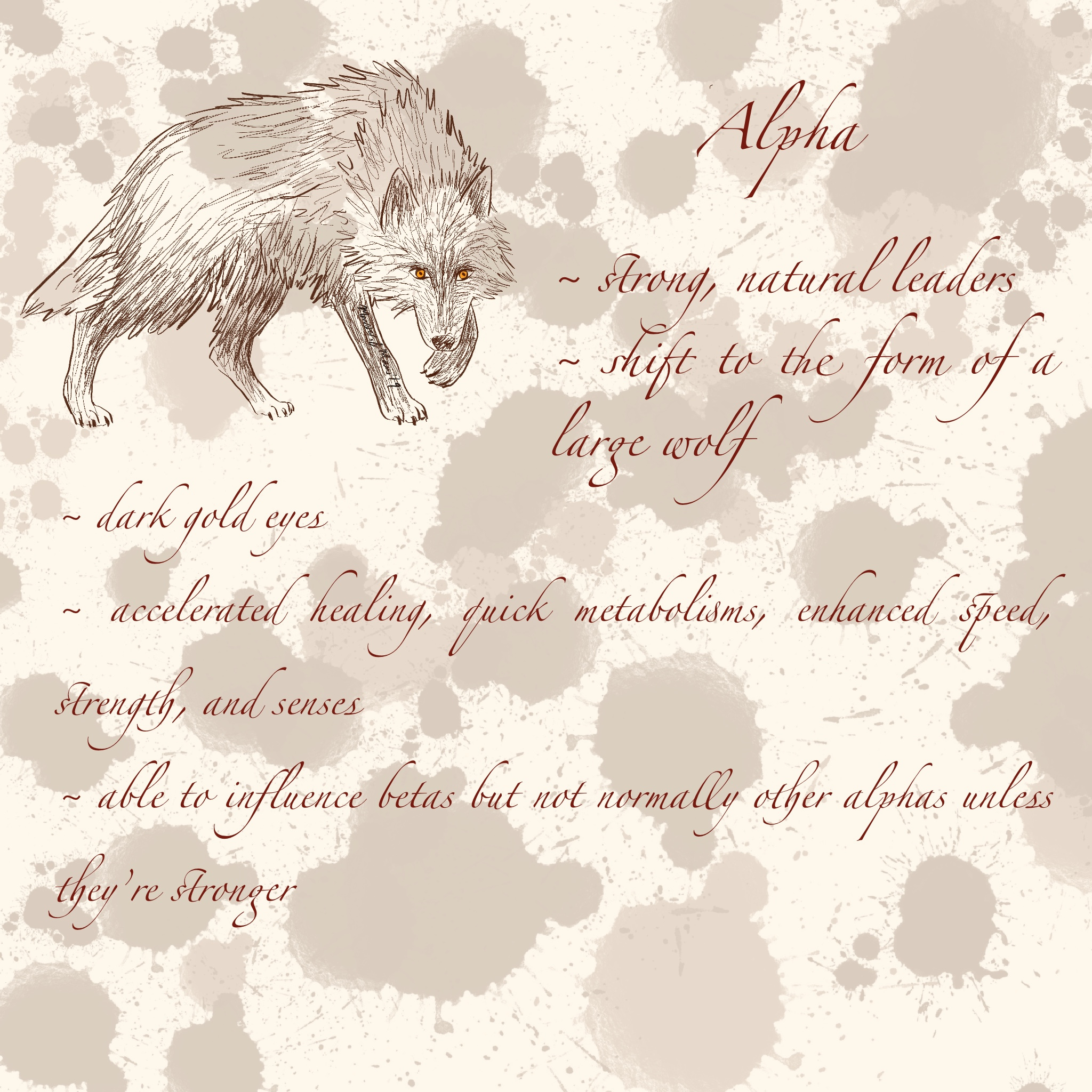
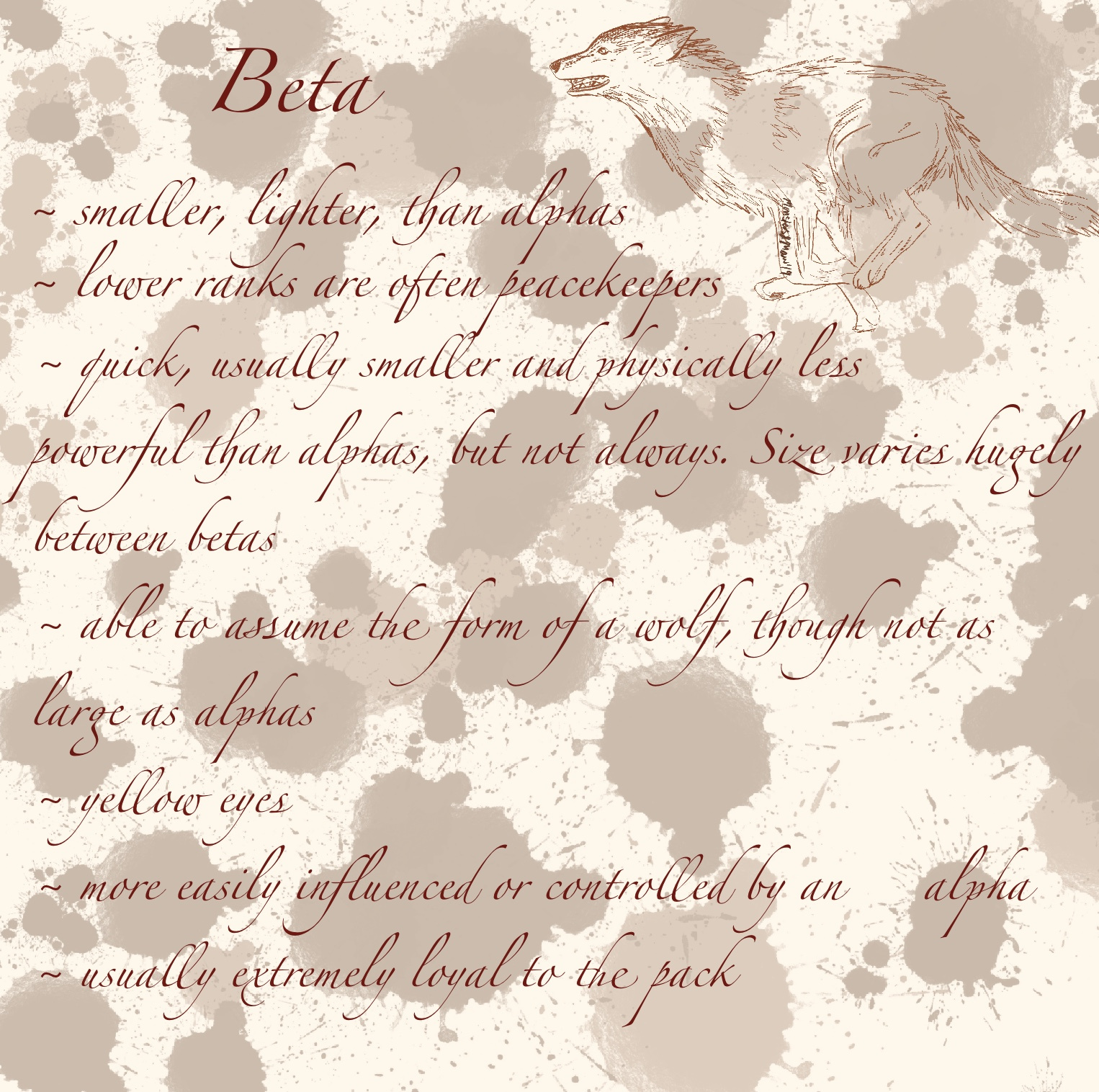
Here's some headcanons and background information for the world of my latest werewolf story, along with some illustrations.
You can read part one of that story here, with the final extract of chapter one here.
___
Werewolves in this universe are unknown by the general human population. Most blend in with society, keeping their supernatural abilities hidden. The humans who do know about them usually tend to be hunters. There is a Hunters’ Guild which has existed for centuries and has dedicated itself to ensuring that werewolves do not get out of control or spread their influence too far. Werewolves can be turned, but most are born. Only a ‘true’ alpha (see below) can turn a human; a bite from any other werewolf is just like a bite from any non-supernatural creature - best to get it disinfected, but it won’t get you turned into a werewolf!
Packs are usually led by a pair, though the pack alpha doesn’t have to be mated, and their mate doesn’t have to be an alpha in order to lead with them. The pack alpha’s word is always final, however. Alphas are almost always born rather than bitten, and they’re relatively rare; most werewolves who are born are betas, and there have only been a few recorded cases of bitten humans becoming alphas. Packs do not tend to have more than one alpha past the age of about eighteen, with younger alphas either challenging the current alpha for leadership or moving away to start or join another pack of their own. It is perfectly possible for more than one alpha to get along in a pack, however it’s rare. Gender is not a criterion for leading; pack leaders/alphas can be male or female.
Werewolves are immune to most human diseases and illnesses, heal much more quickly than humans and are much tougher, physically. A wound that would kill a human in a matter of minutes can be survived by a werewolf, if given some kind of medical attention. Anything less than that, and they will generally heal almost completely in a matter of hours, leaving only a small scar - with alphas healing more quickly than betas.
Pack hierarchy is as follows: (true alpha, if the pack has one) > alpha, with their mate (if they have one) ranking just below them > (any lingering alphas) > betas of varying rank
The different kinds of werewolf (true alpha, alpha, beta) all behave slightly differently and have different abilities and roles according to their rank. Their eyes when shifted (or part shifted) can also distinguish them, as well as scent, size, posture, and behaviour.
Types of werewolf
A ‘true’ alpha is much rarer among werewolves. These are creatures of exceptional - almost legendary - power and strength, and are never bitten but are always born. They tend to pass down bloodlines, but it’s not always given that the offspring of a true alpha will also be a true alpha. Unlike ‘ordinary’ alphas, who shift into large quadrupedal wolves, ‘true’ alphas shift into enormous, largely bipedal creatures, and can easily influence or control the other types of werewolf with their voice, posture, scent, and gaze. Whereas the eyes of alphas and betas range from darker gold to pale gold respectively, a true alpha’s eyes are a dark amber, sometimes even red, depending on the alpha’s strength. The darker the eyes, the more powerful the alpha. Their physical strength is prodigious, though they don’t always have to be big and bulky in appearance in their human form. They usually have a kind of intangible ‘presence’ or ‘aura’ to them that even humans pick up on, though not all are fierce, frightening, or aggressive - some are gregarious - they just have ‘magnetic’ personalities that tend to influence those around them according to their will. They are usually highly active, fit, and have fast metabolisms.
True alphas are nearly always pack leaders, but sometimes they are found as lone wolves. These are often the most dangerous, as they can be unpredictable and extremely powerful, despite not having a pack.
An ordinary alpha is usually the one leading a pack, and it is their responsibility to protect and nurture the members of their pack. An alpha who rules by fear and control is usually regarded as evil or cruel, though it does happen. The more betas who join their pack - an intangible bond of family and loyalty, not merely a spoken pledge - the more powerful the alpha. An alpha who has another alpha as a mate is also generally strengthened by it, but if the two have a powerful enough connection, or even a bond (see below), then they can be as, if not more, powerful.
Betas are what make up the majority of the werewolf population. They can shift into wolves, though are generally smaller than alphas in their lupine forms, and have superior strength, speed, and senses to humans. They are very pack-orientated, with strong bonds between their closest friends, and a deep loyalty to the pack in general, unless they are betrayed by their alpha or something. Their rank amongst themselves generally occurs naturally, with betas just slotting into a space where they feel most comfortable. Even the lowest rank is well regarded and protected by the pack. Low ranking members tend to be the go-betweens in arguments or disputes, and are frequently (but not exclusively) the jokers and the ones to lighten the mood and keep things smooth between the other pack members.
Mating is when a pair ‘click’ and work exceptionally well together on a deep level. Not all wolves decide to mate, or find their mate, and it is a significant step if a pair decide to become officially mated. Werewolves usually mate for life (if a mate is killed it can have a devastating impact on a werewolf’s mental wellbeing. The pack will support and mourn with them, and usually the wolf will not mate again, if they recover. Many go ‘feral’ and are frequently killed by hunters, or their own kind/another pack).
Bonding occurs much more rarely than simply mating. When a wolf bonds with their mate, it creates an extra level of empathy and connection which goes beyond simply being well suited to each other. A bonded, mated pair will almost feel what the other feels, will know instinctively when something is wrong, even if they’re not in close proximity, and will share their strength to increase their power, healing, speed, stamina, and senses. If a bonded mate dies, the other’s mind usually breaks - they do not long outlive each other. It’s seen as a very rare occurrence, and a pack with a bonded pair is regarded as lucky and blessed.
Feral wolves are those who give in to their inner wolf and become more animal than human. A deep trauma or tragedy can provoke this state, and while it’s possible for a feral wolf to be brought back and rehabilitated, they will often be left permanently changed by the experience. Some wolves who turn feral do so because they simply prefer to be so, and if they live remotely it isn’t usually a problem, but since most packs live in areas where human population is high - the UK isn’t, say, Russia or Canada, with miles and miles of uninhabited land, and we don’t have native wolves either any more - hunters will usually get wind of feral wolves and eliminate them before they can do any damage or reveal the existence of the ‘supernatural’ to the rest of the world. If a feral wolf is discovered inside another pack’s territory, they will usually be hunted down and, more often than not, killed to protect the pack. A feral wolf is aggressive, primal, thinking only of survival, and will lash out at almost anything, and a feral true alpha is more dangerous than anything.
Story setting and background
The setting for this story is a (made up) town in England named Ashridge; a large but rural town, with a number of schools, a railway station, a hospital, a large shopping centre, two cinemas, etc. It was recorded in the Doomsday Book (completed in 1085 AD), and was once a prosperous market town in the Middle Ages. The large, landed family in the area is the Everleigh family, who have a manor on what is now the outskirts of the town, and who own vast tracts of land around the house and into the woods, and some of the significant buildings/properties in town too. Ashridge itself sits on either side of a wide river, and is overlooked by a wooded bank of ancient ash trees, which gave the town its name.
The Everleigh family is a long and distinguished bloodline which can trace its roots back to before the Roman empire invaded Britain. Family tradition (no sources save for a few artefacts in the family vault) suggests that they became werewolves during a ceremony carried out by ancient Britons, possibly druids. They defended their pack and the local humans from the Romans when they first arrived, and while under Roman rule had significant sway in the area. A daughter of the family went back to Rome and married a Roman general, and the family still has ties to Italy to this day. The family has been leaders of the Ashridge Pack for as long as anyone can remember - and they have a high number of ‘true’ alphas in their family tree.
Hope that’s whetted your appetite for the story!!
___
Don't forget to check out the Patreon Masterlist, in case you missed anything from before.
Files