Home

 Creators
 Search
 Recent
 Random
 Posts
 DMs
 Tags
 Random
 Importer
 Import
 FAQ
 Account
 Register
 Login
 Favorites
 Keys
 Logout
 Telegram

¡Cómo dibujar poses para animación fácil! El método del plano - How to draw poses for animation easily! The plane method. (Patreon)
Content
English:
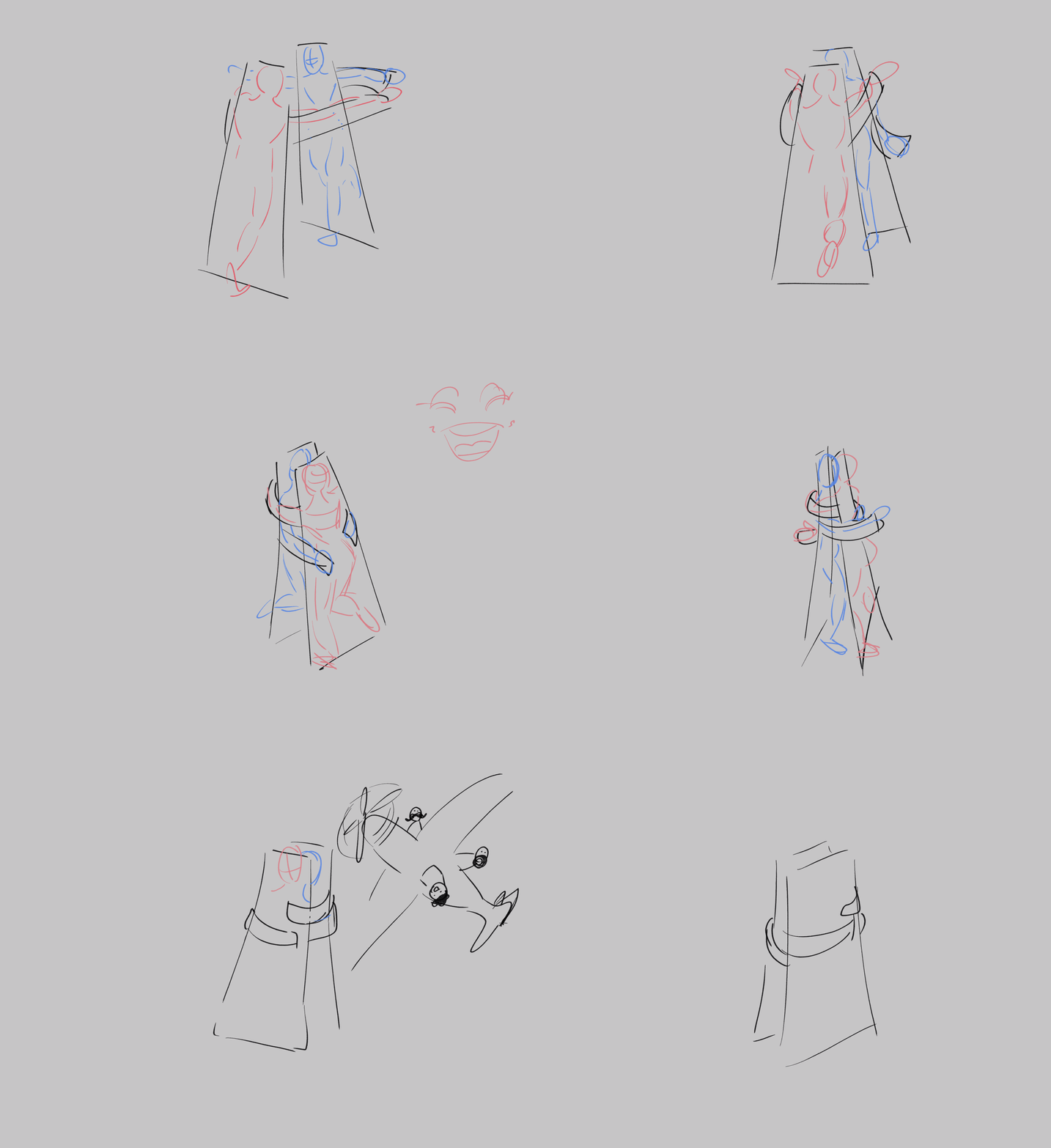
Grab a pencil and paper.
First: Draw a rectangle with diagonal lines.
Second: Sketch the bones with a few lines.
Third: Draw the shapes of the torso and limbs.
As if the character were passing through the wall, only draw the visible parts and ignore the hidden parts, since the wall is obscuring them.
Los métodos más conocidos para dibujar personajes consisten en describir figuras geométricas, flotando donde sea, donde tenemos que considerar toda la figura incluyendo las partes que no se ven.
Eso funciona para ilustradores y dibujantes académicos, pero no para animadores.
Los animadores tenemos que enfocarnos en expresar las ideas y emociones del personaje, el significado que un animador debe darle a sus líneas no es describir una figura geométrica, es expresar una acción, una idea una emoción.
¡Para eso solo necesitamos pensar, visualizar y dibujar los elementos del personaje que se ven!
ENGLISH:
The most common methods for drawing characters involve describing geometric shapes floating anywhere, where we have to consider the entire figure, including the parts that aren't visible.
That works for illustrators and academic draftsmen, but not for animators.
Animators have to focus on expressing the character's ideas and emotions. The meaning an animator should give to their lines isn't describing a geometric shape, but expressing an action, an idea, an emotion.
For that, we only need to think about, visualize, and draw the visible elements of the character!
¡Ejemplo de animación hecha con el método del plano!
Example of animation made using the planar method!
Para lograr esto:
1 - Dibujamos un plano, como una tabla o un papel rectangular.
2 - Sobre este plano dibujamos las partes visibles de la figura, semejante a hacer una escultura en una tabla.
Si vamos a dibujar la cara, enfóquense en dibujar solo la cara. No necesitamos considerar el resto del cráneo.
Cambien usar la esfera y en su lugar usen la máscara de alambre, así dibujan los elementos necesarios.
Visualicen, piensen y dibujen solo las partes que se van a ver.
ENGLISH:
To achieve this:
1 - Draw a plane, such as a board or a rectangular piece of paper.
2 - On this plane, draw the visible parts of the figure, similar to sculpting on a board.
If you are going to draw the face, focus on drawing only the face. We don't need to consider the rest of the skull.
Instead of using the sphere, use the wireframe mask to draw only the necessary elements.
Visualize, think, and draw only the parts that will be visible.
1. No las piensen como esculturas de arcilla, piénsenlas como esculturas de alambre.
2. No dibujen formas regulares, dibújenlas como formas irregulares.
3. De ver formas completas, véanlas como medias formas.
Si pueden dibujar un rectángulo irregular, pueden animar personajes fácilmente.
Pueden hacer su propia escultura de alambre sobre un plano real, con cartón, limpia pipas y silicona. Tendrán la referencia real en sus manos.
¡Tu propia figura de alambre en un plano!
ENGLISH:
1. Don't think of them as clay sculptures, think of them as wire sculptures.
2. Don't draw regular shapes, draw them as irregular shapes.
3. Instead of seeing complete shapes, see them as half-shapes.
If you can draw an irregular rectangle, you can easily animate characters.
You can make your own wire sculpture on a flat surface, using cardboard, pipe cleaners, and hot glue. You'll have a real-world reference right in your hands.
Your very own wire figure on a flat surface!
Files