 Home

 Creators
 Search
 Recent
 Random
 Posts
 DMs
 Tags
 Random
 Importer
 Import
 FAQ
 Account
 Register
 Login
 Favorites
 Keys
 Logout
 Telegram

Why Jens Pulver Needs to Be in the Hall of Fame (Patreon)
Content
By Paul
[This is a transcript for the podcast episode]
Long before Khabib Nurmagomedov and Tony Ferguson ran the lightweight division, there was one person who helped make the division: Jens Pulver. Some of the newer MMA fans might be saying, “Who?” and that’s a damn shame. Pulver should be shown on the big screens at UFC pay-per-view events, drawing raucous applause and having fans screaming his name. He was the first lightweight champion of the UFC, and despite being on the lighter side of 155 pounds, he battled much bigger fighters for the bulk of his career. People talk about lineal champions, and if you want to start one with the lightweights, all roads lead back to Pulver. Despite his many accomplishments in the sport, the UFC has failed to induct him in their Hall of Fame. It’s interesting to note that Pulver’s teammates Matt Hughes and Pat Miletich are right there in the Pioneers Wing, along with guys like Kazushi Sakuraba and Bas Rutten. Much like all of you, I am a huge fan of the Gracie Hunter himself, but what claim does Sakuraba have of being in the UFC Hall of Fame?? Bas Rutten has exactly two fights in the UFC, and despite winning the heavyweight title, a strong argument could be made for his opponent in that fight, Kevin Randleman. The point is, the current Hall of Fame is essentially whoever Dana White is cool with, or at least has pissed him off the least. For those of you who might not know why Pulver’s absence is such a crime, let me spell out some reasons.
Pulver was the first UFC lightweight champion
This is obvious from the earlier but consider for a moment what MMA might look like if we didn’t have anyone below 170 competing. That was actually the case not too long ago, when Pat Miletich (Pulver’s coach) was running through the competition in the late 90’s. Back then, anything up to 170 pounds was considered the lightweight class, and if you happened to be too small for that, tough luck. With all this uncertainty, Pulver made his debut at UFC 22, the legendary card where Frank Shamrock defended his middleweight (now light-heavyweight) title against Tito Ortiz. This was the second UFC event to feature rounds, meaning that prior to the last two events, fights went as long as they had to with no breaks in between. Starting in 2000, the UFC finally introduced the 155-pound division but referred to it as the bantamweight class. Keep in mind that rules were being added as the events kept crawling along to avoid being banned by regulators.
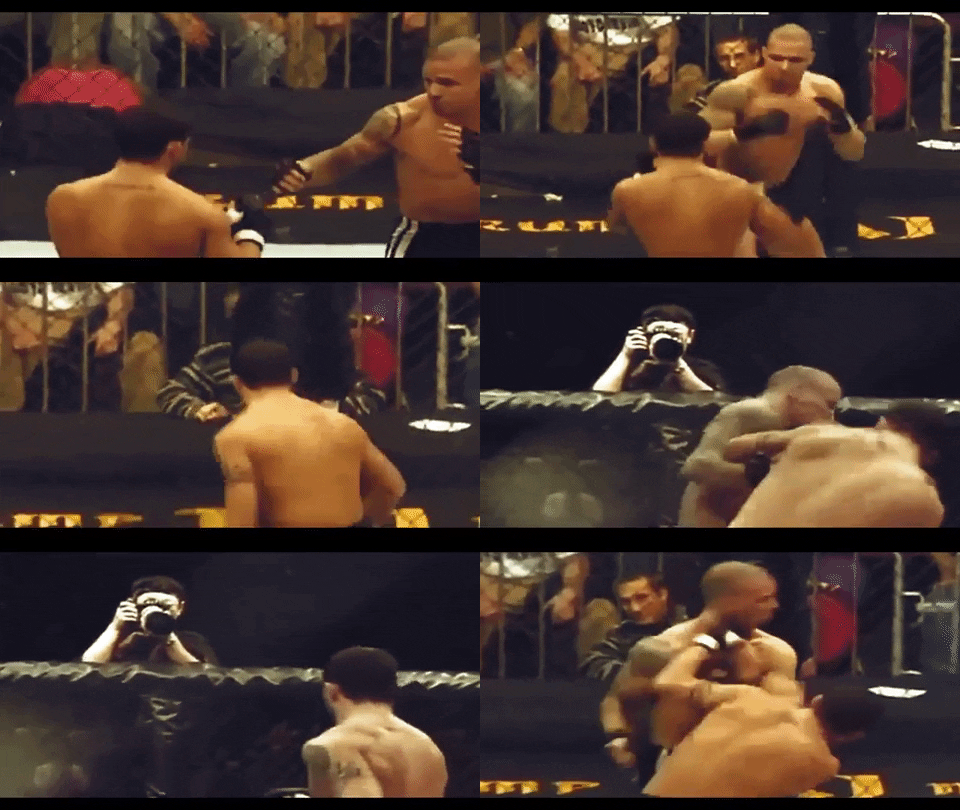
(John Lewis got a taste of the left hand of Jens Pulver in one of the quickest knockouts in the UFC.)
With more weight classes, it made sense for the UFC to have more titleholders. Since Pulver had a 9 win, 2 loss, and 1 draw record (as well as being undefeated in the promotion), they decided to hold the lightweight championship title fight at UFC 30 in February 2001. The event itself was a huge change for the UFC, as it was the first event to be spearheaded by Zuffa, LLC. Prior to this, all UFC events were done under Semaphore Entertainment Group. When Dana White talks about his connection to President Trump and how he allowed fights to happen at his hotel and venue, he’s referring to this event. Coming into the first lightweight title fight, Pulver’s opponent, Caol Uno, had 12 wins, 3 losses, and 2 draws. The bulk of his career was fought overseas in the Shooto promotion, an MMA organization in Japan that predates the UFC by 7 years. Pulver might have been the crowd favorite, but Uno came into the fight with more experience and having faced better opponents. Looking back at the fight now, there is much that stands out as far as poor technique and bad ringcraft, but for its era it was one of the highlight fights for hardcores. For the first time, lighter weight fighters saw an opportunity outside of Japan where they could ply their trade without being at such a huge size disadvantage. Pulver and Uno put on a technical show not usually seen among competitors in those days; it was still mostly MMA version 1.5. A good comparison would be Ricky Steamboat vs. Randy Savage at Wrestlemania 3, way ahead of its time, and also showed the technical prowess of lighter athletes.
After beating Uno by unanimous decision and winning the UFC lightweight title, Pulver returned a few months later at UFC 33 to defend his belt against Dennis Hallman. If the name sounds familiar, it’s because he’s the guy that beat Matt Hughes by submission, twice. When the matchup was first announced, it looked as if Pulver’s reign was going to end prematurely. Not only was Hallman the bigger fighter coming down a weight class, he had twice as many fights as Pulver and was on an 8-fight win streak, one of those victories being an armbar win over Matt Hughes in twenty seconds. Against the odds, Pulver went on to beat Hallman in another unanimous decision win. Even though the fight wasn’t as exciting as people would have liked, a large part of the blame can be placed on Hallman himself. Early on in the fight, Hallman received one of Pulver’s patented southpaw left hook right on the jaw, and it hurt him so bad he fought defensively the rest of the matchup. With his first title defense out of the way, who else was there for Pulver? There was one other challenger who exploded through the promotion who looked like the next big thing. He racked up countless wins in the Brazilian jiu-jitsu circuit and became the first American black belt gold medalist at the IBJJF World Jiu-Jitsu Championship. Despite his grappling background, however, all 3 of this prodigy’s UFC wins were by strikes. This was none other than BJ Penn.
He was the first to beat BJ Penn
At this point in his career, Pulver was 11-2-1, and was victorious in his last 7 fights. Even though he was the champion, Vegas oddsmakers had Pulver as the underdog when the fight was announced. When Penn made his UFC debut, people were expecting another revival of Brazilian jiu-jitsu in the promotion. Even though there were still many fighters who trained in the art, no one was coming out and submitting people left and right like a vintage Royce Gracie. The actual Gracies were over in PRIDE Fighting Championships, where their demands for specific time limits and mega purses were acquiesced. The UFC still had some great black belts like Fabiano Iha, Ricardo Almeida, Murilo Bustamante, and Matt Serra, but they never had a world BJJ champ as young as Penn before. Up until 2019, Penn was one of the few (if not only) fighters on the roster who made their MMA debut in the UFC. It’s hard to tell now, but at one point BJ Penn was considered to be one of the pound-for-pound greats. He could stand and trade strikes with anyone (including Lyoto Machida) and if things got too wild, he wouldn’t hesitate to take the fight to the ground and hammer you down with strikes. He was very much like a younger, more flexible Frank Shamrock, who coincidentally also trained a young Penn while both were at AKA. In his second fight ever, Penn knocked out Din Thomas, the same guy who heel hooked Pulver a year prior. Penn also knocked out Caol Uno in 11 seconds while it took Pulver the entire five rounds. MMA math shouldn’t be used to determine future results, but the outlook didn’t look good for Pulver.
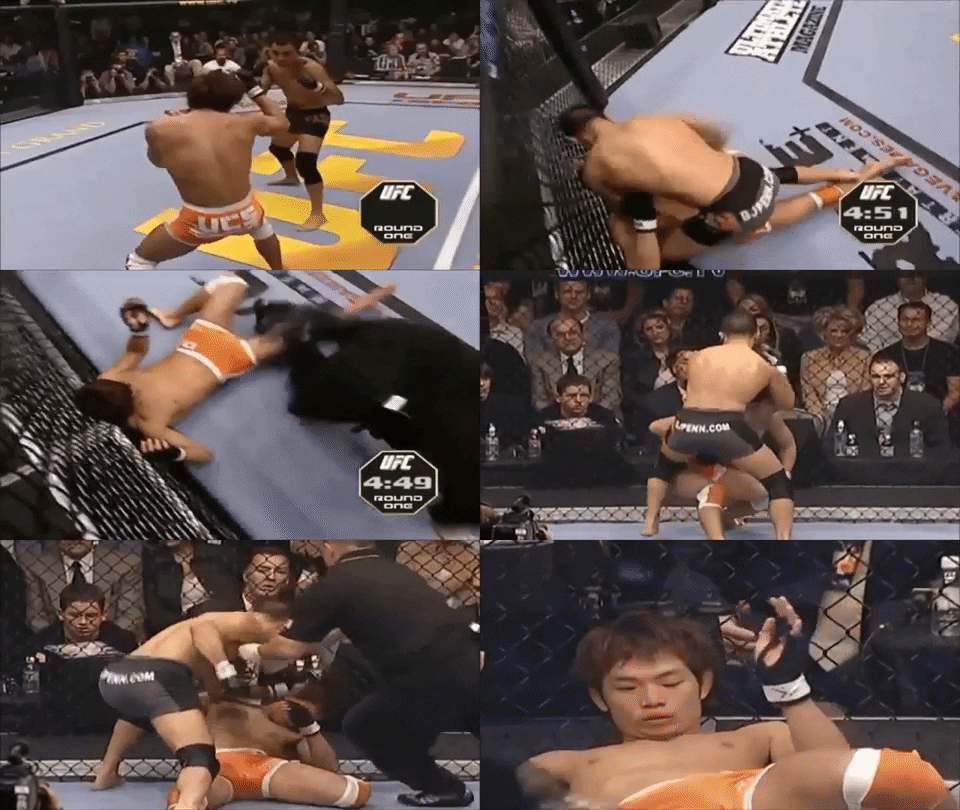
(Just like that, one of the top-ranked lightweights in the world got taken out by Penn.)
When Pulver and Penn squared off at UFC 35, fans were treated to the first UFC ever to be headlined by lightweights. Prior to this, there were always doubts about whether lightweight fighters could draw the fans. The UFC could have given the main slot to Dave Menne vs. Murilo Bustamante, which was the second ever middleweight title fight taking place under the Zuffa banner. Lucky for us, Pulver vs. Penn kept their top billing and we were treated to the main event that we deserved. The first two rounds were definitely in favor of the challenger. It was clear that even though it was Pulver with the more decorated boxing and wrestling background, Penn’s speed and grappling acumen allowed him to land more strikes and take the fight to the ground when he shot in for takedowns. It looked like a done deal at the end of the second round when Penn locked in a tight armbar and if it wasn’t for the clock running out, Penn might have won the title in just his fourth MMA fight. However, Pulver survived and the remaining three rounds told a completely different story.
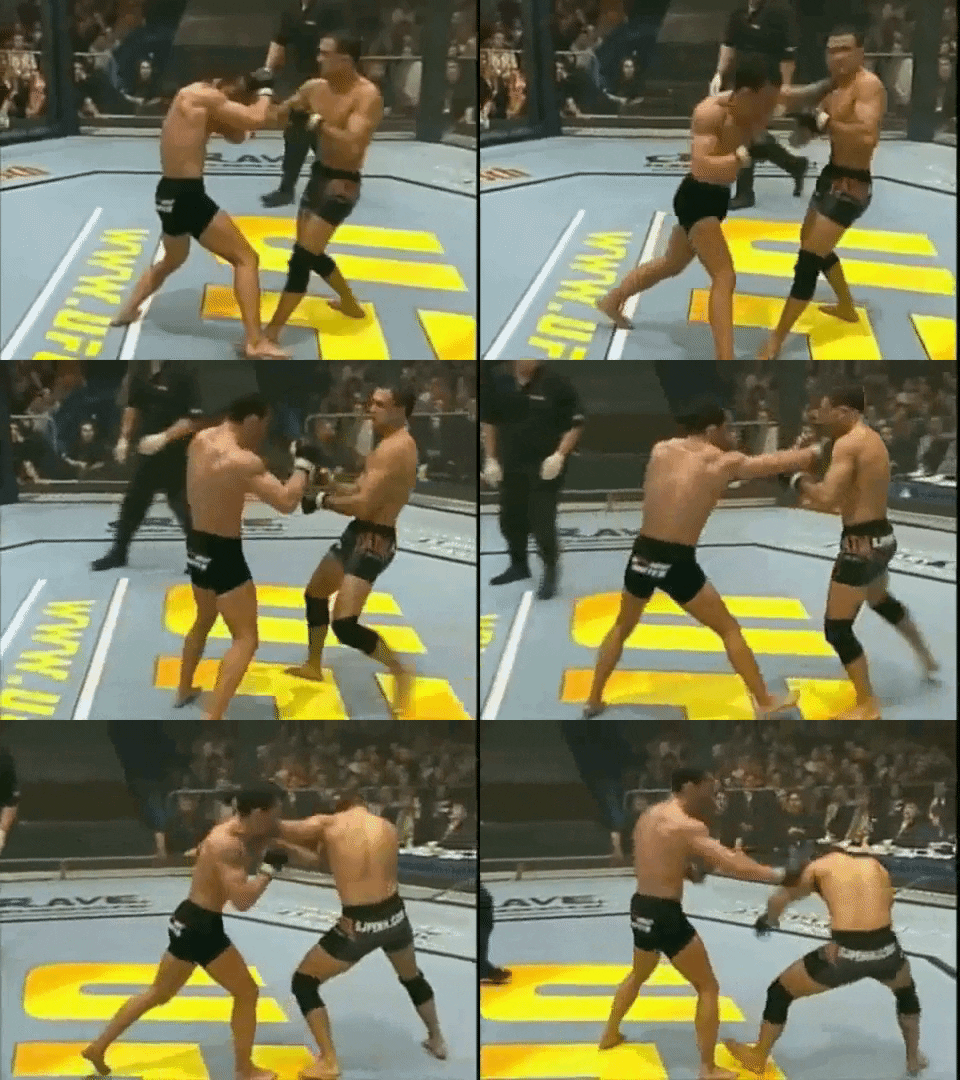
(To this day, it’s still hard to find good boxing fundamentals in the UFC. Pulver was ahead of his time in this aspect.)
Maybe Penn was frustrated that this was taking longer than expected. After all, he had won all his other fights in the first round. Perhaps getting so close to winning only to run out of time mentally frustrated him, causing Penn to lose his cool. It could also be that Penn was only prepared for a blitz and didn’t take his conditioning seriously, leading to low output as the fight wore on. Regardless of the reasons, Pulver turned up the volume and started to land frequently on Penn, combining crisp combinations along with takedowns to rack up the points. Even though Penn was dangerous off his back, Pulver maintained top control and blasted him with punches and elbows repeatedly and did this for the entirety of rounds 3 and 4. In the 5th and final round, Penn opted to take his chances brawling with Pulver, a request that the champion gladly obliged. No longer fresh and frustrated at being outpointed, Penn was reckless and got knocked down twice, sealing the decision win for Pulver. Even though Pulver left the promotion shortly after this fight, there was one gift that Pulver gave to all future strikers: the sprawl and brawl.
The “sprawl and brawl” was popularized by Pulver (at least among lightweights)
Some might argue that it’s not actually Pulver who started this style of fighting, and they make a solid case. Maurice Smith was able to use enough defensive wrestling mixed in with his kickboxing to win the UFC heavyweight title back in 1997, and you had fighters like Chuck Liddell and Igor Vovchanchyn who used their own respective grappling backgrounds (collegiate wrestling for Liddell, sambo for Vovchanchyn) to keep the fight standing and try to knock out their opponents. Unlike Smith, Pulver had a wrestling background and has more credentials on the mats than in the ring. Unlike Liddell and Vovchanchyn, Pulver was already a world champion and the first in his division. For the most part in the early days, MMA coaches felt that if you walked into the gym with a wrestling background, you can be the guy that uses takedowns to ground and pound. If you were a striker, you should learn enough grappling to keep the fight standing where you would have an advantage. But every now and then, a fighter would come in who had the wrestling chops but also a decent striking game. Pulver’s southpaw stance combined with his KO power made a lot of his opponents hesitate when it came to gauging distance. Other grapplers knew that he would be hard to take down and standing and trading with him would be a tall order.
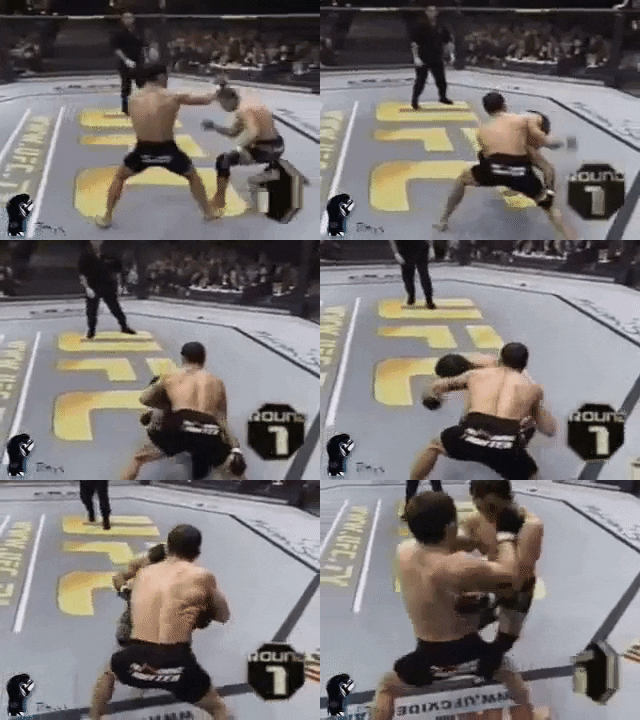
(Pulver’s ability to keep the fight standing and initiate takedowns on his own terms were huge reasons why he could withstand the onslaught of Penn.)
In the early 2000s, any lightweight fighter with a wrestling background paid close attention to Pulver and looked at his successes. Urijah Faber, Tyson Griffin, Frankie Edgar, and Takanori Gomi all fit in the same mold as Pulver. Of the four I just mentioned, Faber and Gomi have both openly spoken about the influence that Pulver has had in their careers. Both are former wrestlers who developed decent striking and modeled their initial styles after Pulver. Although their signature punches were different (an overhand for Faber and a hook for Gomi), they used their wrestling for the same reasons: inflict damage on their own terms and stuff any takedowns that come their way. You see modern iterations of this style in guys like Frankie Edgar, who implemented a similar game plan against BJ Penn when they fought. Current UFC featherweight champion Alexander Volkanovski is somewhat of a spiritual successor to Pulver, a smaller fighter with a wrestling background that prefers to keep the fight standing and dictate the takedowns at his choosing. Anytime you see someone like this under 170 pounds, they are walking the path that Pulver has paved.
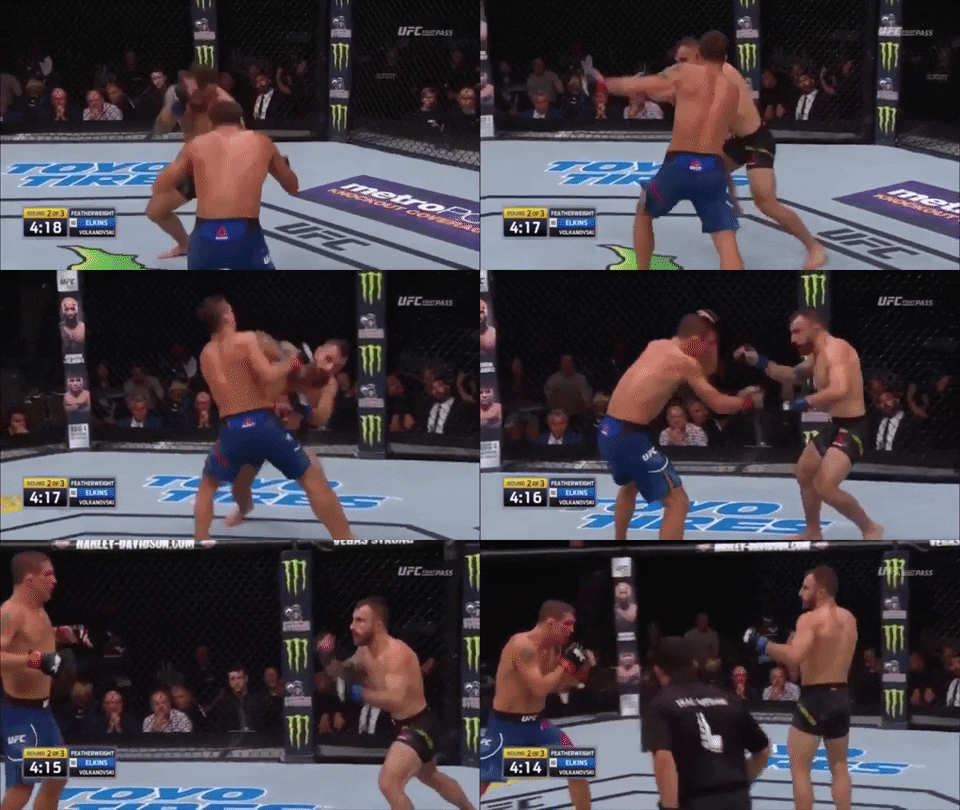
(It’s not quite the picture-perfect comparison, but there are fingerprints of Pulver’s style written all over Volkanovski.)
His body of work speaks for itself
Take a look at Pulver’s record and you’ll see that even though he’s won more than he’s lost, the list of L’s are a bit longer than any fighter would be comfortable with. Ignore that for a second and you’ll see that he’s fought for every major MMA promotion excluding Strikeforce. Glance over to the weight classes some of his fights have been in, and you’ll notice that he has fought at flyweight and bantamweight, a far cry from his days as a 155 pounder. Much like other fighters of his era, Pulver competed in a weight class that was not ideally suited for his frame. What he gave up in size and power he made up for with speed and technique. This was a fair trade-off until sometime in the mid-2000s when it was clear that some of the other lightweights were simply too big for him. With monsters like Nurmagomedov, Ferguson, Gaethje, and Felder, there’s no way even a prime Jens Pulver could compete with them, size-wise. This meant that for the majority of the time, Pulver was always undersized and had to rely on his wits and heart more often than he should have. In spite of that, against bigger guys, he more than held his own. Watch his fight against Hayato Sakurai and you’ll see that he spent large chunks of the fight defending takedowns and even dropped Sakurai with a wicked left straight. Cub Swanson was supposed to ruin Pulver’s WEC debut, only to be submitted in less than 30 seconds into the first round. Pulver has fought all over the world and never made an excuse for a loss (and he’s had plenty of those).
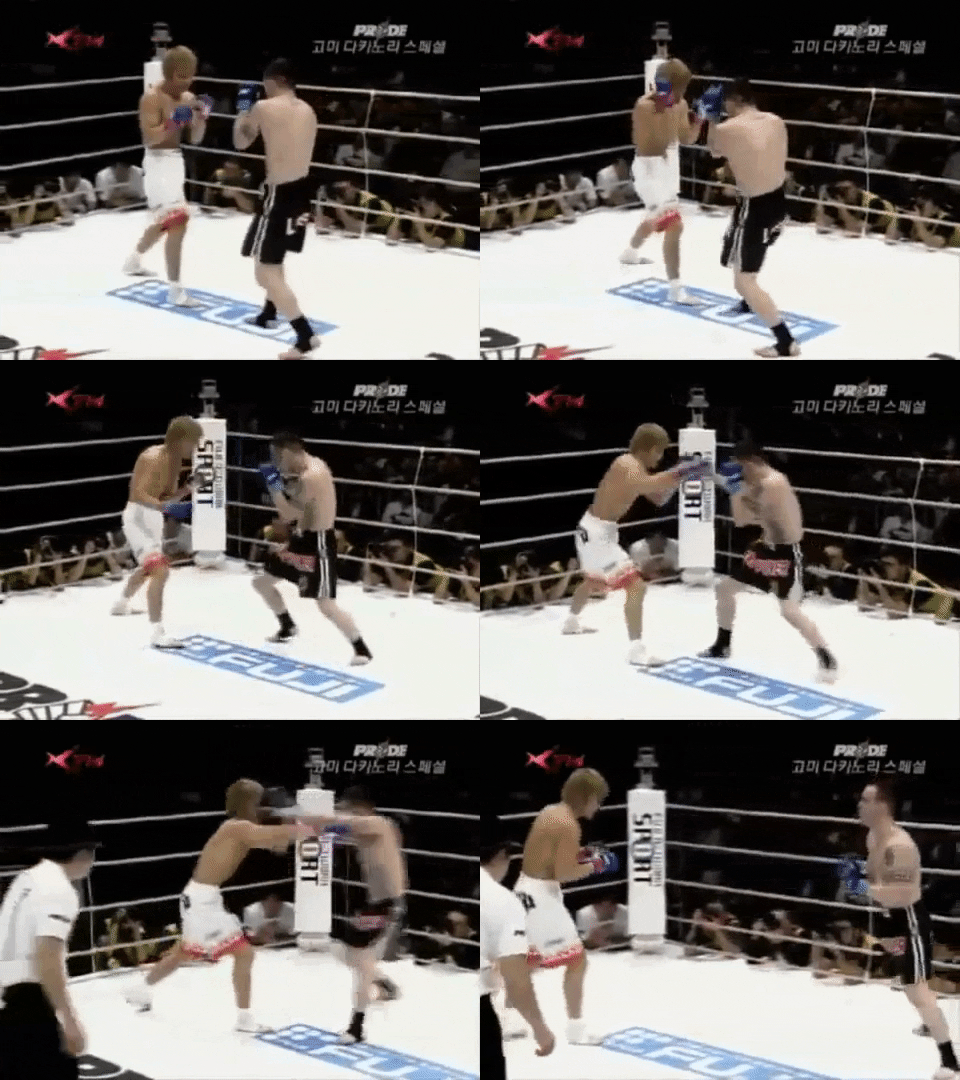
(This about sums up Pulver. Despite being undersized and outgunned, he presses forward against Takanori Gomi, possibly the best lightweight in the world at the time.)
Although he spends the bulk of his free time on Twitch live-streaming and appearing on random podcasts, Pulver wouldn’t be out of place coaching future fighters. In season 5 of The Ultimate Fighter, he coached against BJ Penn. In another historic list of firsts, all the participants were lightweights and the season would end with the coaches fighting in the main event at The Ultimate Finale. Looking at the list of participants now, it’s amazing how many talented fighters emerged from this season alone. In a limited amount of time, Pulver was able to put together a great coaching staff and led his team to a dominant performance, culminating in both Pulver fighters competing against each other in the finale. It’s no surprise that someone who has spent the bulk of his career in both the Lion’s Den and Miletich Fighting System would emerge as a competent coach. Just look at the champions that both camps have produced. To this day, Pulver’s coaching is one of the most dominant in the show’s history, and the sheer talent of the roster was impressive. 3 of the competitors fought for world titles, and many ended up becoming household names. Nate Diaz, Gray Maynard, Joe Lauzon, and Manny Gamburyan all came from this season and have given amazing performances throughout their careers.
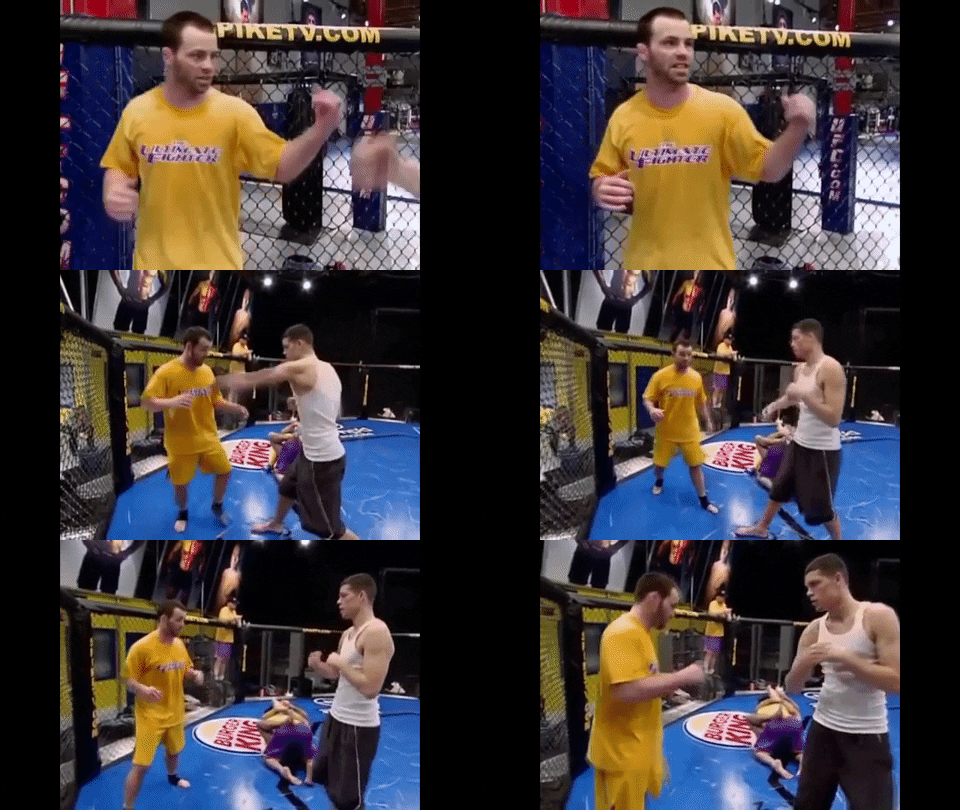
(The combination and footwork that Pulver had Nate Diaz drill is still something you see in many of current performances. Look at Diaz’s fight against Cerrone and see if you can spot that combo.)
If we’re going to split hairs, we can point out that Pulver never had the dominant run of someone like Anderson Silva or Matt Hughes. He never put together a string of highlight-reel finishes, and in fact, his fight against Dennis Hallman was one of the least active title fights in the promotion’s early history. He left the promotion twice under less than ideal circumstances, but not as bad as the likes of Randy Couture or Tito Ortiz. Despite the contract disputes, he never openly spoke negatively about Dana White or outright attacked Zuffa, preferring to leave quietly and letting his fights do all the talking. He was never given a cushy commentating gig (although he was quite good at it) or a UFC gym to run near his hometown. Pulver earned every shot he’s been given, and with all that he’s done for the sport, isn’t it time for the UFC to return the favor? Induct Pulver to the UFC Hall of Fame. It should’ve been done years ago, but we’ll settle for yesterday. Please, and thank you.
