 Home

 Creators
 Search
 Recent
 Random
 Posts
 DMs
 Tags
 Random
 Importer
 Import
 FAQ
 Account
 Register
 Login
 Favorites
 Keys
 Logout
 Telegram

Fight Study 61 – Vet to Champ: Anderson Silva (transcript) (Patreon)
Content
By Paul
When you think of Anderson Silva, what do you picture? The dominant middleweight champion who ruled a division for the better part of a decade? The 185 pounder that defended his title a record-setting TEN times? A fighter who in his prime made opponents crumble with pinpoint counter-striking and devastating Thai clinch? Or are you picturing a man who has fallen on rough times and should retire before he goes the way of BJ Penn? All of the above are true, but there might be one version of Silva that you’re not picturing: a skinny 168 pound striker who was considered good, but destined to stay in the shadows of Wanderlei Silva, the Rua brothers, “Pele” Landi-Jons, and the other brawlers at Chute Boxe.
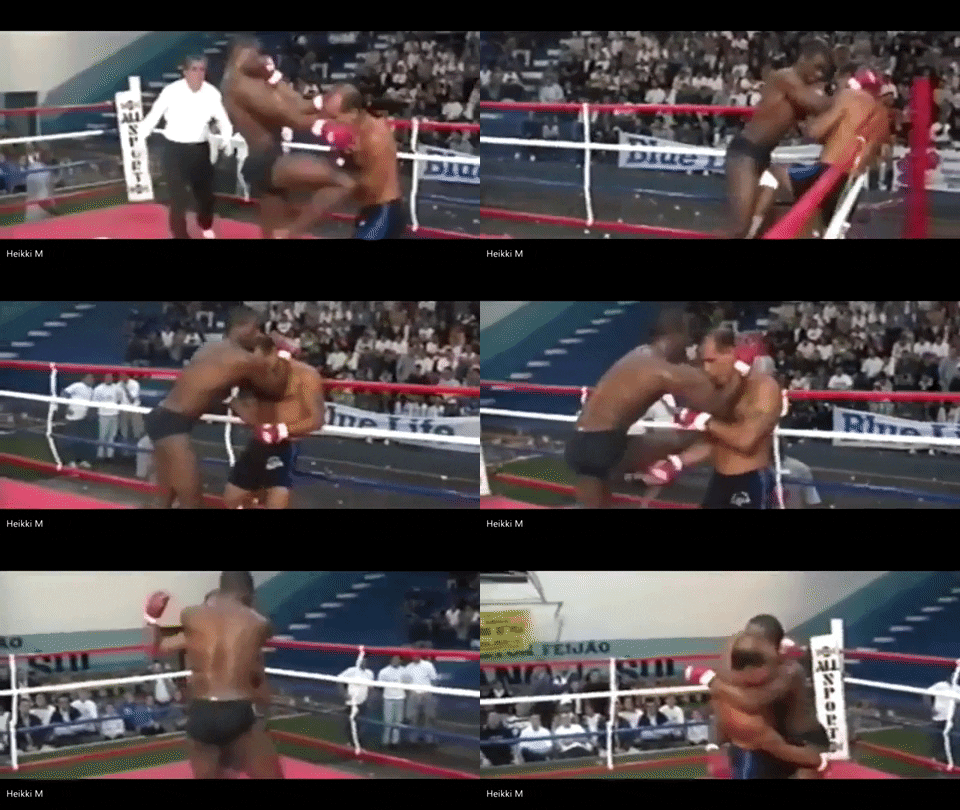
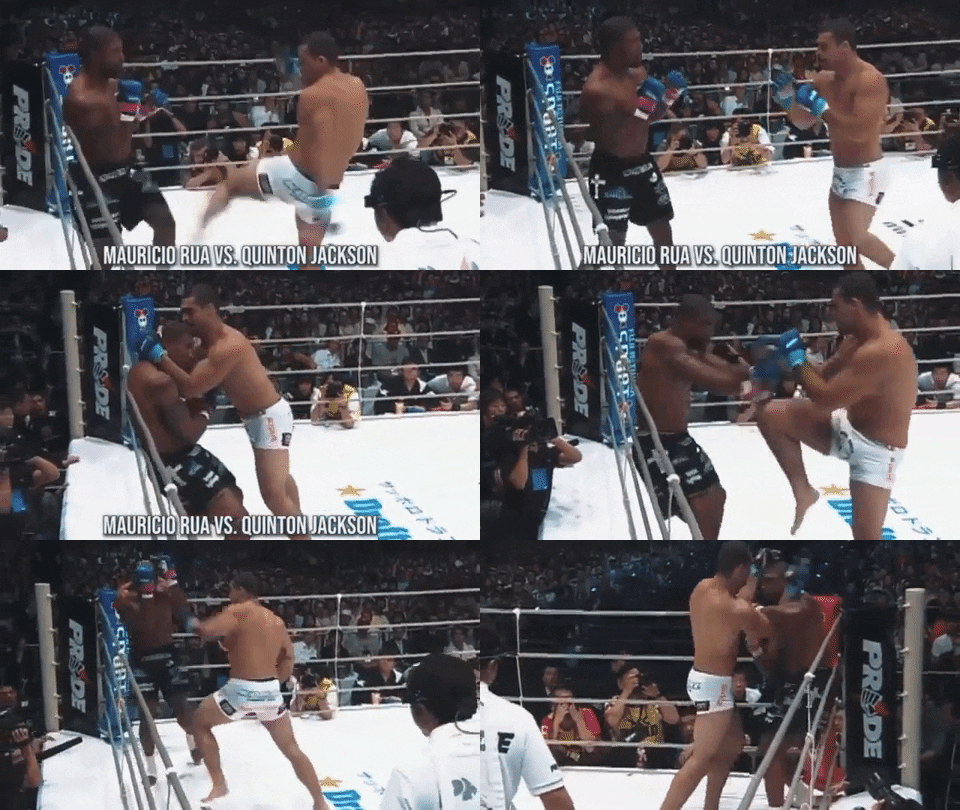
(See if you can note the similarities in all the old school Chute Boxe mainstays. It shouldn’t take very long.)
It may be shocking now, but there was a time when it looked like Anderson was destined to be a B-level fighter. Sure, he could surprise a few people and beat world champions from time to time, but his poor success in fighting off the takedowns and inability to get back up seemed like it would doom him to a career of mediocrity.
During the 90’s and the early 2000’s, there were two dominant MMA camps in Brazil, Chute Boxe and Brazilian Top Team. Anderson was part of the former, meaning that his style was naturally honed to mirror much of his teammates. It wasn’t that Chute Boxe was a bad gym, Wanderlei and Shogun both became world champions and Rafael Cordeiro is still churning out champions and contenders over at Kings MMA. The biggest problem was that Anderson wasn’t able to play to his strengths. Even the most casual fight fan knows of the old adage, “styles make fights.” Chute Boxe was known for producing hyper-aggressive strikers who plodded forward, swung hooks and threw knees in the Thai clinch, and used their Brazilian jiu-jitsu in reverse to get up if they were taken down.
This didn’t mean Anderson was no good because of Chute Boxe, he was good in spite of fighting under a system that downplayed his attributes. This is the same guy that handed Hayato Sakurai his first loss to become the Shooto middleweight champion (which was 167 pounds). Up to that point, Sakurai was considered one of the pound for pound best fighters on the planet and was undefeated in his first 20 matches. In that fight, there were glimpses of the Silva that you watched over and over again in the UFC: slick counter-punching, grabbing the Thai clinch to land knees, and using the body triangle while in guard to frustrate his opponents. After three hard rounds, Chute Boxe had another champion on their roster and Silva looked primed to do great things. However, even in victory there were some holes in Anderson’s game that became apparent.
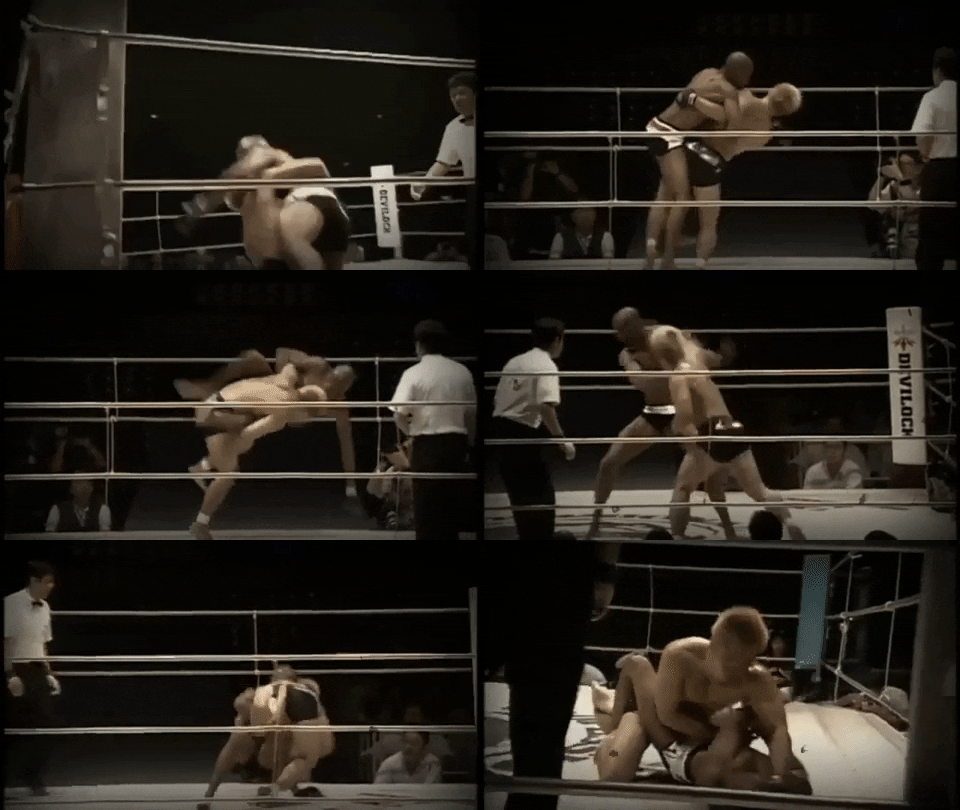
(Well-timed trips, overhands, and clinch takedowns were problems well before Sonnen and Weidman faced off against Anderson.)
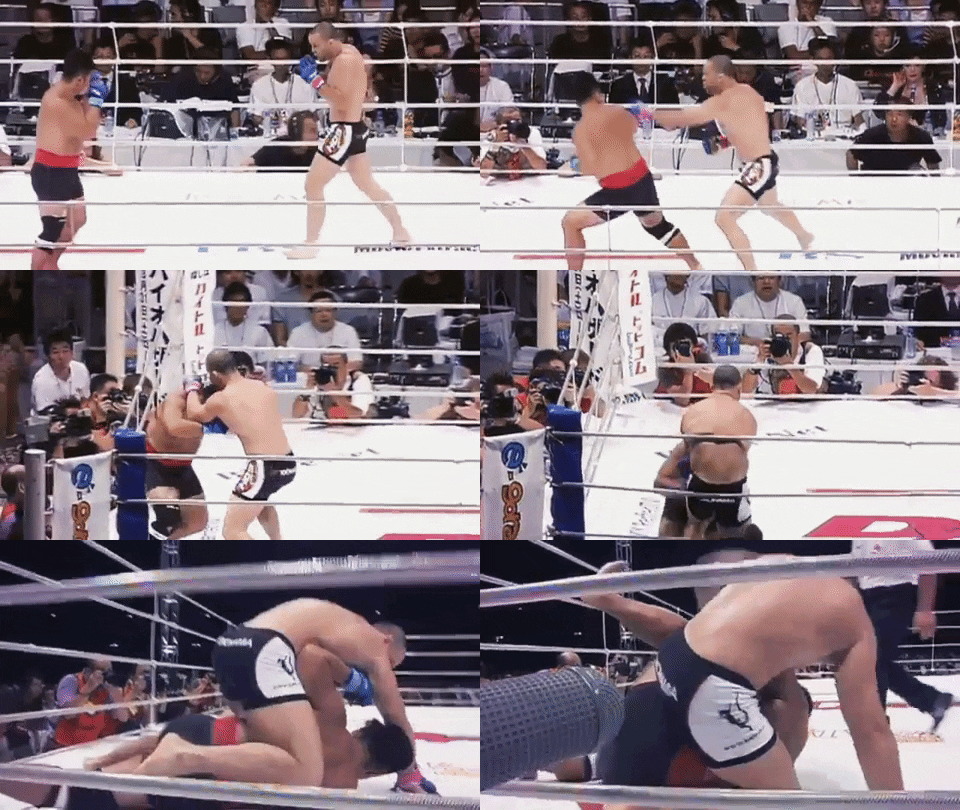
Anderson is 6’2” and fought at under 170 pounds. Even though he never missed weight, it was clear that his frame could stand to gain some muscle to fend off fighters who tried to take him down. In just his third fight, Anderson fought Luiz Azeredo (who later became a teammate) and was flummoxed by his grappling. Unable to stop the takedowns and grappling, he resorted to moving around and taunting him the rest of the fight, since it was clear that any kind of striking could result in another takedown. Unlike most of the other fighters at Chute Boxe, Anderson’s ability to sprawl and stay heavy on his hips didn’t come naturally and he was vulnerable on offense. Since most of his teammates found success advancing forward, so did Anderson by default. More often than not, it worked, but when it didn’t he had no plan B. Despite his glaring weaknesses, Anderson pressed forward and was signed to PRIDE FC, then the biggest MMA promotion in the world. After nearly decapitating Alex Stiebling and beating Alexander Otsuka, he faced off against another former champion, Carlos Newton. A year previous to their matchup, Newton had beaten Anderson’s teammate Pele by armbar and he was coming off another submission victory over Pete Spratt. This was a great opportunity for Anderson to avenge his gym and claim a W over another champion. Just like the Sakurai and the Azeredo fight, Anderson was taken down but this time he held on long enough to get stood up. Without wasting any time, he threw a spectacular flying knee just as Newton was shooting in, catching him clean on the temple and followed up with punches. Finally, it looked like Anderson’s time had arrived.
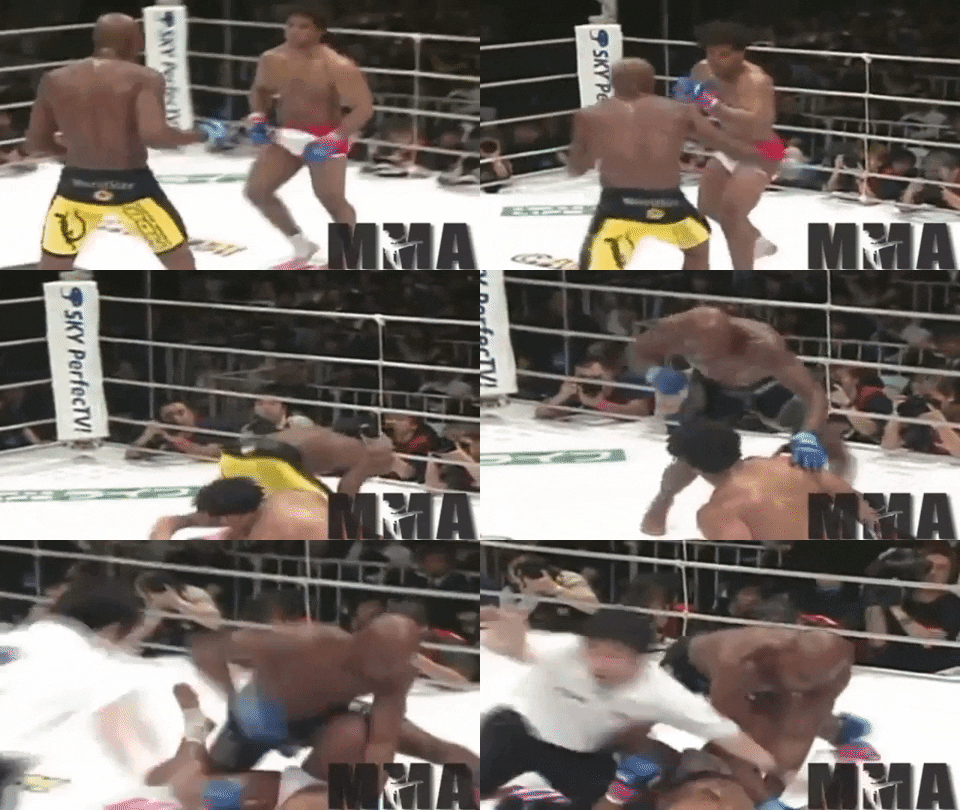
(Despite walking forward with his hands low and base wide, Anderson was still quick enough to land a perfect flying knee and finish with some strikes.)
PRIDE was known for throwing a lot of easier opponents to fighters that they wanted to build into mega stars. Just look at the records of your favorites from that promotion and you’ll see some suspicious names thrown in there. In-between fighting Dan Henderson and Kazushi Sakuraba, Wanderlei fought…Shungo Oyama? Antonio Rodrigo Nogueira also somehow got matched up against Kiyoshi Tamura (yes, the middleweight) despite clearly being a heavyweight. This doesn’t mean that it was only the Brazilians who were getting the easy matchups from time to time, all the main stars had some questionable opponents thrown in there as well. How else do you explain giving Takanori Gomi, who was a 16-2 top ten lightweight in the world, an opponent like Fabio Mello, who was just heading into his FIFTH fight? Anyways, the point is that PRIDE wanted to build Anderson into a star as well. At PRIDE 26, Anderson got another opponent that matchmakers expected him to run through and give something for the video team to use in a highlight reel. Daiju Takase was 4-7-1 heading into the Anderson fight, but he was a grappler by trade. Just like Sakurai and Newton before him, he was able to take Anderson to the ground and smother him. He went from full guard, half guard, and moved into side control. After threatening Anderson with a far-side keylock, Takase flung his leg over and rolled to his back, setting up a triangle choke. What was supposed to be an easy win became a shocking upset.
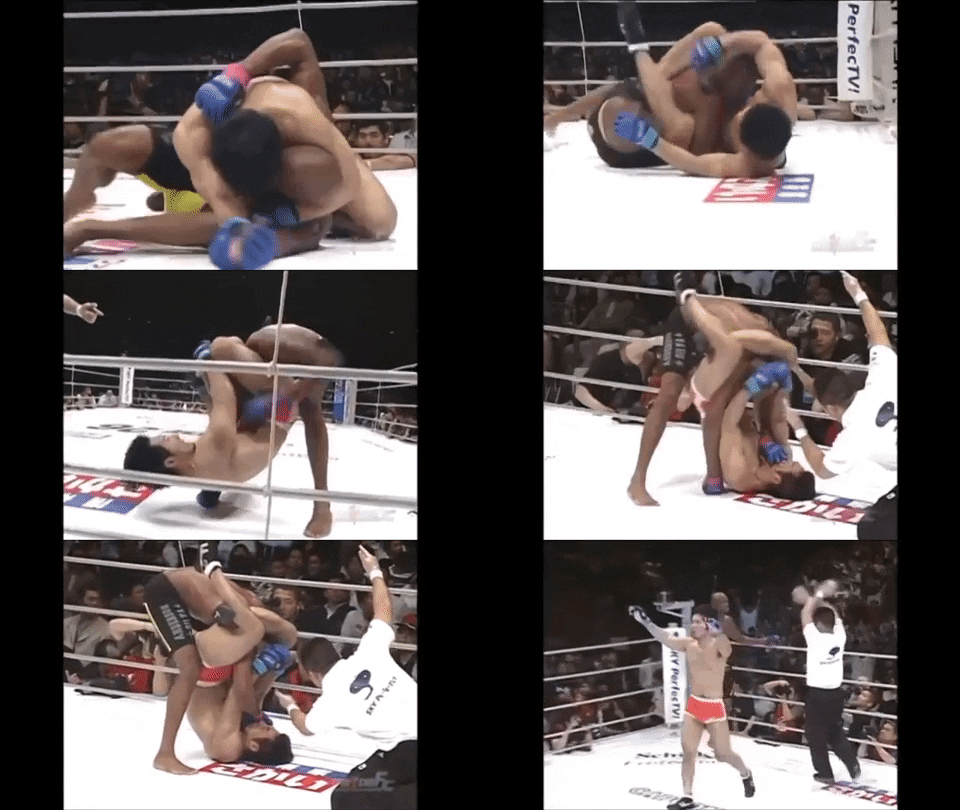
(This moment was preceded by almost 8 full minutes of top control by Takase.)
A lot has been said so far about how Anderson has been taken down often, even in his wins against champions. This was made possible in large part due to his stance. Look at his early fights and you’ll notice a few things about Anderson’s stance right away: his feet placement is extremely wide, his hands are low to reach for underhooks, and his legs are squatted to remain heavy. It’s hard to remain fluid and move quickly from this position since it was designed to try and keep the fight standing while sacrificing mobility. This made combination striking almost impossible (unless they were already hurt) and Anderson would have to rely on one-off flashy strikes to hurt his opponent and get close enough for the clinch. As mentioned before, even in his best performances he suffered from getting taken down and controlled for stretches of the fight.
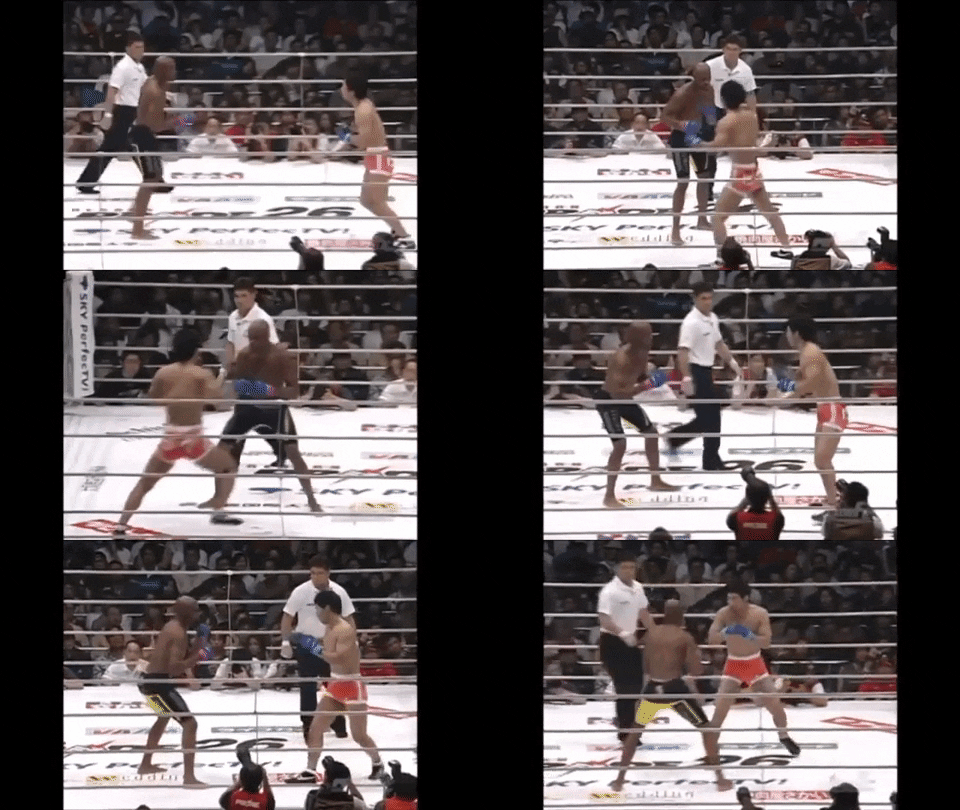
(The squatted stance and plodding movement don’t do Anderson any favors.)
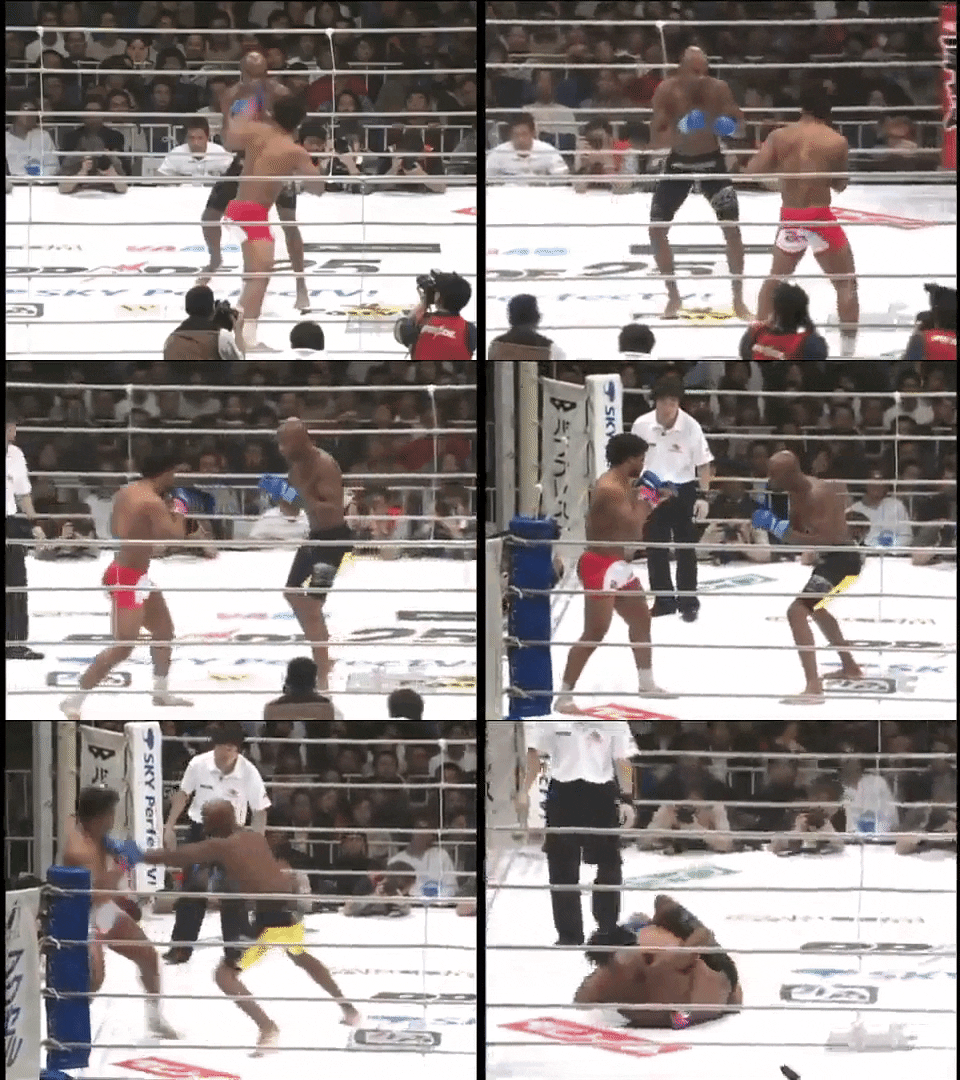
(It’s interesting to note that Carlos Newton isn’t known for his striking but he’s able to land a jab and hook to convince Anderson that they’re trading, only to shoot in once Anderson has committed to exchanging and left his hips less guarded.)
The loss to Takase had Silva competing for different promotions and trying to rebuild himself. One of the first things he did was leave Chute Boxe and trained under the tutelage of the Nogueira brothers. Although he didn’t make the move over to Brazilian Top Team, training with the Nogueiras rounded out Anderson’s game. After two fights in other promotions, Anderson made his Cage Rage debut against Lee Murray. Some of the newer fans might not be aware, but Murray was essentially THE bad boy of the sport at one point in time. His infamous story of knocking out Tito Ortiz in a street fight has been repeated by the likes of Pat Miletich, Chuck Liddell, and Matt Hughes. Eventually Murray went on to rob a bank and cemented himself as just a bad boy, period. With a cannon of a right hand and better than expected grappling, Murray was on a 5-fight win streak, having knocked out Pele and submitted Jorge Rivera along the way. In this fight, Anderson had a different game plan than his Chute Boxe days. Knowing that Murray would be looking to connect with his right straight, Anderson kept moving and forced Murray to chase him, picking good counters and showing a better shot selection.
By the time the third and final round came about, Murray was battered and only his toughness allowed him to last all the way to a decision. This was the start of the Anderson Silva that everyone would soon become familiar with.
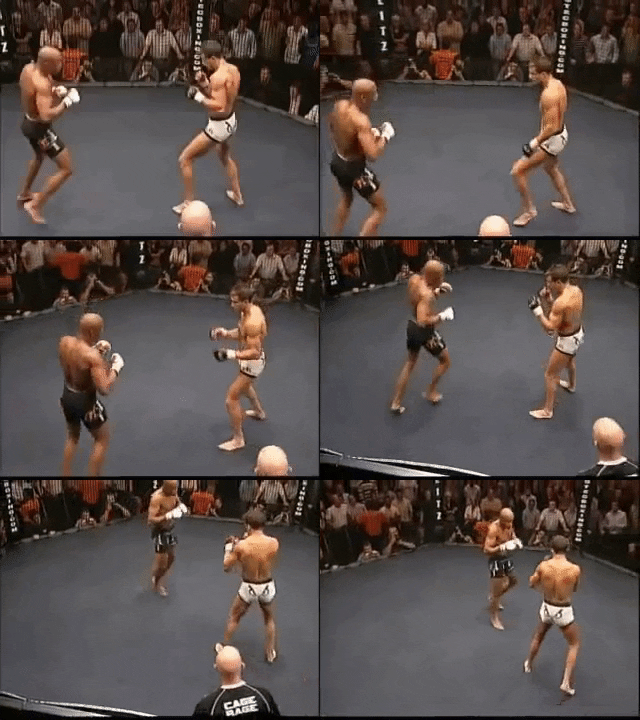
(No longer plodding forward, Anderson bounced around and stayed light on his feet, forcing Murray to come forward.)
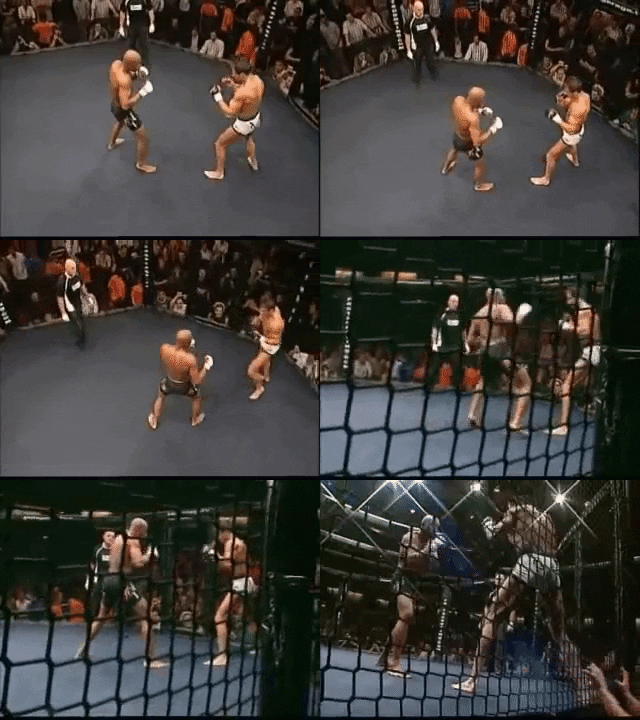
(When he did pressure Murray, you can see he threw low-line side kicks to Murray’s lead knee and waited for a reaction.)
Even though he suffered a once in a lifetime submission loss to Ryo Chonan (by flying scissor heel hook!) and DQ loss to Yushin Okami, Silva was putting in good work over at Cage Rage. The win over Murray gave Anderson his second world title, and he defended it three consecutive times. His footwork improved tremendously and was hitting opponents with combinations and fighting off takedowns using distance and ring craft. Gone was the weird bow-legged low stance and keeping his hands at chest level, this was a fighter that knew how to defend takedowns by giving his opponents the lead leg, only to slip out, Jose Aldo-style.
(Something else Silva eventually stopped doing was fighting from orthodox.)
Silva wasn’t afraid to press opponents against the fence and use it in reverse to get out of sticky situations. After he knocked out Tony Fryklund with a beautiful reverse elbow in his third and last title defense for Cage Rage, Anderson got signed to the UFC.
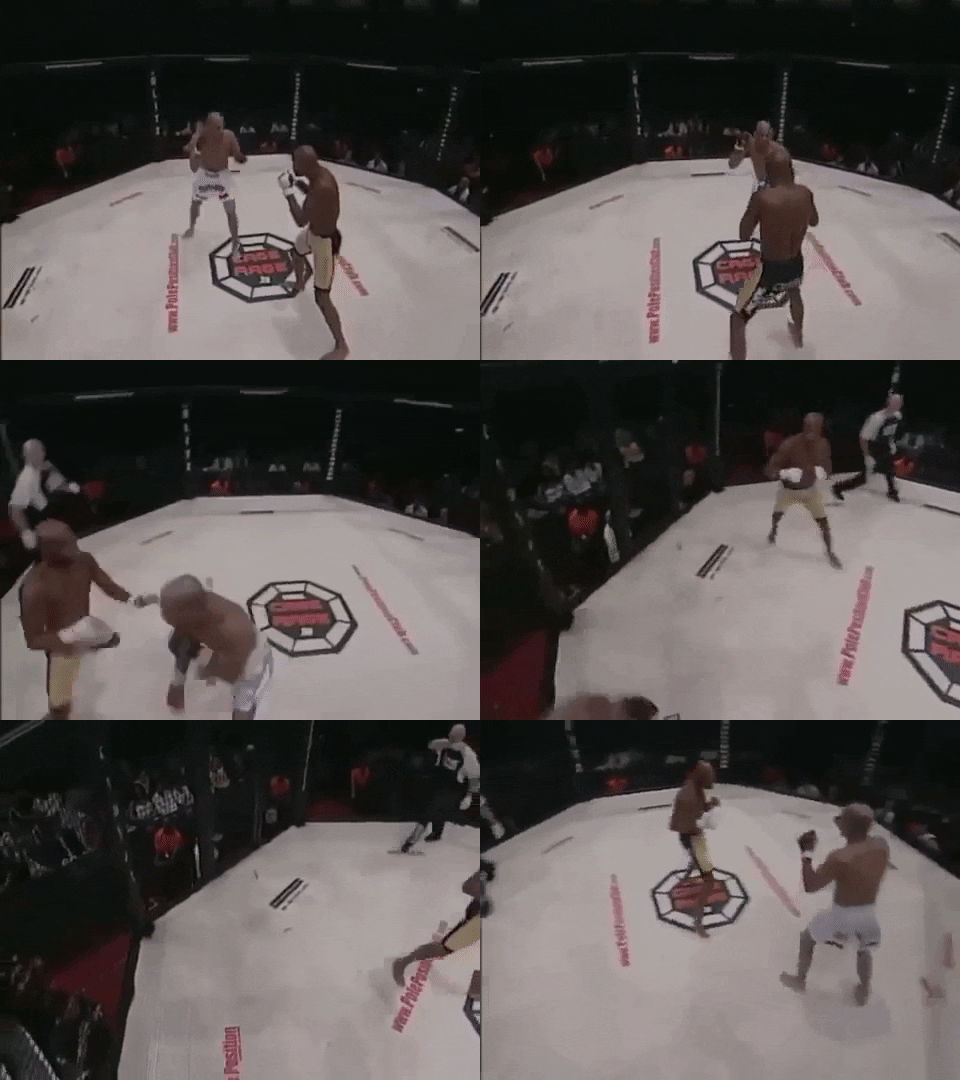
(Jorge Rivera lunged forward on a mobile Anderson, who by now knew the importance of pivoting out of harm’s way and using his opponent’s aggression against them.)
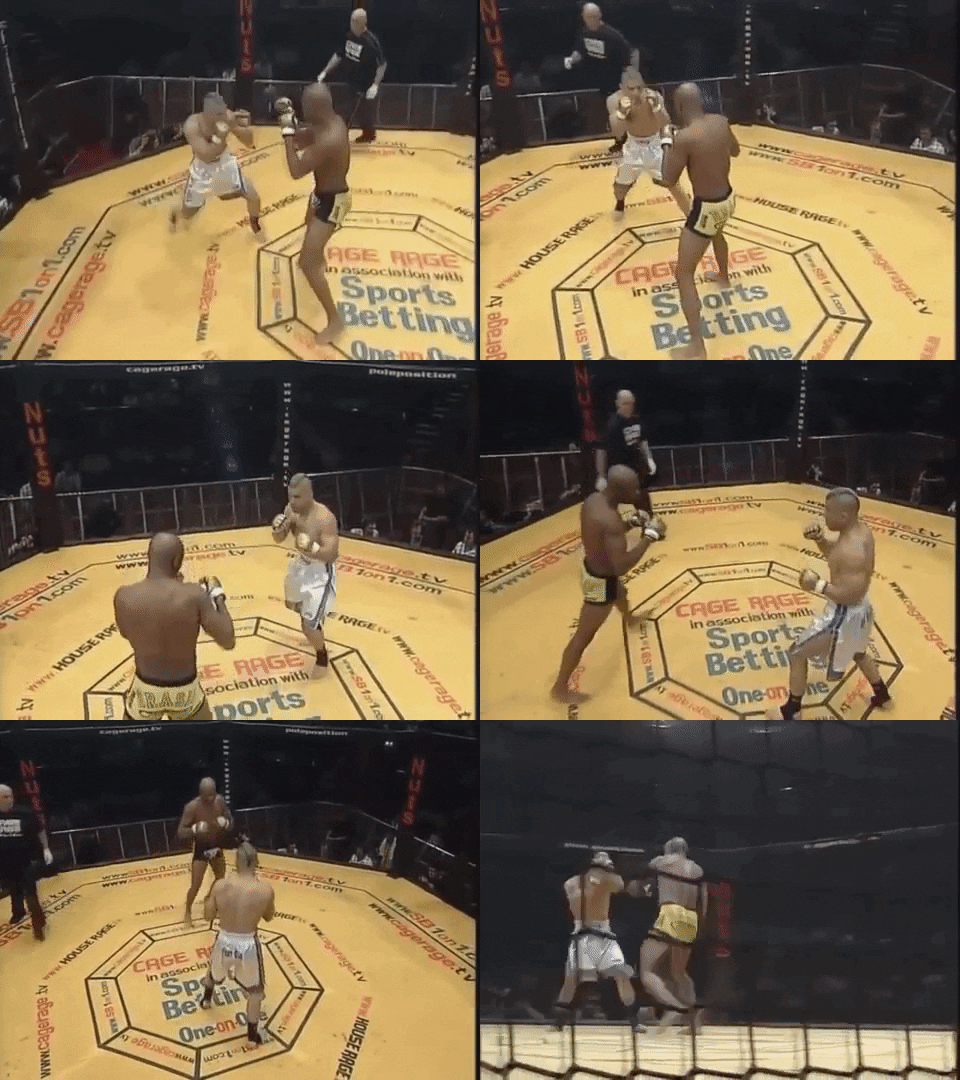
(Again, look at how Anderson almost glides in comparison to his early days. He never chased and knew when to dial things up and down.)
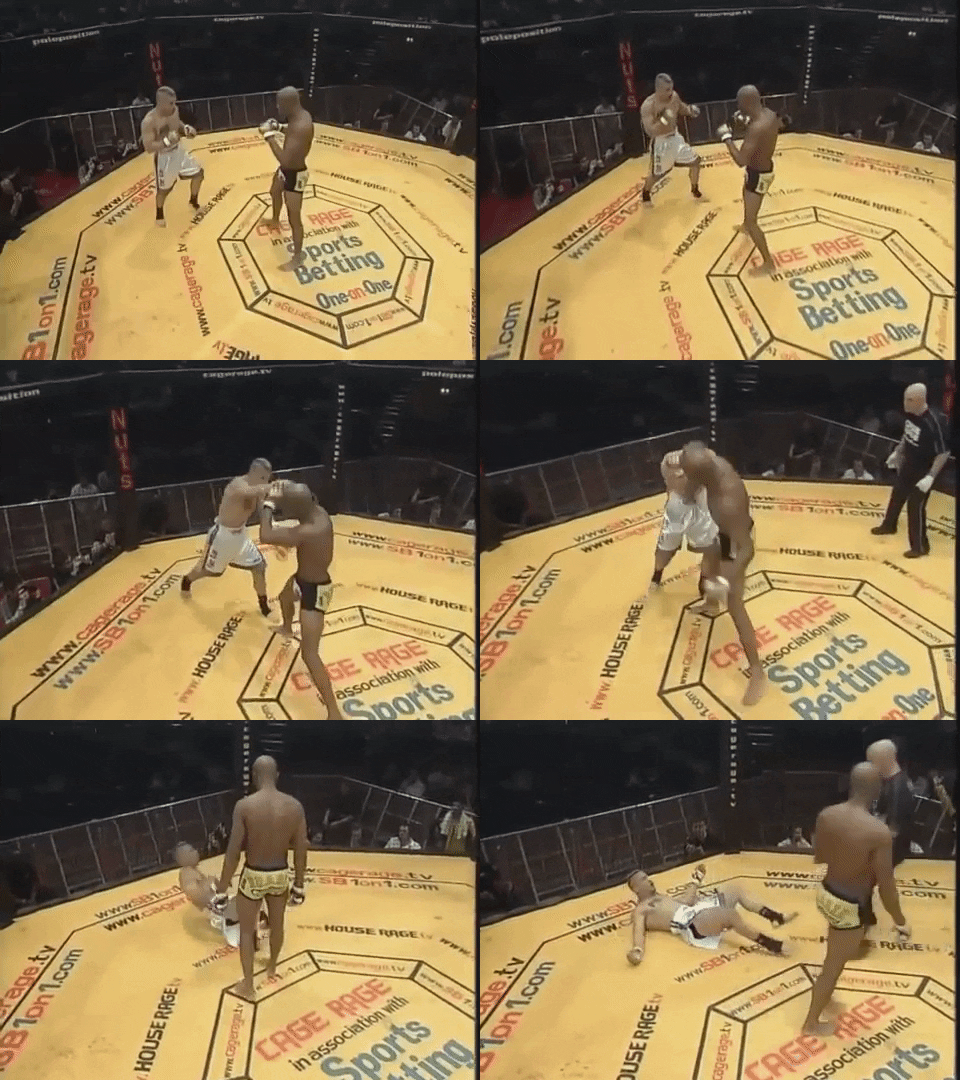
(After a 1,2, Fryklund stayed in place for a second too long, giving Anderson enough time to avoid the strikes and counter with a reverse elbow. Fun fact: Anderson perfected this move by having his wife hold up a sofa cushion while he practiced it after watching “Ong Bak: Muay Thai Warrior.”)
In an instance of perfect match-making, Anderson got assigned Chris Leben as his first UFC opponent. Although Leben vowed to send Anderson back to Japan where “the competition is easier” (was Japan a city in England?), Leben ended up becoming a speed bag for Anderson. The fight itself was done in under a minute, and up to this point Leben had never been finished, let alone knocked out. Leben made the same mistake that Murray did, but much more gravely: he charged face forward and let Anderson do what he does best: counter. It would be a disservice to claim that all Anderson had to do was slow down the pace, after all his training with the Nogueira brothers can’t be overlooked. It’s remarkable to see how Anderson dialed down the aggression and let opponents come to him. Instead of trying to fight like Wanderlei and Shogun, Anderson stopped brawling and sprawling. No longer was he looking to land the picture perfect one strike KO, it would be a better strategy to hit, not get hit, move, and hit some more.
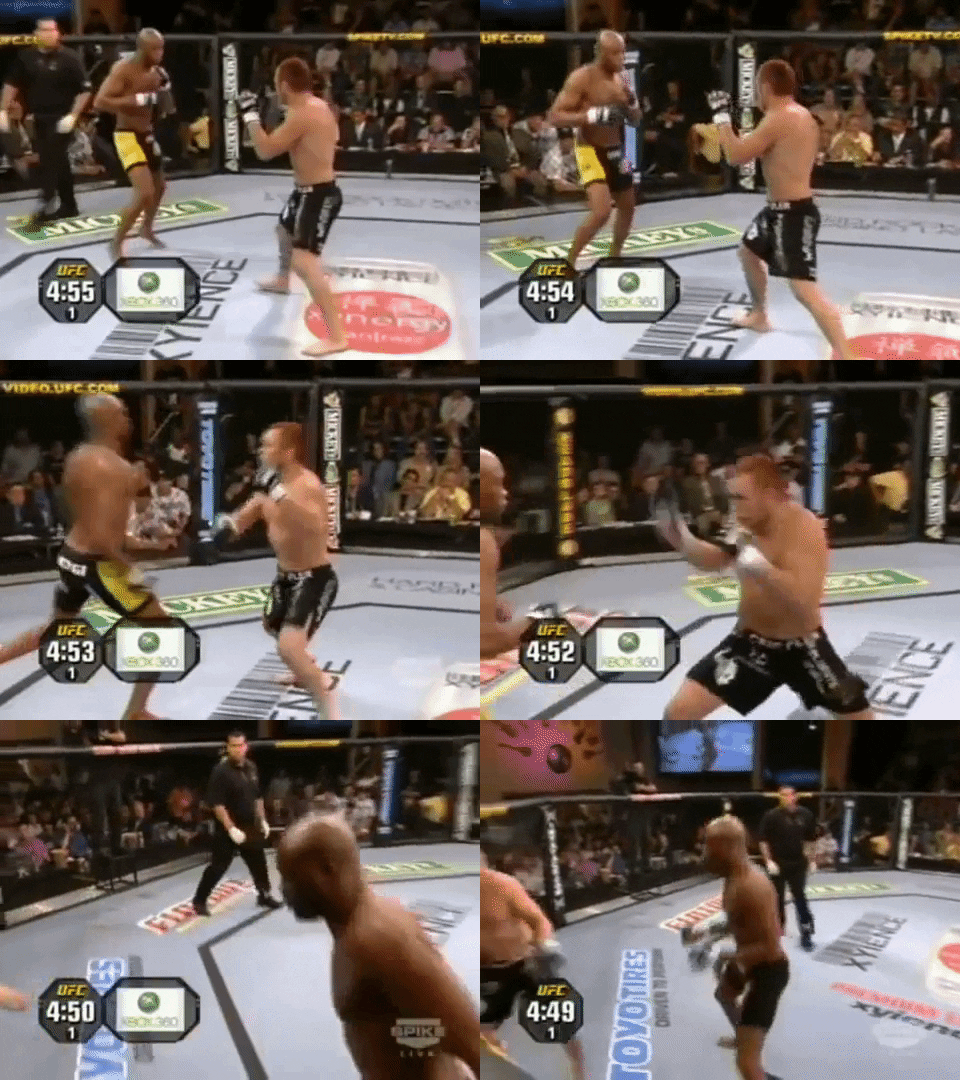
(This would be the start of a very bad night for Chris Leben. Even though he took multiple crisp jabs to the face, he continued marching forward and got flung to the side.)
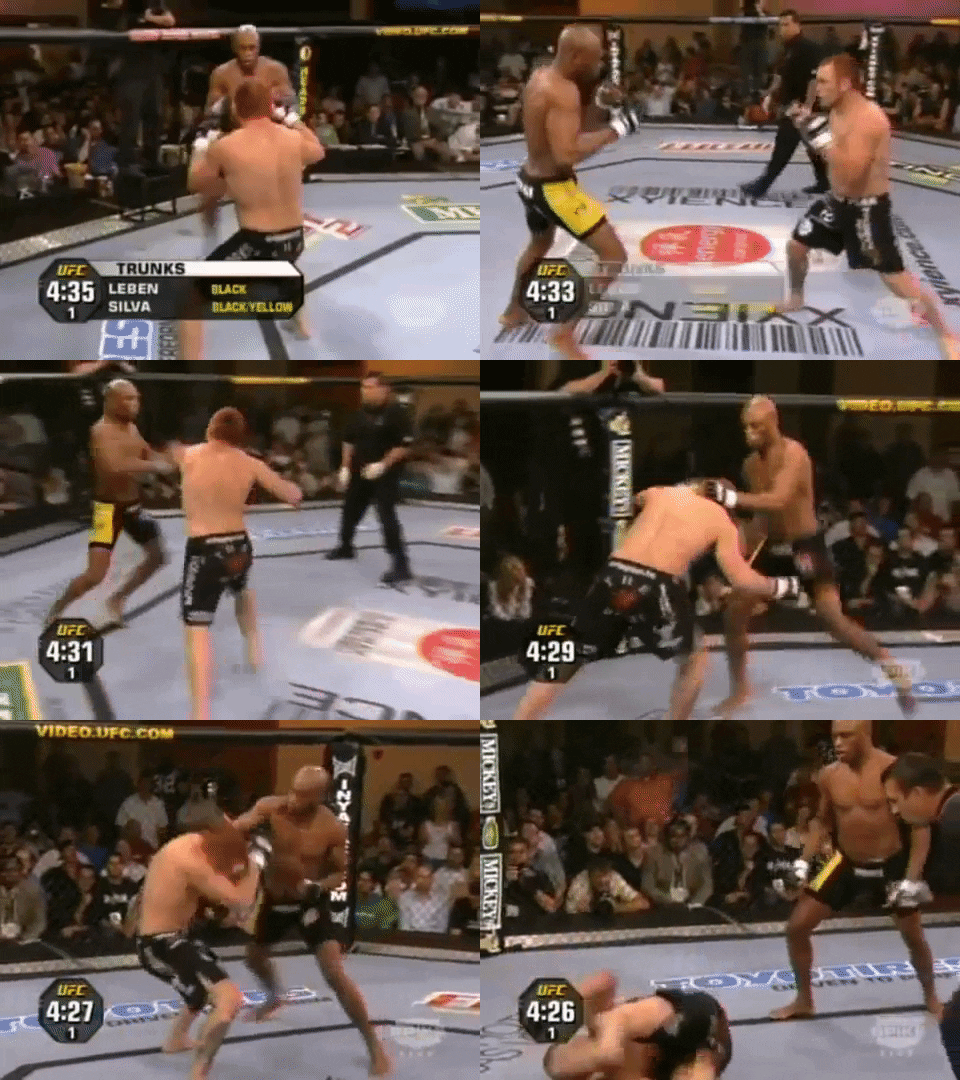
(Just a few seconds later, Leben decided that he had to get back at Anderson with the only method in his arsenal: brawling. It… didn’t go well.)
A close look at the career of another champion in the discussion for GOAT, Georges St. Pierre, shows exactly why Silva made this change. St. Pierre was the master of hitting his opponents with the jab repeatedly and getting them to chase him. Once they committed to throwing strikes back, their hips were wide open for St. Pierre to duck down and grab a double or single leg. Anderson was doing exactly that, but rather than countering with a takedown, he relied on counter-strikes. Anderson went from being the bull to the matador and this made a huge difference. You can doggedly chase for takedowns and rush in to try to corner someone, but if they’re side-stepping and hitting you every time you get in range, you’ll soon find yourself hurt with a depleted gas tank. Another thing that aided Anderson was that his fights were no longer taking place in a ring, because from 2005 he has only fought inside of a cage. This gave him a lot more real estate to move around and quickly pivot out of danger, and if opponents pressed him against the cage he could use it to his advantage by leaning into it, using it as a third leg of sorts to regain balance while digging for underhooks. Also gone were the sharp corners of the ring that used to fluster Silva. Now he could really circle without running into the ropes.
It’s interesting to note that counter-strikers who preferred evasive movements like Anderson and Lyoto Machida flourished early on in the UFC while aggressive power-strikers like Wanderlei and Mirko Cro-Cop struggled to put together a championship run.
In just his second UFC fight, Anderson Silva was given a title shot against Rich Franklin, the current middleweight champion. Franklin also tried his best at trading shots with Anderson, only to be met with crisp counters and knees that ultimately ended his title reign, unfortunately for good.
Some of the haters will point out that Anderson was blessed to have so many fighters charge in at him, rushing towards danger only to be led to their doom. On one hand, it’s hard to deny that Anderson didn’t get matchups that favored him. He was also accused of showboating when he couldn’t get his opponents to charge in, and there were fights where he had to dig deep and utilize his plan B when his counter-striking and takedown defense fell short. Even with these arguments, Anderson beat everyone that they put in front of him and was amazing more times than he was boring.
Opponents like Stephan Bonnar, Forrest Griffin, and Chris Leben charged headfirst to meet quick finishes at Anderson’s hands and feet. Heavy-handed striker/grapplers like Dan Henderson and Vitor Belfort also met their demise when Anderson picked up on their habits and ruthlessly exploited them. Belfort couldn’t help but utilize the same 1-2 and explode in a straight line, only to remain still with his face sticking out just a moment too long when Silva caught him flush on the jaw with a front kick. Henderson abandoned a largely successful grappling-based game plan when he swung for the fences against Anderson, only to be put off balance and eat a perfectly placed left straight and go on the defensive. Nate Marquardt also made this same mistake by over-extending his punches, only to be caught by a short left hook and not have his legs under him. Anderson’s punches didn’t become power strikes overnight, he learned that if he could catch fighters as they were leaning over and off balance, his strikes would have much more potency.
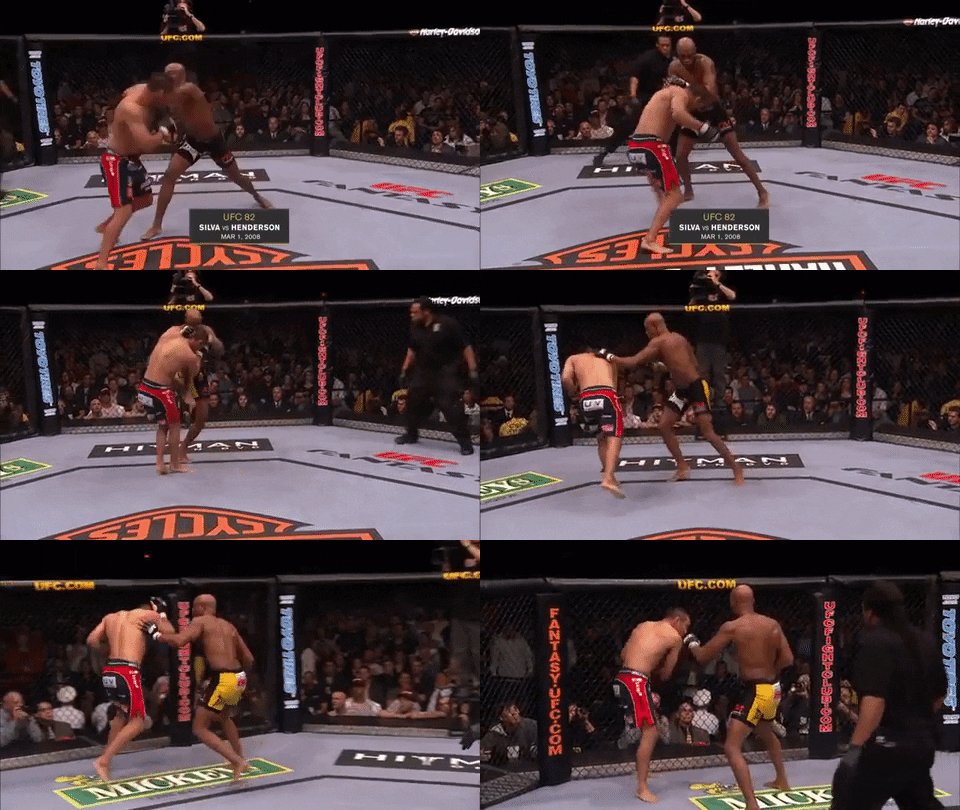
(Brawling with an accurate counter-striker is often a recipe for disaster, and it’s still a mystery as to why Henderson opted to abandon his original game plan to swing wildly against Anderson.)
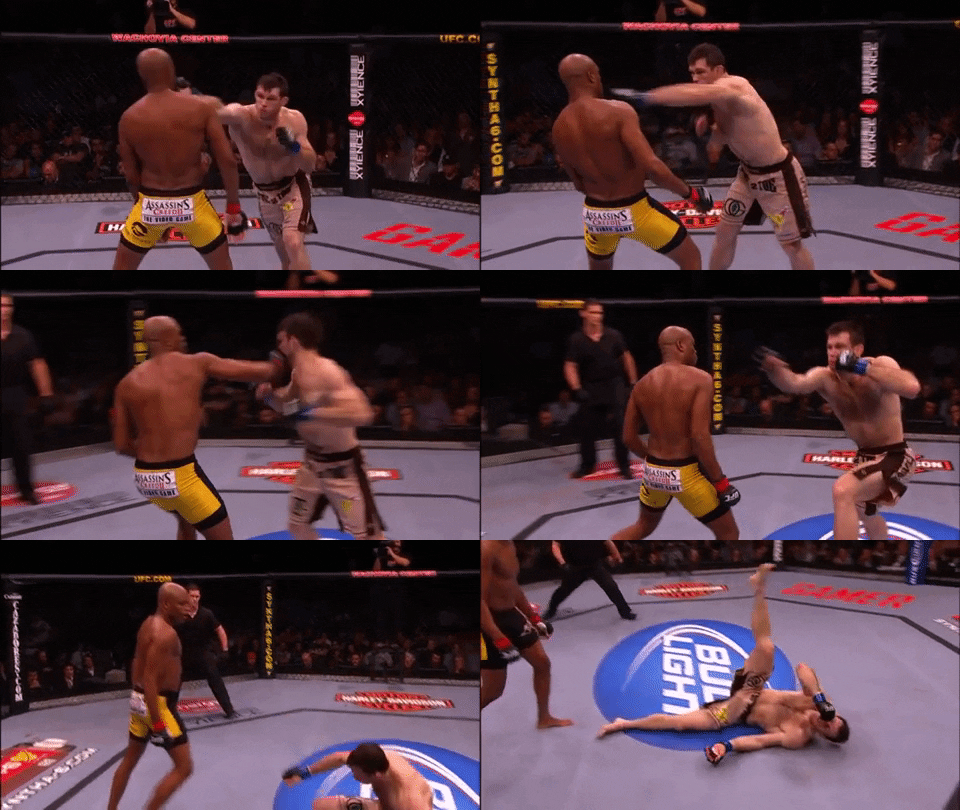
(One of the best moments of Anderson’s career is beating the former UFC light heavyweight champion, Forrest Griffin. It doesn’t take much to hurt someone who insists on doing half the work for you and leap into your punches.)
However, no one remains on top forever and the cracks in Anderson’s game were beginning to show, one fight at a time. Chael Sonnen, Travis Lutter, and even Dan Henderson showed that it was possible to take Silva down and control him for long stretches of the fight. Patrick Côté, Demian Maia, and Thales Leites showed that Anderson isn’t as dangerous on the lead as he is on the counter. Even though a rough blueprint to beating the UFC-era version of Silva was present, it would still take a special fighter to pull it off. Enter Chris Weidman.
It’s hard to believe now, but at one point, Weidman was thought to be the future of MMA. Bursting onto the scene back in 2009, Weidman entered the first Anderson fight with a perfect 9-0 record and as a betting underdog. What the bookies may not have factored in was that Weidman is coached by Ray Longo, one of the architects of Matt Serra’s improbable victory over Georges St. Pierre. Watch the first Anderson fight and you’ll hear Longo and Serra both constantly tell Weidman to “punch a hole in his fucking chest” and keep his balance steady. Weidman made sure to always lead with his jab and keep his head behind his lead foot. He feinted, doubled up with his strikes, and went for takedowns when he found openings. Most importantly, Weidman was always ready to defend and return fire and did so with composure. Anderson was denied an opponent who would wildly shoot in or lead face-first. In an ironic twist, Weidman caught Anderson after he doubled up his punches from the same side while he was off-balance. Anderson made a career out of catching fighters when they were over-extended, and it was almost fitting that he became a victim of his own style. Live by the sword, die by the sword I guess.
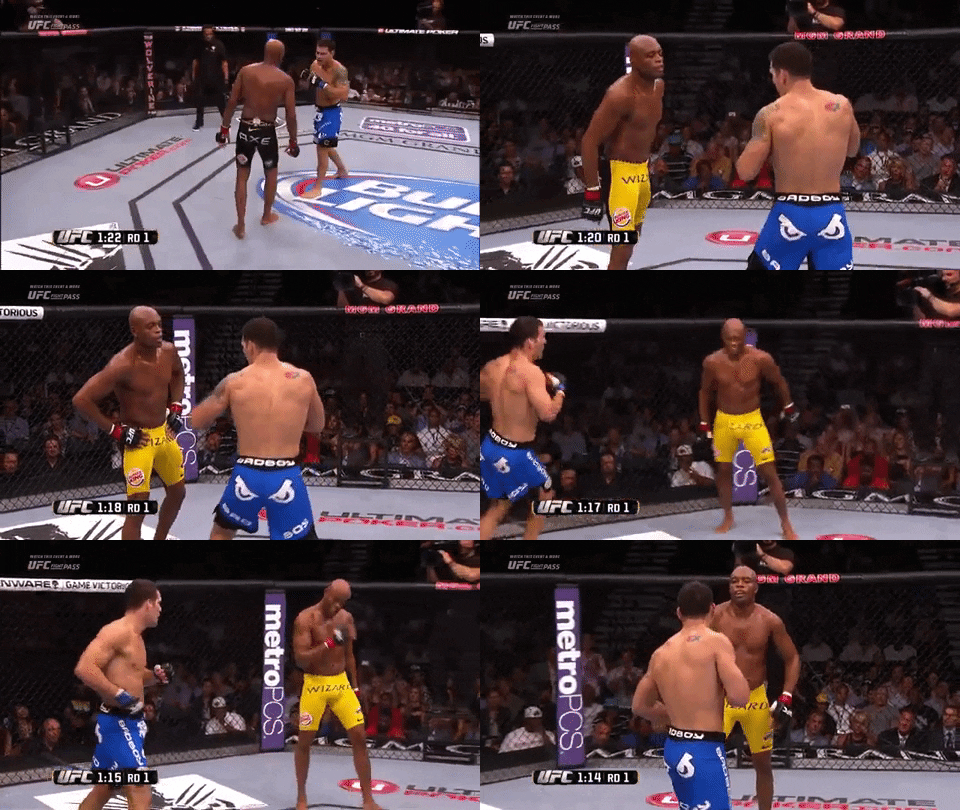
(Weidman maintained his composure the entire fight, measuring his distance and kept his aggression in check.)
The loss to Weidman unfortunately started a bad run for Anderson. Since that first loss to Weidman, Anderson is now 1-6-1 in his last 8 fights, and his sole victory in that stretch was over Derek Brunson, a match that 20 out of 24 media outlets thought Brunson should have gotten the decision nod. Yes, it’s undeniable that Anderson’s best days are behind him, and enough fighters have figured out their own paths to victories against him.
Michael Bisping used his variety of striking tools to keep Anderson at range and constantly feinted to keep him guessing. This also coincided with the time that Bisping began training under Jason Parillo, a respected striking coach who made sure that Bisping leaned in on his best attributes: staying light on his feet while peppering in quick jabs, slipping strikes and pivoting to maintain distance, all while constantly feinting with his punches only to sneak in some kicks to slow down his opponents. Daniel Cormier utilized his world class wrestling (and larger size) to take down Anderson and keep him down for almost the entirety of their fight. Cormier is a much better wrestler than Sonnen and Weidman, and he has the defensive grappling chops to avoid any submission that might be thrown his way. Anderson’s fight against Adesanya showed that even though he can still counter with the best of them, his reactions aren’t as quick and it was only a matter of time before his counters wouldn’t be enough either. Anderson’s last fight against Jared Cannonier had him lose by leg kicks, which became the second time in his career that he lost due to leg-related injuries. Perhaps he has to do what Jose Aldo did and stop kicking altogether to maintain his career?
It’s undeniable that Anderson’s been on the decline, and for the sake of his health and future he should seriously consider retiring. He’s had drug test failures in his history and it’s clear that the new breed of middleweight fighters are more than good enough to beat him. Even though his best days are behind him, Anderson’s path to becoming one of the greatest of all time is fascinating all on its own. He went from being a good fighter with flashes of brilliance to becoming nearly unstoppable in a division that he was still undersized in. He was so ahead of his peers that it took almost a decade for the perfect fighter to come along and displace him during his UFC run. Anderson wasn’t perfect, but really, what fighter is? He was the product of being at the right place at the right time, and he took full advantage. Perhaps if he stayed at Chute Boxe, we never would’ve seen his famous counter-striking. If Anderson stayed in Japan and fought the entirety of his career in a ring, he may have never developed the necessary tools to keep the fight standing. It also raises the question of how many fighters could become legends just by making a few changes or being given the right opportunities. There were a lot of moving parts that needed to shift for Anderson to be as successful as he was, and we as fans should be grateful that things played out the way they did. Any MMA counter-striker worth their salt has Anderson to thank for showing them a possible roadmap. And somewhere out there, Israel Adesanya is nodding in agreement.
Files
Previews only

