 Home

 Creators
 Search
 Recent
 Random
 Posts
 DMs
 Tags
 Random
 Importer
 Import
 FAQ
 Account
 Register
 Login
 Favorites
 Keys
 Logout
 Telegram

FS 62 – Vet to Champ: Rafael Dos Anjos (transcript) (Patreon)
Content
By Paul
When Rafael Dos Anjos (RDA) was slated to fight Anthony Pettis for the UFC lightweight championship, a lot of fans scratched their heads. Up to this point, the two things that RDA was most known for was being on the opposite end of highlight reels for Jeremy Stephens and Clay Guida. Stephens knocked out RDA in his UFC debut and Guida won by jaw injury, of all things. What fell under the radar was the fact that RDA had quietly amassed an impressive win list and was looking better with each outing.
Before his first title fight, RDA was already a 30-fight veteran with over ten years as a pro, with seven of those being in the UFC. The miles are much longer in MMA than it is in boxing. In boxing, ten years and 30 fights might mean you’re just hitting your peak, whereas for many in MMA, that could be a career.
So how did RDA go from mediocre to world class? Let’s look at early RDA. When he first arrived in the UFC, RDA was already an 11-2 fight veteran with a solid BJJ base. Having won world titles at purple and brown belt, RDA seemed like another welcome addition to the already competitive lightweight class. But no one was expecting him to become a future champion.
During the time of his UFC debut, the current lightweight champ was BJ Penn, another fighter who first started in Brazilian jiu-jitsu. However, even though RDA may have had an excellent grappling background, he was no Prodigy and struggled during the striking portions of his debut fight against Jeremy Stephens. It was clear that Stephens was much more comfortable during punching exchanges and didn’t mind getting hit to return fire. RDA would overreact to punches and as far as his cage awareness, he had none. Though RDA is known for his seamless transitions from striking to grappling, that was not yet present in this fight. He struggled early on with takedowns.
However, when RDA was able to take the fight to the ground, it was night and day. What became evident pretty soon was that Stephens’ best chance at winning was to minimize the damage he took and avoid submissions at all cost. Being the UFC veteran to RDA’s freshman debut, Stephens weathered the storm and uncorked a baseball pitch of an uppercut, right onto an RDA who was caught backing up with nowhere to go. RDA’s UFC career was not off to a great start.
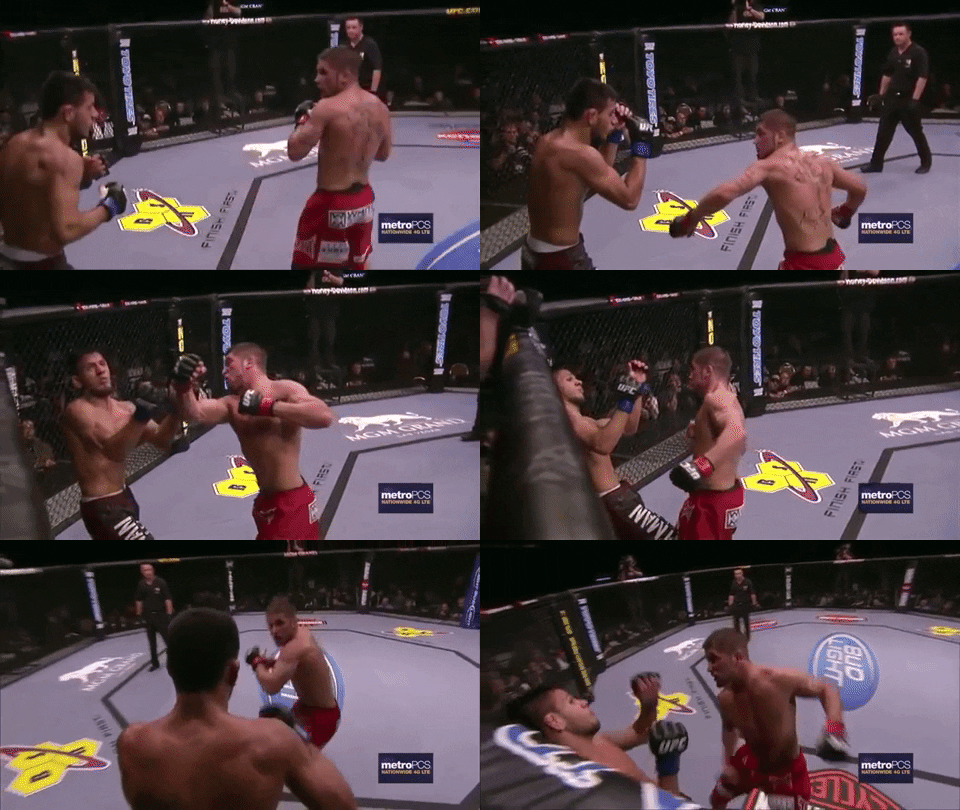
(The fact that Stephens swung from his hips and RDA still didn’t see the punch coming wasn’t a good sign.)
His sophomore outing didn’t go much better. Matched up against Tyson Griffin, it was clear that RDA had little to no answer for Griffin’s right hand and takedowns against the fence. To give RDA some credit, Griffin was at this point considered one of the best in the division and had only lost to Frankie Edgar (who would go on to become champion) and Sean Sherk (who was a former champion).
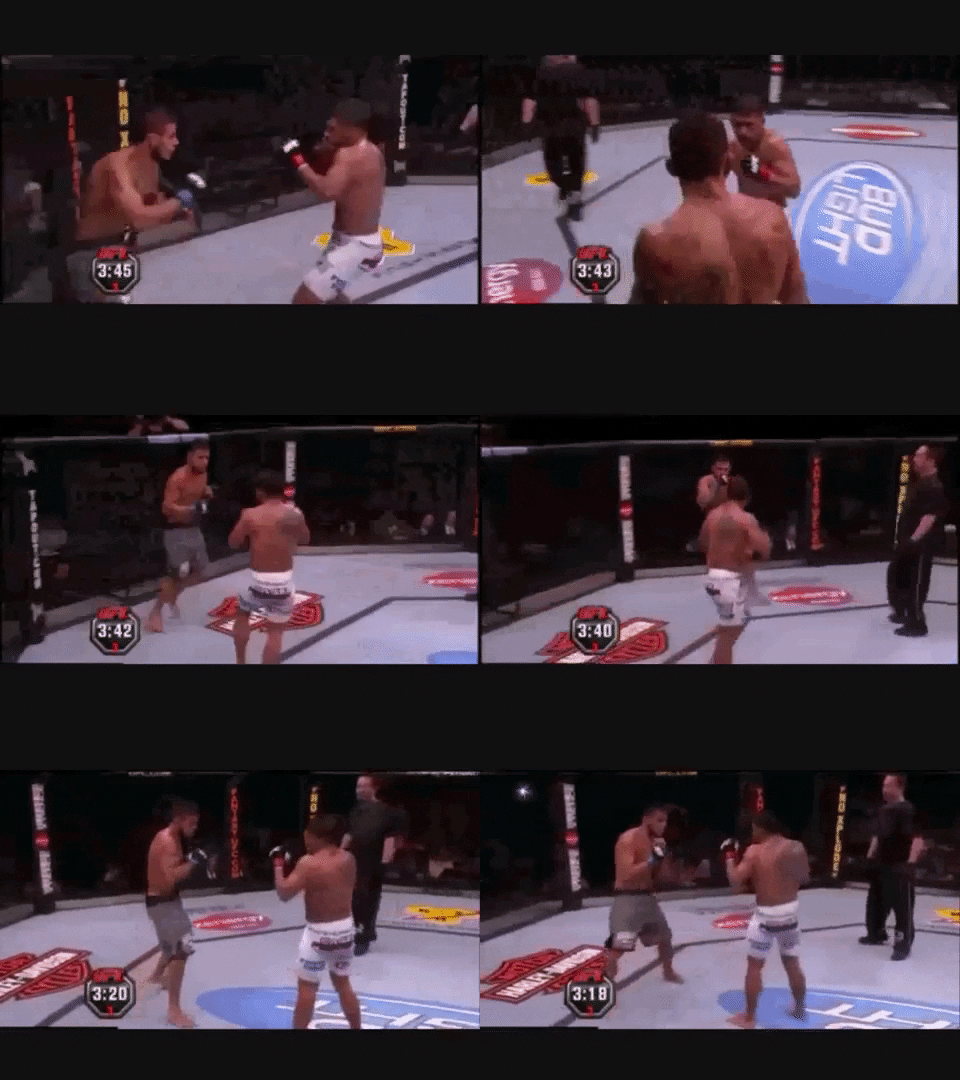
(Overhand rights and kicks to the lead leg were a big part of Griffin’s victory over RDA. Without good footwork, RDA also found himself with his back against the fence way too often.)
All of the issues that were present in the Stephens fight were amplified. RDA would throw 1-2’s and hang out in the open, giving Griffin the opportunity to slip and counter. He would circle to Griffin’s power side and eat right straights. Griffin kept hammering RDA’s lead leg with no consequence. RDA wasn’t given much breathing room in back to back UFC fights, and it almost seemed like he would be released from the promotion sooner than later. When RDA eventually worked his way to a title shot, the reaction from many MMA fans were, “He’s still in the UFC?”
Fortunately for RDA, he eventually got some matchups that were more to his level of development. After rattling off three consecutive victories, it looked like RDA was slowly finding his groove. He was moving slightly better and he looked less anxious to get the fight to the ground. Given his improvements, matchmakers felt comfortable pitting him against Clay Guida. Context is important in this instance, since some fans might only think of Guida as a journeyman. People forget that Guida was the inaugural Strikeforce lightweight champion, and at this point had already amassed victories over the likes of Josh Thomson, Nate Diaz, and was at the height of his abilities over at Jackson-Winklejohn. After he beat RDA, Guida went out to choke out a still dangerous Takanori Gomi and steamroll Anthony Pettis who was making his highly publicized UFC debut as the last WEC lightweight champion.
This is all to say, Guida was legit, and in his fight against RDA, his boxing looked crisp and at one point it appeared that RDA’s jaw was severely damaged in an exchange. After a takedown and some shoulder pressure on the jaw itself, RDA was forced to tap due to injury.
The loss itself was bizarre, but as Gus Johnson would put it, “these things happen in MMA.” RDA got the taste of defeat out of his mouth by rebounding with a KO win over George Sotiropoulos, an Ultimate Fighter veteran who had never been finished before. Immediately after Sotiropoulos, RDA drew Gleison Tibau, who was already 15-fights in the UFC at this point. Although the fight was close, there was a moment in the second round that seemed to spell the end for RDA, but he hung in tough and the fight went to a split decision in Tibau’s favor. RDA was now 4-4 in the promotion, and it looked clear that he would go down in the books as a UFC-caliber fighter but not a contender, not even top ten. However, in 2012 something changed. RDA became better.
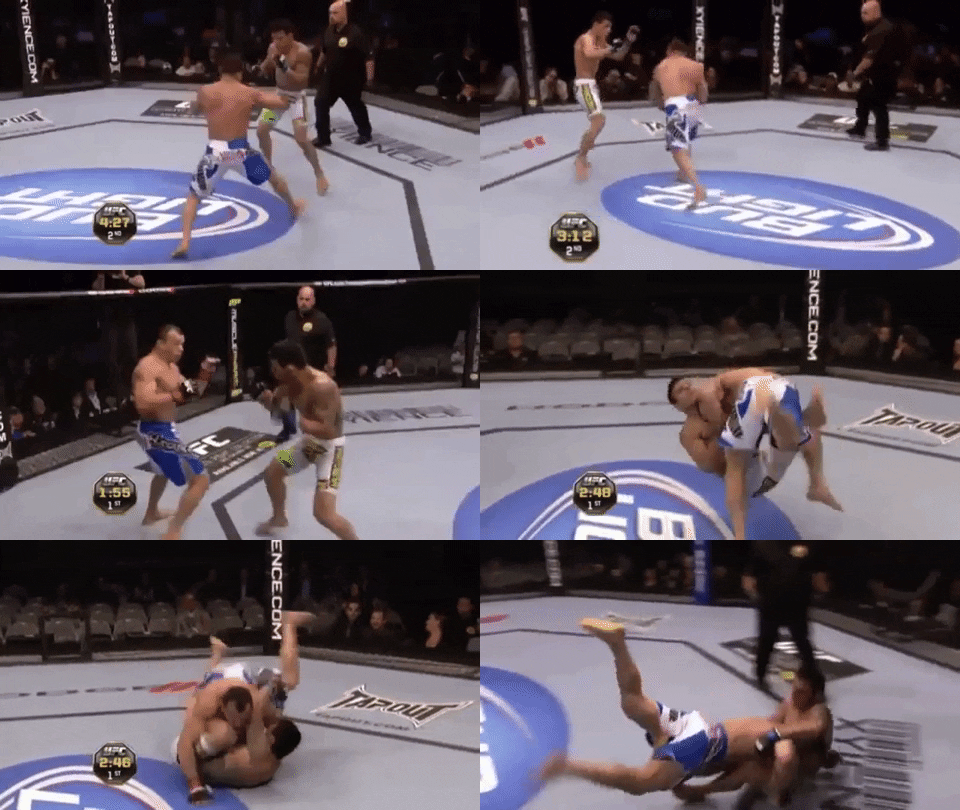
(Tibau’s strategy was pretty meat and potatoes: double jabs to left straight to get RDA backing up towards the fence and shoot in when he left his hips exposed to counter. Rinse and repeat.)
It’s usually never one sole factor that helps an athlete turn a corner, and in RDA’s case there were actually two main things that drove his ascension: working with Rafael Cordeiro at Kings MMA and Nick Curson for his strength and conditioning (three things if you count his involvement with Evolve MMA for their muay Thai). Starting in 2012, RDA began working with coach Cordeiro of Chute Boxe fame. Say what you want about the legendary gym, but one thing you can’t accuse them of is coddling their fighters. It was no secret that the hard sparring at Kings definitely toughened RDA, but what was surprising was the improvement in his footwork and head movement. Gone were the overreactions and low hands, this was a fighter who now knew how to lead with strikes instead of lunging headfirst. Instead of simply using kicks to set up takedowns, he now added them to give versatility in his strikes and get his opponents to start moving towards him.
Against Donald Cerrone the first time around, RDA showed that his toughness combined with controlled aggression and technical striking is a scary combination. He moved forward but was careful not to expose himself and made sure to mix up his attacks both high and low. Showing off a left hook that would soon become a trademark of sorts, RDA targeted the body of Cerrone before going up top with a right hook. This caught Cerrone clean and dropped him, showing that RDA’s knockout over Sotiropoulos wasn’t a fluke. If you’ve ever wondered how it was possible for RDA to maintain such a high pace consistently, strength coach Nick Curson is part of that answer. (Curson trained under Marv Marinovich, who was the only strength coach to get BJ Penn in shape.)
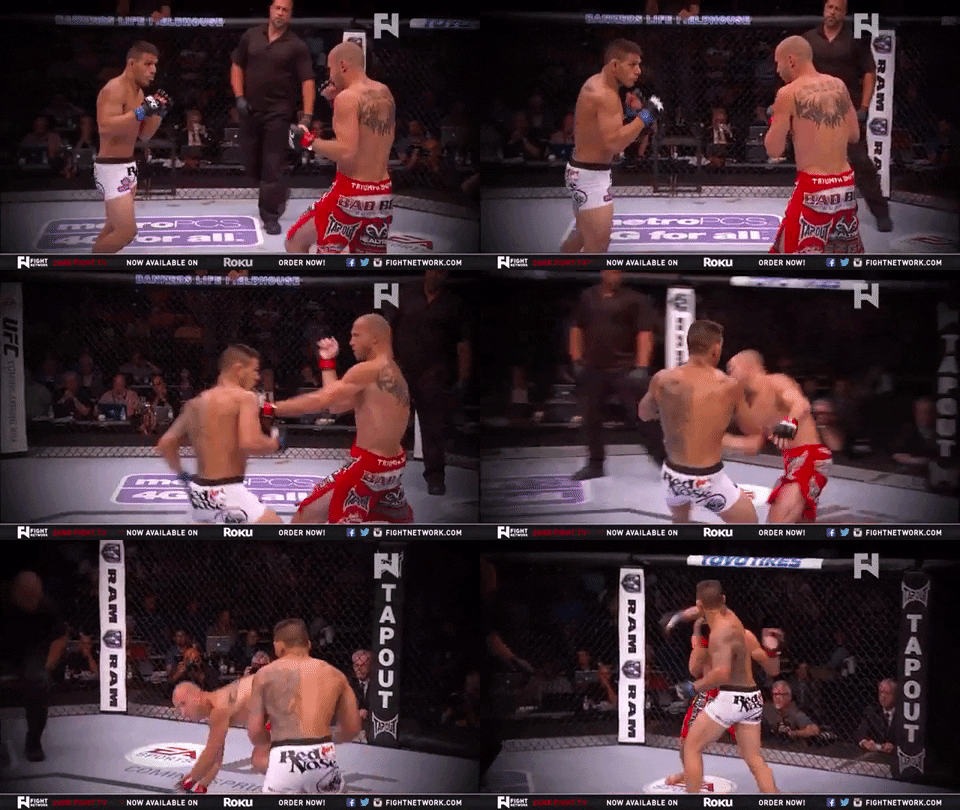
(In what would become one of his signature strikes, RDA throws a long left hook to the body before connecting on top with a right hook to the head.)
Although this breakthrough performance was followed by a loss to Khabib Nurmagomedov, RDA quickly rebounded with a win over Jason High. In what became his most high-profile matchup to date, RDA got to headline his first UFC card against former WEC & UFC lightweight champion Benson Henderson. Not enough credit is given to Henderson for his striking, and it might be because his grappling often overshadows any technical sharpness he displays in his fights. The fight didn’t last long but RDA showed his ability to learn from fight to fight. Just when Henderson thought they were going to start exchanging punches at close quarters, RDA threw a DOUBLE flying knee and caught Henderson while he was in the middle of throwing hooks. This dropped Henderson and had him scrambling for a takedown that RDA easily stuffed. While trying to get back to his feet, a short left hook dropped Henderson and gave RDA his first win over a former champion.
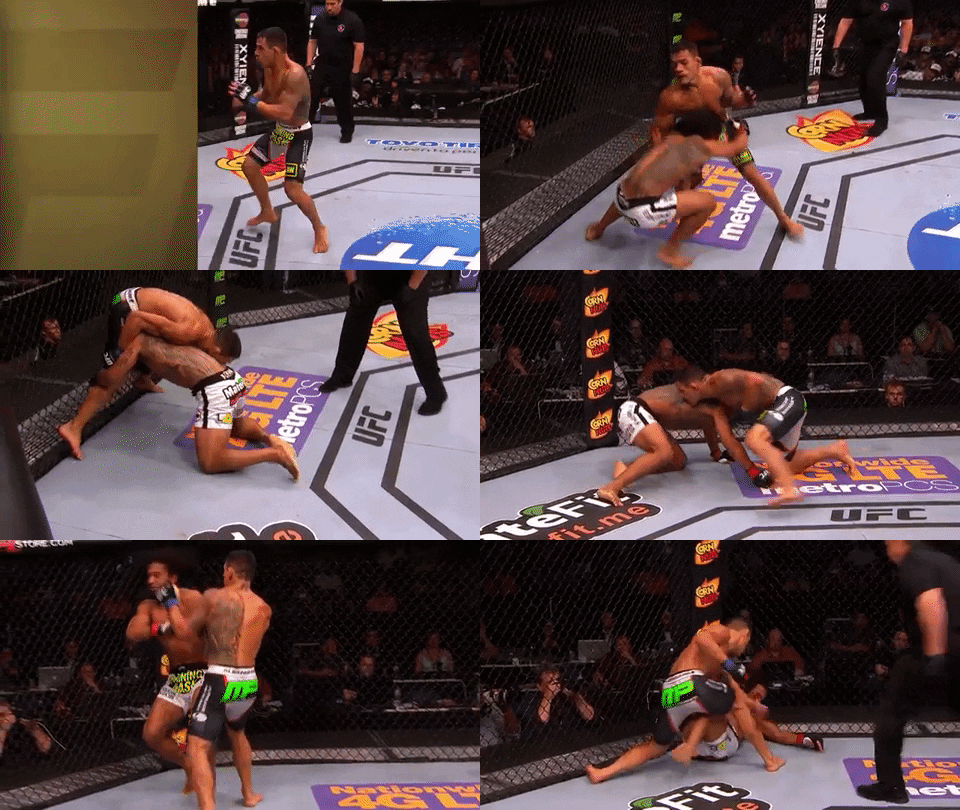
(The double flying knee is great and all, but it was the left hook that finished off Henderson. RDA finally understood the importance of chaining his strikes together.)
Wanting to end the year with one more win and a case for a shot at the title, RDA accepted a fight against Nate Diaz. The way RDA dispatched Diaz showed all the signs of what was to come in the near future against Pettis. RDA mixed it up with beautiful in-fighting and battered Diaz with leg kicks. When Diaz went on the attack, RDA moved his head and shifted away. He pressured Diaz against the fence and moved up and down with his punches. The leg kicks soon made Diaz easy pickings for takedowns, and if it wasn’t for the grappling savvy of Diaz it’s very possible that RDA could’ve picked up a submission win.
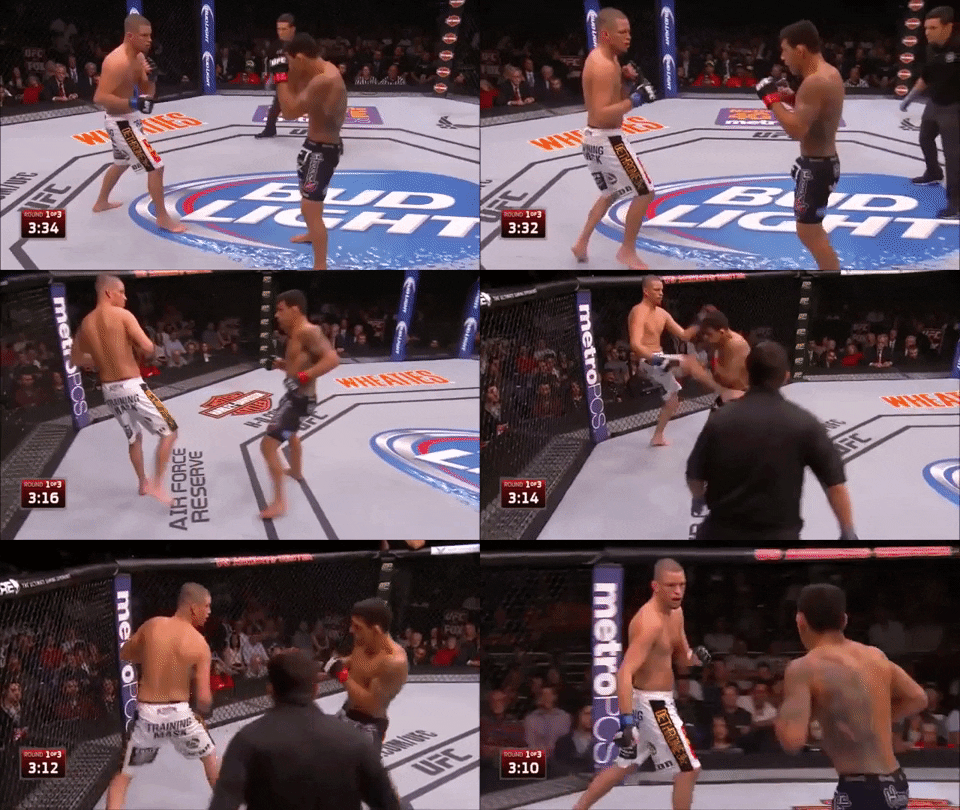
(On top of landing tons of leg kicks, RDA made sure to pressure Diaz constantly towards the fence and was no longer afraid to exchange punches. When Diaz did look to fire, RDA moved out the way and went right back to closing the distance on his terms.)
This led RDA to his first shot at the gold: a title fight against Anthony Pettis at UFC 185. As mentioned before, the RDA that faced off against Pettis was completely different from the one that debuted back in 2008. Unlike Anderson Silva, who I talked about in Fight Study episode 61, rather than a couple of key adjustments, RDA completely overhauled his game. This was a fighter that could exert pressure without leaving himself exposed. In backing Pettis up, RDA was able to force Pettis to fight out of a squared stance, removing power from his strikes and cutting off paths for escape. When Pettis did throw, Pettis shot off panicked arm punches that RDA absorbed using his entire body: his forearms, shoulders, and the top of his head. When Pettis finished, RDA returned the favor with more vigor. This was a specialty of Takanori Gomi during his legendary PRIDE run.
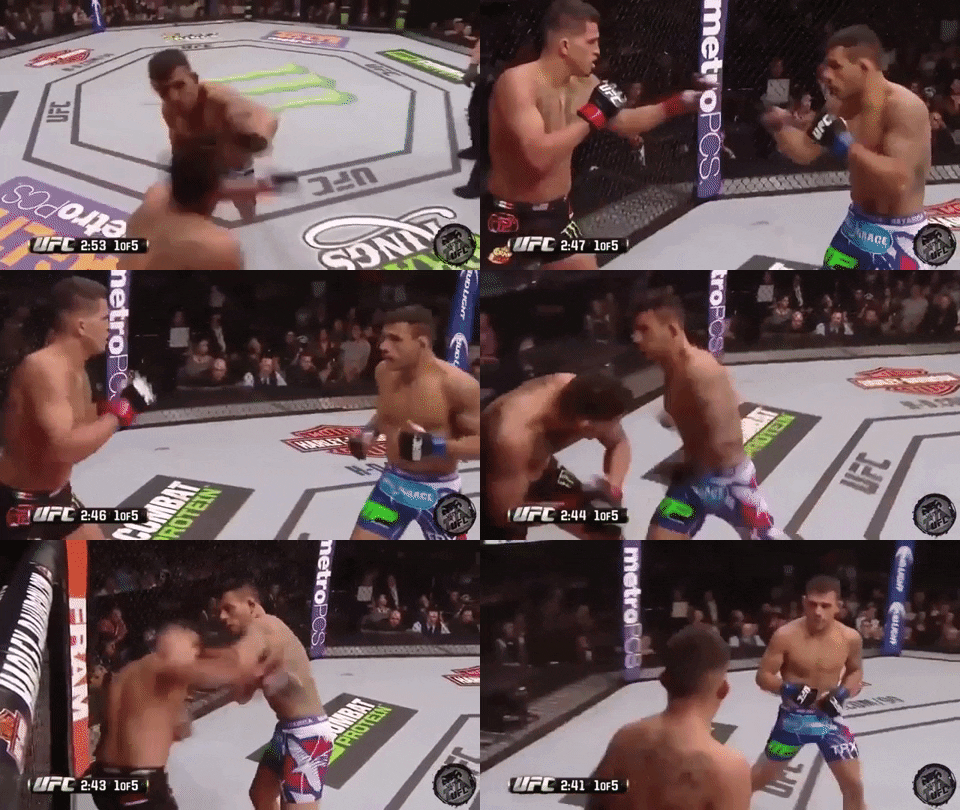
(RDA absorbed the punches and kicks with his frame so he could get in close to throw his own strikes. Note the left hook to the body that makes another appearance here.)
He also wasn’t afraid to trade kicks with a kicker, and with his back dangerously close to the fence, Pettis wasn’t able to get full torque on any of his strikes. It’s been said ad nauseum, but in order to fluster the kicker, you should kick them first. They don’t have to be pretty, but they have to be consistent. In the lightweight class alone, Tony Ferguson and Justin Gaethje aren’t the prettiest kickers, but their low kicks get the job done and have stymied better kickboxers like Pettis and Cerrone. Even Conor McGregor got in on the action and surprised Cerrone with a high kick before finishing him. By threatening Pettis with a kick or straight from the southpaw stance, RDA made sure that his attacks from the same side remained unpredictable (a favorite strategy of another southpaw, Mirko Cro-Cop).
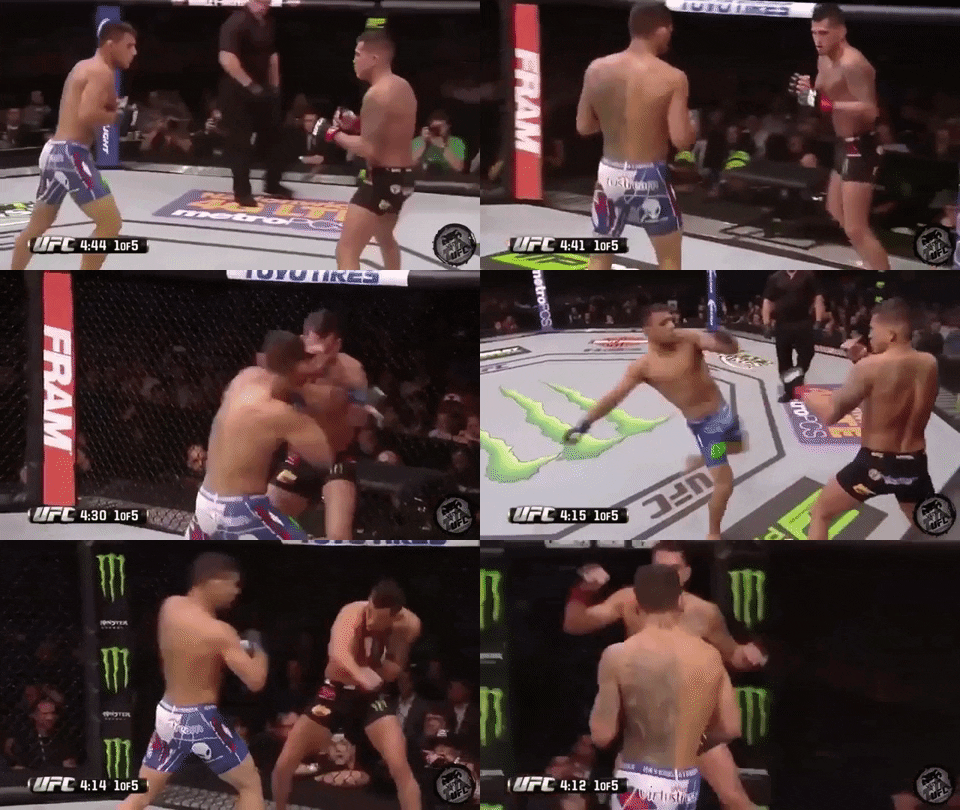
(RDA kept forward pressure on Pettis, and he focused on straight punches since they land quicker. If you re-watch the fight, look closely at Pettis’s foot placement and you’ll see he was forced into a square stance quite often.)
But were there takedowns? There sure was! RDA timed Pettis’s punches and ducked under them to ground Pettis and pressed his back against the cage while he himself remained upright, killing Pettis’s hips. This meant that Pettis wasn’t able to go for his usual submission and scramble attempts and had to wait for RDA to slip up instead of trying to impose his own offense.
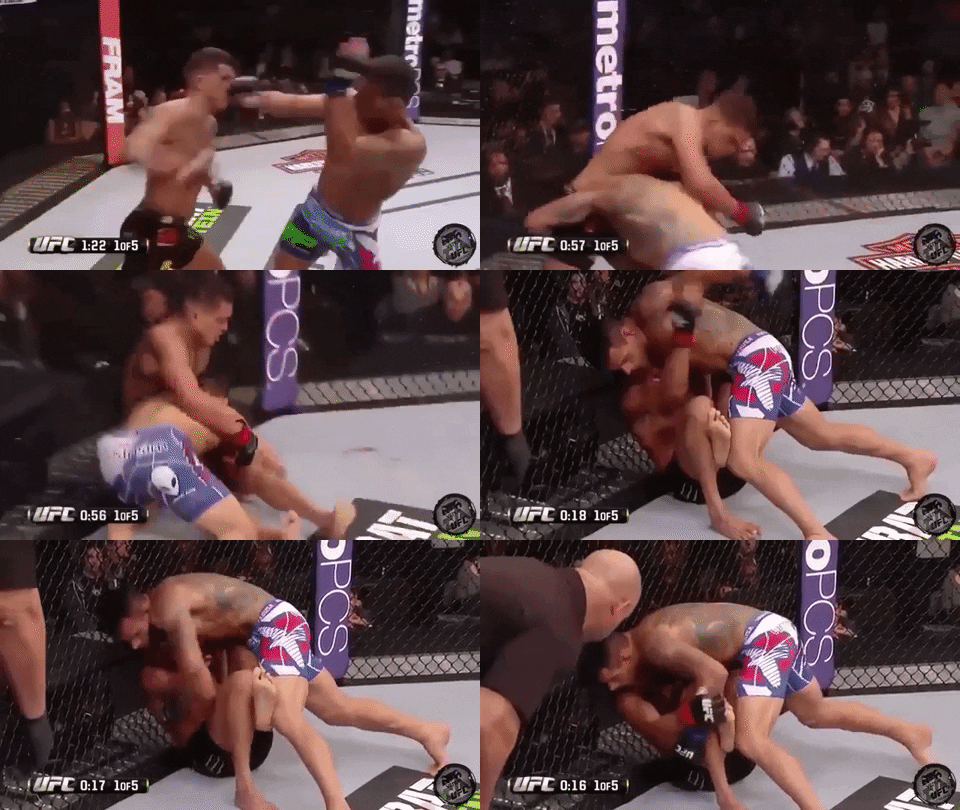
(After he ducked under the punches, RDA continued his onslaught on the ground. Hammering away at the midsection and body while on top is a great strategy to tire your opponents out in the long run.)
The fight itself wasn’t competitive at all, and by the time the bell for the final round rang, it was clear that outside of a miracle, Pettis was well on his way to losing his title. RDA looked absolutely perfect and decimated Pettis. What was supposed to be a long title reign was cut short. It’s a testament to RDA’s careful planning and execution that other fighters have gone on to replicate his strategy to beat Pettis in their own fights. Imitation is the sincerest form of flattery, after all. Pettis was never the same after this fight because he was unable to adapt the way RDA did after his losses.
RDA’s title run, however, didn’t last long either. After running through Cerrone in his only rematch and title defense, he faced off against Eddie Alvarez and got finished in less than a round. Alvarez’s performance deserves a deep dive in itself, but suffice to say that the pressure-heavy style of RDA worked against the darting movements of Alvarez.
When RDA lost again, this time to Tony Ferguson, RDA opted to stop his difficult weight cuts and move up to welterweight. Given that RDA’s 5’8” height and 70” reach is on the lower end of the weight class, many didn’t expect much from him. To compound this issue, it was revealed that RDA was leaving Kings and forming his own gym so he can run his own camps. There are many examples of this kind of approach going bad, so it almost seemed like a foregone conclusion that the undersized RDA would suffer at the hands of much larger opponents. But with the help of Jason Parillo and Bubba Jenkins, RDA was able to adapt once again.
For his welterweight debut, RDA got matched up against Tarec Saffiedine. Despite having a losing record and coming off a hotly contested split decision loss over Dong Hyun Kim, Saffiedine still had size over RDA and was the last Strikeforce welterweight champion. Being another southpaw striker with a good takedown defense, it looked like RDA might suffer three losses in a row. However, RDA showed that the strategy that he utilized against Pettis had many uses, and he employed more or less the same game plan against Saffiedine. He pressured Saffiedine against the fence and threw kicks to his right side (who fought large portions of the fight in the orthodox stance despite being a southpaw). He leaned in heavy against Saffiedine and took him down to score points. RDA also made sure to vary his strikes both to the head and body.
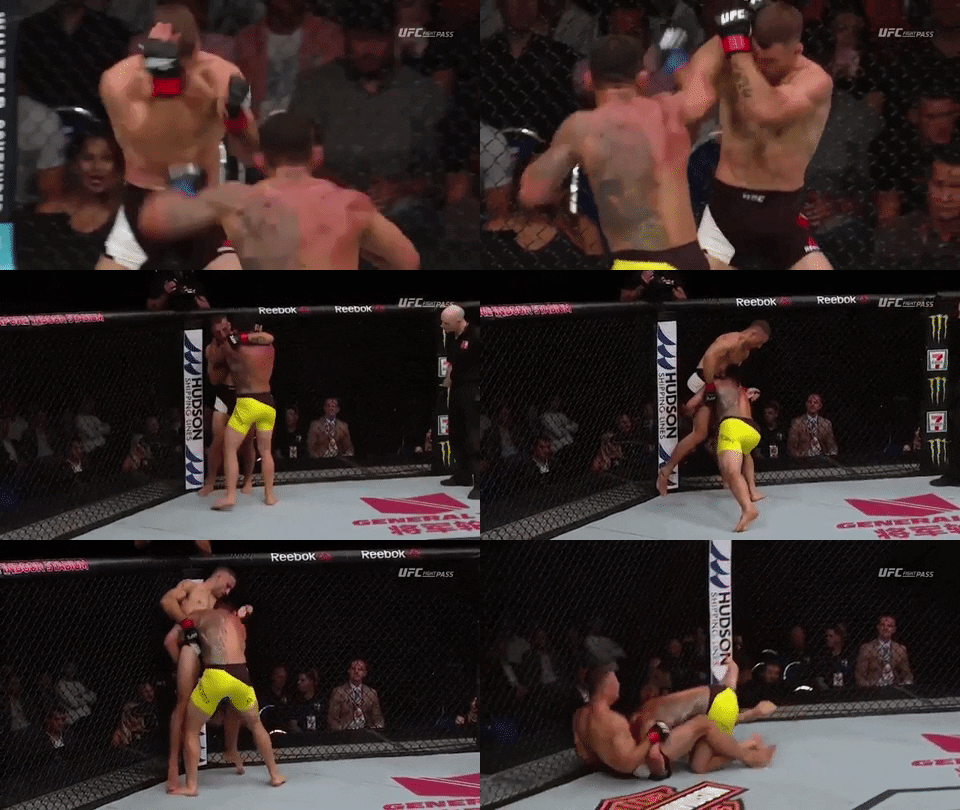
(The left straight to the body, Junior Dos Santos style, combined with some follow up jabs had Saffiedine covering up. Once he got him to the fence, RDA would utilize his wrestling to take him down.)
He followed this up with a quick submission win over Neil Magny, which was made all the more impressive by the fact that Magny was coming off a win over Johny Hendricks. RDA stalked down Magny and one well-placed calf kick stumbled him down to the ground. RDA swarmed all over Magny, moving quickly from side control, half guard, and then back into side control before getting full mount. From that position, people were reminded that although RDA didn’t use his submission game often, it’s always there to threaten his opponents if they leave themselves exposed.
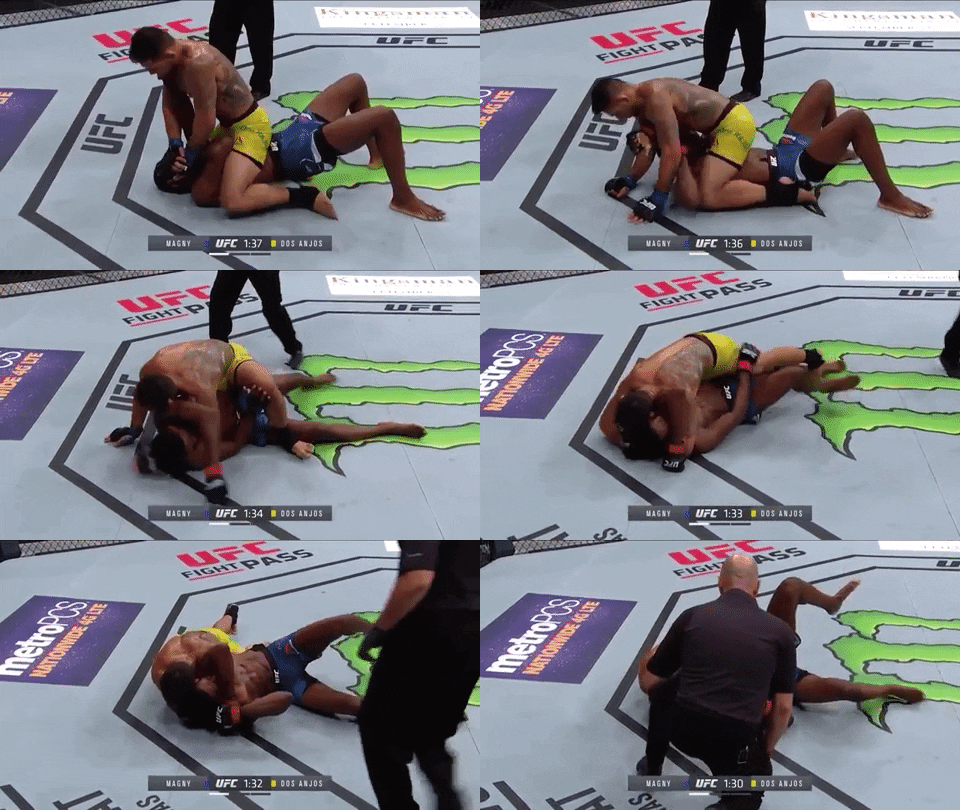
(The sequence of movements almost looks like something out of a BJJ instructional. Attack with strikes to get the opponent to open up, snatch up an arm while swimming yours across their neck, finish by moving to side control. Demian Maia would be proud.)
Figuring that one more impressive performance could grant him a title shot, RDA was given another headlining opportunity, this time against former UFC welterweight champion, Robbie Lawler. Lawler was still in the mix (so to speak) at welterweight, and with his loss to Tyron Woodley still fresh in the minds of fans, he knew that beating RDA would be another welcome chance to prove that he still has the mettle to become champion again.
Just like the Saffiedine fight, RDA faced another southpaw. Despite the danger that Lawler’s hands possessed, RDA went after him. RDA hammered Lawler’s lead leg and matched head movement for head movement. By focusing on aiming his low kicks below Lawler’s knees, RDA was able to sneak them in despite having to throw them from further away. One of these kicks hobbled Lawler early on and staggered him, setting the stage for things to come.
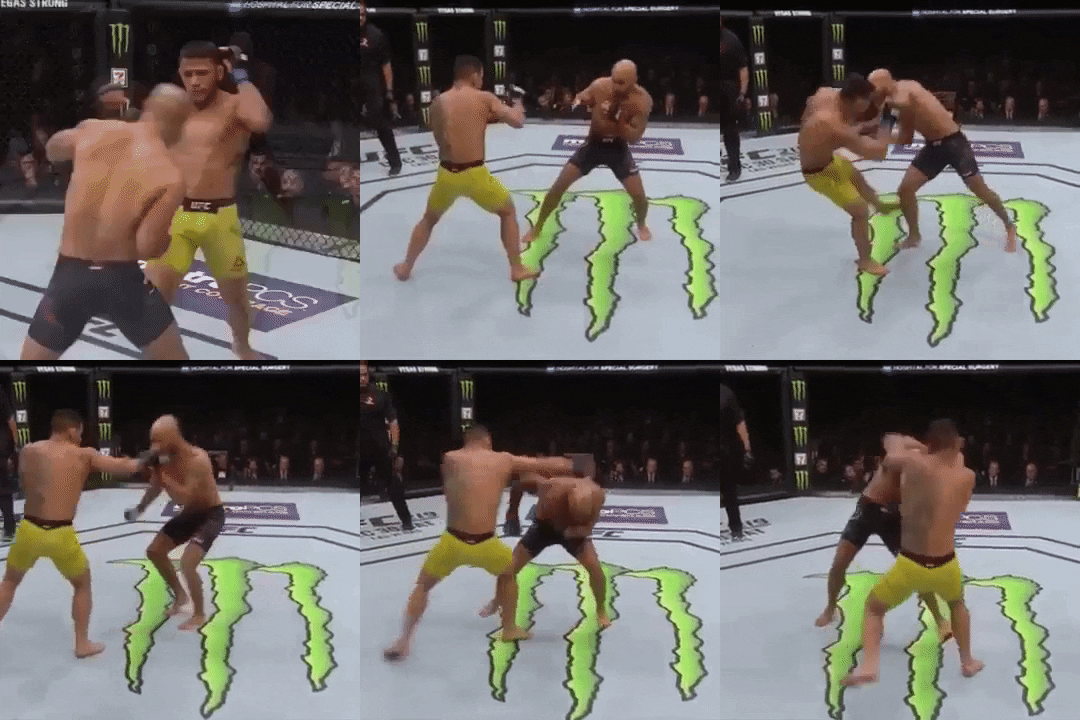
(Although the kick is thrown from further away, Lawler’s focus on upper body movement made him react slower to the kicks.)
Lawler is known for his calculated aggression and ability to slip punches to deliver his own offensive arsenal. What he doesn’t always do a good job of is checking the leg kicks or moving his feet out of the way. Pete Spratt, Melvin Manhoef, and Lorenz Larkin all targeted Lawler’s legs and made sure to keep that up even if they ate a punch or two, since chopping him down would severely limit his explosiveness and mobility. RDA clearly read that chapter in the Lawler book because that’s exactly what he did. Once Lawler slowed down just a bit, RDA clamped on the Thai clinch and threw an onslaught of knees. Even though Lawler worked RDA’s body with hooks, he was countered with elbows and short uppercuts for his troubles. Although some fans doubted RDA’s claims that he’d been training with muay Thai champions at Evolve MMA, this fight clearly showed that he had been diligently training his striking with at least someone that could teach muay Thai effectively, post-Cordeiro. When he wasn’t attacking with his rear leg, RDA used his inside low kick to punt Lawler and keep him off balance. Melvin Manhoef may not have won against Lawler but RDA made sure to watch their fight and learn from it. Lawler was a former champion, and if the time tables were different, this could have been a champion vs. champion fight with RDA becoming a two-division champion.
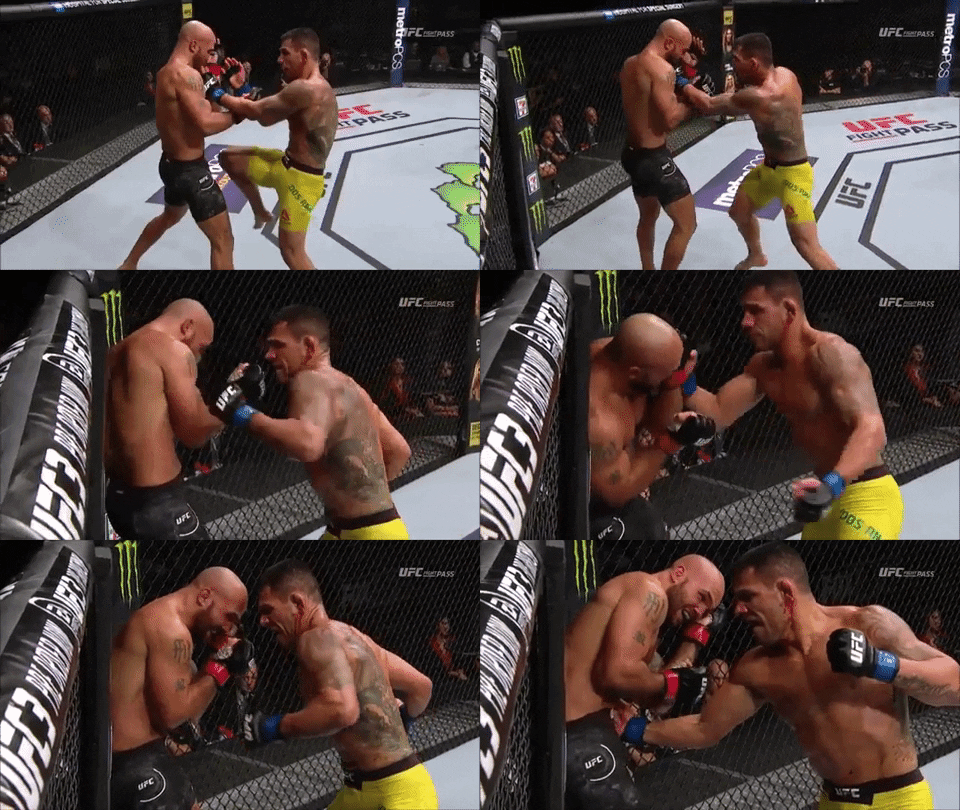
(Watch as RDA acts as the aggressor, punishing Lawler with a variety of punches. He never forgets to finish with hooks to the body in order to empty out Lawler’s gas tank.)
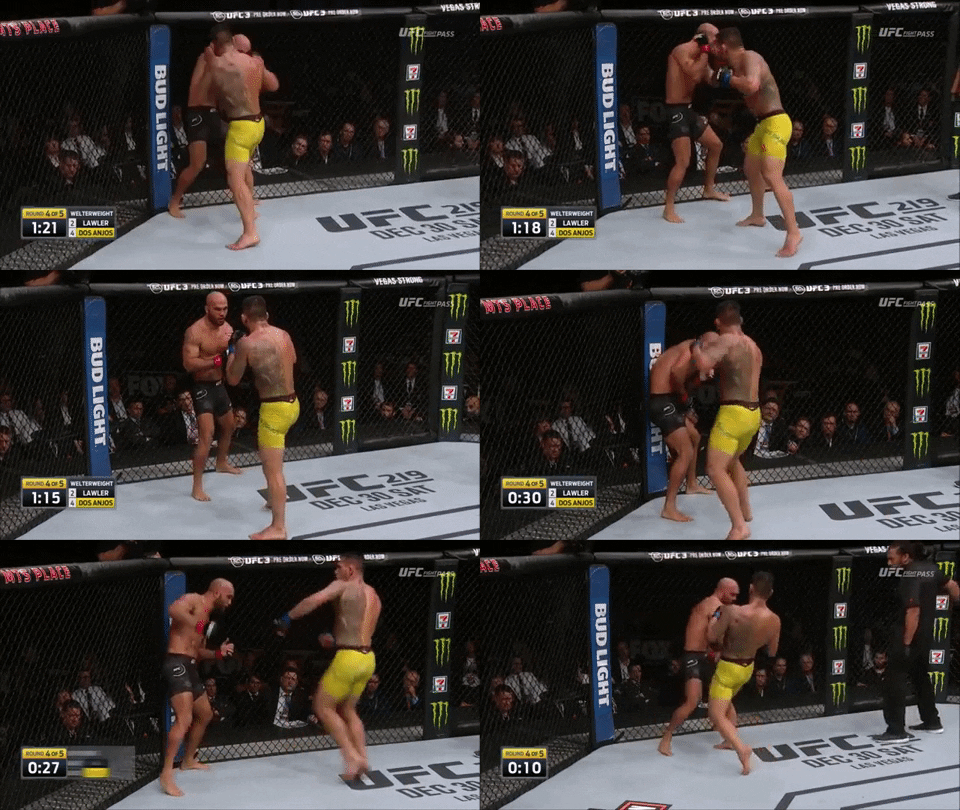
(As the rounds wore on, it was clear that RDA’s commitment to combination striking was taking its toll on Lawler. By the 4th round, he was reduced to trying to slip punches as RDA picked his shots. Elbows, hooks to the body, low kicks, high kicks, everything was on the table.)
As expected, a victory over Lawler gave RDA his coveted title shot, although it was for the interim welterweight title. Standing in his way was Colby Covington, who himself had rattled off five straight wins and looked like he could match RDA’s gas tank. For the first time at welterweight, RDA’s size deficiency showed. Though it was a competitive fight, Covington’s wrestling and top control in the early rounds gave him an edge when it came to the judges’ scorecards. RDA did everything right, but it was clear that Covington’s ability to ground RDA and keep him there cost him, just like in the Nurmagomedov fight. Even though RDA was able to score takedowns on Covington as well, it was just too little too late.
RDA was given Kamaru Usman right after Covington and a similar fight ensued, only this time Usman kept RDA on his back even longer. No matter how many improvements RDA made, he simply couldn’t make up the size difference. Welterweights like Covington and Usman were massive, cutting from as high as 200 pounds to make the 170-pound limit.
Since his victory over Lawler, RDA is 1-4, with his sole win being over Kevin Lee, a fellow former lightweight who had trouble with the 155-pound limit. Although he was able to dispatch Lee in similar fashion to Magny, it took him longer and he absorbed more damage. His next two losses were to Leon Edwards and Michael Chiesa, both legitimate welterweights with height and reach advantages. Edwards used his reach to keep RDA at bay with sharp 1-2s and hurt him with short elbows whenever RDA closed the distance. Chiesa overpowered RDA and used his size and strength to overwhelm him on the ground. It’s clear that RDA would benefit from a 165-pound weight class, but that’s something that’s out of his control.
Even with his recent struggles, RDA’s successes at lightweight and welterweight are clear indicators that sometimes, it pays to leave your comfort zone. Instead of trying to find ways to simply get better at implementing his BJJ for MMA or learning to conserve his energy, RDA went 100 miles the other direction. He enlisted the help of Rafael Cordeiro, one of the best MMA striking coaches in the game and one who embraces the hardcore sparring that’s needed to climb to the top. Everyone knows that the old school Chute Boxe guys were tough and aggressive, but often questioned their skill levels. Outside of his native Brazil and away from Rudimar Fedrigo (Chute Boxe’s founder), Cordeiro was able to show the world how to take talented grapplers and turn them into fearless strikers. RDA isn’t the only one to go through this metamorphosis, take a closer look at guys like Beneil Dariush, Fabricio Werdum, and Kelvin Gastelum. All well known grapplers who became competent kickboxers in their own right. Ages ago, Frank Shamrock told reporters that he would beat Tito Ortiz through superior conditioning and he was mocked. RDA showed everyone again why this is so important, especially in five-round fights. RDA shocked the world when he beat Pettis and more or less made a blueprint for everyone else. His own transformation from a good BJJ fighter to a tough well-versed striker became a blueprint for a lot of future fighters, including guys like Usman and Covington, who ended up beating him. I said it before, and I’ll say it again: imitation is the sincerest form of flattery, even if it whoops your ass.
