 Home

 Creators
 Search
 Recent
 Random
 Posts
 DMs
 Tags
 Random
 Importer
 Import
 FAQ
 Account
 Register
 Login
 Favorites
 Keys
 Logout
 Telegram

Preview: UFC 250 Bantamweight Grand Prix (Patreon)
Downloads
Missing 1 full-res photo, 1 file, as this post has not yet been imported.
Content
Imagine Scott Coker taking control of the UFC for one card, throwing a bantamweight grand prix. Because that's essentially what we have.
Do you remember UFC 230? It was less than two years ago, and it was headlined by Daniel Cormier defending his heavyweight title against Derrick Lewis. The main event was hastily put together after the original headliner, Valentina Shevchenko vs Sijara Eubanks for the flyweight title, was scrapped at the last minute. It’s okay if you don’t recall the match, Cormier took Lewis’s back and choked him out within two rounds. What is worth remembering is that the UFC put on an unofficial middleweight tournament to determine who would be moving closer to getting a shot at Robert Whittaker for the title. The eight fighters selected for this bracket had won titles in promotions all over the world, including the UFC, Strikeforce, ADCC, World Series of Fighting, Glory, Cage Warriors, and BAMMA. Sounds amazing, right? You had former UFC middleweight champion Chris Weidman facing off against former Strikeforce and ADCC champion Jacare Souza. It also had Jared Cannonier’s middleweight debut which he won in stunning fashion against David Branch, and we got to witness Israel Adesanya rack up an impressive victory over the always tough Derek Brunson. Looking back, the UFC marketed this event all wrong, the focus should’ve been about the 185-pound weight class and the showcasing of its talent, not some last-minute cash grab to capitalize on Derrick Lewis’s 15 minutes of fame.
20 UFC events later, and we’re in a similar situation again. This time around, Amanda Nunes is defending her featherweight title against Felicia Spencer. This fight is mind-boggling because the UFC has gone out of its way to destroy the women’s featherweight division, so why it still has a champion makes very little sense. The men’s flyweight division has long been rumored to be on the chopping block, but as of this writing it’s still on the official UFC rankings with a top 15 list. Women’s featherweight, however, just has a photo of Amanda Nunes as champion and nothing under her.
Why the UFC doesn’t build up the women’s featherweight division is an entirely different problem to solve. Before you abandon the event altogether, take a look at the main card and you’ll be surprised to see that underneath the title fight, we are treated to another mini-tournament, this time with the men’s bantamweights. You have former champion Cody Garbrandt making his return after a year away from competition against the #5 ranked Raphael Assuncao. Aljamain Sterling and Cory Sandhagen have both picked up some momentum in the division and the winner can make a serious case for a shot at the title. Last but not least, Sean O’Malley is out to prove that he’s the future of the division against long time veteran Eddie Wineland. Although the UFC hasn’t outright stated that this is a grand prix, let’s imagine for a second that Scott Coker had taken over for just one card and has given us these match-ups. How would they unfold? Let’s start with the co-main event.
Cody Garbrandt vs. Raphael Assuncao
Garbrandt has had a rough go of things lately. After putting on the performance of a lifetime against Dominick Cruz where he won the bantamweight title, Garbrandt has been finished by strikes in his last three fights. It might be easy to dismiss him now, but there was a point in time where it looked like Garbrandt was going to be the future of the division. With quick, powerful hands and a solid wrestling base, Garbrandt was knocking out fighters left and right on his way to a title fight. Granted, his skills inside the cage didn’t translate to smooth talking on the mic, so it was easy to see why fans and other fighters thought that Cruz would just play mind games before and during the match, then walk away with another victory over Team Alpha Male. Instead, Garbrandt proved that given enough time, you can game plan for even the best fighters.
You can’t blame people for doubting Garbrandt. In his first five UFC fights, he was a whirlwind of punches and quick knockouts. There was no guarantee that he could sustain his pace for the championship rounds and no signs of patience in his approach. However, when he met Cruz inside the cage, his potential shined bright. Many of his predecessors have made the mistake of charging at Cruz or tried to overwhelm him head on. Garbrandt instead let Cruz come to him, forcing Cruz to go on offense instead of relying on his usual defense. Much like Anderson Silva, Cruz does his best work when fighters lunge face first towards him, giving him the opportunity to cut an outside angle and hit them with long looping punches or jabs after switching stances. Garbrandt had seen this movie multiple times and instead of stepping on the pedal, he hit the reverse and fought most of the fight on his backfoot. Slipping and ducking under Cruz definitely started to wear on him, who was now getting frustrated and started to exclusively headhunt Garbrandt. This is exactly the kind of strategy you shouldn’t use against someone with quick hands who would love nothing more than to trade hooks, but Cruz fell for Garbrandt’s traps.
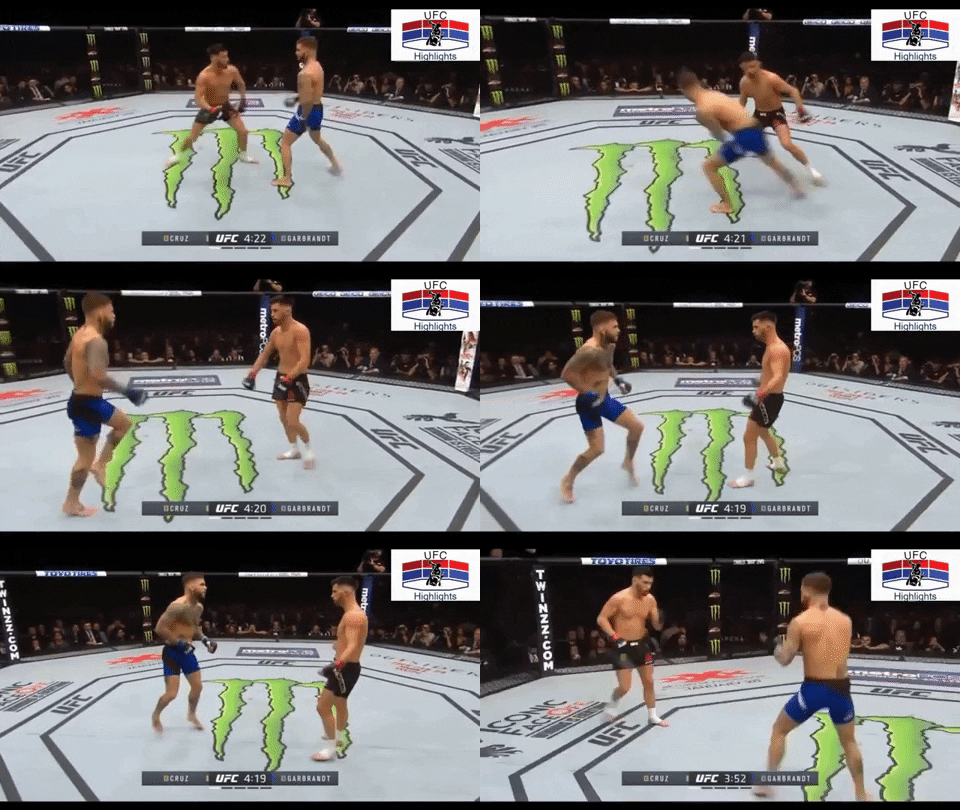
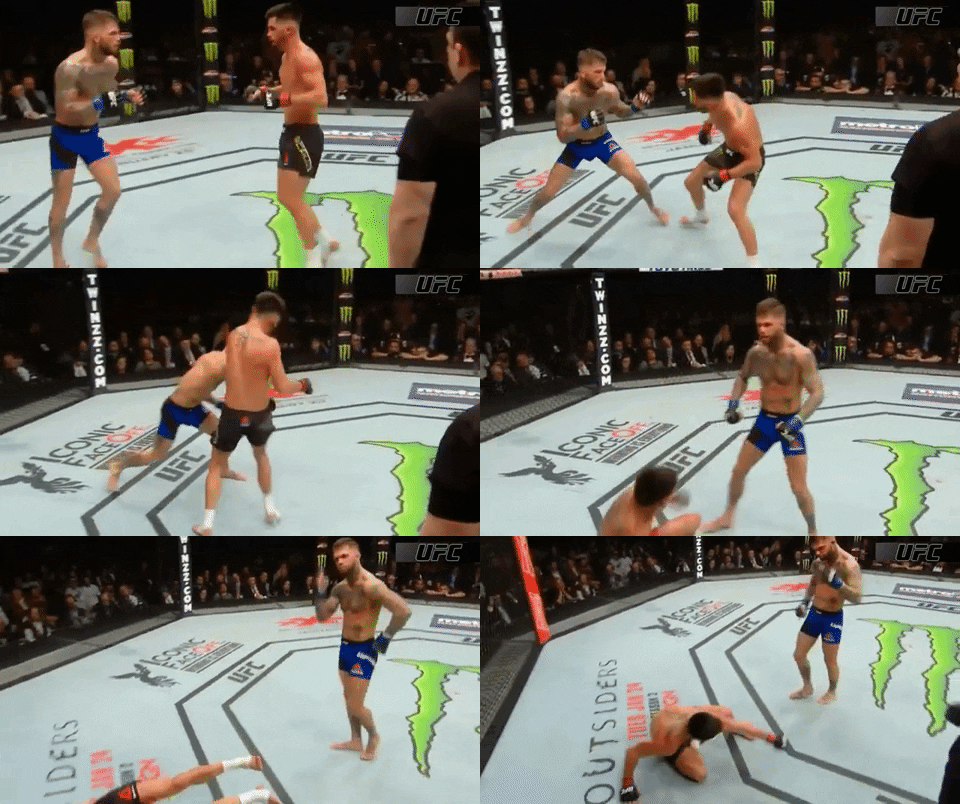
(In the first clip, Cruz tries to clip Garbrandt with a short left hook, only to have Garbrandt duck and pivot out of the way, adding in some taunts for good measure. As the fight went on, Garbrandt was able to hurt Cruz when he committed to moving forward and dropped him with hooks.)
Recognizing that most of Cruz’s feints come from footwork, Garbrandt kicked at the legs whenever the opportunities presented themselves. Instead of aiming for where Cruz’s head was, Garbrandt swung hooks and uppercuts where Cruz would be. Not only was Garbrandt able to hurt and drop Cruz multiple times in that fight, he also scored takedowns of his own and proved that he can stick to a game plan. At least for one fight.
Garbrandt’s first title defense was against T.J. Dillashaw, a former champion and teammate who had developed a reputation as being a traitor of sorts. In the first round of their match, Garbrandt again looked great on the counter. Instead of brawling and chasing Dillashaw, Garbrandt smartly backed away. This disparity was most obvious when Dillashaw started throwing kicks, only to have Garbrandt withdraw his lead leg and have the kicks whiz by. On the occasion that Garbrandt did want to throw punches, he waited until Dillashaw threw his low kick first before bursting up the center line with hooks. It’s a dangerous tactic and Garbrandt did absorb more strikes than he should have, but it was an opportunity to catch Dillashaw while he was on one leg. Garbrandt also scooped up Dillashaw’s legs from time to time when he would throw the front kick and move it across his body, a favorite move of Jorge Masvidal against kickers. The round ended with Garbrandt dropping Dillashaw with a counter right hook at the buzzer, and if the fight had 30 more seconds it’s quite possible that Garbrandt could have started a decent title run. Instead, Dillashaw was able to rebound nicely with a head kick in the next round when Garbrandt started to look exclusively for the knockout.
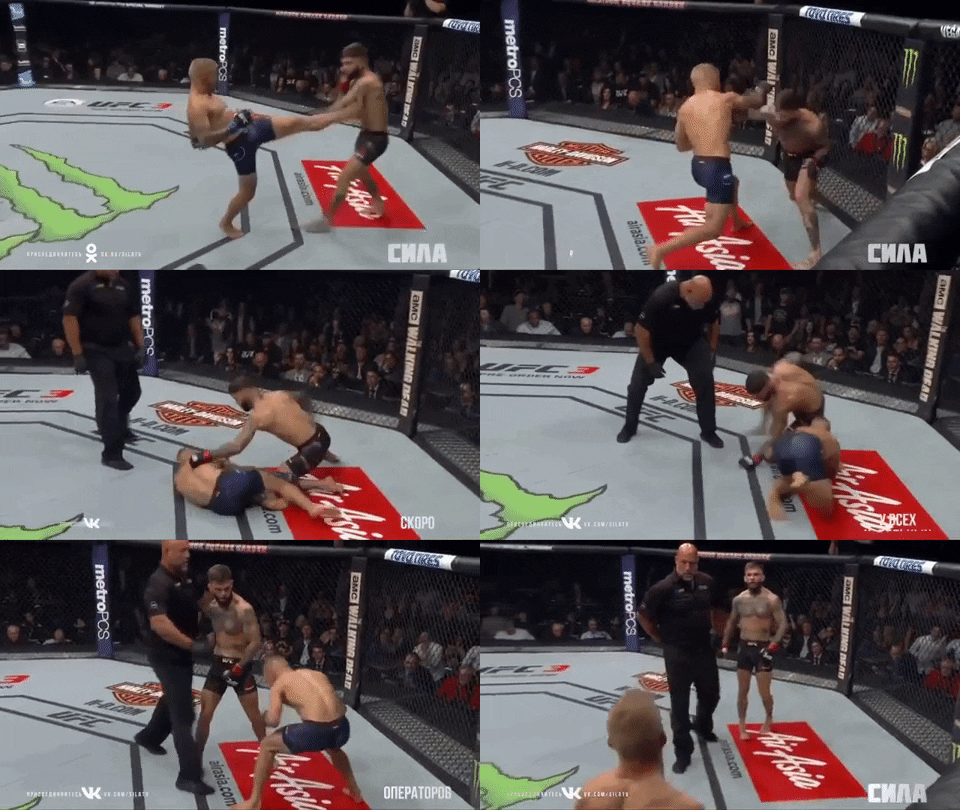
(After he stepped back from a lead front kick, Garbrandt landed a right hook that dropped Dillashaw. You can see the ref step in to stop the action right at the bell. Dillashaw was on wobbly legs.)
The loss to Dillashaw started a downward trend for Garbrandt as he performed even worse in a rematch and got knocked out in less than a minute. Even though it looked like he would turn things around against Pedro Munhoz, Garbrandt again started getting wild in exchanges and got clipped with his favorite weapon, the right hook (a threat Cruz never had). The frustrating thing about watching Garbrandt fight is knowing that he has the athleticism and ability to follow through on a well-planned strategy, but if he senses a finish he’ll immediately start swinging. With three losses in a row, the UFC still wants to see if Garbrandt can become a champion again. Who better to prove it against other than Raphael Assuncao?
Assuncao might be the longest tenured bantamweight to have never gotten a title shot. At one point, he had a seven-fight win streak in the division, and it looked like he was next in line to fight Dominick Cruz. After a loss to Dillashaw at UFC 200, he was forced to start over again from scratch. Despite the long odds, he was again able to put together a decent streak, racking up wins over Aljamain Sterling, Marlon Moraes, Matthew Lopez, and Rob Font. Just when it seemed as if his fortunes were turning around, he got pitted against Moraes in a rematch to determine who would be fighting Henry Cejudo for the vacant bantamweight title. Unfortunately for Assuncao, Moraes dropped him with punches before submitting him with a guillotine choke. It was his first submission loss in the UFC, and it looked more and more like he would never be granted a title shot.
In his last outing against Cory Sandhagen, Assuncao was soundly outpointed and had no answer for his opponents long range attacks and switch hitting. Although Assuncao himself is a competent stance switcher, Sandhagen just seemed more comfortable with his jab and consistently hit Assuncao with body shots, slowing him down as time wore on. Assuncao is also finding himself in a strange place. Not since 2010 has he had back to back losses. Granted that both Moraes and Sandhagen are great fighters in the division, it doesn’t change the fact that Assuncao is in desperate need of a win.
Even though Assuncao has been around forever, there’s a good chance you don’t remember how he fights. Assuncao’s style of switch hitting is done best through counters, and his timing is a bit odd, making it hard to get a read on him. With his constant attacks from both sides, opponents find themselves waiting and waiting for the perfect time to attack only to get out-struck in the process. He might not possess the one punch knockout power of someone like John Lineker, but he can hurt you on the counter if you get sloppy and attack straight on.
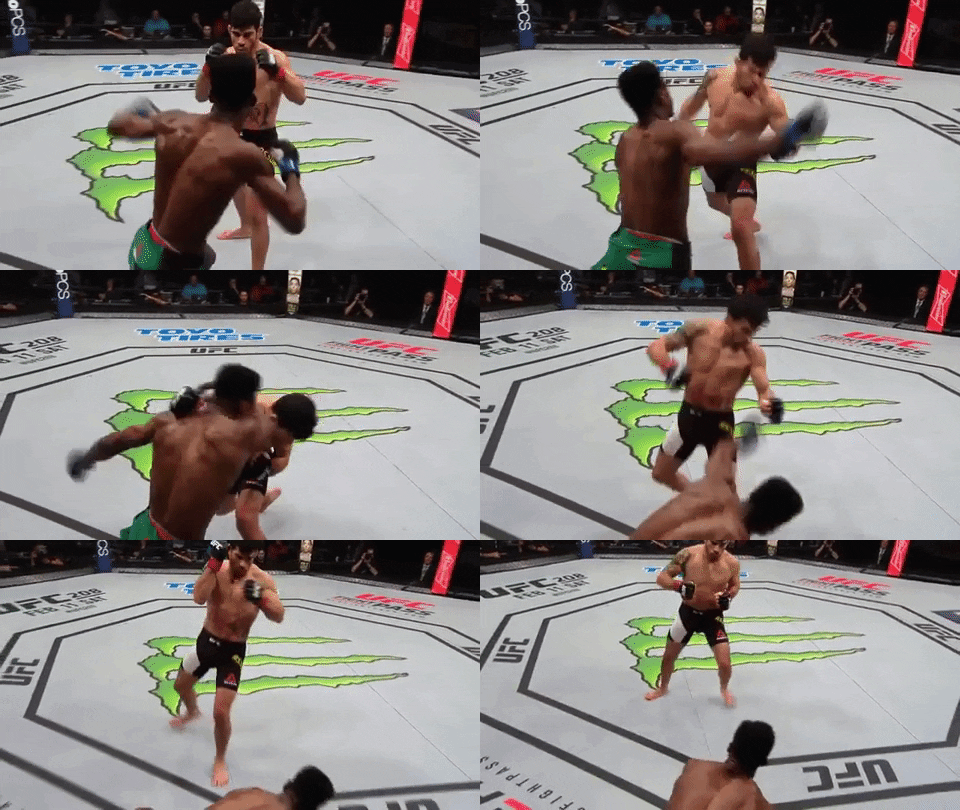
(Moving his head slightly off center, Assuncao counters Sterling with an overhand right.)
Assuncao is essentially a jack of all trades, master of none. He can exchange strikes, wrestle for takedowns, and hunt for submissions as well as anyone in the division. When you take a look at the first Moraes fight, Assuncao was able to stymie the much more polished striker by waiting patiently and picking his shots. Moraes is dangerous, but if you can get him to hesitate and throw non-committal strikes, you can damage him. In particular, the right straights did quite a number on him, and we recently got to see Henry Cejudo do the same in his fight against Moraes for the title. This pacing may not be the most exciting, but it does the job of luring opponents to fighting at his tempo.
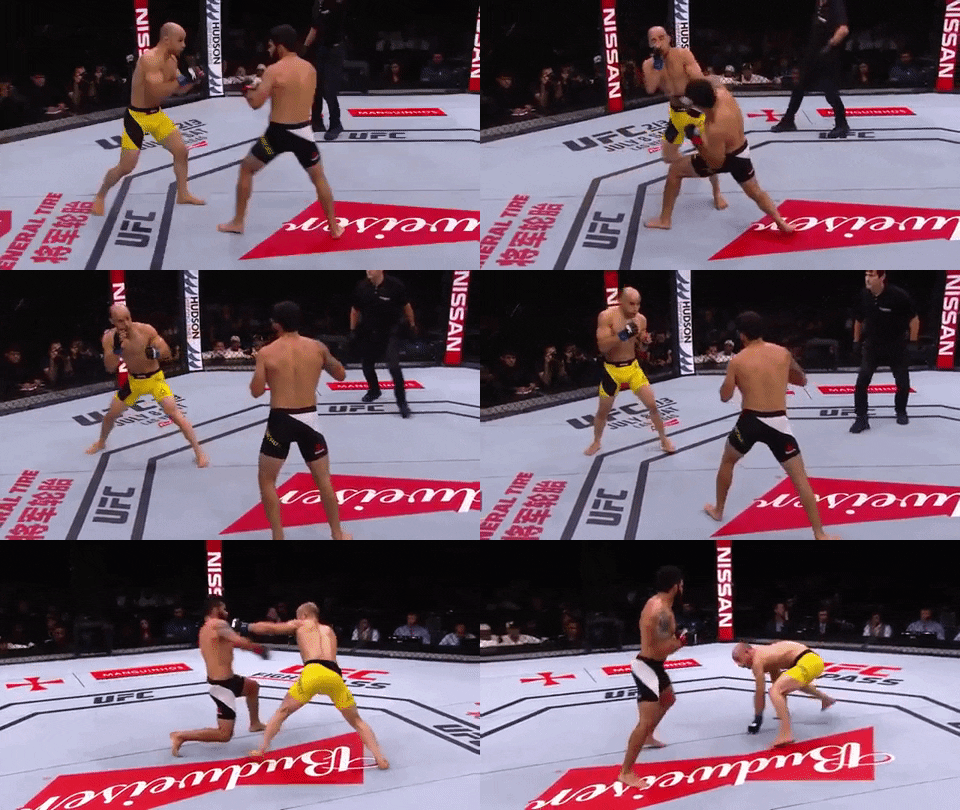
(There were multiple times throughout the fight where Moraes seemed to pause for just a moment, giving Assuncao the opportunity he needed to attack. Even when Moraes threw a lazy jab, Assuncao was ready with a right straight.)
This fight serves as a litmus test for both Garbrandt and Assuncao. Even though Garbrandt has been knocked out in his last three fights, Assuncao could be someone that Garbrandt can exchange with and see if his striking is back to form. There’s always the danger of getting clipped and finished again, but if there was ever a time to see if Assuncao has lost a step, this is it.
For Garbrandt to win, he’s going to have to get on the balls of his feet and play the matador again. Assuncao’s awkward striking can be exploited during exchanges, and he does have a habit of staying put too long in the open. If that plan doesn’t suit Garbrandt, he can take a page out of Sandhagen’s book and look to hammer Assuncao’s body with hooks and volume striking. Even if Assuncao switches stances, his midsection is vulnerable and much harder to move off-line than his head. For Assuncao to score a victory, he should focus on getting Garbrandt to swing wildly and hit him with straight punches. Assuncao’s straight right in particular can score some damage if Garbrandt starts throwing his hooks recklessly. If Garbrandt moves backwards to get him to chase, Assuncao shouldn’t take the bait and instead try to lure Garbrandt to his rhythm. It’s not the most exciting method, but it can dull his senses and leave him vulnerable to counters. It’s unfortunate that one of these men will continue their losing streak, but this is the hurt business.
Aljamain Sterling vs Cory Sandhagen
The co-main event has two fighters struggling to break out of a rough stretch in their careers, but the same can’t be said for Sterling and Sandhagen. Each has built a nice win streak (four for Sterling, seven for Sandhagen) and have legitimate claims for a title shot with just one more win. Although there are rumors flying around that Jose Aldo vs. Petr Yan could be matched for the vacant bantamweight title, this fight could serve as a #1 contender’s match.
Ever since losing to Marlon Moraes, Sterling has been on a mission to clean up his striking. With a wrestling background, it’s understandable that Sterling’s striking is on the less-developed side. Early on, his stand-up was essentially a combination of back fists, awkward kicks, and slow hooks and straights used to set up his takedowns. Sometime in 2018, Sterling really worked on his fundamentals. He still doesn’t have the best boxing or clean low kicks, but he has become an incredibly effective MMA striker. Like a smaller Jon Jones, Sterling constantly works on maintaining proper distance and will reset to the center of the cage if he feels pressured. His commitment to front kicks have also given him a long range weapon that can be fired directly at his opponents midsection, and serves as a great way to deplete their gas tank.
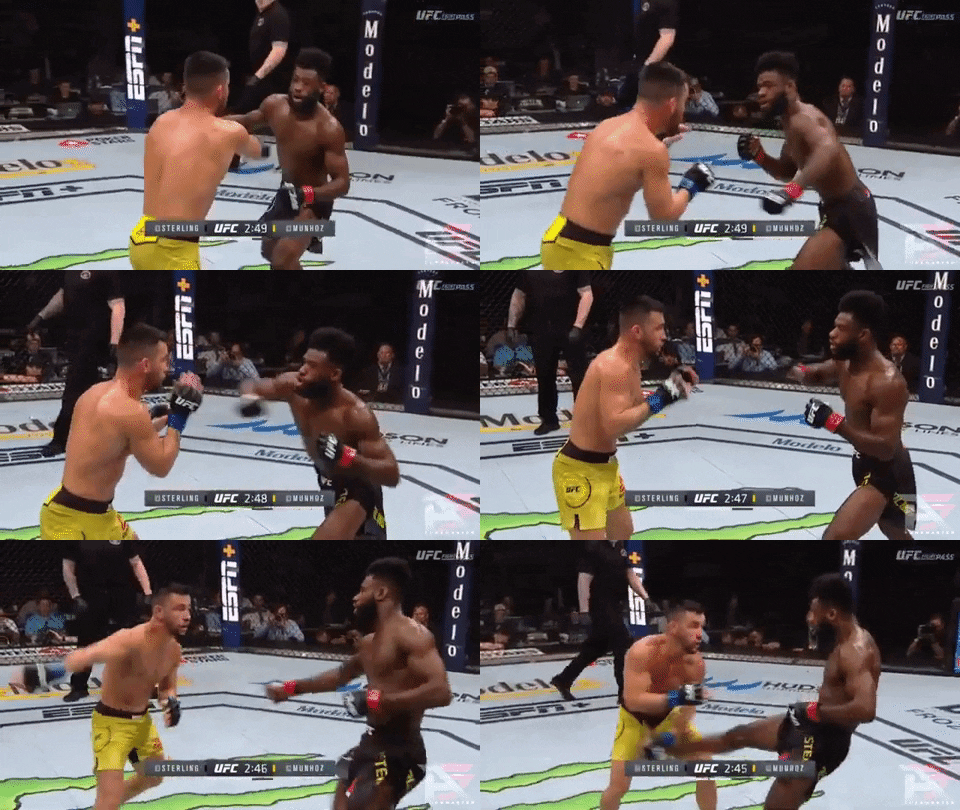
(Leading with a jab, Sterling follows this with a slight pause before throwing his straight. By following this with consecutive front kicks, Munhoz is left trying to parry attacks from all over.)
In addition, it’s nice to see him switching stances with more confidence and have active responses whenever he senses a threat. It’s not uncommon to see Sterling throw a rear front kick from southpaw, only to land in an orthodox stance to set up a jab. Sterling alternates nicely between punches to the head and strikes to the midsection, constantly keeping his opponents on edge and unable to adjust. Against both Pedro Munhoz and Jimmie Rivera, Sterling put on a clinic of effective MMA striking. Kicks to the body wore on both Munhoz and Rivera, and Sterling picked them apart with spinning backfists and straight punches for good measure.
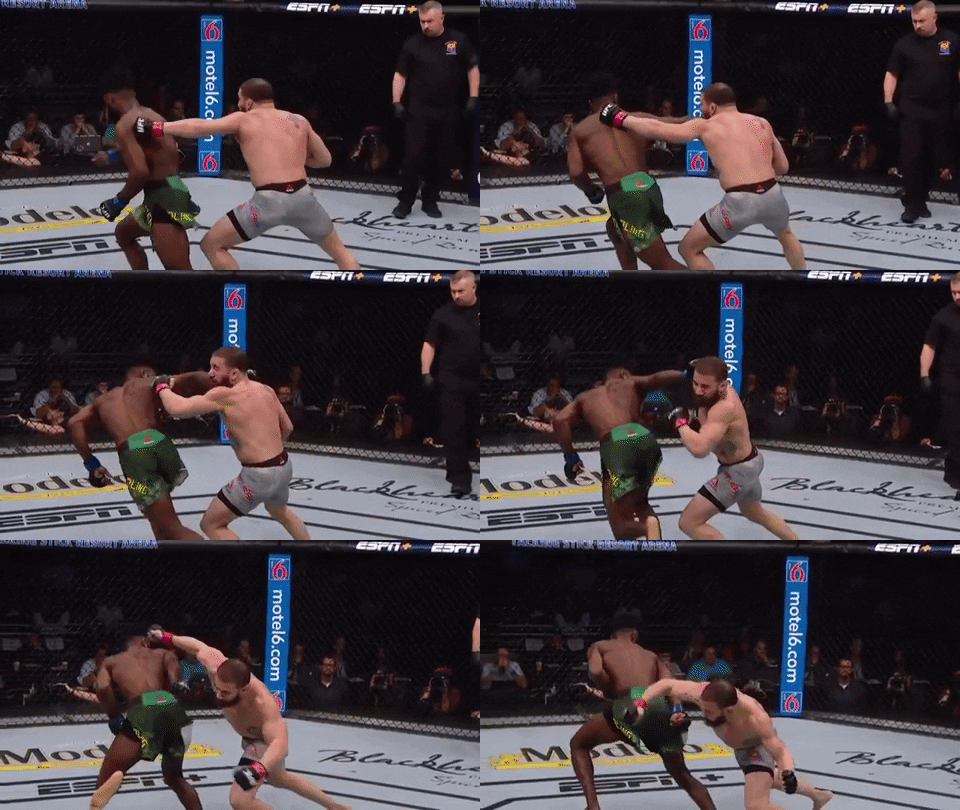
(It’s not as refined as Tony Ferguson’s spinning elbow, but Sterling’s back fist still finds its mark against a charging Rivera.)
Standing in Sterling’s way is Sandhagen, who has looked nearly unstoppable in the UFC so far. With a background in karate and muay Thai, it’s no secret that Sandhagen prefers to keep the fight on the feet. What makes Sandhagen such a fun fighter to watch is his smooth, flicking jab. Not only is this reminiscent of a young Nate Diaz, Sandhagen has added stance switching to give himself more options. In addition to his punches, his kicks come out quickly and with very little tell, making him a well-rounded threat. One of the reasons his jabs are able to sneak in and do so much damage is because he varies the speed and power constantly and is more concerned about the volume of punches than simply swinging power strikes. Also, his ability to sell the feints gets his opponents to relax their defenses only to have their heads snapped back. There’s no wrong way to jab (unless you’re constantly missing and getting countered), but the way that Sandhagen uses them to set up his other attacks are pretty neat.
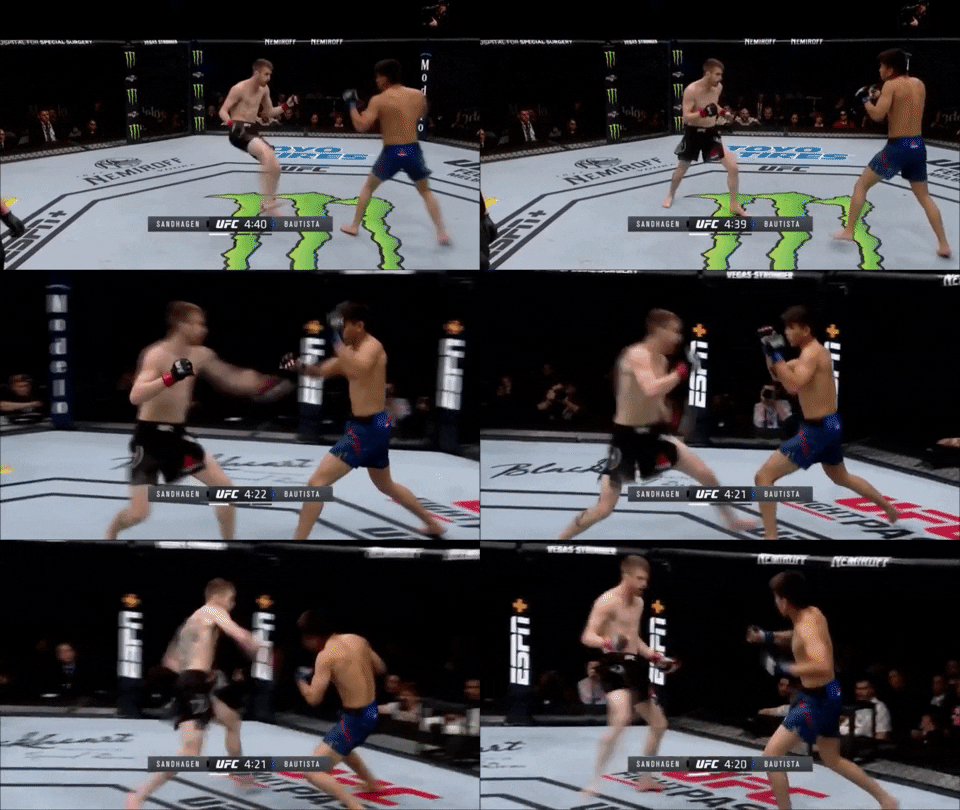
(The jab wasn’t going to hurt Bautista, but it set up a hook to the body and low kick.)
Sandhagen isn’t the only bantamweight with a great jab, fellow fighters on this card Sean O’Malley and Eddie Wineland in particular have great lead hands as well. What makes Sandhagen different is that he can quickly recover his jabbing hand since he doesn’t throw it with full power. If the opponent swings back, they leave themselves open to pull-counters, a favorite of Renato Moicano. If the opponent simply covers up, Sandhagen can blast them down the middle with straight punches or follow up with hooks to the body into low kicks (a Dutch kickboxing favorite). Did I mention Sandhagen spends months at a time in Holland to train his kickboxing?
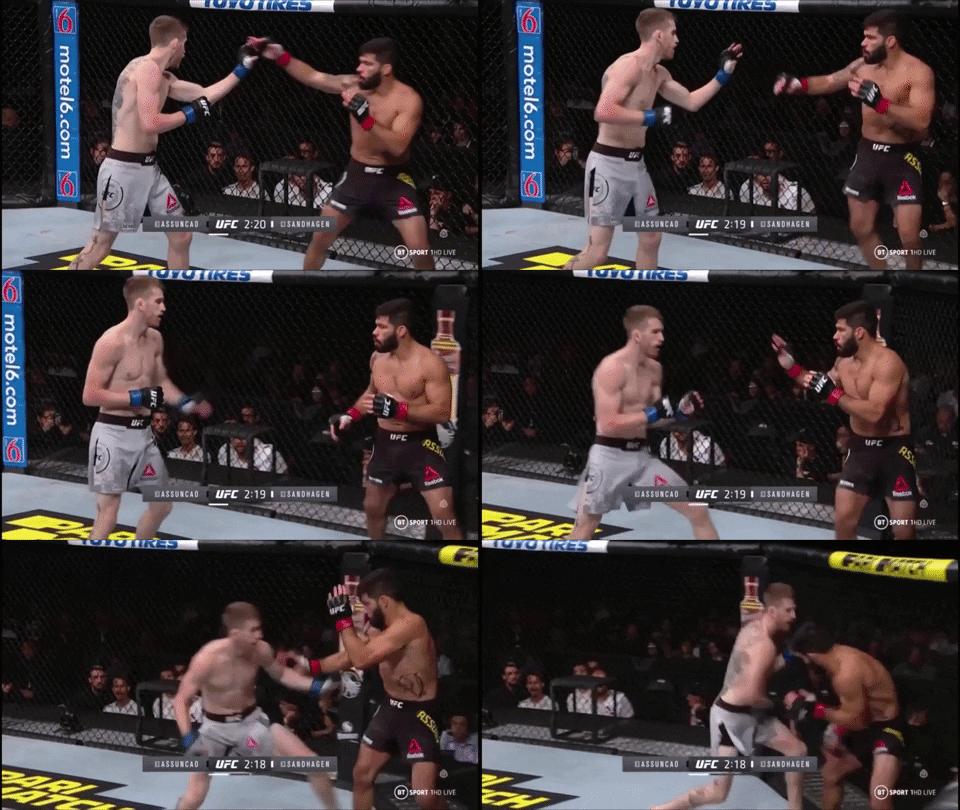
(Even early on, Assuncao was so preoccupied with parrying the jab that he forgot about the rear hand.)
This is a great match-up and both fighters have multiple ways to win. Sterling is going to want to make sure that he keeps a close eye on distance management and not be overwhelmed by the feints and volume of Sanhagen’s jabs. Although Sterling himself is a competent switch hitter, Sandhagen is a bit more polished in this area and can give him problems if enough momentum builds. Sterling can definitely utilize Sandhagen’s forward pressure to change levels and get a takedown or at least create some offense through clinch work, an area that he might hold the advantage in. Sandhagen isn’t a grappling phenom by any means, but his ability to attempt the kimura from all angles to create scrambles could be a problem if Sterling is committed to wrapping himself around his waist. For Sandhagen, his best chances lie with constantly feeding misinformation to Sterling and getting him to overreact. Sterling’s last loss to Moraes came when he misread a switch kick that turned into a straight knee. Feinting in one direction only to attack with another is a great way to keep Sterling on edge and unable to start his own offense. No matter who wins, the victor should definitely be next up for a title shot.
Sean O’Malley vs Eddie Wineland
This is the fight that’s set to kick off the main card, and it will serve to see just how good O’Malley is and how much more is left in the career of Wineland. Not many people realize this, but Wineland is actually the inaugural WEC bantamweight champion. Needless to say, he’s been around the fight game for a while. Although his UFC career has been that of a gatekeeper (at best), Wineland is still a tough test for anyone at 135 pounds. Wineland has a peculiar way of moving, and with his chin high in the air and pressure heavy style, it could be the kind of match-up that makes O’Malley look like the next Conor McGregor. However, there are still some things he should be wary of.
Wineland has one of the quickest jabs in bantamweight, and much like Sandhagen, he loves utilizing feints. Unlike Sandhagen, Wineland’s jabs have much more power to them and can stop fighters from advancing. If they decide to eat the jab or think it’s a feint, Wineland’s right straight is a threat, especially when thrown as a counter.
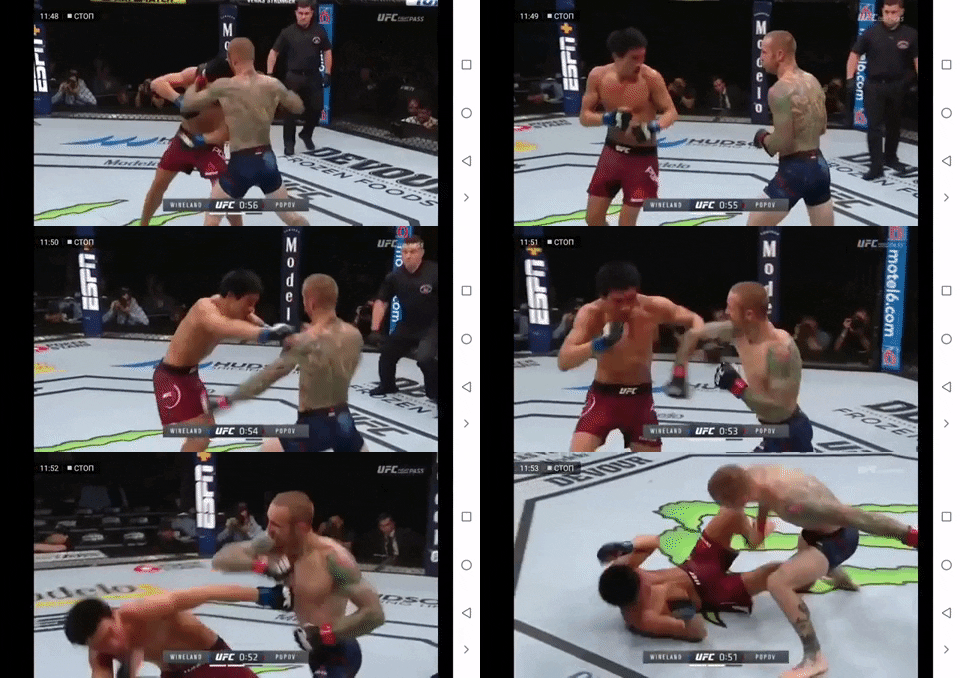
(When Wineland has you hurt, you can expect a flurry of right hands to follow.)
O’Malley might be early in his MMA journey, but he’s off to a great start with an undefeated record. In his most recent fight against Quinonez, O’Malley battered him with leg kicks and constantly moved laterally to get Quinonez to chase him. Much like McGregor, O’Malley excels when he can pressure his opponents into lunging at him so he can counter with short punches and kicks.
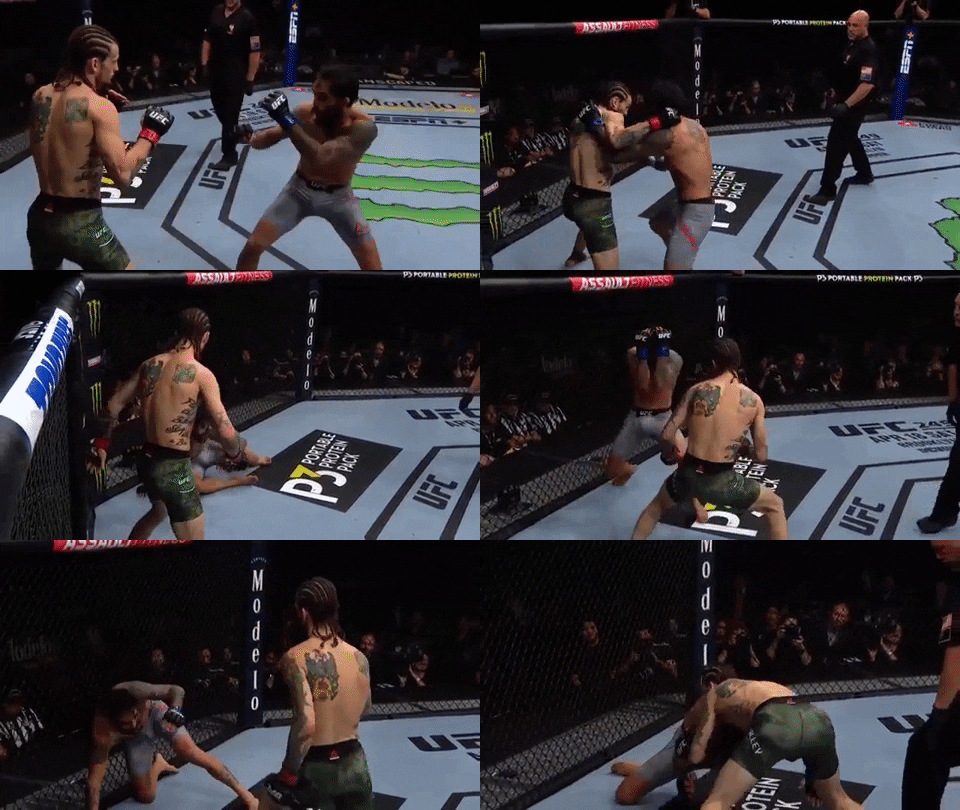
(After blocking looping right hook, O’Malley counters with his own. As Quinonez struggles to get up, he’s met with a right kick that drops him.)
Just like Adesanya, O’Malley just might be the future of the division. However, also like him, he’s going to have to make his way through a division of killers to stake his claim as champion. Time will tell if he’s got what it takes to get to the top, but it’ll be fun to watch him try to get there.
The UFC has a genuine opportunity to make bantamweight one of their marquee divisions. It’s the weight class where every other fighter is a competent switch hitter who’s also adept at all facets of MMA. It’ll be a shame if the UFC somehow manages to screw up the division. But their track record isn’t that great. With all that said, UFC 250 should provide some clarity on the future of the division and it’s contenders moving forward.
Files
Previews only

