 Home

 Creators
 Search
 Recent
 Random
 Posts
 DMs
 Tags
 Random
 Importer
 Import
 FAQ
 Account
 Register
 Login
 Favorites
 Keys
 Logout
 Telegram

Preview: Robert Whittaker vs. Darren Till (Patreon)
Downloads
Missing 1 full-res photo, 1 file, as this post has not yet been imported.
Content
When it comes to middleweights, there's a certain kind of toughness that defines them. They are at the perfect weight class where the fighters are as strong as light heavyweights but still have welterweight speed. As a result, the 185 pounders are among the most athletic fighters in the UFC roster, and it shows every time they compete. Among the best in the weight class is former champion Robert Whittaker. Tired of draining himself to hit 171 pounds on the scale, he opted to move up after going 3-2 as a welterweight. An eight-fight win streak and a title win plus defense show that this was the right move, even though his most recent fight resulted in a loss. After taking some much-needed time off, Whittaker indicates that he's back to feeling like his old self and ready to compete against the best. In his way is Darren Till, another ex-welterweight in search of success at the weight class above. Unlike Whittaker, Till has had trouble on the scales before, missing weight twice. Coming off a split decision win over Kelvin Gastelum, Till gets to face off against the very person he wants to emulate at middleweight. Let's see how these two match up, starting with the former champion.
Don't let his last loss fool you, Whittaker is still a dangerous fighter and among the best in the division. Standing 6' with a 73.5" reach, Whittaker doesn't seem like the most imposing middleweight, but he more than makes up for it with his fight IQ. Even though he operates out of the orthodox stance, Whittaker will frequently switch stances to get the best angle for his attacks. Whittaker keeps his hands low on purpose to bait attacks from his opponents even though it looks like he's vulnerable to jabs. If they attempt to punch or kick his head, he can shoulder roll out and come back with hooks and straights. If opponents change levels for takedowns, his hands are already low and ready to defend. This came in handy when he faced off against grapplers like Jacare Souza and Yoel Romero, with Whittaker defending 75% of Romero's takedown attempts in their first fight. This low lead hand approach mixed in with forward pressure forces wrestlers to take shots that they normally wouldn't, tiring them out prematurely and giving Whittaker opportunities to land power strikes mixed in with his usual jabs and sidekicks. In the Souza fight, Whittaker had him gassed after the first round and picked him apart standing. It might seem that his habit of keeping his hands low leaves him vulnerable to blitz attacks (and it's gotten him in trouble before). He's able to prevent most of them by feinting.
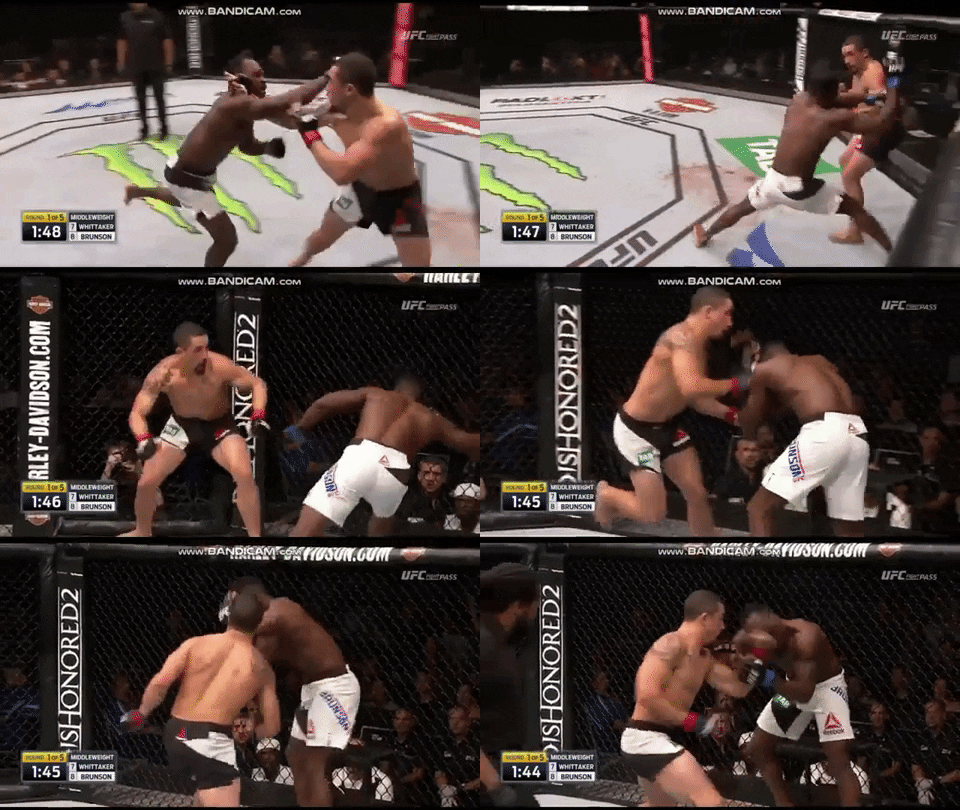
(Feinting isn't necessary when opponents insist on blitzing forward. Derek Brunson chased Whittaker for the takedown, only to get framed by Whittaker's right forearm and blasted with a left hook. Some follow up hooks and uppercuts started the end for Brunson.)
For Whittaker, a key part of his game relies on his jabs. They come in at different speed levels, intervals, and targeted areas. Fighters like Max Holloway have shown how even tweaks to the most basic weapons like the jab can have significant results during the match. When Whittaker raises his shoulder and moves forward, opponents are ready for him. Much to their chagrin, Whittaker will often take a stutter step/half step or extend his arms mid-way before stepping back. When opponents get frustrated and decide to move in to attack, Whittaker steps in and meets them with a jab and the occasional left hook. Whittaker also makes sure to target the midsection with strikes to the body, and when hands go low to protect, Whittaker will go back upstairs to their heads. When the opponents are convinced that the strike isn't real and let their guard down, Whittaker will pounce in with an attack and catch them off guard. One interesting thing to note about Whittaker is that he keeps his head slightly off to his left, dipped slightly lower than most fighters are comfortable with. This has his opponents convinced that a high kick is coming (but one can never be too sure). By adding in a variety of kicks, (including but not limited to: front kicks, low line kicks, body kicks, hook kicks, and sidekicks), opponents are resigned to absorbing the strikes and waiting for the right opportunity to counter or grit their teeth and press forward anyway. Rafael Natal, Brad Tavares, Souza, and Romero fell for this trap time and time again.
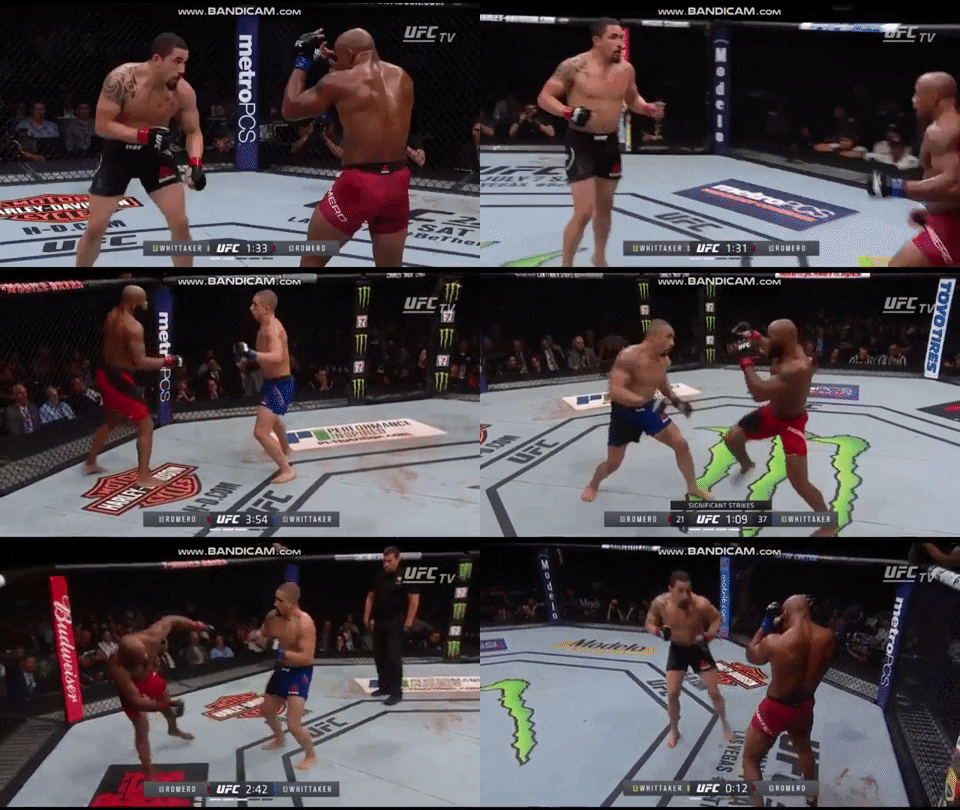
(Across two different fights and ten rounds, Romero spent most of the time absorbing various attacks from Whittaker while waiting for just the right time to launch his own offense. The opportunities were few and far between.)
In his most recent fight against Israel Adesanya, Whittaker fought a good part of this match-up attacking in a straight line, leading early with low line kicks and in his usual crouched stance with his head slightly leaning towards his left. The kicks were a good idea, Kelvin Gastelum had a lot of success pinning Adesanya in place when he threw him, and Whittaker was faster at throwing them than Gastelum. Adesanya had to choose between checking the kicks or withdrawing his lead leg, and he opted for the former since it allowed him to return fire from a close range. One of the first problems that showed up for Whittaker was his love of leading with stiff jabs. Although there's nothing wrong with showing some power early, there's something to be said about setting up your traps to get your opponent to buy into a rhythm before breaking it. Whittaker did this constantly against Natal, Clint Hester, and Tavares. In each of those fights, his jabs came at you from different speeds and angles. The opponents weren't sure exactly where the lead hand would attack. In this fight against Adesanya, Whittaker wanted to prove his worth early and came out with much more power in his jabs.
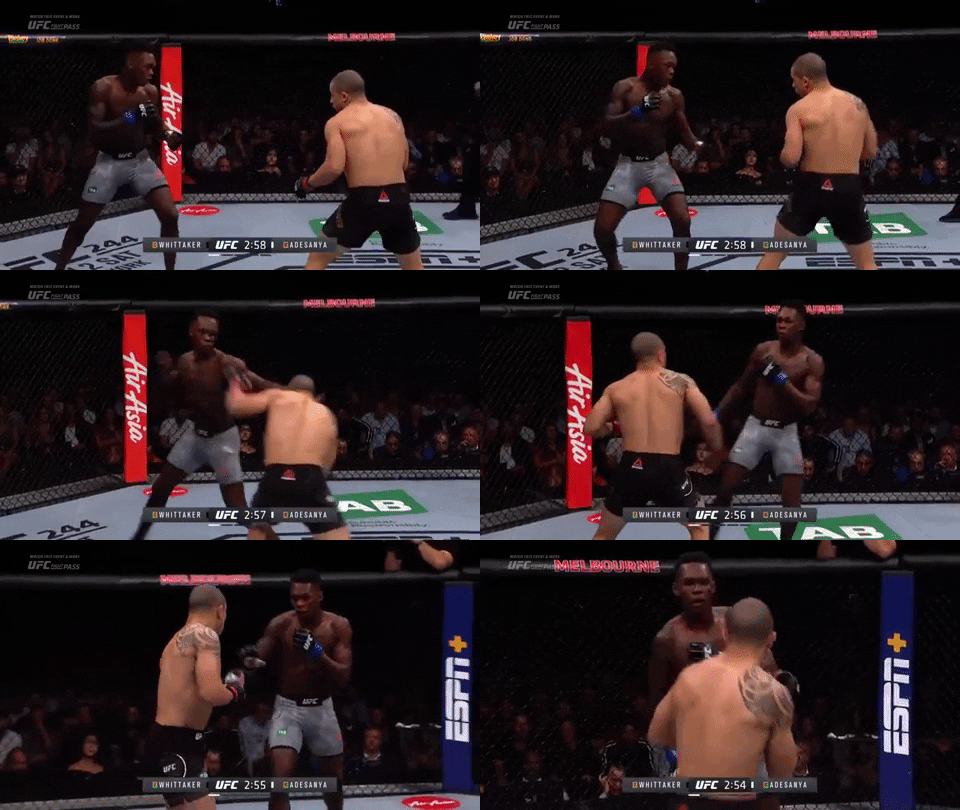
(Although he missed with the overhand right, Whittaker was able to catch Adesanya a few times as he turned to move away from his strikes.)
Unfortunately for Whittaker, Adesanya proved to be the better striker that night, switching stances and moving his head just out of the way to avoid the overhand rights. Adesanya's ability to counter Whittaker's blitzes with lateral movements and jabs of his own also flustered the former champion. This showed whenever they traded hooks. The first time around, Whittaker was saved by the bell. In round two, Adesanya was able to capitalize on Whittaker's habit of leaving himself open after throwing the left hook by leaning back and throwing a hook of his own. It ended the short reign of Whittaker as a champion. If history can serve as a guide, we can see a better Whittaker who has learned from his mistakes. Who better to test himself against than another fellow striker in Darren Till?
Till entered the UFC as a solid striking prospect who was undefeated in the regional Brazilian MMA circuit. With a background in Muay Thai and a build that was quite larger than most other welterweights, Till compiled a 3-0-1 record before getting matched up against Donald Cerrone. In a breakout performance, Till TKO'ed Cerrone inside of round one and announced his presence to the rest of the 170 pounders. Even though Till doesn't have a lot of tools in his arsenal, he makes the best use of the weapons he does have. Much like another famous southpaw, Conor McGregor, Till's best punch is his left straight. The stats show that Till doesn't have the most active striking numbers, but it doesn't capture what makes Till dangerous. By utilizing his left straight as a counter or intercepting strike, the damage is increased by the opponent running into his attack. If the opponent isn't chasing him as expected, Till often moves laterally to get them to pivot so he can throw the left straight as they turn (or throw punches to try and intercept his movements). Till can keep his volume low but striking percentage high by consistently feinting and getting his opponents to react. Whether moving his hips or pumping his shoulder prematurely, Till can get his opponents to start moving and reacting before any strike actually lands. Against Nicolas Dalby, there were moments where he faked the left straight down the center to get Dalby to react and then threw the strike for real after Dalby thought the exchange was over. Great fighters don't have to land every strike they throw, they only need to convince you that one is coming to keep you on edge.
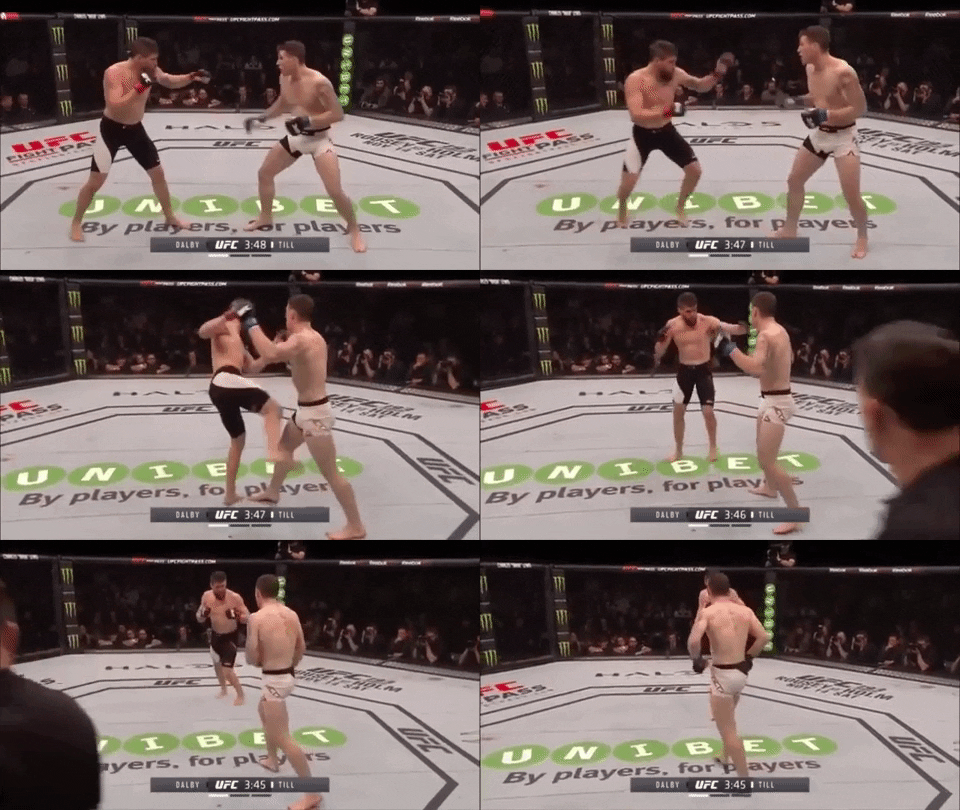
(Dalby pumps out the jab to hide the kick that's chambered and coming, but Till sees it coming. Till's left hand connects flush on Dalby's jaw, sending him stumbling back.)
Against Cerrone, Till managed to withdraw his lead leg whenever a low kick swung by (a Cody Garbrandt favorite) and then pressured Cerrone to the fence with an effective feinting game. Once there, Cerrone tried to punch his way out only to dip right into uppercuts. Cerrone knew that the left straight could come at any second, but he left himself open to Till's other punches. With the fence to his back and nowhere to go, he ran out of options fast. One particular punch that seemed to catch Cerrone (and other opponents) by surprise was the jab. Even though hand fighting is usually a favorite tool used by orthodox fighters to control the southpaw jab, Till was able to keep his right hand low to have Cerrone drop his own lead hand down, exposing his jawline. After taking a couple of jabs to the face, Cerrone brought his lead hand back up, only for Till to dip his lead hand low under Cerrone's line of vision and hammered him with body strikes.
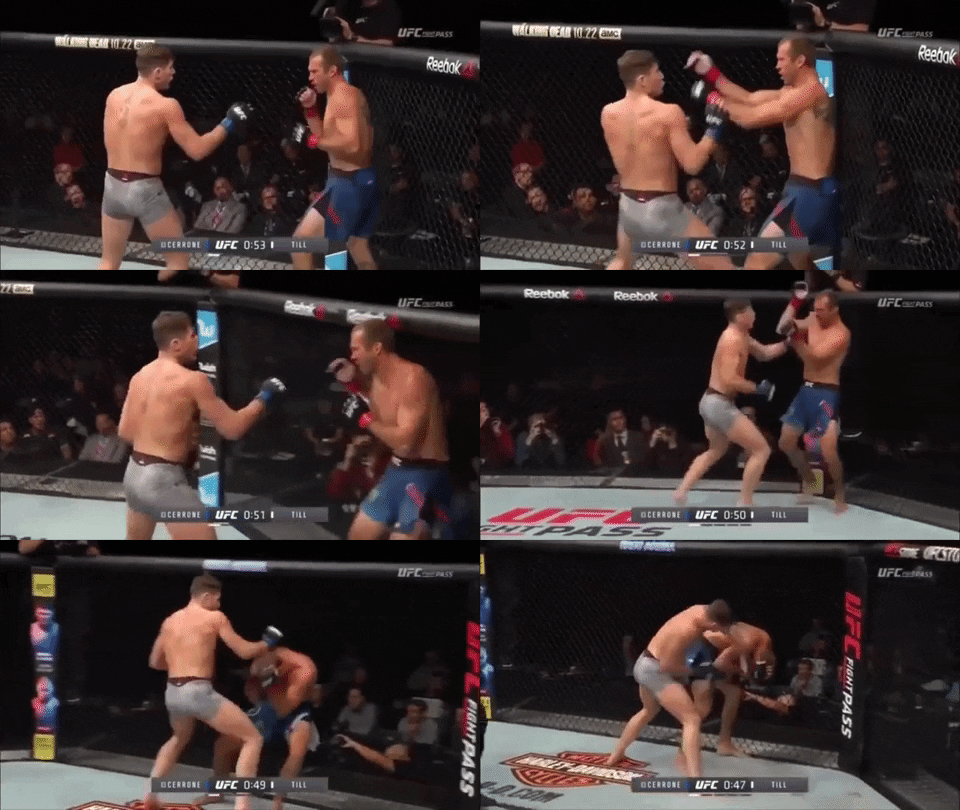
(Nothing that Till does here in this exchange against Cerrone is overly complicated: he throws plenty of feints to draw out the hands so he can throw his own straight punches mixed in with hooks.)
Till's ability to exploit fighters as they rush in draws a lot of comparisons to Stephen Thompson, a fellow welterweight striker that Till beat by the narrowest of margins. When opponents like Jessin Ayari started throwing right straights, Till took a step back at an angle and returned with a counter left. Since the opponent is usually exposed immediately after throwing with their rear straight, it gives Till the perfect opportunity to hurt them without worrying about a follow-up strike. Look no further than how Thompson could get Whittaker to over-commit and blasted him punches from an angle. Hopefully, Till watched that fight closely to see if there were any old habits that he could exploit.
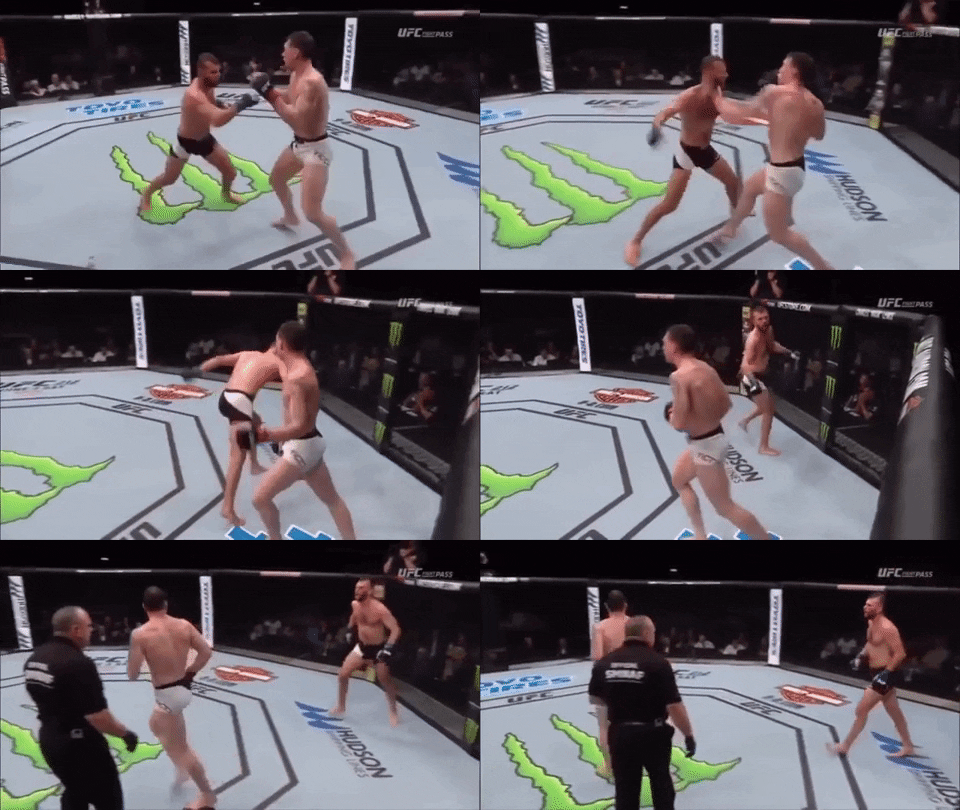
(Till's ability to skip back and let Ayari lunge in allowed him to connect with his left hook before jogging to the center and egging him on to try again.)
This doesn't mean that Till wasn't without his faults. Against Woodley, Till was so afraid of the takedown that even attempting feints seemed like a tall order. Since Woodley usually backs up against the fence to launch his striking and wrestling attacks, Till never got his timing and feinting game going, only to get hit flush with a right straight as he walked in, getting knocked down and choked out by a D'Arce choke. Against Jorge Masvidal, his retreats straight back while keeping his chin in the air allowed Masvidal to counter with a punch over the top. Even in the clip above, Till's chin is straight up in the air as Ayari presses forward. This was bound to get him in trouble sooner or later.
In his most recent fight against Kelvin Gastelum, Till showed more patience by tying up Gastelum in clinches to remove the threat of Gastelum's hooks and wrestling game. It wasn't the most exciting match-up, but it did show that Till's ability to feint and time his opponents isn't the only thing he can do well. By keeping Gastelum at a distance with his kicks and not retreating straight back with his head in the air, Till showed that even though he's lost two in a row, they were tough lessons that he grew from rather than just beatings that exposed his flaws. With speed on his side as a middleweight, Till's underrated jabbing game and round kicks could give a lot of other 185 pounders some real trouble.
For Whittaker to win, he should return to his challenger's mindset. Before he was champion, Whittaker essentially cleared out most of the division before fighting for the title. He used a well-rounded arsenal of kicks aided by his left hook to keep his opponents at bay, but this might be a good fight for him to show off some of his underrated wrestling. Whittaker uses a lot of wrestling as a defensive measure, whether he's scrambling back up after a takedown or wall-walking up to his feet. If he can mix in a few takedowns with his strikes, it'll be interesting to see if it'll get Till to freeze up and hesitate (much like in the Woodley fight). He can also utilize his wrestling to clinch up and put Till against the fence, kicking him in the legs as he moves out and level changing to see if he drops his hands before sprawling. Masvidal got Till to briefly drop his hands before punching him with his own combination. The threat of a takedown could be something that Whittaker uses to throw off the timing of Till. In his fight against Gastelum, Till framed off whenever he wanted to create some distance. If he does that against Whittaker, it could provide Whittaker a good opportunity to land his favorite punch: the left hook.
Till doesn't fight like Adesanya, but he can emulate another previous opponent that beat Whittaker, Stephen Thompson. Till also has similar measurements to Whittaker (although he has 1" reach advantage), so it's not as if he'll be able to overwhelm him with size. By keeping his distance and angling off whenever Whittaker stepped in, Thompson was able to land massive counters early on. Every time Whittaker came in a straight line, Thompson circled out and hit Whittaker with straight punches. He absorbed a ton of damage fairly quickly. A right hand eventually ended Whittaker's night, and this is something that Till has the skillset to mimic. Till should also be mindful of Whittaker's pattern of bouncing on his feet before leaping into an attack. Perhaps he can use his excellent sense of timing to throw the left straight when he sees this coming or an intercepting knee to dissuade him from doing that again. Whittaker also does have a bad habit of dropping his hands after his attacks, but he does after he retreats. The problems come in when he thinks he's at a safe enough distance only to realize he's still within striking range, which is how Romero was able to drop him with punches. Till's counters are some of the best in the weight class, and combined with his feints, he could get Whittaker to overcommit and get caught.
This is the last fight in the UFC's Fight Island series, and it's nice to see the promotion giving us a main event worth the time. It's hard to tell if we'll get another event in Abu Dhabi, but with the way the pandemic is unfolding in the US, we might be seeing a return to Yas Island sooner than later.
Files
Previews only

