 Home

 Creators
 Search
 Recent
 Random
 Posts
 DMs
 Tags
 Random
 Importer
 Import
 FAQ
 Account
 Register
 Login
 Favorites
 Keys
 Logout
 Telegram

Preview: Miocic vs. Cormier III (Patreon)
Content
Good trilogies are rare in MMA, and usually, the rematches tend to resolve the question of who is better. This is even truer for the heavyweights. Fans point to Cain Velasquez vs. Junior Dos Santos as a great heavyweight trilogy, but was it really? The first fight was quick, and the second was a one-sided thrashing. The third was a repeat of the second.
At UFC 252, Daniel Cormier and Stipe Miocic will get to settle the score to determine who is the best heavyweight of this era. Between the two, they've beaten a who's who of heavyweight greats. If the stakes weren't already high, this is slated to be Cormier's retirement fight. Both fighters have spent the last three years focused almost entirely on each other, and it'll come down to small adjustments to see who can emerge as champion. Let's start with Miocic, what makes him so great?
It's arguable that among UFC heavyweights, Miocic can already make the case as the greatest ever in the organization. Fabricio Werdum has a great list of victories, but Stipe knocked him out in the first round. Velasquez might argue that he should hold that distinction. However, his title defenses have been against the same two opponents—Junior Dos Santos and believe it or not, Antonio 'Bigfoot' Silva. Velasquez also has a loss to Werdum that remains unavenged. Miocic's reign as champion was close to three years with three successful defenses against three different opponents (Dos Santos, Alistair Overeem, and Francis-fucking-Ngannou). He was also able to avenge his only loss as champion by finishing Cormier in the 4th round during their rematch. To the surprise of many, Miocic doesn't work with a variety of tools, but the ones he uses are honed to maximum effect. Given his background as a Golden Gloves boxing champion, it shouldn't surprise anyone that Miocic prefers to strike with his hands more than his feet. What seems to set him apart is his diligent use of jabs. Aggressive counter-strikers are met with a healthy dose of feinted jabs to dull their reactions, only to be met with real punches when they swing and miss. Heavy hitters are met with volume, as a high pace can deny them the time it takes to set up powerful blows. Technical strikers with decorated boxing or kickboxing backgrounds are pressured towards the fence, denying them space to counter or escape. While at the same time, Miocic sets them up for his 1-2.
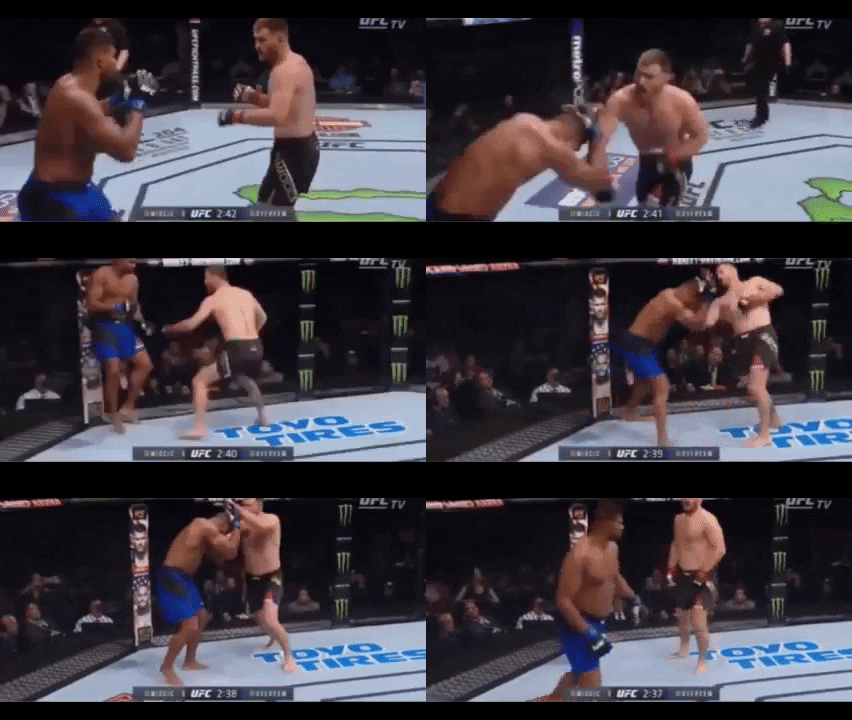
(Knowing that fighting Alistair Overeem out in the open is dangerous, Miocic crowded him towards the fence where he couldn't escape.)
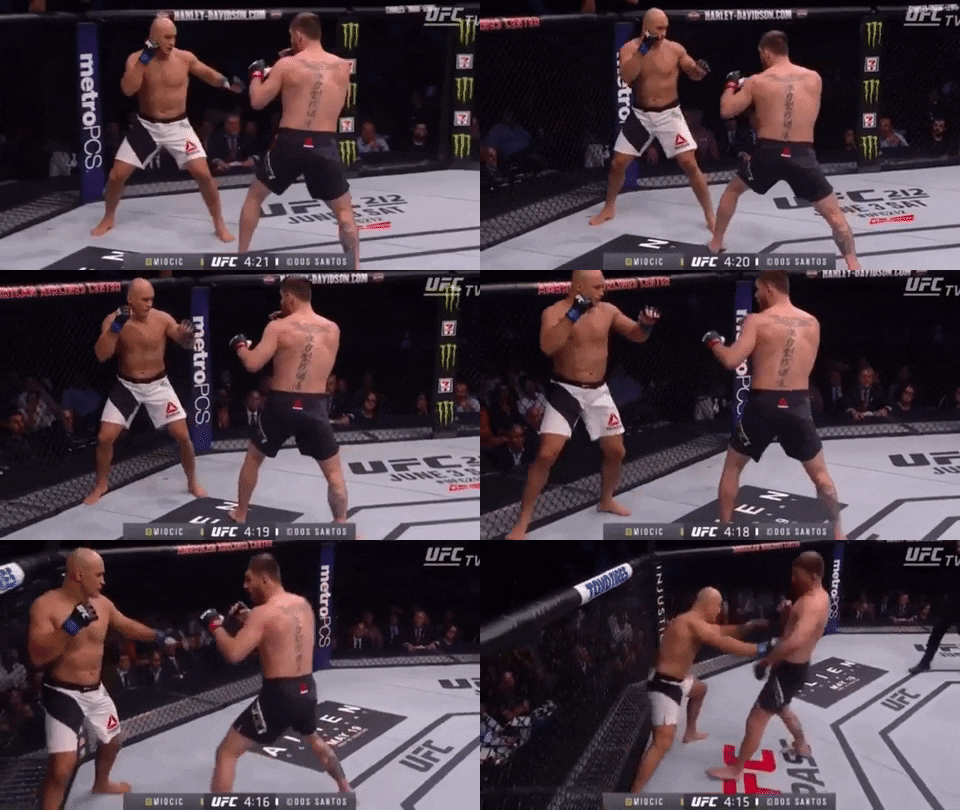
(In his rematch against Junior Dos Santos, Miocic defused a lot of Dos Santos's punching power by squaring up his hips and ensuring that his back was towards the fence.)
If you've never seen Miocic fight before, think of him as a bigger Calvin Kattar with a solid wrestling base. At 6'4" with an 80" reach, Miocic is a real heavyweight with the size and frame to give anyone problems. He doesn't have the wrestling credentials of Cormier or Velasquez, but he doesn't need them as he uses his single and double leg takedowns to compliment his boxing. Against Mark Hunt and Francis Ngannou, he was able to feint and overwhelm them with volume before level changing for takedowns. This led to takedown anxiety, where both Hunt and Ngannou kept their lead hands low to defend takedowns, only to eat jabs and straights instead. Much like Kattar, Miocic can get opponents to react because many of his jabs come from the elbow, hiding its trajectory and making it difficult to time. Shoulder and hip feints hide his real strikes and are used instead of variety. Feints and variety serve the same purpose, to keep opponents guessing.
Good jabs are multidirectional and variable and can be used both offensively and defensively. Off-rhythm and the jab is a nightmare for counter-strikers. Think of it as a game of hot hands—the goal is to move your fingers just enough that your partner flinches so you can slap the back of their hand. Feinting with the jab keeps the opponent guessing and unable to move forward with their game plan.
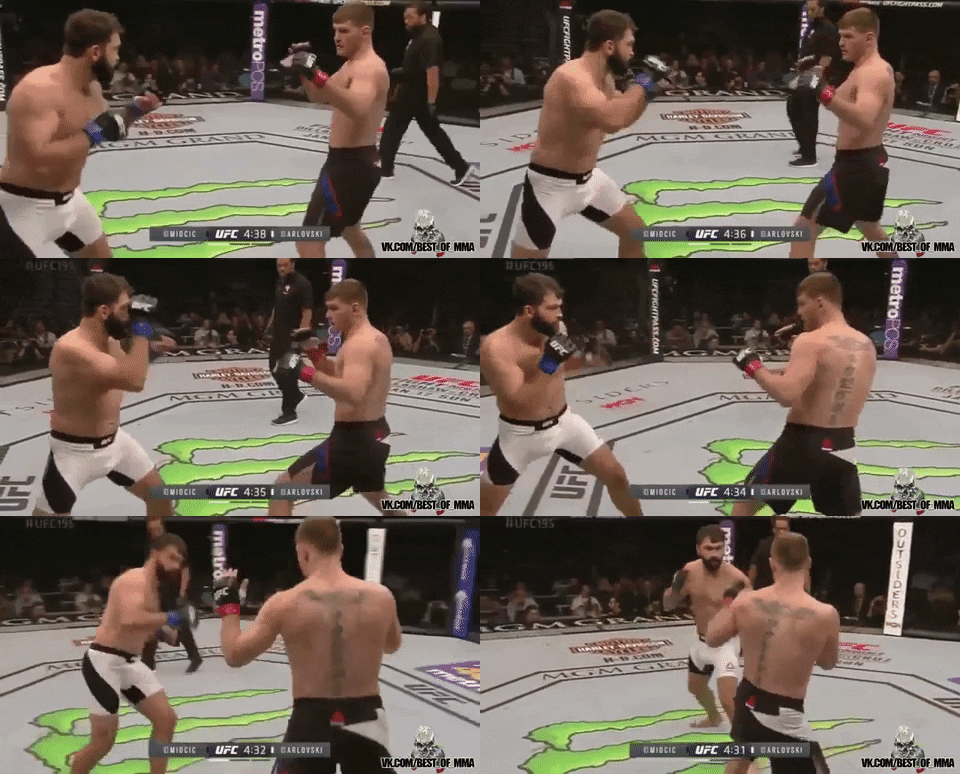
(The feints from Miocic get Arlovski to overreact, and this was in the first 30 seconds of the fight.)
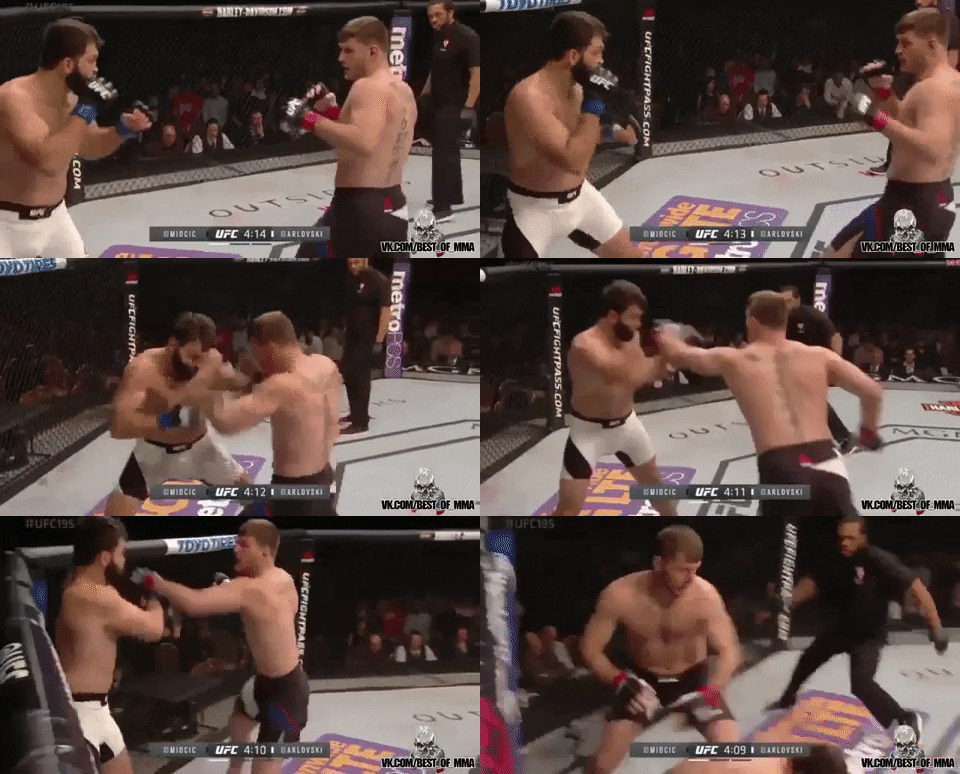
(Here, Miocic flicks out a jab Arlovski disregards, only to get hit by the sneaky right. This wobbled him for a second, allowing Miocic to follow up with strikes.)
In the fights with Daniel Cormier, we saw the best and worst of Miocic's striking. Instead of using his feints to enter, Miocic engaged in prolonged hand-fighting where Cormier neutralized Miocic's boxing and was able to land with his own jabs and straights. This wasn't a surprise gameplan that Cormier had developed just for Miocic, this was standard Cormier. When Miocic finished off his combinations with the right straight, from this range, he was left open to counters from Cormier.
In the first fight and the majority of the rematch, Miocic was content hand-fighting and only landing the occasional straights and hooks around Cormier's arms.
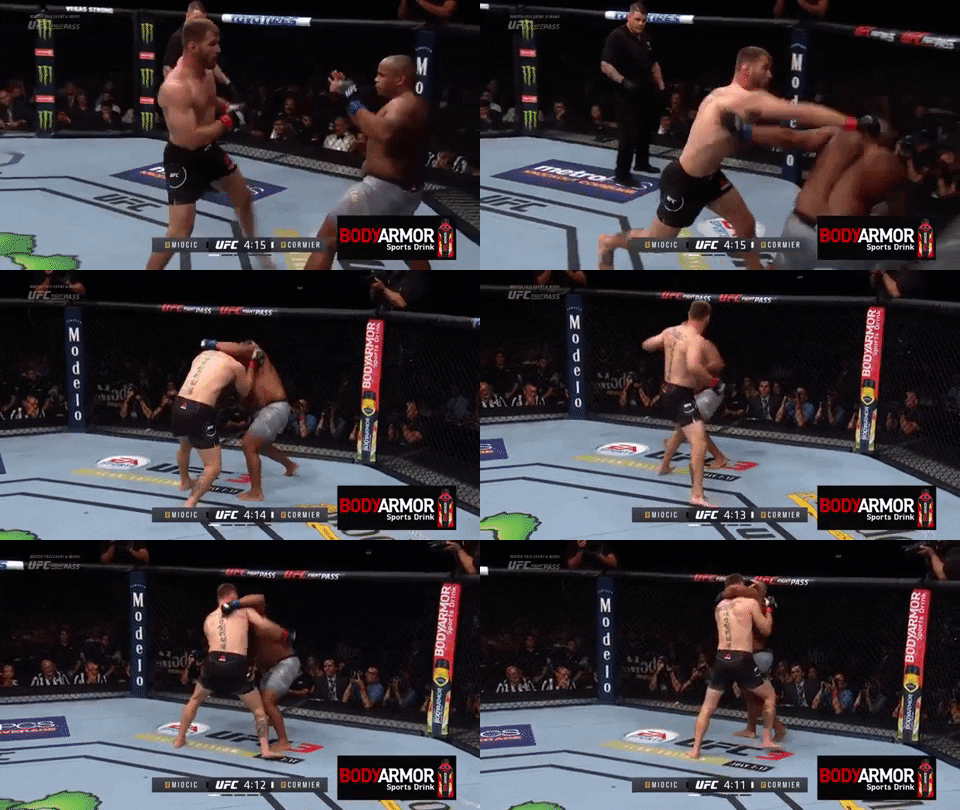
(In this clip, look at how Miocic presses forward against Cormier, allowing Cormier to swing his arm around Miocic's neck to throw uppercuts. It doesn't help that Miocic didn't throw a lead hook after the 1-2, leaving him exposed for counters. Immediately after Cormier releases the single collar tie, Miocic repeats this mistake and gets clinched again.)
Finally, in the fourth round, Miocic started finishing off his punches with a left hook to the body. Before the rematch, we talked about Miocic needing to use body shots, and eventually, Miocic arrived at the same conclusion. Left body kicks, low kicks, hooks, and uppercuts to the body should've been something Miocic did from the get-go. It's been well documented that Cormier doesn't do well against body strikes. Anderson Silva was a last-minute replacement for Cormier, and his best attack against him was a kick to the midsection that froze Cormier. An instinctive takedown prevented the upset by Silva.
Miocic won the rematch, but still showed his usual flaws. Despite having a good wrestling background, Miocic isn't on the same level as Cormier and had no business staying in the clinch for as long as he did. This only gave Cormier repeated opportunities to land uppercuts and hooks off the clinch break. Miocic also fought Cormier while standing unusually upright (possibly from Cormier's pressure), which made him vulnerable to overhand right hands and jabs. The hand fight with Cormier removed Miocic's active lead hand. As a result, he absorbed more unanswered strikes (and eye pokes) than necessary.
Now that the series is tied at 1-1, does Cormier have what it takes to win back the title before riding off into the sunset?
Cormier doesn't have anything more to prove. He's a former two-division champion in the UFC and the only Strikeforce Heavyweight Grand Prix champion. Even though he lost the rematch, he was winning most of it before Miocic started hammering his body. He has the tools to win, and with a few adjustments, it's reasonable to assume that he could reclaim the title.
Let's start by analyzing what gave Miocic so much trouble: the hand-fighting. Cormier's hands up, George Foreman-style guard isn't popular anymore in boxing because of the limited amount of counter strikes available. Still, it works for Cormier because it's MMA. With kicking, grappling, and elbows, Cormier has options. After slipping or smothering the jabs of Miocic, Cormier would counter with hard low kicks. When Miocic tried to check them, he would sneak in kicks to the body.
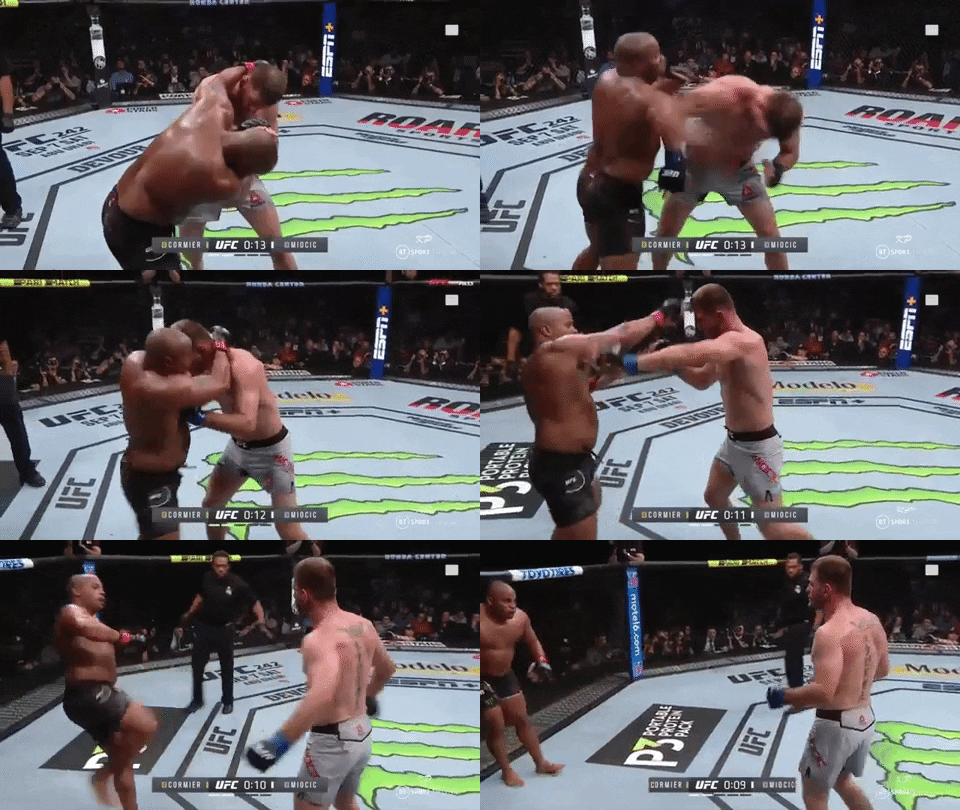
(Because of the height difference, you'd think it would be Miocic who would use his legs more, but Cormier was able to sneak in plenty of kicks after throwing punches from the clinch.)
Miocic fell into the trap that many others had before him when his hands were checked. He either withdrew his hands completely (which left him vulnerable for Cormier's own jabs and hooks) or swung with hooks on the outside (only to get drawn into the clinch).
Against Miocic, Cormier was able to throw his arm over Miocic's shoulder and grab the back of his neck. If Miocic lowered his head to escape the clinch, Cormier would throw a right uppercut as a parting gift. Cormier's entire system is built off utilizing his wrestling game. Even the process of building up strikes has the collar ties and clinch work baked in. Meaning no matter what you do, you're going to have to deal with wrestling, and this is where Cormier shines.

(The clinch is not the best place to fight Cormier. Even Jon Jones had trouble early on and kept eating uppercuts from Cormier before he started attacking the hands later.)
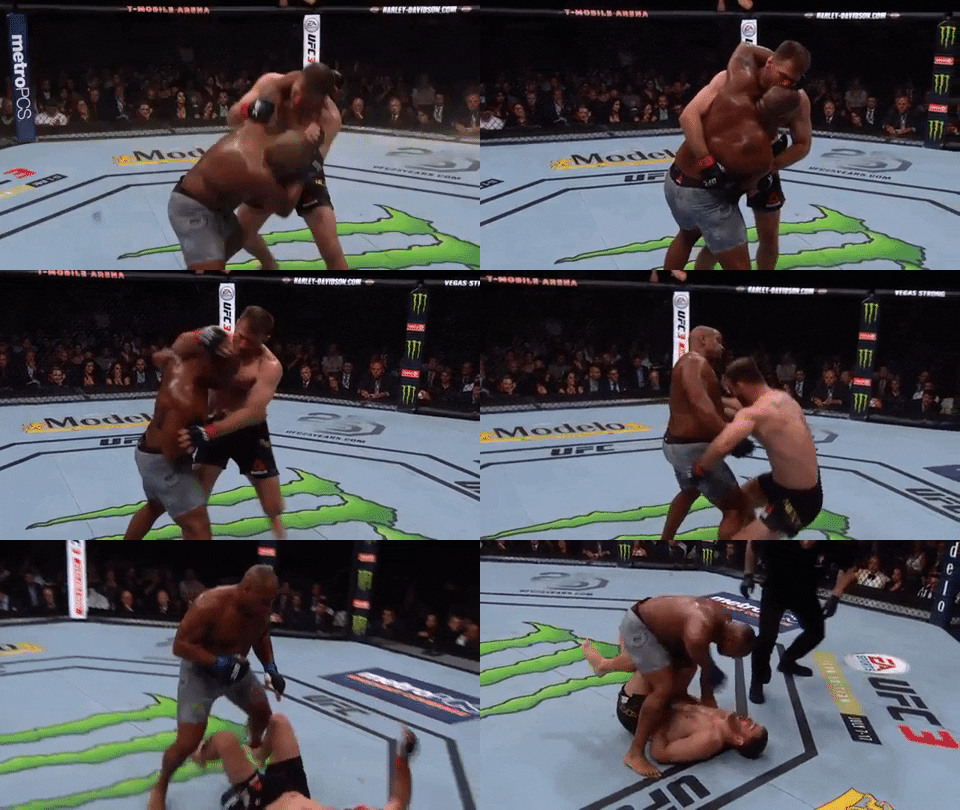
(A closer look at the hand and arm placement of Cormier shows you what he had been planning from the beginning. When Miocic felt secure by establishing an underhook and controlling Cormier's right hand, Cormier used a limp arm to secure his own underhook. At the same time, he broke his right hand free by circling his arm. Cormier then threw a right hook to the jaw.)
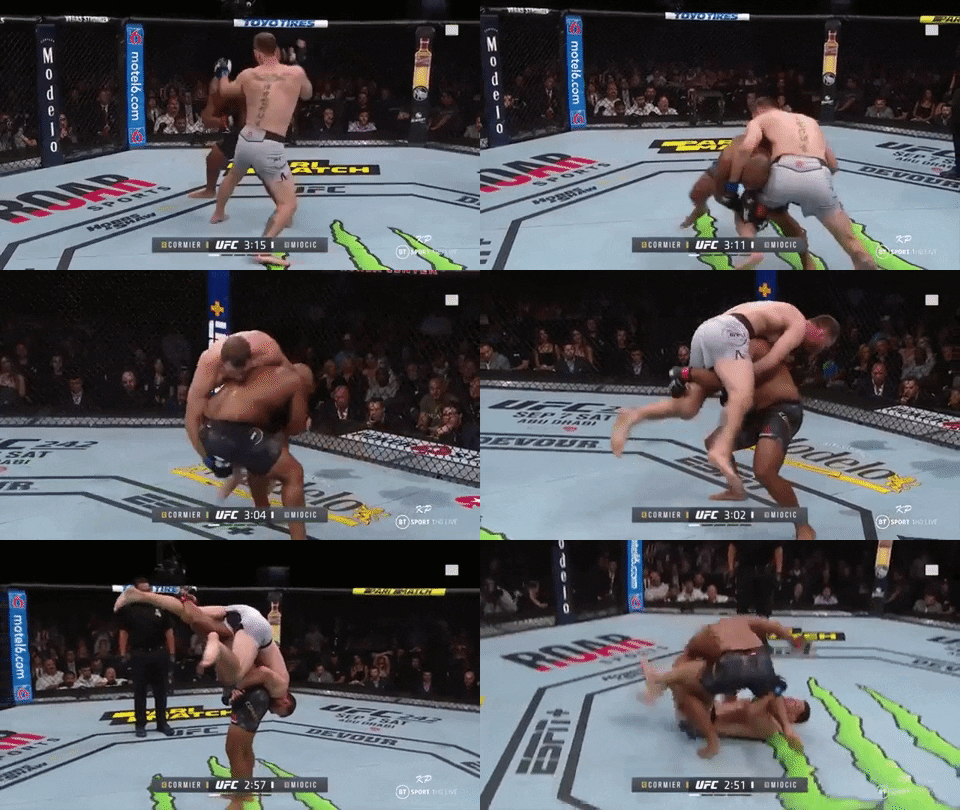
(Cormier leads with his jab before ducking to grab Miocic's lead leg. With Cormier's wrestling pedigree, the rest was academic.)
Whenever the fight hit the mat, it was Cormier who initiated, allowing him to score with ground and pound. Even though he stands at just 5'11" with a 73" reach, Cormier's wrestling allows him to negate a lot of the traditional height and reach disadvantages. Let's not forget that this is the same man that rag-dolled Josh Barnett in his 10th MMA fight and tossed around Dan Henderson like he was making pizza. His physical strength is built from decades of training at the Olympic level, and no amount of training camp can help you beat him in a straight freestyle wrestling match-up. Cormier's awkward punching style mixed in with his wrestling makes him a difficult night for any fighter. However, he is not impossible to beat.
Like Justin Gaethje's high guard or Dustin Poirier's stonewall, there are ways to work around Cormier's defense. Cormier's hands out approach leave several openings, the most prominent being the body and legs. Cormier does his best when you come towards him, maximizing his reach. Alexander Gustafsson's use of pivots gave Cormier fits, which allowed him to counter Cormier with body shots. Jon Jones countered Cormier's hand-fighting with kicks to the legs, knees to the midsection, and elbows off the clinch break. Even older fighters like Frank Mir and Anderson Silva hurt Cormier with kicks to the body whenever he moved forward.
In the trilogy fight, there aren't many things either fighter need to adjust to win. Both have shown the necessary tools, and it'll come down to basic questions: Will Cormier use more of his wrestling to keep Miocic guessing on the feet? Can Miocic repeat his second performance and target the body early on?
For Miocic, an ideal game plan would be to stay light on his feet with his hands tucked in and wait for Cormier to come to him. Look for counter straights and right hooks whenever Cormier steps and get Cormier to hesitate. Switching to southpaw from time to time will also open Cormier up for body kicks, not to mention the left straight down the middle. Doing this will also deny Cormier the high crotch.
Another tactic Miocic could benefit from is the front kick. Robert Whittaker used this to keep Yoel Romero, another Olympic wrestler, at bay. It goes without saying that Miocic should focus on body strikes, whether they're left hooks at the end of his combinations, uppercuts to the body when entering (a la Rafael Dos Anjos), or kicks to the midsection to let Cormier know he's getting too close. Going kick for kick with Cormier isn't a terrible idea. Miocic can mitigate the damage from the low kicks by keeping his lead leg pointed at a 45-degree angle (since this can hurt Cormier if he kicks low). Miocic also shouldn't be afraid to initiate the wrestling, especially if he can find a way to lean in and make Cormier carry his weight. Jon Jones did this many times against Cormier, and Miocic could do the same.
Cormier is still prone to tiring out the longer the fight goes, so by investing early on in draining out his gas tank, the better the chances are for finishing him down the stretch.
Cormier's improvements might come down to going back to his wrestling roots and tweaking parts of his boxing game. He's already stated that Miocic should bring his wrestling shoes. Cormier is going to go all out to ensure victory in his last fight out. By all indications, he seems serious. This the lightest Cormier has been at heavyweight. He's been able to get both Cain Velasquez, Luke Rockhold, as well as a list of other all-stars to help him prepare for this fight. He's also added Mark Henry as part of his training camp to discuss possible striking strategies and counters against body strikes. Henry's pupils have included Eddie Alvarez, Frankie Edgar, and Marlon Moraes. Their penchant of throwing darting right hands and level changes to hide body shots would be a nice addition to Cormier's arsenal. Perhaps Cormier can start throwing more uppercuts and hooks to Miocic's body to keep his hands low, only to pop up with a sneaky counter punch to the head. Miocic relies heavily on his jab to set up the rest of his punches, so throwing leg kicks to the lead leg can help disrupt his power and rhythm.
No matter who wins this fight, it's a shame that MMA is losing a fighter like Daniel Cormier. There are few athletes among heavyweights who can claim to have his skill level, both on the feet and on the mat. With a win, Miocic can rightfully claim the title of greatest heavyweight ever in the UFC, having defended his title four times and being the only fighter to beat Cormier twice. After this fight, the heavyweight division might not be competitive for a while, so let's enjoy every second of this fight.
Files
Previews only

