 Home

 Creators
 Search
 Recent
 Random
 Posts
 DMs
 Tags
 Random
 Importer
 Import
 FAQ
 Account
 Register
 Login
 Favorites
 Keys
 Logout
 Telegram

Preview: Adesanya vs. Costa (Patreon)
Content
Israel Adesanya and Paulo Costa are both exciting strikers in the UFC middleweight division, and neither fighter has experienced a loss. The similarities end there, but that’s also what makes this fight exciting. This match-up has been in the making for over a year, with both fighters sniping at each other whenever given the opportunity.
The 185-pound division has an interesting mix of young guns and aging veterans, and both the champion and challenger are part of the former. With youth on their side, one winner can cement himself as the next long-reigning champion while the other can start a new reign. At the very least, this match-up could provide us with another great MMA rivalry.
In the co-main event, Dominick Reyes and Jan Błachowicz face off for the vacant light heavyweight title. Arguably, Reyes should have won his last fight against Jon Jones, and this fight gives him the chance to right that wrong. Błachowicz’s last three performances are worthy of a title shot (at least by light heavyweight standards), and what better time than now? As fans, we don't always get double headlining title fights. Let's count our blessings and take a closer look at the headliners competing.
Israel Adesanya vs Paulo Costa
Paulo Costa has been on a tear in the middleweight division. A former contestant on The Ultimate Fighter: Brazil 3 in 2014, Costa was eliminated in the quarterfinals. Costa would not make his official UFC debut until 2017. A glance at his record shows that 92% of his fights don’t see the third round. Costa has finished 11 opponents by TKO, ten of them by way of punches. Like fellow Brazilians John Lineker and Jessica Andrade, Costa throws alternating hooks while pressuring opponents towards the fence. Costa knows whether he's targeting the body or the head, his above-average power can make up for any technical deficiencies.
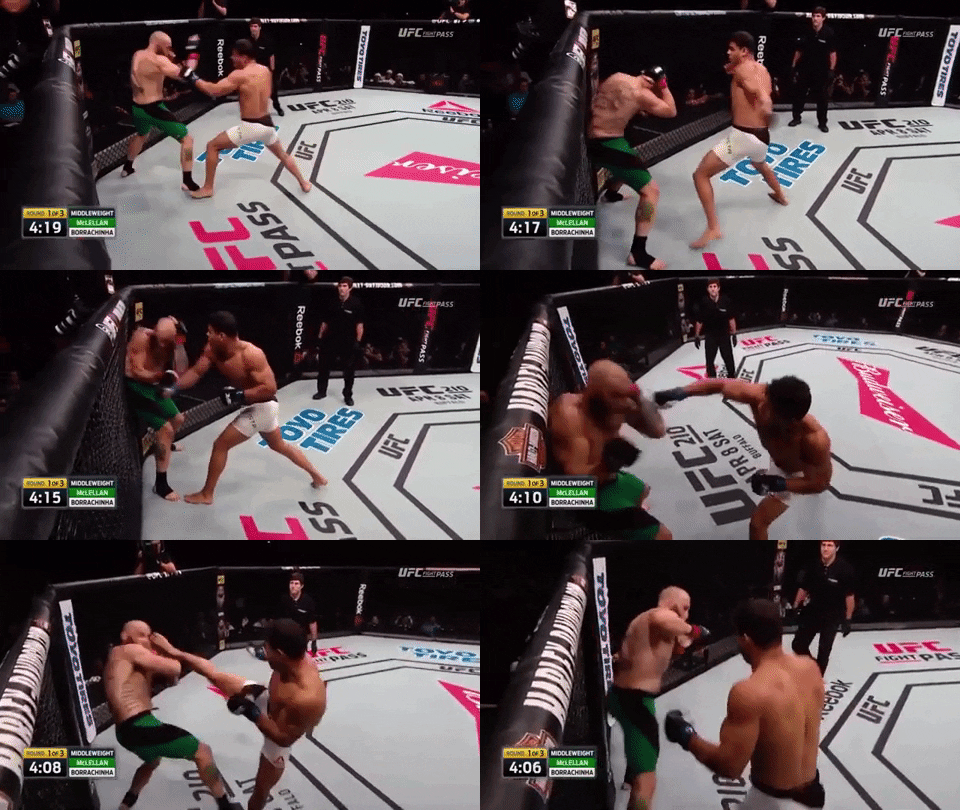
(For every straight punch or kick that’s thrown, you can expect Costa to triple the number of hooks.)
Costa favors using his hands to inflict most of the damage on the feet. This doesn’t mean those are his only weapons. While he might not have a varied jabbing game, Costa manages to gauge distance by throwing body kicks.
Jabs are a great tool for measuring distance and keeping your opponent in place, but they’re not the only ways to do so. Costa’s alternative method of moving forward, cutting off the ring, and throwing body kicks has worked well for him. It accomplishes the goal of backing his opponents against the fence and leading them into his power shots.
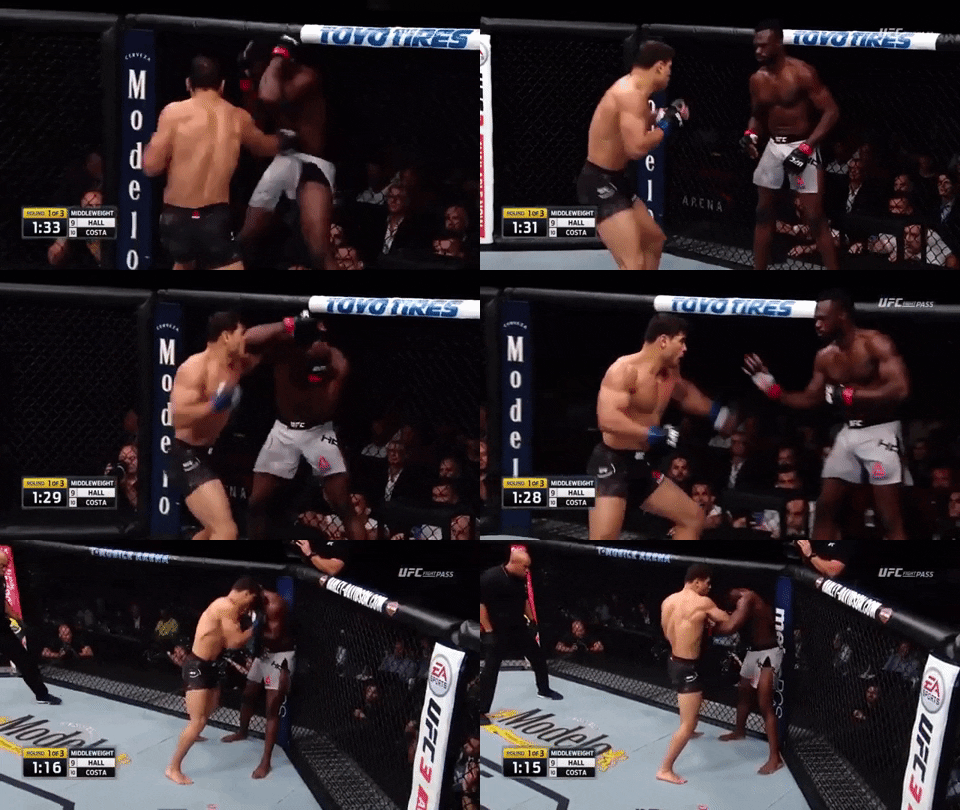
In the moments where the opponent darts the other way, Costa’s wheel kicks can stop them in their tracks. Southpaws like Romero don’t seem to fare any better. Costa's highlights might focus on his punches, but the kicks give Costa the positional advantage to swing away. Even if the fighter starts to counter, Costa’s ability to absorb strikes is among the best in the division. It doesn’t matter if you’re able to land clean on Costa, he’s more than willing to take a few shots to return fire.
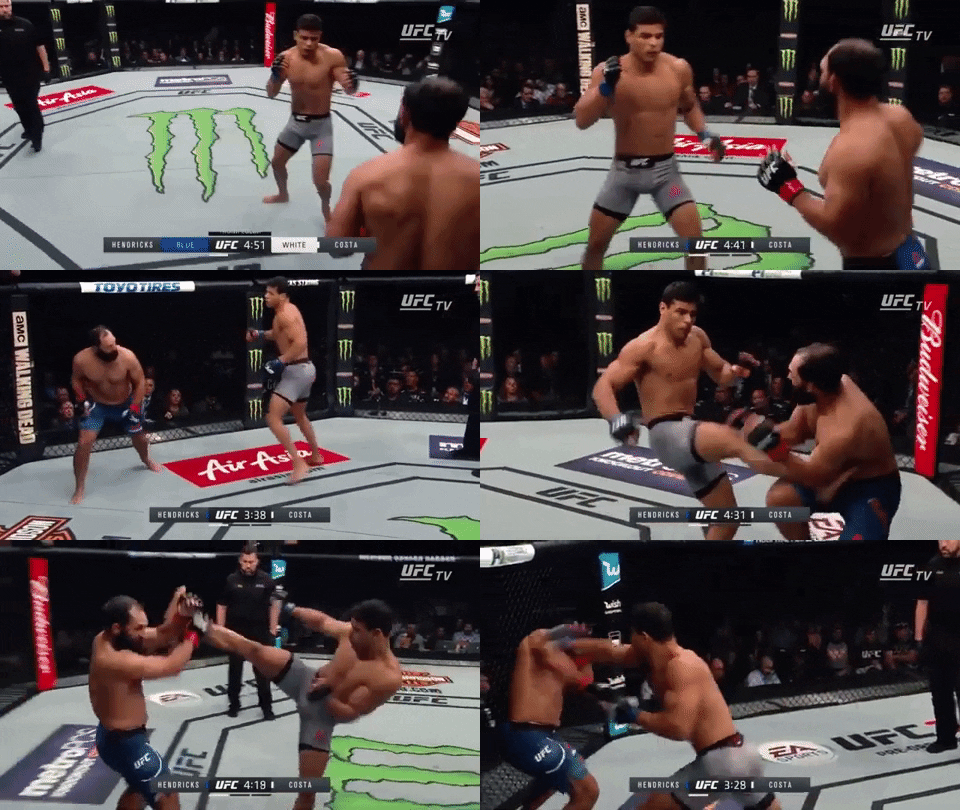
(By adding kicks to the body, Costa got Hendricks to lower his hands, leaving openings for punches to the head.)
Since Costa does his best work standing, he has developed effective takedown defense. By favoring hooks and uppercuts to the body at close range, Costa can switch to digging for underhooks if opponents try to change levels. Costa's punches to the midsection get them thinking twice about lowering their head. However, shooting in from too far out would mean they could end up on all fours with no protection. Against Johny Hendricks and Yoel Romero, Costa was able to sprawl out of takedowns or scramble back up. Costa took a page out of Robert Whittaker's playbook and targeted the midsection of Romero.
Throwing jabs to the body also kept Costa in a better position to defend takedowns. It worked, as he won a unanimous decision.
The win over Romero guaranteed Costa a title shot against current champion Israel Adesanya. Adesanya is not only the most decorated striker he has ever faced, but also his youngest opponent. Adesanya made his UFC debut after Costa, but he’s been able to stay busier and become the undisputed UFC middleweight champion. One of Adesanya’s key strengths is his convincing use of feints. He starts by twitching his shoulders, turning his hips, raising his knees, and extending his hands before mixing in actual strikes. Adesanya’s feints are almost as convincing as the real thing. He doesn’t mind feinting many times to land an actual strike down the line. When you look at the stats, Adesanya has attempted 1,032 significant strikes, with nearly half of them landing. That’s the second-highest number of significant strikes attempted in the division. Like the great Willie Pep, Adesanya can win rounds by feinting and moving forward alone. It's not uncommon to see opponents retreat and lie in wait for an attack to happen.
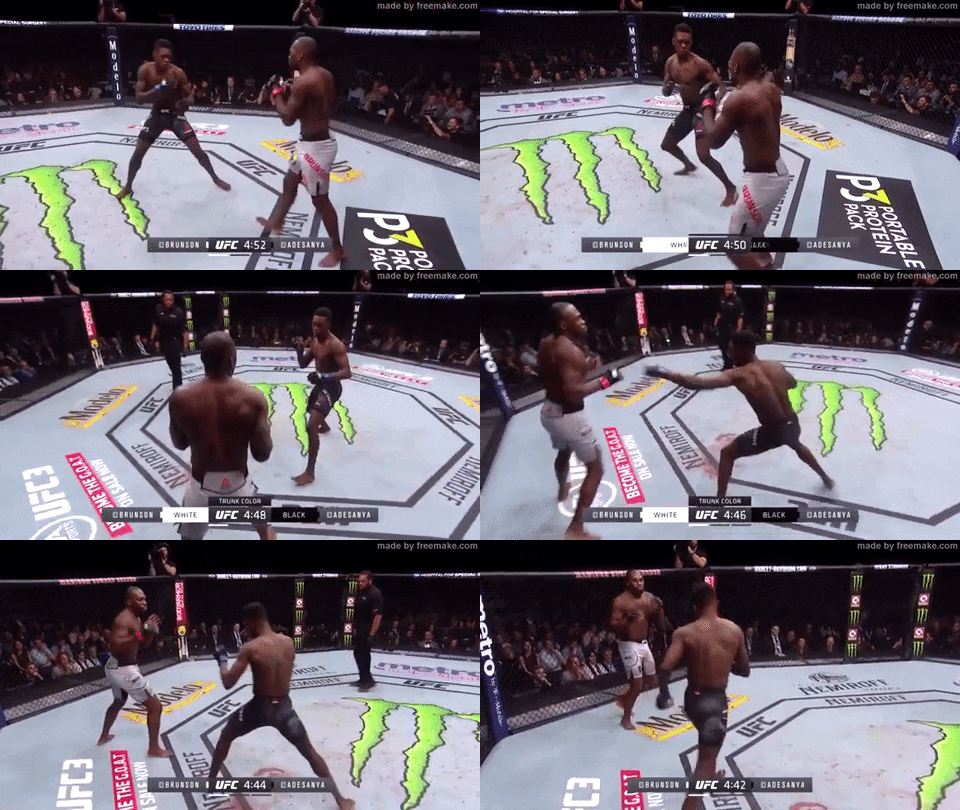
(Not a single strike has landed, but Adesanya’s movements are enough to worry Brunson.)
No matter how sharp someone is at the beginning of the round, over time their reactions start to dull. No one stays perfect for 25 minutes straight. During this time, a small disruption is all Adesanya needs to work his magic. Feinting seems obvious, so how is it that he’s able to catch so many opponents? Take a closer look at Adesanya’s feet and you’ll notice he hides his stance switches in plain sight. Adesanya flows between southpaw and orthodox, whether he's attacking or retreating. Against Derek Brunson, Adesanya faked a low kick only to go high, hurting Brunson. The moment Brunson was stunned, Adesanya switched stances and began attacking him with different strikes before finishing him.

(Adesanya switching stances and finishing Brunson)
Adesanya’s ability to angle out and return with counters against rushing opponents is among the best. On the inside, Adesanya’s clinch is full of attacks such as knees from the collar tie, elbows off the break, and even foot sweeps if the opportunity presents itself.
Even though Adesanya might not appear to have power, his ability to time his opponents as they move forward is what gives his strikes some added sting. In his kickboxing days, Adesanya had no problem taunting opponents to have them lunge in, only to throw knees to the midsection or hooks to head. Robert Whittaker and Kelvin Gastelum got hit by Adesanya’s left hooks when they missed. Their forward momentum added power to Adesanya’s punches (even though he used less energy).
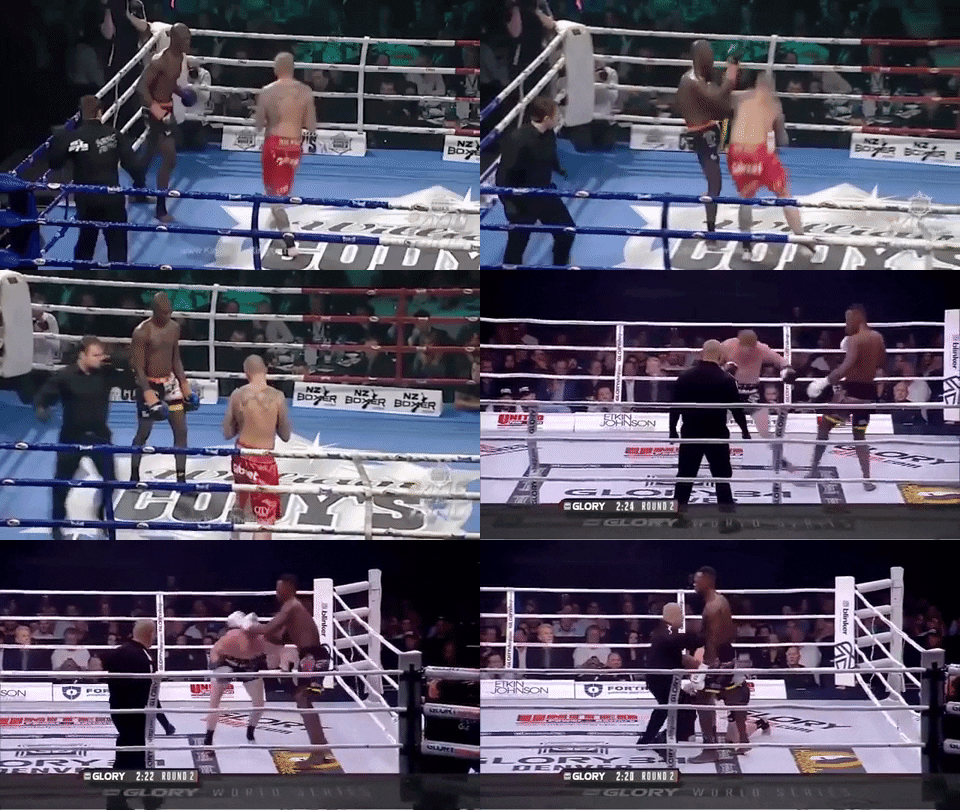
(Compare the two knees to the midsection. The first comes as an offensive attack that stuns the opponent. The second is thrown as the opponent comes forward, making the impact stronger.)
One of their 0's has got to go. It’s been a while since the UFC has pitted two undefeated fighters against each other, especially at the championship level. For Costa, he has a rough road to overcome but it’s not impossible. Throughout his time in the cage, Adesanya has shown glimpses of weaknesses and Costa has the tools to exploit them. By pressuring Adesanya towards the fence and kicking the legs as Adesanya circles out, Costa can limit his mobility. Whittaker had success by punching first and then kicking Adesanya in the legs. Even though Adesanya was able to move his head to avoid the punches, his legs stayed in place and absorbed the kick. It’s not out of the question for Costa to lower his body kicks and aim for the legs of Adesanya. This is the same strategy that Shogun Rua utilized against Lyoto Machida in both fights. Shogun blitzed Machida with punches and finished with leg kicks to the trailing leg. Adesanya is a counter striker, so having him take the lead could also give Costa the chance to surprise him. Kelvin Gastelum is shorter than Costa and even his low kicks stopped Adesanya long enough to land with hooks. Gastelum moved forward while throwing punches, forcing Adesanya to move his head often. Some of these punches did slip through and hit him clean.
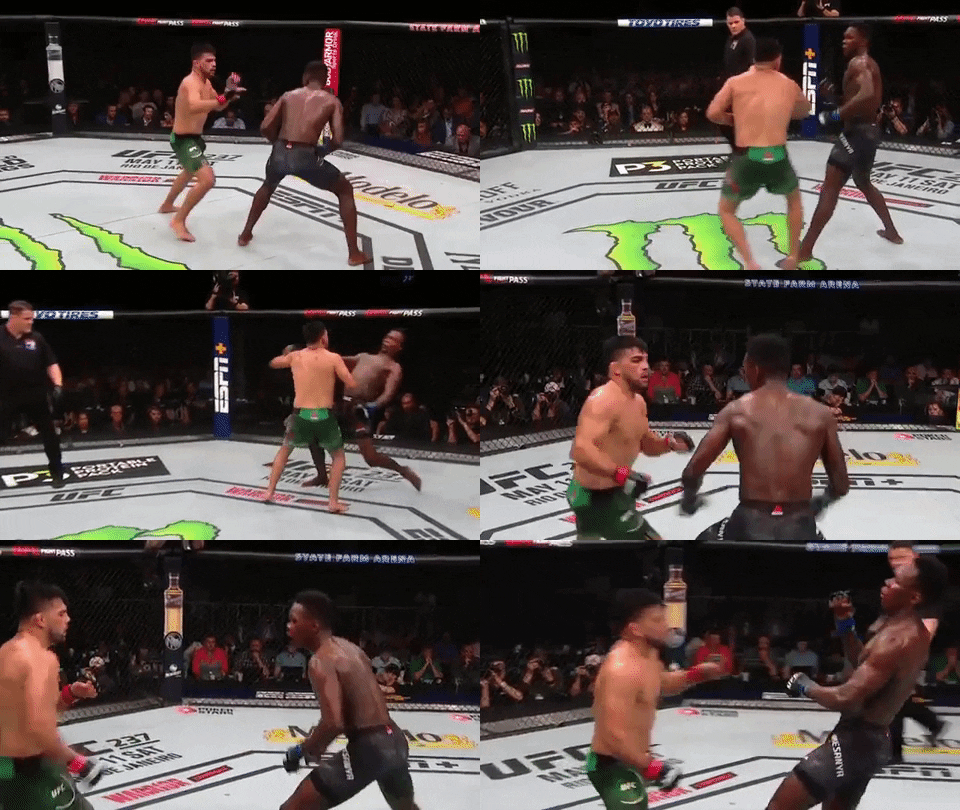
(Notice how during these exchanges, Gastelum never stopped to admire his work. He kept throwing punches until something landed.)
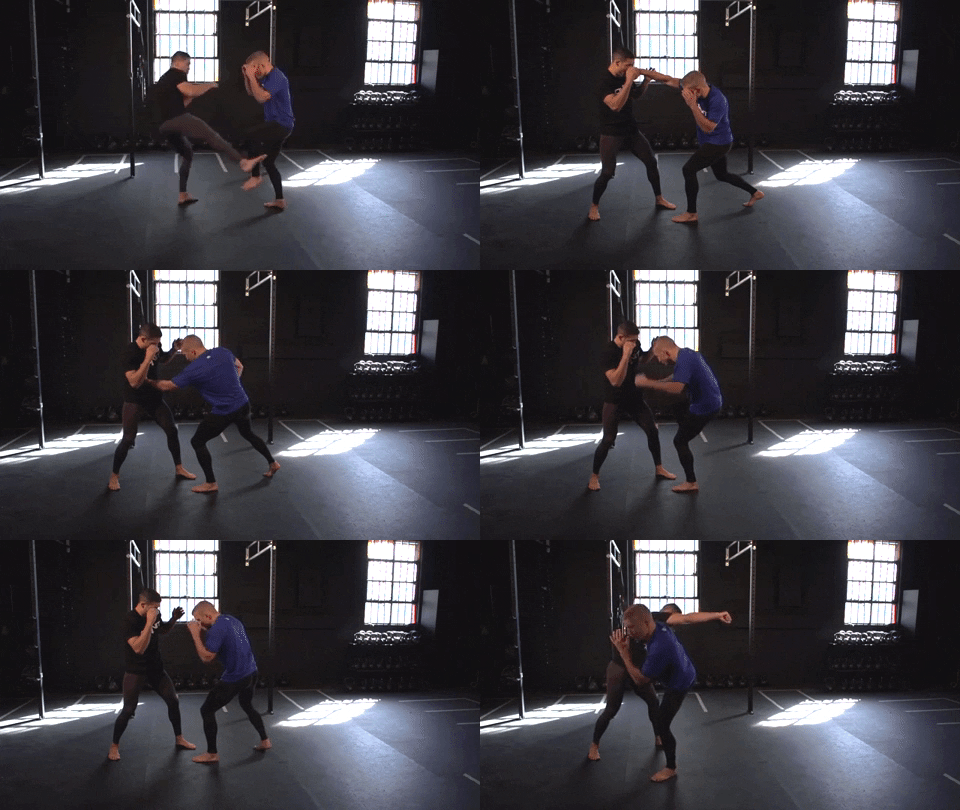
(A possible combination to use against Adesanya is here. After checking the low kick, Dillashaw throws a right straight which sets up a left hook to the body. From there, he shuffles to the left before ending the combination with a kick.)
Adesanya is an adept switch hitter that can transition from orthodox to southpaw. At 6’4” with an 80” reach, he towers over Costa, who is 6’ tall with a 72” reach. Costa can find success by timing Adesanya’s stance switches and blitzing up the middle with hooks while Adesanya is on one leg throwing kicks. Shane Burgos was getting hit by the jabs of Calvin Kattar, but he answered back with combinations that forced Kattar to cover up and retreat.
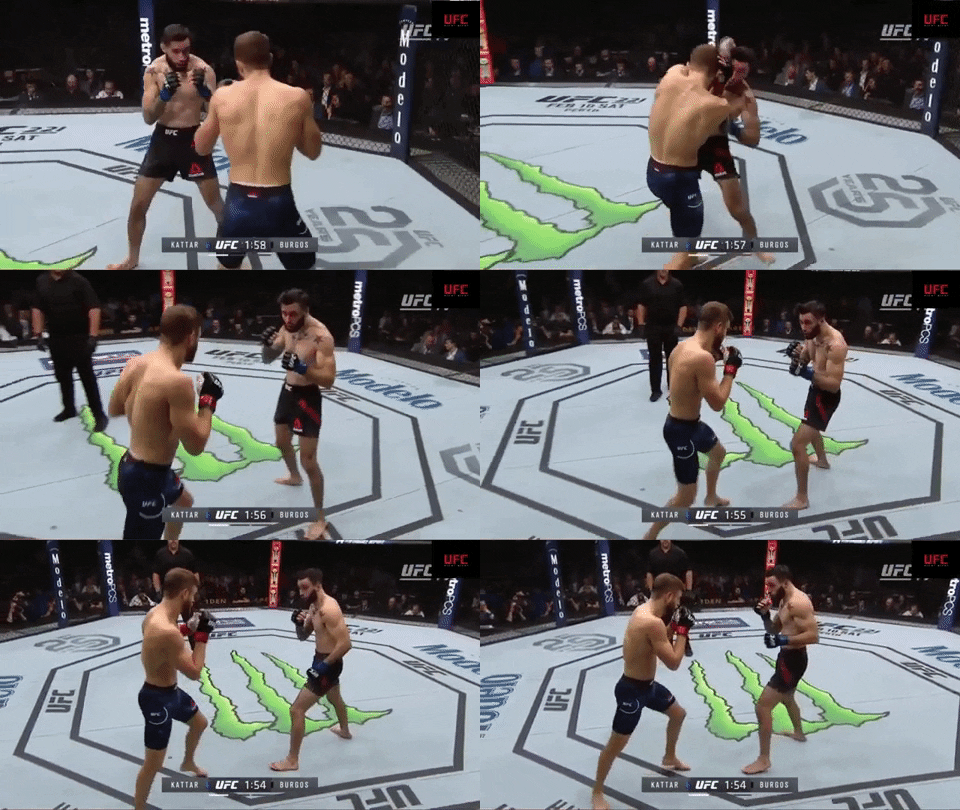
This is something that Costa can mimic and do throughout the fight. Costa's hooks, smaller cage size, and the addition of Eric Albarracin in his corner give him good odds. One of the few strikes that Adesanya is still susceptible to happens to be the lead hook. In his kickboxing days, Adesanya threw a southpaw left straight against Alex Pereira and got caught by a counter left hook.
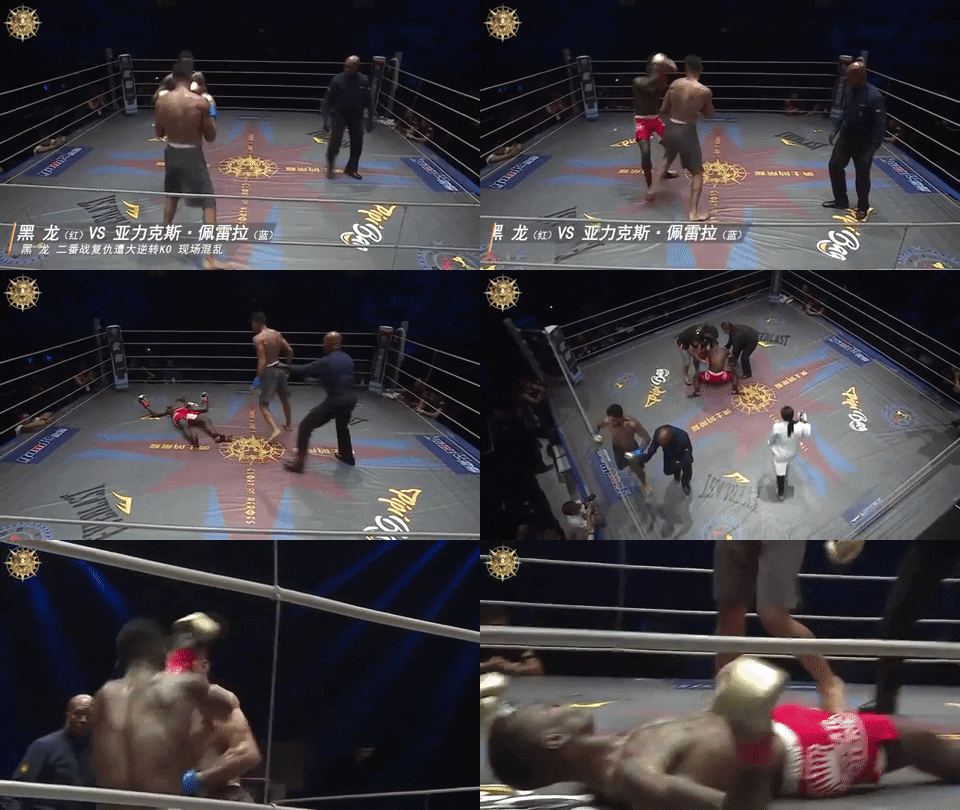
Whittaker also connected with the left hook on occasion in their fight. Even an aging Anderson Silva found the same counter when Adesanya threw the southpaw left straight.
For the champion to walk out of the cage still undefeated, he’s going to have to go back and look at all the past successes that previous opponents have had against Costa. Luckily for Adesanya, he has a deep bag of tricks to draw from and his style matches up well against Costa. Throwing hooks and uppercuts are powerful, but they’re often thwarted by a well-timed jab. Adesanya has an 8” reach advantage over Costa, and it’s no secret that he’s adept at utilizing his jabs. Uriah Hall had success with the jab against Costa whenever the latter moved forward. Hall isn’t a jabber, but his basic jab combined with simple head movement seemed to give Costa trouble.
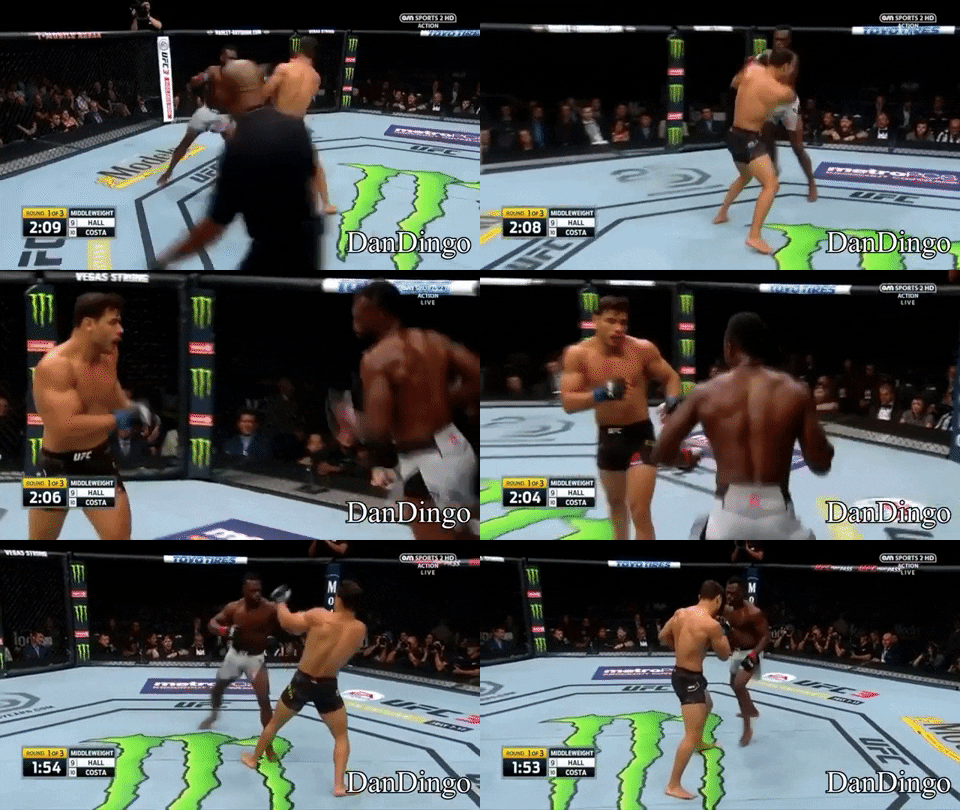
(Hall was able to hurt Costa while moving back with jabs since Costa’s forward pressure created collisions.)
Adesanya can also kick the body and retreat off-line when Costa tries to counter with hooks. Against Romero, Costa remained stationary after his attacks and got countered. It’s not that Costa couldn’t think of what to do next, he was also gassed in a three-round fight. Despite Costa being the one to target the body of Romero, it was he who seemed worse for the wear in the third round. Adesanya can break Costa's pressure by forcing him to chase and use up more energy. By doing this, Adesanya can tire Costa out before the championship rounds. To counter Costa’s body kicks, Adesanya should consider utilizing the cross-check. By having his round kicks checked early and often, Costa might hesitate to throw them as the fight goes on. Luke Rockhold is famous for his leg kicks, but Romero checked them early. Rockhold soon stopped with the kicks and relied on his punches to try and finish the job. Adesanya has the fortune of looking back to his fight with Gastelum to come up with a possible blueprint.
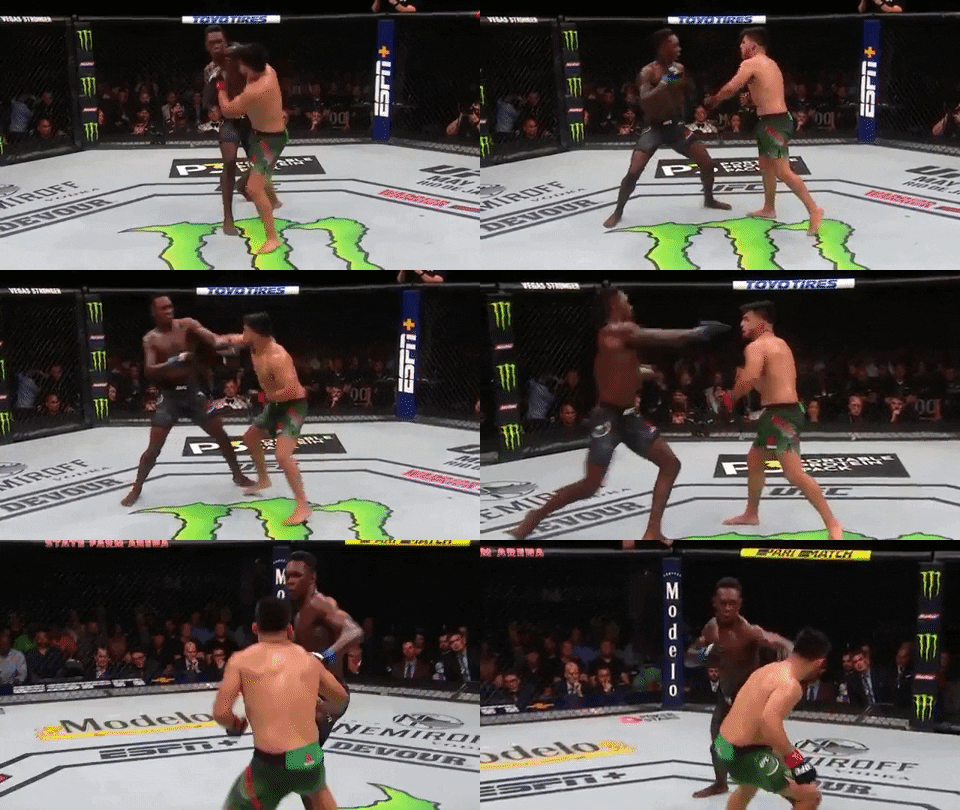
(Adesanya answered Gastelum’s swinging hooks with head movement and counter strikes. Whenever Gastelum didn’t angle out, he got hit with something on the return.)
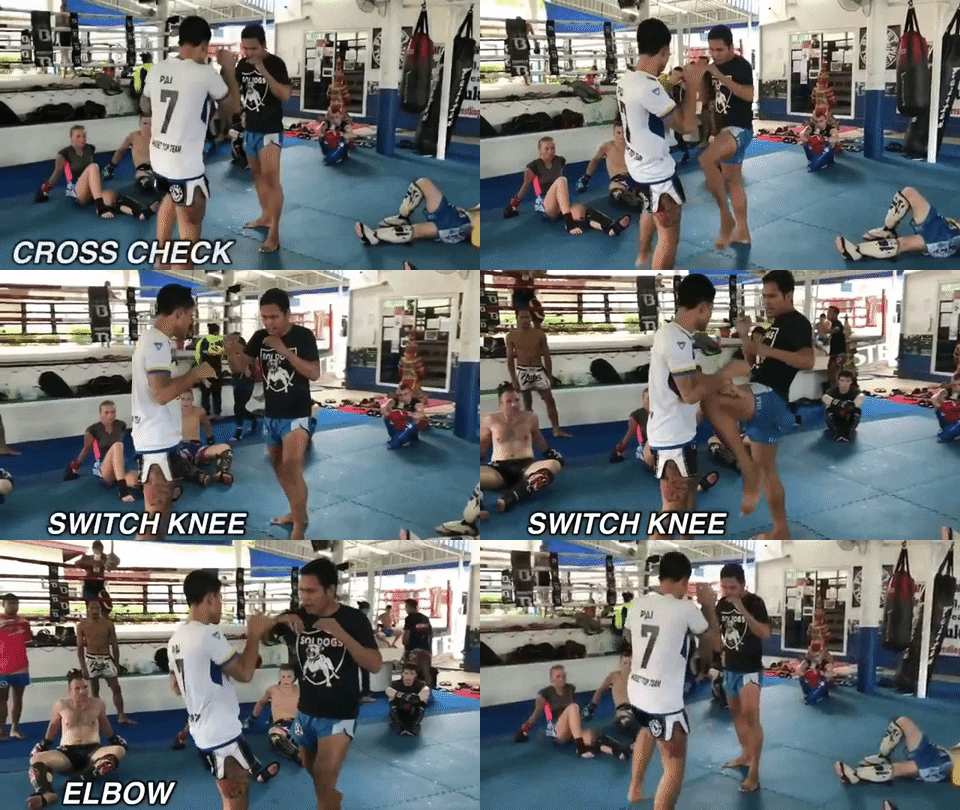
(Adesanya is no stranger to Muay Thai, so this combination should be easy to try. After cross-checking a round kick to the body, a rear straight followed by a switch knee and elbow could keep Costa from rushing in.)
There’s no love lost between Adesanya and Costa, with Adesanya insinuating that Costa is on steroids and Costa stating that Adesanya is more of a runner than a fighter. There is an interesting statistic about Costa that could make all the difference in this match-up. On average, Costa lands 8.83 significant strikes per minute in every fight. That is a stat that no one else in the middleweight top ten has, not even the champion. The second closest number of significant strikes per minute is 4.9, courtesy of Jack Hermansson. The longer you stand in front of Costa, you are twice as likely to get hit (compared to other middleweights). On the flipside, Costa also has the highest number of significant strikes absorbed at 5.79 per minute.
By moving forward and swinging hooks, Costa has ensured that he’s the aggressor in every fight. Unfortunately, that also makes him very hittable and open to getting countered. Strangely, he’s both the hammer and the nail whenever he steps into the cage. It’s not a style that’s built for longevity, but if he can hold up for this-match-up, he might walk out Fight Island champion.
Dominick Reyes vs Jan Błachowicz
In the co-main event, Dominick Reyes faces off against Jan Błachowicz for the vacant 205-pound title. Winning a vacant title doesn’t have the same prestige as beating someone of Jon Jones’s caliber, but the UFC can finally have someone else sitting at the 205-pound throne. Depending on who you ask, Reyes should be the light heavyweight champion already, and this should count as his first title defense. This is the same position Johny Hendricks was in after GSP retired. In reality, this match-up is a fight among the two best in the division that has long been absent of serious talent.
In his last match against Jones, Reyes put on the fight of his life and arguably won three of the five rounds back at UFC 247. Unfortunately for Reyes, the judges didn’t see it that way and turned in a unanimous decision for Jones. This shouldn’t take away from the game plan that Reyes and his team put together.
Reyes managed to stay on the move constantly against Jones but mixed in plenty of kicks and punches as he stayed mobile. Reyes stayed at close range to throw combinations or far away from striking distance. When Jones’s low kicks made an appearance, Reyes withdrew his lead leg or checked the kicks to keep Jones from doing too much damage. When Jones finished, Reyes blitzed in with punches and hit Jones every time he was stationary. In the boxing range, Reyes copied a lot of Cormier’s game plan and made sure to occupy Jones’s hands and strike over the top. Unlike Cormier, Reyes’s height allowed him to connect easier. This could also be due to Reyes’s own 6’4” frame aligning with Jones without the need for him to strike upwards.
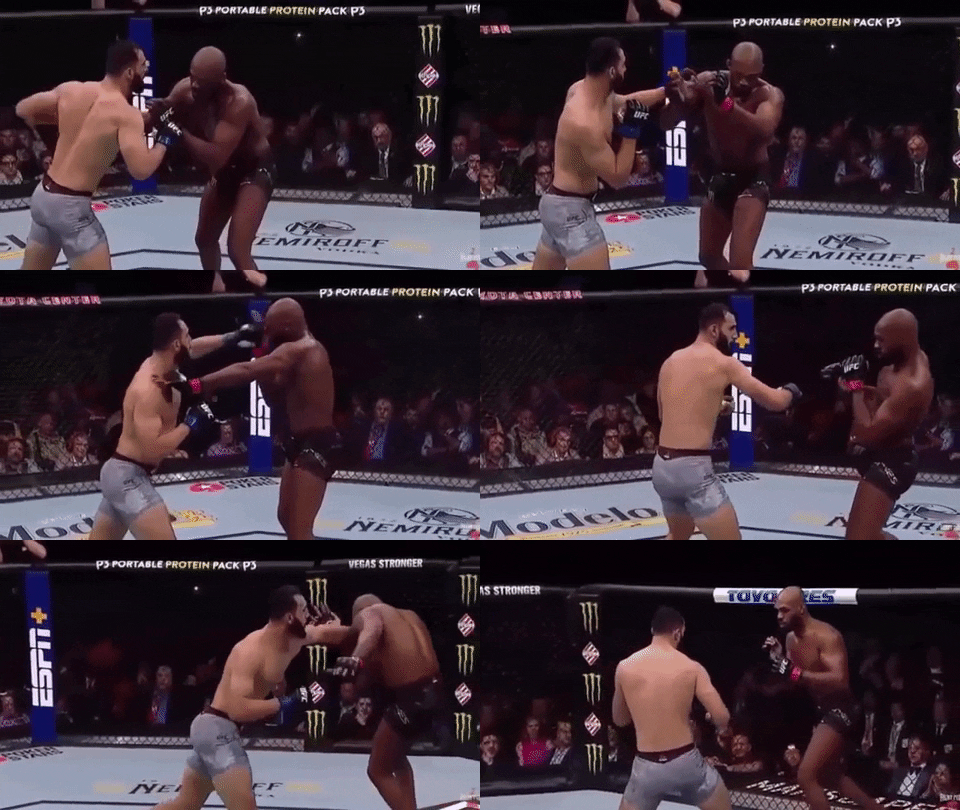
(Even with his fingers extended at Reyes’s eye level, they weren’t enough to stop the multiple left straights from connecting.)
Reyes spoke confidently about his boxing, and his hands have come a long way. His right hook, southpaw left straight, and uppercuts hurt Jones up close and kept him from ducking in. Reyes wasn’t shy about throwing left straights to the body. A well-timed punch to the midsection dropped Jones in round 1 and had him scrambling back up. Even during clinches, it was Reyes who threw uppercuts and used evasive head movement to keep away from Jones's elbows and knees.
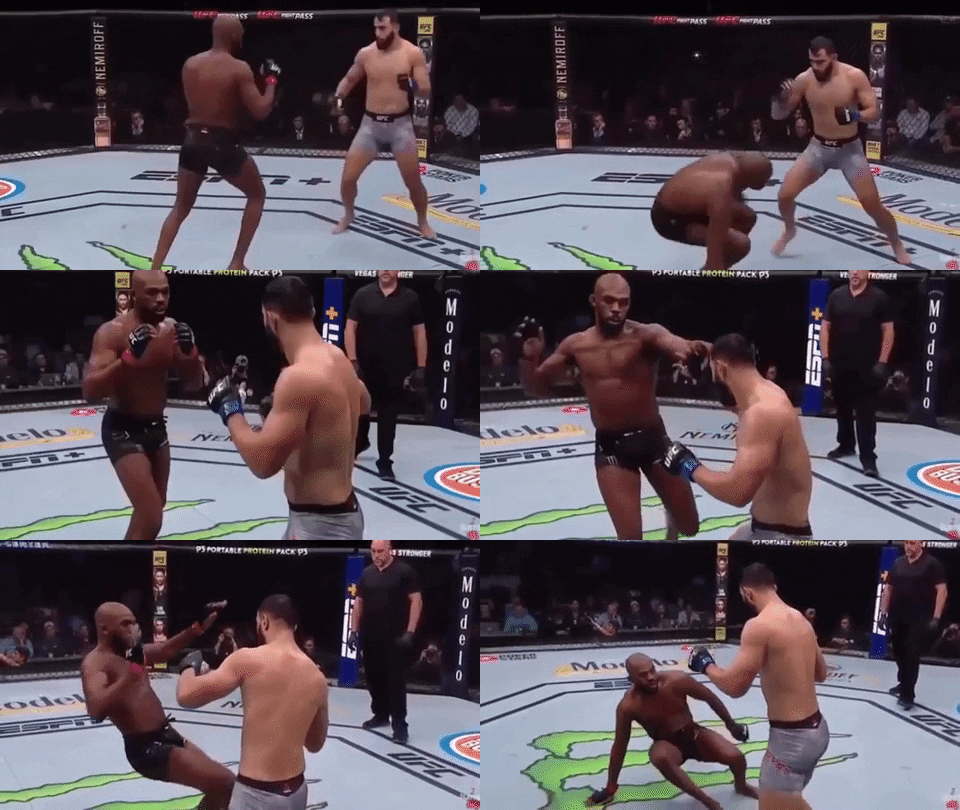
The volume of kicks that Reyes threw kept Jones guessing and unable to commit to his offense. Calf kicks, inside leg kicks, body kicks, and high kicks were all thrown without the fear of Jones grabbing his legs for a takedown. We’ve said this before, but it’s worth repeating: if you want to stop someone from kicking you, kick them first. The kicks themselves don’t have to be picture-perfect, consistency is more important. Even awkward low kicks thrown often can slow down a fighter. Stipe Miocic threw low kicks at Francis Ngannou whenever he felt that a jab was coming. This made Ngannou uncomfortable with putting weight down on his lead foot. When Ngannou saw Miocic move his hips, he instinctively raised his lead leg to check the kick, only to get taken down.
Reyes’s constant usage of his left high kick and left straight gets compared to Croatian kickboxer and MMA champion, Mirko Cro-Cop.
Despite the simplicity of the attacks, these two strikes can cause a lot of damage. Opponents play a guessing game of what attack is incoming: a high kick, a left straight, or the occasional body kick. The defenses for them are all different, and the prize for guessing wrong is pain. It might be easy to write off Reyes’s style as too basic, but why has no one outside of Jones been able to beat him? Simply put, it’s his speed. Other southpaws have attempted the same combination, but if they aren’t quick enough to adjust at the last second, they get countered. Speed is what makes the left straight/left high kick so dangerous. Since both the kick and punch is thrown from the same side with the same hip/shoulder movements, opponents can’t tell what's coming. Mixing in feints, jabs, and other kicks make Reyes even more of a threat.
Reyes becoming king at light heavyweight might look like a foregone conclusion, but Jan Błachowicz might have something to say about that. The former KSW champion is coming off a knockout win over Corey Anderson and has racked up five performance bonuses in the UFC.
In his first UFC match, Błachowicz seemed like another European import that was great on the regional circuit but would struggle under the UFC banner. Even though he won his debut against Ilir Latifi, Błachowicz found himself with a 1-4 record in his next five fights. Granted, he was fighting the likes of Alexander Gustafsson and Jimi Manuwa, but having more losses than wins in your first six fights is never a good look. Even in defeat, Błachowicz showed glimpses of championship potential. Against Gustafsson, Błachowicz’s counter punches and check hooks had Gustafsson hesitant on the feet, opting instead to use his wrestling. In the first Manuwa fight, Błachowicz landed some good jabs early, forcing Manuwa to change things up and start clinching to avoid further damage. If those two found Błachowicz to be tricky on the feet, others should be wary.
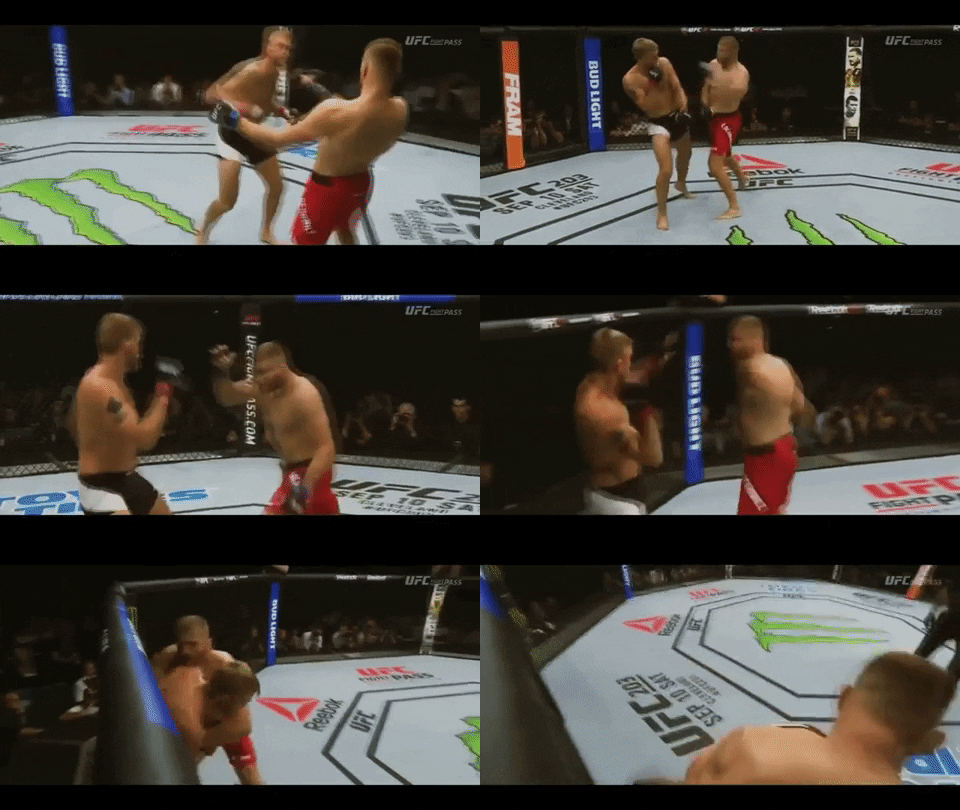
(After absorbing some hooks and feeling the blitz attack of Błachowicz, Gustafsson decided to clinch against the fence to regroup.)
Starting with the Devin Clark fight, Błachowicz embraced his awkward style as his own instead of trying to compete like someone that he’s not.
This helped put him on a four-fight win streak, which included victories over Jared Cannonier and avenging his loss to Manuwa. In his second fight against Manuwa and parts of his fight against Cannonier, Błachowicz avoided most of the infighting. Instead, he picked them apart at a distance before securing takedowns to steal the rounds.

Against Nikita Krylov, Błachowicz showed that his awkward style isn’t limited to his striking. Krylov’s karate base is tricky to deal with. Outside of a handful of competitors in the UFC, it’s hard to find fighters that can replicate that kind of striking. Krylov focuses on kicks to the body and legs, waiting for his opponents to drop their arms so he can attempt kicks to their head. Błachowicz avoided all that by timing one of Krylov’s kicks and taking him to the mat. From there, he secured an arm triangle while still holding on to the body triangle with his legs.
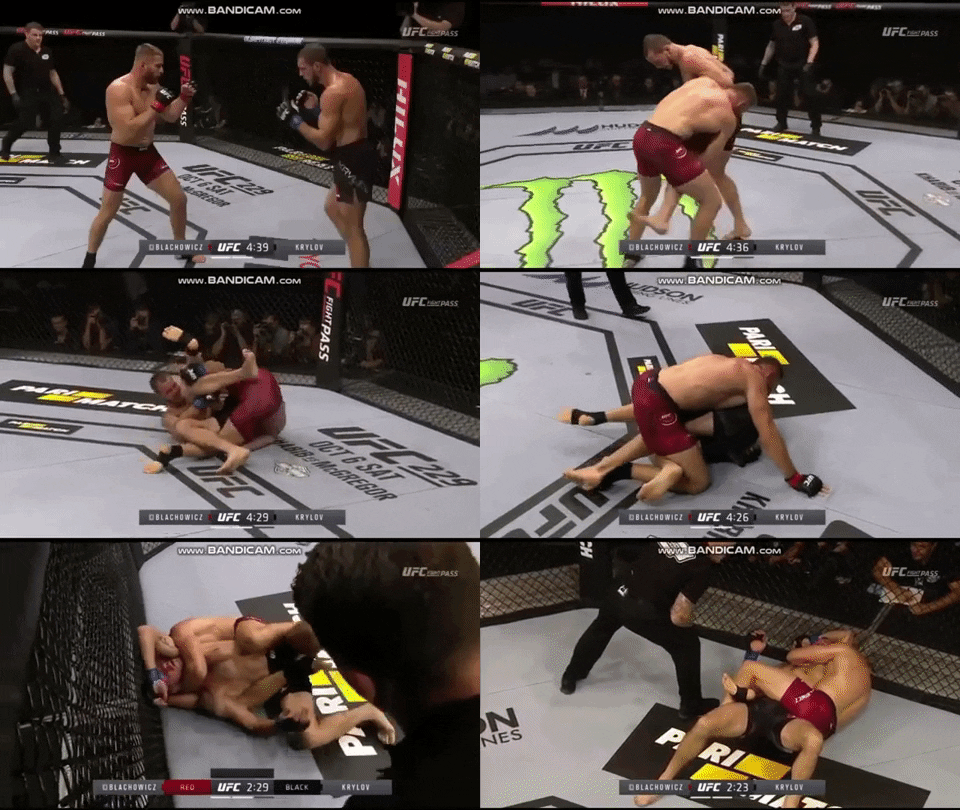
Lately, Błachowicz has turned his awkward check hooks into his signature move. When Luke Rockhold moved up to light heavyweight, it was Błachowicz that welcomed him to the weight class. Rockhold made big claims about wanting to win another belt, looking right past Błachowicz. Unfortunately for Rockhold, Błachowicz played the part of the spoiler and finished him in the second round.

By focusing on the inside low kicks, Błachowicz forced Rockhold to clinch. Błachowicz broke away and KO'ed him with a left hook. In his most recent fight against Cory Anderson, Błachowicz timed Anderson as he moved forward with kicks and caught him with the counter right hook.

No matter how you look at it, Błachowicz is a real threat.
Dominick Reyes has a clear path to victory, but one that he should walk with caution. To become the next 205-pound champion, Reyes should keep the fight on the outside, and keep Błachowicz guessing. Błachowicz is a fighter that relies on swinging counter hooks, so throwing off his timing should be high on the list of things to do. Reyes can accomplish this by feinting often, mixing in body kicks along with his left straight/left high kick, and constantly jabbing to keep Błachowicz’s lead hand occupied. Reyes’s best chance at a knockout is going to happen when he can get Błachowicz to think that a left straight is coming, only to land a left high kick (or vice versa). Most of Błachowicz’s opponents have shot in on him at some point, so Błachowicz has developed a decent grappling game. Reyes would be smart to mind his takedown defense and work on some attacks if Błachowicz shoots in. Intercepting knees and uppercuts from Reyes could hurt Błachowicz if he moves in carelessly, or at the very least could dissuade him from changing levels.
For Błachowicz to continue his spoiler campaign and become the second Polish UFC champion, he’s going to have to be prepared to make this a clinch heavy affair. Reyes is at his best when he’s moving laterally, so setting up kicks to slow him down is going to be important. When Reyes does step in, Błachowicz should be ready to meet him with check hooks to make him aware of the danger every time he gets within boxing range. The great thing about throwing hooks is that immediately after, you’re still in close enough to grab your opponent’s neck in a collar tie. Błachowicz can miss all his counter hooks, but if they allow him to grab Reyes and throw some punches while in the clinch, they’re still worth it.
It’s not every day that we get two undefeated fighters competing for a championship, and it’s even rarer to have the co-main event be for the light heavyweight belt that doesn’t have Jones or Daniel Cormier involved. The close proximity of middleweight and light heavyweight gives us the possibility that the winners of both title fights could find themselves facing each other in the future. Unless COVID-19 fucks everything up. Until then, fingers crossed everyone!
Files
Previews only

