 Home

 Creators
 Search
 Recent
 Random
 Posts
 DMs
 Tags
 Random
 Importer
 Import
 FAQ
 Account
 Register
 Login
 Favorites
 Keys
 Logout
 Telegram

Preview: Zombie vs. Ortega (Patreon)
Content
When Brian Ortega and Chan Sung Jung face off on October 17th, it will be a fight over a year in the making. Back in September 2019, Ortega and Jung were announced as the main event for UFC on ESPN+ 23. This would be the promotion’s return to South Korea and the first-ever in the city of Busan. A few weeks before the scheduled event, Ortega had to withdraw due to a partially torn ACL. Jung knew that turning down a replacement opponent would mean that he would no longer be competing on the card, depriving all the Korean fans of seeing him compete. Not one to back down from a challenge, Jung accepted Frankie Edgar as a late notice opponent, winning emphatically by TKO in the first round. Fast forward to October 2020 and we finally get to see Ortega and Jung fight at UFC on ESPN+ 38. What started as a friendly match-up has devolved into a fight with some bad blood attached.
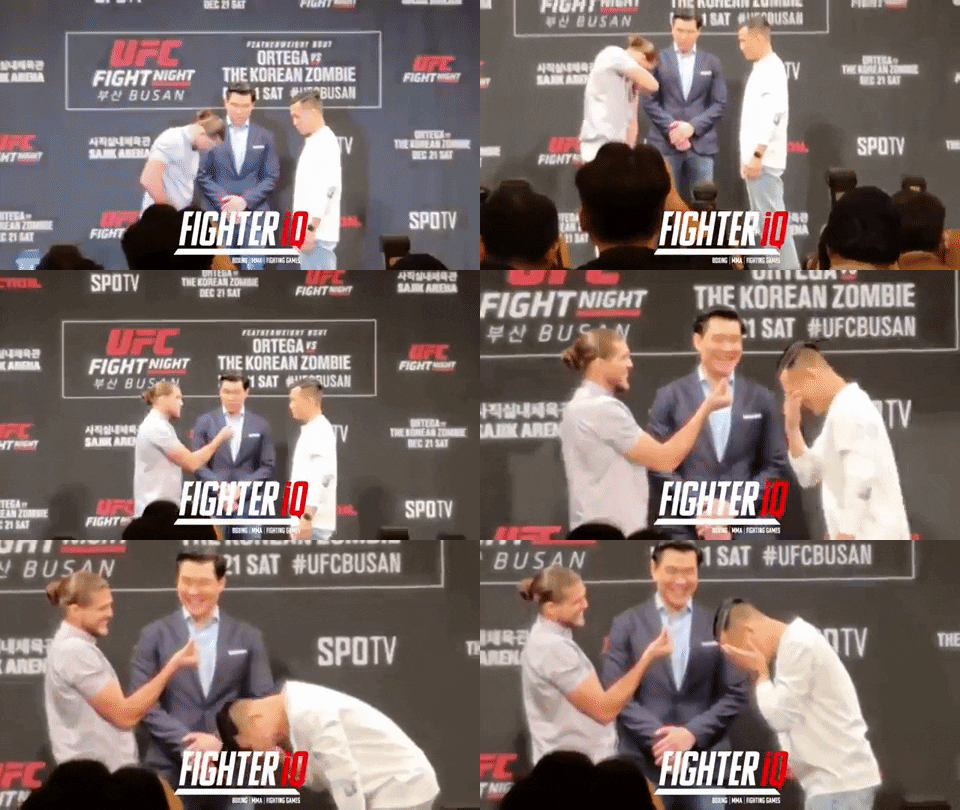
Although Ortega and Jung’s professional relationship has soured, this makes the already technical fight that much more compelling. As of this writing, Jung has received a performance bonus in seven of eight fights in the UFC. None of Ortega’s fights have gone to a decision. Both fighters are dangerous on the feet and the ground.
Ortega has been out of action for close to two years, but he still casts a long shadow in the featherweight division. Despite his inactivity and most recent loss, Ortega is still ranked #2. This puts him ahead of others like Zabit Magomedsharipov, Yair Rodriguez, Calvin Kattar, and Jung himself. Between his mix of long uppercuts, elbows off clinch breaks, and standing guillotine attempts, Ortega is a fighter that has made the most of his limited arsenal. Even though he hadn’t faced a lot of fighters in the top ten, his then-undefeated record and streak of finishes allowed him to fight Max Holloway for the featherweight title in December 2018. The fight did not go well for Ortega. Holloway was able to paint a picture of marvelous striking and Ortega’s face served as the canvas.
Although Oretega absorbed over 300 strikes in four rounds, he had moments where he stunned Holloway on the feet. With so many punches being thrown his way, Ortega was able to time some elbows that caught Holloway flush. When Holloway came forward after throwing jabs, Ortega switched stances and hit him in the face with a counter left elbow. If that looked familiar, that’s because it’s the same one he was able to hurt Frankie Edgar with.
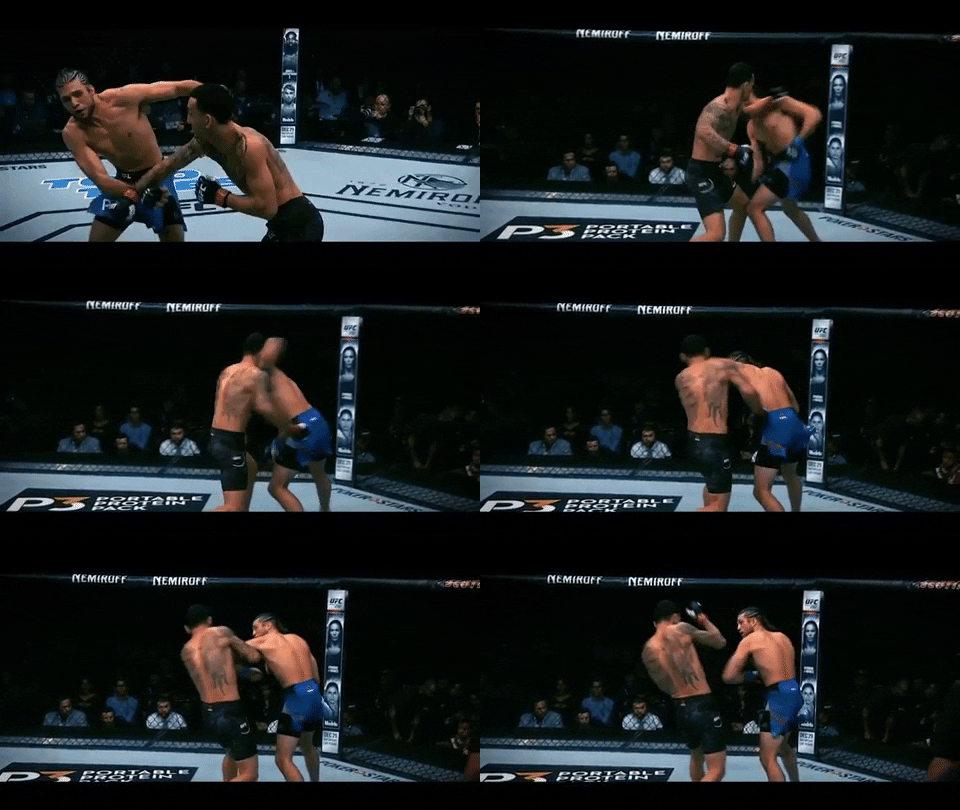
Another neat strike that Ortega landed successfully was a spinning back elbow in the third round. Just like the counter left elbow, Ortega timed Holloway as he came in after a 1-2 and ducked forward before committing to the spinning attack. Outside of an attempted heel hook in the fourth round, Ortega didn’t get close to sinking in any submissions. A couple of elbows and takedown attempts weren’t enough to stop Holloway from boxing him up. It seemed like a mismatch. Ortega was never the most polished striker in the division whereas Holloway had been fighting the best the weight class had to offer for close to a decade. Perhaps it's because Ortega was able to find a way to win, even in fights he was getting beat.
Renato Moicano had a lot of success by timing Ortega’s shoulder rolls and throwing the right hand whenever Ortega squared back up to his stance. Executing the shoulder roll is difficult enough in boxing where you’re limited to two hands, but in MMA where opponents can also throw kicks and elbows, it invites more danger than necessary. Cub Swanson also threw plenty of strikes to Ortega’s body and hurt him with straight punches. Ortega’s uppercuts from the rear hand seldom land and are often countered with hooks. What ends up saving Ortega in fights is his ability to absorb strikes and threaten with submissions. Moicano was exhausted by repeated body punches and shot in with a sloppy takedown, resulting in a guillotine choke.

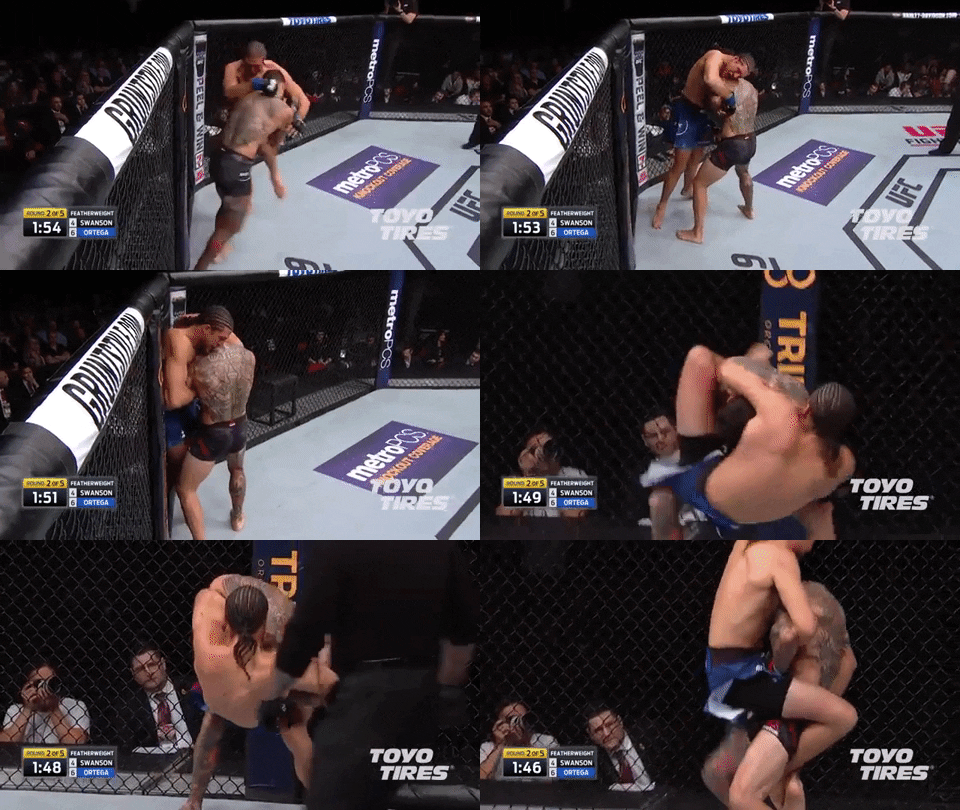
In the Cub Swanson fight, Ortega marched forward with straight punches until he got Cub Swanson in an over-under clinch. Swanson tried his best to avoid a guard pull by moving his hips back, only to have Ortega snap his neck down and attempt a standing choke. This is a favorite of Tony Ferguson and even if opponents can get out of submissions, they become wary of prolonged grappling exchanges. Swanson was saved by the bell in the first five minutes, but when they clinched up again in the second round, Ortega was able to secure the guillotine choke and submitted Swanson.
Frankie Edgar tried to take Ortega down off a leg kick, only to immediately have his neck in danger from a guillotine attempt. When Ortega tried the kick the second time, Edgar opted not to attempt a takedown off it. Ortega displayed a more thoughtful jabbing game against Edgar, even doubling and tripling his jab whenever Edgar remained stationary. He also managed to keep Edgar at bay by throwing his forearm up at Edgar’s chest whenever he charged in, providing a buffer to follow up with hooks and elbows.
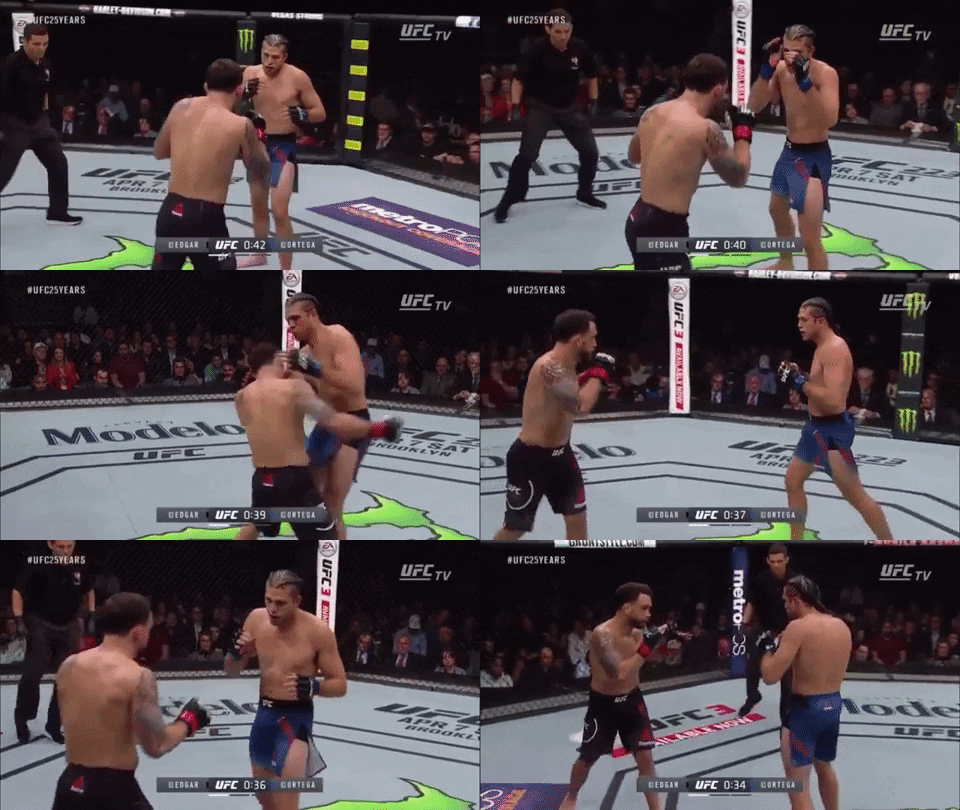
(Ortega not only throws an intercepting elbow to stop Edgar, but he stiff arms him back before stalking him again.)
That’s the tale of Brian Ortega: sloppy on the feet with a few dangerous tricks, but a nightmare on the ground if he can wrap his limbs around you. Surprisingly for a grappler, Ortega has landed just one out of 18 attempted takedowns in his UFC career. With a takedown accuracy score of 17%, it’s amazing how he’s able to still get opponents tangled up in submissions. Even though Ortega would love nothing more than to get back in the win column and challenge the new featherweight champion, Chan Sung Jung and Kpop stans around the world have been waiting for Jung to get his hands on Ortega.
If you didn’t know, Brian Ortega slapped Kpop idol and personal friend of Chan Sung Jung, Jay Park, earlier this year. This has only further flamed the fires of Gracies vs Kpop, which is actually a thing, and enraged The Korean Zombie.
Chan Sung Jung made his stateside debut against Leonard Garcia at WEC 48. In WEC’s first and only PPV event, loaded with great fights and two title matches, Jung and Garcia were awarded the Fight of the Night bonus. Since that fateful night in 2010, Jung has built a fan base that allows him to headline practically anywhere in the world.
Despite never having won a title, Jung has headlined six different cards. From Greenville, South Carolina to Rio de Janeiro, Brazil, Jung has been slotted for five rounds for the better part of a decade. Even when he went away for mandatory military service and was out for even longer due to injury, he never lost his popularity. In his first fight back after four years away from the UFC, he was given the main event spot against Dennis Bermudez. At the time, Bermudez was ranked in the top ten and his combination of boxing and wrestling could have given Jung real problems. Even though the early goings were tough, Jung adapted around Bermudez’s striking and slipped an inside jab to land his uppercut-left hook combo. The same combination was good enough to hurt Dustin Poirier, and finishing Bermudez with it was even better.
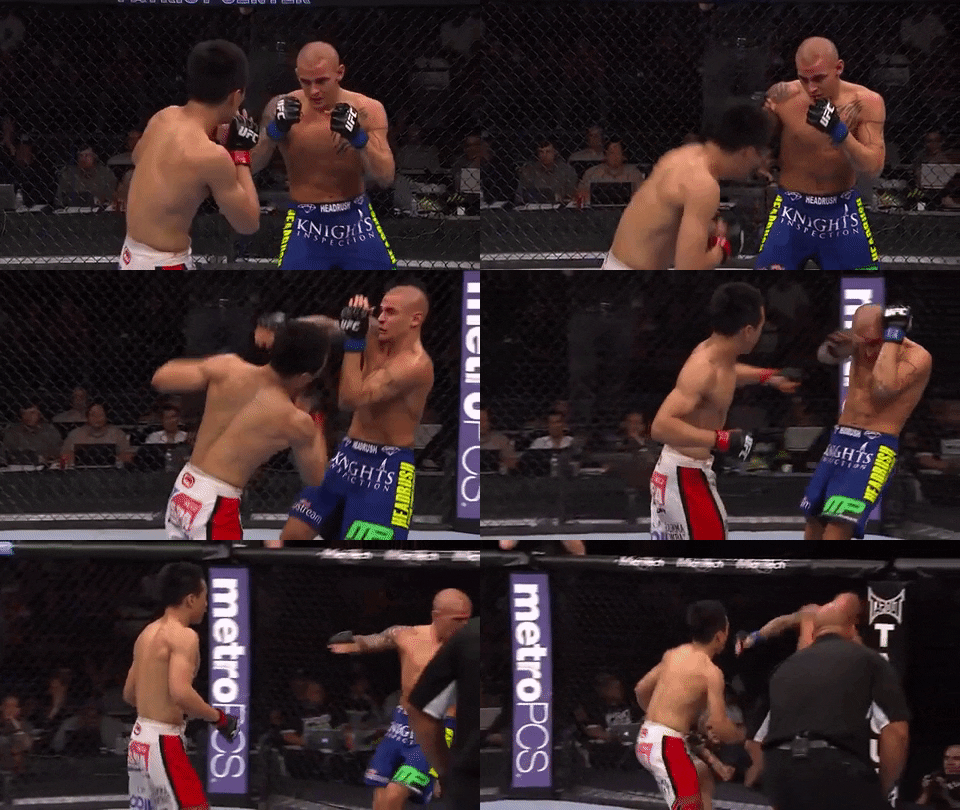
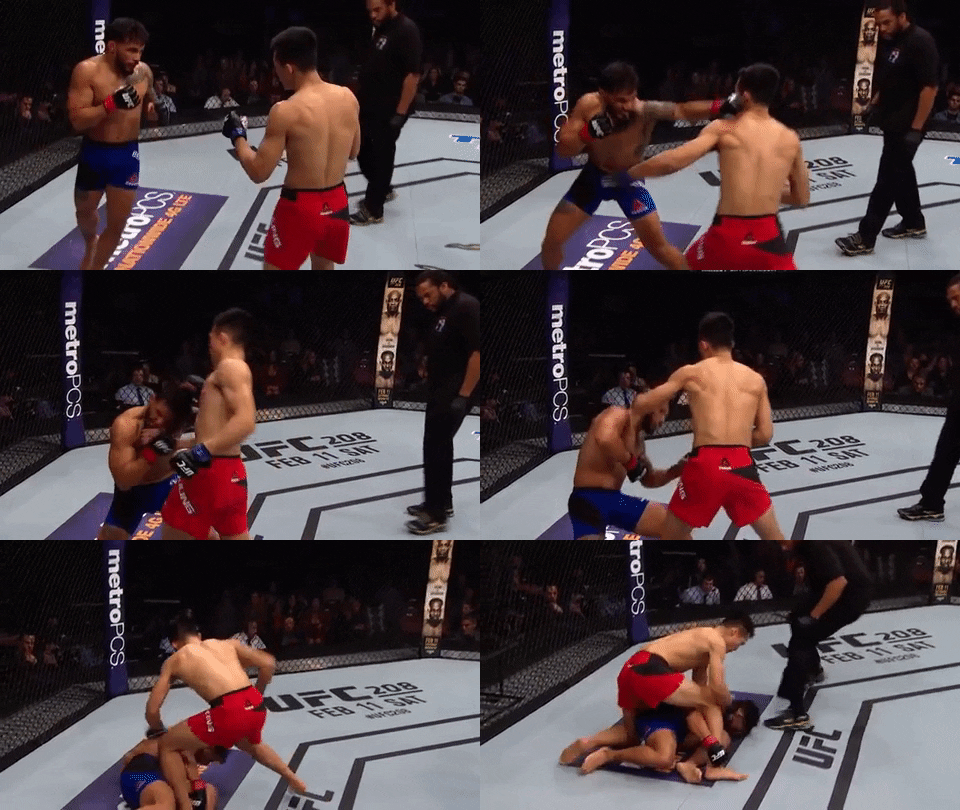
Although he lost after an exciting back-and-forth match against Yair Rodriguez, the lessons he learned were worth the “L” on his record. Jung looked good whenever he pressured Rodriguez and got him moving on his back foot. It’s always hard to throw kicks moving backward, and the constant jabs and right straight were enough to frustrate Rodriguez. A last-minute blitz ended up costing Jung as he got caught with a ducking, no-look elbow right as the final bell sounded. The fight taught Jung, again, that being exciting is great, but not if it’s going to cost him the victory. There are ways to please fans without being reckless. Both Renato Moicano and Frankie Edgar found this out the hard way.
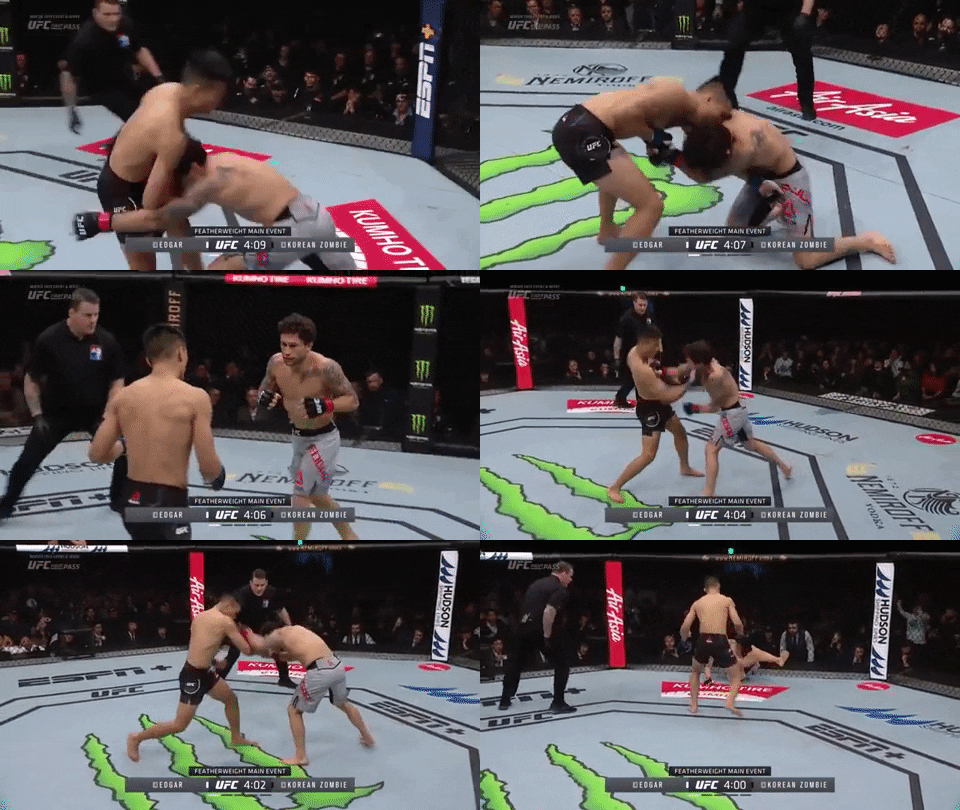
(Edgar was already wobbled by a left hook which had him shooting in. Jung stuffed the takedown attempt before blasting Edgar with alternating hooks and uppercuts.)
Jung isn’t built like Rumble Johnson, so how is he able to knock out so many opponents? The short answer is his timing and angles. Take a closer look at his knockout victories and you’ll see that he’s waiting for opponents to come in closer and move their faces towards him. Once they start coming forward, Jung quickly changes levels before returning fire with short punches thrown from odd angles. They’re not textbook punches that you’ll see in boxing manuals, but the arc of the strikes makes it difficult for the opponents to detect until it’s too late. When opponents chase Jung, bad things seem to happen to them.
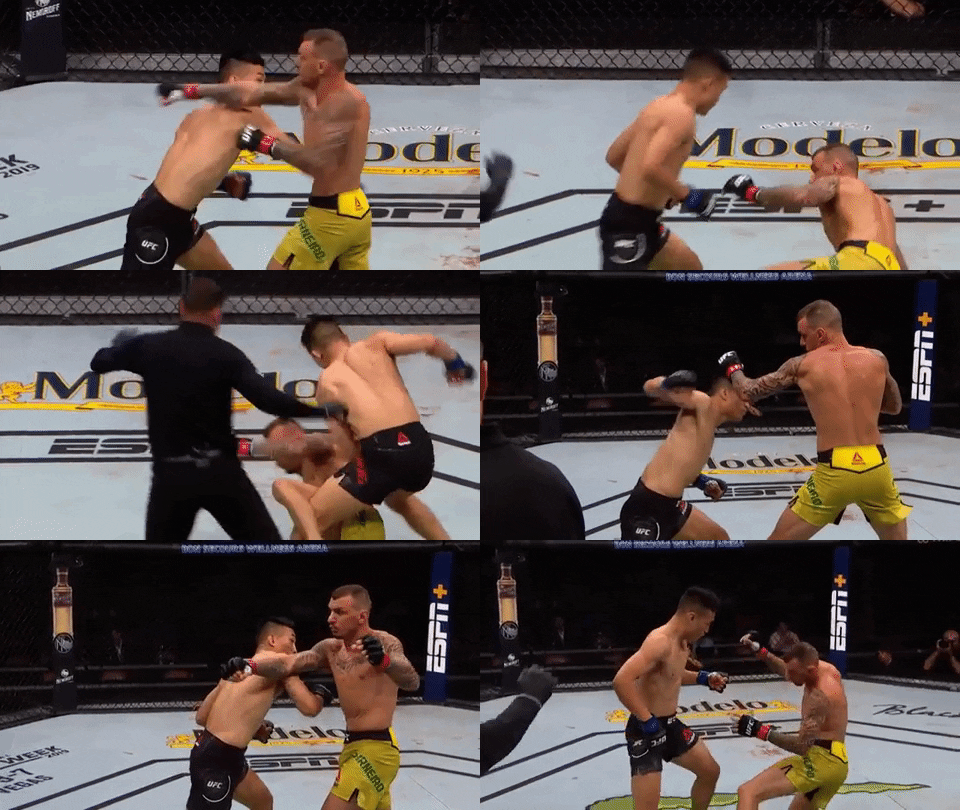
(Moicano threw a lazy jab only to have Jung slip and counter with a right hand-left hook.)
Ortega has his hands full, but things aren’t hopeless. Jung has cleaned up a lot of his game but he’s still susceptible to the occasional brawl from time to time. Ortega is the slightly smaller fighter at 5’8” with 69” reach (compared to Jung’s 5’9” & 72” reach), so it’ll be in his best interest to let Jung come towards him. As I just mentioned, Jung seems to do his best when opponents chase him, so if Ortega can get Jung to move forward, he can set up traps with his elbows and low kicks. Without any fear of takedowns, Ortega can freely chop down Jung’s lead leg to try and get him to shoot in, a mistake Frankie Edgar almost made. Ortega has been getting better with his jabs, so feinting and doubling up with them could get Jung to swing back prematurely, leaving him open to counters. If Jung opts to not to play that game, waiting until he overextends with straight punches and clinching up is a nice alternative for Ortega. Swanson and Moicano wanted nothing to do with Ortega in this position, but he was able to grab their necks anyway and strangle them. It’s not outrageous to think he can’t snap Jung down and catch him with a standing guillotine. If all else fails, Jung has been knocked out with intercepting elbows, and we’ve seen Ortega have plenty of success with those.
For Jung, he is one win away from a possible shot at the title. Ortega has tricks up his sleeves, but he’s not without weaknesses to exploit. Holloway probed and hurt Ortega with his jabs, and Ortega seemed to have no answers for the follow-up right hand. Hooks to the body off the jab repeatedly found their marks and had Ortega dropping his hands early and often. Ortega is also prone to stance switching in the middle of exchanges, something that both Holloway and Moicano took advantage of. Edgar also threw left hooks to the body followed with right hands to the head. If Jung has picked up on this habit, it plays into his strengths. Ortega has never been knocked out, but he’s been hurt plenty of times on the feet. Jung doesn’t have to knock Ortega out to win, the referee can stop the fight or he can damage him enough to get the doctor involved. It might be tough to imagine Jung submitting Ortega, but if he’s hurt enough from strikes, it’s not out of the question to see him sinking in a tight choke forcing Ortega to tap.
With Alexander Volkanovski sitting at the throne and beating Max Holloway (twice!), the winner of this fight is going to have a tough time against the current champion. But if there’s anything to be said about both Ortega and Jung, it’s that no matter who the opponent is, both have found ways to surprise us.
Files
Previews only

