 Home

 Creators
 Search
 Recent
 Random
 Posts
 DMs
 Tags
 Random
 Importer
 Import
 FAQ
 Account
 Register
 Login
 Favorites
 Keys
 Logout
 Telegram

Preview: RDA vs. Felder (Patreon)
Content
Rafael Dos Anjos (RDA) is in a bit of a tough spot. The former UFC lightweight champion finds himself on a two-fight losing streak, and 1-4 in his last five fights. With just one fight left on his current contract, he’s betting on himself to win his next fight and put himself in a strong position to renegotiate a better contract. The problem is, he doesn’t seem interested in trying to wait for a favorable match-up. Originally slated to face rising prospect Islam Makhachev at UFC Fight Night 183, he is now set to fight Paul Felder on five days’ notice. How Felder will deal with the weight cut and five rounds is another issue altogether. Unfortunately, RDA has effectively backed himself into a corner. If he lost to Makhachev, it would’ve been to a future title contender on a six-fight win streak. However, if he loses to Felder, then he gets beaten by someone that wasn’t training for anything other than a triathlon. Even a victory wouldn’t be that sweet, since people can point out Felder was given less than a week to prepare. Let’s look on the bright side. It’s easy to complain about how this fight came to be, but it’s at least it’s between two entertaining fighters despite nearing the latter stages of their careers. Ignoring his current slump, let’s not forget how dangerous RDA can be.
In the past 5 years, RDA has added a pressure-based counter-striking game to his solid offensive wrestling that has seen him take out some of the very best at 155 and 170 pounds. At 5’8” with a 70” reach, RDA is already on the smaller end of lightweight (let alone welterweight) but he somehow manages to work around this limitation. Under the eyes of Rafael Cordeiro, RDA developed a forward heavy style while working off counters. You see a lot of prime RDA in current featherweight champion Alexander Volkanovski, who stalked the likes of Chad Mendes, Jose Aldo, and Max Holloway, only to return fire with counters and retreat when given space. By backing his opponent towards the fence with ring craft and superior footwork, RDA’s opponents can either angle out to avoid being cornered or throw strikes to create space needed for an exit. This plays well into RDA’s game plan of having the opponents vulnerable to his counter punches, mostly to the body. RDA’s hooks and knees to the body in particular drain opponents’ gas tanks and his low kicks inhibit any explosive movements. The hooks and kicks also serve as a way for him to keep his opponents from shifting laterally, leaving them open for a double leg against the cage. This was used perfectly against Anthony Pettis and Kevin Lee.
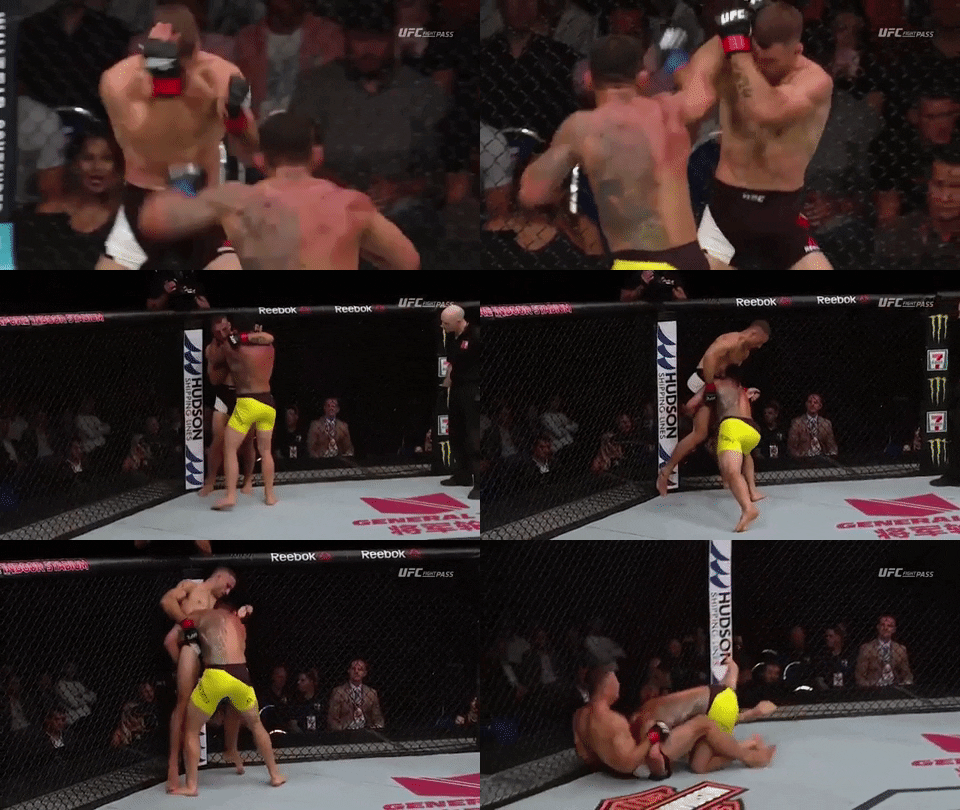
While we’re on the subject of Kevin Lee (his last UFC victory), one of the things that RDA has done well is add in kicks to his pressure-but-counter style. In both the Kevin Lee and Robbie Lawler fights, RDA hammered their lead legs and switched often to kicks to the body. RDA targeted Lawler’s open side and calves to keep him upright and unable to put his weight down. When Lawler’s legs were hurt, he was forced to open up his stance a bit more. RDA adjusted and started throwing inside leg kicks, punting it just a bit more and making it harder for Lawler to come back with powerful strikes.
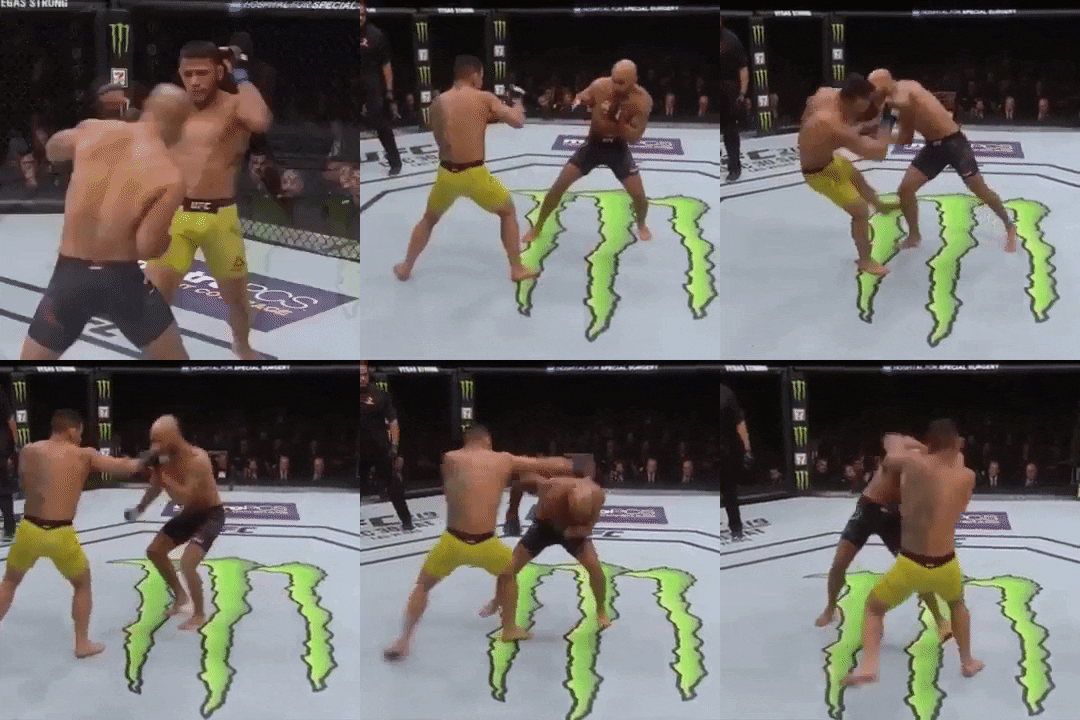
The clinch is also an important area for RDA since this is one of the ways he can set up his takedowns if the cage isn’t a factor. If the takedown doesn’t present itself from the clinch, RDA can score with elbows and uppercuts off the break. Although he’s not a powerful puncher, RDA is great at timing his hooks into the clinch (often into the double collar tie) where he can wear you down with knees. This serves the dual purpose of keeping opponents from countering him while tiring them out by having to carry the upper body weight of RDA. If RDA feels that the opponent is hurt enough, he can either unload strikes for a TKO or power through a takedown and hunt for a submission. At 36 years old, he’s the same age as Paul Felder, who will enter this fight with nothing to lose and everything to gain.
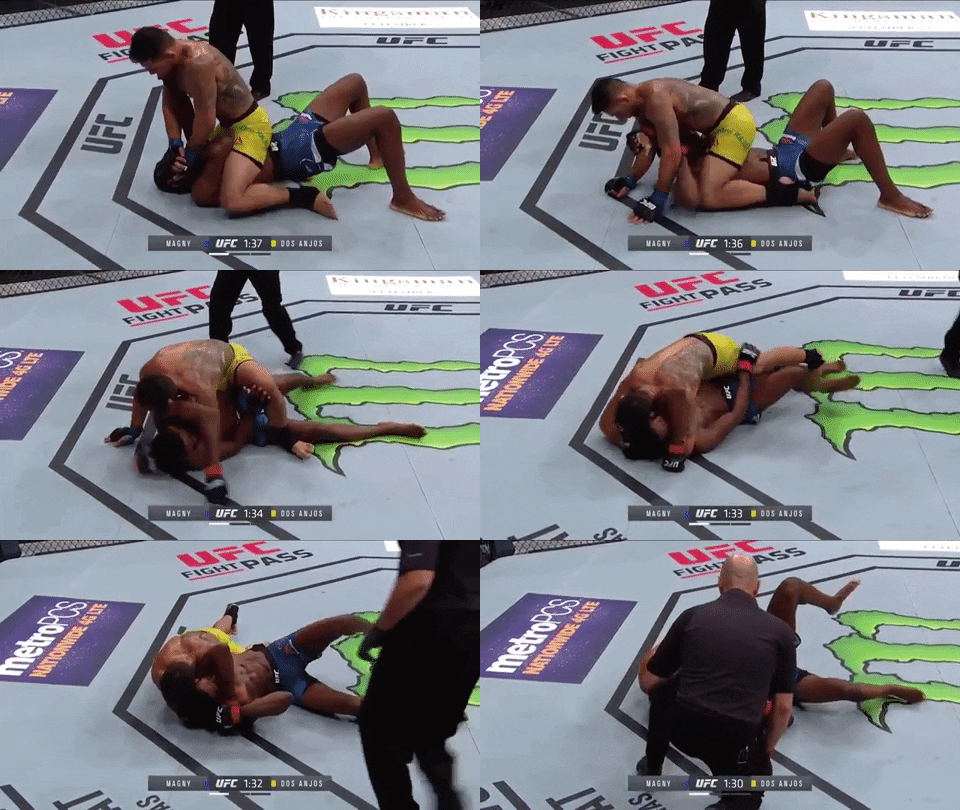
(RDA attacks with strikes to get Magny to open up, snatching up an arm while swimming his arm across Magny’s neck, finishing the move in side control.)
Felder himself is also coming off a loss, but it was a close match against perennial top contender Dan Hooker that could have gone either way. If you’re struggling to think of what sets Felder apart from the others at lightweight, you’re not alone. Felder is good everywhere, but not particularly great at anything. Comparisons are made to Donald Cerrone due to both of them being training partners in the past, but that’s a lazy way to look at things. Felder prefers throwing elbows compared to Cerrone’s love of knees, and Felder uses his punches to set up his kicks while Cerrone does the opposite. As a solid striker that can stand with anyone in the division, there are times when he becomes predictable in his attacks and counters. An infamous slow starter, Felder often loses the first round before making adjustments and winning more rounds as the fight goes on. In both fights against Edson Barboza and Hooker, Felder absorbed many strikes in the first round, mostly hooks from Barboza and right hands from Hooker. If opponents don’t take Felder out at this point in the fight, he can use the first few moments to teach himself how to return fire from round 2 and on.
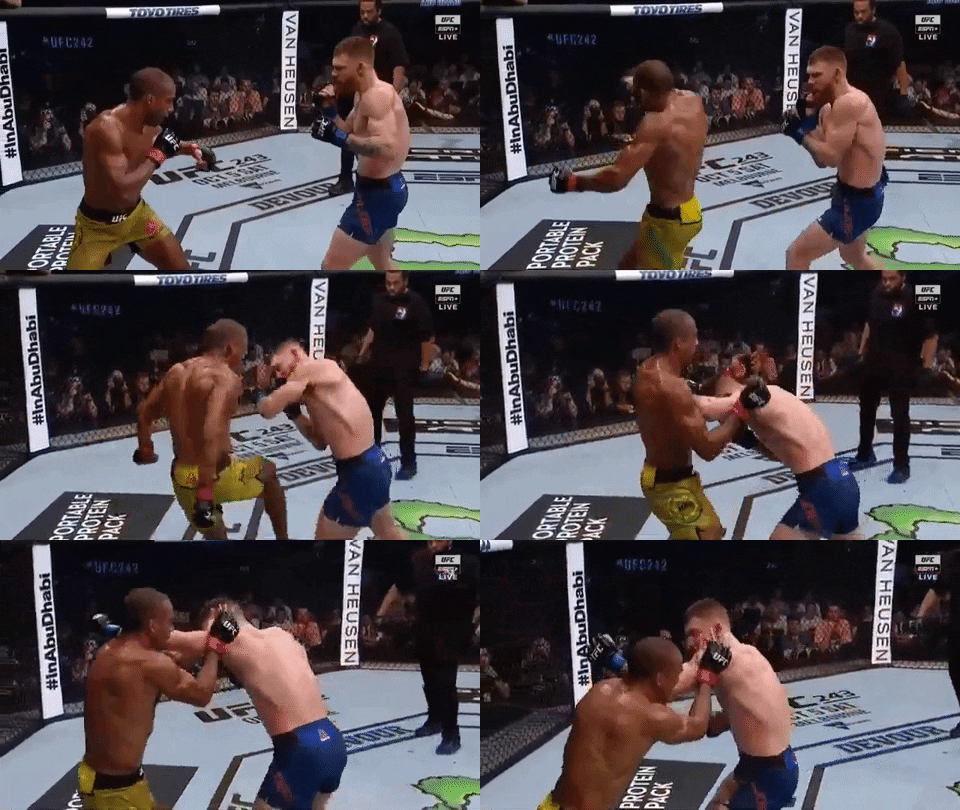
This is where Felder stands out from his peers: his ability to adapt mid-fight. Against Charles Oliveira, the first round was Oliveira putting on a grappling clinic and going after D’arces and rear-naked chokes. In particular, one scramble resulted in a D’arce choke for Oliveira that seemed close to ending the fight early. In the Alessandro Ricci fight, Felder had trouble in the first round adjusting to Ricci’s southpaw stance and got hit every time he closed the distance with his step-in jab. Eventually, he turned the tables against both fighters and picked up wins. Elbows in particular were the weapon of choice in both fights, and it’s something that he’s quite adept with. In particular, the left hook and elbows helped Felder score points against Hooker and kept Hooker from outright finishing him.
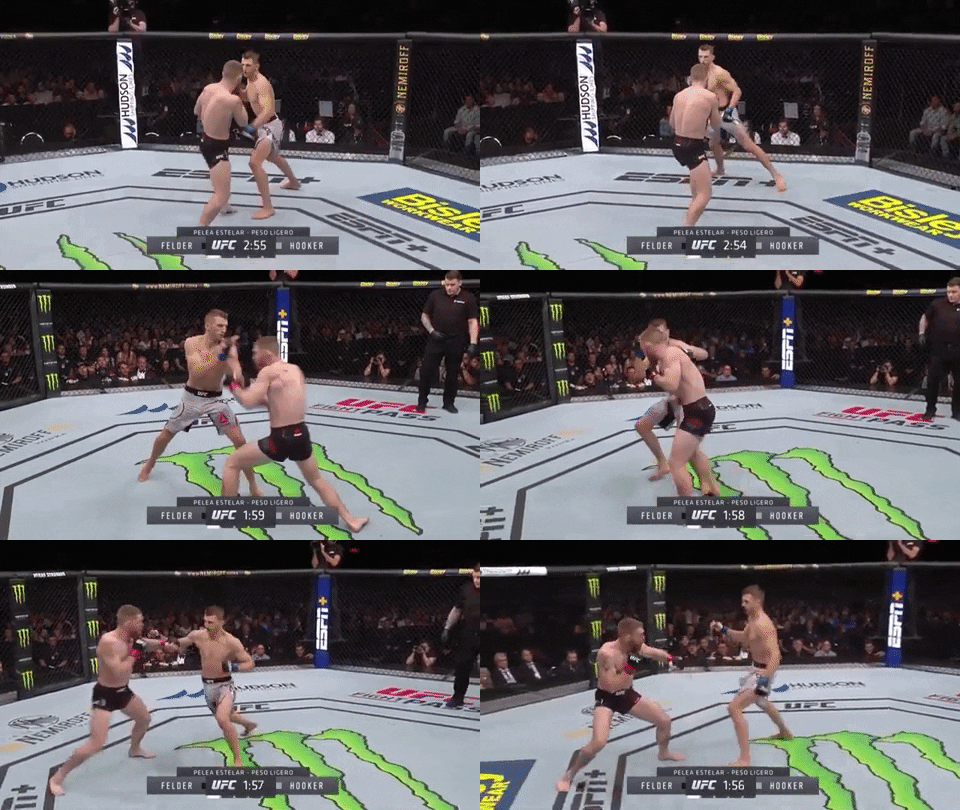
An overall issue with Felder’s game plans is that he will wait for his opponent to finish their attacks before starting his own. Not everyone falls into this rhythm, and sometimes they figure out that they can continue their offense as long as it disrupts Felder’s timing. Felder attacked Daron Cruickshank with punching and kicking combinations, only to admire his handiwork and get clipped with an additional strike that he walked into. As seen earlier, Barboza was able to clip him with a spinning back fist, but he found a way to trick Barboza. Felder started to throw in jabs while stepping forward instead of merely flicking them to get Barboza to remain in place. When Barbosa moved laterally, Felder would mix in the hooks to hurt Barboza, which is how Justin Gaethje was able to knock him out.
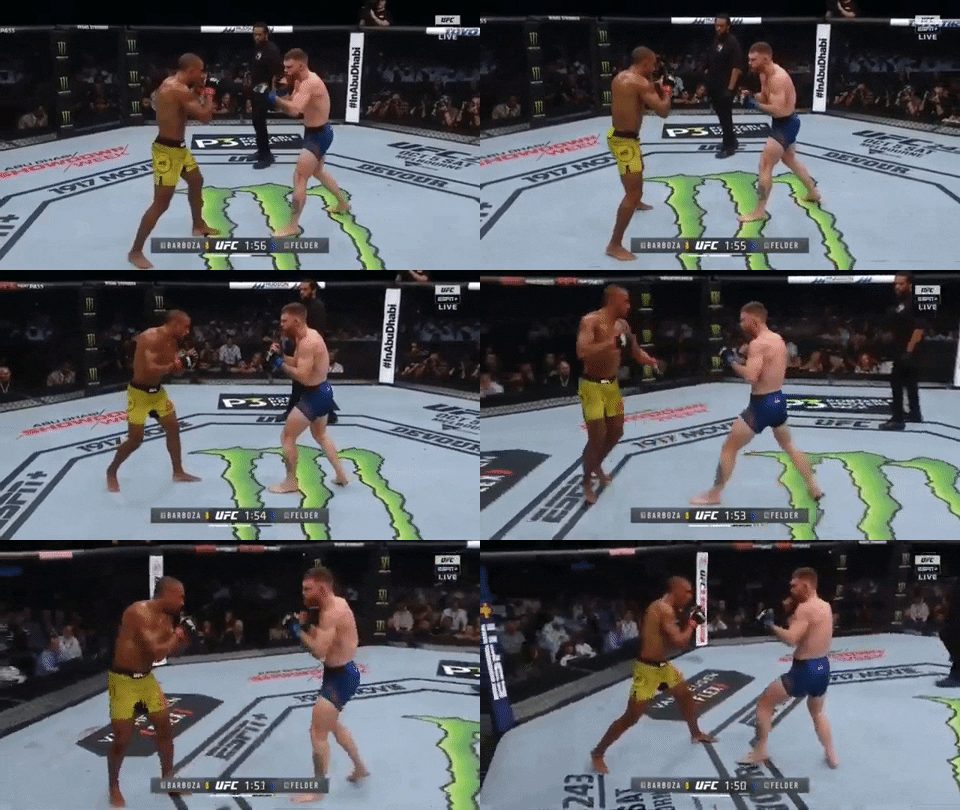
(Felder timed Barboza’s low kick and lands a lead hand down the middle. Barboza is sent stumbling back and is now on the defensive.)
RDA and Felder have the same reach, but Felder will be the taller man at 5’11”. After facing off against much bigger fighters in Leon Edwards and Michael Chiesa, Felder might come off as a much more manageable opponent (size-wise). RDA can throw kicks with impunity and does so often. Felder is more cautious in the early rounds, but when pressured against the fence, he has been taken down and controlled (like in the Oliveira fight). The slow start gives RDA the chance to try and finish with a submission in round 1, like the Neil Magny fight. RDA has made it no secret that he welcomes the clinch, an area where Felder is no stranger. Since RDA is the shorter fighter, Felder will have to dip lower to place his forehead on RDA’s jaw, a move that can give RDA the chance to grab a double collar tie. From here, it’ll be a tossup of who can score more elbows, hooks, and knees first. RDA has shown multiple times that he can go five full rounds at a high pace, although Felder has also shown an ability to get better as the fight goes on.
For Felder, he’s going to have to prepare to make this a fight for all five rounds and figure out early how to adjust RDA’s strategy. RDA’s previous opponents have had success by out-wrestling him (except Leon Edwards), and Felder should try and shoot in from time to time to keep RDA guessing. When pushed against the fence himself, RDA looks much more vulnerable. RDA has shown that he can be taken down while moving since he prioritizes stuffing the takedown instead of angling out of bad positions when pressured back. If wrestling isn’t in the cards, kicks should be utilized. Kevin Lee was also able to land some clean kicks to the body of RDA since the threat of takedowns alone had RDA worried. If Felder can establish solid clinch work against the fence and turn them into a takedown, he can drill that threat to the back of RDA’s mind to set up more strikes on the feet. Lateral movements into straight punches also caught RDA clean against Eddie Alvarez, and this is something Felder can try to replicate.
This match-up was completely out of left-field, especially with Felder openly contemplating retirement from the sport. Not only was he nowhere near a fight gym, but he also may not have his coaches in time to corner him for this fight. Essentially, he accepted this fight to save the card. It’s a bit suspicious how Felder was still ranked in the top ten despite claiming to have been done with the fight game, but who knows what kind of deal was worked out between him and the UFC brass? Whichever way this plays out, hopefully, both fighters get well compensated for this unexpected turn of events. Or at least some extra Reebok merchandise they can use. We’re not holding our breath on that though.
Files
Previews only

