 Home

 Creators
 Search
 Recent
 Random
 Posts
 DMs
 Tags
 Random
 Importer
 Import
 FAQ
 Account
 Register
 Login
 Favorites
 Keys
 Logout
 Telegram

FS 83 – UFC Fantasy Lightweight Grand Prix (transcript) (Patreon)
Content
By all indications, Khabib Nurmagomedov is done with the sport. In his own words, “You can fight until you’re 40, but there should be a goal. I had a goal to reach the summit, and I got there. Further, I have no competitive interest. Next year I will graduate. I’d like to [build on] my thesis, do a master’s course, dedicate more time to studying. I’ve bought sheep, I tend to my farm. I’d like to develop in this field a little. I have the bull calves out to feed. I have cows.” On top of his farming and academic endeavors, Nurmagomedov is also launching a new mobile virtual network operator called Eagle Mobile. This a busy man that doesn’t have fighting on his radar.
With one of the biggest stars of the sport gone, it seems like the UFC is in the perfect position to start a Lightweight Grand Prix. They have the talent, they have the scheduling capabilities, but it makes too much sense, so they won’t do it. Come on, this is the same promotion that will not add a 165-pound weight class. For whatever reason, a tournament is something the UFC is vehemently opposed to. But hey, we can dream, right? What would a UFC lightweight tournament look like if they were to schedule one out for the 2021 calendar year? Granted we already have some match-ups announced like Conor McGregor vs. Dustin Poirier 2 and Tony Ferguson vs. Charles Oliveira, but a lot of the other lightweights remain unscheduled. Since this is purely a fantasy scenario, let’s break this down like playoff brackets, with ranks 1-8 facing off against each other (with a couple of wild card matches as alternates). This will be done based on the UFC’s “official” rankings, although we know that can change based on the promotion’s feelings.
Justin Gaethje (1) vs. Paul Felder (8)
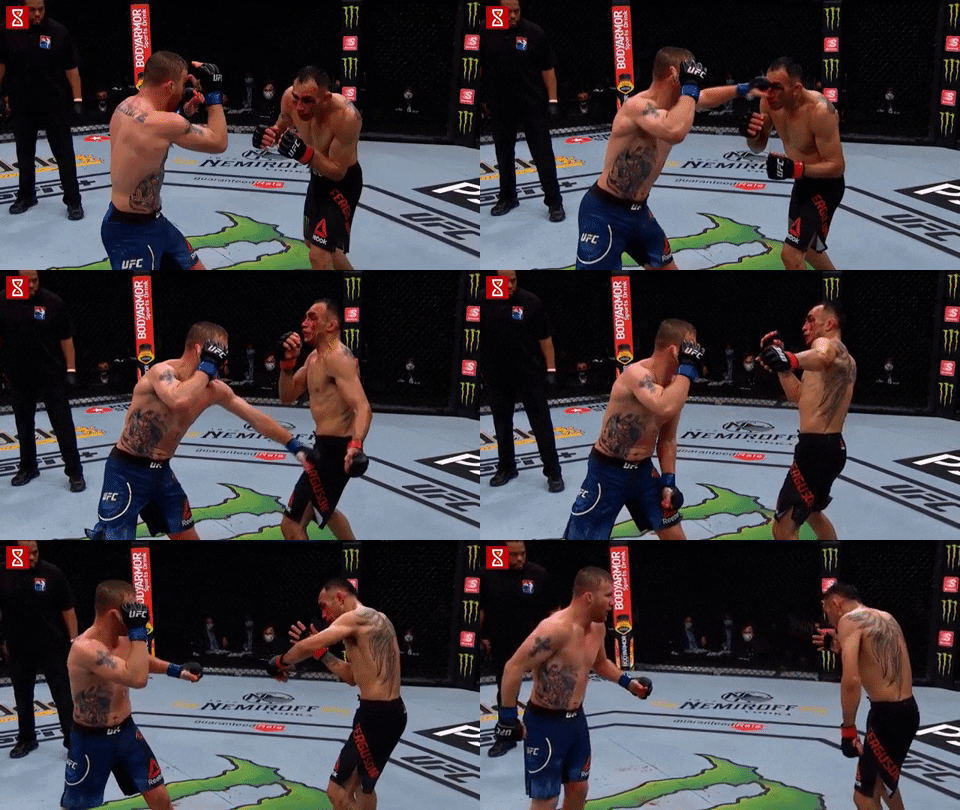
Gaethje lost his last fight against Nurmagomedov, but his performance against Ferguson and status as former interim champion keeps him high in the rankings. This is no longer the same fighter that would march forward with his guard high, ready to absorb punches on his forehead and arms. Gaethje now leads with his jabs and feints, only to back away when opponents start to counter. If they were going to exchange blows, it would be Gaethje that sets the terms. Against Ferguson, Gaethje was able to get him to overreact to his feints, creating hesitation. A common theme was seeing Gaethje feint a few times before circling out, with Ferguson chasing. After growing impatient, Ferguson would step in to try and pressure Gaethje only to get hit with punches by Gaethje. Instead of gassing out as the fight wore on, Gaethje showed no signs of slowing down. If anything, Gaethje seemed to get better, round by round. That could come in handy against someone like Paul Felder.
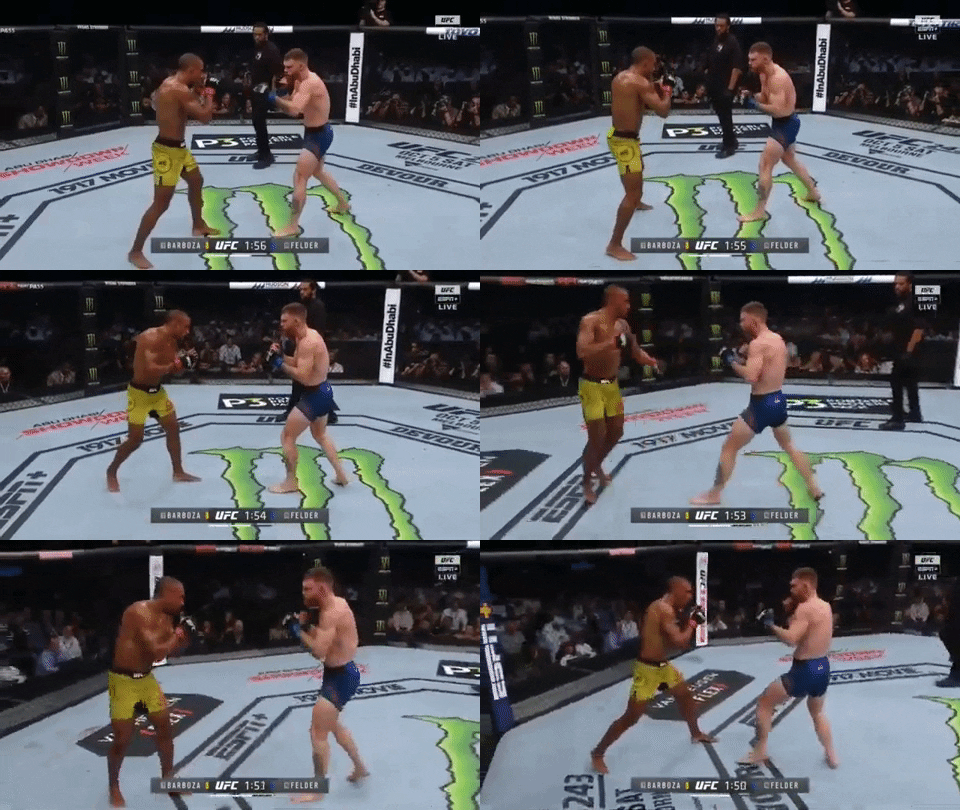
Felder is also someone that’s coming off a loss. In his defense, it was on five days’ notice and for five rounds total. Going the full 25 minutes with moments where he hurt RDA showed that Felder can be dangerous no matter how much the odds are stacked against him. Like clockwork, you can expect Felder to lose the first round before making adjustments and adapting to his opponents. In fights against Edson Barboza, Dan Hooker, and RDA, Felder was able to weather the storm before figuring out appropriate counters for each respective opponent. Felder timed Barboza’s low kicks to catch him with jabs, he threw counter left hooks when Hooker swarmed in, and he spun around with an elbow and cut up RDA. Outside of a doctor’s stoppage, Felder has never been finished. History has shown that the longer you drag on a fight with Felder, the more likely it is he can find a way to work around your strengths.
This match-up seems to favor Gaethje, but Felder is no slouch and has never been stopped by strikes or submission. Gaethje has shown more versatility in his striking, but that’s where Felder does his best work. Even low kicks from Gaethje may not be enough since Felder has dealt with them previously by the legs of Barboza and found a way to stop them with his jabs. Elbows from Ferguson also seemed to stun Gaethje, and that happens to be Felder’s specialty. Gaethje has the firepower and wrestling edge, but you can never count Felder out in this division.
Dustin Poirier (2) vs. Rafael Dos Anjos (6)
In a battle of former champions, Dustin Poirier facing RDA could be the unexpected fight of the year candidate that no one asked for. During RDA’s championship run at lightweight, Poirier was finding his way back into the division after a stint at featherweight. It wasn’t until RDA moved up to welterweight that Poirier became the savvy striker you see today. It’s an interesting fact that outside of Nurmagomedov, RDA is the only lightweight that has notched a title defense in the past seven years. That’s right, other champions either had no title defenses or were interim champions at best. It just goes to show you that winning a title is tough, but defending it is even tougher. With Nurmagomedov retired, it might be the perfect time for RDA to try and reclaim the lightweight title. At his best, RDA is a forward-moving counter-striker with a strong wrestling base that can give anyone problems (at both lightweight and welterweight). RDA’s clinch game combined with knees to the body tire opponents, and if he can’t grab their necks, he has no problem throwing hooks to the midsection as a plan B.
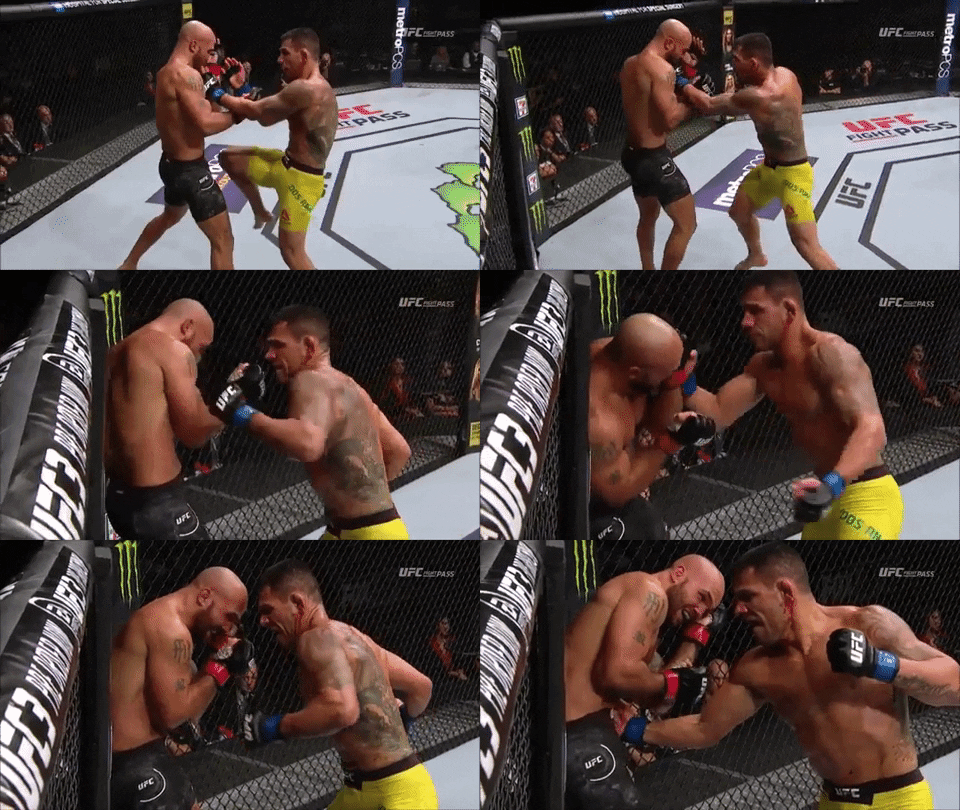
RDA is not the only one that went from veteran to champion. Poirier went from getting flatlined by Michael Johnson to beating Gaethje and Eddie Alvarez back to back in four months. It was subtle changes that made the biggest differences. By pressuring opponents with timing and accuracy, Poirier could focus on setting his left straight whenever the openings presented themselves. Adding in feints also caused overreactions in opponents, giving Poirier opportunities to counter. To strengthen his defense, Poirier committed to moving his head off-line (either by slipping or moving slightly back) and using the shoulder roll. These two defensive moves give Poirier the visibility to counter effectively but absorb strikes if necessary. The brawler from Louisiana is now a polished striker.
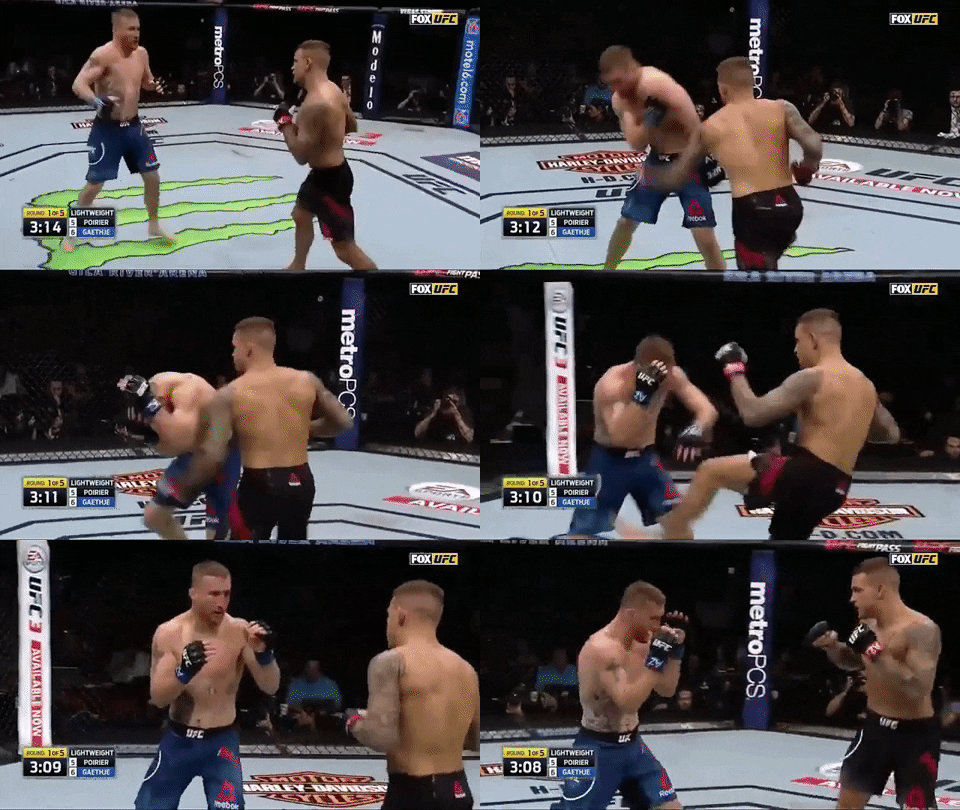
(Poirier gets Gaethje to cover up by throwing a barrage of hooks and finishes with a kick, adding a jab towards the end as he retreats.)
This fight has all the makings of fireworks on the feet, as Poirier’s hook-heavy style clashes perfectly with RDA. Both constantly move forward and attack the body to tire their opponents. It could boil down to RDA’s wrestling. Poirier is by no means bad at grappling, but he has been taken down by both Eddie Alvarez and Dan Hooker. RDA was able to take Colby Covington and Michael Chiesa down, both much larger opponents with strong grappling bases. If RDA can time some of Poirier’s leg kicks for takedowns, it could prove to be problematic for Poirier. On the flipside, Poirier can use his shoulder roll combined with lateral movements to catch RDA as he moves in with his chin exposed. Alvarez was able to slip in his right hand while changing direction laterally, and it stumbled RDA enough for Alvarez to get the TKO finish. In a battle of southpaws, it’s more than just stances that cancel each other out.
Tony Ferguson (3) vs. Charles Oliveira (6*)
It’s amazing that even though both Ferguson and Oliveira built long win streaks in the division, they have never crossed paths. Luckily for us, this is the only fight on the list that’s booked in real life. One of the reasons that Ferguson has found so much success is because he’s a threat in all ranges of combat. There isn’t one specific area where you’re completely safe with him. Ferguson’s unique style and unusual rhythm have caused considerable difficulty for many of his opponents. They have found it challenging to time their attacks and implement their strategies, especially when Ferguson pumps out the jab and uses feints. Adding to all this is Ferguson’s conditioning, herky-jerky head movement, and spastic footwork. Even the normally aggressive RDA found himself baffled by Ferguson and ate a constant stream of elbows and punches.
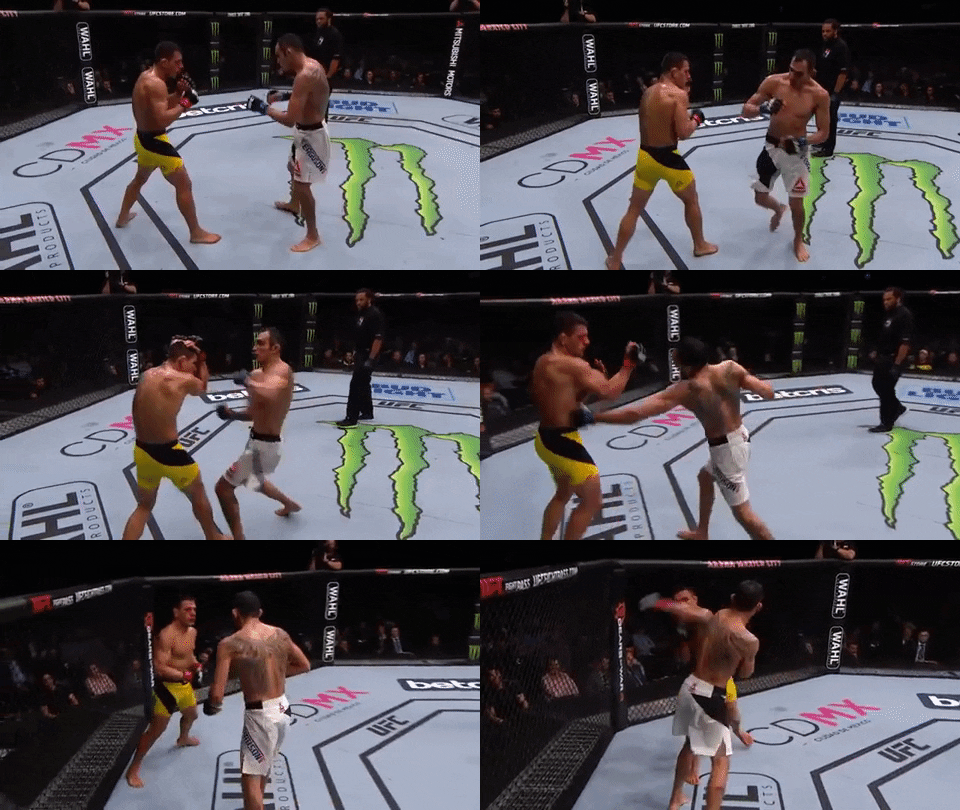
(Did I happen to mention that Ferguson also has the longest reach in the division? RDA found out the hard way.)
Since moving back to lightweight, Oliveira has racked up an 8-1 record and is currently on a seven-fight win streak. You have to go back to 2014 to find one of his matches that went to a decision. Given his confidence in submissions, Oliveira welcomes opponent’s takedowns and often stands in the traditional Thai stance, egging them on and baiting them with kicks. This forces most fighters to make a tough choice, either stay on the outside eating kicks and looping punches or close the distance and risk getting caught in a submission. If Oliveira gets a collar tie, fighters are so worried about being sucked into his ground game that they don’t remember to block the knees and elbows. Once a couple of strikes land, they react by moving their arms to protect their body, giving Oliveira the head and neck that he was aiming for all along.
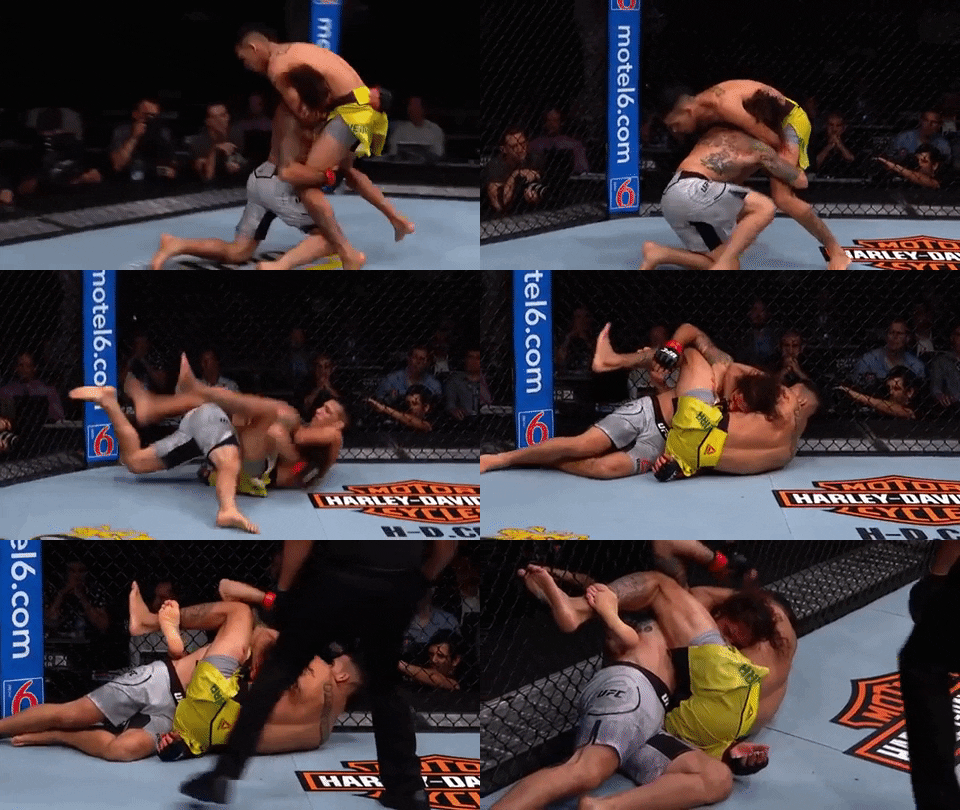
(Oliveira only needs a small mistake from his opponents to get the finish. Guida timed his takedowns incorrectly and got caught in a guillotine.)
Given that this fight will be happening soon, a full breakdown will be available in a future preview. But what we can expect is for Ferguson to welcome a grappling exchange with Oliveira, and meet his Thai clinch with sharp elbows of his own. The reach and size do favor Ferguson, but Oliveira isn’t much smaller. Ferguson can also throw Oliveira off by actively looking for takedowns and throwing elbows from the top (like Paul Felder) only to go for submissions of his own. Why not make Oliveira play defensive grappling for a change? Conversely, Oliveira can throw strikes with reckless abandon since he’s seen Ferguson get cracked plenty of times. The track record of both men indicates that we’re going to see a finish, no matter who gets his hands raised.
Conor McGregor (4) vs. Dan Hooker (5)
By the looks of things, McGregor is all but confirmed to return in 2021 against Poirier in a rematch of their featherweight fight. However, he could have made a return to the division against New Zealand’s own Dan Hooker. It’s a given that McGregor would be the heavy favorite entering the fight, but don’t discount Hooker’s chances. McGregor hasn’t competed at a 155 pounds in the past two years, and Hooker is massive for the weight class. By this point, the book on McGregor’s strengths have been published and studied by his peers (and their coaches). McGregor usually takes the center of the octagon. From here, he reaches for the lead hand and throws left straights to cut off the exit to the right and will throw the occasional front kick to keep opponent’s back to the fence. If the opponent panics and charges at him, it gives McGregor the chance to take a step back and let their punches whiz by, only to come back with a left straight counter.

Hooker is one of the bigger guys at lightweight, and it’s incredible to think that he made featherweight earlier in his career. His most recent loss to Poirier shouldn’t hurt his stock too much. Hooker’s counter left hook is great against fighters who press forward, and McGregor would be no exception. Against the likes of James Vick, Al Iaquinta, Felder, and Poirier, his counter left hooks found their target repeatedly and no one was left unscathed . Whenever Hooker can keep you at range, he prefers to throw kicks to draw out reactions so he can counter accordingly. His slow cooker method served him well in most of his fights, and it was a key part of his victory over Paul Felder. Hooker’s ability to set the pace and find openings as the fight wears on has gotten better. What was fun to watch in the Felder and Poirier match-ups were Hooker’s hip feints, which got both men to overreact and set them up for low kicks.
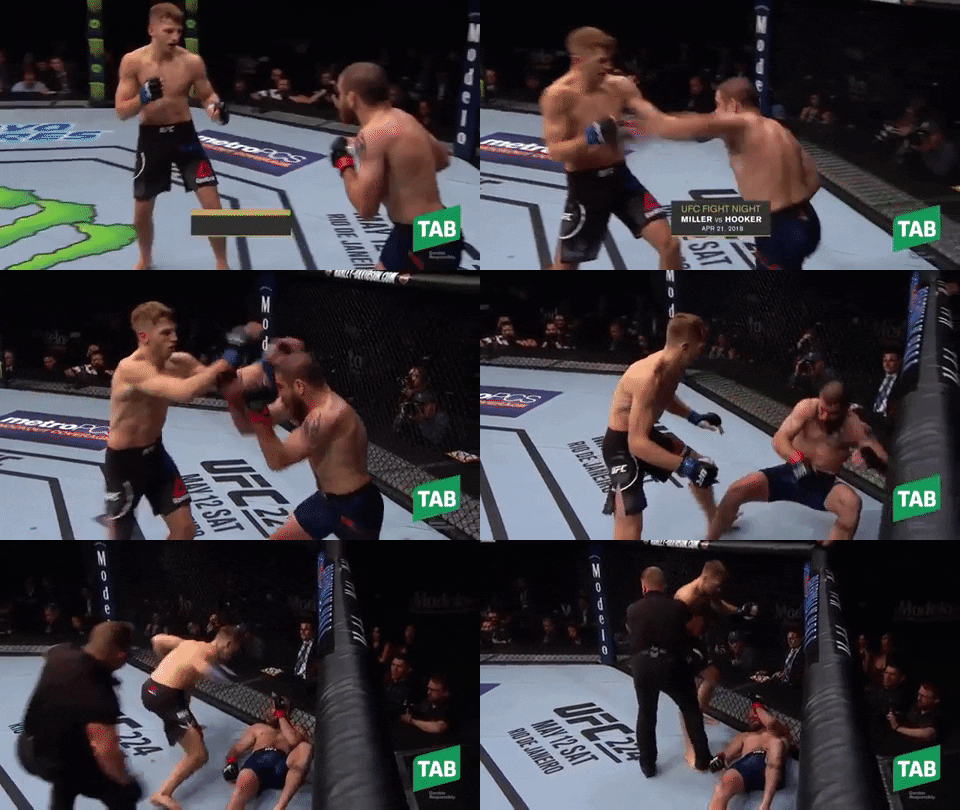
(A 1-2 from Hooker gets Jim Miller to swing and miss, allowing him to counter with a left hook and knee to the jaw.)
McGregor’s left hand is a great equalizer, but it doesn’t have the best track record against men his size. Donald Cerrone was stopped by McGregor in less than a minute, but Cerrone’s recent fights show that this might be due more to his decline than McGregor’s power. With that said, McGregor still finds a way to land his left straight in almost every fight and it’s carried him to two title victories in different weight classes. He also showed in the Chad Mendes and Nate Diaz fights that he knows the importance of targeting the body, something that Hooker has shown vulnerability in. For Hooker, his low kicks and counter left hooks can prove to be a nightmare for McGregor if set up properly. Nate Diaz is similar in size and he was able to draw out punches from McGregor by volume alone, and Hooker’s low kicks are some of the best in the division. Hooker might struggle against other grapplers in the division, but on the feet, he can give anyone problems (McGregor included).
Alternate Bouts:
Michael Chandler (N/A) vs. Diego Ferreira (9)
Chandler is the new kid on the UFC block, but at 34 years old he’s no spring chicken. Originally introduced to the UFC as the backup fighter for Nurmagomedov or Gaethje, Chandler comes with championship gold from another promotion. His recent record doesn’t reflect the best competition he could have faced, and it could prove to be an issue among other UFC lightweights. However, Eddie Alvarez didn’t debut in the best of circumstances and he ended up becoming champion. Matching him against Ferreira could give us a chance to gauge where he is in the division. Ferreira is ranked in the top ten and on a six-fight win streak. If Chandler can cruise by easily, it’ll show he deserves a top-five opponent next, if not an outright challenge for the title. If Ferreira wins, he would have beaten a champion from a rival promotion and notches his win streak to seven, moving his ranking and giving the UFC another title contender to add if they need a short-notice competitor that they can legitimately push.
Beneil Dariush (12) vs. Islam Makhachev (13)
It’s a shame that Makhachev had to pull out of his fight against RDA due to a staph infection since it would have let us know where he stands in the division. Since RDA has notched a win against Felder and will most likely be moving on to other opponents, a fight against similarly ranked Dariush could be fun. Both have established win streaks dating back a few years, and have built a solid striking base. This might not be main event material, but it’s a solid addition to any card. The winner obviously can crack the top ten, and in this hypothetical tournament, has a shot at becoming a world champion.
This might all seem like a pipe dream, but lightweight is a stacked division so some of these match-ups WILL happen. With Nurmagomedov out of the picture, there are very few fights that won’t have title implications. Whether they call it a tournament or not, it IS a tournament in the minds of the lightweight fighters to see who gets to claim the empty throne.
