 Home

 Creators
 Search
 Recent
 Random
 Posts
 DMs
 Tags
 Random
 Importer
 Import
 FAQ
 Account
 Register
 Login
 Favorites
 Keys
 Logout
 Telegram

Preview: UFC 256 (Patreon)
Content
Around this time last year, the UFC ended 2019 with a triple title card – Kamaru Usman vs. Colby Covington, Alexander Volkanovski vs. Max Holloway, and Amanda Nunes vs. Germaine de Randamie. The rest of the card was rounded out by Marlon Moraes vs. Jose Aldo and Petr Yan vs. Urijah Faber. It was a great pay-per-view event to end the year. Fast forward to December 2020 and you’ll notice that UFC 256 doesn’t have the same kind of star power. What it lacks in name value, it makes up for with fun fights. In the main event, Deiveson Figueiredo is making the quickest turnaround in championship history by facing Brandon Moreno just 21 days since both their last fights at UFC 255. It has been quite a while since a champion defended their title in back-to-back UFC cards. You have to look at UFC 32 and 33 to find a champion that defended their title in consecutive events. Fun fact: that fighter was Tito Ortiz, but there was a four-month gap between those title defenses. If UFC 33 rings any bells, it’s possibly because it’s been called “the worst show we’ve ever had” by Dana White multiple times. Yikes. Luckily for us, the co-main event for UFC 256 is Tony Ferguson vs. Charles Oliveira, where both combatants haven’t been in a boring fight (yet). Let’s start this preview by taking a closer look at Deiveson Figueiredo.
Despite the UFC’s mixed signals on the state of the men’s flyweight division, Figueiredo is still the champion. The weight class isn’t very strong but considering that the UFC has treated it as the step-child of the promotion, you can’t blame it for not being in a healthy state. As champion, Figueiredo has started his title reign correctly by finishing Alex Perez at 1:57 of the first round. With that win, Figueiredo has the record for the fastest finish at flyweight for a championship fight, beating out Demetrious Johnson’s victory over Joseph Benavidez in their rematch by 11 seconds. Figueiredo might not have the likes of Henry Cejudo or Demetrious Johnson to test himself against, but establishing himself as a champion outside of those two can help create his legacy. Cejudo has a single flyweight title defense to his name, and it was against a former bantamweight champion that was dropping down. Another victory would have Figueiredo eclipse Cejudo in the number of title defenses.
When it comes to fighting style, Figueiredo can do it all. In his last fight against Alex Perez, Figueiredo had multiple stance switches and threw kicks without hesitation. The fight itself didn’t last long, but we saw plenty of feints and stance switching from Figueiredo. For maximum success, stance switches should be done in between feints or attacks, not just for the sake of doing them. This is what separates those with great footwork and those that are going through the motions. Look at how Israel Adesanya hides his stance switches in between attacks and feints.
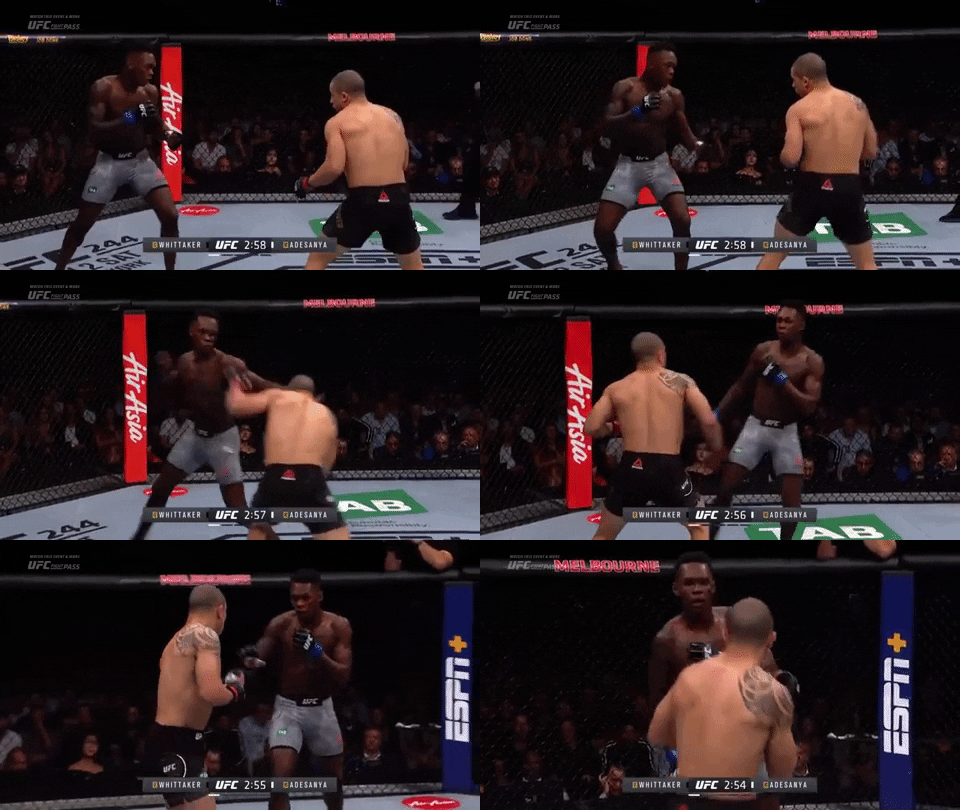
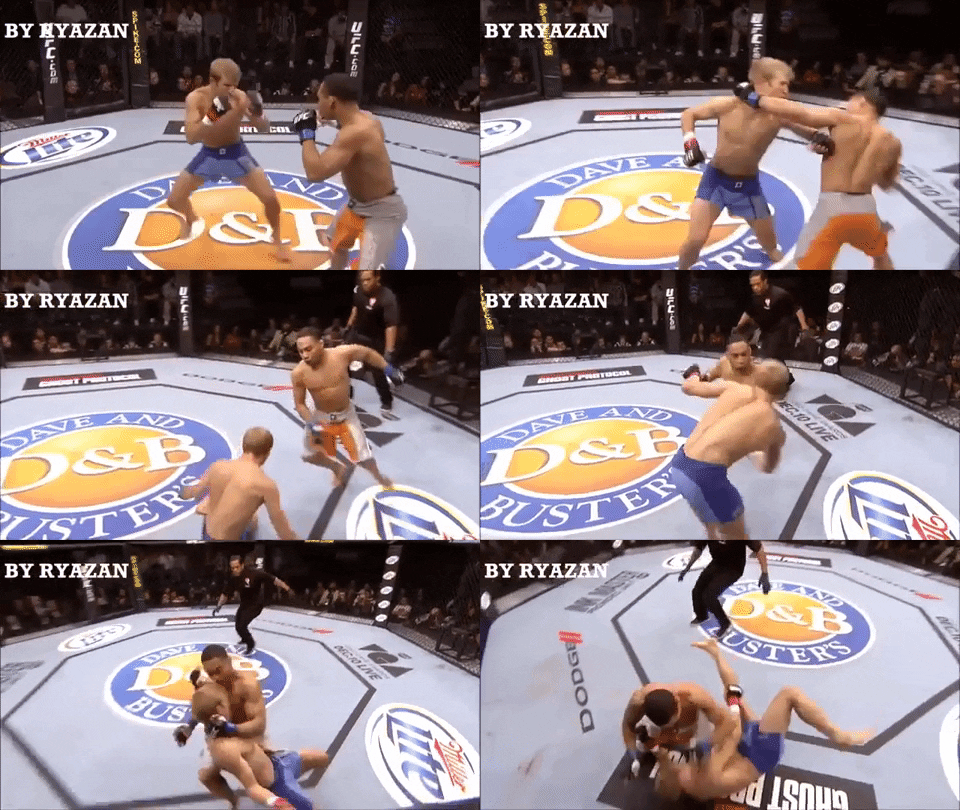
Stance switching while stepping forward is how knockdowns occur. Every single bantamweight/flyweight great you can think of, from T.J. Dillashaw to Demetrious Johnson and Dominick Cruz have been dropped while stance switching out in the open.
Although there’s a danger to stance switching, the juice is worth the squeeze. Not only do you momentarily halt an opponent’s offense and put them on the defensive, but you now have also doubled the weapons you can attack with. Like Adesanya, Figueiredo disguises his stance switches with his kicks. That’s good news because at 5’5” with a 68” reach, he’s not towering over his competitors. The kicks to the body of Perez found their mark repeatedly. Perez shuffled straight back afterward, and Figueiredo was in a new stance. Perez was unable to start throwing low kicks to disrupt Figueiredo’s balance, and his entire game plan was put on hold.
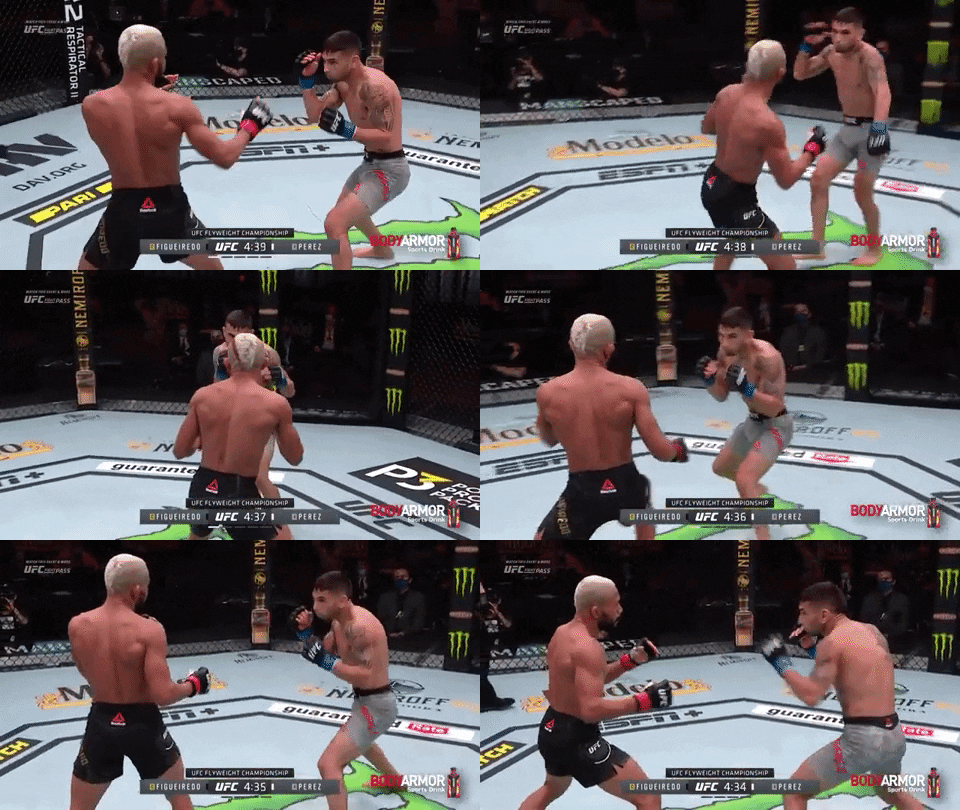
(From a single kick, Figueiredo was able to get multiple stance switches. Even though the damage was minimal, it created hesitation from Perez.)
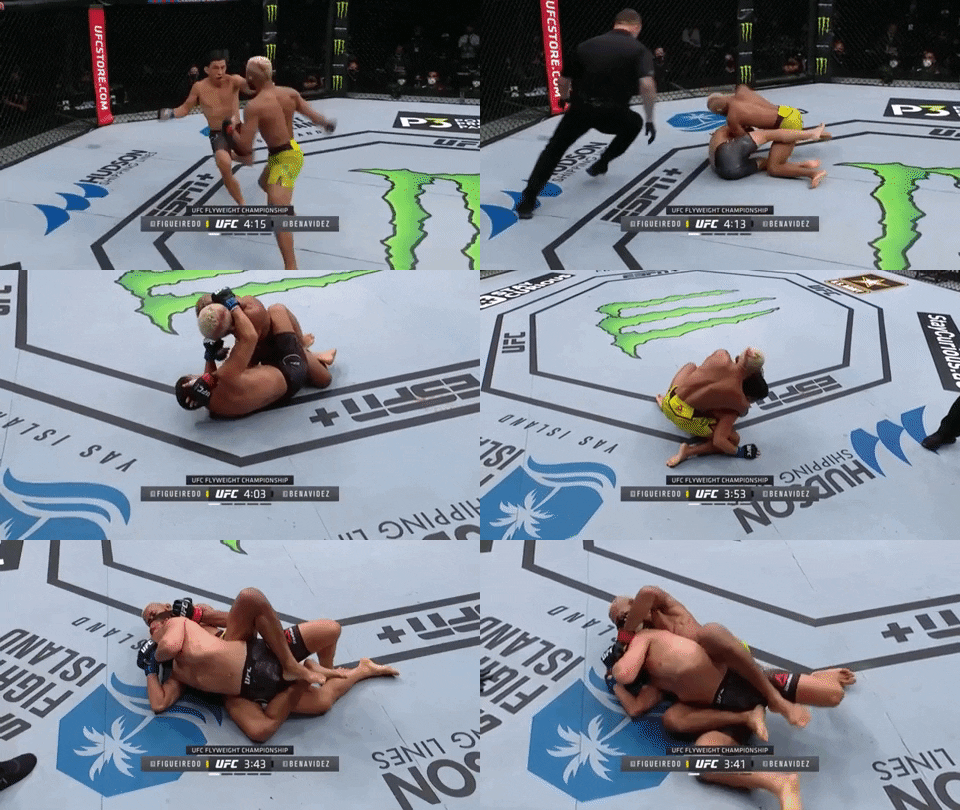
In both his fights against Joseph Benavidez, Figueiredo timed most of Benavidez’s attacks and hit him with straight punches repeatedly. By leading with his face, Benavidez got tagged by the jabs of Figueiredo without the latter having to fully extend his punches. On the ground, things weren’t looking too great for Benavidez either. Despite his wrestling background and submission prowess, it was Figueiredo that controlled the exchanges when the fight hit the mat. Figueiredo attempted a reverse triangle (à la Braulio Estima) before switching over to multiple armbar attempts.
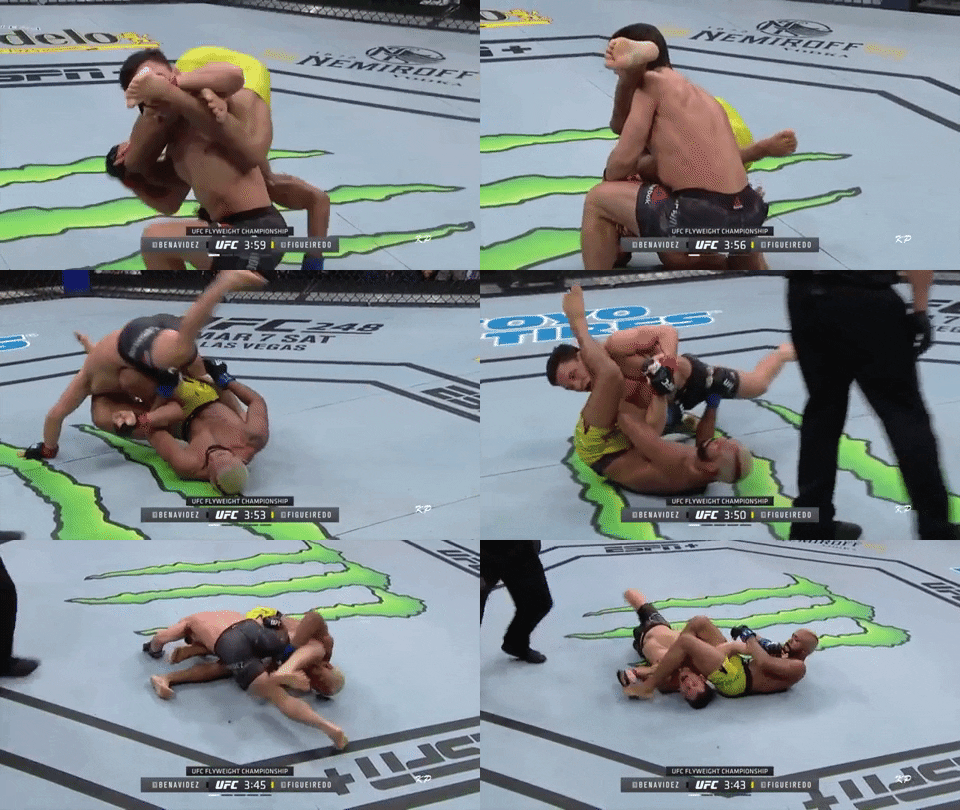
In their first fight, Figueiredo won by knockout, but since he missed weight, the title remained vacant. Both Figueiredo and Benavidez ran it back just a few months later, and this time there was no controversy. Figueiredo timed a right hook perfectly and dropped Benavidez early. After more lopsided exchanges, Figueiredo took the back and sunk in a rear-naked choke. It was a thing of beauty and the end came quicker than the first.
There’s no question that Figueiredo is improving with every fight, but the same can be said for his opponent, Brandon Moreno. Although Moreno started his UFC career with a perfect 3-0 record, he suffered back to back losses against Sergio Pettis and Alexandre Pantoja. The losses couldn’t have come at a worse time. During this period, the UFC was actively purging flyweights from their roster, and two L’s in a row meant that he got cut from the promotion. Even though he was no longer in the UFC, Moreno rebounded nicely with a win over at the LFA promotion where he won their 125-pound title. The win also put him back on the UFC’s radar and he got signed for their Mexico City card. If you’re thinking they only re-signed Moreno because of his Mexican roots, you are half-correct. Yes, Moreno was a name that the locals could get behind, but he’s also a legitimately talented fighter.
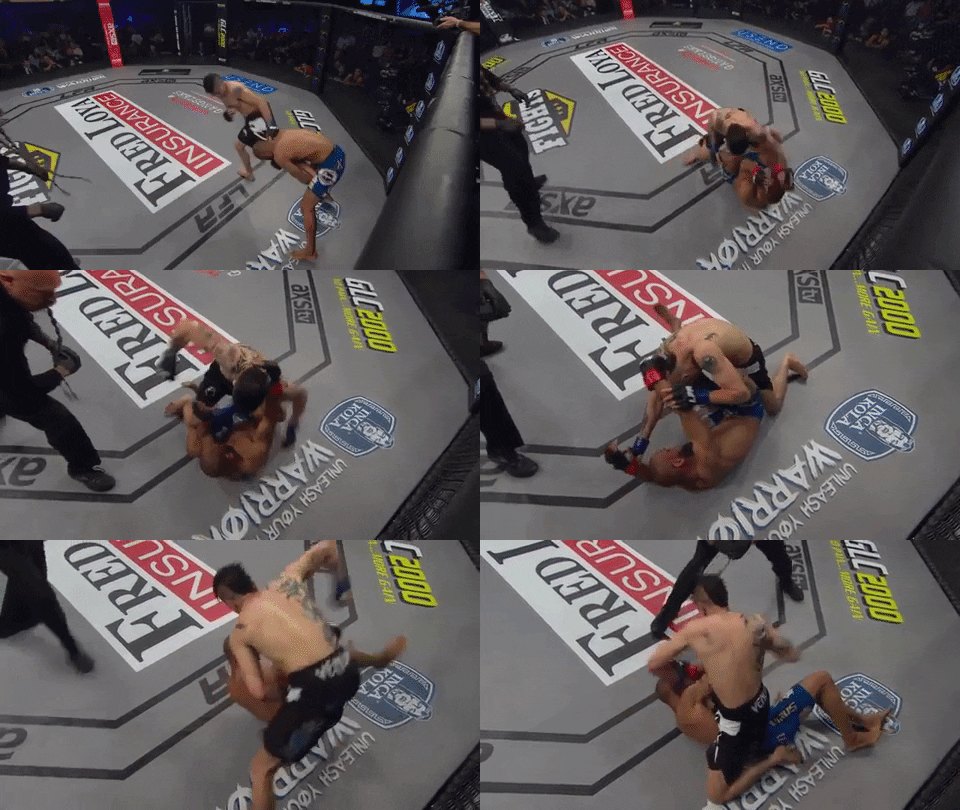
(A failed takedown attempt was the only opening Moreno needed to win the LFA flyweight championship.)
In his first fight back for the promotion, Moreno engaged in an exciting back and forth match-up against Askar Askarov. The contest ended in a draw, but since then he’s been on a three-fight winning streak. Against Kai Kara-France, Moreno pumped out sharp jabs before adding in hooks to keep Kara-France from lunging in. Jussier Formiga tried to clinch up with Moreno right after getting hit with a leaping jab, only to get tripped down. Moreno isn’t the most technical fighter at men’s flyweight, but his heart has carried him through some tough matches. In his most recent fight against Brandon Royval, Moreno waited until Royval unloaded with punches before ducking under and taking him down.
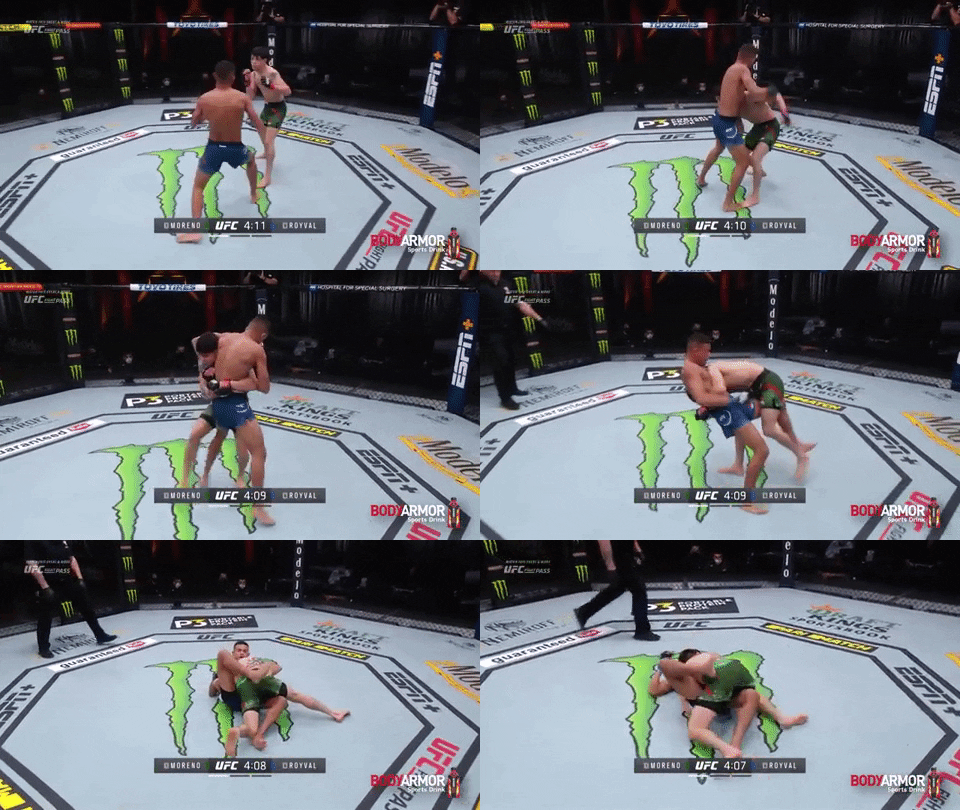
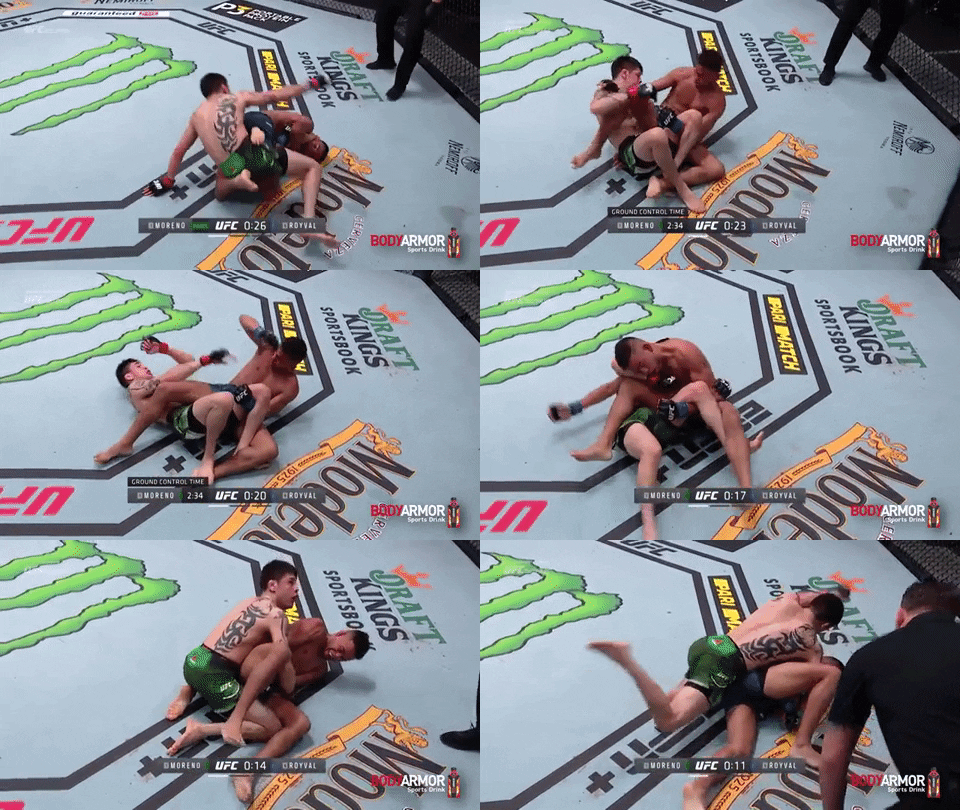
Royval found his way back up to his feet, but Moreno timed a spinning elbow and took him down again. This time, Moreno took Royval’s back and stayed glued to him. Even when Royval was able to regain guard and attempted a kneebar, Moreno stuck to him and finished Royval with hammer fists from up top.
This is a quick turnaround for both Figueiredo and Moreno, but at least they had the same amount of time to prepare. For Figueiredo, feinting to get Moreno to swing first will be his best bet at returning with a counter. Moreno likes to swing away with hooks if he thinks an attack is looming, but this leaves him exposed if he misses. Figueiredo has a slight edge in the ground game and has finished three of his last four opponents with chokes. Moreno’s habit of ducking down for trip takedowns could become a liability if he doesn’t protect his neck during the transition from standing to ground. Figueiredo was taken down by Perez in his last fight, but that only gave him opportunities to go for different submissions until he got the guillotine. The fact that Figueiredo was able to get the submission without having to look is proof that he has multiple setups for the guillotine, and he has no problems switching to a different submission if he thinks it’ll be available.
For Moreno, he should focus on turning this into a brawl where he can get Figueiredo to lower his guard and beat him to the punch. At 5’7” with a 70” reach, Moreno does have a slight size advantage. Moreno has losses on his record, but his chin has held up in multiple exchanges. Moreno’s hooks off the jabs could be used whenever Figueiredo closes the distance as both an offensive and defensive measure. Michael Bisping’s left hook became a perfect counter whenever opponents retreated in a straight line and didn’t mind their defenses. Moreno could do something similar. Moreno might not have the same ground game as Figueiredo, but he shouldn’t be afraid to counter Figueiredo’s submissions with strikes. Figueiredo could be expecting a grappling exchange, but if you hit him with some good shots he might abandon hunting for submissions and disengage. The men’s 125 division isn’t the most stacked, but the activity levels of both Figueiredo and Moreno will make this exciting.
Tony Ferguson vs. Charles Oliveira
This is a match-up that could serve as a headliner of its own, but it’s great that the UFC put this on before the end of the year. Ferguson has had a rough 2020. He’s seen his 12-fight win streak broken by Justin Gaethje along with a potential fight against Khabib Nurmagomedov. Heading into the year, Ferguson was ranked #1 and all but guaranteed the next shot against the champion. After getting TKO’ed by the hands of Gaethje, he finds his ranking dropped to #3 and having to prove himself all over again. His opponent, Charles Oliveira, feels equally ignored in the UFC’s crowded lightweight division. Even though he’s put together a seven-fight win streak, he wasn’t on anyone’s list of potential title contenders. He had his ranking drop when Rafael Dos Anjos beat Paul Felder. It just goes to show you that even if all you do is win, it’s equally important who you win against. The good news for both Ferguson and Oliveira is that whoever wins is going to be on the shortlist for a chance at the possibly vacant lightweight title.
Past fight previews have covered Ferguson extensively, but it’s always fascinating to see him at work. Even though he’s coming off a loss, Ferguson is dangerous in all areas. With a 76.5” reach, it doesn’t take much for Ferguson to land a jab. Combined with his feints and awkward footwork, it makes predicting his movements a nightmare. Ferguson will go from bobbing and weaving on the attack to moving his head straight back, confusing opponents as they try to time their attacks. Fighters like Donald Cerrone, Anthony Pettis, Kevin Lee, and Rafael Dos Anjos couldn’t figure him out in time. Even when knocked down (like in the Pettis match-up), Ferguson front rolled his way out of danger until he could shake the cobwebs out and get back to hurting Pettis on the feet.
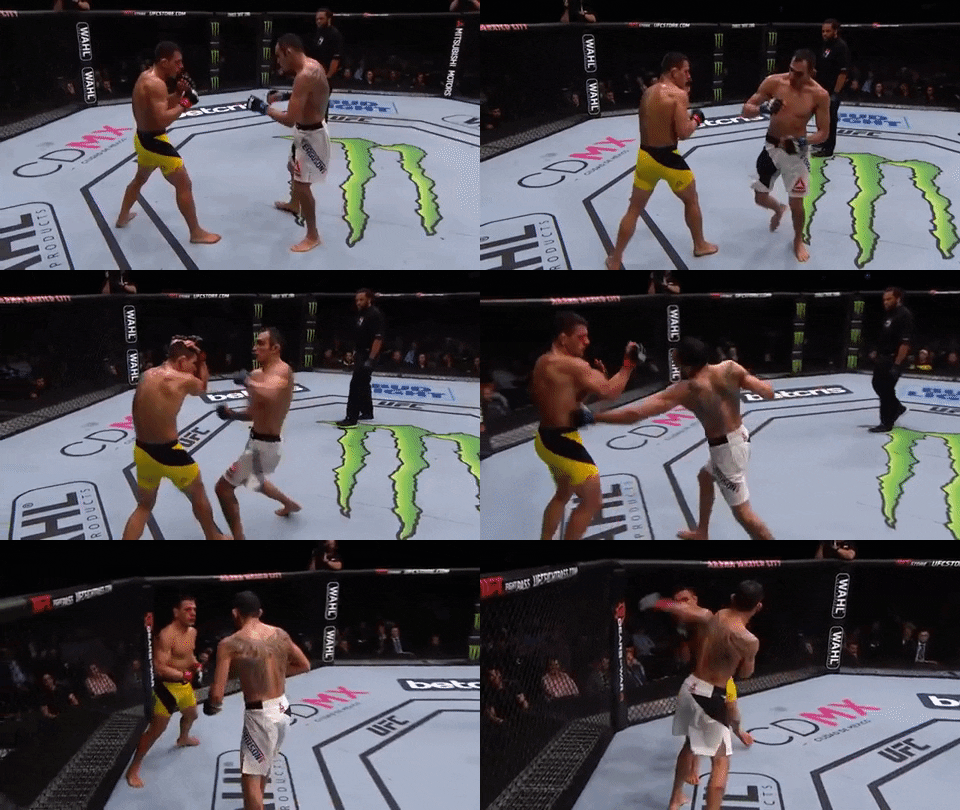
(RDA threw out a jab and covered up his head expecting a counter up top, only to get hit with a long hook to the body.)
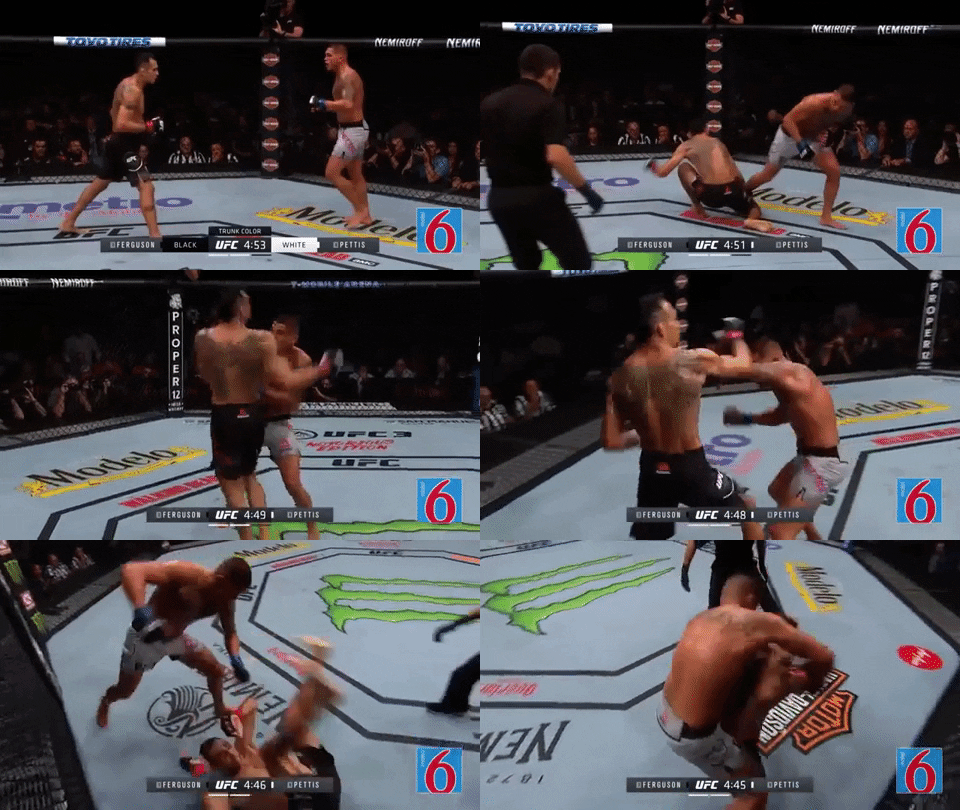
(Even when he’s dropped and hurt, Ferguson is never completely out of the fight. Look at how he fought back with a spinning back fist and 1-2’s.)
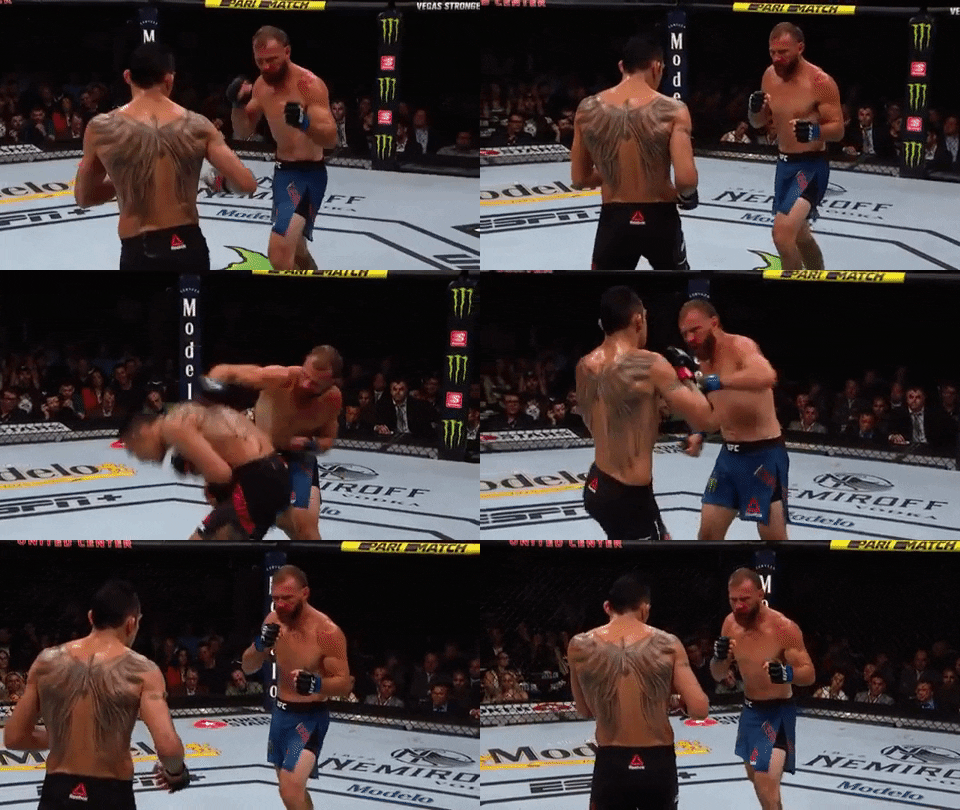
In the Cerrone fight, Ferguson repeatedly gave up his back after throwing the jab. Knowing that Cerrone couldn’t resist the temptation to close the distance, Ferguson timed a couple of spinning back elbows that caught Cerrone clean on the jaw. These didn’t finish Cerrone, but it made him more hesitant on the feet and less likely to follow up with a counter.
Although he lost to Gaethje, Ferguson nearly ended the fight at the end of round 2 when he caught Gaethje with an uppercut right as the round ended. Who knows how that fight could have turned out if there were just a few more seconds left?
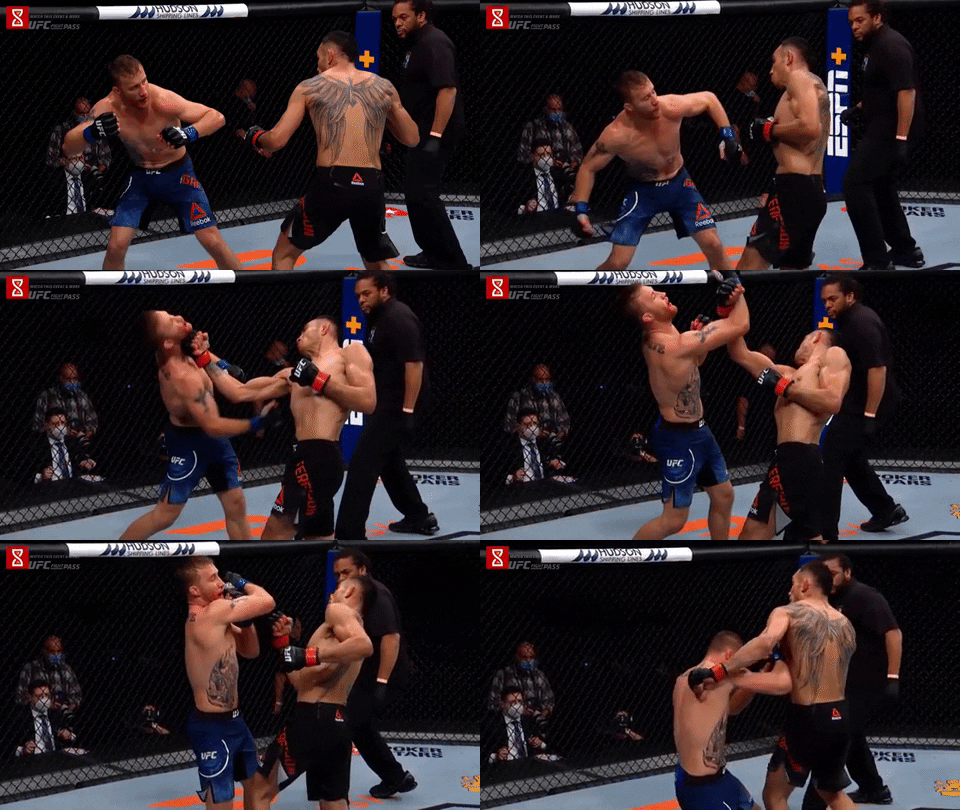
(Both swung uppercuts, but Ferguson’s reach helped him land first.)
Ferguson’s not going to have much time to reflect on past mistakes, as Oliveira is hoping that an emphatic win places him on the shortlist for title challengers. Oliveira is on the longest winning streak of his UFC career, which started back in 2010. He’s been in the UFC a year longer than Ferguson, yet their paths have never crossed. It could be because Oliveira bounced around from lightweight to featherweight back to lightweight, but it’s at 155 pounds where Oliveira has found his groove. Oliveira has always been dangerous on the ground, but his striking never presented the same threat. It wasn’t until Oliveira moved over to the legendary Chute Boxe team where his aggressive muay Thai and kicking game blossomed. Opponents could no longer wade in carelessly with strikes, Oliveira’s hands could knock them out before he could sink in a choke.
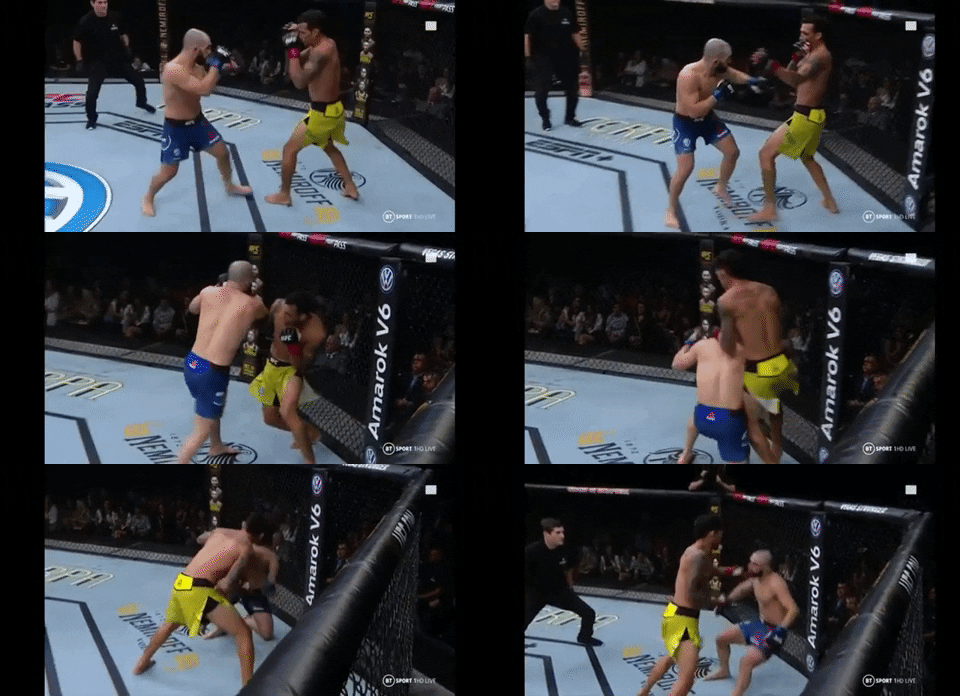
(Jared Gordon moved in behind the jab before throwing his straight right, only to get caught with a right hand from Oliveira.)
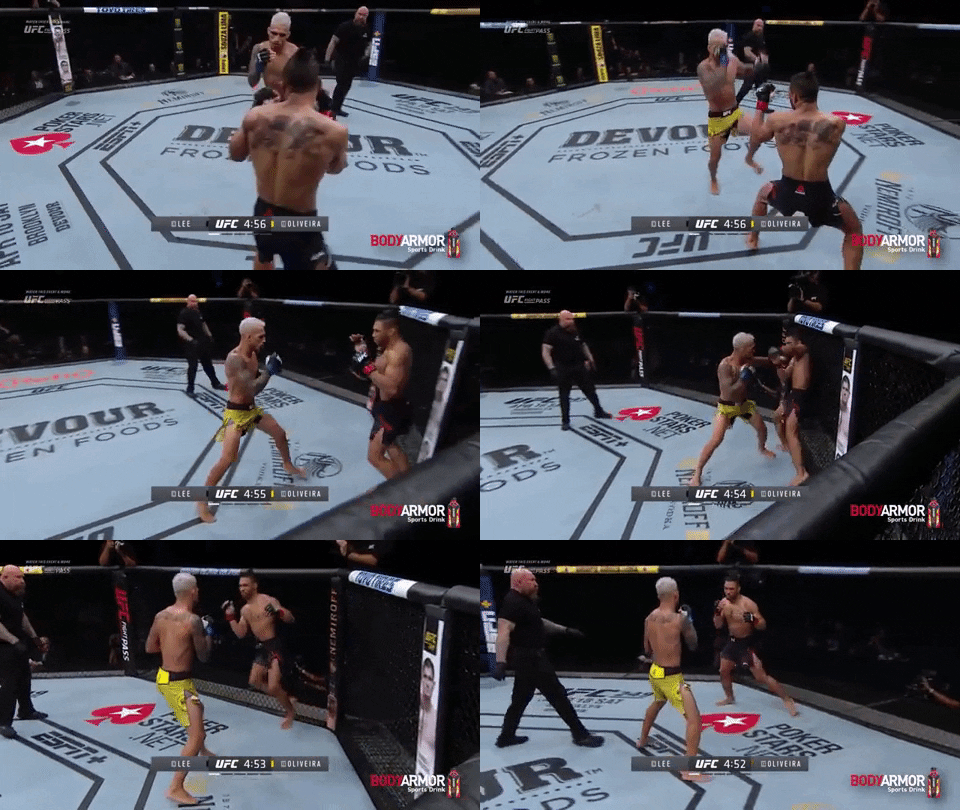
Although six finishes in a row are impressive, it was easy for critics to write off his wins as victories over unranked opponents. They couldn’t say the same about Oliveira’s most recent opponent, Kevin Lee. Heading into this fight, Lee was coming off an impressive KO victory over Gregor Gillespie where it finally looked like he was finding a way to take advantage of absurd 77” reach. Oliveira’s 74” reach wasn’t going to do him much in a jabbing contest, so he started throwing front kicks to Lee’s body and head. The kicks might seem erratic, but it forced Lee to cover up instead of attack, and before you knew it, Lee had his back against the fence.
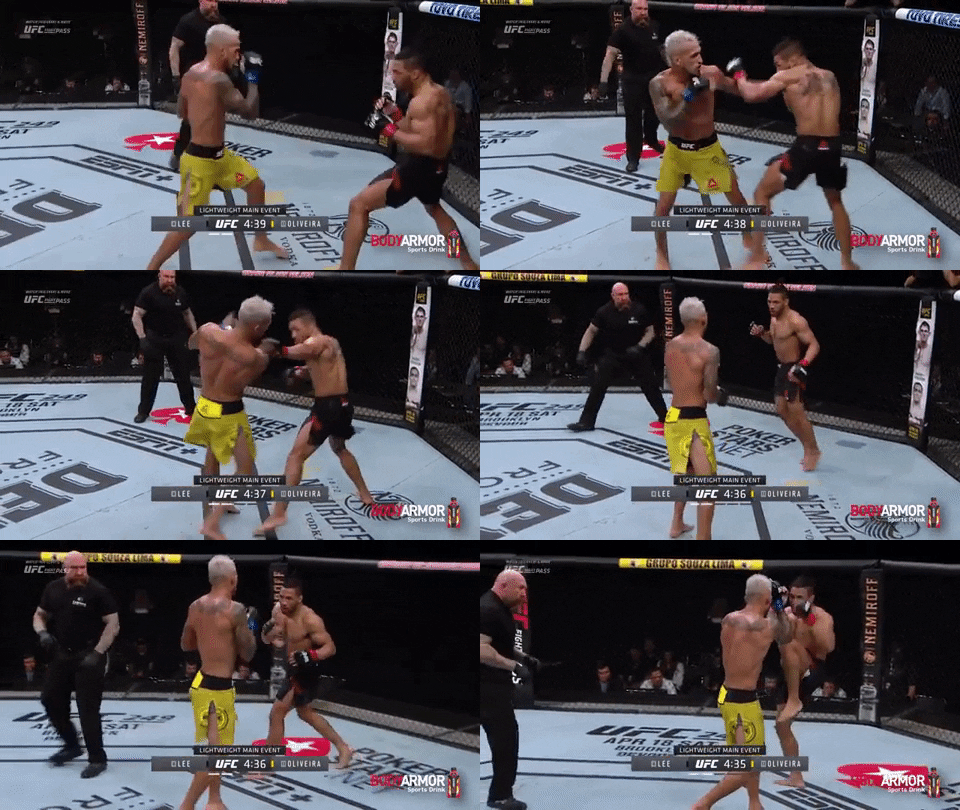
Denying Lee open space to operate, Oliveira could throw jabs of his own to initiate the clinch. Even when Lee was able to muscle out of the clinches, Oliveira was there to counter immediately with uppercuts and right straights. Vasyl Lomachenko utilizes a similar strategy where he’ll shove opponents under his armpits so when they pop up, he can nail them with punches and not get called for grappling.
It was clear that the fight was lost on the feet, so Lee decided that his best chance would be to take Oliveira down and pass his guard. Outside of the now-retired Khabib Nurmagomedov, there aren’t many other lightweights that excel at this. Unfortunately for Lee, Oliveira is one of the better grapplers in the division and he tied up Lee’s legs quite often. Lee never looked comfortable exchanging leg attacks with Oliveira, and Oliveira’s constant transitions while on bottom kept Lee from unloading with ground and pound.
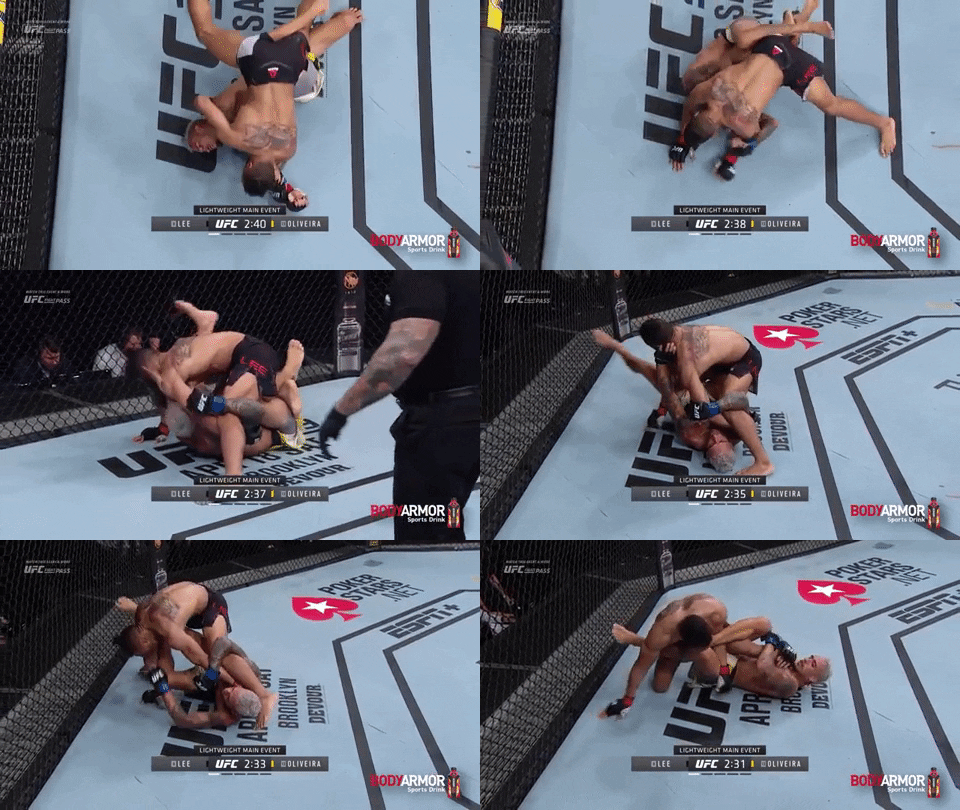
Even when Lee had side control, Oliveira popped open his half guard to reap Lee’s open leg. Lee’s control on the ground was sporadic at best, and Oliveira’s constant leg entanglements were more dangerous than they were worth. When round three started, Lee was exhausted and running out of options. When Lee couldn’t deal with the front kicks anymore, he went after Oliveira’s lead leg and attempted a single leg takedown. This led Lee right into a front headlock before Oliveira transitioned seamlessly into a guillotine. It wasn’t long before Lee had no choice but to tap, giving Oliveira his 7th straight win and cementing him as a legitimate contender.
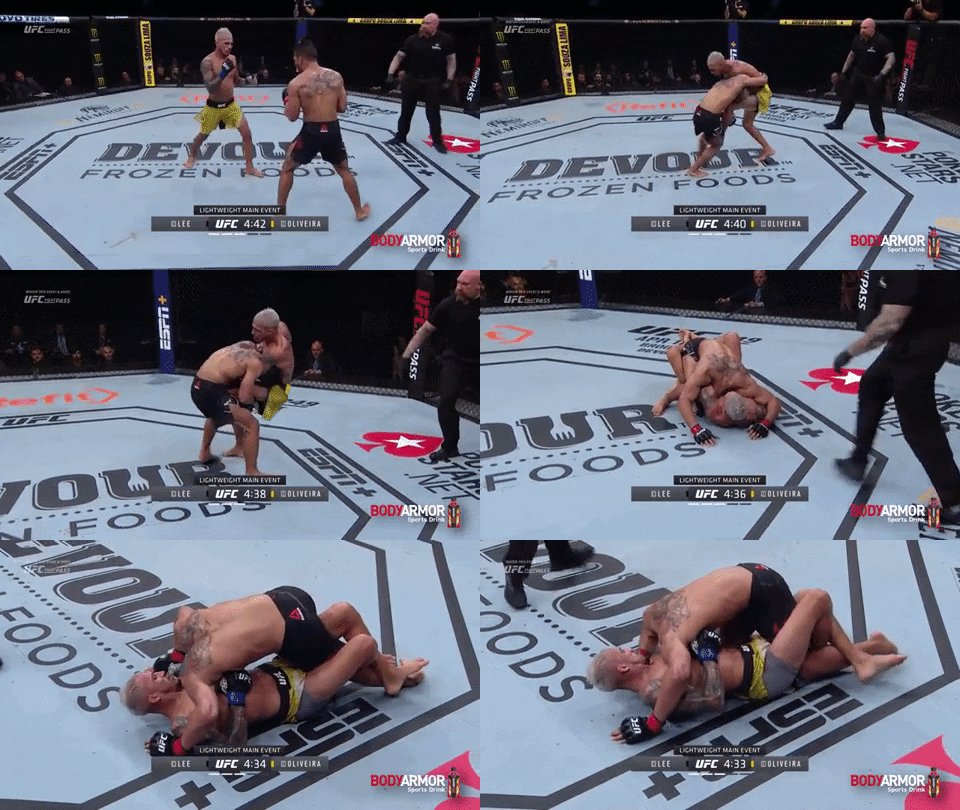
For Ferguson, he should try to keep Oliveira near the cage where he will have difficulty kicking, and can launch front kicks of his own to Oliveira’s body. With a longer reach and wrestling chops to stuff most takedowns, Ferguson can safely keep the fight on the feet and force Oliveira to engage him in an extended boxing match. Oliveira has developed confidence in his striking, but his fundamentals can be exploited if he’s forced to stand for extended periods. He has fewer tricks up his sleeve and if Ferguson can disrupt his timing, it shouldn’t be difficult for Ferguson to overwhelm Oliveira with volume. Don’t discount Ferguson’s submission game either. Despite his wealth of knowledge as an MMA grappler, Oliveira has been submitted before by Anthony Pettis and Ricardo Lamas after he’s been hurt on the feet. People make bad decisions when they panic, and Oliveira is no exception. For Oliveira, a more patient kickboxing game could be to his benefit. Gaethje became the first to finish Ferguson with strikes by being able to get him to throw first and counter with more accurate punches. Traditional kickboxing counters and combinations could be used whenever Ferguson attempts his kicks since he’s on one leg (and he’s been hurt in scenarios like this). If Oliveira gets in a tough spot, he could look for a single-arm collar tie to off-balance and return fire with straights and uppercuts rather than go for a panicked takedown attempt.
UFC 256 has gone through a lot of changes because, you know, COVID, but at least these two fights remain intact. Here’s to hoping we can at least end the year with some great fights by competitors who have always delivered. Fingers crossed that it doesn’t become another UFC 33.
Files
Previews only

