 Home

 Creators
 Search
 Recent
 Random
 Posts
 DMs
 Tags
 Random
 Importer
 Import
 FAQ
 Account
 Register
 Login
 Favorites
 Keys
 Logout
 Telegram

Vet to Champ: Robbie Lawler (Bonus) (Patreon)
Content
Without looking it up, name the longest-tenured UFC fighter still active on the roster. Diego Sanchez? Not a bad guess, he’s an alumnus of the original Ultimate Fighter show and is still somehow getting fights from the promotion. Frankie Edgar? Solid choice, he debuted in 2007 and has fought in three different weight classes. However, he’s not the one. If you guessed Robbie Lawler, pat yourself on the back.
Lawler has been fighting since 2001 and made his UFC debut back in 2002. There are some MMA fans right now who were born around the time he first stepped in the cage and others who still remember Lawler as the next big prospect to come out from the Miletich camp in Iowa. Looking at the first half of his record, he doesn’t stand out as a future champion. For every two consecutive wins, he had a loss that stopped his momentum. When Strikeforce was purchased by the UFC, Lawler was thought of as a solid veteran addition to their deep welterweight roster. No one thought Lawler could make a championship run and wear the belt around his waist. Against the odds, Lawler won the 170-pound title and successfully defended it twice. Lawler was always a crowd-pleaser, but nothing in his skills indicated that he could become a world champion. How did Lawler evolve from wild brawler to patient striker? You can’t always teach an old dog new tricks, but in the case of Lawler, a few technical changes made all the difference.
When Lawler started his MMA journey, he had a leg up over other competitors in his weight class. Training out of Pat Miletich’s gym, Lawler was exposed to champions early on and had access to a plethora of high-level training partners. Even if he wasn’t getting the best coaching, there was no denying that Lawler was at least getting pushed to perform to the best of his abilities. At 20 years old, Lawler fought as if each match-up could be his last. He led with hooks and uppercuts and never took a step back. Occasionally, he would mix in flying knees and head kicks to keep his opponents on edge.

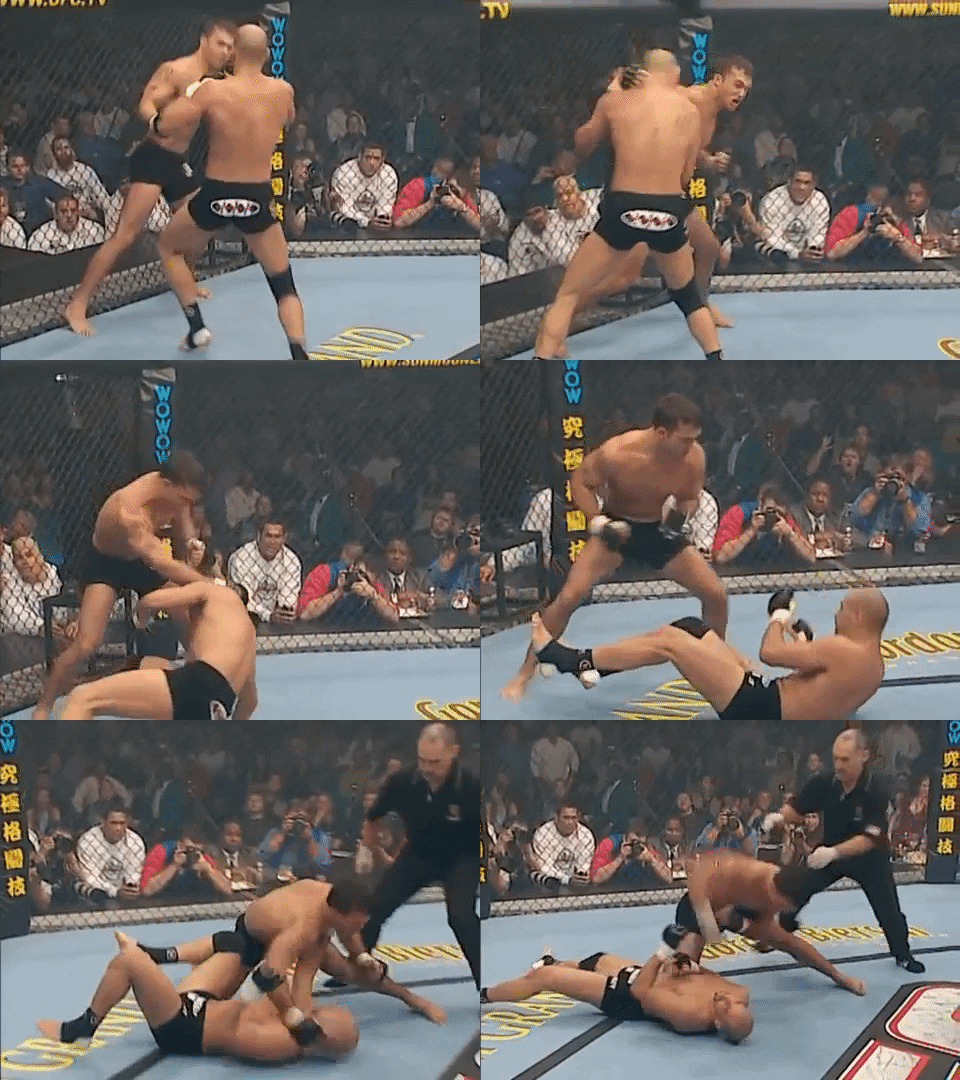

(Early Robbie Lawler was all about hooks and uppercuts. More often than not, this was enough.)
This approach worked early on, but some immediate problems became evident. Lawler’s punching heavy style left him open to kicks, as Pete Spratt demonstrated in his 7th fight. Even though Lawler claimed it was a torn hip flexor, it was no secret that the leg kicks hampered his movements and kept him from exploding with strikes. It was also the first time we saw Lawler shoot in for takedowns. Just a few months later, Lawler got matched up with Chris Lytle, a pro boxer who competed in MMA when he wasn’t busy being a full-time firefighter. Lytle was able to out-box Lawler in spurts, but the power and speed of Lawler were enough to win a comfortable decision. Lytle may have been a gentleman, but the same couldn’t be said for Lawler’s next opponent, Nick Diaz. Although there wasn’t any bad blood between the two, Diaz kept trash-talking throughout the fight and even slapped Lawler between punches. At 22 years old, Lawler was anything but calm in his fights, and he took the verbal taunts and slaps as disrespect and powered through to hurt Diaz. This backfired and had Lawler walk right into a punch from Diaz that knocked him out.


(The volume, taunts, and straight punching from the southpaw Diaz were too much for Lawler at this stage of his game.)
Now at 4-2 in the UFC, Lawler wasn’t on the chopping block, but he didn’t have the same aura of invincibility either. With teammate Matt Hughes still in the same weight class and no clear path to the title, Lawler opted to move up to middleweight where he thought he stood a good chance at becoming the 185-pound champion. The middleweight title was vacated after the UFC stripped former champion, Murilo Bustamante, after he left the promotion for PRIDE. Unfortunately for Lawler, an ill-timed takedown led to getting triangled by the late Evan Tanner, who moved on to face David Terrell for the middleweight championship title. Two losses in a row aren’t the end of the world, but Lawler opted for a change of scenery and requested his release from the UFC. Keep in mind that this was during an era in MMA where it wasn’t unusual for fighters to bounce around from promotion to promotion. Think of it as the regional pro-wrestling scene: there were a few top players but each territory had its champion and distinct identity.
In seven years, Lawler fought for seven different promotions. In that span, he won three different titles despite having a record of 11-6-1. The record might not seem impressive, but keep in mind he was fighting above his weight class. This was also around the time when Lawler was entering his fighting prime, but a lot of his teammates at Miletich were slowing down. They weren’t retiring in droves, but it was clear that many were in the latter stages of their careers. With Miletich focusing on his civilian contracts with law enforcement agencies and no clear leader in the gym, Lawler was forced to train himself. Occasionally, Lawler would get time with Matt Hughes, but Hughes also had his fighting career to worry about. The loss to Lorenz Larkin was the last straw. Lawler packed his bags and headed to south Florida to start over at American Top Team.
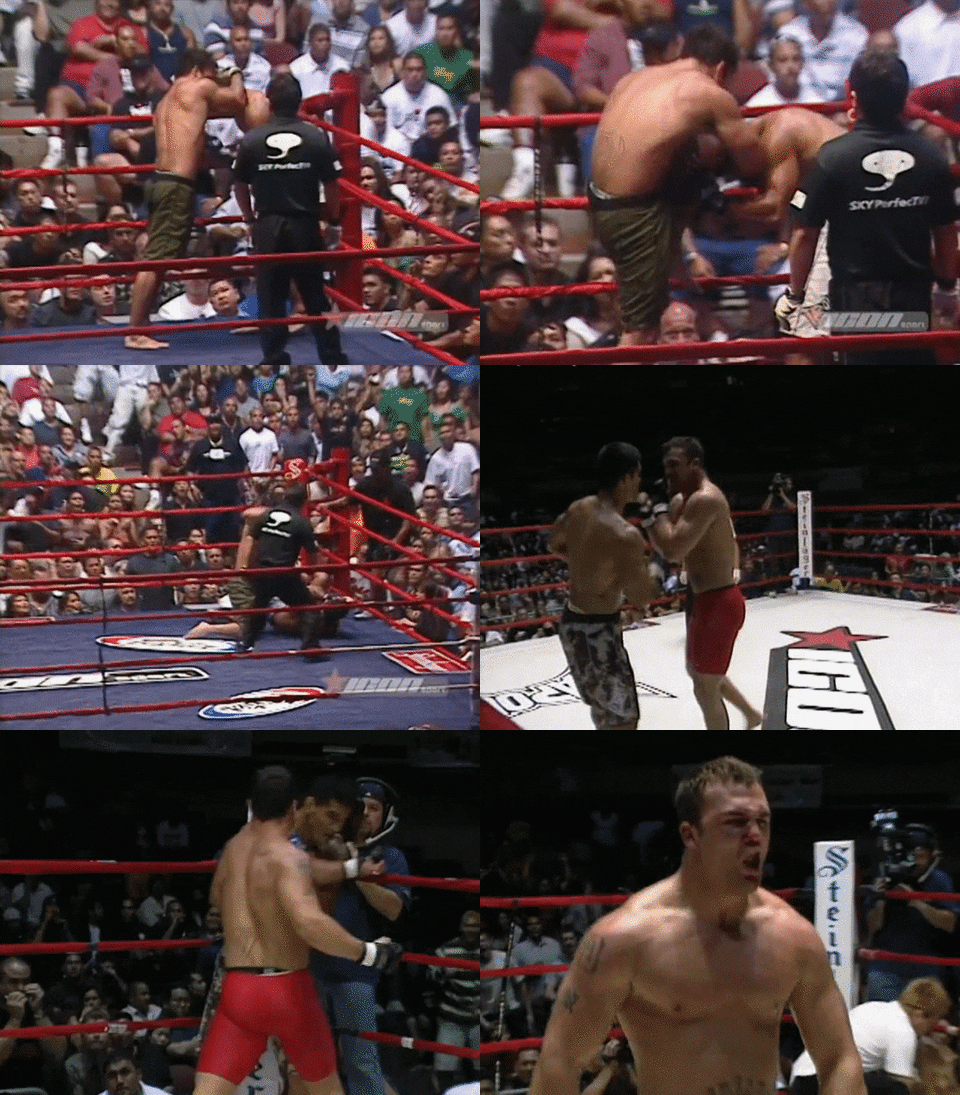
(In seven months, Lawler beat Falaniko Vitale by KO, winning the SuperBrawl and ICON Sport middleweight championship. Can you guess what punches he used?)
While bouncing around different promotions, there was one thing that Lawler stopped doing: sparring. After his first (and only) fight for PRIDE, Lawler made a conscious decision to stop sparring. Period. He insisted that he already knew how to fight, why get beat up for free in the gym? Without consistent high-level training partners, Lawler could have also decided that the likelihood of sparring injury was high. That choice alone could be what extended Lawler’s career. Although the lack of contact may have dulled his instincts and cost him a few fights, it’s arguable that it allowed him to build up to his eventual UFC championship run.
At ATT, Lawler was no longer responsible for his training. With coaches at the ready to give Lawler proper game plans, he could focus on preparation instead of coming up with strategies. Oh, and there was no way that trainers would let Lawler get away with not sparring.
In addition to having proper coaches and sparring partners, Lawler decided that his frame was best suited for welterweight. When he returned to the UFC in 2013, he got matched up against Josh Koscheck at 170 pounds. At the time, Koscheck was coming off a split decision loss to Johny Hendricks and was ranked 8th in the division. Even though Lawler’s recent record up to the point was 2-3 in his last five fights, he was also competing against middleweights. The difference was immediately evident – Koscheck was by far the better wrestler but he struggled to take down Lawler. When Lawler was taken down, he utilized an active butterfly guard to scramble back up. Contrast this to his fights against the likes of Renato Sobral and Tim Kennedy where he would be content with holding closed guard and hoping for a referee stand up.


(Compare how Lawler reacted to the takedowns of Jacare Souza and Tim Kennedy vs. those of Josh Koscheck. He’s actively working his sweeps to try and get back to his feet.)
Fighting against competitors his size also meant that Lawler’s strikes could do more damage. Lawler wasn’t the biggest middleweight, but he still managed to knock out the likes of Melvin Manhoef and Matt Lindland, the former while getting his leg chopped down.

At 170 pounds, that punching power was augmented by a more…patient approach. The Robbie Lawler that originally debuted in the UFC was all about lunging in with hooks and uppercuts. In his second run, he was cautious about how he approached his opponents and used feints to draw them in. Against Bobby Voelker, Lawler would fake a southpaw straight to get Voelker to react, dulling his senses over time. When Voelker finally bit on a feint, Lawler countered and hit him with a real left land. Lawler was never a committed kicker either, but he threw plenty of body kicks to Voelker. When Voelker lowered his hands to protect himself, Lawler aimed for Voelker’s head and knocked him out.

Lawler’s experience combined with the coaching staff at ATT seemed to be a perfect match. Rory MacDonald was next for Lawler, and Lawler again used his butterfly guard to keep MacDonald from holding him down. When he got back up to his feet, Lawler’s southpaw stance allowed him to smother MacDonald’s lead hand, taking away his best weapon – the jab. When MacDonald got frustrated and withdrew his jabs, Lawler was there to counter with a right hook. The win set up a title fight against Johny Hendricks for Georges St. Pierre’s vacant title.
The first fight against Hendricks didn’t go Lawler’s way. Lawler was able to bob and weave past most of Hendrick’s punches, but he left his legs wide open for low kicks. It’s been an issue of Lawler since day one. From Pete Spratt to Melvin Manhoef to as recently as Rafael Dos Anjos, Lawler can evade punches from the best of them only to get his legs kicked to shreds. Hendricks couldn’t put Lawler away with his punches. However, the kicks started to add up as the fight went on and Lawler slowed down. His counter punches became easier to predict and he couldn’t defend the takedowns as well as before. The loss set him back, but not for long. Lawler rebounded with victories over Jake Ellenberger and Matt Brown and guaranteed himself another title shot.


In the rematch, Lawler was still susceptible to low kicks, but he made a few changes. In the first fight, Lawler almost exclusively head hunted, but the second time around he lowered his punches to Hendrick’s body. On top of the punches to the midsection, Lawler also threw plenty of kicks to keep Hendricks busy. It might seem counterintuitive to kick against a wrestler since it presents them with your leg, but that’s a very outdated way of thinking. Lawler had no problems throwing kicks against Ellenberger, another wrestling-heavy welterweight. If timed correctly and mixed in with hip feints, kicks are a great way to keep wrestlers upright and unable to initiate takedowns. The strikes to the body slowed Hendricks and even when he took Lawler down, Lawler was able to get back up. A final blitz attack by Lawler did enough to win him a close fight and the welterweight title. Believe it or not, Lawler was the first UFC champion out of ATT. But as Lawler’s friend and mentor Matt Hughes would say, “Anyone can win a title, but it takes a champion to defend it.” And defend he did.

For his first title defense, Lawler rematched Rory MacDonald in what is still considered one of the best fights of all time. Lawler used every bit of his veteran experience in drawing out reactions from MacDonald. By feinting and constantly jabbing with his lead hand, Lawler was able to get MacDonald to hesitate and pieced him up with straights and counter right hooks. His footwork was smooth and he evaded MacDonald with movement alone. In the third round, a high kick from MacDonald found its mark and stumbled Lawler. MacDonald saw an opening and went for it. He threw knees, kicks, punches, anything to close the distance and try to finish the champion. Lawler recovered, only to stare MacDonald down, oblivious to the damage he had just taken.


Perhaps it was this moment that made MacDonald question his chances. Even though he may have gotten the upper hand momentarily, Lawler was unfazed and even with a split upper lip, he kept moving forward with no hesitation. No matter how often MacDonald tried to force clinch exchanges and throw elbows, Lawler wouldn’t fold. Eventually, Lawler found his distance and got back to the center. A visibly exhausted MacDonald tried to get close and ate right hooks for his troubles, so he returned to kicks to the head. Not only did the kicks not finish Lawler, but he ended the fourth round by spitting out a mouthful of blood towards MacDonald’s direction.

The fifth and final round of this fight came down almost entirely to who could dig deeper and gut out the last five minutes. After all those years of throwing hooks and uppercuts, it was the straight punches that got the victory for Lawler. He used the left straight as he slipped past MacDonald’s jab. Lawler followed up with a series of 1-2’s and left straights and crumpled MacDonald to the canvas. Arguably the fight was 2 rounds apiece heading into the final five minutes, and Lawler made his first successful title defense.

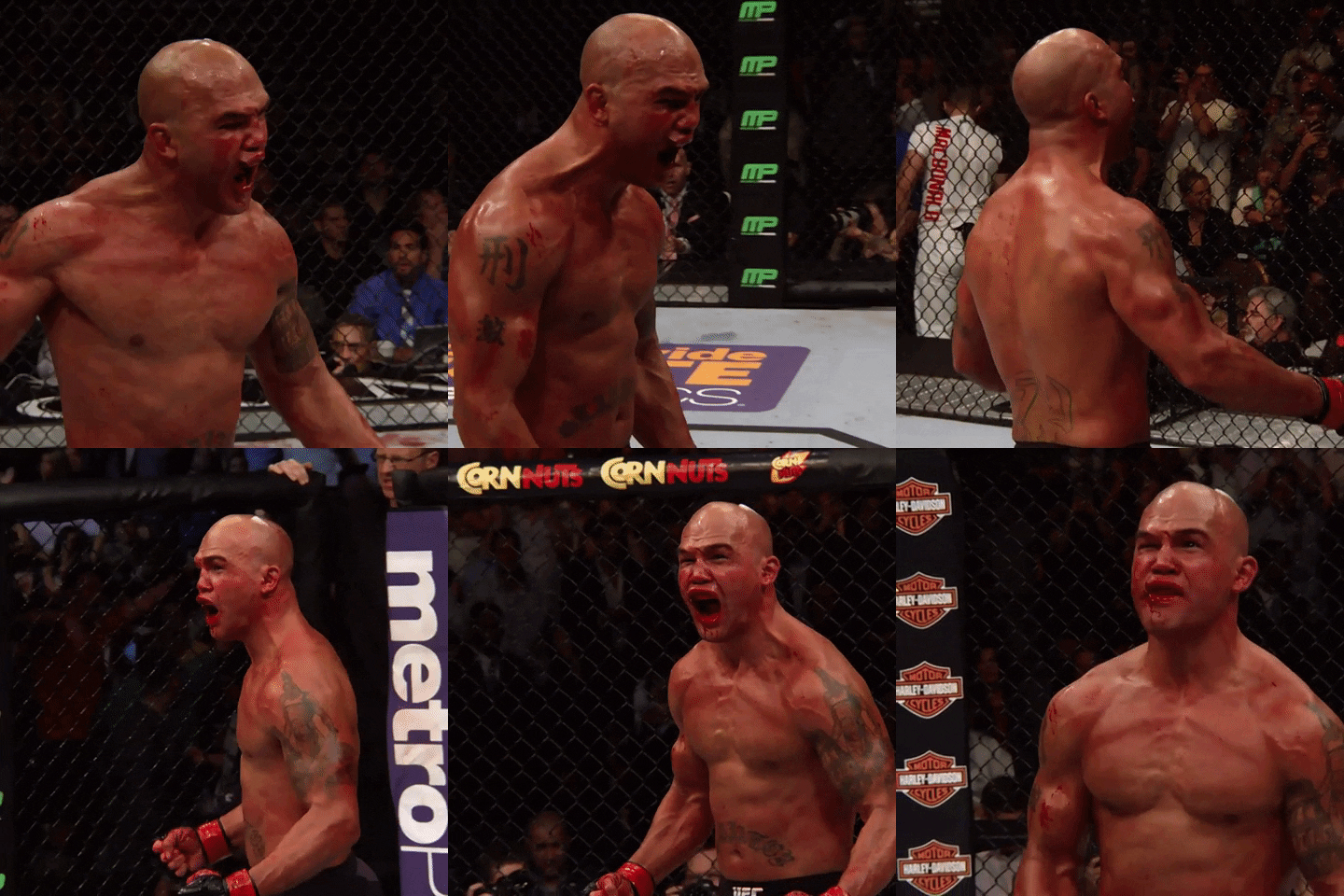
In his second title defense against Carlos Condit, Lawler walked away with a split decision, but what was most troubling was his return to old habits. Condit isn’t a notable ring cutter, but he was able to get Lawler to chase him repeatedly and stumped him with some basic moves. One way to throw off a fighter’s feints is to return fire with volume. Condit did just that, throwing an astounding 497 strikes to Lawler’s 178. Knowing that Lawler’s head movement is his preferred method of avoiding damage, Condit threw plenty of high teeps to keep Lawler upright. We even saw Condit target the legs of Lawler, a stylistic flaw he still hasn’t addressed. Lawler threw plenty of jabs against MacDonald and Brown, but in the Condit match-up, he went back to swinging hooks repeatedly. What ended up saving Lawler in this fight was his aggression in the final round. Lawler may have kept the title, but his days at the top were numbered.

Tyron Woodley knocked Lawler out for the title back in 2016, and Lawler has been 1-5 since. To be fair to Lawler, he’s still fighting opponents in the top ten, and he’s not out there getting finished in every match-up. But it’s undeniable that he’s slowed down and his flaws are too hard to ignore. It could be that since leaving ATT, he’s more or less in charge of his training with Henri Hooft and other coaches only advising in their area of expertise. We also can’t ignore that Lawler never addressed how to handle low kicks outside of doing his best to ignore them and power through. Once opponents were able to get past his feints with volume and feints, Lawler became much less of a threat. Look no further than how Rafael Dos Anjos was able to use his constant pressure, takedowns, and clinch work to frustrate Lawler in all phases of the fight. Ever since that fight, Lawler has looked gun shy and unable to recapture the viciousness that helped him snatch victories against MacDonald and Condit.
Fight fans might be disappointed at how Lawler’s career is ending, but no one stays on top forever. At best, fighters can end their journey on their terms like Khabib Nurmagomedov or be forced to retire in the same fashion as Anderson Silva. Lawler isn’t quite washed to the level where he needs to call it quits, but he can no longer compete with the best of the division. This shouldn’t take away all the accomplishments he’s achieved throughout his career.
Lawler is the only fighter that’s active from his era, where every other competitor has either called it quits or is in a Nick Diaz state of retirement. He has won titles in SuperBrawl, ICON, EliteXC, and the UFC with multiple title defenses in each promotion. There’s also something to be said about the way he conducted himself outside of the cage. Not once has Lawler been entangled in a PED scandal or engaged in trash talk outside of the fights themselves. Nick Diaz can find a problem with just about anyone he fights or has fought, but he mentioned having zero issues with Lawler and spoke positively about him. Lawler’s fight record of 28-15-1 isn’t amazing, but it doesn’t give the full scope of his career. He’s been in 13 title fights, winning more than losing. When Lawler does call it a career, we shouldn’t just remember his recent struggles. Instead, we should picture the growth of the athlete. Someone who entered the game as a brawler who swung on instinct, only to evolve to a more complete fighter that won multiple titles along the way. He got to the top by refining his skills, but it was his toughness that kept him there.
Files
Previews only

