 Home

 Creators
 Search
 Recent
 Random
 Posts
 DMs
 Tags
 Random
 Importer
 Import
 FAQ
 Account
 Register
 Login
 Favorites
 Keys
 Logout
 Telegram

Preview: Holloway vs. Kattar (Patreon)
Content
Back on December 15, 2018, the UFC aired its last card on the Fox network. Al Iaquinta defeated Kevin Lee in the main event, and the promotion has since moved all their content over to ESPN. Although having events on the “worldwide leader in sports” is prestigious, it doesn’t have the same reach as network TV. When Max Holloway fights Calvin Kattar on January 16th, it will not only be the first UFC event of 2021, but it will mark its return to network television. UFC on ABC: Holloway vs. Kattar might not be a title fight or even a #1 contender’s match-up, but it is an exciting featherweight contest.
Holloway is a former champion with one of the longest win streaks at 145 pounds, and Kattar is hitting his stride and building up a case as a future title contender. On the surface, both fighters are exciting strikers that can go toe-to-toe with anyone in the division. Holloway is ranked #1 at featherweight but has back-to-back losses to the current champion, Alexander Volkanovski, and getting a trilogy fight seems unlikely at this time. Kattar’s 2-fight win streak might not seem impressive, but he’s shown steady improvement from fight to fight. Holloway has gone winless in 2020, but don’t forget about the skills that made him a champion. He was razor close to winning back the featherweight title in his last fight. No matter how you look at it, Holloway won at least the first two rounds.
In their first fight, Holloway seemed content to absorb the leg kicks and let Volkanovski glide out of the way. Volkanovski kept Holloway turning and unable to start his usual volume striking game. I’d be remiss if I didn’t mention how Volkanovski constantly threw with feints to keep Holloway from getting the right reads, something Holloway is all too familiar with. In the rematch, Holloway’s team seemed to be aware of these shortcomings. Instead of chasing Volkanovski, Holloway waited for Volkanovski to come to him whenever he wanted to attack. If Volkanovski was expecting Holloway to march towards him like the first time around, that didn’t happen. Holloway pressured Volkanovski but never stayed within striking range. When Volkanovski got close enough to throw leg kicks, Holloway did one of three things: return with a kick of his own, withdraw his lead leg to avoid getting kicked, or punched down the center. By constantly returning fire or reacting right away, Volkanovski wasn’t given the chance he needed to reset and get in a better position.
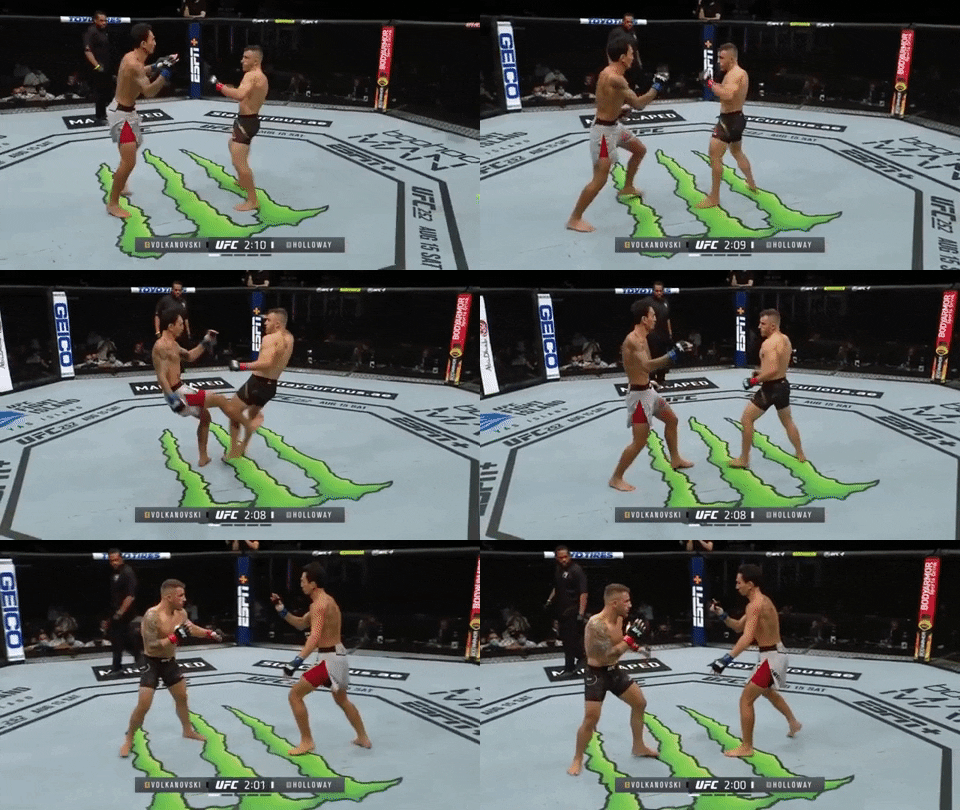
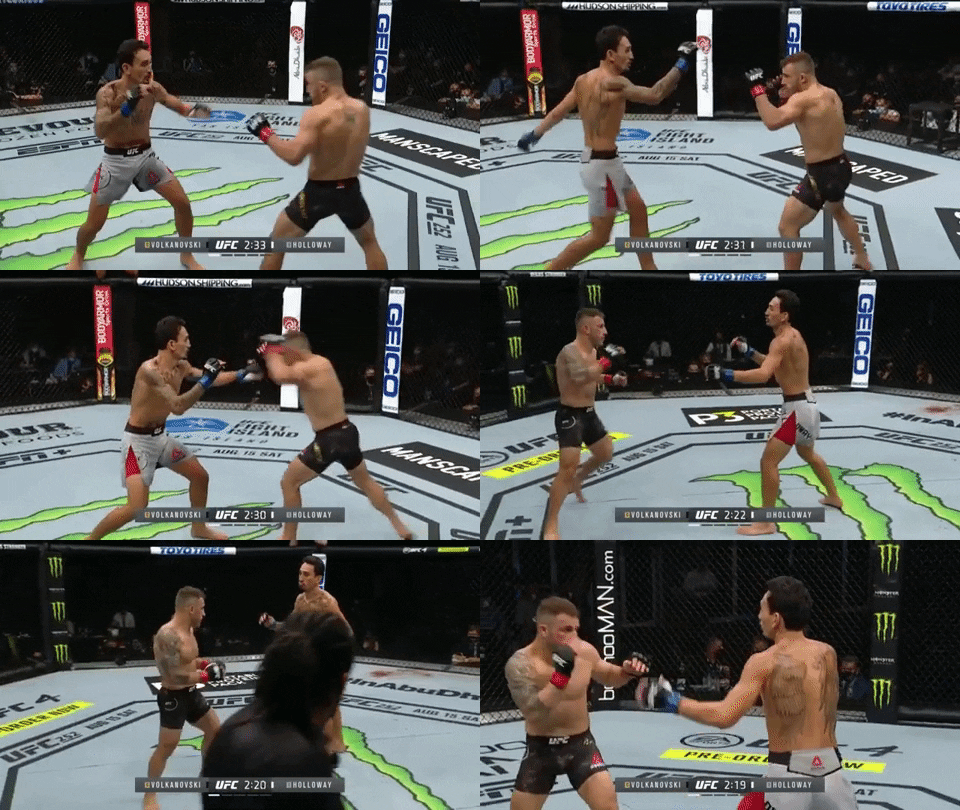
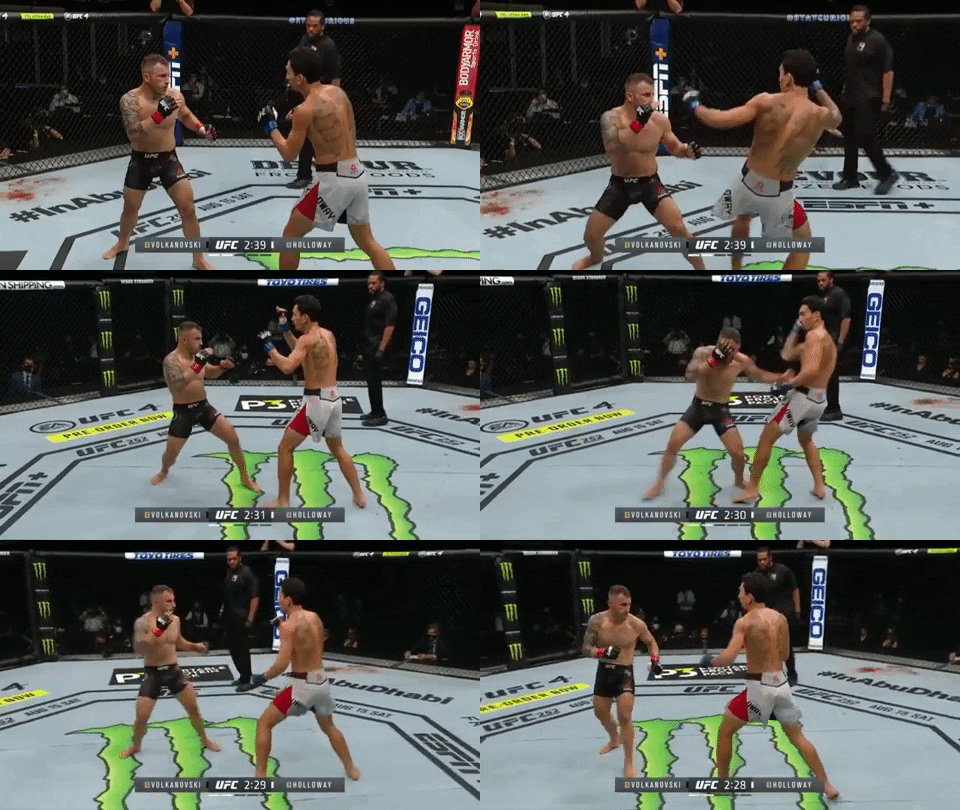
People forget that even though Holloway has great hands, his kicks aren’t bad either. Volkanovski was expecting another bull rush but got hit with a high kick that dropped him.
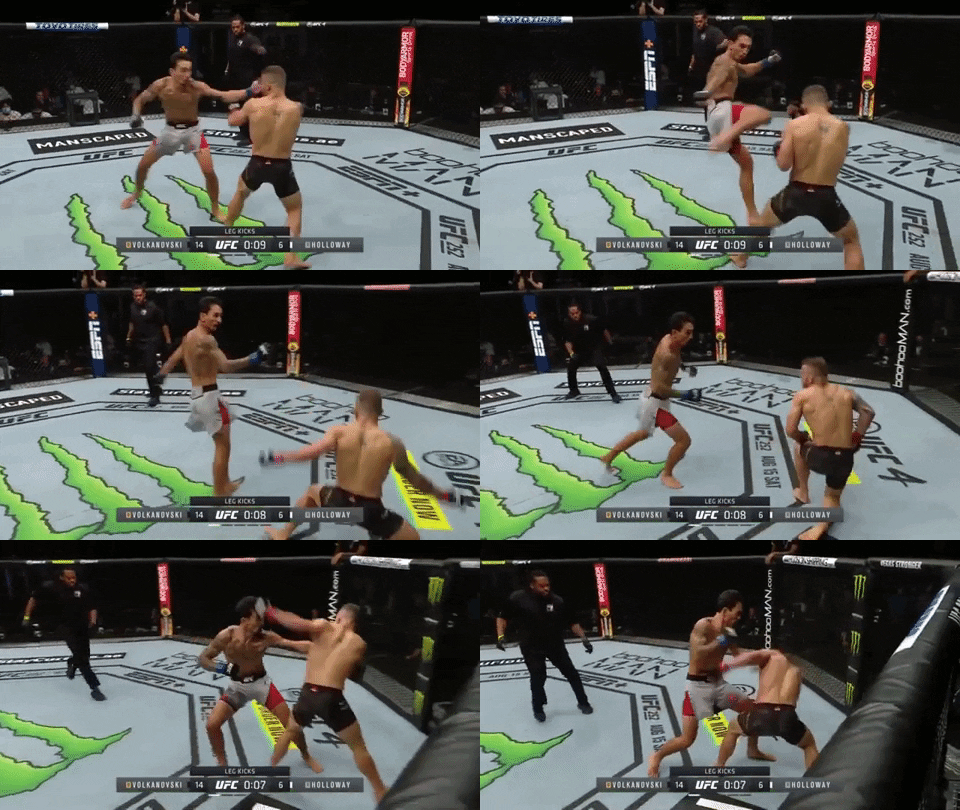
We even saw a return of the spinning kicks from Holloway!
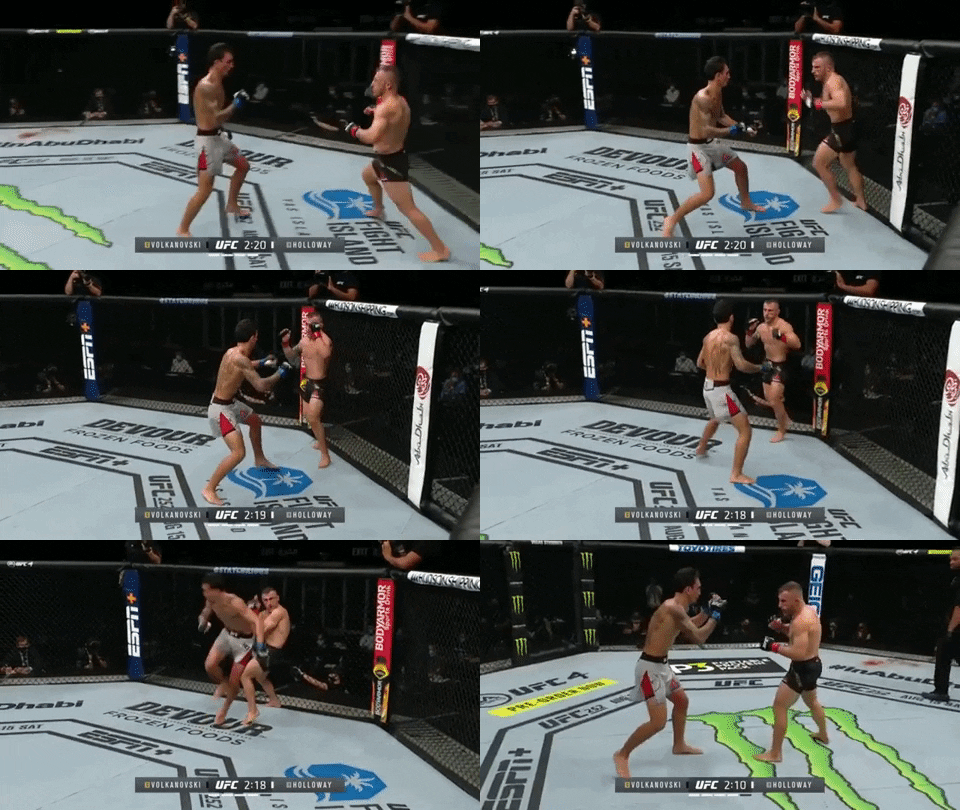
Another cool trick we saw from Holloway was throwing kicks and following up with punches from the same side. This was a favorite of kickboxer Andy Ristie, and both Israel Adesanya and Petr Yan have had a lot of success with it in MMA.
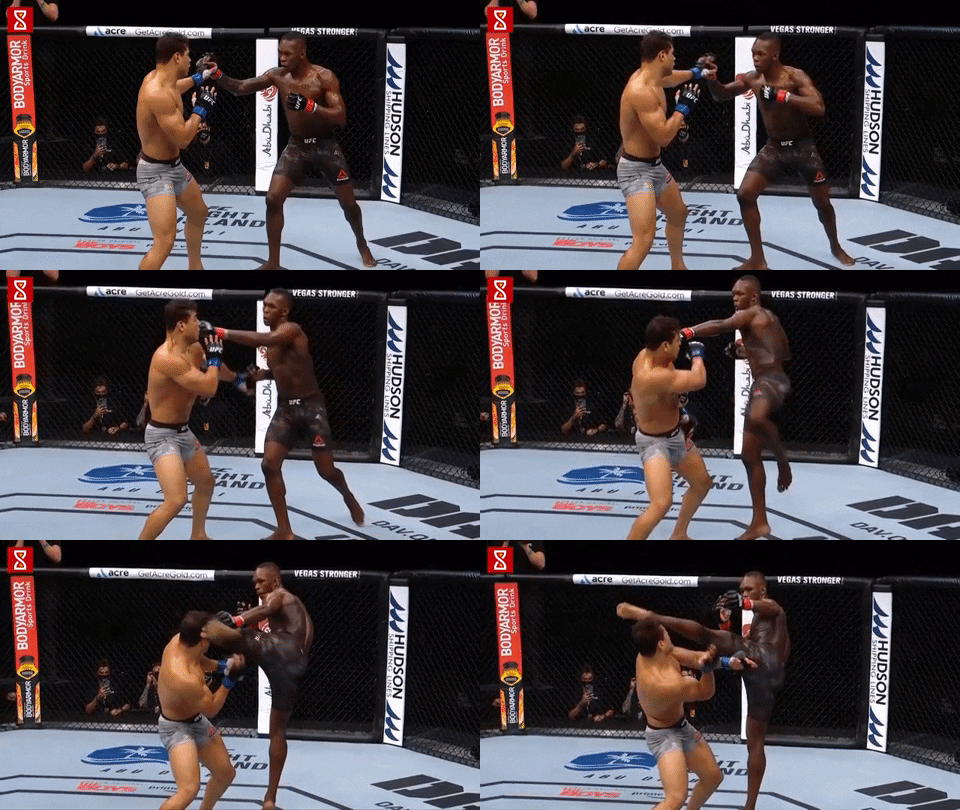
(Adesanya throws a left straight and follows up with a high kick on the same side.)
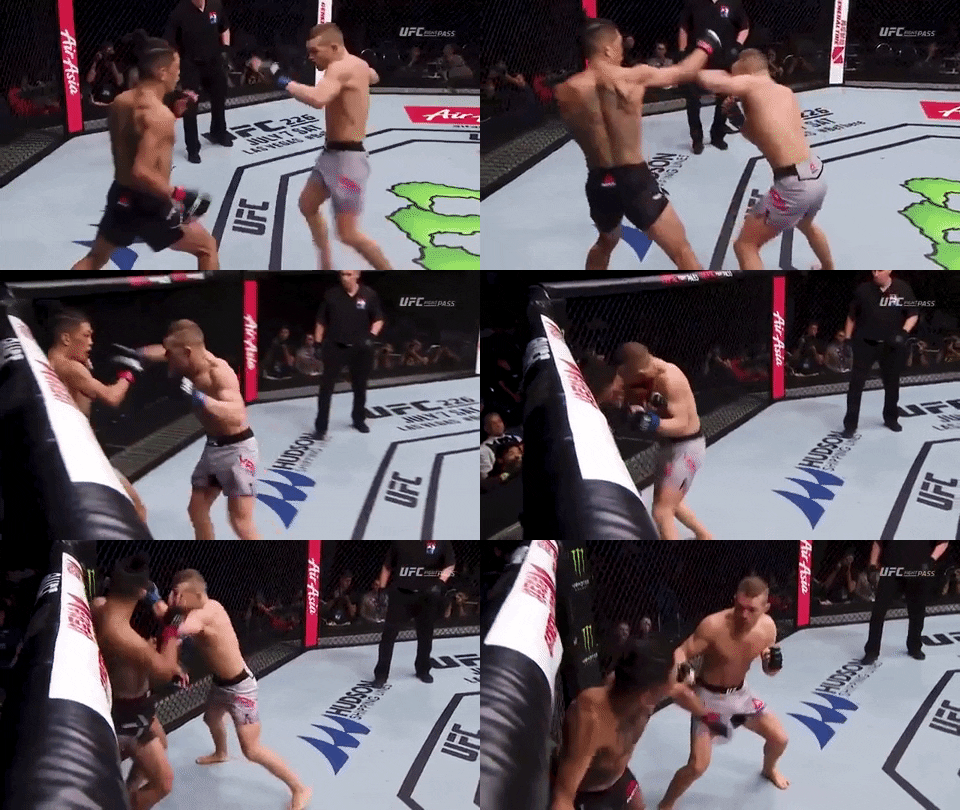
(Yan uses his lead kick to follow up with a jab before switching stances and swinging with combinations.)
When Volkanovski got impatient and lunged in, Holloway was able to greet him with intercepting knees and uppercuts. These were the kind of attacks that caught Volkanovski by surprise in the first fight, and they worked just as well in the rematch.
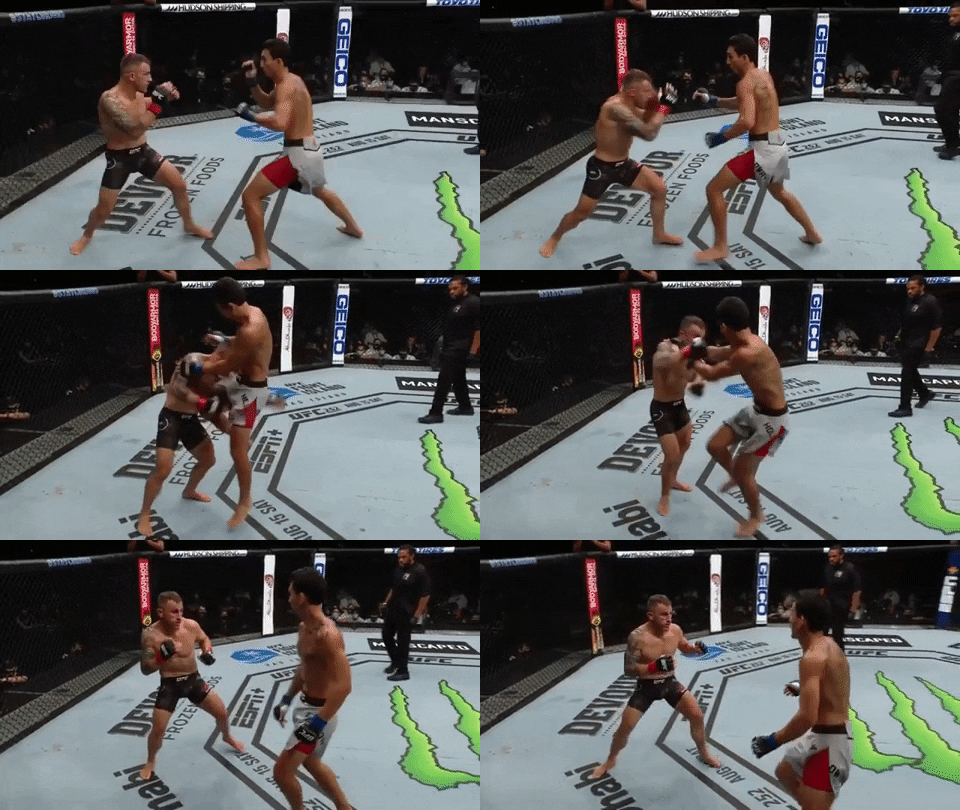
Even though he’s a prolific jabber, Holloway did far less jabbing the second time around. Holloway usually attributes a lot of his wins by leading with the jab, but this time around he was more conservative with his lead hand. Holloway realized that he was planting his feet every time he wanted to throw it, which gave Volkanovski the chance to kick his lead leg. To minimize the damage from the kicks, Holloway raised his lead leg and stomped down to close the distance without having to take a low kick. This approach was used successfully by Jorge Masvidal against Donald Cerrone.
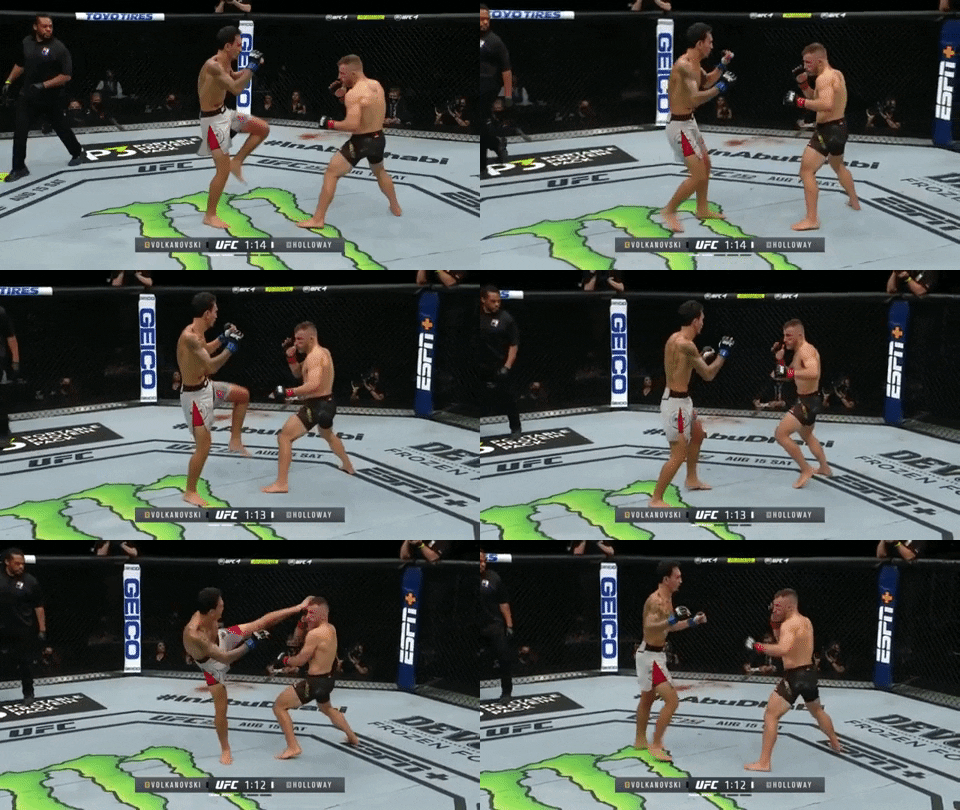
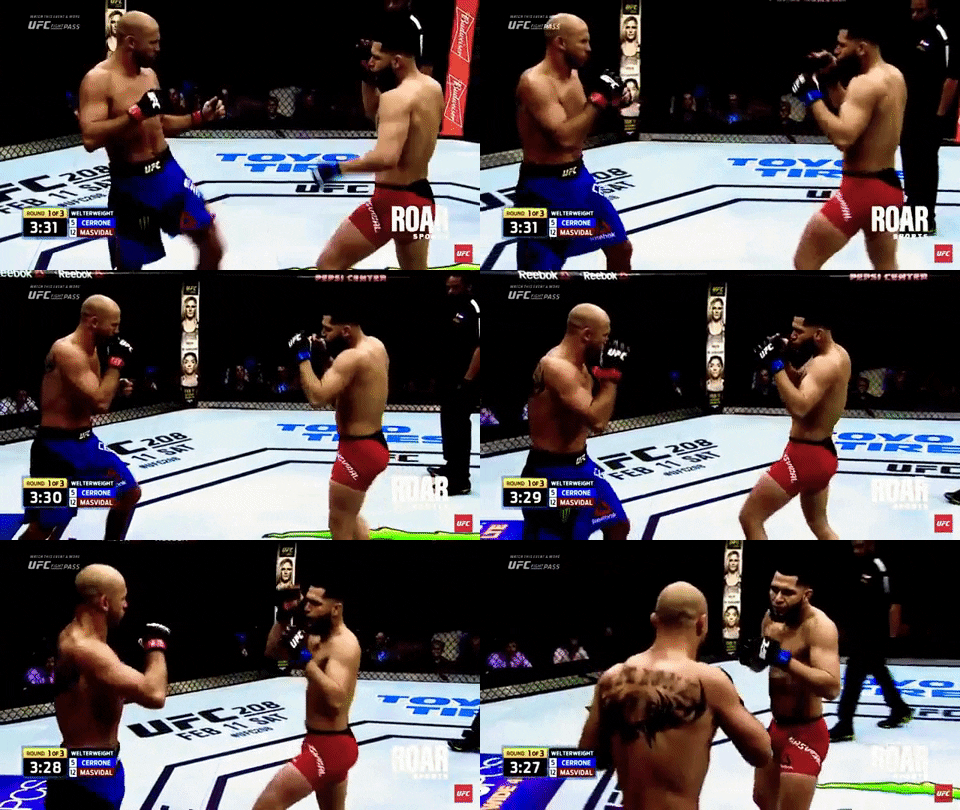
As he stepped down, he was now closer to Volkanovski and could land combination punches. It was more common in the second fight to see Holloway commit to multiple strikes on the inside and end them with a hook or an uppercut. Overall, Holloway was able to get a better read on Volkanovski in the rematch and didn’t give him the reactions he wanted. Holloway frustrated Volkanovski early on, with Volkanovski running into punches and missing with his jabs. Both rounds one and two were capped off by Volkanovski getting dropped by Holloway, one by a kick and another by an uppercut.
Ultimately, Volkanovski was able to rebound in the later rounds (at least enough for the judges) and won a split decision. Holloway reminded us of his well-rounded striking arsenal, but his go-to weapon on offense is still the lead hand. Holloway uses the jab as an information-gathering tool. The jab is his sword, shield, and spear. When Holloway jabs, you can be sure that a right straight is soon to follow, and if Holloway can get opponents to lunge in after slipping the jab, all the better. Hooks off the jab are somewhat of a specialty for Holloway, and you would be surprised how many fighters still can’t do this well. When used as a counter, hooks off the jab makes opponents hesitant to move forward even after Holloway is done punching. He’s also successful whenever he doubles and triples up on hooks to the body, which pay dividends as the fight goes on. Holloway’s next opponent, Calvin Kattar, knows all about effective striking.
Kattar is a great fighter and one of the bigger guys in the division. At 5’11” with a 72” reach, he uses his length to his advantage. Although he’s not as big as Zabit Magomedsharipov or Shane Burgos, he’s still big enough to tower over the likes of Dan Ige and Jeremy Stephens. Kattar uses a lot of boxing in his fights, but he has a background in wrestling, going as far as being ranked eighth in the state of Massachusetts while in high school. Opponents find this out the hard way when they try to shoot in carelessly, only to get stuffed with underhooks and hit with knees to the midsection. He utilized his wrestling more frequently early in his career, but his UFC appearances have almost entirely been striking affairs. Jabs to the body, lead uppercuts, and front kicks to the face are all part of his arsenal.
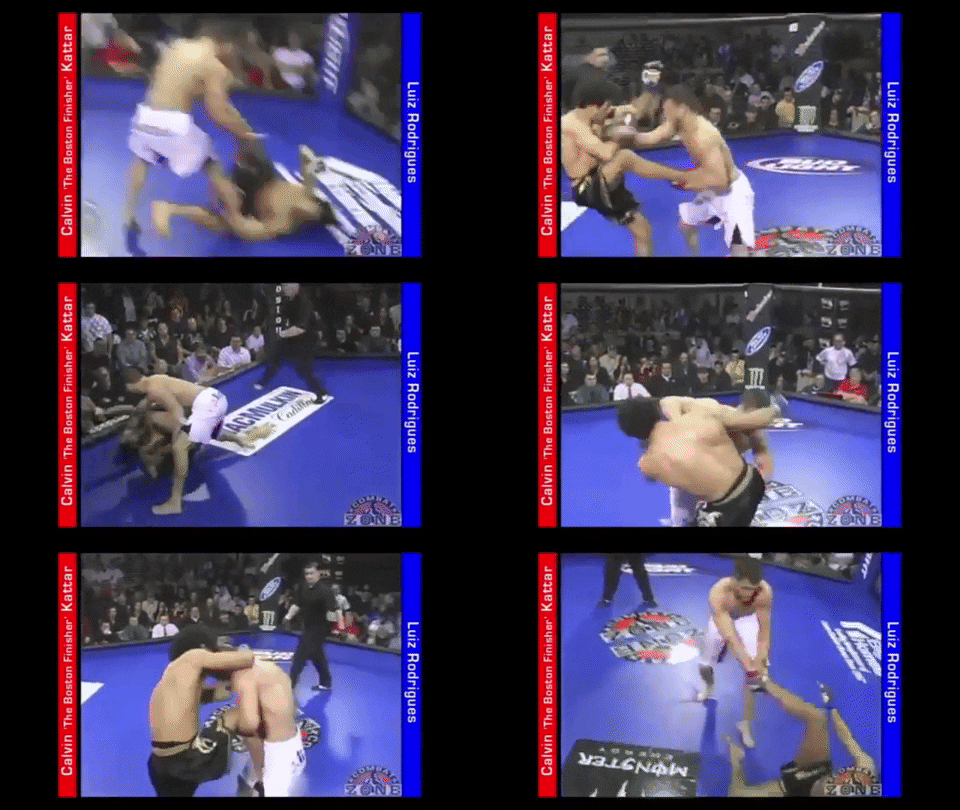
Heading into his latest fight against Dan Ige, a lot of the focus has been made about Kattar’s jabs (and for good reason). Against Ige, he showed a variety of jabs that you don’t often see in MMA. It seemed that Kattar favored the quick vertical fist jabs and piston-like arm punches. These came in handy when Kattar wanted to occupy Ige’s vision so he could set up the right straight, but when he wanted to hurt Ige and remind him of his lead hand’s power, he dropped his weight before pumping out the strike. It wasn’t the first time Kattar has done these moves, it’s how he was able to hurt and drop Shane Burgos.
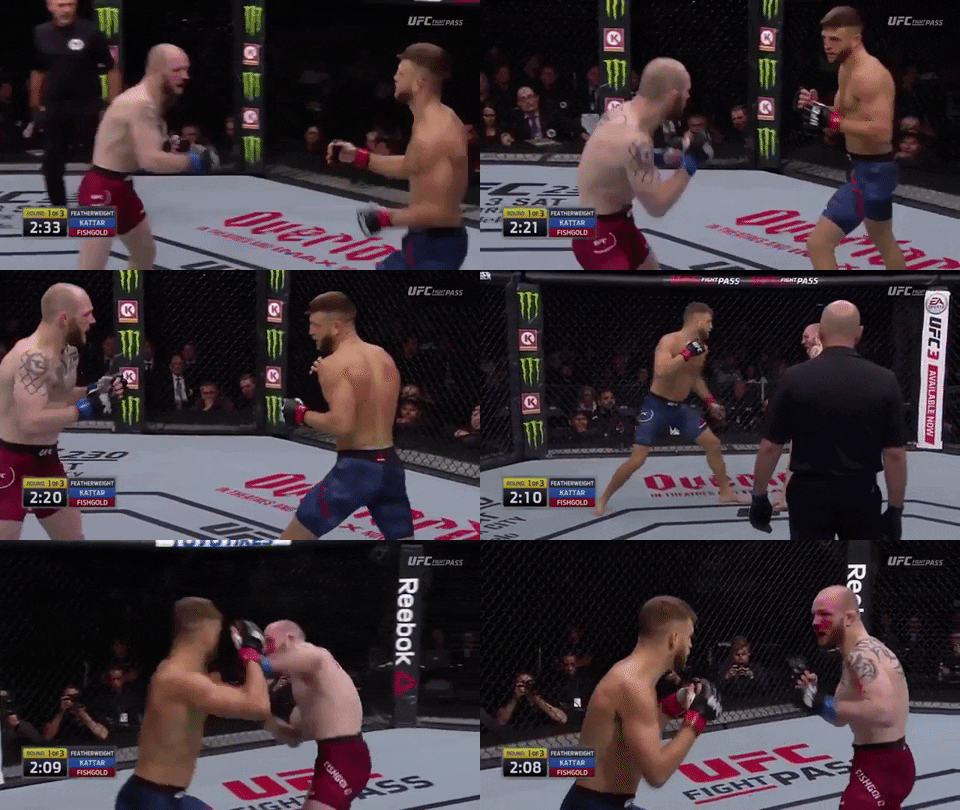
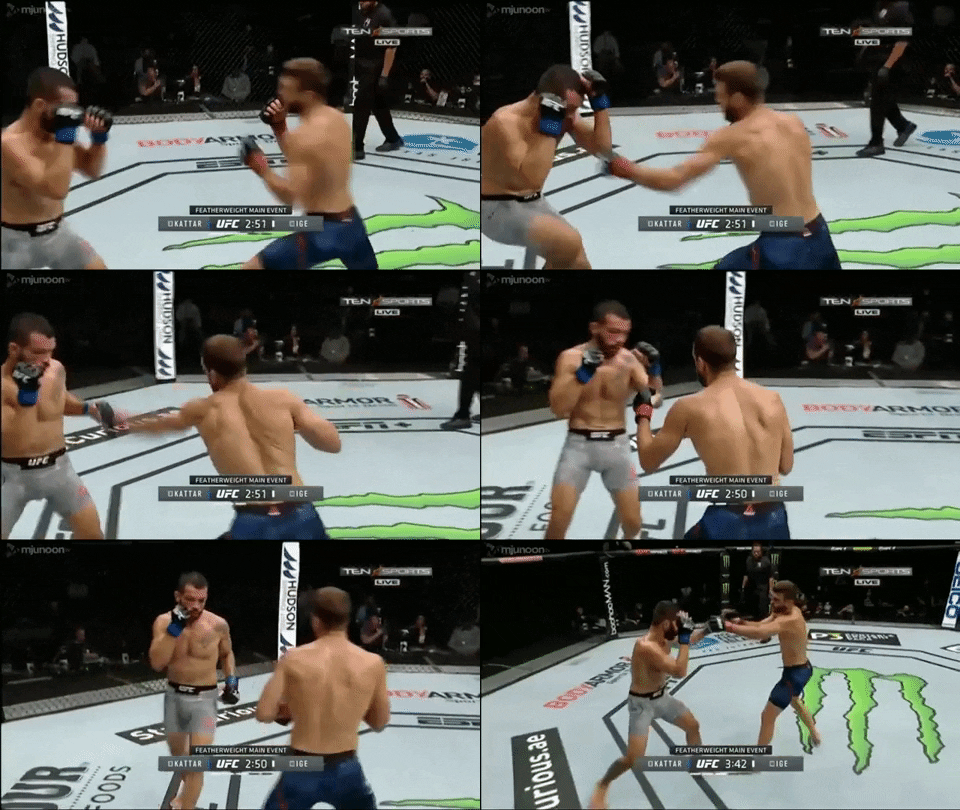
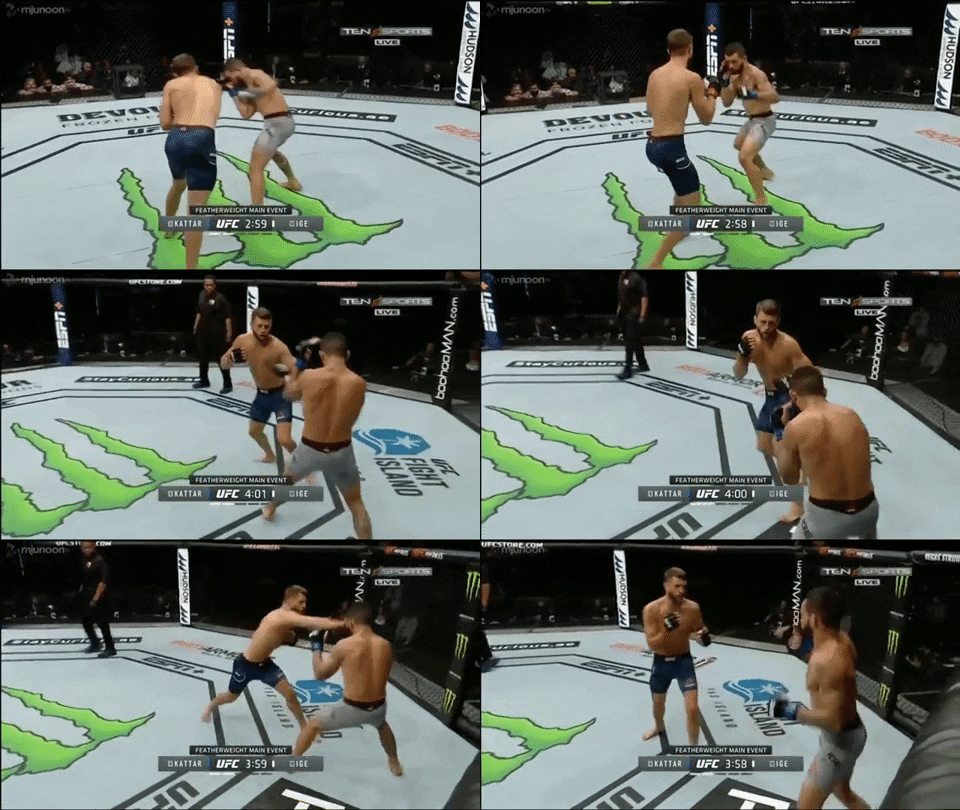
(Notice how quickly Kattar can pump out his lead hand. Sometimes Kattar would use his jabs as setups for his right hand, other times he would throw them to seriously hurt someone.)
One of Kattar’s set-ups is reminiscent of the Diaz brothers: instead of throwing a jab first and then a straight, Kattar throws them almost at the same time, like he’s trying to hit a speed bag. It doesn’t do a lot of damage, but it throws off the timing of opponents and makes them wary of future follow-ups. In the Shane Burgos fight, Kattar used jabs from his shoulder when Burgos moved forward and unloaded with combinations when Burgos started swinging back.
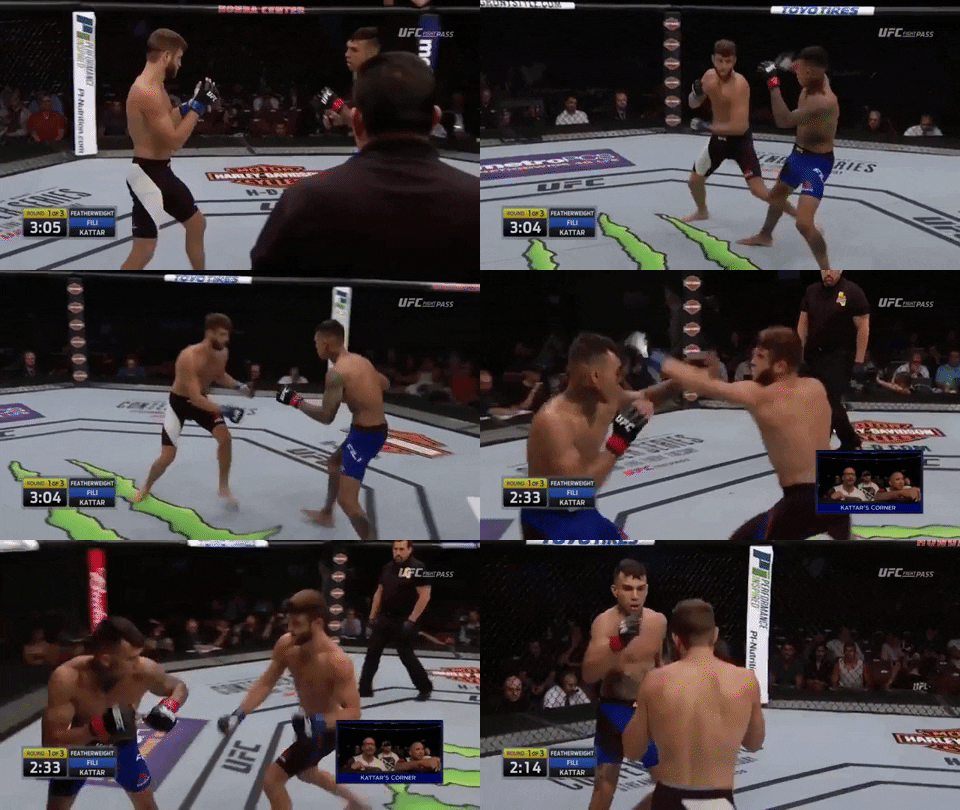
(Even if he misses with the first punch, the second strike is what does the damage.)
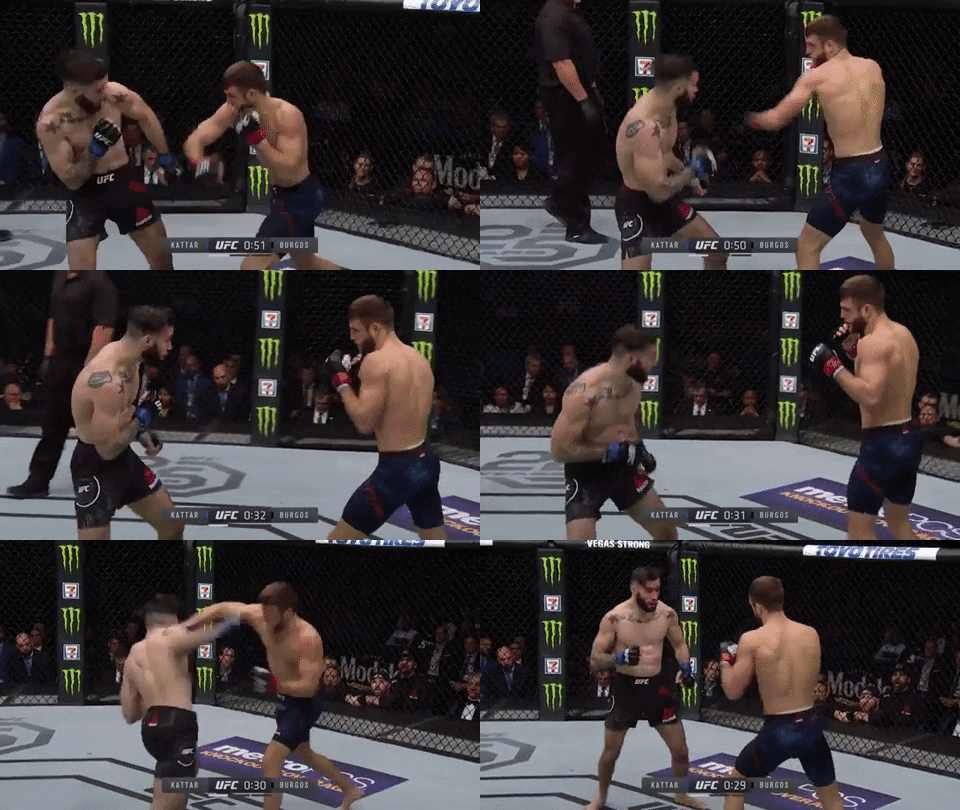
(Burgos tried to pressure Kattar, only to get hit with multiple punches to the head and body.)
Like his opponent Max Holloway, Kattar uses his jabs to probe and gather intel so he can formulate other offensive attacks. Kattar’s constant pinwheel motion with his hands keep opponents from lunging in, and if they do so carelessly, they end up eating counters. Against Ricardo Lamas, the majority of Lamas’s attacks came from a straight line. These were easy enough for Kattar to either evade outright or defend and return fire. Of note were the uppercuts to the body, left hook over Lamas’ jabs, and his right straight as a finisher.
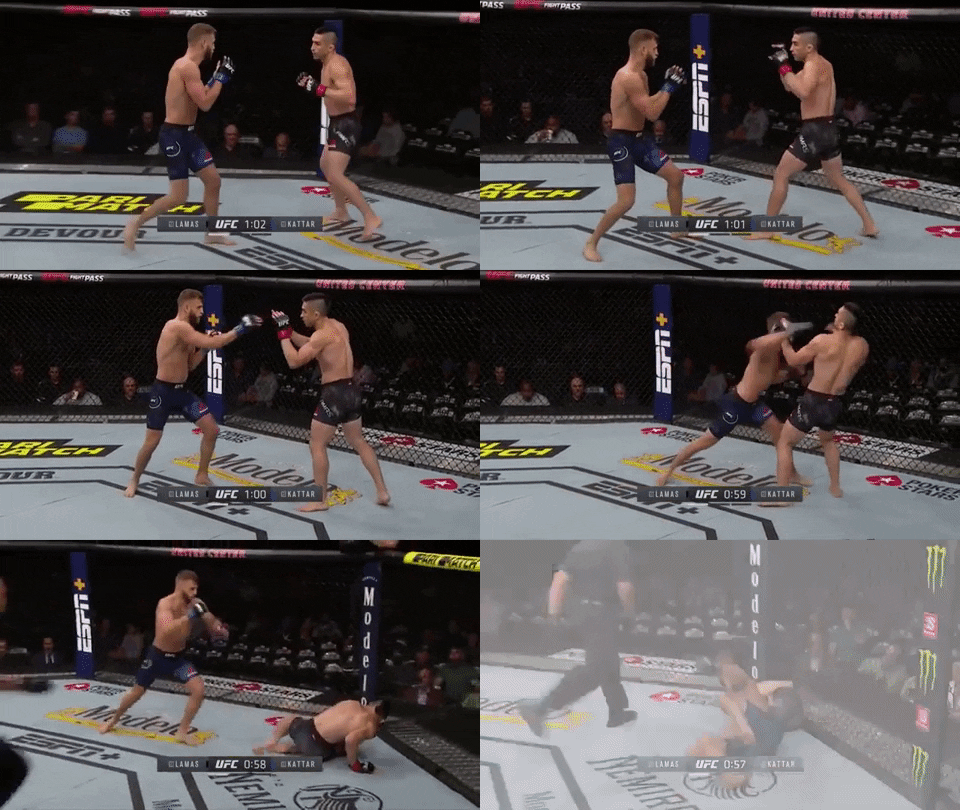
Kattar has fought 8 times in the UFC, racking up six wins with two losses. The losses weren’t ideal, but it gave Kattar reasons to add more variety to his striking. It was impressive seeing the subtle changes Kattar made to his overall game. Loading up with feints, withdrawing his lead leg, attacking with front kicks, and timing the low kick to throw his own are all signs of improvement. His takedown defense is always solid, and when Zabit got him to the ground he was able to pop back up. Renato Moicano tore up his lead leg whenever he set his leg down to jab, so he started to vary up his entries and improved his lateral movements. Kattar has the tools to make it to the top, but he has to beat Holloway first.
For Holloway, using a similar game plan to the one he used against Volkanovski could be his best bet. Finding the perfect balance between pressuring Kattar and letting him swing and miss is going to be difficult, but it’s something that Holloway has done well in his career. It could benefit Holloway to stance switch early and smother the jabs. In the Cub Swanson fight, Holloway showed that he can fight out of the southpaw stance to check the lead hand and blast Swanson with body kicks. Instead of chasing Kattar and getting hit with a straight right, Holloway should use lateral movement to keep turning Kattar. Jon Jones did just that against Alexander Gustafsson in their rematch and was able to nail him with counters and kicks, and when it looked like Gustafsson was going to start with combination strikes, Jones simply disengaged and reset. Kattar works best moving forward in a straight line but going side to side still isn’t his strong suit.
Ige may have lost his fight against Kattar, but even he had success when he started to stance switch and move back towards the fence. The stance switches weren’t nearly as effective, but when Ige moved back and forced Kattar to come to him, Ige exploded and caught Kattar with hooks and punches to the body. To give you some numbers, Ige threw 150 strikes to the head of Kattar, and only connected on 37 of them. However, out of 46 strikes to Kattar’s body, Ige landed 30. Shane Burgos also responded to Kattar’s jabs with multiple hooks, momentarily stopping Kattar in his tracks.
In his losses against Renato Moicano and Zabit Magomedsharipov, Kattar has shown weaknesses typical of jab-heavy strikers. Moicano was able to time a lot of Kattar’s jabs and kicked his lead leg while moving his head off the centerline, and whenever Kattar’s jabs got lazy he slipped and returned fire with straight rights. Zabit used volume striking also mixed with low kicks and constant movement to overwhelm Kattar early on, giving him no chance to retaliate. These are all things that Holloway can do effectively.
For Kattar, parts of his strategy should incorporate what Volkanovski did in both of his fights against Holloway. Since Holloway was defending the lead leg kick well, Volkanovski started doubling and tripling up his kicks to throw off the timing. Another strike that appeared more often in the later rounds was the lead left hook from Volkanovski. Whenever he would throw a 1-2, instead of trying for a clinch or moving out of the way, Volkanovski finished off his combos with the left hook or stepped in with them whenever Holloway got too close without setting up his kicks. Kattar’s left hooks are great on the counter, and it’s something he can use in this fight.
Kattar isn’t the most prolific kicker, but it could benefit him to throw more of them. Inside low kicks, calf kicks, lead left high kicks, rear kicks to the body, anything to keep Holloway from setting up his punches. Holloway is at his best when he’s able to set the rhythm and build upon his volume striking early, but if you take that away, he has to reset. Every moment that Holloway isn’t engaged in offense is one where he’s playing defense. What seemed to work well for Volkanovski in their fight were his jabs, low kicks, and pivots. Volkanovski throws his jab a lot like George Foreman, pumping with his shoulders so that a bit more power is put into his punch without sacrificing any speed. Kattar has a solid jab himself and giving his lead punch a bit more power could pay dividends as the fight goes on.
Dustin Poirier’s game plan against Holloway can also provide the foundation for how Kattar could win. If Holloway presses forward, Kattar can take a step back and counter. Kattar can get Holloway to constantly turn, not giving him a chance to set up his offense. Poirier also made sure to utilize the shoulder roll constantly, absorbing punches on his arms and his protruding lead elbow hurt Holloway’s hands. Combining that with Volkanovski’s strategy of throwing plenty of low kicks to keep Holloway in place to follow up with the jab and straight might be enough to carry Kattar to victory.
Files
Previews only

