 Home

 Creators
 Search
 Recent
 Random
 Posts
 DMs
 Tags
 Random
 Importer
 Import
 FAQ
 Account
 Register
 Login
 Favorites
 Keys
 Logout
 Telegram

Preview: Poirier vs. McGregor 2 (Patreon)
Content
Rematches are common in combat sports, but they often happen in one of two ways: immediately after the first fight to capitalize on a close match, or just a year or two after when both fighters have improved. Seldom do we get rematches more than five years after the first, especially in MMA. The smaller talent pool in an MMA promotion’s roster usually indicates that fighters are likely to run into a previous opponent, at least once or twice in their career. At UFC 257, we see a rematch seven years in the making. Former two-division champion Conor McGregor fights former interim champion Dustin Poirier in what could be considered a title eliminator at 155 pounds. Khabib Nurmagomedov is retired at the moment, and the championship is ostensibly up for grabs. So much has changed from the first time McGregor and Poirier have fought, not just in their fighting styles but also in UFC ownership. It’s been that long.
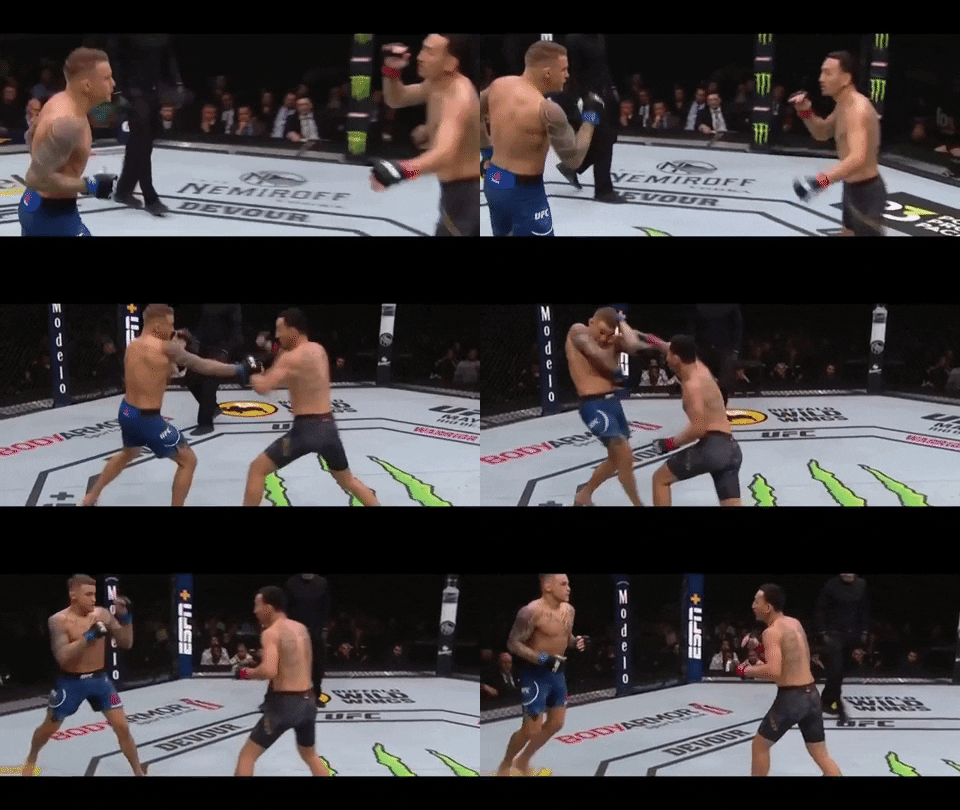
Poirier looks almost unrecognizable from his days as a featherweight, and it’s not just because of his change in hairstyle. He has made considerable advancements in his striking—so much so that he was able to box up Max Holloway for the interim lightweight title and came roaring back against Dan Hooker back in June 2020. The 5’9” Poirier doesn’t exactly tower over lightweights, and his reach of 72” isn’t anything special. What might seem like a disadvantage in size and reach has not affected his fighting abilities, especially his jab.
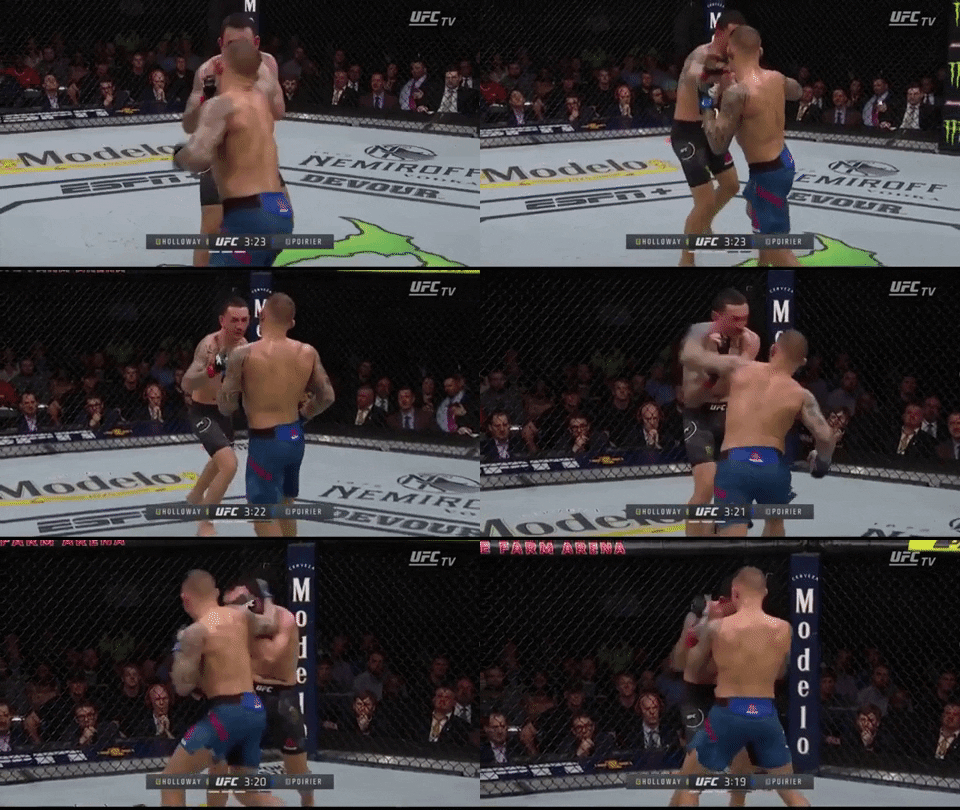
These days, Poirier displays a type of jabbing game that he had rarely used before. By pressuring opponents with timing and accuracy, Poirier can now focus on setting his left straight properly whenever openings are present. Poirier has also added in feints, causing overreactions in opponents so Poirier can counter. Poirier’s preference to stand in southpaw lets him utilize the open stance liberally. Opponents still expect the 2014 Poirier, hoping he’ll start swinging away. Instead, they get hit with jabs constantly and countered with left straights when they miss. Once opponents think they have a read on the jabs, Poirier mixes things up with kicks. Poirier always had decent kicks, but they weren’t tactically organized. Once Poirier started jabbing consistently, the kicks were a good way to end combinations and keep his opponents from chasing him. The old Poirier swung with alternating hooks and hoped to land. Now, Poirier throws a double jab, feints a left straight, and goes for a low kick to an opponent who’s already shelled up to block punches.
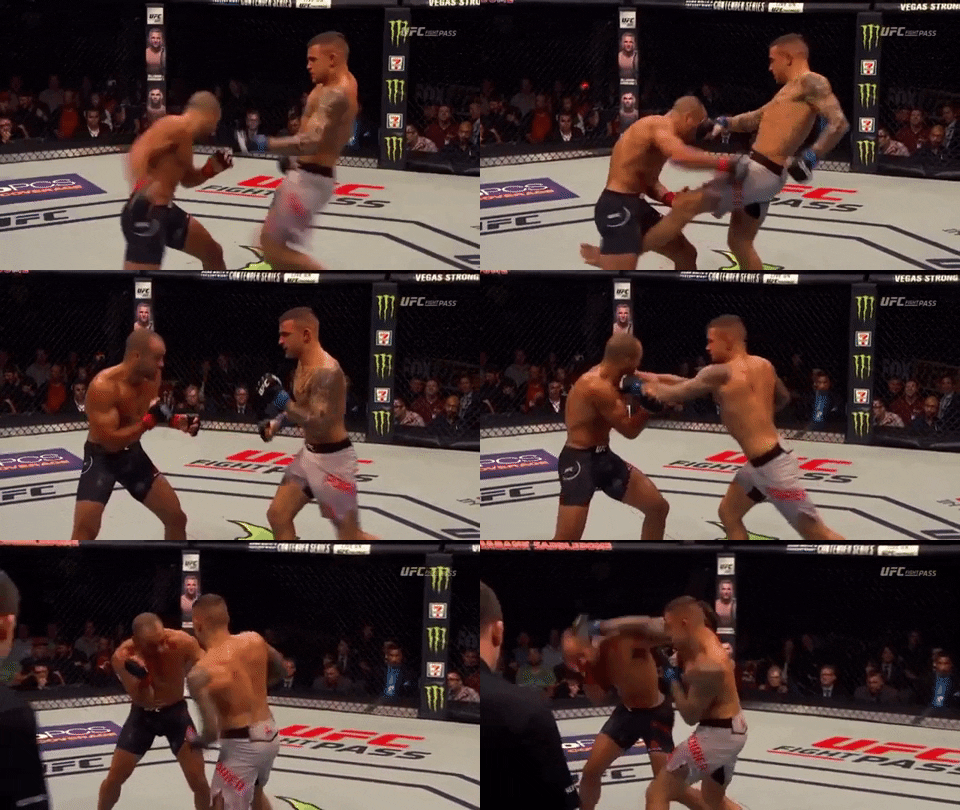
You can see this in action in his fights with Eddie Alvarez. In both matches, Poirier moved back whenever Alvarez pressured him and doubled up on his jabs to keep Alvarez from darting. By throwing kicks at the end of his jabs (along with some intercepting knees), Alvarez had his reach cut down, and his gas tank was sapped the more he advanced. In his interim lightweight title fight, Poirier’s stonewall guard and shoulder roll made Holloway unable to land on Poirier’s head and hurt his hands in the process. By shuffling side to side whenever Holloway got close, Poirier was able to keep Holloway from building up his volume striking. Poirier’s check hooks and left straights landed with more power than Holloway, and it kept the former featherweight champion from becoming a two-division titleholder.
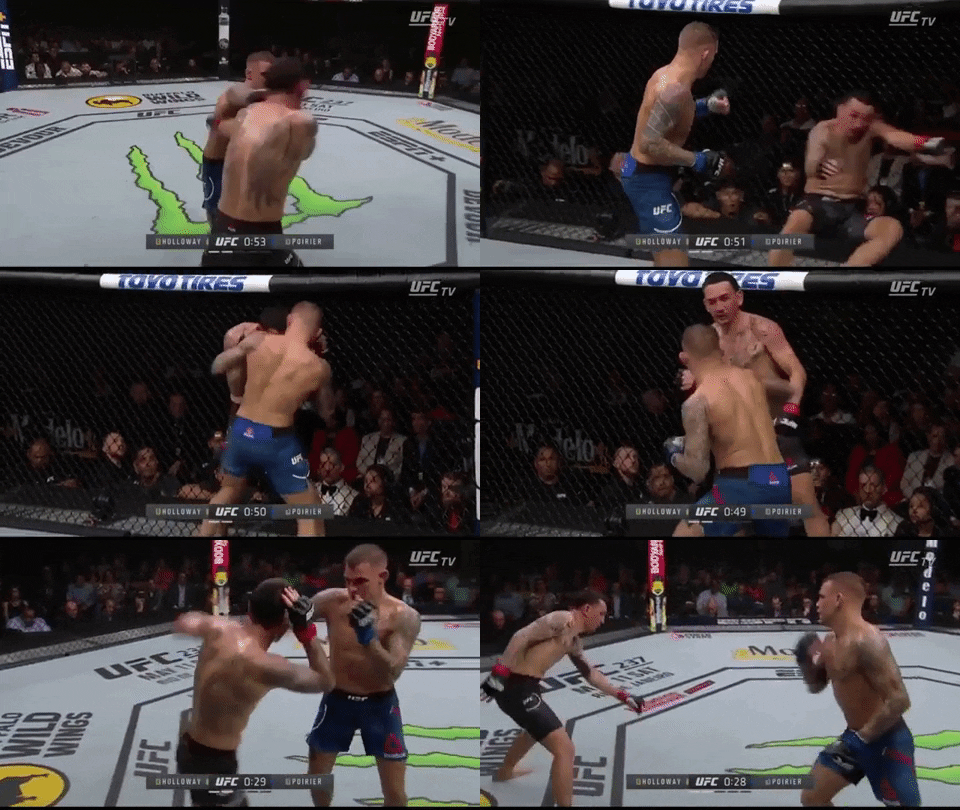
Improvements to Poirier’s game wouldn’t be complete without mentioning his defense. Poirier still has a habit of exchanging in the pocket, much to his detriment. To curb this risk, Poirier has improved his head movement (by either slipping or escaping laterally) and using the shoulder roll/stonewall guard to absorb head strikes on his arms instead of his chin. The stonewall guard allows Poirier to see his opponent, but be close enough to counter effectively.
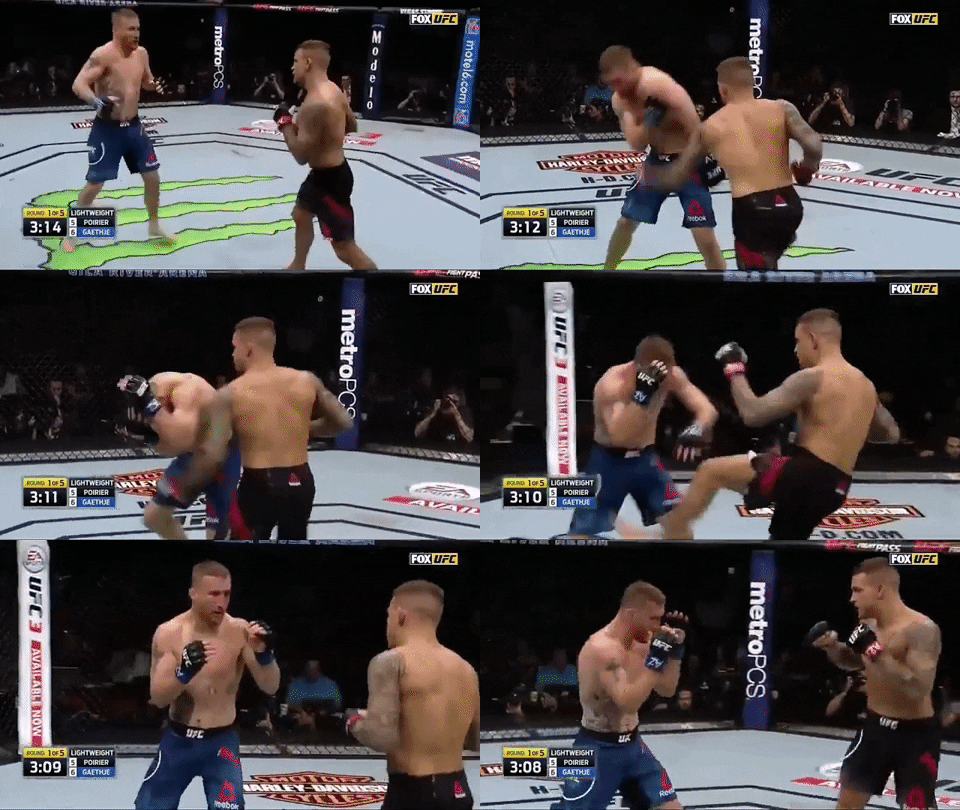
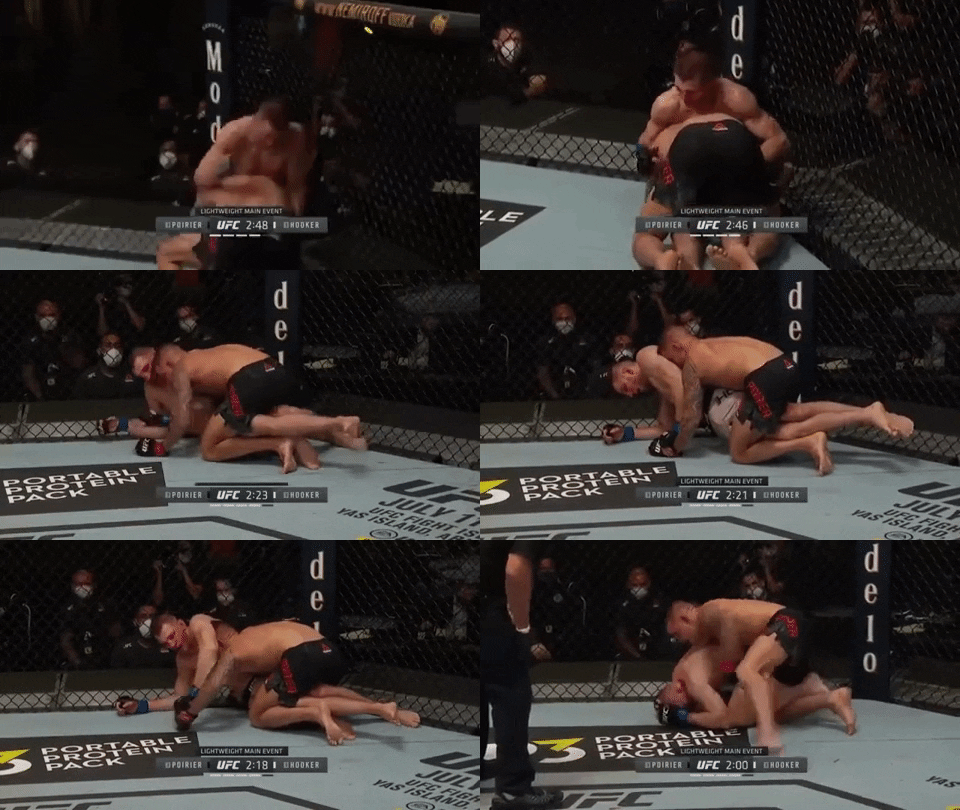
All these changes have allowed Poirier’s ground game to shine. His fight against Anthony Pettis showed that he can mix striking with effective grappling against the fence, denying Pettis the space he needed for his creative attacks. Poirier stayed heavy on Pettis’s hips, punching Pettis in his guard while avoiding submissions. Justin Gaethje low kicked Poirier’s lead leg repeatedly, but Poirier adjusted by throwing the left straight as a counter, which buckled Gaethje since he was on one leg. Poirier even used this tactic to time a takedown and get Gaethje to the ground. The fight with Dan Hooker was close in the early goings, but Poirier pulled the same tactics from the Pettis match in the later rounds and scored with punches when Hooker turtled up. As a testament to his improvement from fight to fight, watch how Poirier trapped Hooker’s legs with a triangle while advancing position and controlling Hooker’s wrist to keep him from framing back up. Poirier may have lost his fight against Khabib Nurmagomedov, but he learned from it. He’s going to need to use every bit of his veteran experience to beat his old foe, Conor McGregor.
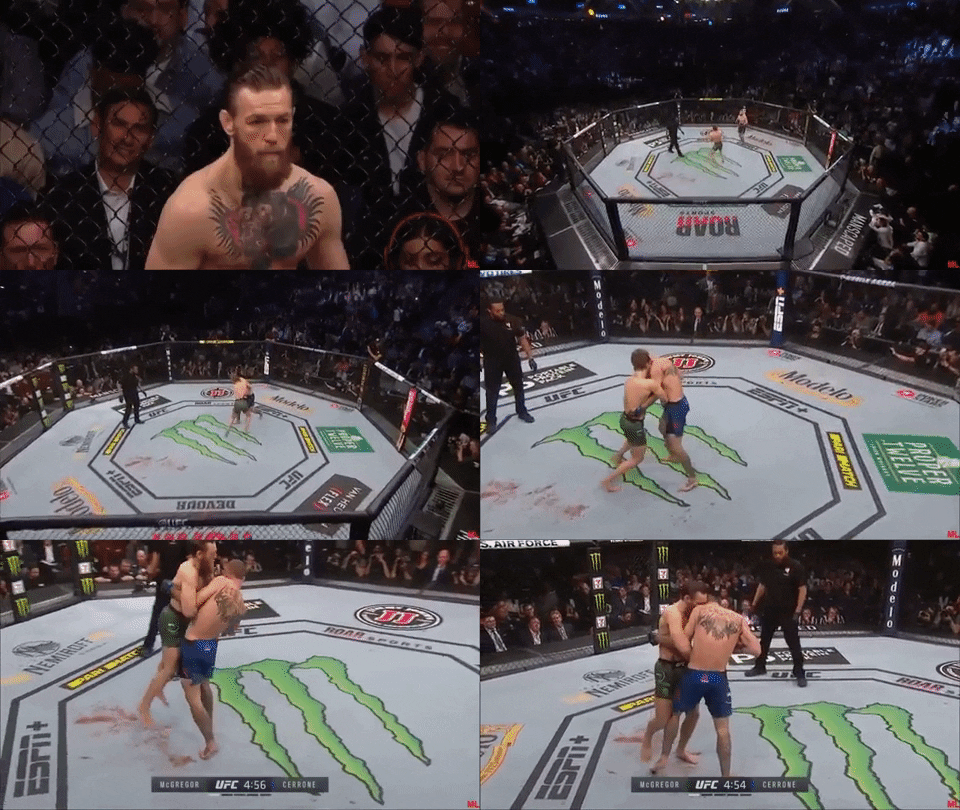
McGregor hasn’t been very active in the last four years. He’s had just three fights in that time (four if you count the boxing match against Floyd Mayweather Jr.). When he meets Poirier at UFC 257, it’ll be just over a year since his last fight. Before this fight, McGregor blasted through Donald Cerrone in less than a minute to get back in the win column. Cerrone has lost before, but never that quickly. The victory wasn’t against a top-five opponent, but it’s the first ranked opponent McGregor had beaten in a while. Even before the fight clock was visible on the screen, McGregor had thrown a left straight to get Cerrone to react. Almost like clockwork, Cerrone dipped his head out of the way and clinched up. What Cerrone might not have expected was for McGregor to secure an overhook and start hitting him shoulder strikes to the nose.
We’ve seen shoulder strikes from heavyweight fighters, but McGregor’s was different. Instead of shrugging his shoulders, McGregor changed levels and dipped his hips, and then sprung his entire body upwards, giving the shoulder strikes more power behind them. Planting his forehead right at Cerrone’s jaw also kept Cerrone from tying up and throwing knees to escape. Once they disengaged, McGregor still pressed forward, crowding Cerrone and forcing him to react. After absorbing a right kick from Cerrone, McGregor answered with a left high kick of his own. This kick was hard for Cerrone to counter since the starting motion of the attack was identical to the left straight. You can actually see him start to move his right hand forward to parry what he thought was a punch, but it was the wrong defense.
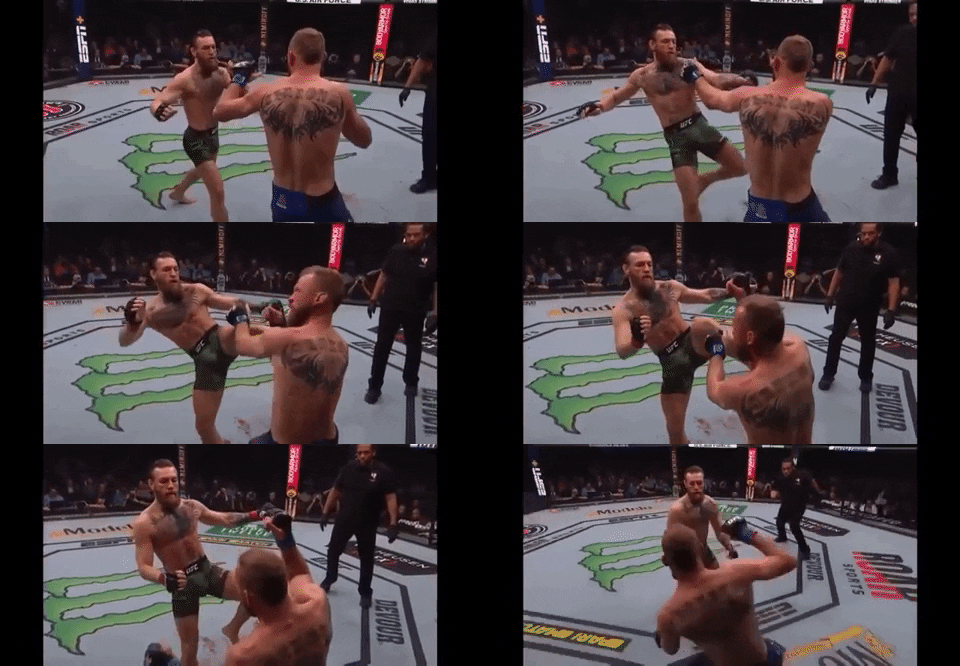
Mirko Cro-Cop knocked out many opponents with this two-strike tandem, and we see Dominick Reyes use it quite frequently at light heavyweight.
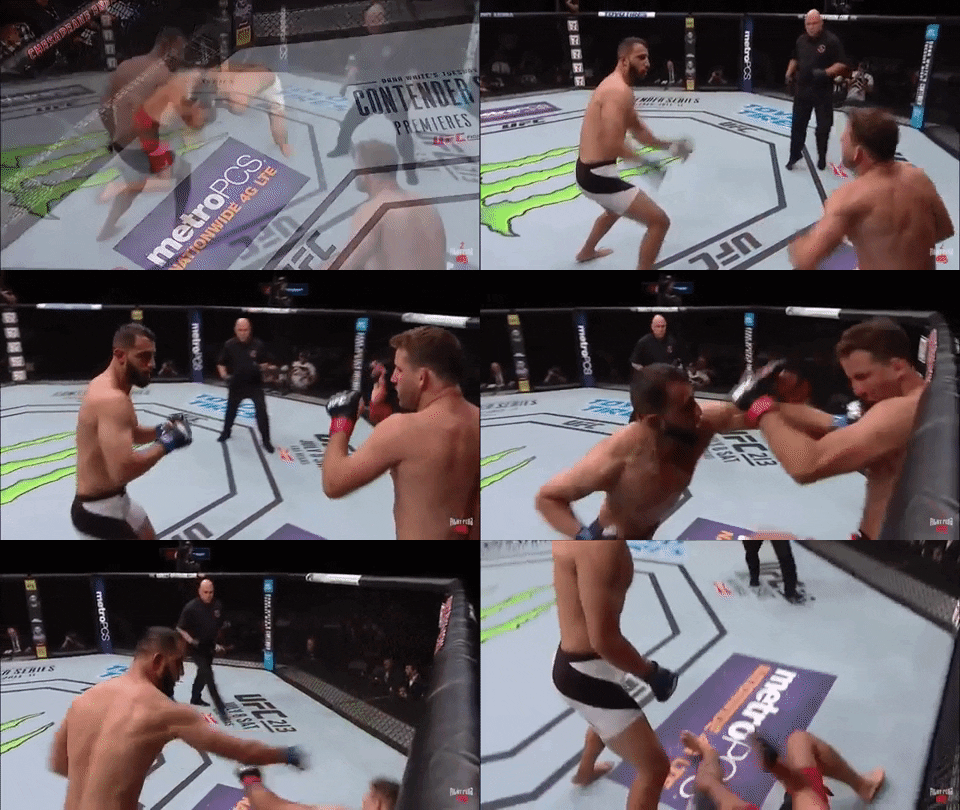
Once Cerrone got rocked by the kick, McGregor swarmed him with hooks and finished him on the ground. The fight was over before Jon Anik could do his usual sponsor plugs, but what does a typical McGregor fight look like?
McGregor usually takes the center of the Octagon to establish himself, standing tall in the southpaw stance. Like Poirier, McGregor stands at 5’9” but he does have a 2-inch reach advantage over him (at 74”). From this position, McGregor paws at the lead hand and throws left straights to cut off lateral movements to the right and throws front kicks to push opponents back to the fence. Sometimes, these moves alone are enough to win fights. His title win over Jose Aldo demonstrates this best.
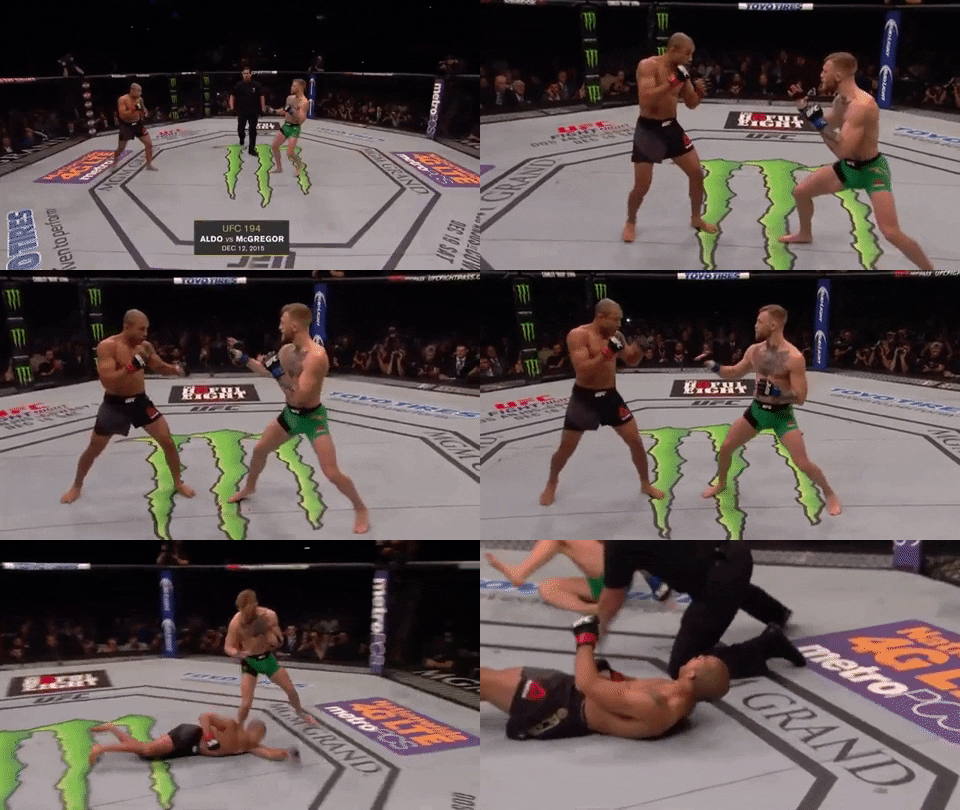
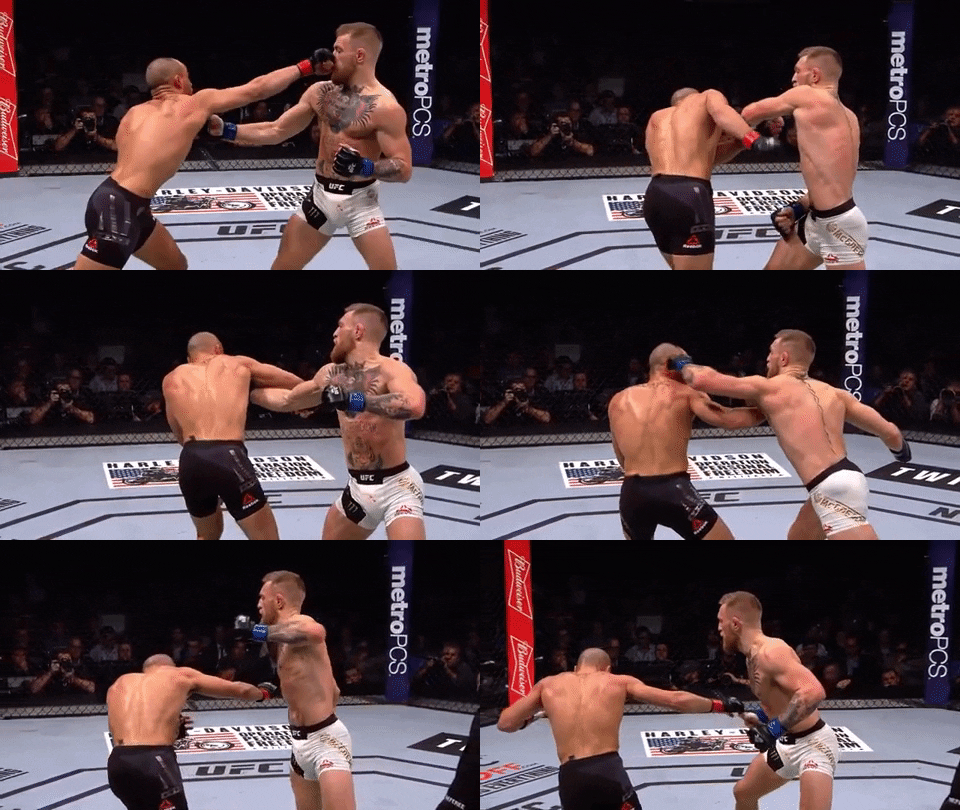
These moves usually cause opponents to panic and charge forward, allowing McGregor to skip back and let their attacks miss. Once they’re out of position, McGregor returns with his infamous left straight counter. Other than the Aldo fight, the best display of this style in action was against Eddie Alvarez, by far McGregor’s most iconic performance. McGregor’s ability to move back and allow Alvarez to miss with his punches meant that he could fire back with his southpaw straight multiple times. This requires timing and accuracy, but Alvarez seemed content in lunging in repeatedly. McGregor relies heavily on head movement and reactions to evade his opponent’s strikes. When it works, it looks like poetry in motion. When it doesn’t, he leaves himself without defenses in place.
In his fight against Khabib Nurmagomedov, McGregor seemed determined to try his luck on the feet, taunting Nurmagomedov to try and take him down. Despite his tie-ups and sprawls, McGregor was grounded multiple times by Nurmagomedov’s single leg, double leg, and high crotch takedowns. In the second round, Nurmagomedov’s striking rhythm and the continued threats of the takedowns had McGregor cautious, and before he knew it, he took an overhand right to the jaw. The thrashing from Nurmagomedov and the quick beatdown of Cerrone has fans confused as to where McGregor’s skill levels are. It’s not exactly a black and white answer.
McGregor is supremely talented and his striking puts him in elite company. It’s also true that he’s been protected during his rise and was given fights that favored him. How was it possible that leading up to his title fights at featherweight and lightweight, he’s only faced two wrestlers, with one of them on short notice? Some analysts don’t want to admit it, but McGregor’s ability to trash talk and get inside his opponent’s heads is a big part of fighting. It’s not exactly a metric that’s easy to measure, so it’s easy to see why many don’t count it as a skill. The current McGregor seems to have eschewed trash-talking, at least for the Cerrone and Poirier rematch. Will this new approach pay off?
For Poirier, he should try to keep his range and be diligent about his footwork. McGregor wants opponents pressuring him, but out in the open, he’s hittable. Volume striking isn’t Poirier’s game, but if he mixes in feints it could give him an edge by dulling the reactions of McGregor. Poirier should also double/triple his attacks (especially to the midsection). In the main event fight, it’s going to be important for Poirier to start hitting the body early and sap the gas tank of McGregor. This was something that Diaz was keenly aware of, and eventually, his pace and striking volume overwhelmed McGregor. Speaking of body work, McGregor has his hands low inviting you to strike him at his seemingly vulnerable head. This is to bait you to take a swing so he can counter with his straights. When you ignore this ruse, it does allow you to attack the rest of his body, especially the legs and midsection. Mayweather showed that consistent body work can drain the gas tank (making you vulnerable for the finish) and Diaz also focused on volume to get McGregor to overcommit and expend more energy than necessary.
It will not be enough to punch more, Poirier will have to move his feet after his attacks to avoid counters. If Poirier is going to plant his feet and throw, his best shot at a knockout is going to be his left straight, and if he can time it after McGregor throws leg kicks, even better.
In the first Conor McGregor vs Nate Diaz fight, Diaz was able to hurt McGregor when the latter attempted pull counters. McGregor would wait for Diaz to paw at him with a jab, only to pull back and counter with a left straight or an uppercut. A southpaw himself, Diaz found success by exploiting McGregor’s predictability and threw a left straight of his own immediately after. In my Southpaw fight preview for Max Holloway vs. Calvin Kattar, I pointed out this specific habit of throwing out the straight immediately after the jab. The sudden nature of the strike often catches opponents off-guard, and even if there isn’t a lot of power behind the punch, the speed and unexpectedness are enough to stun people in place.
Grappling isn’t Poirier’s strong suit, but he should mix in takedowns to keep McGregor alert. Nurmagomedov worked on mixing in jabs and uppercuts to keep opponents upright. His opponents are focused on keeping their base low to avoid takedowns, only to leave themselves open to punches down the center. This is how he was able to drop McGregor, by utilizing shoulder/head feints and jabs before throwing his right hand. McGregor was so worried about the takedowns that his left hand was lower than usual. This let Nurmagomedov feint with his head movement before throwing his rear hand. As mentioned earlier, Poirier took Pettis, Hooker, and Gaethje down, so this strategy isn’t out of left field. If McGregor is the one that moves forward, Poirier has his intercepting knees and can drain McGregor’s gas tank as the fight wears on. This was on full display in both of his fights against Eddie Alvarez, so it shouldn’t be hard to implement. McGregor also dislikes low kicks, something Poirier has worked on consistently and uses to end his combinations.
The path for McGregor is easier. Although Poirier cleaned up a significant portion of his game, some of his old habits are there for McGregor and the Straight Blast Gym to pick apart. Even with an improved jabbing game and better footwork, Poirier still rushes in head first from time to time, shifting his weight and crossing his feet. This caused him trouble against Alvarez and Holloway, with Holloway briefly dropping him in the first round. If McGregor can get him to brawl wildly, Poirier becomes a lot more hittable. Also, Poirier’s use of the stonewall guard means that his midsection is exposed long enough to be hit with jabs and straights (or kicks if McGregor chooses). One of Poirier’s bad habits is still stance switching while attacking, and this has proven to be the bane of many who utilize this style.
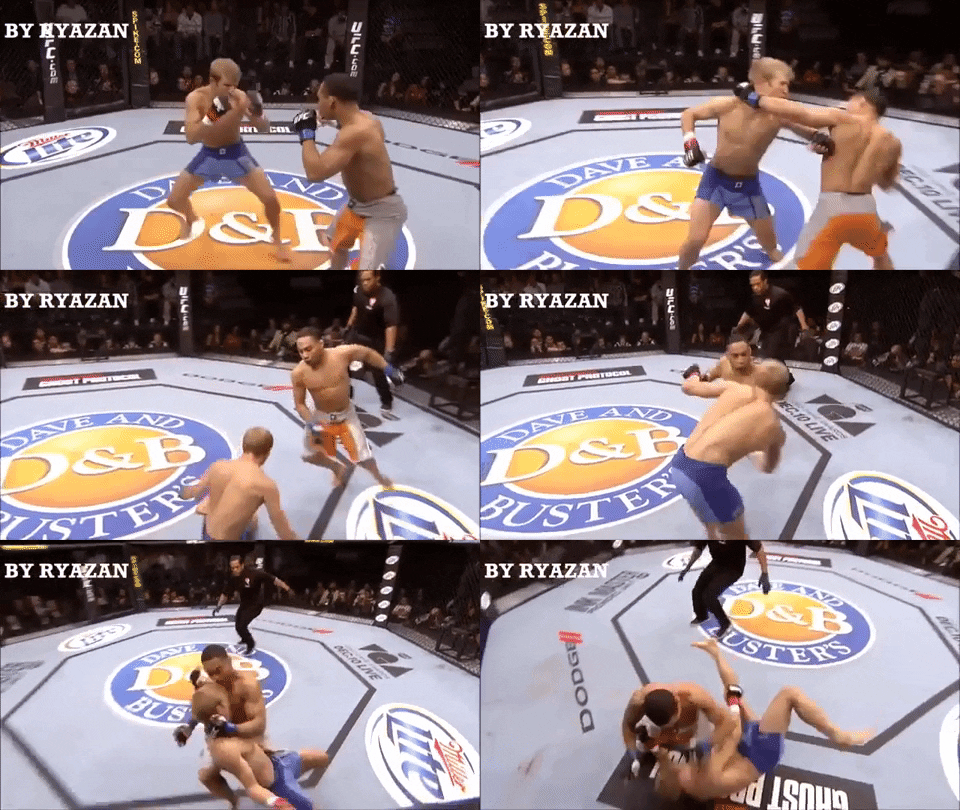
Dominick Cruz, TJ Dillashaw, and Demetrius Johnson have all been dropped while moving forward and stance switching. Dan Hooker had success and caught Poirier’s chin clean during the moments where Poirier swung hard with his left without minding his footwork.
Even though he’s limited the use of his kicks, McGregor does have an arsenal of kicks that he employs to keep opponents in place long enough for his left straight. Low kicks aren’t in McGregor’s usual rotation, but it’s not without precedent. In the rematch against Nate Diaz, McGregor constantly punted Diaz’s lead leg and kept him from planting down to hit with power. Hooker mixed up his levels by throwing plenty of inside low kicks whenever Poirier squared up. McGregor can also utilize the intercepting knee whenever Poirier gets close enough to throw his southpaw straight, something that both Hooker and Alvarez had success with.
If Poirier does chase and move forward, McGregor should be comfortable exchanging punches at close range. McGregor’s footwork is going to be a key part of beating Poirier. The good news is that McGregor’s style naturally gives Poirier a lot of problems. McGregor loves moving forward and pressuring opponents against the fence with just his footwork alone. It’s clear from the first fight that McGregor has the power to hurt Poirier, enough to knock him out if given the opening. He has the potential to repeat his first performance, especially if he can capitalize on an aggressive Poirier.
With Nurmagomedov retired, for the time being, the lightweight title is up for grabs. Between the winner of this match-up, the addition of former Bellator lightweight champion Michael Chandler, and the resurgent Charles Oliveira, the 155-pound weight class has many contenders that can be champion. Hopefully, after UFC 257, that picture will become a bit more clear.
Files
Previews only

