 Home

 Creators
 Search
 Recent
 Random
 Posts
 DMs
 Tags
 Random
 Importer
 Import
 FAQ
 Account
 Register
 Login
 Favorites
 Keys
 Logout
 Telegram

Preview: Usman vs. Burns (Patreon)
Content
Teammates turned rivals aren’t anything new. T.J. Dillashaw and Cody Garbrandt went from close sparring partners to bitter enemies when the latter left Team Alpha Male to do his own thing. Jon Jones and Rashad Evans famously feuded back in 2011, culminating in a title fight for Jones’s light heavyweight championship in 2012. Go back even further, and you’ll find Chuck Liddell finally getting his hands on his old training partner, Tito Ortiz, and mauling him twice in the octagon. All three examples are tainted with bad blood, but the welterweight title fight between former teammates Kamaru Usman and Gilbert Burns doesn’t seem to have any (at least not publicly). It’s inevitable when elite fighters train under the same roof, there’s bound to be a collision down the line. At UFC 258, reigning welterweight champion Kamaru Usman makes his third title defense against former teammate and three-time BJJ world champion Gilbert Burns. Usman has looked nearly unstoppable in all his fights, but Burns is in the unique position of having trained with him for over six years. It’s not a guarantee that past sparring sessions will be enough for Burns to win, but his last performance against Tyron Woodley shows a lot of promise.
Outside of a few bursts and jabs to the body from Woodley, Burns dominated the fight. Burns utilized forward pressure and feints to draw out Woodley’s attacks so he could counter. Many were amazed at this level of striking IQ, especially since they still saw Burns as a grappler with mediocre punches and kicks. Getting Woodley to whiff on punches only to strike back with counter left hooks or right uppercuts show real growth in his MMA development.
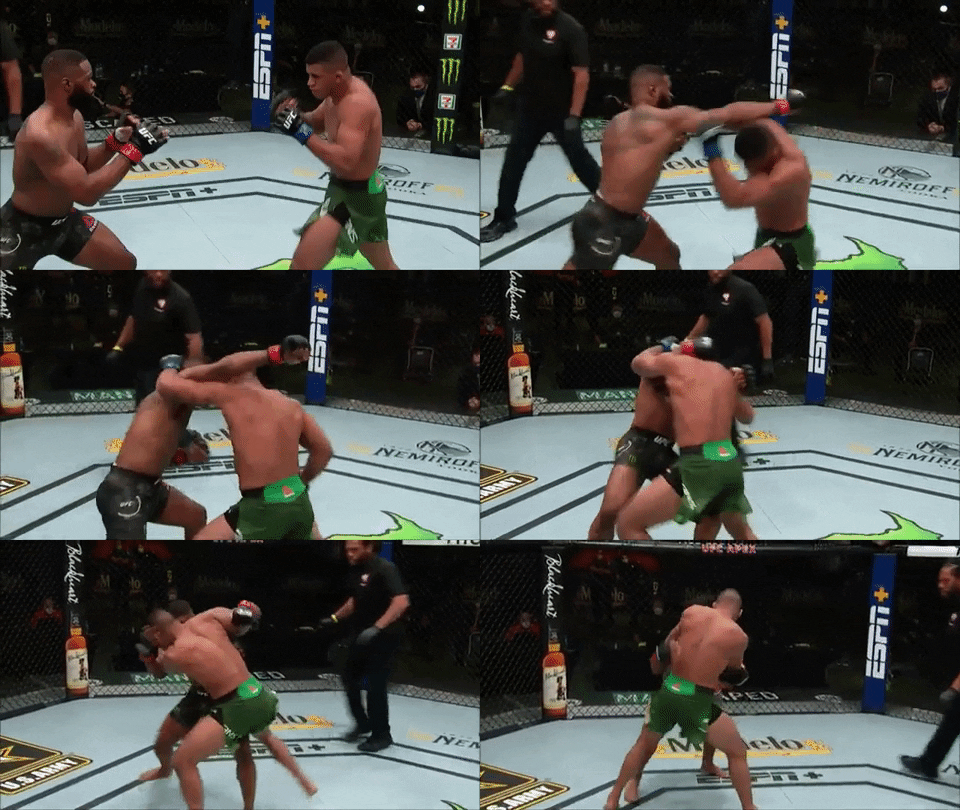
Whenever Woodley pawed his rear hand out to touch Burn’s gloves, he got his hands slapped down and was met with hooks to the head or jabs to the body. Burns had the most success when he let Woodley come towards him, only to create a collision and strike first and strike hard without mercy (sorry, I couldn’t resist a Cobra Kai reference).
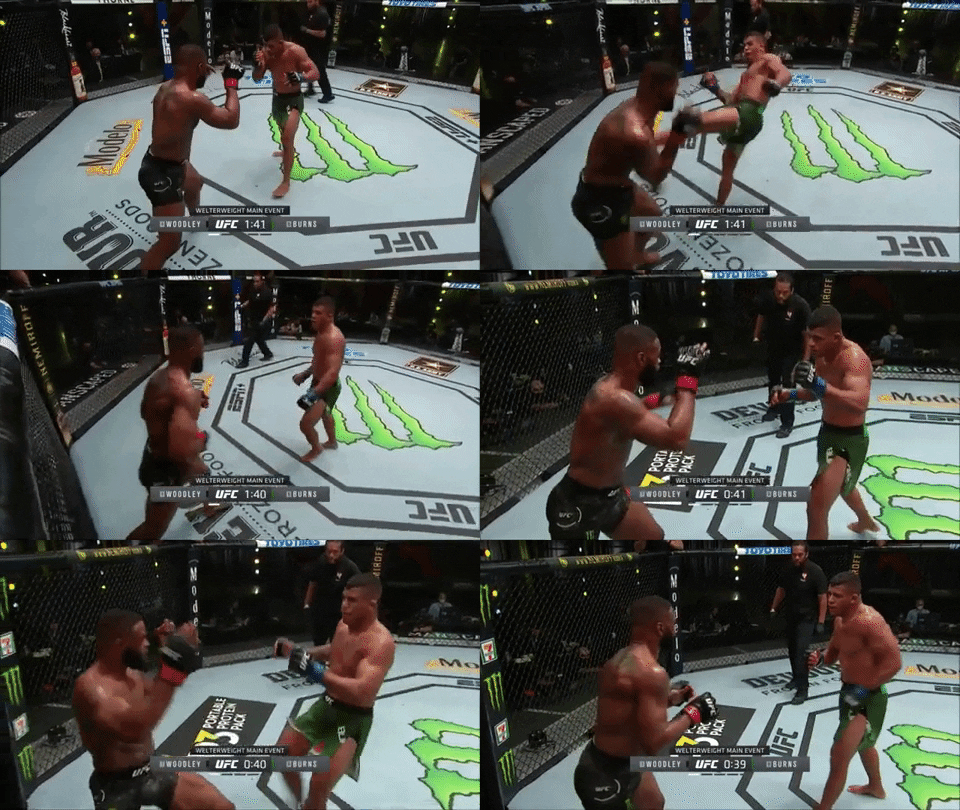
Burns also had a lot of success by timing Woodley whenever he rushed in with his right hand. So many of Woodley’s previous opponents would either back up or move out of the way laterally but Burns held his ground and countered with different weapons. If he wasn’t pounding the body with his left kick, he was hammering Woodley’s face with jabs and hooks off the jab to keep him lunging in. Woodley’s stance didn’t help matters either. By leading with a long stance, Woodley left his lead leg vulnerable to calf kicks.
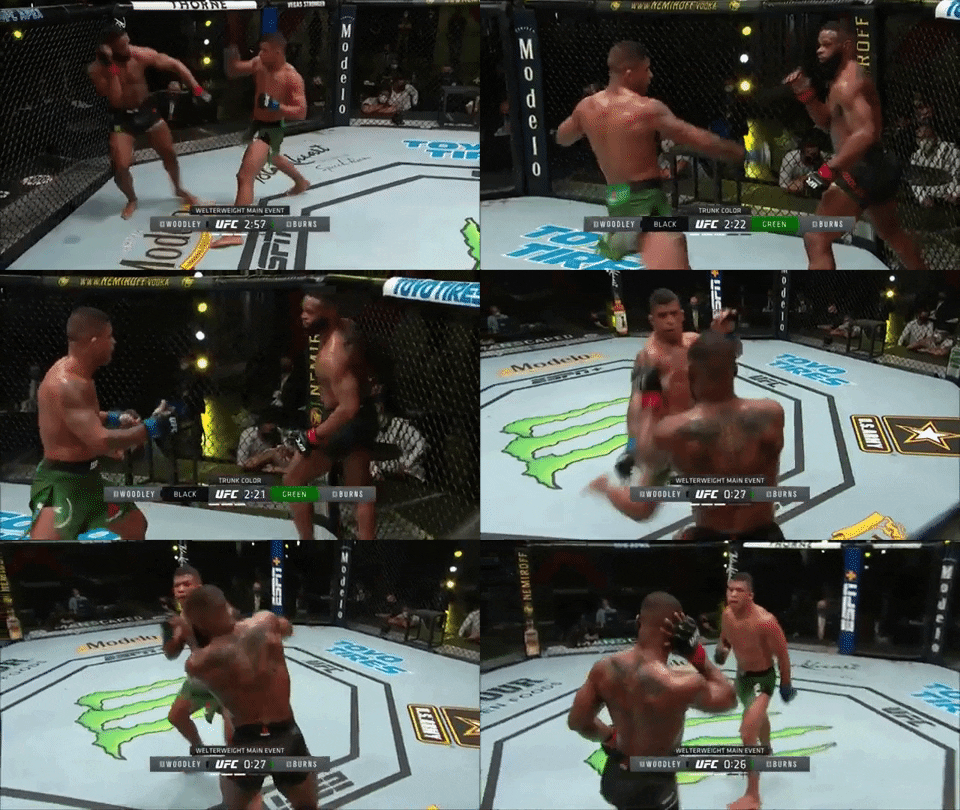
Burns didn’t rely on jabs alone to measure distance, connecting with the calf kicks let him know that he was close enough to follow up with more kicks and punches up top.
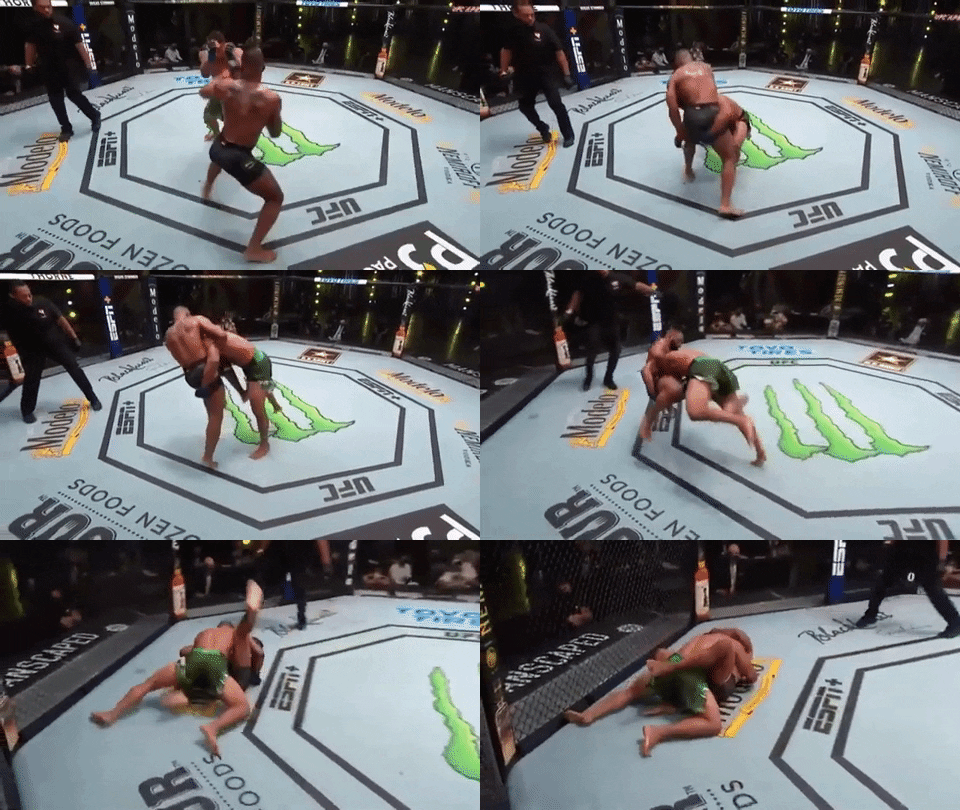
On the occasion that Woodley moved forward to launch his own offense, Burns level-changed to take Woodley down.
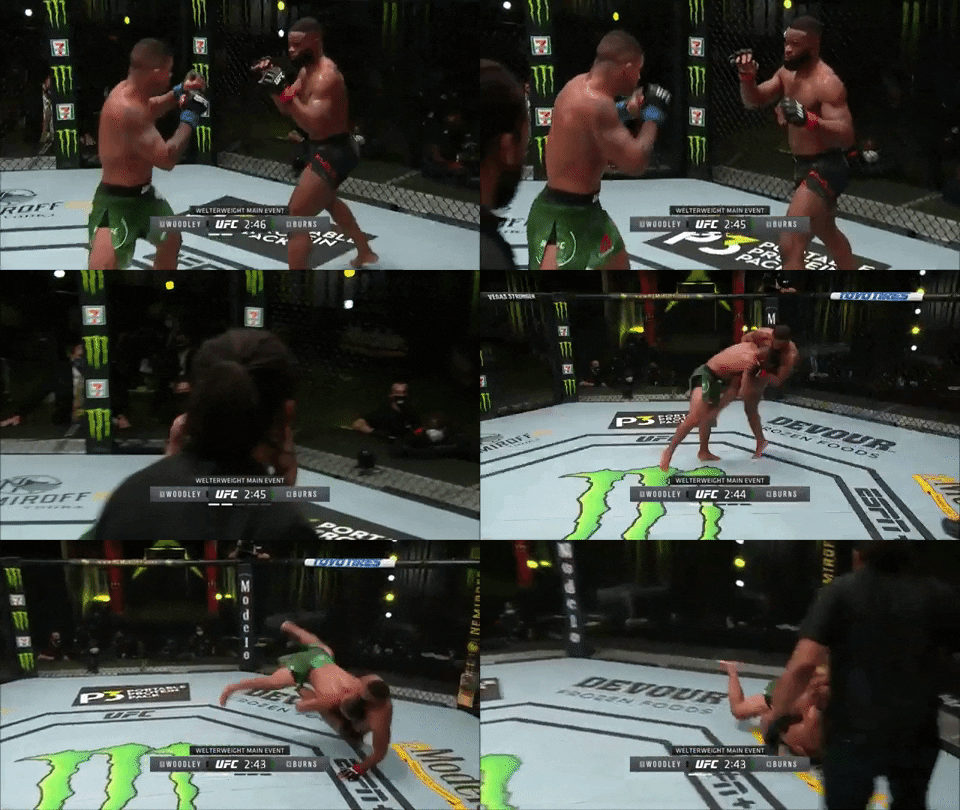
This might seem surprising to casual fans, but it’s common to see non-wrestlers land this kind of takedown. When fighters get preoccupied with throwing their rear hand while moving forward, they leave their hips wide open for takedowns. When Woodley uncorked his right hand, Burns threw left kicks to the now exposed body or intercepted with a left hook.
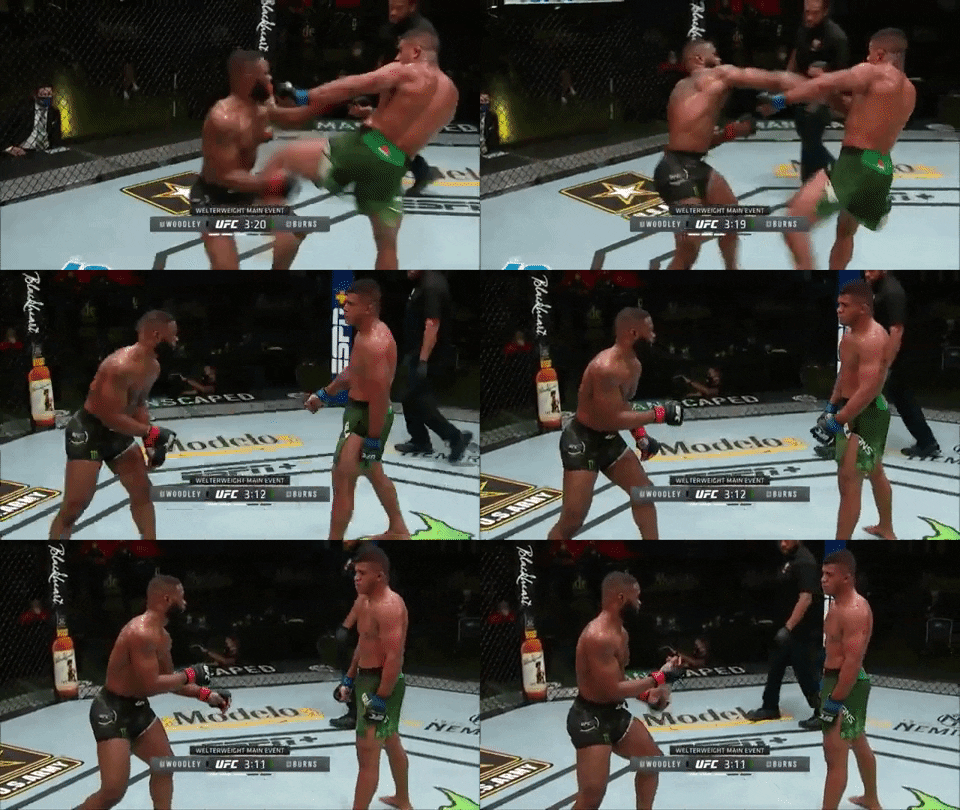
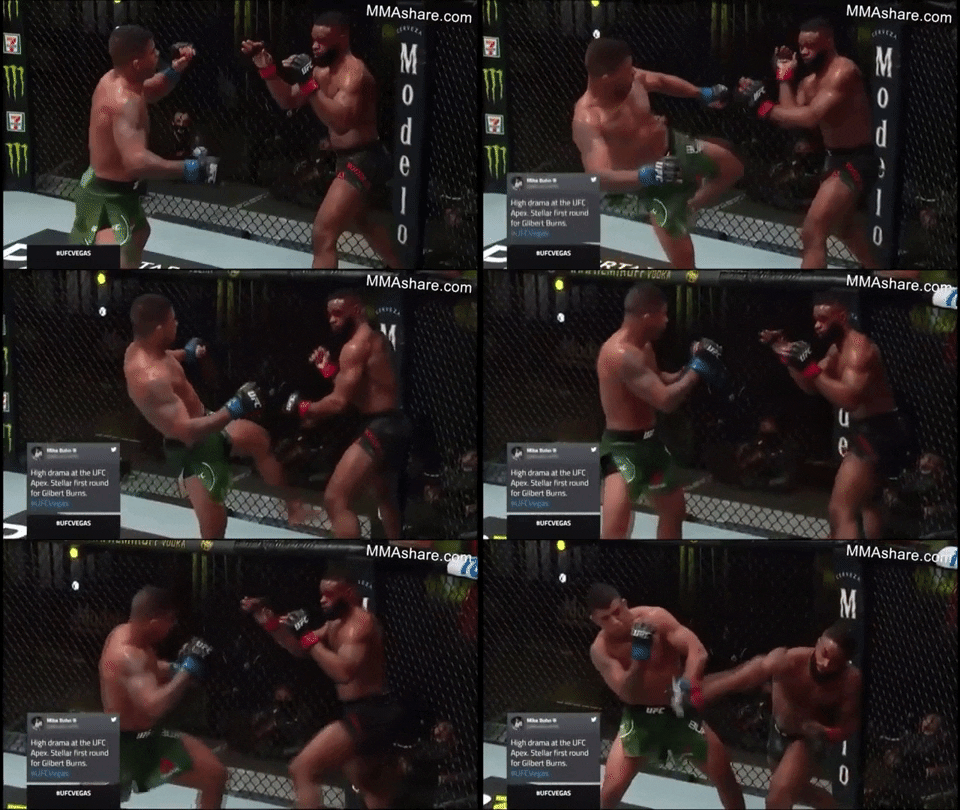
When Woodley did land strikes, Burns defended himself perfectly by using his entire body as a defensive frame. Rafael dos Anjos did this against Anthony Pettis.
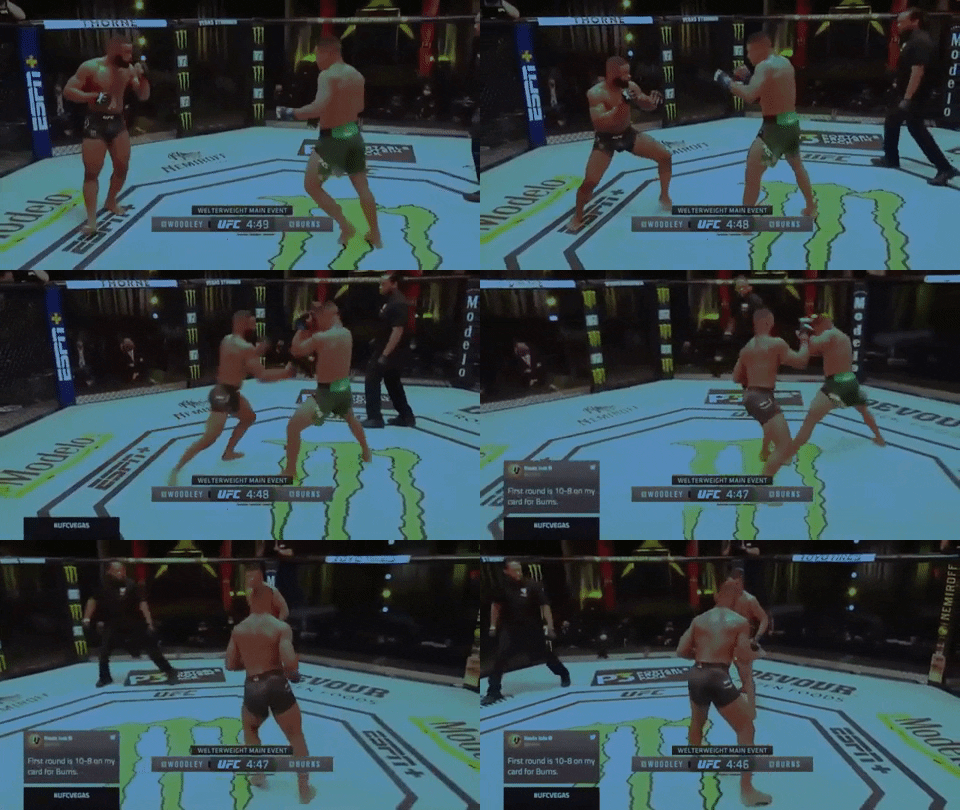
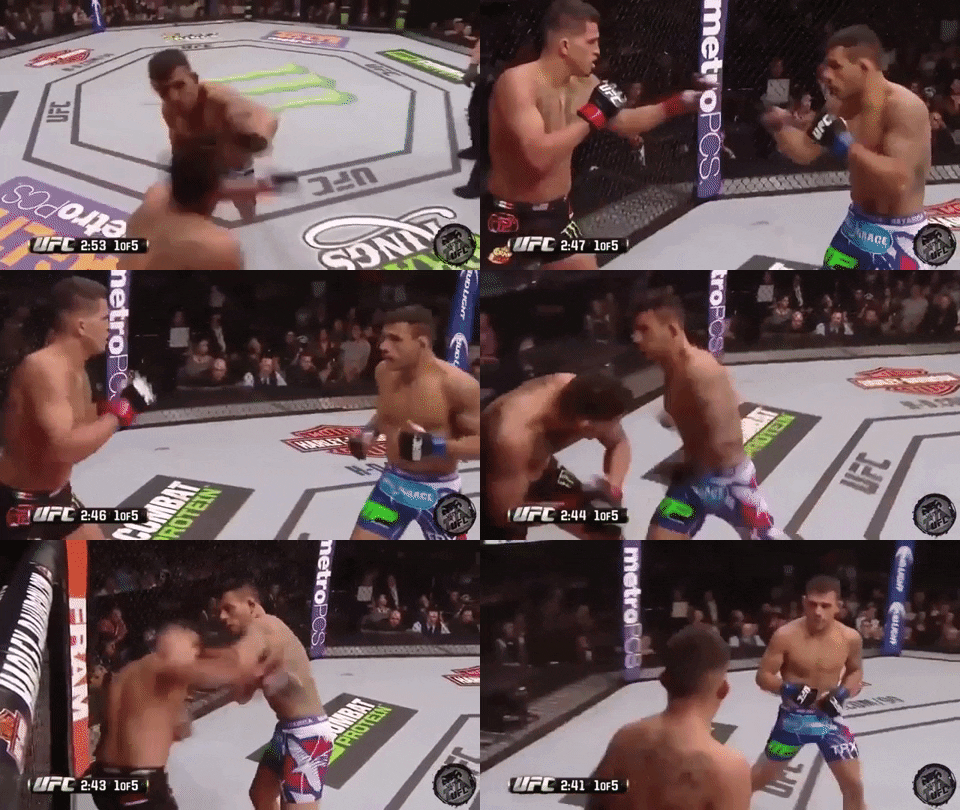
Burns didn’t just rely on head movement and evasion, he absorbed punches on his arms, shoulders, and forehead to stay close and counter as soon as Woodley stopped punching. Unlike Stephen Thompson or Demian Maia, Burns wasn’t afraid of getting hit by Woodley and knew that if he wanted to win, he had to stay close to land his strikes. When it was all said and done, Burns landed 156 strikes to Woodley’s 65, nearly triple the amount. By the time the final bell rang, it was clear that Woodley had lost, and that Burns is title contender material. This shouldn’t be a surprise if you’ve been following Burns’s career since returning to 170 pounds.
Currently 6-0 as a welterweight in the UFC, Burns is having the best run of his MMA career. At first, moving back up to 170 pounds didn’t seem like the best idea. After all, the 5’10” Burns doesn’t look imposing when compared to others in the weight class, and his 71” reach is on the shorter end. He was dwarfed by the likes of Dan Hooker at lightweight, how was he going to handle the larger fighters at welterweight? Fortunately, whatever Burns lacks in size, he makes up for with skill. Everyone knows about his elite grappling credentials, and it’s safe to assume opponents should keep the fight standing unless they’re feeling extremely confident in their submission defense. But on the feet, things aren’t any easier.
Burns has a well-developed right straight that is best utilized as a counter (or thrown as a lead). Burns usually drops his weight when throwing the straight, adding more power behind the punch and not just swinging with his arms. To try and get his opponents to engage, Burns starts throwing rear leg calf kicks.
The rear leg calf kicks are thrown quickly and have dropped opponents like Alexey Kunchenko if they’re off balance. Against southpaws, his counter left hook is a favorite go-to and has dropped the likes of Gunnar Nelson and Demian Maia. Look out for the right kick-right punch combo, a nice double threat from the same side. This is a favorite of Errol Zimmerman in his kickboxing days and is still used heavily by many in MMA.
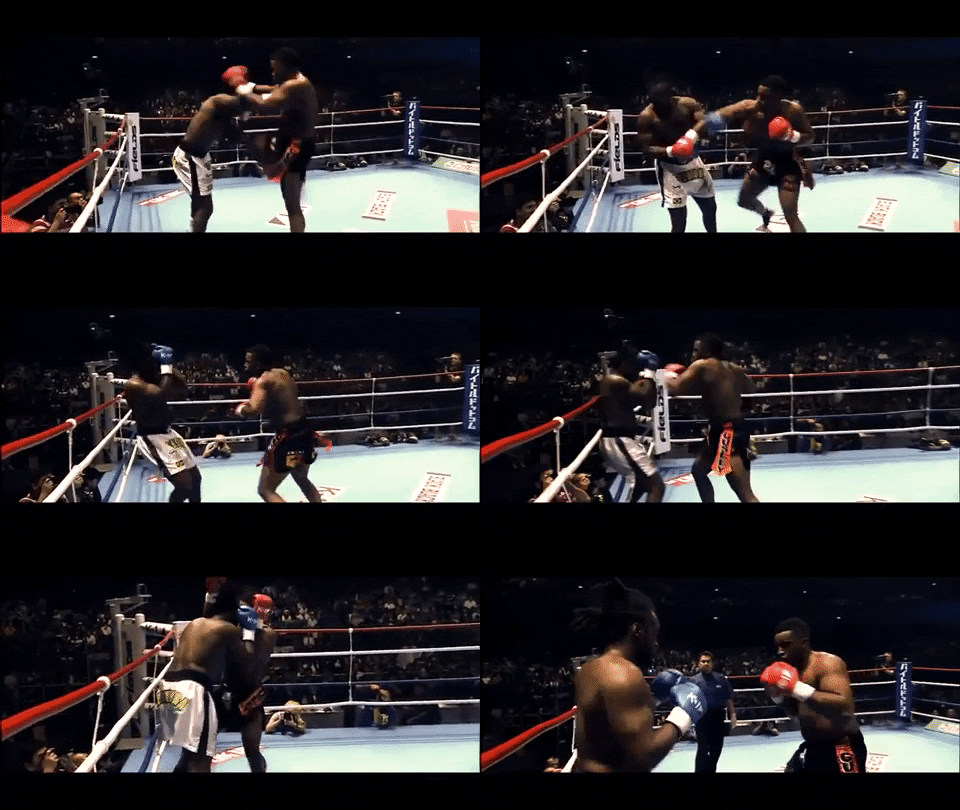
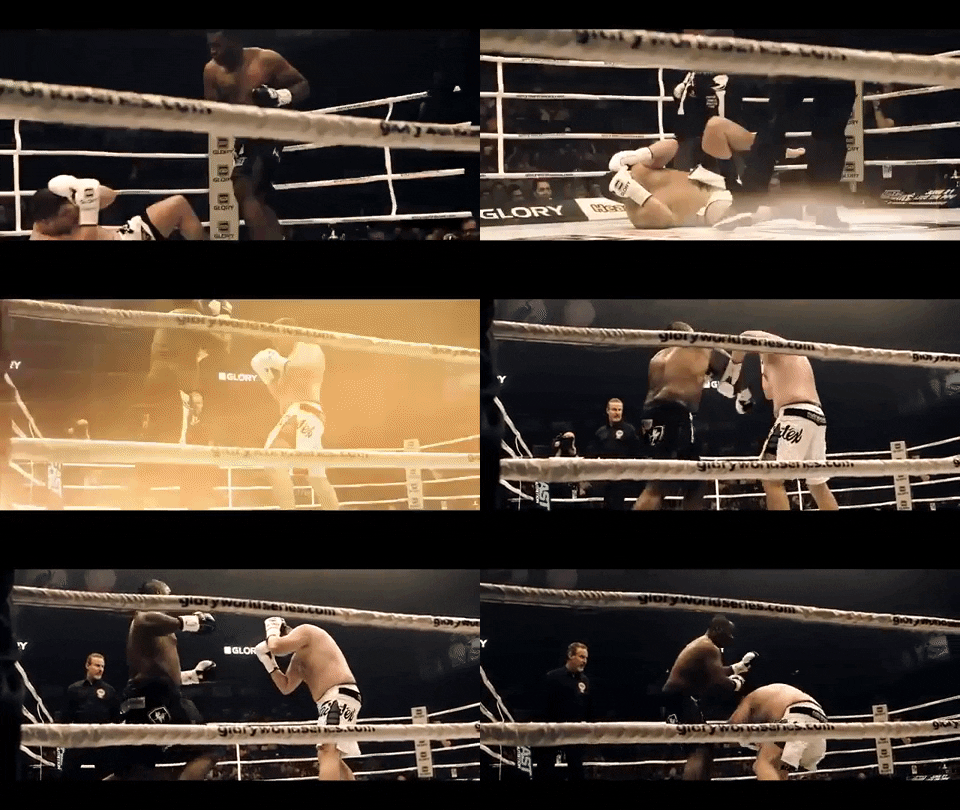
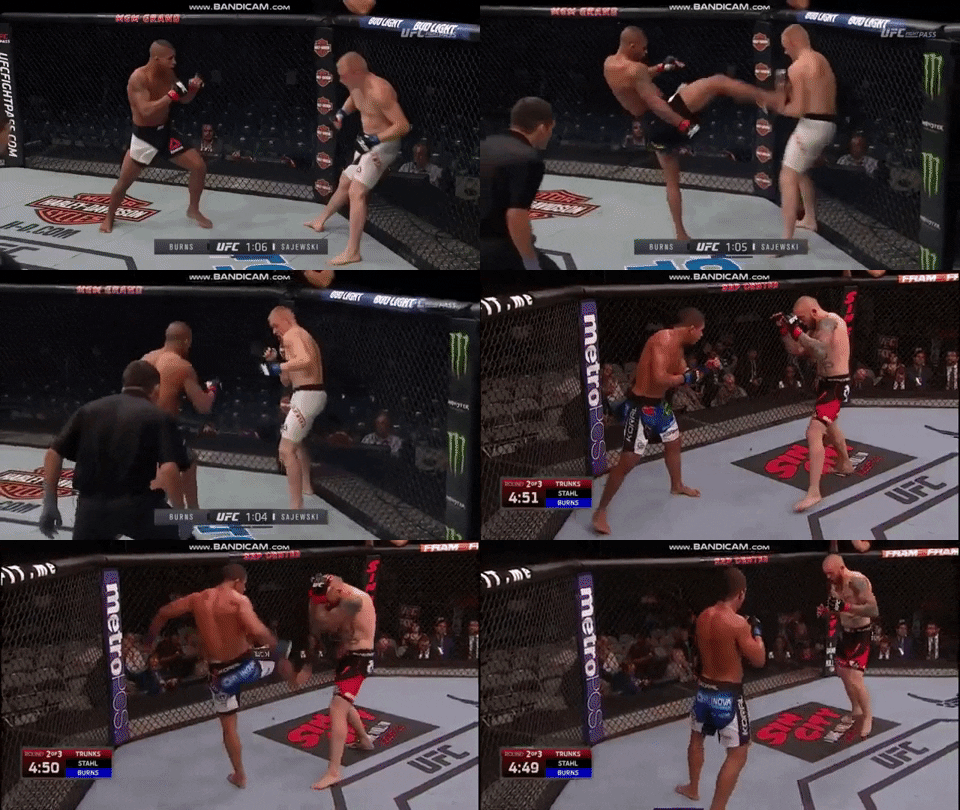
Even though the ground is where you might expect Burns to do his best work, you’d be surprised when you look at his record. Out of 15 UFC fights, he has just as many finishes with his punches as he does with his submissions (four and four).
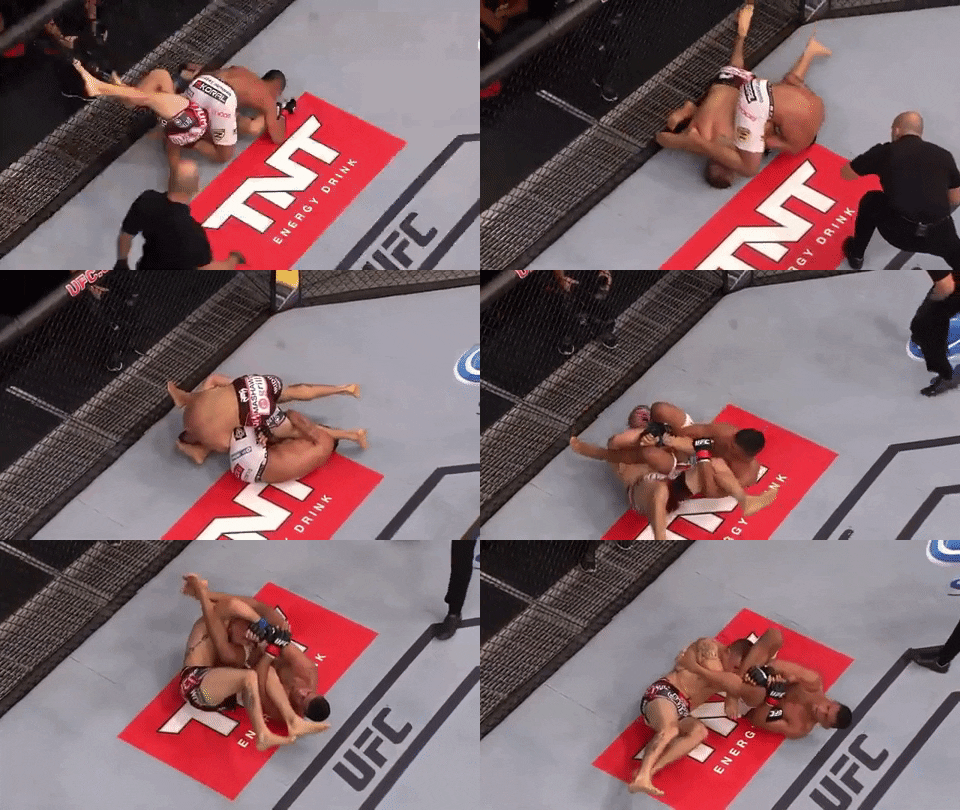
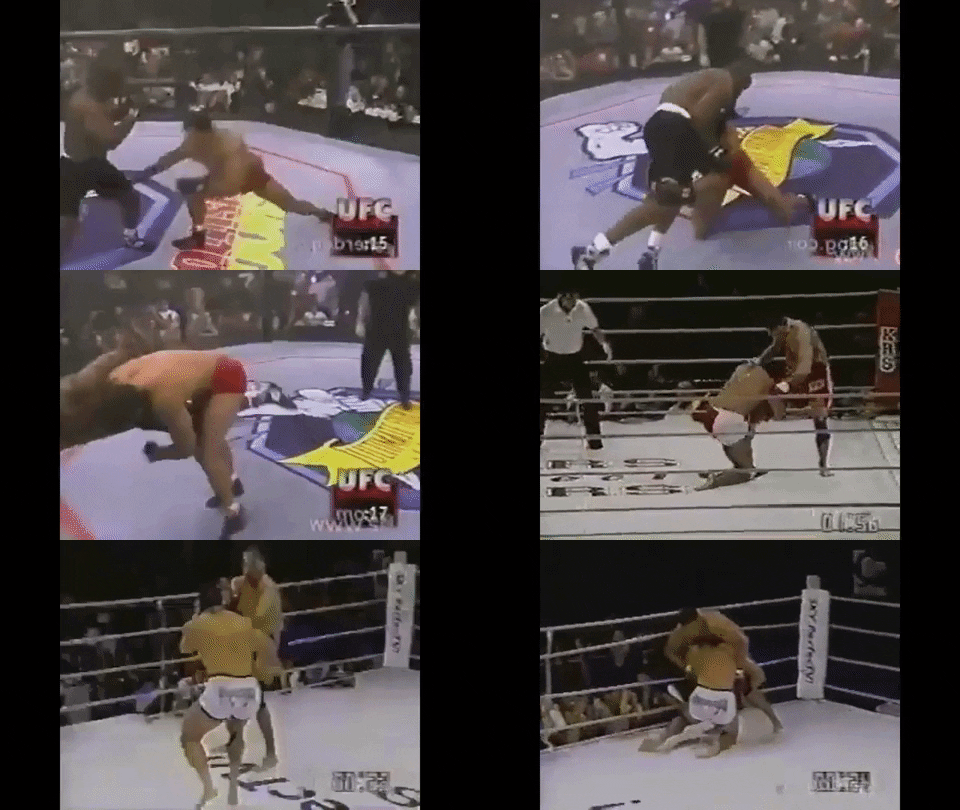
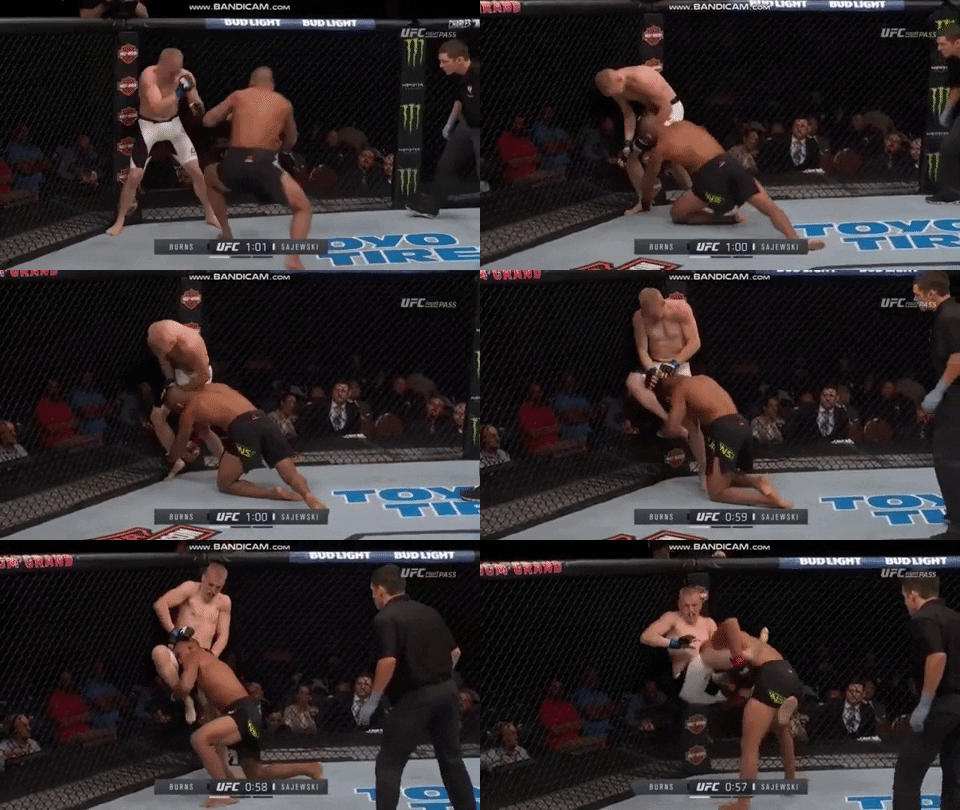
Perhaps opponents are aware of his grappling so they prepare their takedown and submission defense thoroughly before facing him. It’s also possible that the addition of strikes changes the dynamics of being able to hunt for submissions and maintain top control. If all else fails, his old school takedown of dropping to his knees can catch opponents off-guard if they aren’t expecting him to get that low. This was a favorite of legendary fighter Mark Kerr and it still has its place in MMA.
If Burns can’t finish from there, he’ll work his way back up to the feet and be in the clinch position, ready to try for a trip takedown.
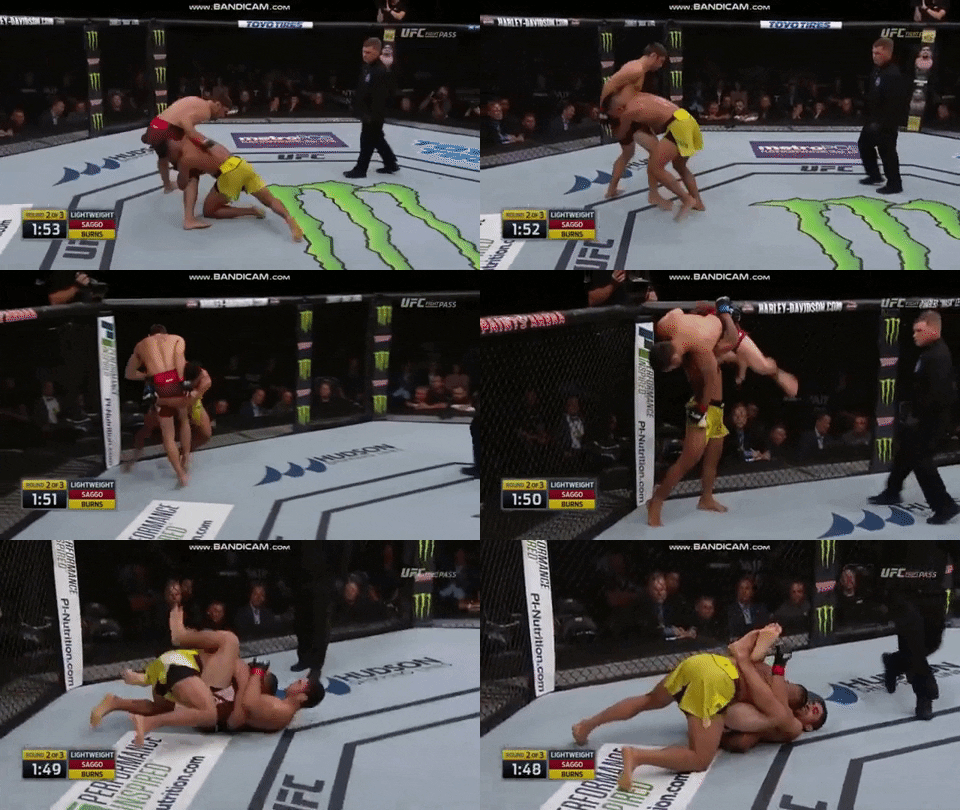
Burns might be peaking at just the right time, which is great since he’ll be facing one of the best welterweights in recent memory.
In his most recent fight, Usman put on a dominant performance against a last-minute opponent in Jorge Masvidal. People love to heap praise on Masvidal for stepping up to fight for the title with no prep time, but not enough credit is given to Usman for accepting a completely different opponent with no time to update his game plan. Despite the short notice, Usman controlled this fight. After a chaotic round one, Usman was able to crowd Masvidal towards the fence. From there, Usman reached with his hands and changed levels until he was close enough to clinch up and hammer Masvidal with blows.
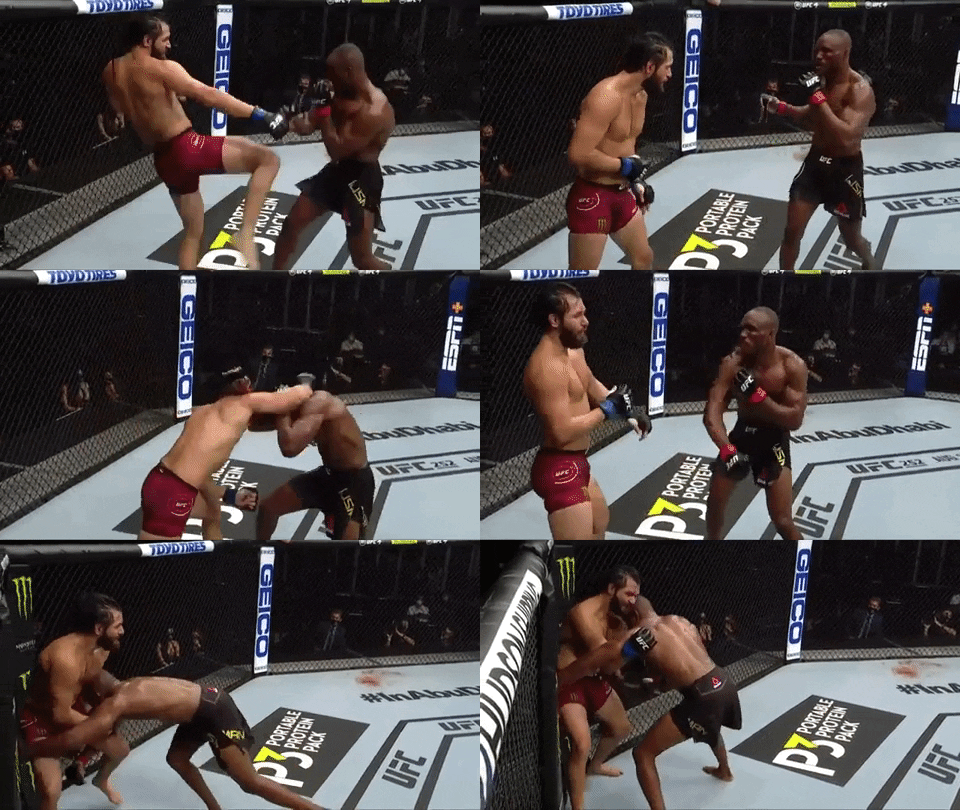
Hooks to the body, shoulder strikes to the jaw, and stomps to the feet were Usman’s go-to moves. It didn’t help that Usman kept pounding the midsection of Masvidal, causing him to gas out as the fight continued into the later rounds. By holding on to Masvidal’s rear hand, Usman was able to prevent him from breaking off and returning with strikes. Even though it wasn’t the most exciting way to win, he built up such a lead with strikes that the numbers looked lopsided. Usman landed 263 total strikes compared to Masvidal’s 88.
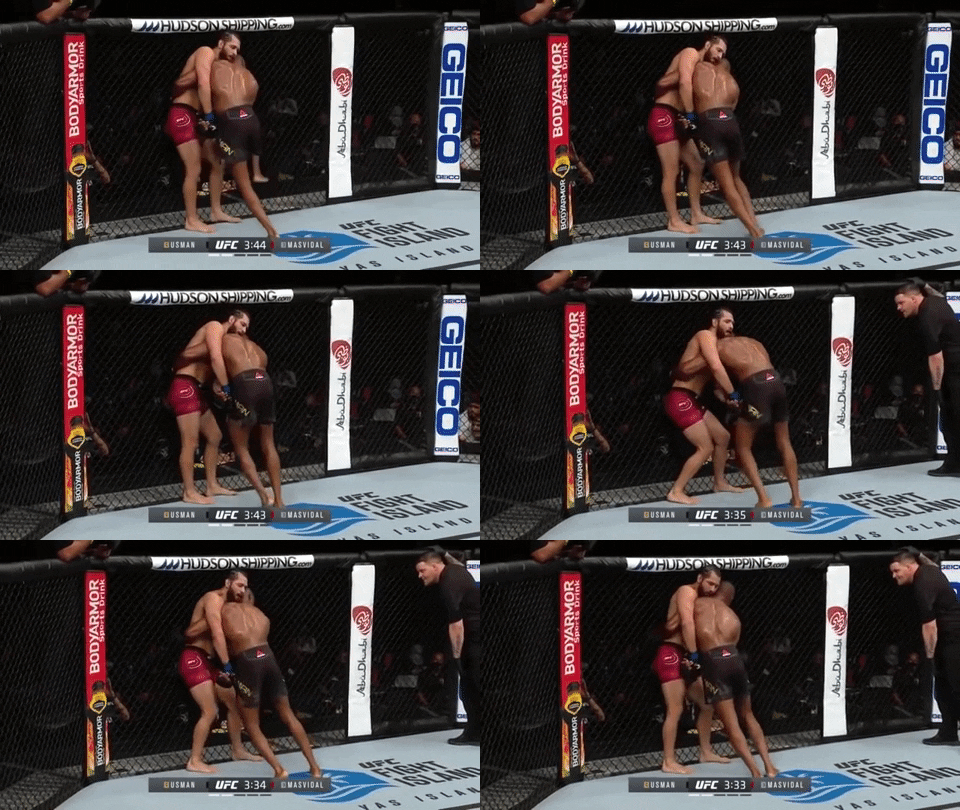
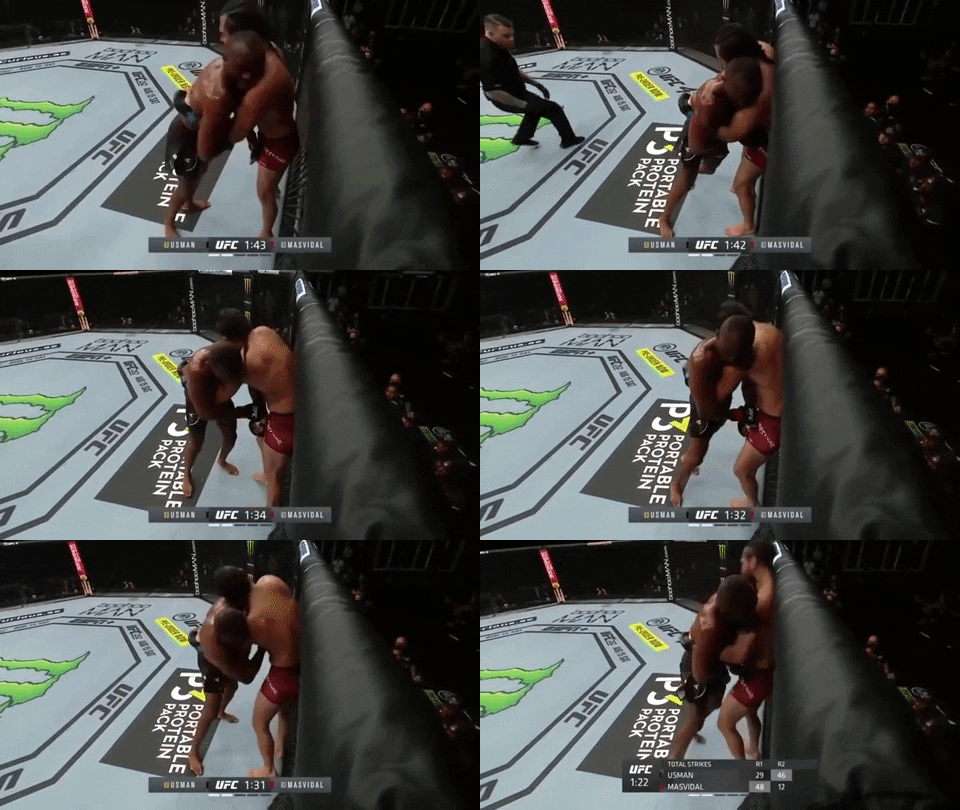
Usman doesn’t seem to tire, and even though he took some kicks by Masvidal flush to the body, he kept the pressure up and constantly led Masvidal towards the fence. Like in all his fights, the fence is where he does his best work.
Usman favors pressuring opponents to the fence and striking from close range to secure the clinch. Short punches to the head, knees to the body, with the occasional hooks and uppercuts off the clinch break are common tools in his belt. Once his opponent’s back is close enough to the cage, Usman will attempt every takedown possible to get a hold of his opponent’s hips and hoist them into the air. The cage keeps opponents from sprawling or using lateral movement to avoid strikes. Usman’s ground and pound aren’t going to get any stoppage victories, but the constant stream of strikes never lets up.
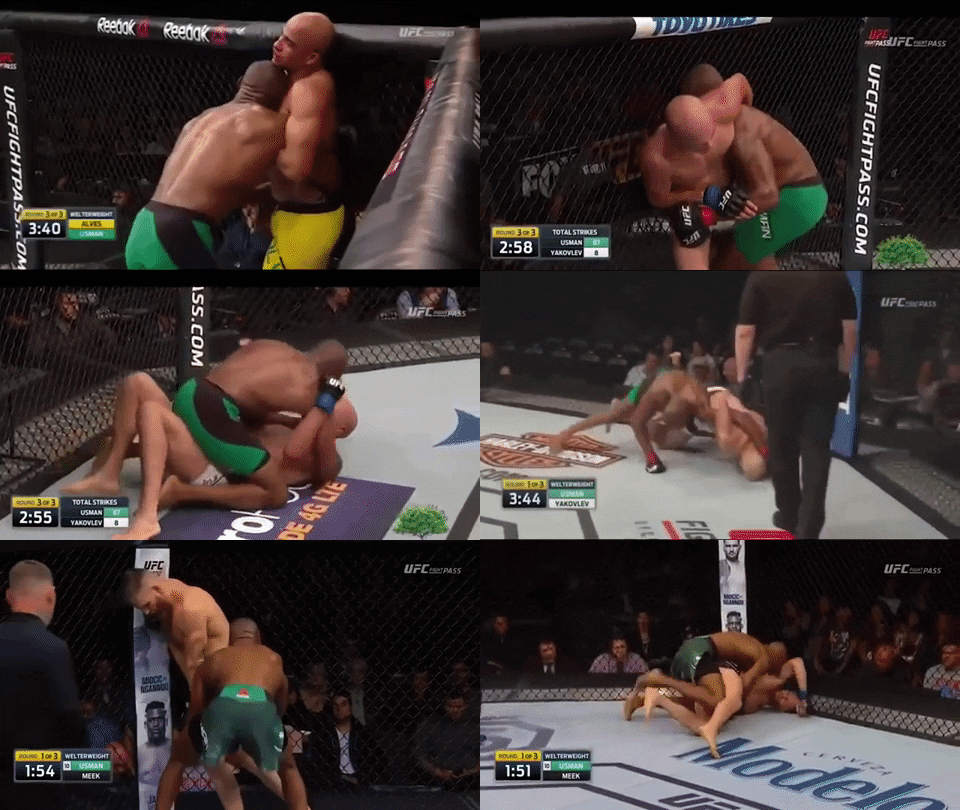
(It may not be as pretty as GSP’s double leg takedowns, but there’s no denying that Usman has more tools in his wrestling game than most in the division.)
Usman is an accomplished wrestler, but you might not believe it if you just saw the stats. Usman’s takedown percentage is 47%. It doesn’t seem high, but once you see how long he can maintain control on the ground, the takedown accuracy becomes less important. In the Masvidal fight, he controlled the action on the ground for 16 minutes and 38 seconds out of a possible 25 minutes despite only getting 5 of 16 takedowns. Against Tyron Woodley when he was the challenger, the time Usman spent on top was 18 minutes and 13 seconds with only TWO takedowns out of an attempted six. Once Usman gets his hands on you, things become a lot more complicated.
Usman may start slow, but through a steady work rate and constant pressure, he gains a huge lead that opponents can’t overcome. By slowly sapping the energy away from his opponents, their effectiveness drops the longer the fight goes. Go back and watch his old matches and you’ll see that his opponents’ work rates drop round by round until they were effectively punching bags.
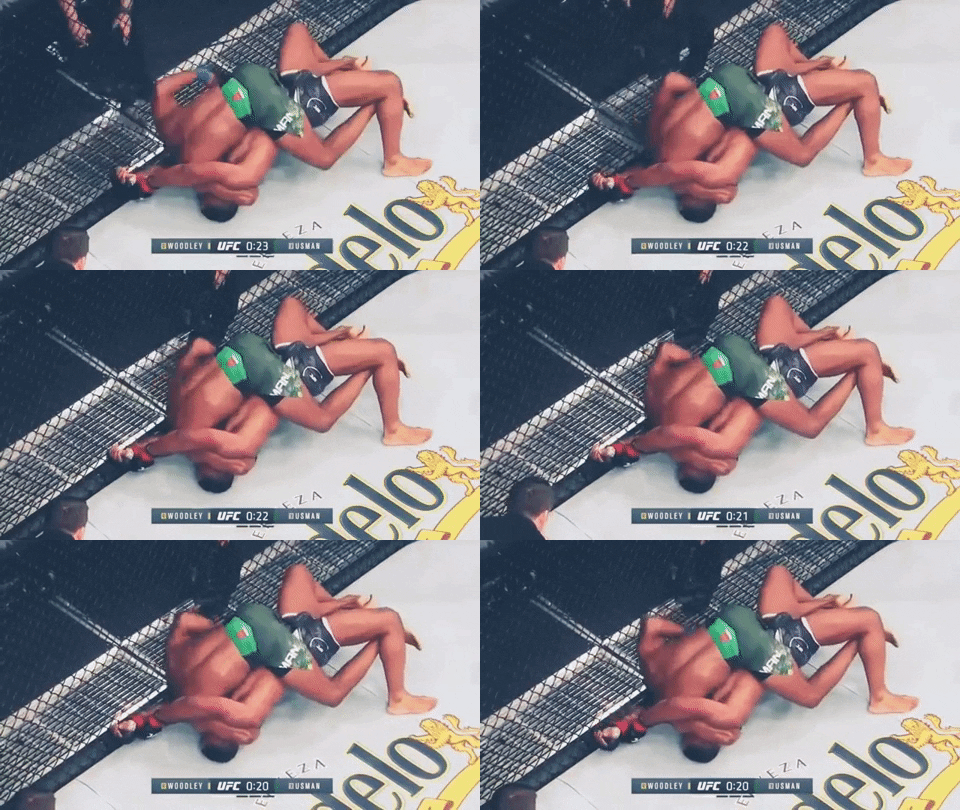
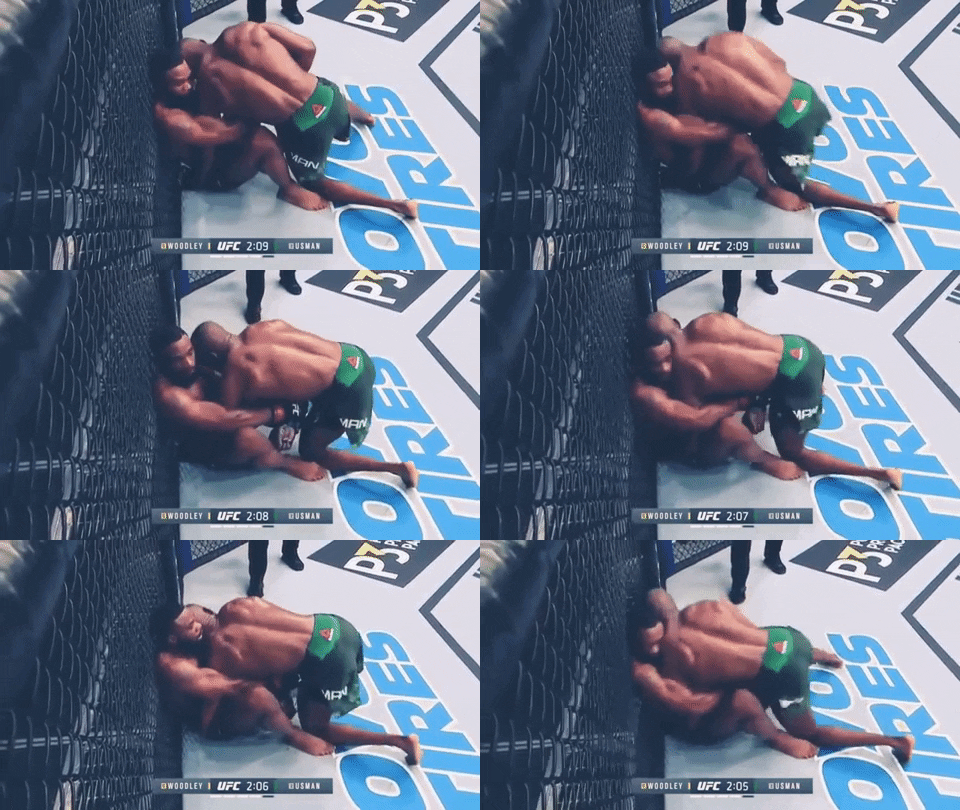
(They may not look like much, but short choppy strikes like these add up over time.)
Prior to the Covington fight, most of the damage that Usman scored in his matches came from ground and pound, but has shown that his striking has come a long way.
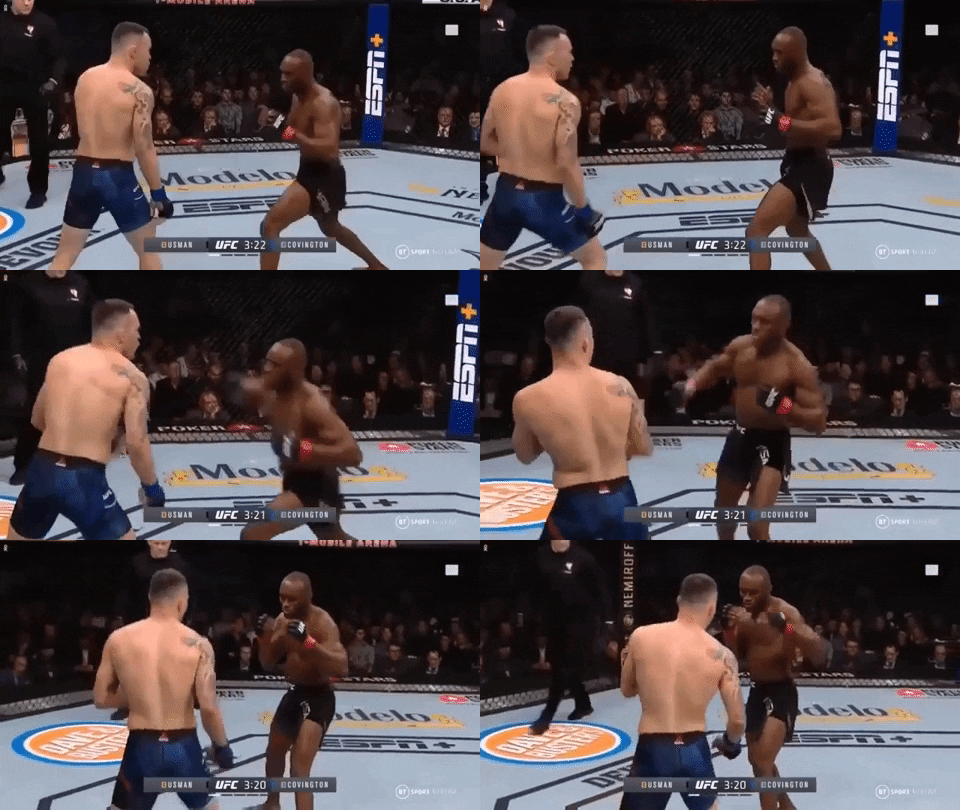
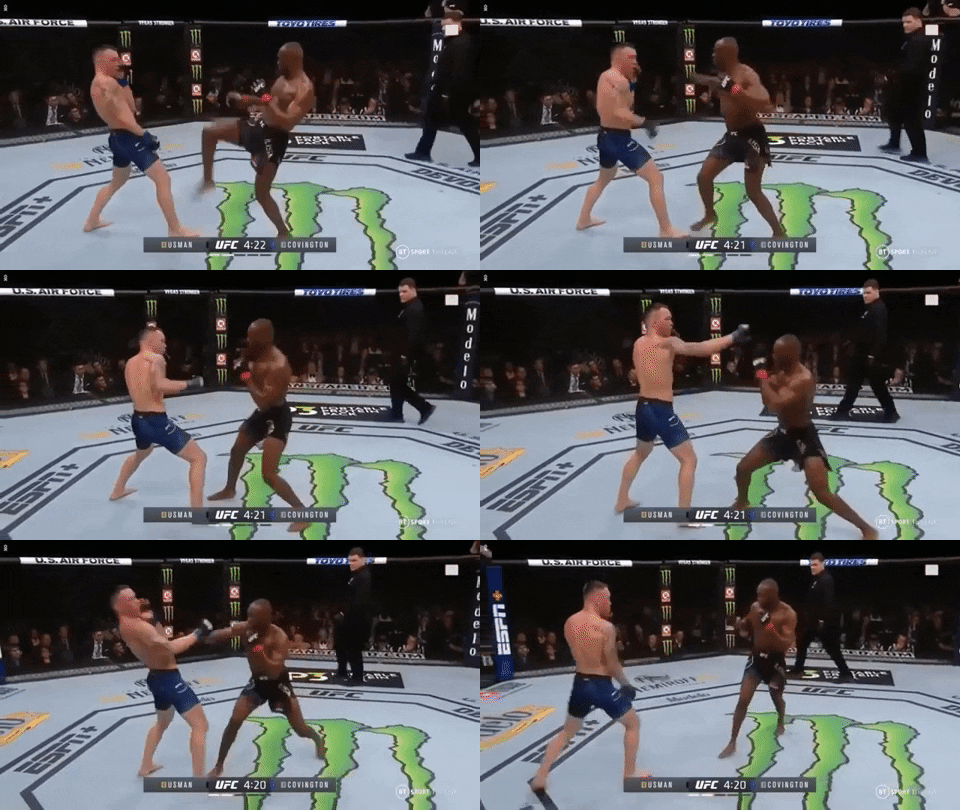
(Usman raises his lead leg and stomps down while landing with a jab, then doubles up after Covington thinks Usman is done.)
Covington fought out of the southpaw stance and it was a battle of who could land better shots as the fight continued. What really started to turn the tides in Usman’s favor were the rear hand uppercuts to the body. By hitting the midsection repeatedly, Usman was able to tire out the usually energetic Covington.
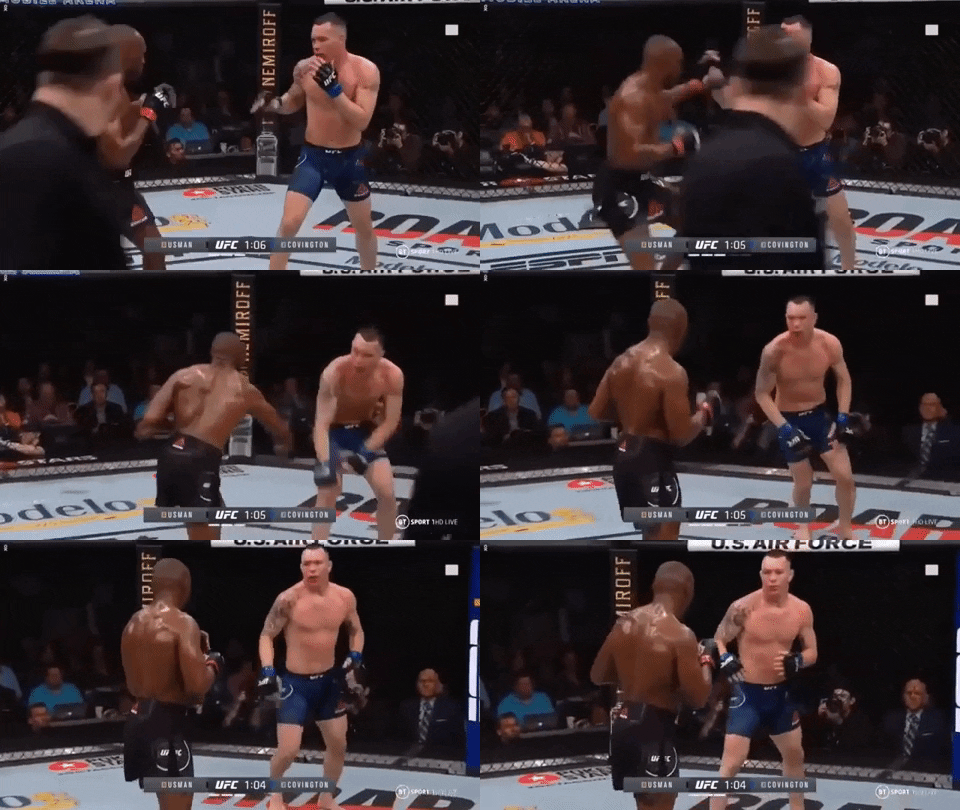
(As much as he tries to hide it, the rear hooks to the body definitely hurt Covington. Look at how he drops his hands and the reaction on his face.)
Usman isn’t knocking out fighters left and right, but his strategic use of wrestling mixed in with his ground and pound makes him an incredibly difficult opponent to solve (but not impossible).
For Burns, keeping Usman on his backfoot is going to be key. Usman doesn’t mind playing the bull to his opponent’s matador because he’s confident that his conditioning will eventually break his opponent. If Burns threatens Usman with strikes and can stop him in his tracks, it gives him a chance to drive Usman back, unable to initiate his game plan. It might be tempting for Burns to allow Usman to take him down so he can initiate a grappling exchange, but that could be disastrous. Usman’s submission defense is excellent, and his use of short punches and shoulder strikes don’t give many opportunities to take advantage of a slip in judgement.
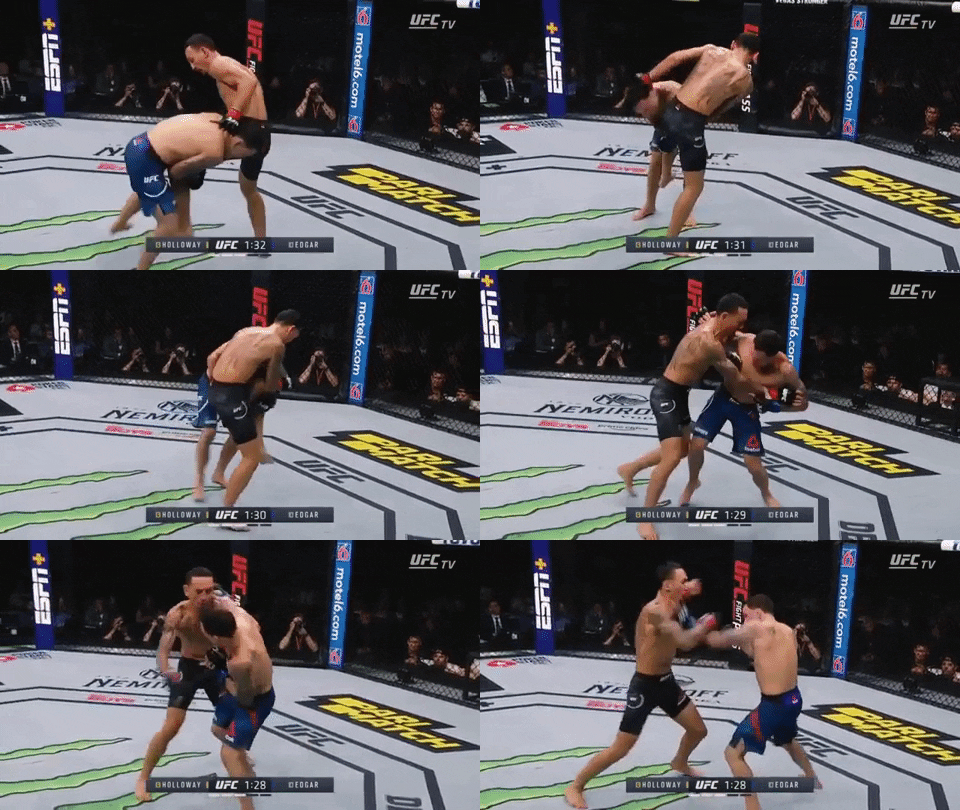
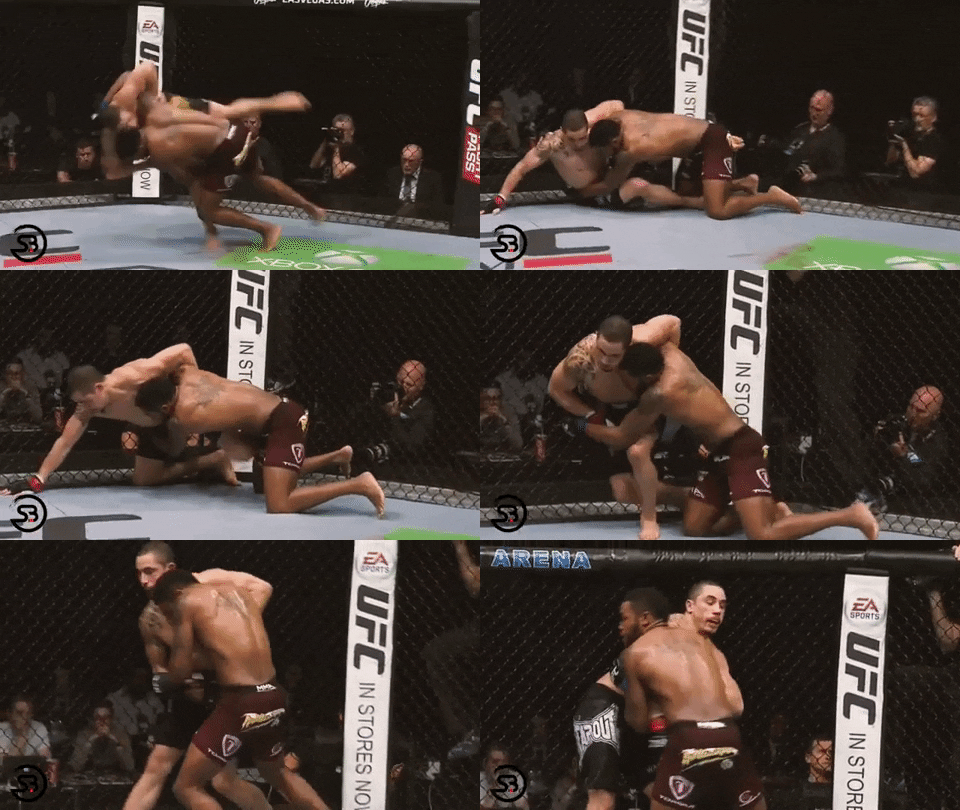
Burns might benefit from avoiding the clinch altogether (even though he doesn’t mind getting put on his back). At least in the early rounds, why give up points and work harder against a fresh Usman who can defend submissions with clear eyes? If Burns finds himself in the clinch, he might be able to score with elbows and short punches off the breaks. It’s important to keep Usman from locking his hands together, preventing a takedown attempt in the first place. Max Holloway uses this defense quite often against grapplers, and it does a great job of dissuading future clinch attempts. Robert Whittaker also pops up whenever he’s taken down and immediately grabs an overhook and separates his opponent’s hands as soon as possible. Burns should consider doing something similar.
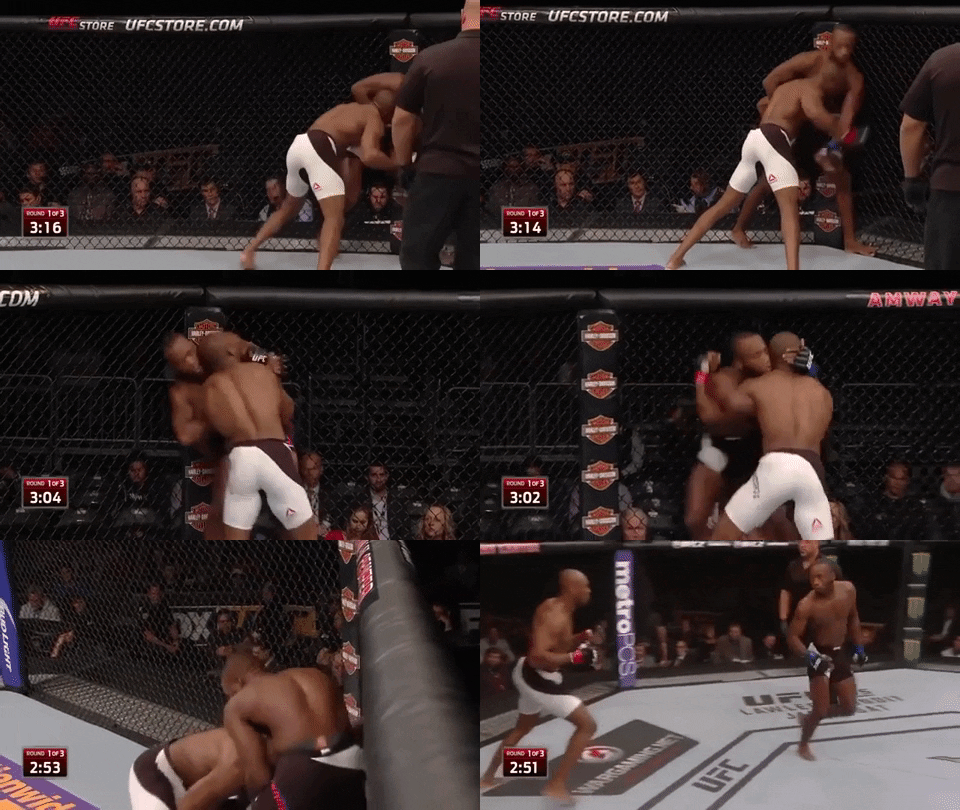
We know this can work because Leon Edwards did exactly that against Usman, and it could still be effective. Usman has a bad habit of leaning his head closer to the hips when he clinches up, and it could hurt him badly.
Burns should also take a closer look at certain moves that Covington did repeatedly against Usman. Covington seemed determined to throw combinations to overwhelm Usman and get him flustered. This did a good job of keeping Usman’s head in one place so he was susceptible to follow-up strikes. Covington also threw his high kick to uppercut on the same side, and this seemed to catch Usman by surprise.
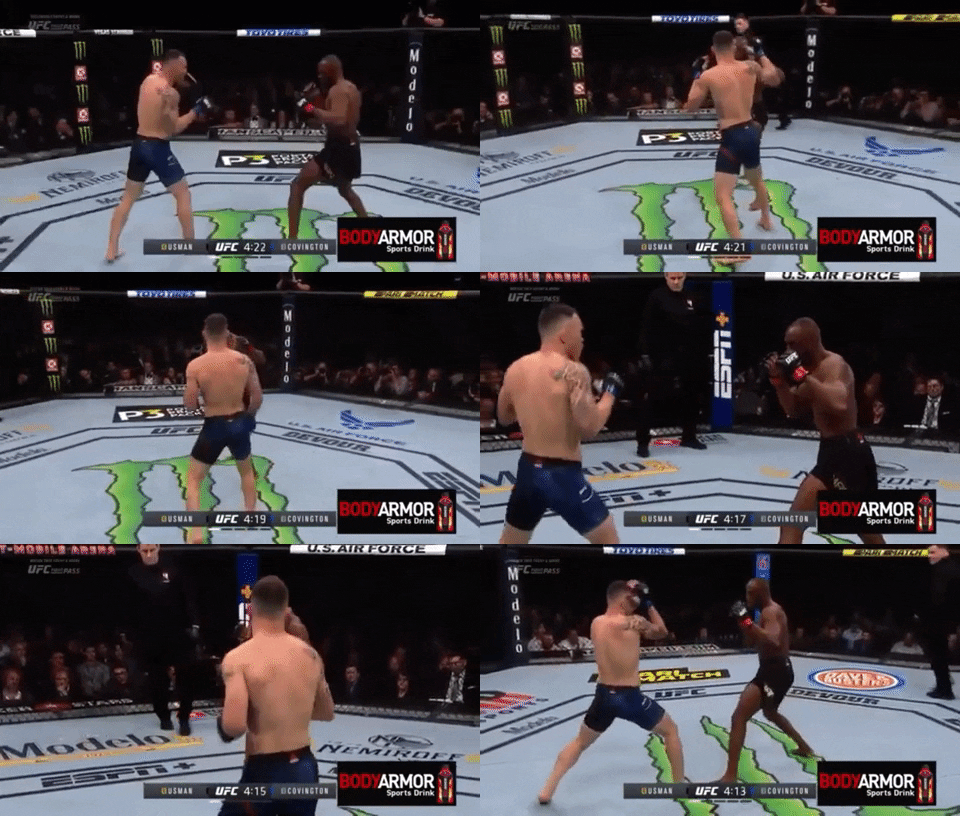
Since Covington usually uses the high kick to change levels and duck in for a takedown, the uppercut was a nice swap in strategy and caught Usman flush a couple of times. An opponent can usually block the knee or the hook, but when both are thrown in rapid succession (and with the same setup), it can often come down to a split-second decision to decide what to block and what to absorb. Burns attempted a similar setup multiple times against Woodley by leading with kicks whenever Woodley got close enough to try and check his hands. If Woodley held his hands high to protect his head, the calf kick was an open target that Burns took advantage of all night. Burns does this move quite well and often, but he should avoid spamming them in case Usman picks up his tells.
For Usman, he should try to make this match-up less pressure heavy than his previous fights since Burns does his best work when opponents chase him. Usman can use Burns’s aggression against him by tying him up in the clinch to neutralize his striking threat and throw elbows and hooks off the break. If Burns decides to put the pressure on early, Usman can use a lot of the same game plan that he did against Woodley. Usman backed Woodley against the fence and pressured him effectively with feints and level changes.
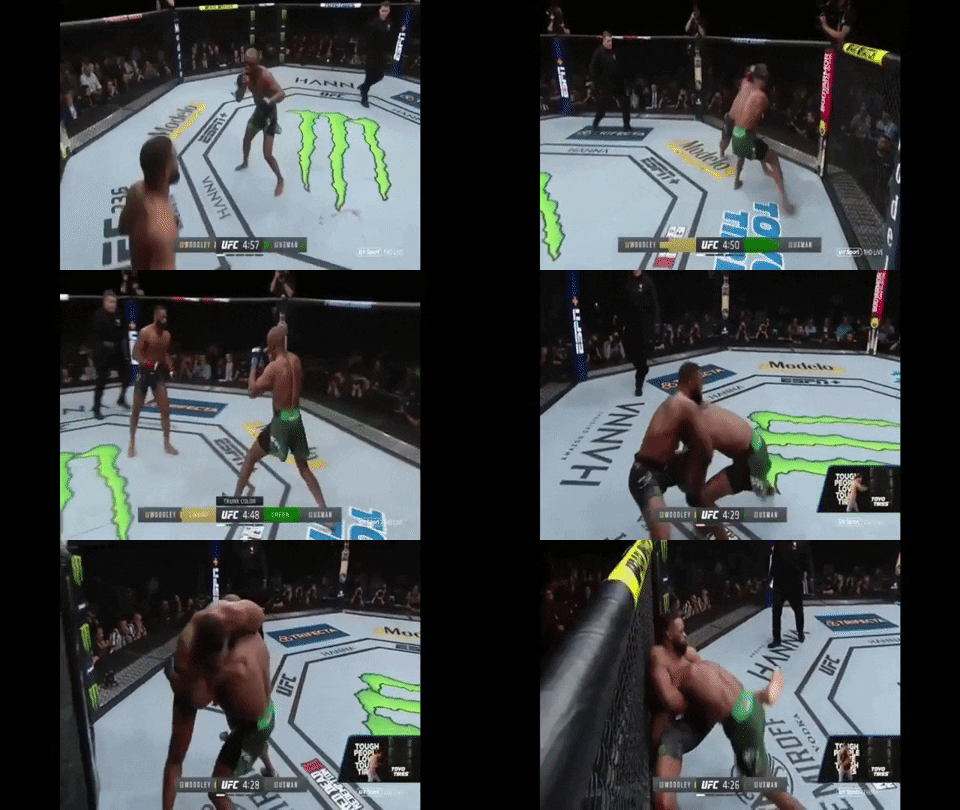
Instead of trying to pivot out, Woodley opted to defend the takedowns and attempt guillotines. This resulted in Woodley getting out-wrestled and spending the rounds on his back. Burns might not be able to resist a chance to end the fight with a submission early, but a failed attempt could be costly. Usman probably isn’t as worried about Burns’s takedown. Remember those takedown percentage stats from earlier? Where Usman really shines is his takedown defense. Unlike his peers, Usman’s takedown defense is at 100%. The next closest is Woodley at 87%, and Covington is at a distant third with 75%. Burns’s takedown accuracy is at 37%, so it’s not looking all that great.
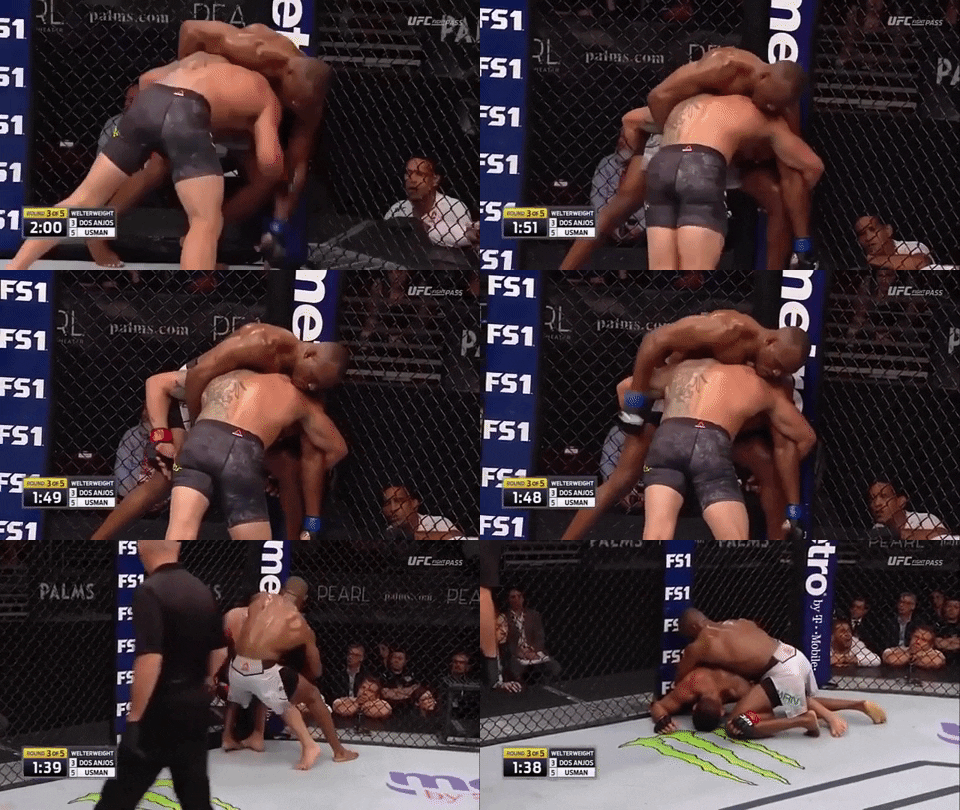
If Usman decides to start applying volume with his jab and mix in some stance switches, it could cause hesitation from Burns. It’s no secret that Burns has a great counter left hook and calf kicks, but his actual striking arsenal is pretty bare bones. Usman’s feints aren’t the level of fellow countryman Israel Adesanya, but the threat of the takedowns are often more than enough to get opponents to hesitate. The longer he can draw out the fight, the more it stacks in his favor.
There was once a time when Henri Hooft and company were toiling away in Deerfield Beach, Florida, while their rival, American Top Team, was celebrating the successes of all their UFC champions right across town. But now, Hooft has two of his pupils, one current and one former, battling it out for one of the most storied titles in UFC history. No matter who wins at UFC 258, Hooft can look on proudly knowing that he had a hand in crafting the next UFC champion. Whether it’s “And New” or “And Still” remains to be seen.
Files
Previews only

