Home

 Creators
 Search
 Recent
 Random
 Posts
 DMs
 Tags
 Random
 Importer
 Import
 FAQ
 Account
 Register
 Login
 Favorites
 Keys
 Logout
 Telegram

Loading Screen #4 (Patreon)
Content
(German below)
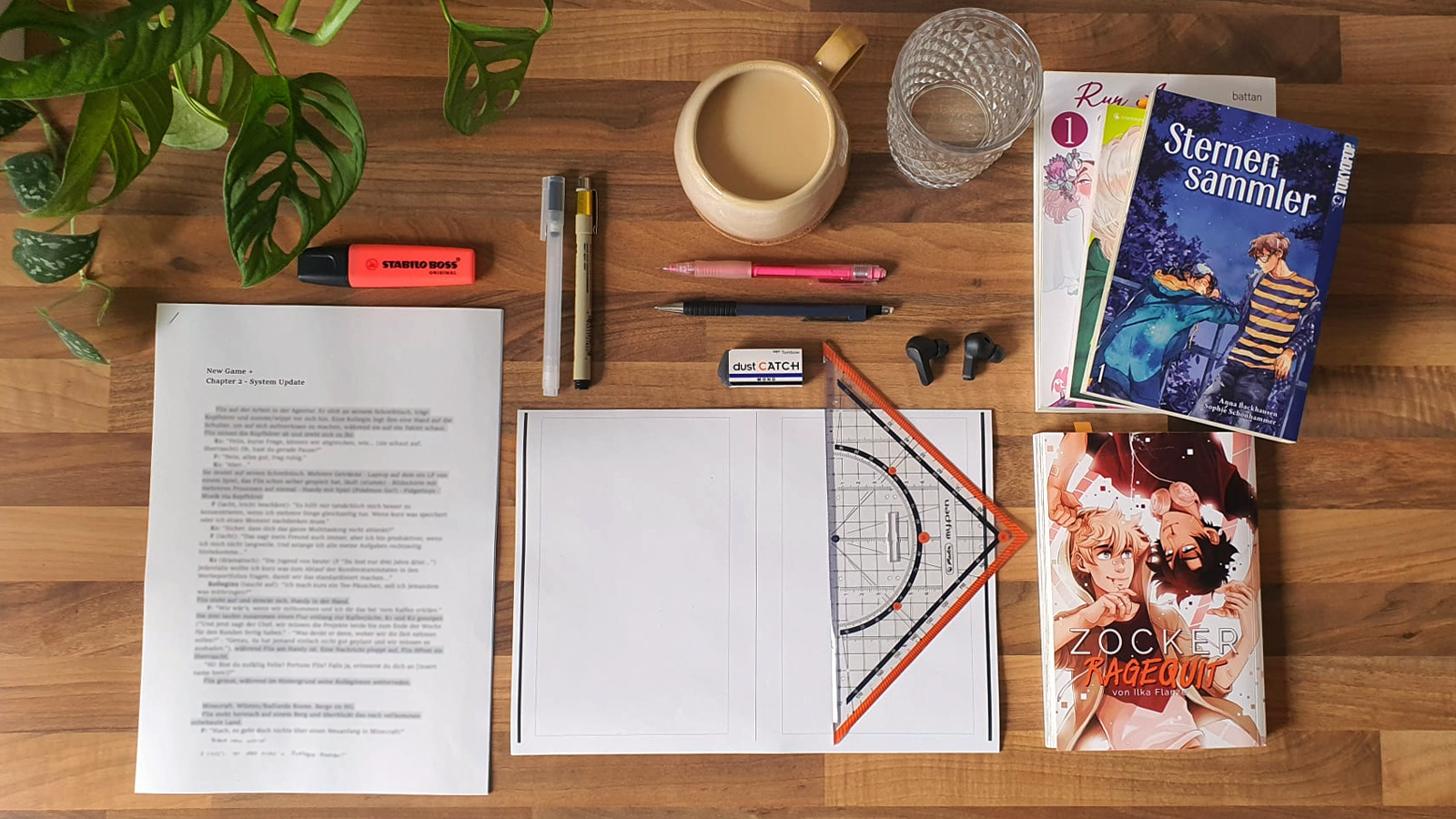
I finished writing the script for chapter 2 (title: System Update) and started storyboarding! Very important: chai with oatmilk, music and good comics for inspiration (paneling is my nemesis!).
In my case, a storyboard means I draw the whole chapter sloppily in a smaller scale. This means I can easily rearrange panels, throw something in the trash and start over, violently erase stuff and make it “fit” without being precious about my drawings. And in the end I can read the whole thing as if it was the finished piece to see if the pacing is good or if any crucial information (in text or drawing) is missing. I can also share this version with my friends and get feedback on flow, pacing, dialogues etc. “I don’t understand why he reacts that way in this scene” can be great feedback for me to know “Oh, there is an information missing, I need to make this clearer” since those characters live in my head and everything makes a lot of sense to me. But in the end, I want it to make sense to you. :)
I start out with a suuuuper rough pencil sketch! This is just about throwing something onto the page. The most important part to me is deciding on where the text bubbles go to create a (hopefully) good path for the eye to follow through the page without distracting going back and forth and how many panels there will be in the end.
I then go over the pencil with a Muji liner. This way I can be a bit more precise and make changes or solidify decisions withou havgin to erase and work with what I already have but can just add a second, darker layer. Later, when I scan my storyboard, I set my scanning program up in a way that only picks up the deep black and not the pencil drawing so I have a “clear” storyboard sketch. This way I don’t have to erase every page and strain my poor wrist (I did use an eraser on those two example pages for you though, so you can understand my mess better xD).
The sketches in the panels can stay rough; I only need to know what is happening there and will adjust perspective, zoom and correct anatomy later during the sketching progress of the actual pages. Some people make their storyboards super clean and detailed so they can use them later on as a sketch already. But that would put too much pressure on me and draw out this process too much for my liking. One thing about me: I get bored super easily. And the thought of drawing a rouch storyboard, then a more detailed storyboard and then drawing a detailed sketch and then inking said sketch… it would feel like I was drawing this comic three times. And I already spend hours on one page. XD
Storyboarding is the hardest stage of making a comic for me. This is the heart and soul of a comic. If you do it well, you can experience the story already as if it was a finished piece and get the same emotions out of it. Making a clean sketch, inking it nicely, making the boys look pretty, adding detailed backgrounds and adding shadows and sparkles makes the drawings look good, but the experience of reading the story and getting a feeling across happens in this part. And it takes so much brain energy for me! It’s also hard to accept for me that I can’t plan on how long it will take me since it’s such a creative process and utterly mysterious to me. I’ve had days where I sat in front of the paper and after 7 hours I had 4 pages badly planned out. And other times I manically spent an entire night, unable to stop myself, storyboarding 80-page comic in one sitting. With drawing, most days I can sit down and get into the routine of drawing, even if I don’t feel especially inspired. With storyboarding, I can’t force it. I can just try to be disciplined and sit my ass down to see if something will appear on the page. And that frustrates me. XD
How do you approach creative work? Do you wait for inspiration or do you believe in rituals and dicipline? What works for you? :)
DEUTSCH…………………………………..
Ich habe das Script für das zweite Kapitel fertig geschrieben (Titel: System Update) und habe mit dem Storyboard angefangen!Ganz wichtig dabei: Chai mit Hafermilch, Musik und tolle Comics für Inspiration (Paneling ist mein Erzfeind!).
Storyboarding bedeutet in meinem Fall, dass ich das komplette Kapitel einmal rotzig in klein zeichne. Auf diese Weise kann ich einfach Panels neu arrangieren, Dinge rausschmeißen, eine Seite einfach in den Müll werfen und neu anfangen oder hemmungslos rumradieren, um es “passend” zu machen, ohne, dass ich meinen Zeichnungen nachtrauere. Und am Ende kann man das Storyboard so lesen, als wäre es ein kleiner, fertiger Comic, um zu sehen, ob das Pacing gut ist und ob alles wichtige (im Text und in den Zeichnungen) vorhanden ist. Diese Version kann ich auch mit meinen Freundys teilen und mir Feedback einholen. “Ich verstehe nicht, wieso er so in dieser Szene reagiert” ist zum Beispiel ein tolles Feedback für mich, um zu wissen “Oh, da fehlt wohl anscheinend ein wenig Info, das muss ich klarer darstellen”, da diese Charaktere in meinem Kopf leben und alles für mich Sinn ergibt. Aber am Ende sollt ihr es ja lesen und es soll Sinn für euch ergeben. :)
Ich starte mit einer suuuper groben Bleistiftskizze. Dabei geht es mir nur darum, irgendetwas auf das Papier zu werfen. Der wichtigste Teil für mich ist es zu entscheiden, wo ich Textblöcke platziere, um (hoffentlich) den Blick der Lesenden gut durch die Seite zu führen, ohne ablenkendes Hin- und Her und Verwirrung. Und wie viele Panels es pro Seite werden und wie groß sie in etwa sind.
Dann gehe ich über die Bleistiftskizzen noch mal mit einem Muji Liner. Hier kann ich nun ein bisschen präziser sein und Entscheidungen verfestigen oder auf meiner groben Basis etwas korrigieren, ohne, dass ich viel radieren muss. Ich füge nur eine zweite, dunklere Ebene darüber. Später, wenn ich das Storyboard einscanne, kann ich meinen Scanner so einstellen, dass er nur das Schwarz erkennt und nicht den Bleistift, sodass ich dann eine “saubere” Storyboardskizze habe, ohne, dass ich jede Seite radieren und damit mein Handgelenk quälen muss. (Bei diesen beiden Beispielen habe ich allerdings radiert, damit ihr durch mein Chaos durchblicken könnt xD).
Die Skizzen innerhalb der Panels können grob bleiben; Ich muss nur wissen, was in etwa passiert und kümmere mich um richtige Perspektive, Anatomie und Zoom dann später im richtigen Skizzierprozess der Seiten. Manche Künstler*innen erstellen direkt super cleane Storyboards, die sie dann schon als Skizzen benutzen können. Damit würde ich mir selber aber viiiel zu viel Druck machen und diesen Schritt zu sehr ausdehnen. Fun Fact über mich: Ich langweilige mich wahnsinnig schnell. Und allein der Gedanke, erst ein grobes, dann ein detailliertes Storyboard zu skizzieren, dann dieses Storyboard ordentlich zu skizzieren, dann diese Skizze ordentlich zu inken… würde sich anfühlen, als würde ich den Comic drei mal zeichnen. Und ich brauche sowieso schon so viele Stunden für nur eine Seite. XD
Storyboarding ist der härteste Schritt im Comic-Prozess für mich. Das hier ist das Herz und die Seele eines Comics. Wenn man es gut anstellt, kann man den Comic in dieser Fassung schon komplett lesen und die Geschichte erleben und Emotionen heraufbeschwören, als wäre es das fertige Werk. Eine ordentliche Skizze, schöne Inks, die Jungs hübsch zu zeichnen, detaillierte Hintergründe und schöne Raster-Effekte sorgen dafür, dass es gut aussieht am Ende, aber das Leseerlebnis und Gefühle entstehen hier in diesem Part. Und das kostet mich enorm viel Hirn Energie!Außerdem muss ich akzeptieren, dass ich nicht kalkulieren kann, wie lange ich für diesen Schritt brauche, weil er so kreativ und komplett mysteriös für mich ist. Ich hatte schon Tage, an denen ich 7 Stunden lang auf das Papier gestarrt habe und am Ende 4 schlecht geplante Seiten hatte. Und dann wiederrum habe ich auch schon innerhalb einer Nacht manisch das Storyboard für einen 80-Seiten-Comic am Stück rausgekloppt.Wenn es um’s Zeichnen geht kann ich mich an den meisten Tagen irgendwie hinsetzen und mich in eine Routine zwingen, auch wenn ich mich nicht besonders inspiriert fühle. Beim Storyboarden kann ich das nicht erzwingen. Ich kann mich nur diszipliniert hinsetzen, auf’s Papier schauen und hoffen, dass etwas passiert. Und das frustriert mich. XD
Wie gehst Du kreative Projekte an? Wartest Du auf Inspiration oder glaubst Du an Rituale und Disziplin? Was funktioniert für Dich? :)
Files