Home

 Creators
 Search
 Recent
 Random
 Posts
 DMs
 Tags
 Random
 Importer
 Import
 FAQ
 Account
 Register
 Login
 Favorites
 Keys
 Logout
 Telegram

Let Me Introduce You to a Neat Little Crow Temple (Patreon)
Downloads
Content
This isn't your your normal crow though. It's a Yatagarasu -- a very large, three-legged Shinto crow god who is known for its gift of guidance. More on it in a minute.
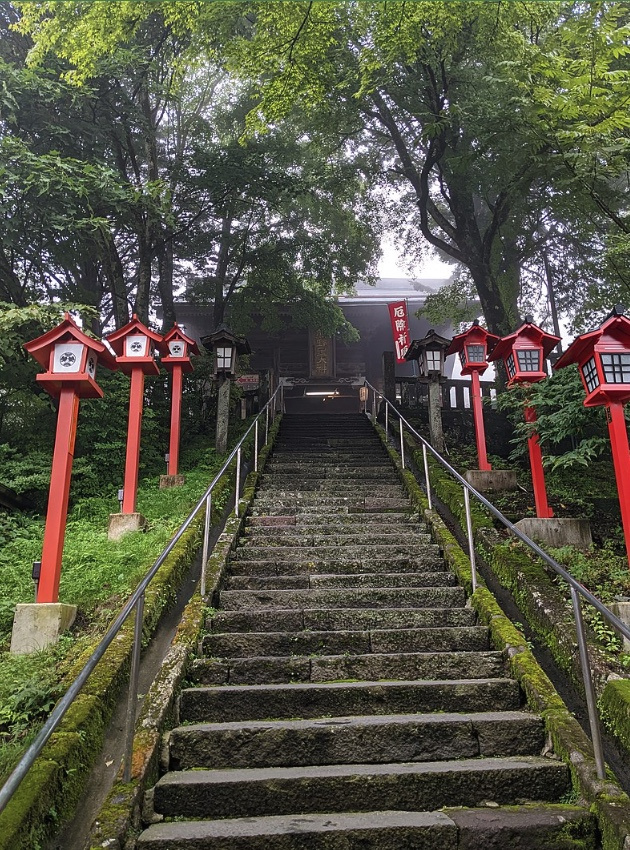
The Shrine itself is unique in that it literally straddles a prefectural line. Half is on the Nagano side (called Kumanokotai/熊野皇大) and half on the Gunma side (called Kumano Jinja/熊野神社). When you walk up the stairs, if you go straight down the middle, one foot will be in Nagano, the other in Gunma. The plaque embedded in the ground was covered in snow and I couldn't find it to take a photo.
Here's a less snow-covered photo of the steps.
Kumanokotai stands at 1,200 meters above sea level at the top of the Usui Pass and had been designated a Tokubetsu Jinja/Special Shrine, one of only four in Japan, by the Association of Shinto Shrines. (I couldn't find any more information about the other three.)
By the way, the Kumanokotai website is adorably retro.
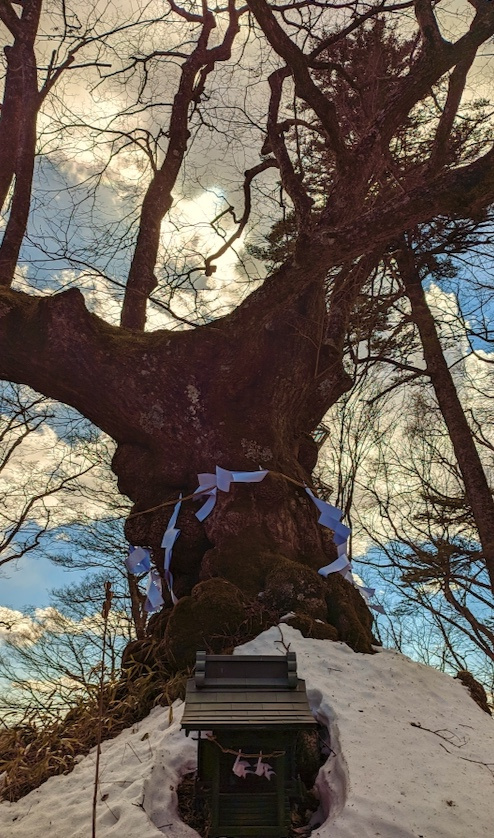
On the grounds (atop the stairs and behind the visitors' center on the left-hand side) stands a tree that is over a thousand years old. It's called the Shina no Ki. That's a lime tree, evidently, and it has heart-shaped leaves, but no mention of limes. It's also a power spot.
Here's the old fellow.
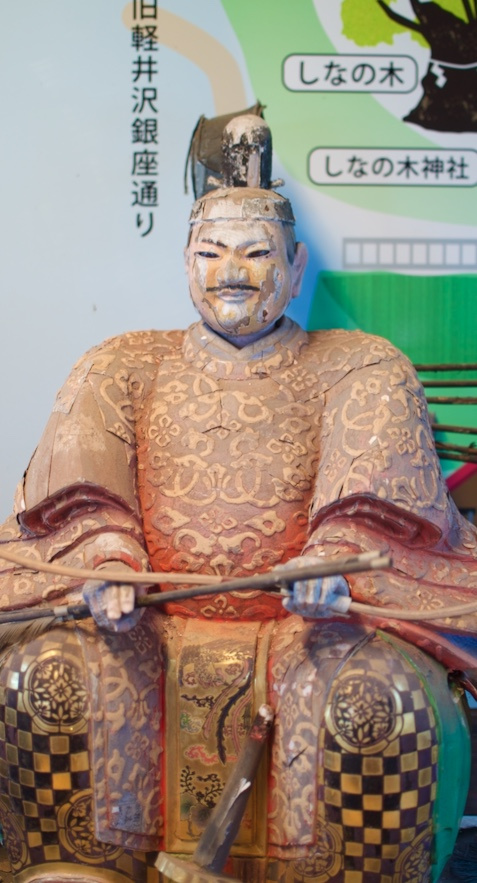
The story behind the shrine itself is neat, as well. It seems it was mentioned in both the Nihon Shoki and the Kojiki. Dating back 1900 years ago, Yamato Takeru no Mikoto...(see the handsome lad below)...
...was climbing the ridge along the Usui Pass when a fog rolled in and became so thick he couldn't see anything. Along came a Yatagarasu who guided him by dropping leaves to follow. Which he did and made it all the way to the top of the mountain.
The prince then gazed out from the summit and saw the distant sea. This reminded him of his dear wife (Oto Tachibana) and how she had thrown herself into the ocean to calm the rough seas at Sagami-Nada. He cried out: Alas! My wife!
For some time the mountain was called "Nageki Aru Yama" or Mountain of Grief.
Over the years the pronunciation changed to "Nagakura Yama." To this day you'll find many places in Karuizawa named Nagakura. You'll also find places named "Kirizumi" (thick fog) and "Agatsuma" (my wife) and "Tsumagoi" (Love of Wife).
In gratitude, Prince Yamato Takeru built the shrine (three actually).
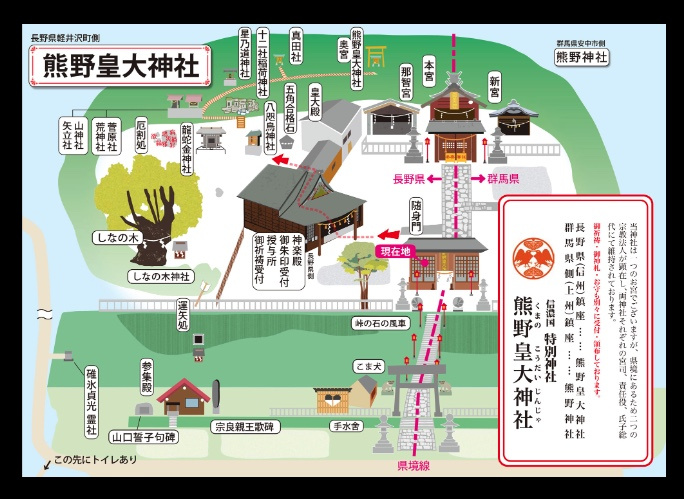
Here's a map of the grounds. The dotted line showing the prefectural boundary.
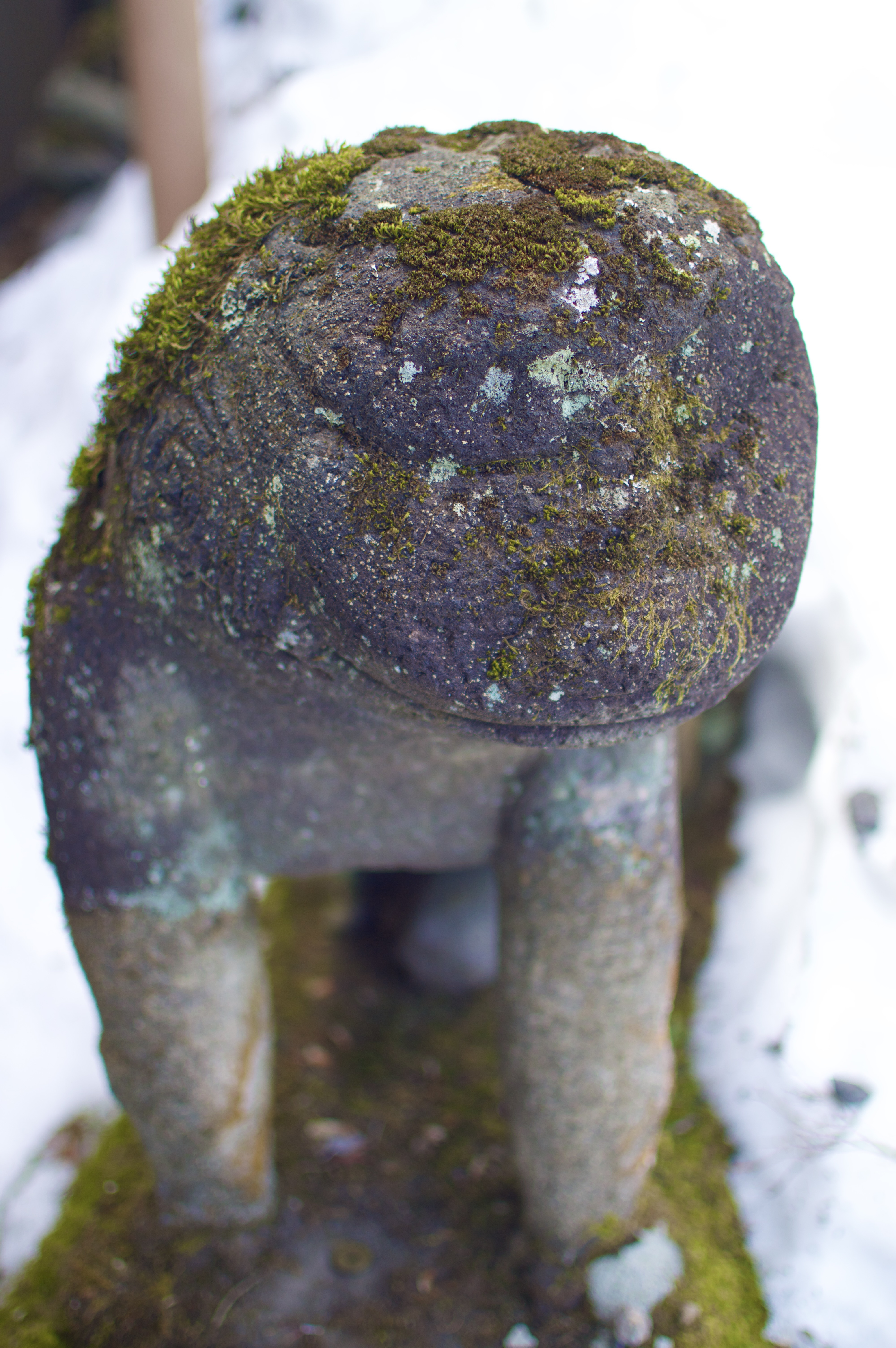
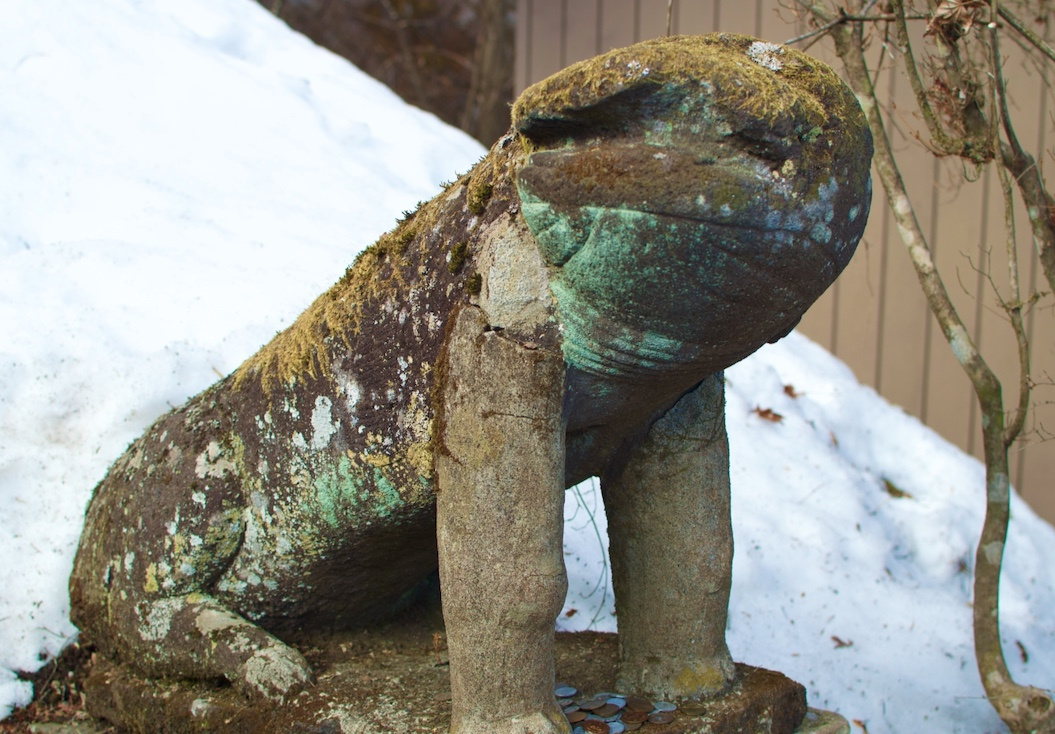
Another unique thing about the shrine(s) are the komainu or guardian dogs on either side of the steps. These were made during the Muramachi Era and are the oldest in all of Nagano. Adorable in their fierce froggy likeness.
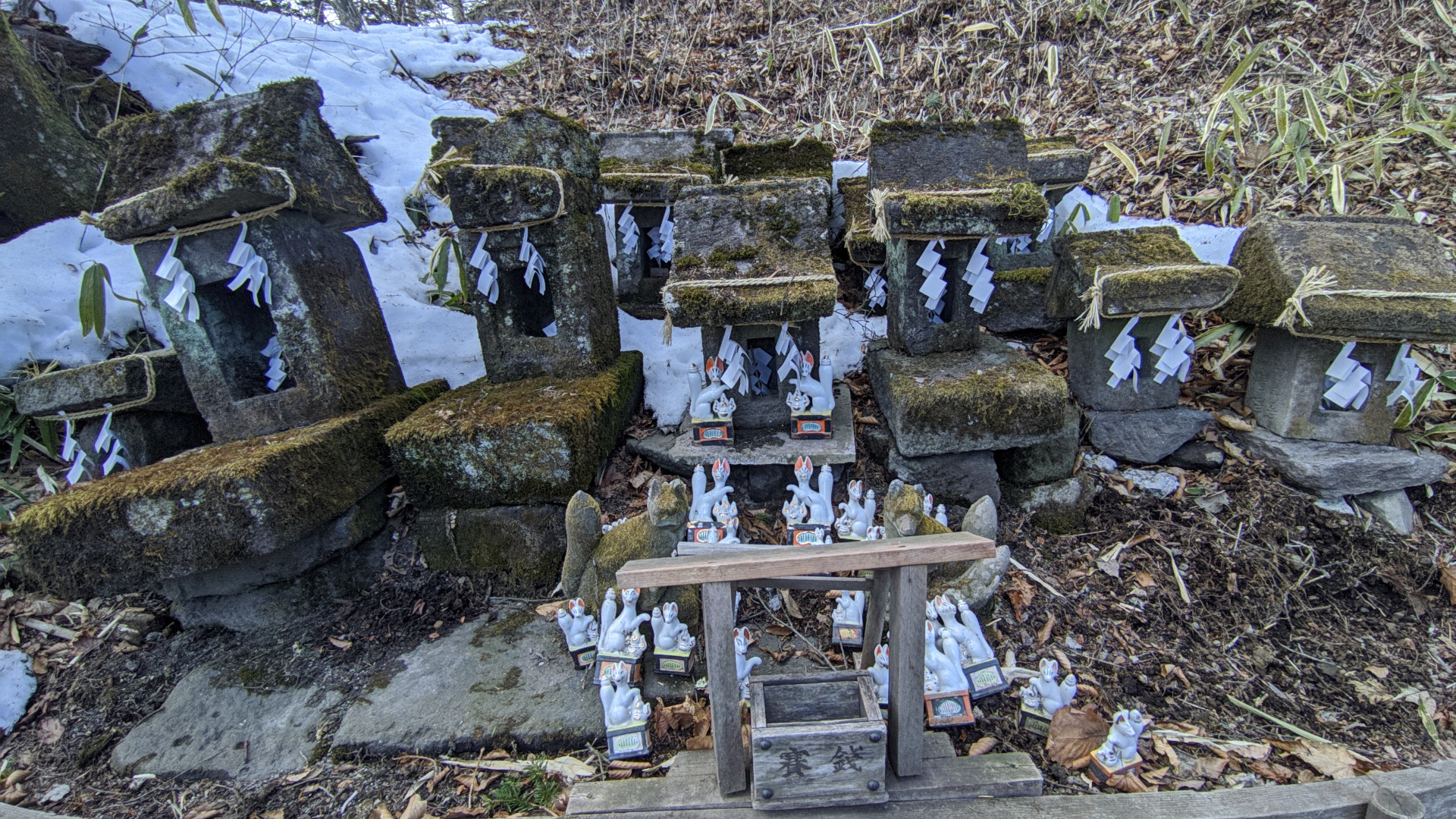
There are a handful of other smaller shrines behind the main one.
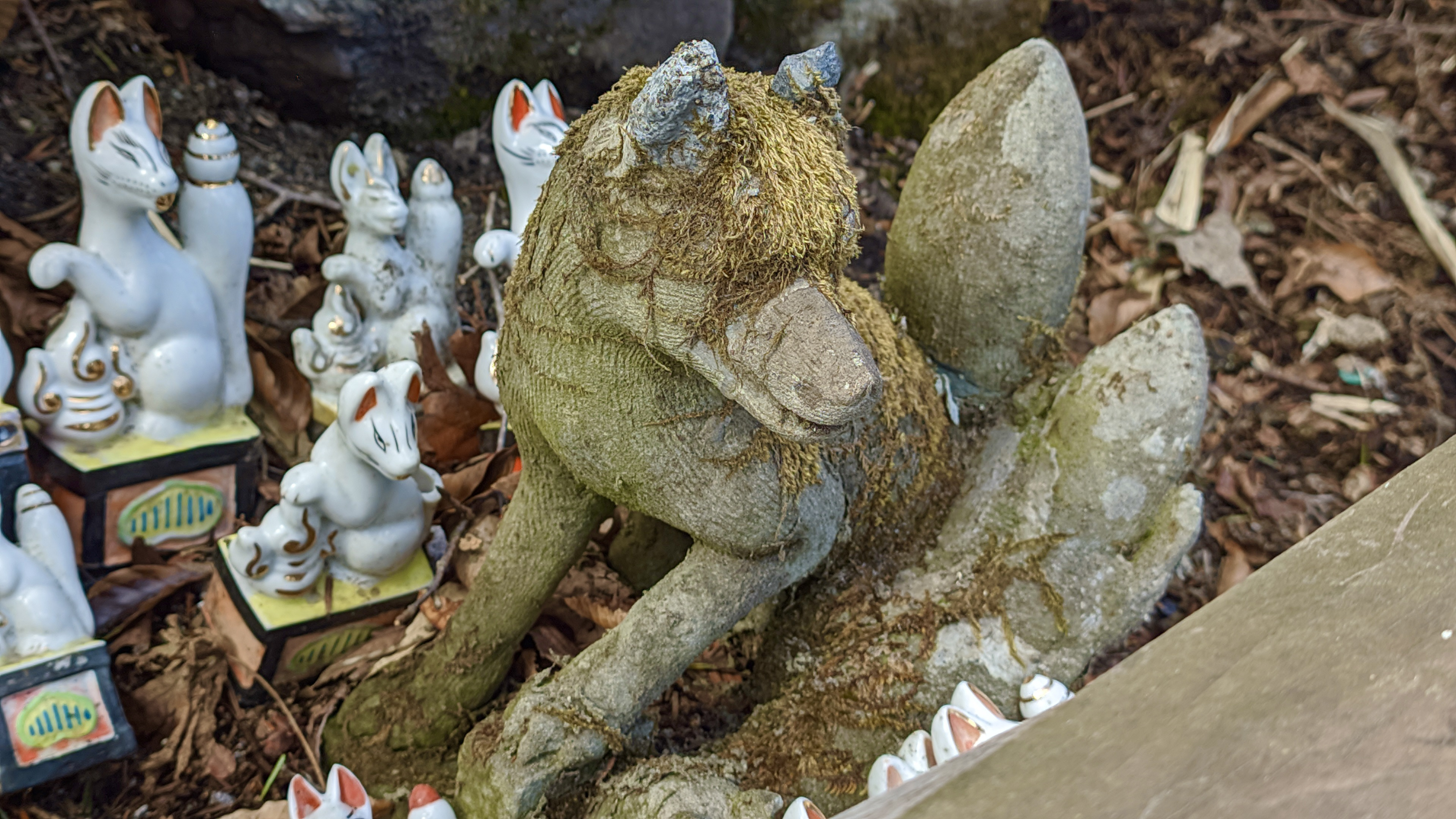
This small kitsune one was delightful.
There was even a shrine for toy matchbox cars. For some reason I can't get that ONE photo to upload here.
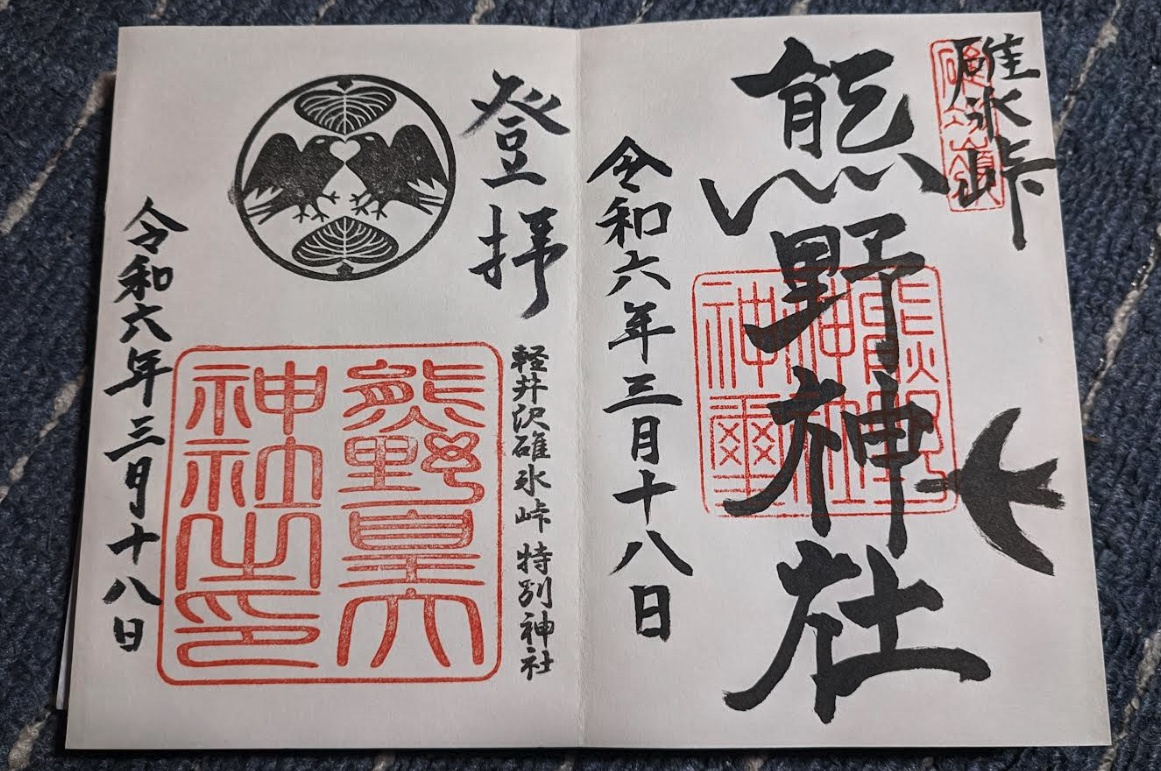
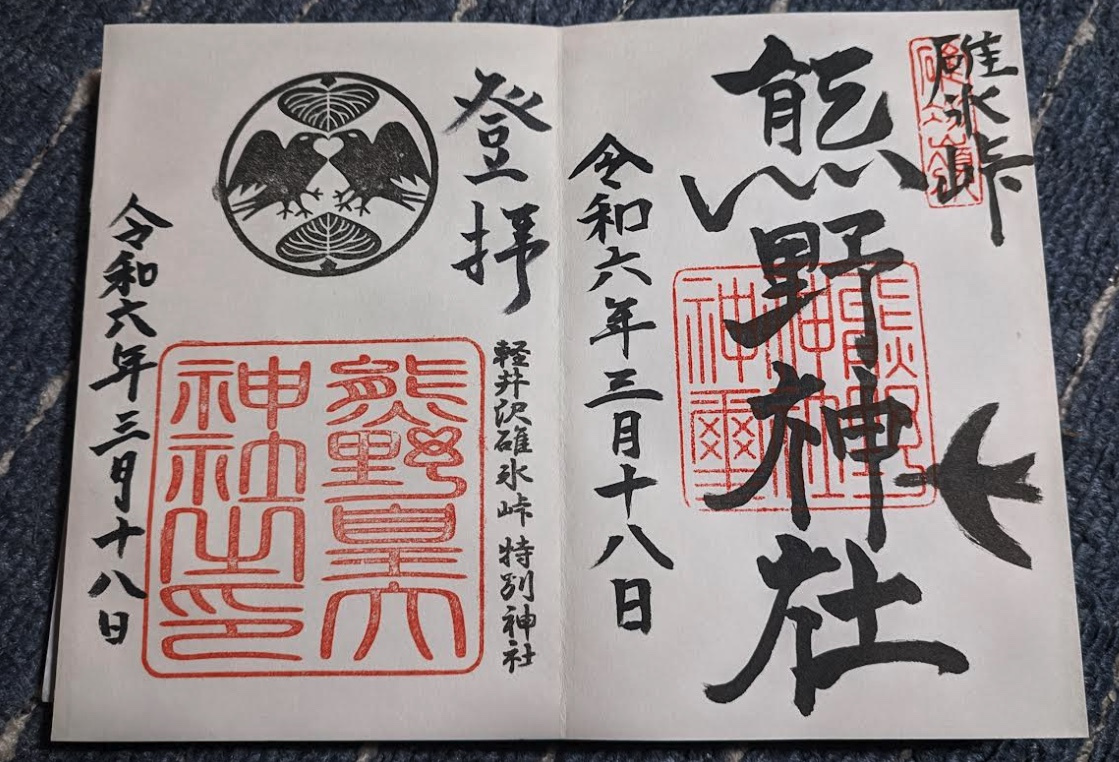
Now when you get the shrine stamps, you can get one from each prefecture. At the top of the stairs, turn right to get the Gunma stamp and left to get the Nagano one. Below the right onbe is Gunma and left is Nagano (Karuizawa).
The Nagano side was a bigger building and is much more hopping. They were doing dog blessings while we were there. I guess they dip the pup's paws into ink and stamp them, then prayers. They were going on in a little side area I couldn't see into. The small chihuahuas were okay, but it sounded like the Shiba inu was about to take off the poor shrine attendant's hand. #yikes
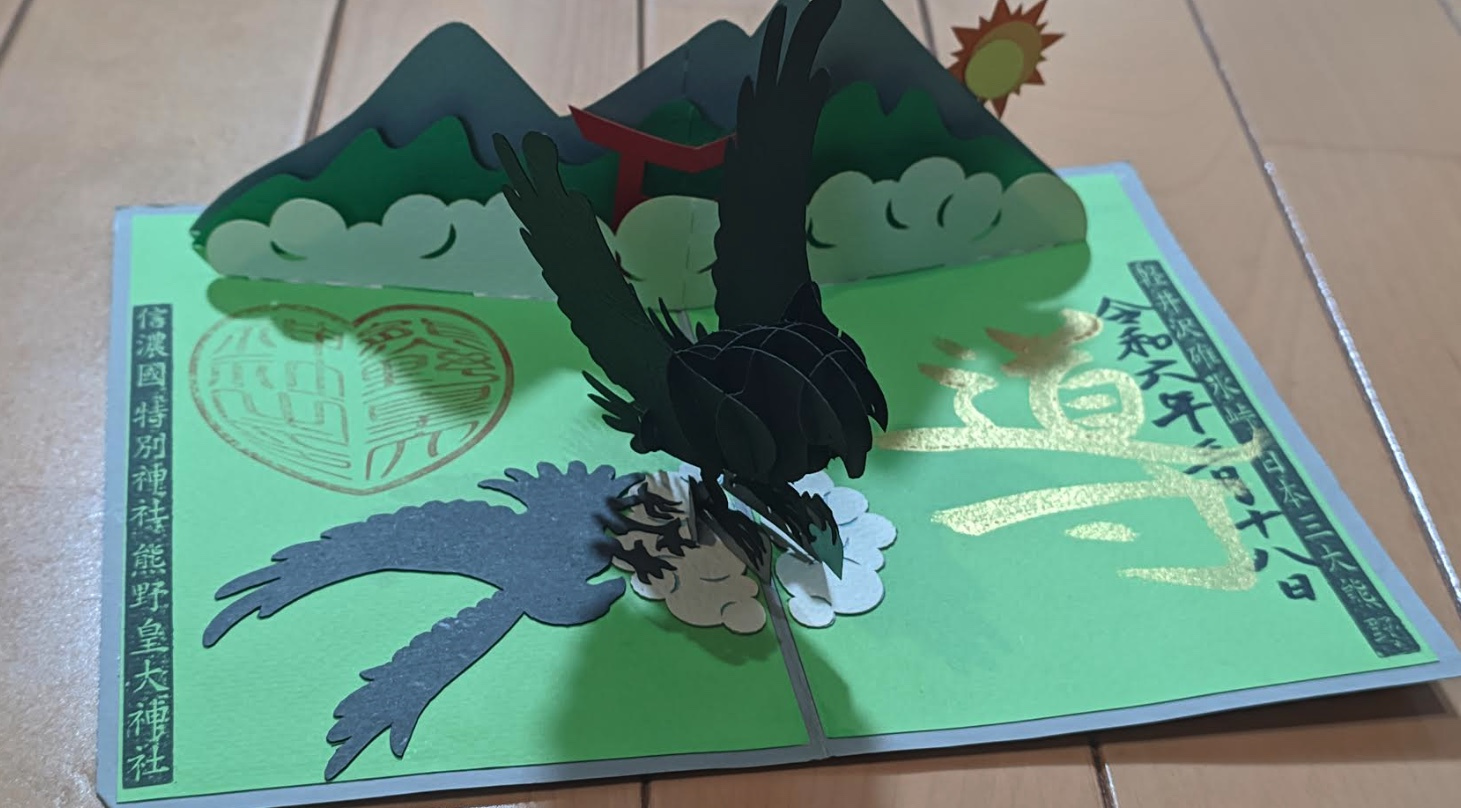
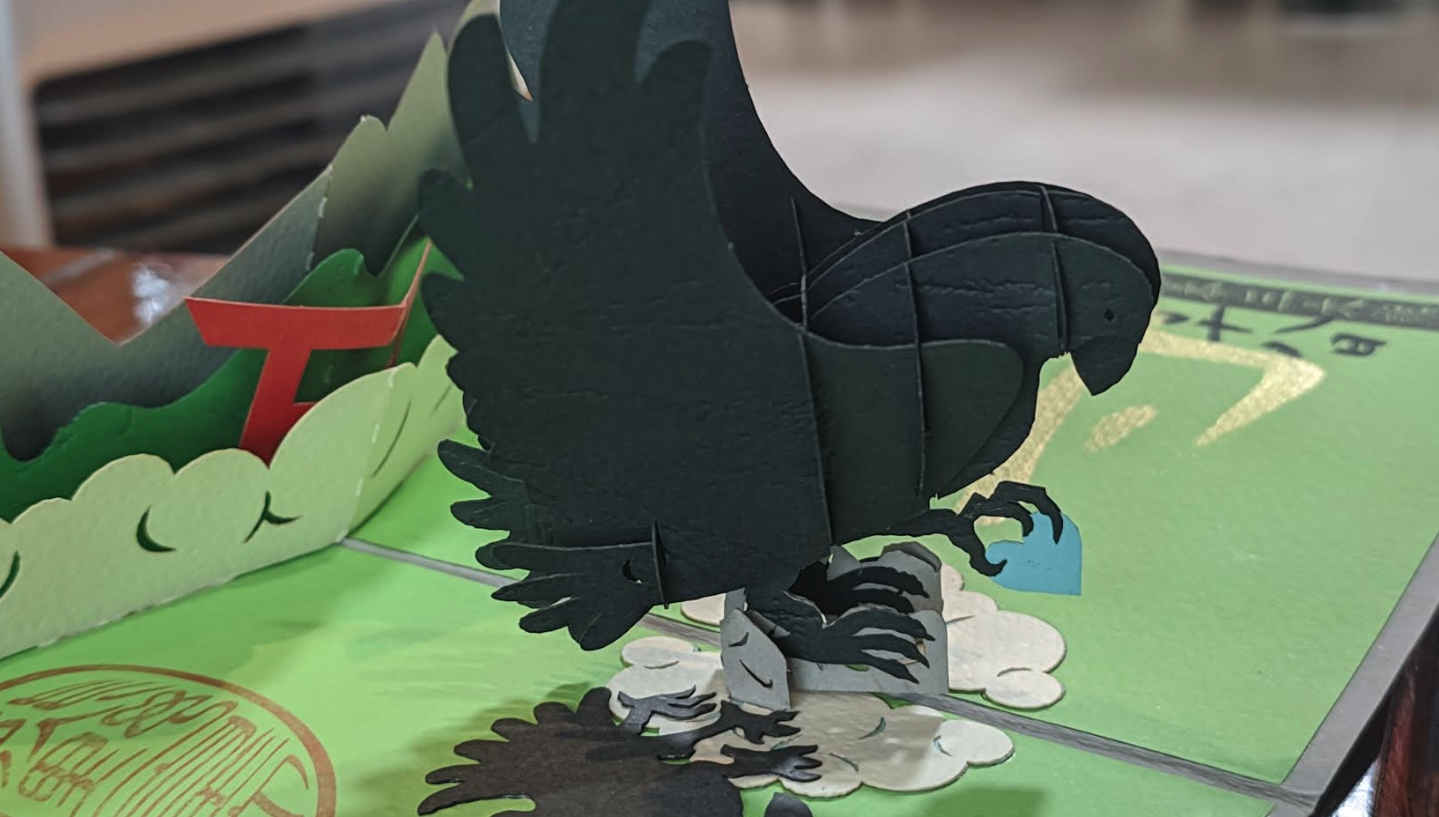
They also had an extra shrine goshuin which I read somewhere they only make thirty available every day. It's a popup! Yes, I'm a child. I got one!
Notice the Yatagarasu is holding a heart in its claws, echoing the leaf-shape of the ancient tree. #sweet
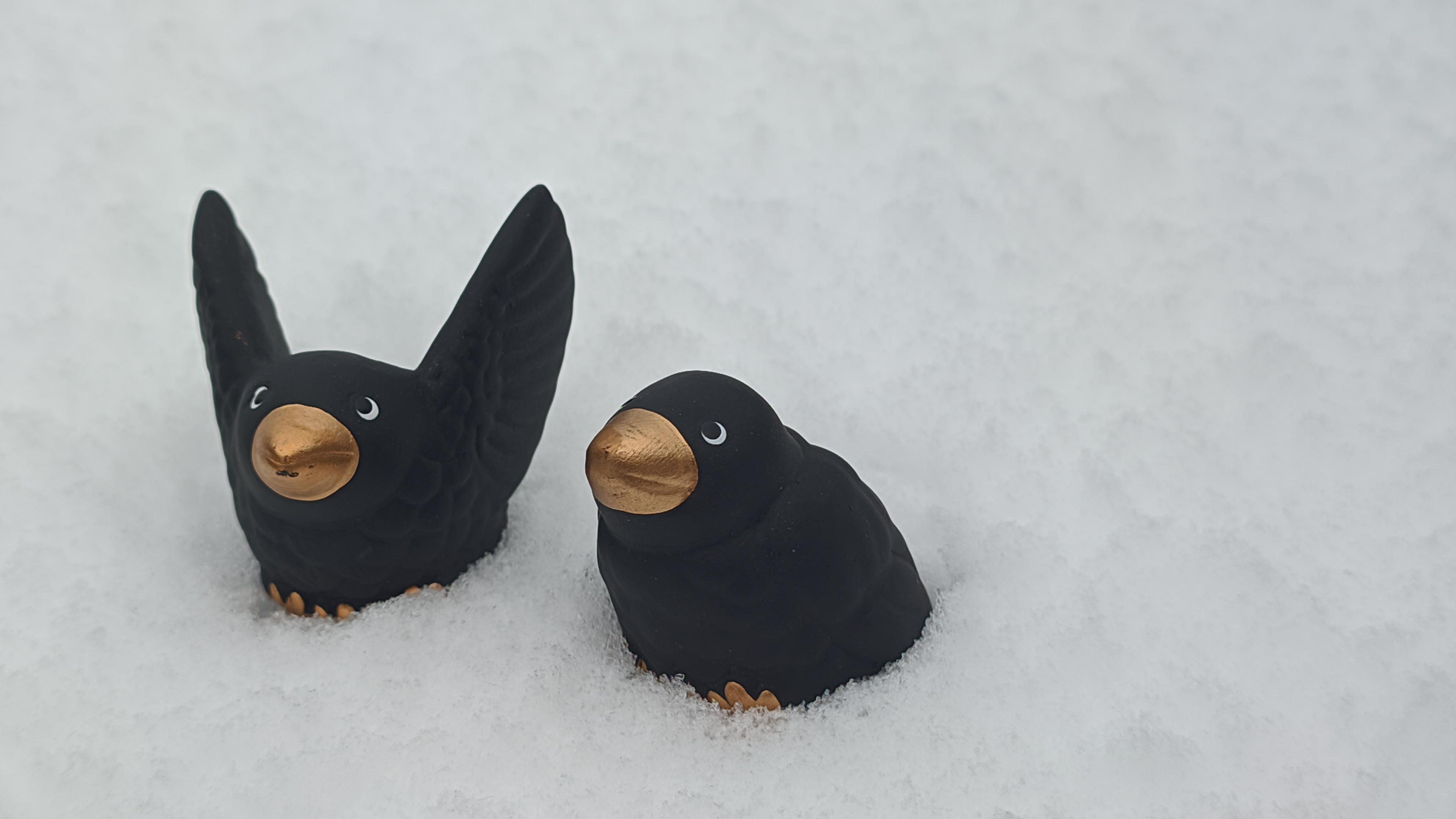
Another little good luck talisman they sold were these two ceramic crows. Richard was funny. He went ahead of me while I waited for the goshuins to be written, then comes running back with one in each hand. "Which do you like?" When I couldn't decided immediately he goes, "Wait, you have two crows. Okay, one of each!"
So my new friends.
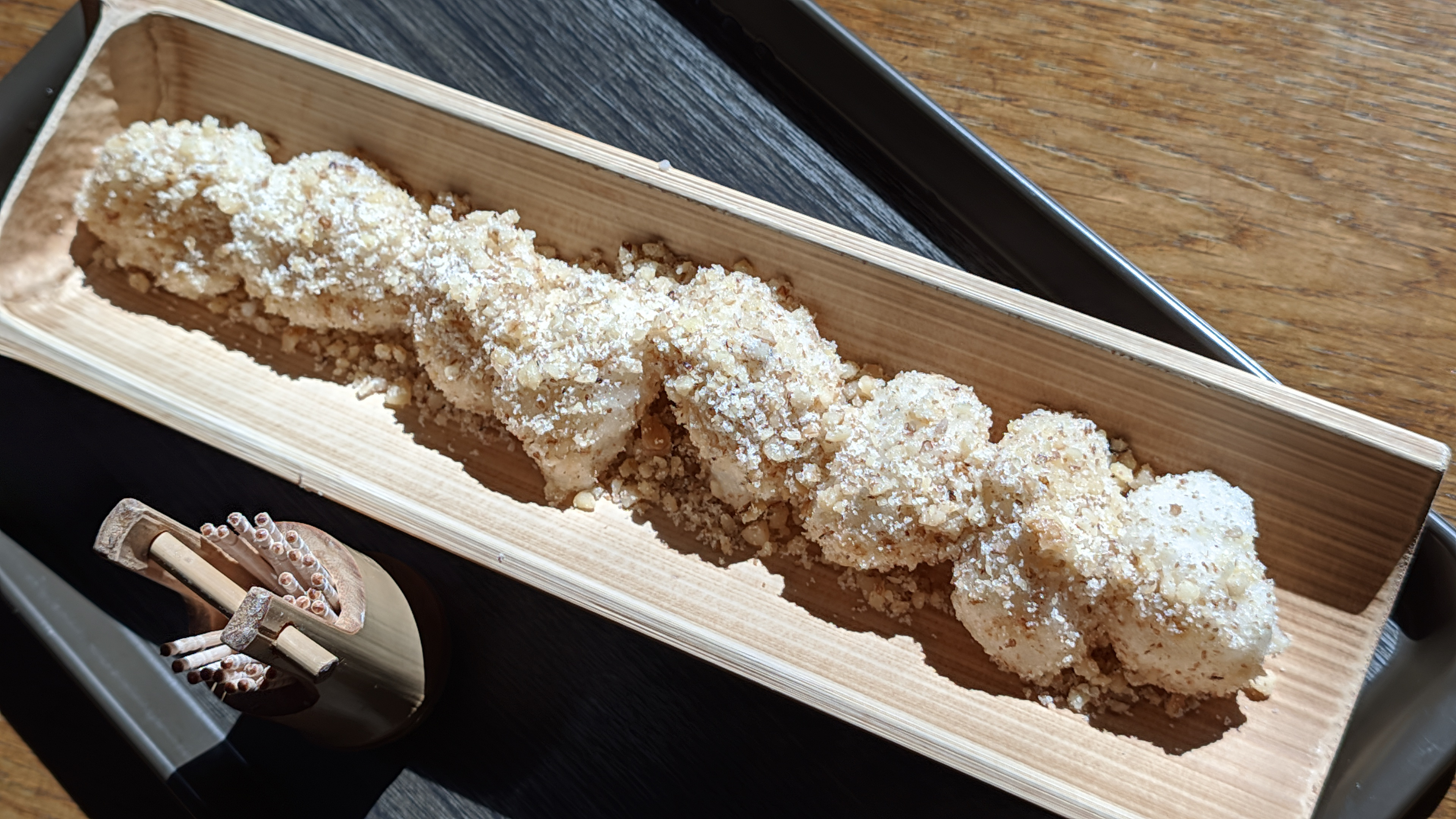
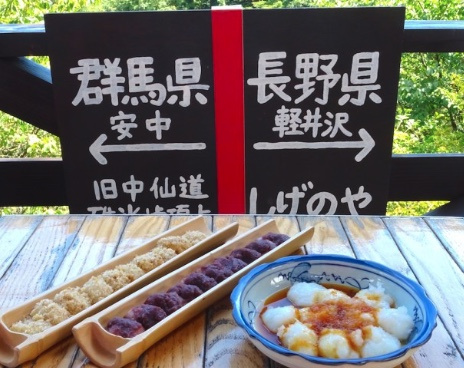
Once you're done with visiting the shrine, you can go across the street to have some chikara mochi. A hilarious play on words, "chikara" means "strength" and "mochi" means "to have". So if someone is "chikaramochi" it means they are very strong. But here the pun is "strength" and "mochi" referring to the food mochi. So Strength Mochi. Mochi that gives you strength. They are famous and most people stop to get them. The old cafe overlooks a gorgeous ravine, but it was under repair so we couldn't sit out there. Plus, cold.
We had just eaten, so I got the walnut version. Soooo delicious.
But this is what I wanted to get. Sweet adzuki bean and soy sauce, too.
Yum!
Okay, this got long! But I wanted to end with something I just randomly found after we got back. I thought it was really interesting.
An artist named David Stanley Hewitt did a painting for the ceiling of Kumanokotai Shrine. He talks about it on his website and there's a lovely and dramatic video, too.
https://hewett.jp/2021/07/kumanokotai-shrine/
Thank you all so much! The publicist at Simon and Schuster told me the book is selling better than what they usually consider really good for a non fiction title. It's all thanks to you 🙏
XO, ╰(*´︶`*)╯♡
t
Files