Home

 Creators
 Search
 Recent
 Random
 Posts
 DMs
 Tags
 Random
 Importer
 Import
 FAQ
 Account
 Register
 Login
 Favorites
 Keys
 Logout
 Telegram

Some Interesting Oni Content: Hide Those Horns! (Patreon)
Content
A couple (I think) fascinating bits of oni/鬼 trivia that I wanted to share. The first I mentioned over on the Discord server, but thought it might be interesting enough for a post here, too.
1. The Heart Sutra - The Heart Sutra is one of Mahayana Buddhism's more popular sutras. It's very short and memorizable and chanted a lot. I've heard it hundreds of times throughout the years (mostly funerals). The full title is "The Heart of Perfect Wisdom". In Japanese it is Hannya Shingyo / 般若心経.
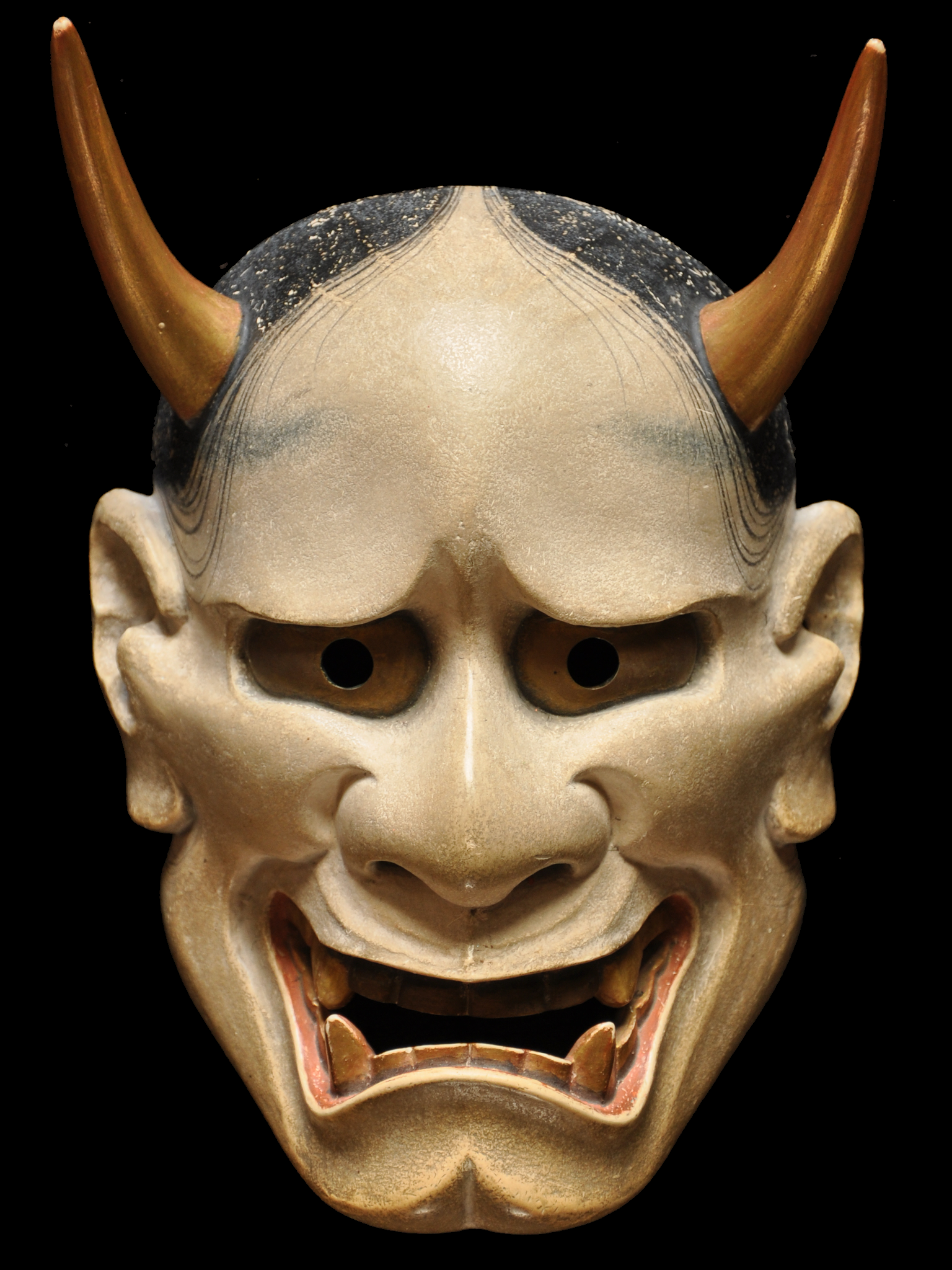
I mentioned I've heard it a lot. Well, there was always one word that stood out and I meant to look up and I finally did. That word is hannya / 般若. In the case of the sutra it is the transliteration of the Sanskrit word prajna or panna becomes hannya and it means wisdom or the ability to know the truth. What has always been very curious to me is that the same word, same characters, too, hannya / 般若 mean this:
A hannya mask is a Noh mask representing a jealous female demon/oni.
So why have an oni attached to the Buddha's teachings?
A near as I can figure, the word prajna became hannya in China and meant great wisdom. The characters stayed the same as the sutra moved from China to Japan. So that's the original meaning. Why it's used for the jealous demon mask is one of two reasons:
1. The artist monk who carved and created the mask was named Hannya-bo. So they named it after him.
Or
2. The mask and its character is so incredible well done that it certainly took a lot of WISDOM to make it. Hence, Hannya.
I've always found that such a strange juxtaposition in words, Hannya Shingyo.
2. Hiding the Horns - Another term I've been in morbid love with since I first heard it is the word for this wedding head garment:
It's called tsuno kakushi / 角隠し or horn hiding, hiding horns. In Shinto wedding ceremonies it's worn and it symbolizes hiding the brides horns of jealousy and selfishness. From now on she'll be demure and all that. *ahem*
3. Angry gesture - And speaking of horns. When you want to show your angry in Japan without saying it, there's this gesture that I like a lot.
I mean you don't have to make the goofy face, but I've always found the gesture incredibly useful. Especially if your in a situation where you want to get across that someone is angry, but you don't necessarily want to talk about it. So it's used to refer to someone else.
For example, you're with friends and they ask, "Hey, we had a late night last night at the karaoke bar, huh. What did your wife say?" You can just make this sign and they totally get that she turned into an oni and got angry and you really don't want to talk about it.
Another useful way to use it is when you're in a situation you can't talk, the person who is angry is nearby.
Say you're on a playdate with some friends and their children at the park. You show up and your son/daughter is a little out of sorts, acting mopey or something. You friends might just make eye contact with you like (What's up?) and you (without your child seeing you) make this gesture and they know Aha! Something happened. The kid's angry. Won't talk about it but maybe give him/her a piece of candy or something.
Hey, what did your mom say when she saw your report card?
*makes oni horn gesture*
XO,
terrie
Files