 Home

 Creators
 Search
 Recent
 Missing
 Random
 Posts
 DMs
 Tags
 Random
 Importer
 Import
 FAQ
 Account
 Register
 Login
 Favorites
 Keys
 Logout
 Telegram

New Script (video coming v soon, see description) #2! The Most Abused Term in Videogame Criticism...? A Response to SolePorpoise (Patreon)
Content
Hello everyone... again!
This is the second of two scripts being posted for the end of the month so you have something to go on while I finish off the videos. Full breakdown of the situation here but in short, I was working like crazy to try and get a bunch of projects finished, got COVID, and needed to listen to my body screaming at me to slow down for a bit. I'm incredibly sorry for the delay but the videos will be with you in the next couple of days. As has been the case before, I'm charging for the scripts right now, but rest assured you will not be charged again once I post the finished videos. I really hope you can understand.
Anyway, this one is something a little bit different and I'm a bit nervous about it! A few years back, a creator whose videos I really love (SolePorpoise) put out a video I also really love (The Most Abused Term in Videogame Criticism) about the term "ludonarrative dissonance." SolePorpoise laments the lack of critical rigour that has seen those in our field, through a weird game of Telephone, drift further and further from the original, highly specific definition of the term as coined by game designer Clint Hocking back in 2007. I have thought about this video for four years. I genuinely love it, even if I have my issues with it—the expression of which is the purpose of this piece. Essentially where Porpoise sees a critical failing, I see language functioning as language is going to function.
I want to reiterate that SolePorpoise is truly one of my favourite creators and I see this piece not as some sick takedown or whatever the heck, but rather a means of engaging with and interrogating criticism I find really intriguing. The video stuck with me all this time! That says a helluva lot!
I'll be keeping the final video patron exclusive (although I'll probably send Porpoise a link) as I like the idea of keeping this to a fairly limited enthusiast audience rather than broadcasting it to the internet at large (as I go into at the end). Anyway, I sincerely hope you enjoy it and the final vid will be with you in a few days!
---
I don’t really watch that many “video essays” anymore. I’ve been doing this for seven years now, and so when I’m scrolling through YouTube I’m much more likely to watch something funny, something to do with cooking, or guitar amp reviews. All of this to say that, when a video essay does stick with me, personally it says a lot.
Never has this been more true than it is for SolePorpoise’s 2018 piece entitled “The Most Abused Term in Videogame Criticism”. I love SolePorpoise’s videos (who, for the sake of brevity I will be abbreviating to Porp, in a move that I sincerely hope conveys no disrespect). He’s been doing this whole “literary analysis as applied to video games” thing even longer than I have, and his series Oh The Humanities makes for some of the best watching on the platform if you’re into that kind of thing.
But this one video has stuck with me quite unlike anything else in his already impressive catalogue. It’s truly burrowed into my brain. As it turns out, the titular “most abused term” is “ludonarrative dissonance”, and the video sees Porp lament the lack of critical rigour that has seen those in our field, through a weird game of Telephone, drift further and further from the original, highly specific definition of the term as coined by game designer Clint Hocking back in 2007.
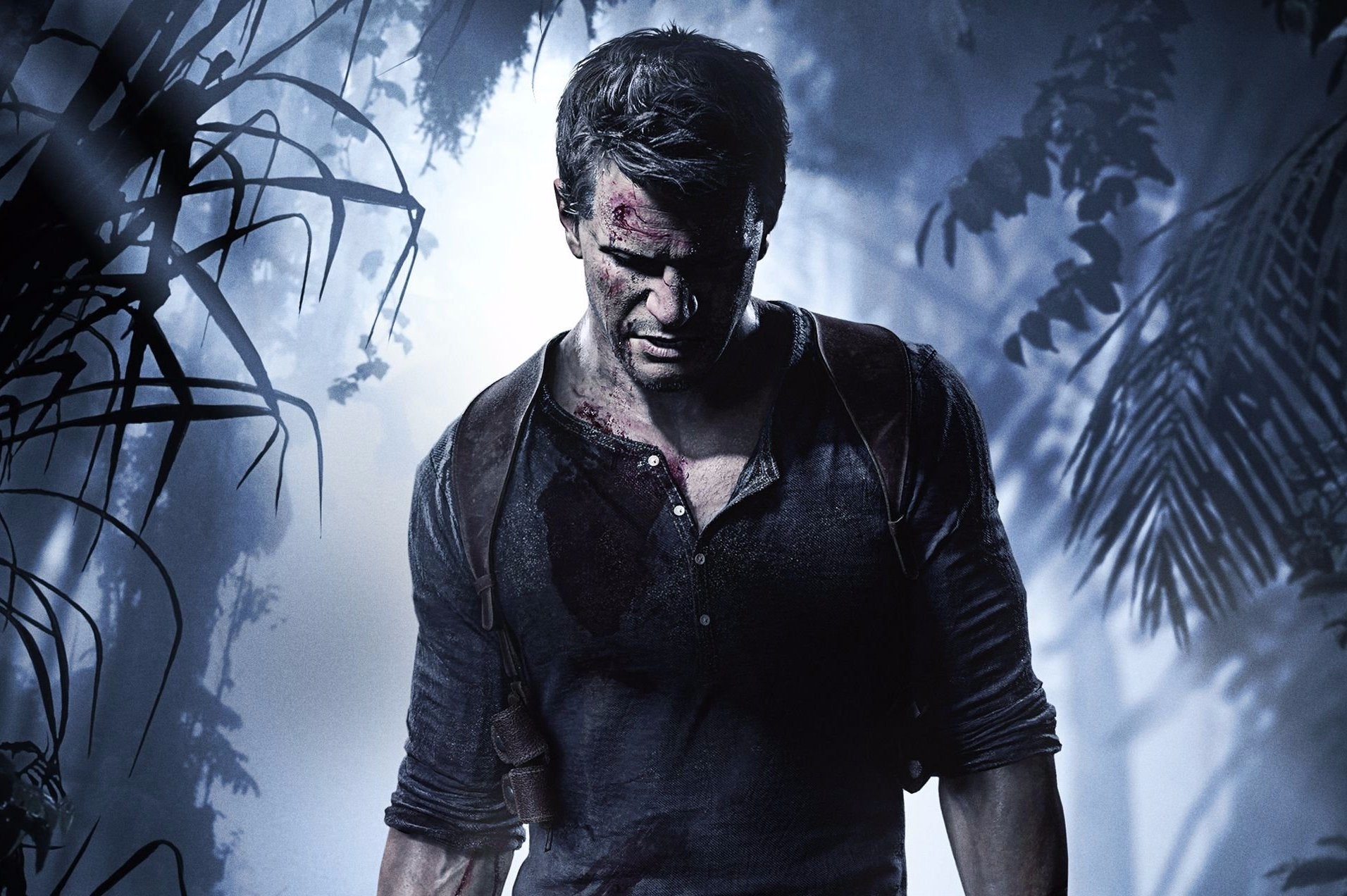
What was once a term used to describe a kind of thematic betrayal on the part of a game – where the mechanics of harvesting the Little Sisters in Bioshock allowed Hocking to fully feel the objectivist philosophy that forms its thematic core, before the ending demands that you help Atlas; forcing you into gameplay that, in Hocking’s eyes, narratively rejects that ruthless individualism – we now have people saying that the quintessential example of the term is found in Uncharted, merely because Nathan Drake is portrayed as likeable in cutscenes, but he kills people.
Essentially, the term as it was originally envisioned describes a dissonance within the ludic narrative (the gameplay reneges on a thematic contract it initially set up with a player) – now, critics use it to describe a difference between the “ludic” (gameplay) and the “narrative” (cutscenes). Because Uncharted’s themes have nothing to do with the toll that violence takes on a person, Porp argues, this is not ludonarrative dissonance as defined by Hocking, and we as critics are failing in our duties by not respecting that specificity.
Since its release four years ago, I haven’t really been able to stop thinking about this video.
It really is fantastic – the argument is well constructed, the examples are thoroughly examined, Porp has a very soothing voice for this kind of thing. It’s the kind of video that intimidates me. It plays to my still very prevalent impostor syndrome I feel as a “critic” of some description – it makes me wonder if I have unwittingly played into this game of critical telephone myself, and makes me vigilant to avoid contributing to it further in the future.
And on the other hand, it’s a video I can’t help but disagree with as passionately as I understand its frustrations. In short, what Porp deems a failure of the critical sphere to hold itself to any kind of rigour or discipline, I would just call the meaning of a term evolving through use to something more immediately functional. Further, what misgivings I have about Porp’s video can be summed up in one segment in particular—hell, one word, because it sees Porp fall foul of the same kind of linguistic stumbling block his video takes aim at.
At about the halfway point in his video, Porp begins to discuss Brothers: A Tale of Two Sons. My personal thoughts as to why that game is narratively broken aside (other people see a heart wrenching tale being told through the dual control setup, whereas I see a game whose core challenges are so cemented in whether or not you can focus enough to stop each character running into a wall, that the game is either insinuating they literally share one brain or that they’re individually catastrophically stupid), Porp’s praise of this game stems from the idea that it is the opposite of ludonarrative dissonance. Again, I am in the minority in my view on the game, and I can see where he's coming from in defining it as opposite. My problem comes with the specific terminology he uses – describing it as an example of “the arch enemy of ludonarrative dissonance – ludonarrative harmony.”
That’s it. That’s where the entirety of my discomfort with this video lies. That one word – “harmony.”
I get it, the word evokes flow, ease, tranquillity—it stands in stark contrast to the rough, jagged nature of dissonance. But technically, this is the incorrect usage of the term. Ironically, in a video about the importance of linguistic specificity, my guy has just unwittingly done a phrasing oopsie.
See, the musician in me feels my ears perk up whenever I hear that phrase used in this way (and to be clear, Porp is far from the only person to have committed this Clearly, Truly Irredeemable Sin). Simply put, in musical terms, dissonance does not negate harmony.
In fact, dissonance is a type of harmony – not a pretty one in the traditional Western sense (which is itself to be taken with an extremely coarse grain of salt), but it’s harmony nonetheless. Harmony as a term merely marks that a relationship exists between two notes – dissonance defines the quality of that relationship. Not all harmony is dissonant, but all dissonance is harmony, if you get my drift.
And so technically, the correct terminology for the opposite of ludonarrative dissonance, I suppose, would be “ludonarrative consonance”. Consonance is the opposite of dissonance, not harmony. Check fucking mate, Porp. You’ve been fucking rumbled, you hack, you fraud, you. You used the wrong word in a several-years-old video! Maybe I should make a video entitled “The Second Most Abused Term in Videogame Criticism”!
Of course I’m kidding – as I will continue to emphasise, I love Porp’s videos. I love this video! My point is just that, well, even if the use of musical terms for this kinda thing is murky, I get what he means. I would have to be petty to pretend I don’t, as if the misuse of this one term caused such deep confusion as to deem the other 27 minutes of the video worthless. Just as, I would argue, I get what other people mean when they use the term “ludonarrative dissonance”, even if such use doesn’t quite line up with Hocking’s highly specific definition of the term.
Does simply saying “Nathan Drake is portrayed as likeable even though he kills a lot of people” fulfil that specificity? Clearly, it doesn’t – as Porp states, Uncharted isn’t a game about the psychological strains of inflicting violence, and given how fun, how swashbuckling Uncharted’s combat is meant to be, having Nathan feel bad about murdering people in cutscenes would arguably create ludonarrative dissonance rather than solve it. If Nathan Drake… I dunno, suffered from fucking PTSD as some weirdos actually suggested, then the game being fun would be a betrayal of that theme.
But… does that mean that the more immediate disconnect between gameplay and the story told through cutscenes (that, while different to a thematic disconnect, Porp does indeed acknowledge) isn’t worth exploring in its own right? When someone tries to communicate that the narrative you feel through gameplay is fundamentally separate to the story presented in cutscenes, and they use the term “ludonarrative dissonance” to do so, what’s the more interesting thing to consider—the disconnect in-game, or the perhaps clumsy use of a shorthand to describe said disconnect? I would argue it’s the former.
See, just because Clint Hocking came up with a term does not mean that said term is sacrosanct. I mean, Clint Hocking also made Watch Dogs Legion – one of the most thematically nonsensical games I’ve ever played. In fact, I would go as far as to argue that, in its “Play as Anyone” mechanic’s utterly dystopian means of fighting dystopia (encouraging player freedom/starting a “people’s revolution” by removing recruits of their individuality in exactly the same way as the corporations/government trying to implement literal mind control), it might unintentionally be one of the keenest examples of actual ludonarrative dissonance I have ever experienced in a game. Why do I give a shit what its director’s definition of the term is?
(Again, to be clear, I actually do respect Hocking and, to a certain extent, I do give a shit about his definition – I’m just pointing out that there’s really no reason for me why his highly specific definition should be given much more weight than the shorthand that has been established through the term’s general use in the years since.)
Is there not a single issue to be found with a video game character being portrayed as jovial and quippy while also having the gameplay-sanctioned blood of hundreds upon hundreds of people on his hands? Just because the gameplay doesn’t have you thematically explore that—just because this clash might not be specifically ludonarrative in nature as Hocking envisioned his own term—doesn’t make that clash, that… shall we say, dissonance, less interesting to navigate critically.
Funnily enough, it might be more accurate to describe the Nathan Drake debacle as a case of “narrative disharmony” – the outright absence of harmony between gameplay and cutscene narrative. There we go, that’s the new term sorted (obviously I’m having a bit of a laugh here, I think YouTubers coining new terminology is rightfully treated with a whole heck-of-a-lot of scepticism, but is this really that much different than what Hocking did?).
Does this disharmony or dissonance ruin games? As I argued in my video on GTAV (which you could argue whether or not that was the correct use of the term “ludonarrative dissonance”), nah. But if we are doing our job as critics (as Porp’s video so requests), then these kinds of disconnects are surely worthy of some kind of further examination – a fact that I believe Porp’s video largely dismisses, purely because the (admittedly clumsy) examples he highlights of writers using Hocking’s term to describe said disconnect don’t line up with that original meaning.
I do appreciate the argument that as writers, as critics, it is at least partly our job to be specific with our language, to respect specificity. But as much as the argument I’m about to make sometimes gets used to justify some really silly shit by morons on Twitter, the fact is that language really is in flux – definitions shift with use and are affected by any number of personal biases.
I mean, hell, even the argument I made regarding dissonance and harmony in music is, as much as it pains me, debatable. Google “is dissonance harmony” and you’ll get answers ranging from “yes” to “no” to “well, it’s harmony, but the frequency relationship between the two notes causing said harmony is unstable”.
I’m willing to bet a lot of the people you’ll find saying “no” will come from far more traditional Western classical backgrounds, where dissonance is, at best, a tension-building stepping stone that gets you to the “correct” resolution of a chord progression. Dissonance isn’t Harmony, you heretic, it’s a necessary evil on the path to Harmony! Haven’t you heard of the tritone? Dissonance is where the devil slumbers!
But what about the countless other musics in the world where what Western traditionalists might think of as horrendously dissonant (simply because it doesn’t fit into their narrow view of the chromatic scale) forms a key part of that nation’s music? What about microtonal music? Hell, what if you’re like me and you happen to find a wholly unique beauty in music that says “fuck you” to “traditional” harmonic values and actually strives to sound noisy by deliberately picking the most dissonant, fucked up intervals between notes?
Suddenly, the term dissonance isn’t quite so specific in its connotations. It means different things to different people, and that’s fine. When you say “ludonarrative dissonance” as if it’s inherently a bad thing, that’s also fine. I get it. And as long as that’s the case, isn’t that specific enough? Isn’t that language serving its purpose?
I would argue that more people are readily able to define “ludonarrative dissonance” as the kind of gameplay/cutscene disconnect found in Uncharted than what I would argue is the far more esoteric use of the term to describe the director of Watch Dogs Legion getting absolutely raging because a game wouldn’t let him live out his deeply Randian fantasies to climax (again, k i d d i n g). And so, which is actually the more useful definition fifteen years on? What phenomenon is more common, and by extension, more commonly requires the usage of this terminological shorthand?
Ultimately, some guy made up a term in 2007 that just so happened to catch on in what are still pretty small circles. Even in my duty as a writer to respect specificity, that does not require me to take said guy’s definition as gospel, nor does it negate my other duties to communicate as vividly and efficiently as I can with my audience. If “ludonarrative dissonance” helps a critic do that, and people get it, then, well… that seems like language doing what language is going to do. As with the use of the word “harmony” before this, some may bristle at what may or may not be its misuse, but to me, there is little valour to be found in fighting that linguistic tide.
I want to close by reiterating that this is by no means intended as some kind of sick takedown. I love SolePorpoise’s work, I love the video on ludonarrative dissonance (the fact it’s been swimming around in my head for years says it all) and I am in no way saying that my opinion is somehow fact – form your own views on the matter. I’ve always liked the tradition of letter writing where critics or authors or artists or philosophers or whatever would do the ol’ back-and-forth with each other discussing where they agreed and disagreed with regarding each other’s work – never seeking to find the One Correct Answer or prove the other wrong, but just considering facets of an idea that may warrant further interrogation. For me, and I hope this comes across, I see this piece as an extension of that tradition. Go watch the video, go watch Porp’s other work and thank you all for indulging me in this daft intellectual exercise.
