Home

 Creators
 Search
 Recent
 Missing
 Random
 Posts
 DMs
 Tags
 Random
 Importer
 Import
 FAQ
 Account
 Register
 Login
 Favorites
 Keys
 Logout
 Telegram

Door III (1996, Kiyoshi Kurosawa) (Patreon)
Content
60/100
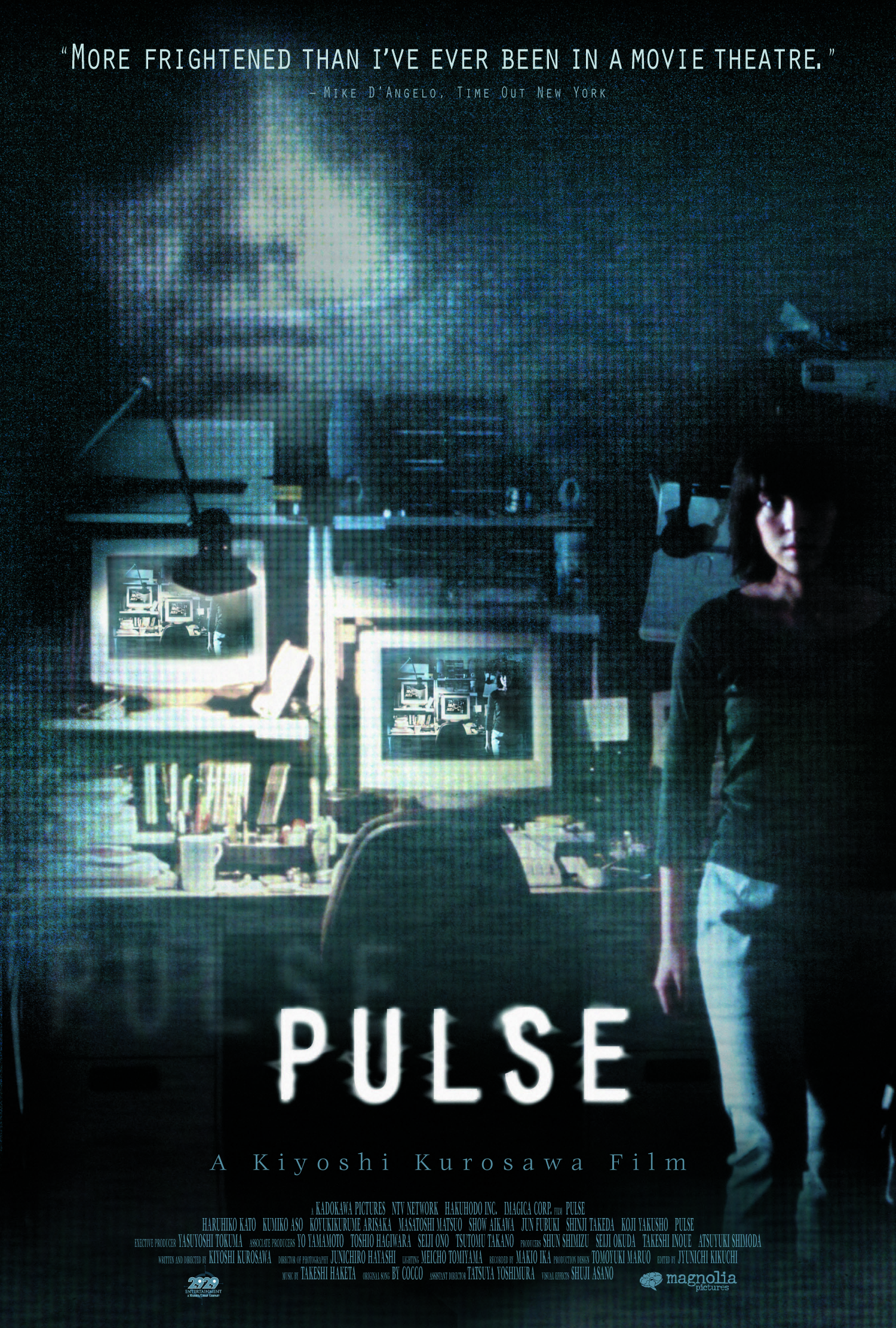
Imagine sitting down for the third installment of some undistinguished thriller "franchise" (the movies have virtually nothing in common, as far as I can tell, allowing me to skip the second one after being decidedly underwhelmed by the first) and getting...this. It's as if a barely-known David Lynch had been hired to write/direct Taken 3 and made Lost Highway. Not only is Door III a full-blown Kiyoshi Kurosawa film, but it's essentially a rough draft for Pulse, employing many of the same surpassingly creepy effects in a different context. Most notably, Pulse's famed "forbidden room" sequence (regarding which I'm blurbed on the U.S. poster) was baldly self-plagiarized by Kurosawa from this movie, right down to the woman's head slowly peering over the back of a couch behind which someone's hiding in terror. You've got people who appear threatening, or at least frighteningly "off," merely by virtue of standing impassively in the background, like robots that have been switched off; you've got barren rooms that are for no particular reason draped in sheets of plastic through which shadowy figures can be glimpsed; you've got psychically despondent characters abruptly committing gruesome suicide; etc. All of which is executed with far more finesse in Pulse (which clearly had a zillion times the budget) and other subsequent films, but seeing their embryonic form can't help but fascinate. Where Door III goes awry, oddly enough, is in its conceptual debt to a couple of early Cronenberg films—Kurosawa attempts to impose his own formal preoccupations onto a sex-parasite story with subtext about female workers being pressured to seduce clients, and that's just not a good fit (in part because the social critique's so flimsy that I'm not 100% confident it exists outside of my own head). Finale's kind of a mess, and while I don't mind Door III's ironic twist ending, Kurosawa ruins it by, yes, having someone look directly into the camera lens a split second before we cut to the end credits. Still, can't fathom anyone who saw this in '96 failing to recognize that a potentially major talent had arrived.
Files