Home

 Creators
 Search
 Recent
 Random
 Posts
 DMs
 Tags
 Random
 Importer
 Import
 FAQ
 Account
 Register
 Login
 Favorites
 Keys
 Logout
 Telegram

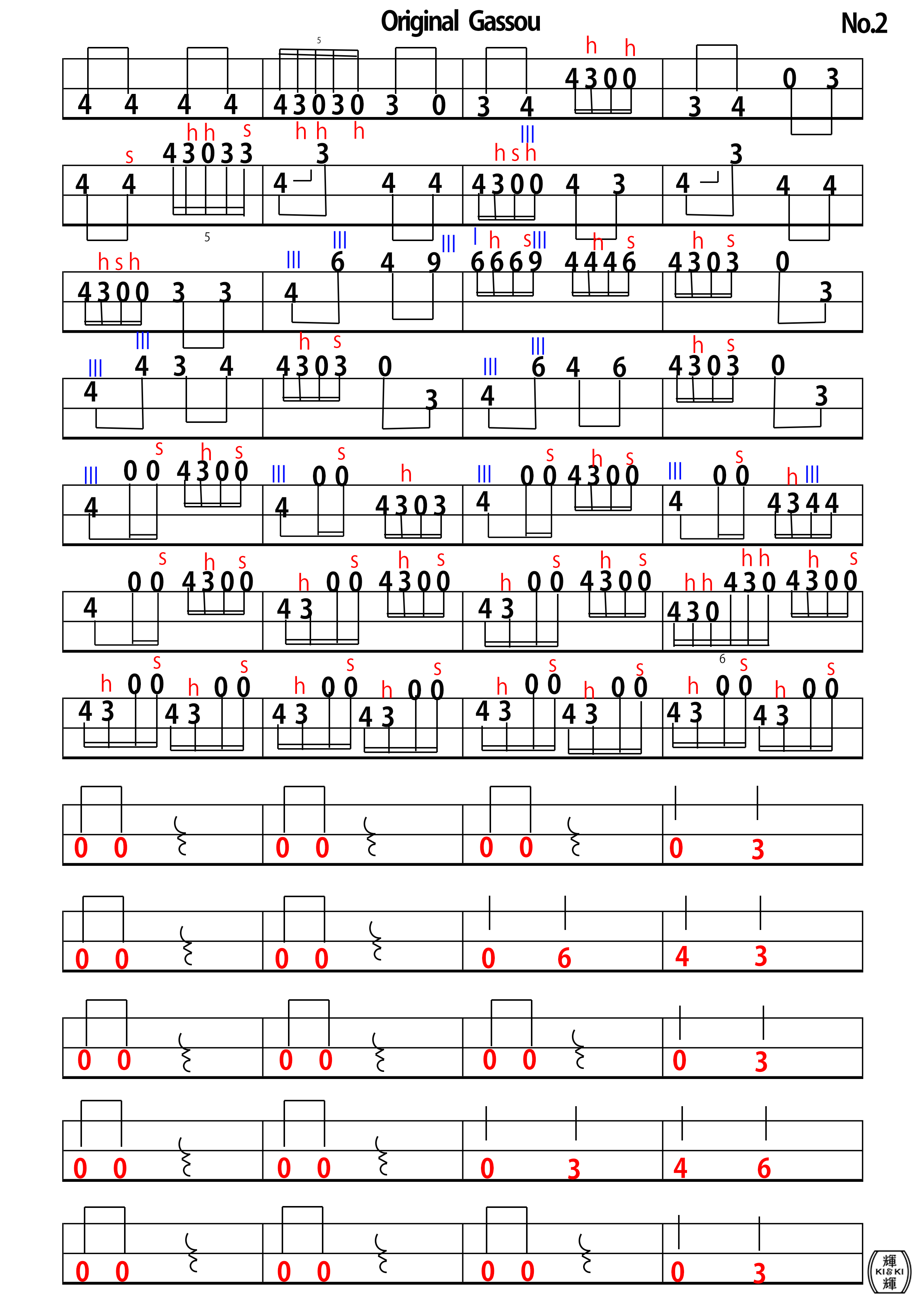
Original Song Lesson | Senninbayashi [Learn Shamisen SPECIAL] Easy Version Part -- オリジナル曲 | 千人囃子~簡単パート (Patreon)
Downloads
Content
In this video, we will cover the easy version part of the song. Even if playing the entire ensemble piece seems challenging, you can actually participate by learning just one melody! We will explain where and how the easy version part overlaps with the main part, so please check it out. Additionally, the full score attached highlights the easy version part in red. Feel free to use it as a reference when playing through the entire piece!---------------------------------
この動画では、千人囃子の簡単パートを説明しています。合奏曲を全て覚えるのが難しいという方も、一つのメロディーを覚えると実はこの合奏曲に参加することができます!動画でどこでどのようにメインパートと重なるかを説明しているので確認してみてください。
また、添付のフル楽譜には簡単パートを赤字で記してあります。通しで演奏する際参考にしてみてください。
---------------------------------Vocabulary List
Tuning - to adjust the pitch of the Shamisen
Niagari - the tuning with the first string in C, the second string in G, and the third string in C. The base note on the first string can be other notes than C, but the balance between the three strings remains the same
Otoawase - to tune and synchronize rhythm at the beginning of a song. There are songs that has not Oto-awase as well
Tsuru-tere - a phrase that combines Sukui or Hajiki with Tsubo 4 and 3 on the second string and the open string on the third string
Tsubo - positions on Sao (shamisen neck) that indicate where to hold strings with the string-hand fingers to determine musical scale of sound
Kakimawashi - a phrase that is used for ending of the song to stir up the crowd by changing repeated Chiri-tere to 030030. It is also called "Kamashi"
調弦 - 三味線の音程を調整すること
二上り - 一の糸をドにしたときに、二の糸がソ、三の糸がドになる調弦。一の糸をド以外にすることもあるが、三本の音の関係は変わらない
音合わせ(おとあわせ)- 曲の最初にその曲のリズムをとりながら音を合わせること。音合わせがある曲とない曲がある
ツルテレ - 二の糸の4、3のツボと三の糸の開放弦を使ってスクイやはじきを組み合わせたフレーズのこと
ツボ - 音程を決めるために左手の指で弦を押さえる棹(さお) の場所のこと。1~20まである
かきまわし - 曲のエンディングでチリテレを繰り返して盛り上げる時に030030に変化させて使うフレーズ。かましとも言う。