Home

 Creators
 Search
 Recent
 Random
 Posts
 DMs
 Tags
 Random
 Importer
 Import
 FAQ
 Account
 Register
 Login
 Favorites
 Keys
 Logout
 Telegram

Secret Sabunga Notes #06 (Patreon)
Content
Ganbare! Nakamura-kun!! is a cool, charming show with unusual production methods and priorities
The second that a Ganbare! Nakamura-kun!! adaptation was announced as a full-length TV series, everyone had to know for a fact that it’d be a transformative experiment. The original work isn’t particularly unique, nor does it need to be fixed, but there’s no getting around the fact that there simply isn’t that much to it. That much of it, even! Syundei began the first run of the series in 2014 after BL magazine OPERA found itself in a pinch, asking for her to cover a gap that had opened in their publications. She was already toying with these ideas as a pastime anyway, so she converted them into an irreverent romcom following a gloomy, octopus-loving dork and his angelic crush. Without any expectations that this would run for long, she jumped from one situation-based skit to the other, not really concerned with any overarching story.
3 years later and with that original run compiled into a standalone volume, Syundei got to extend that story under the umbrella of Motto Ganbare! Nakamura-kun!!. At this stage, seeing that she’d been brought back, the series gained more of a concern for character growth. Don’t get it twisted, though: it’s very much still a chill romcom without any huge developments, ending this second run with yet another silly punchline fueled by its protagonist’s overly active imagination. Had an anime adapted these two volumes in a straightforward way, it could have amounted to a pretty entertaining short anime series (an endangered species in the commercial space, even though the streaming age promised to free us from the rigidity of 30-minute TV slots).
It goes without saying that there were more ambitious plans for the series altogether. The manga returned yet again (now as Yuru~ku Ganbare! Nakamura-kun!!), and most importantly, those two volumes were going to be fleshed out into a fully-fledged TV show. The project was kickstarted by Crunchyroll, who I suppose need an occasional good deed to pretend to make up for their often demonic behavior. Aniplex forwarded it to studio Drive, who have a decent number of interesting connections despite their fairly messy nature. I don’t mean necessarily just the usual chaos of deadlines, but also that they’re the type of environment where one of the AniP called dibs on an already ongoing project because he thought he could make things even better. Even the leading position took wild swings—Aoi Umeki was originally contracted (after she personally reached out) to become the character designer… then she became the series director and nearly sole scriptwriter as well.
Despite those rocky foundations, it’s clear that they were able to get the team on the same page. Syundei’s art is quite distinct in its nostalgic sensibilities, with Nakamura-kun often embracing city pop vibes and slapstick that feels straight out of late 80s/early 90s romcom. Umeki & co really wanted to preserve this identity, which the director referred to as new retro, and effectively put together something that feels more like modern Ranma than modern Ranma. They didn’t focus on a singular aspect of its craft to pull that off, but rather imbued it to some degree in all areas. It’s not an exaggerated Kanada-fest like YAIBA, but it does have animation quirks that feel reminiscent of the era it evokes. It’s not attempting outright cel emulation, but its very involved color pipeline adds to its oldschool feel; apart from the usage of color scripts and a design process that was meant to emulate the CMYK characteristic of print, they even introduced a color grading stage to nail that nostalgic, lively, but not overly vivid palette.
Even the music is carefully geared in that direction, reinforcing the nostalgia but not committing too much to the gimmick. The way this fine line is threaded is most obvious with the endings: classic (or at least vibes-appropriate) covers played one week after the other over long, relaxed shots… until the dramatic penultimate episode drops you into a silent, empty room for its equivalent to underline the emptiness that the currently heartbroken protagonist feels. This heightening of the drama using sound doesn’t feel out of place either, given that the series is fully film-scored. Such a costly approach for a project like this is very uncommon, and you could get cynical about it if you hear the internal reasoning that worldwide audiences demand the grandeur associated with that method. I quite like Umeki’s justification, though: she feels like Nakamura-kun’s emotions undulate from one moment to the other, so the music ought to do the same rather than be made up of distinct songs. Easy to guess that its broadcast delays had something to do with this approach, though!
The way these ideas coalesce in the show is pretty clear since the start. Calling Umeki’s additions connective tissue ends up falling short; it’s more that she reimagined the entire series as a more regularly flowing narrative. Specifics about the situations in each original chapter are transported into more involved scenarios that actually connect with the next, in a way that helps appreciate the subtle growth of the protagonist. Of course, you can’t disconnect these structural changes from alterations that ended up being controversial. Trigger happy discourse peddlers made a fuss about the adaptation (which has otherwise been even more explicit about homosexuality than the original) cutting some spicy panels from the original, but that’s merely a consequence of the consciousness of the overarching tone. There is plenty of comedy in the show, but there is restraint that was missing from an irreverent skit-based comic started basically as a hobby. Mind you, I think this makes the original a funnier experience, but there’s no denying that the angle taken by the anime is perfectly coherent with itself.
More than anything else, though, what stands out about this adaptation is the emphasis on the position of the storyboarder. There is no work out there where the boards don’t matter, but this team greatly emphasized their ability to elevate material on a conceptual level. In addition to a sturdy in-house rotation (mostly Daiki Yonemori and Umeki herself), they were able to reach out to very extravagant guests like ex-Madhouse & KyoAni, current theatrical specialist Ai Yoshimura (#04), good ol’ Nabeshin (#07), the mysterious but tremendously promising Wazuka Komamiya (#10), and everyone’s favorite Rakugo/Kaguya-sama director Hatakeyama, who gave episode #11 the funniest rhythm conceivable.
Beyond the studio’s connections and Umeki’s own, much of this is owed to that bold animation producer I brought up earlier: Takaya Yoshikawa, a name we might want to keep track of. Involvement with the likes of SARU, independent hubs, and also proactivenes in reaching out to exceptional individuals are qualities to look out for in this field! That said, I think it’s also important to point out that some people really want to be able to work on high-profile BL anime, given how rare these are. Look no further than de facto main animator Karen Nozawa, for the longest time associated with Studio Colorido’s wild branch Yamahitsuji. Her intentions after going freelance couldn’t be any more obvious: she became the lead animator and person-who-does-sorta-everything for Dogakobo’s BL duology Karaoke Ikou/Muchuu sa, Kimi ni, then adopted a very similar position for Nakamura-kun. Again, it doesn’t take rocket science to see that she’s treasuring these opportunities that don’t come around often. Maybe they should!
On the note of those fancy storyboarding guests, the two most important episodes were handled to the biggest names they were able to attract. While there had been some serious moments in prior episodes, the trip in episode #06 has a sense of pathos that makes Nakamura’s yearning feel more affecting and real than the unrequited crush some punchlines paint it as. A lot of this has to do with Naoko Yamada’s pupil Haruka Fujita, who wasn’t in the business of hiding her roots. It’s the resonant way she depicted his longing (and relatedly, the fear of losing him) that helps his heartbreak in episode #12 hit the way it does.
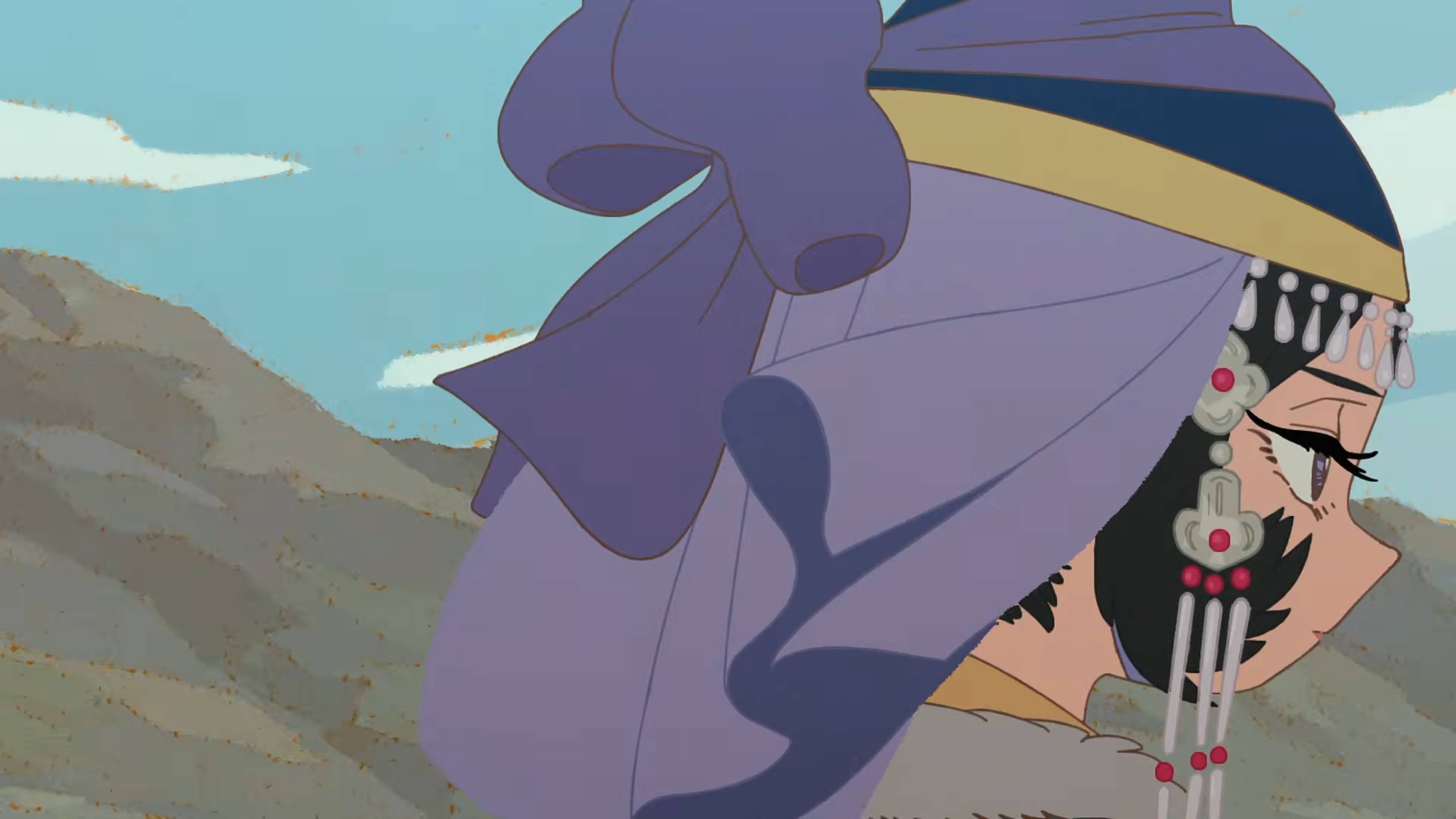
An understated aspect in this strategy is that the processing of those storyboards has been very careful, often with the kantoku themselves getting involved alongside the assigned episode directors. Even though basically none of those glamorous storyboarders was at the studio to execute their ideas, the team made sure that they weren't crudely wasted during processes like the compositing. In this regard, assistant series director Naoki "yotube" Yoshibe deserves a massive shout out; he was personally in charge of directing that penultimate episode, carefully redrawing scenes like the one above to capture the delicate intent. Whenever Umeki found herself overly burdened, he would be the one to take over. He even had some chances to unleash his renowned effects animation!For that special second-to-last episode, the protagonist is the elusive Shouko Nakamura, whom Umeki has been a fan of ever since Doukyuusei. Her boards emphasize how isolated, disconnected from the world Nakamura feels as his object of affection slips away, but also feel attentive to the minute gestures that communicate his increasingly bottled angst. In that way, it shares a respectful sense of distance with Fujita’s work, which also doesn’t intend to intrude too much on characters’ emotions when they’re at their most vulnerable. Her elegant means of conveying the protagonist’s feelings in such moments include obscuring them through recurring motifs related to his relationship with Hirose, which is so cool you might forget for a second that it’s also deeply sad. This show (and these episodes in particular) are a very easy recommendation to anyone who appreciates storyboarding oozing with intent, in ways that are less apparent than visibly idiosyncratic schools like SHAFT’s. Give it a try!
We’re in a bit of a josei-muke anime resurgence, but the world deserves way better
The broad umbrella of anime for women has been in such dire straits that I understand the instinct to say we’re entering a new golden age for it, but we’ve got to be real for a second and realize just how far we are from that. By sheer volume, most shows aimed at the demographic nowadays hail from Narou into support studios that have no business heading a production. That sadly remains true of more traditionally published works, which consistently clash against the low ceiling of such projects; the belief that they simply can’t become a megahit so they should make do with less is, of course, also gendered as all hell.
This isn’t to oversimplify the situation into a conclusion that josei-muke anime now is simply lesser because it has fewer resources. This year alone we’ve had Tamon’s B-Side capturing the fun spirit of the original work with an efficient approach that was able to incorporate the exaggeration you need in a series like that. Studio KAI has effectively left A Star Brighter Than the Sun to dry, but that hasn’t stopped Sayaka Kobayashi from standing as one of the quirkiest director discoveries in years. Modest teams can put together great work, but acknowledging that shouldn’t mean that we accept how consistently this type of series has to face such restrictions.
Even in the rare instance of a high-profile josei-muke project, teams still face difficulties. For starters, there’s no binary separation between the two; Scenes from Awajima by all means stands above most seasonals, adapting the work of a renowned author like Takako Shimura through a reputable studio and a damn near legend of a director… and it still damn near caused a civil war within Madhouse, as the more ambitious staff felt like they were handed an awful hand they had to overwork themselves to fix.
What if you secure yourself a genuinely prioritized production? Such cases are then open to the more insidious filtering of aesthetic and narrative aspects that are thought to put off male viewers; a consideration for other viewers that, for some mysterious reason, doesn’t happen when the main demographic is guys. This is not to say that such works are automatically lesser—I’ll be the first one to rave about Kusuriya’s excellence, but it’s not a coincidence that it’s a shounen manga adaptation that became broadly accepted and then was made into the skeleton of the anime. Even in the recent Agents of the Four Seasons (which admittedly had other problems) you can see how, sometimes voluntarily and sometimes through the industry’s weighted inertia, the bigger projects tend to become friendlier to a male audience when they’re animated.
At the end of the day, unashamed josei-muke that turn out to be genuinely transcendent are something we’re lucky to get once or twice a year. The likes of A Sign of Affection or more recently Ikoku Nikki are gorgeous exceptions, not the norm. Even as we get more, sometimes better titles under this umbrella, I’m not convinced we have consistent pipelines like noitaminA’s golden age briefly was. Making historical claims about the current state of shoujo and josei anime without being aware of the contributions by titans like Osamu Dezaki himself is silly, but we don’t even need to look back that far to find situations where it was easier to get an excellent josei-muke series to take off. Support the cool stuff we get, and by all means continue to enjoy the interesting crumbs that can be created even in adverse situations, but don’t stop asking for better.
...we are days away from a Yamada-adjacent Jaadugar and not that far from her old pal Ishidate taking on Endroll though, so again, I really do get the enthusiasm. Good things happen.
Files