Home

 Creators
 Search
 Recent
 Random
 Posts
 DMs
 Tags
 Random
 Importer
 Import
 FAQ
 Account
 Register
 Login
 Favorites
 Keys
 Logout
 Telegram

[WIP] Nazca (Patreon)
Content
The Nazca (Nasca) culture flourished (1~800 AD) in the coastal desert of Southern Peru. While they are best renowned for their iconic 'Nasca Lines,' they also left an extremely rich and diverse artworks, including pottery and textiles.
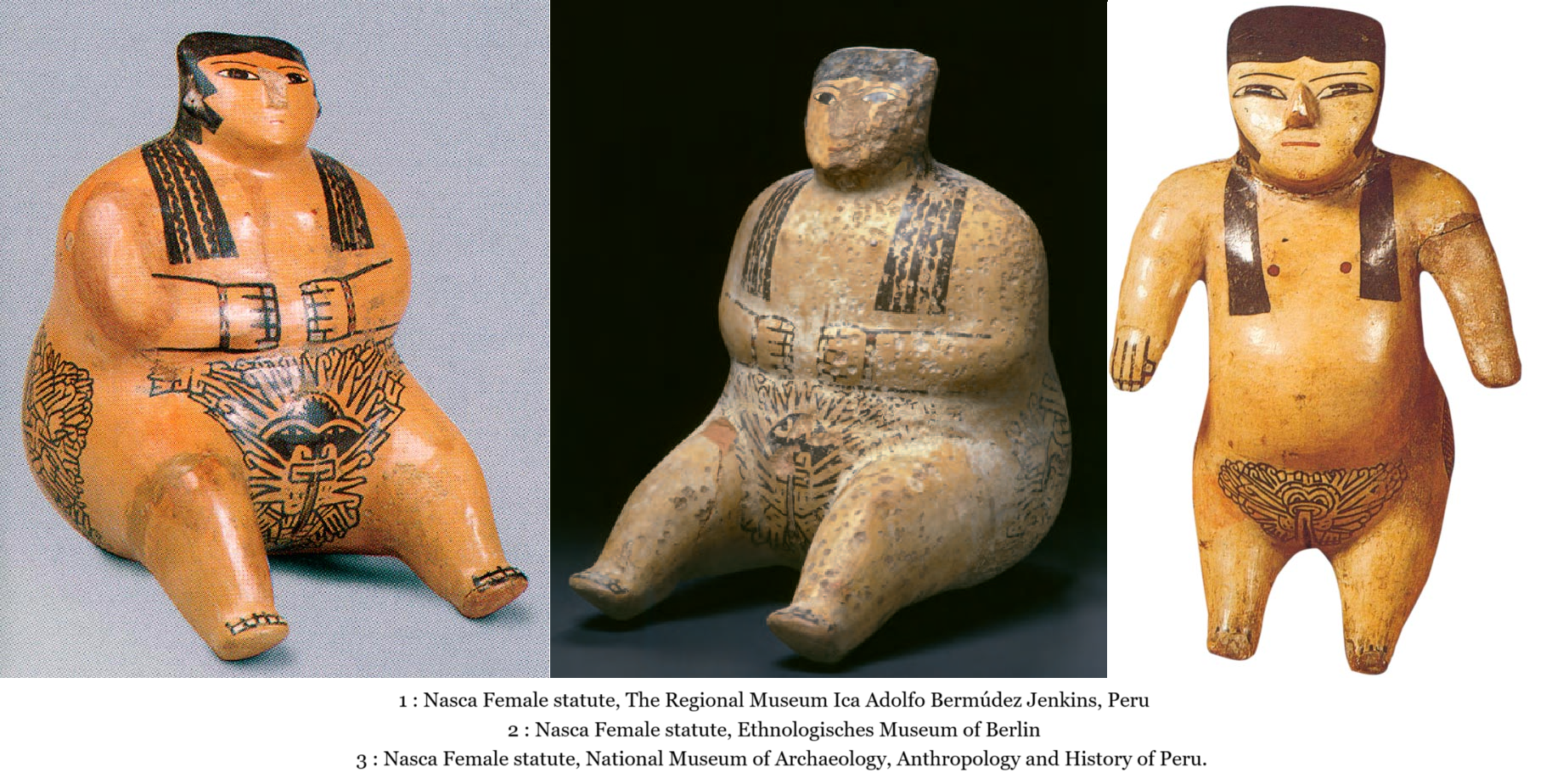
This drawing is inspired by the female statues of the Late Nasca period, around the 6th to 8th centuries. These effigies depict a nude woman with a voluptuous lower body, which is often decorated with black tattoos on the genital area and buttocks. Tattooing is well documented for pre-Columbian Peru and is still practiced by several South American—especially Amazonian—tribes today.
Studies are divided on how to interpret these figurines. Some argue that they are supernatural beings, particularly the moon goddess. On the other hand, some insists that they depict actual humans who performed ritual functions. What is certain is that the motifs used on their body are predominantly related to fertility: the moon, scepter, lightning bolt, marine fauna, crops such as fruit and maize, mythical beings, trophy head, and penis. The textile on the floor is based on the wool cloak from the early Nazca period.
Files