Home

 Creators
 Search
 Recent
 Random
 Posts
 DMs
 Tags
 Random
 Importer
 Import
 FAQ
 Account
 Register
 Login
 Favorites
 Keys
 Logout
 Telegram

Octavia and Cabirus reference sheet [2026 ver.] (Patreon)
Content
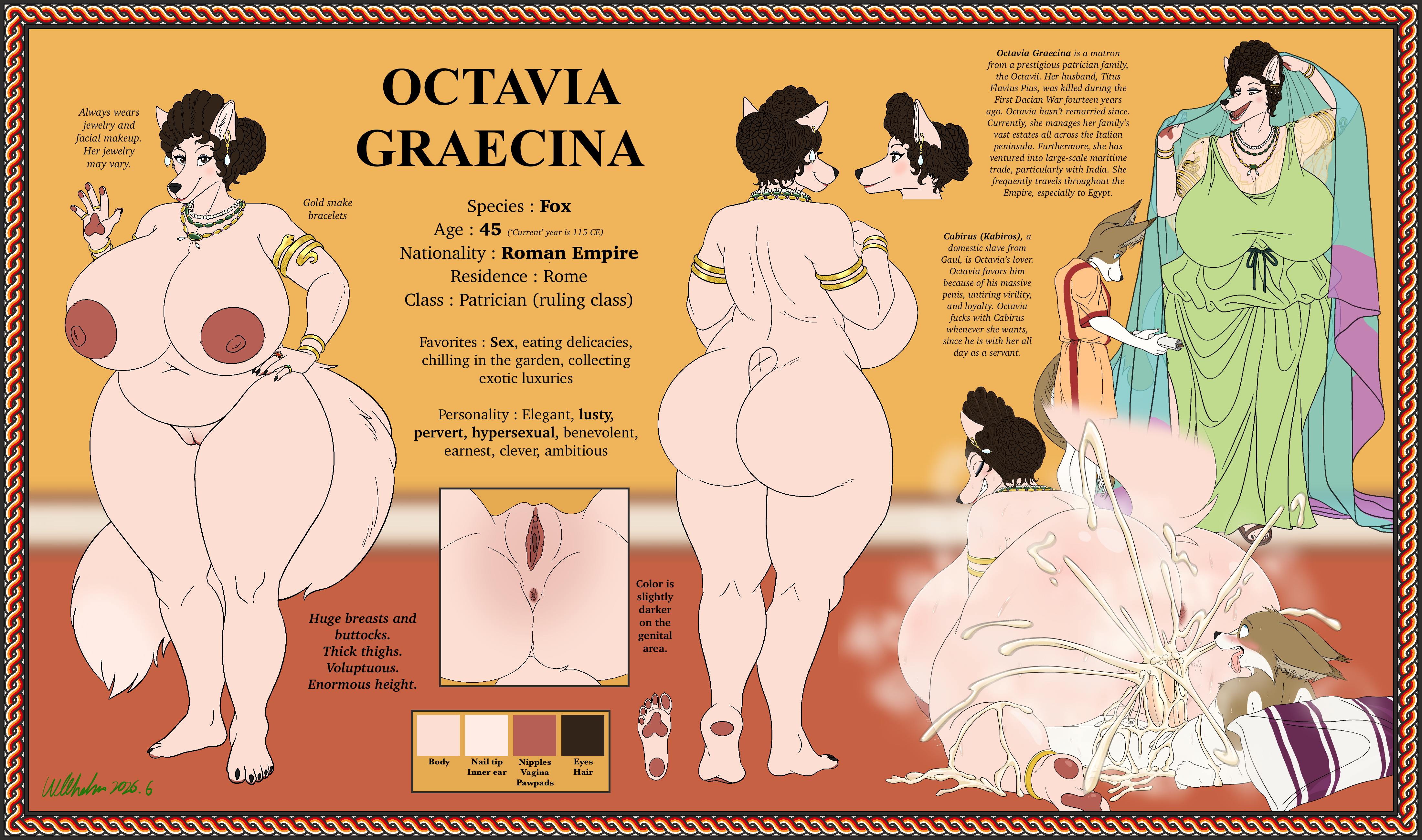
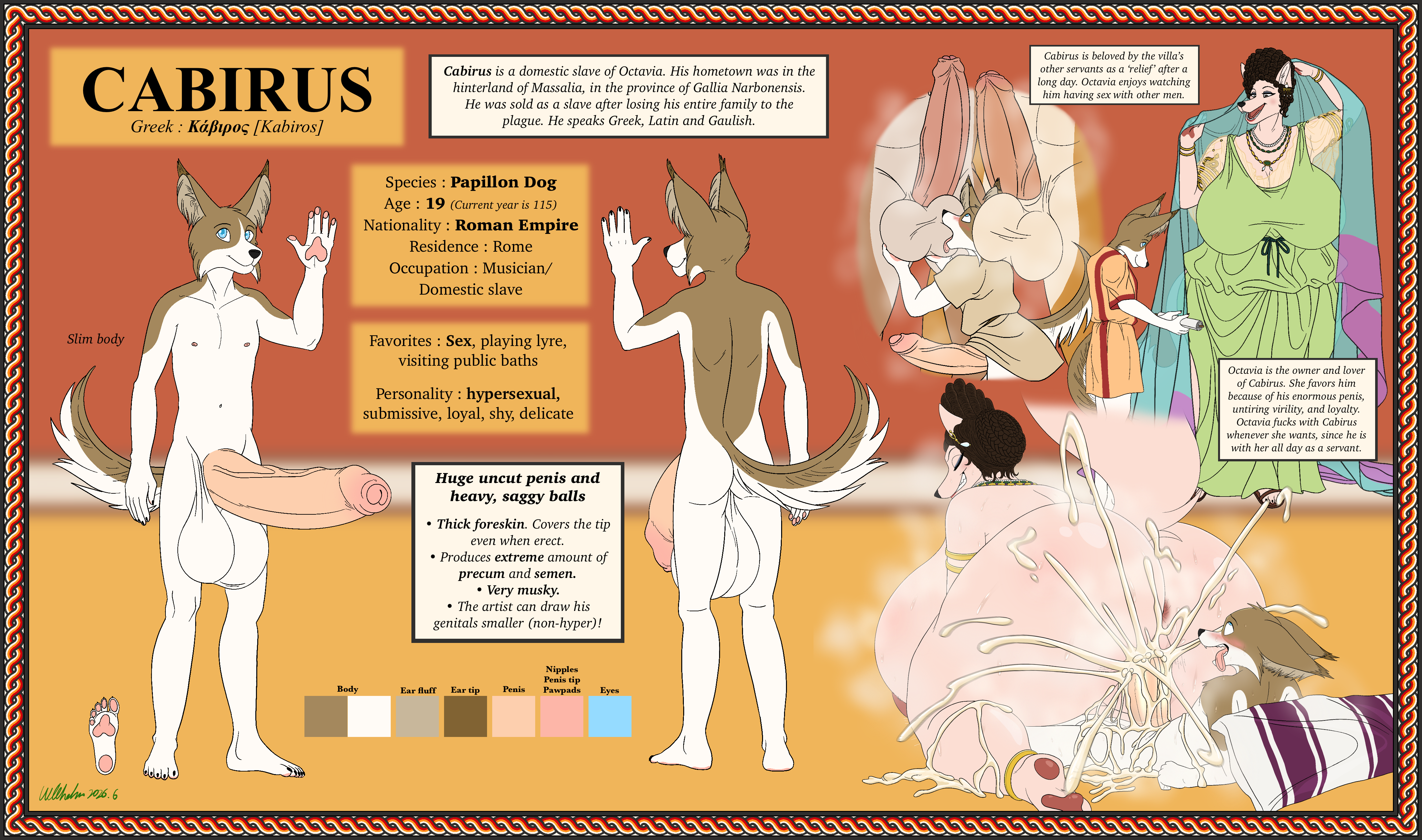
Here are the long-awaited new reference sheets of my ancient Roman OCs!
With more thorough research, I made quite a lot of changes. As for their lore, I added new details about Cabirus' hometown and Octavia's business operations.
I modified the names of both characters slightly. Octavia's previous name, 'Julia Octavia Graecina,' isn't quite correct for ancient Roman naming conventions. First, 'Julia' is a family name that is incorporated to a person's second name, nomen. It makes no sense to write it as her first name or praenomen. Second, by the imperial period, Roman women used just two names (nomen-cognomen), rather than three (praenomen-nomen-cognomen). Therefore, I got rid of 'Julia'. She is now just "Octavia Graecina."
Side note, Octavia would've likely called herself 'Graecina' or 'Octavia Graecina'. By the imperial period, people usually distinguished each other by their cognomen. This is evident in hindsight, as we still refer to Roman emperors by their last names (for example, Publius Aelius Hadrianus => 'Hadrian'). Unfortunately, her name already stuck, so I'll keep referring to her as 'Octavia,' or 'Octavia Graecina' at least.
Another name change is from Kabiros to Cabirus. 'Kabiros' (Κάβιρος) comes from the first-century BCE Gallo-Greek inscription found in southern France. Before the Roman invasion, Celtic people in Gaul were writing their language with Greek alphabets. The Gaulish aristocracy quickly adopted the language of their overlords, Latin, after the Romans conquered them. However, although Latin spread into rural hinterlands, it retained less influence in remote areas. Therefore, Kabiros, who was born in this rural area, likely used a Greek name. Then, after he was sold to Rome, he would've changed to a Latinized name. It is frequently attested in the names of foreign slaves of ancient Rome. Therefore, his name is going to be written as 'Cabirus' from now on.
The last tidbit is about the eventual freedom of Cabirus. Octavia is considering freeing Cabirus from servitude. When he is freed, his name will be changed to Marcus Octavius Cabirus, following the naming custom of a freedman. He takes his former owner Octavia’s nomen, Octavius (masculine form). Because Octavia doesn’t have her own praenomen, Cabirus takes her father Marcus Octavius’ praenomen, Marcus. His personal name, Cabirus, becomes his cognomen. I'm not sure about changing Cabirus' status yet because I haven't done much research about the life of ex-slaves. Especially regarding their relationship with their former owner. It is said that freedmen usually formed a patron-client relationship with their former masters, so even if Cabirus were freed, he would likely remain close to Octavia.
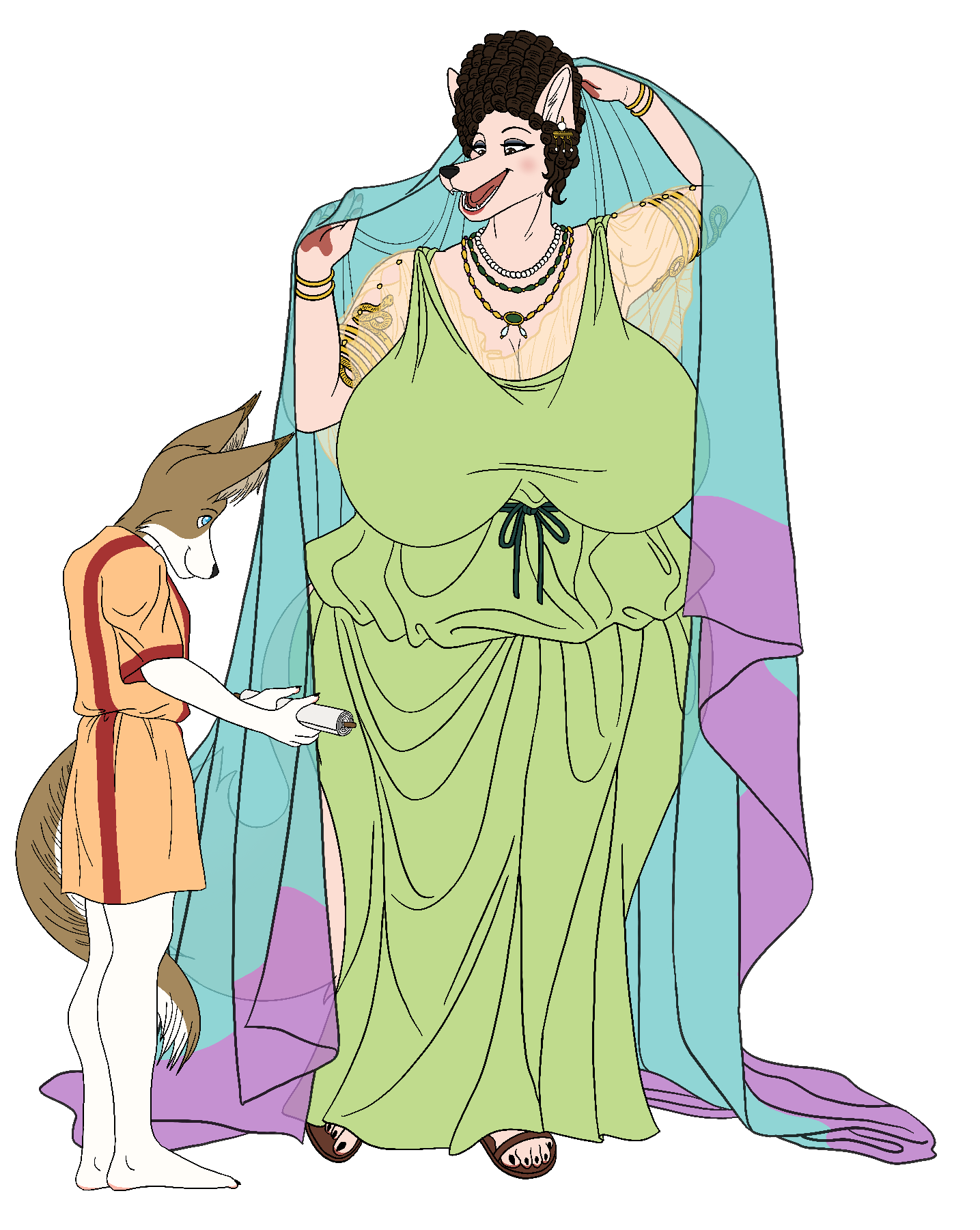
Before finishing this article, I want to clarify about the nature of their relationship. Despite their evident social differences, Octavia and Cabirus are madly in love. Octavia treats him as a lover rather than a slave. Their relationship is mutually consensual. And it is not as far from historical reality as you may believe.
Several Roman sources, such as Martial, mention noblewomen having sexual encounters with their male slaves. And if the said woman was widowed or divorced and left without a husband, there was no legal code to punish it. This demonstrates how the Romans' moralistic ideal was often different from reality, particularly in terms of sexuality.
With this in mind, was it possible for a Roman noblewoman who had lost her husband to develop a new romantic bond with her slave, then eventually freeing him and remaining close to each other? I think that's why historical fiction exists: filling the gaps between historical sources without disregarding the evidence. And that is what my historical OCs are all about.
Files