Home

 Creators
 Search
 Recent
 Random
 Posts
 DMs
 Tags
 Random
 Importer
 Import
 FAQ
 Account
 Register
 Login
 Favorites
 Keys
 Logout
 Telegram

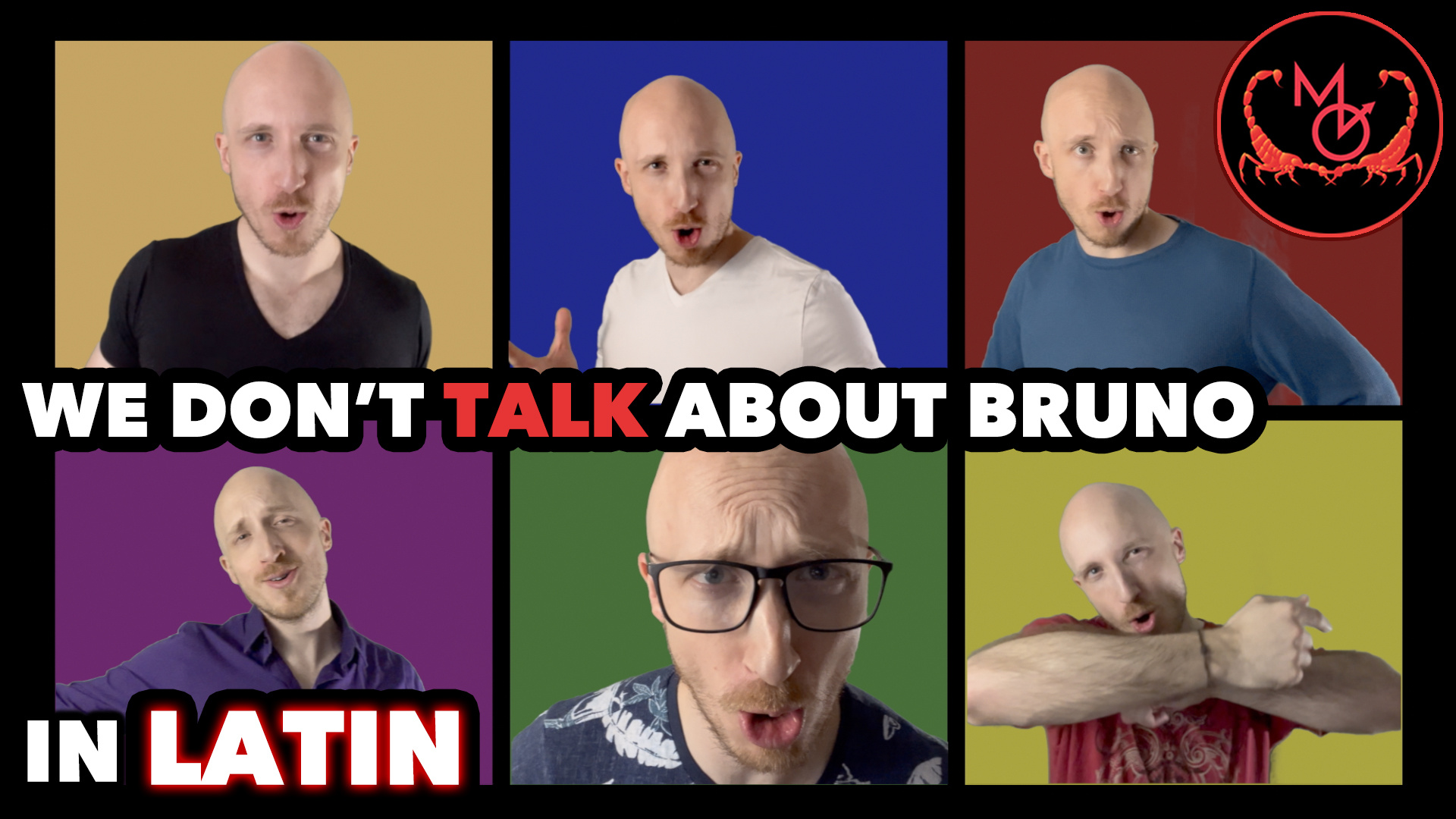
Audio download of "We Don't Talk About Bruno" Latin cover of the song from Disney's Encanto (Patreon)
Downloads
Content
LYRICS WITH EXPLANATION
PEPA
Nōn loquendum’st dē Brūnō, nōn nōn nōn
Nōn loquendum’st dē Brūnō, SED
Diē nūptiālī
FELIX nostrā nūptiālī
P. bellā subdiālī lūcet sōl inoperto caelō.*
*Translation of Pepa's line:
On my wedding day, a beautiful day outside, the sun shines {historical present} from an uncovered sky.
F. Nūbēs vetat caelō!**
**[Pepa] disallows clouds in the sky!
P. Subdolus Brūnus īnfert suōs lūsūs —
F. Tonitrūs!
P. Ast uter?! nārrābis? anne egō?
F. Ignōsce mihī, ocelle!
P. “Pluet” inquit “hodiē”
F. Cavĕ procellās!
P. Implet inde mē psȳchē´
F. Avia, age cape umbellās!
P. nūptiīs dīluviē [archaic genetive]***
F. Sīc veniant ad mē diēs saepe! [Ov. Amores 1.5]****
*** "Pluet" inquit "hodiē," inde psȳchē [mea] mē implet nūptiīs dīluviēī.
**** Ovid, Amores 1.5 "Prōveniant mediī sīc mihi saepe diēs."
PEPA & FELIX
Nōn loquendum’st dē Brūnō, nōn nōn nōn
Nōn loquendum’st dē Brūnō!
DOLORES
Heus, pavidae locūtulus murmurat claudus
omnisoniaudienti mussitat balbus
praedicātor afferēns sonitūs sabulī. ts ts ts.
Tetrica vāticinātur ēnōrmis
ars mutilīs prophētīzat fōrmīs
carminis turbidulentīque orculī. [Cat.3]
Animum mihī! †
†Heus, [Brūnus] praedicātor claudus [et] balbus locūtus [mihi] pavidae [et] omnisoniaudienti {a term I coined} murmurat et mussitat afferēns sonitūs sabulī. Ars orculī turbidulentī {a term a coined} tetrica [et] ēnōrmis vāticinātur [et] prohētīzat fōrmīs mutilīs carminis. Animum mihi [intende]!
Hey, Brunus the soothsayer, lame and babbling, having spoken would murmur and mumble to me who hears all, bearing the sounds of sand. The dark and impressive art of the confused little orc {referring to Catullus 3} would tell the future and prophesy by means of the disjointed images of his spell. Pay attention to me!
CAMILO
Ab īnfōrmī horrendō et ingentī īnfausta [Verg. Aeneid, 3.658, 4.181]
agere appellāta subque umbrās hausta [Verg. Aeneid, 4.660]
tuīs somnīs altō ējulātīs.††
†† Appellāta ab īnfōrmī [et] horrendō et ingentī [Brūnō] ageris sub umbrās, [ā Brūnō] altō tuīs somniīs ējulātīs.
Named by Bruno the hideous and horrible and giantic you are driven below the shadows, by him who is fed by your screamed out dreams.
Verg. Aeneid, 3.658 "monstrum horrendum, informe, ingens, cui lumen ademptum."
Verg. Aeneid, 4.181 "monstrum horrendum, ingens, cui quot sunt corpore plumae"
Verg. Aeneid, 4.660 "sed moriamur' ait. 'sic, sic juvat ire sub umbras."
PEPA FELIX CAMILO DOLORES
Nōn loquendum’st dē Brūnō, nōn nōn nōn
Nē loquāmur dē Brūnō!
PAGANI
Dīxit tenebrās squāmōsōs obitūrōs! [Cat.3]
Dīxit adipēs mihī percrētūrōs!
Dīxit mihī meōs capillōs omnīs efflūctūrōs!†††
††† He said that my scaly ones (my fish) would go upon the shadows (refering to Catullus 3 "malae tenebrae Orcī".
He said my fat would grow a lot!
He said my hair would flow from me! (This is an idiom for going bald: "capillī hominī effluere")
PEPA FELIX CAMILO DOLORES
Lūgēte ūnīversōs vātem audītūrōs! [Cat.3]
ISABELA
Vītam fore meam mellītam [enjambent] (catullus 109, pompeii inscription)
apiumque ita flōriferam
ait vim simul et anthemia
nitidamque racēmiferām.††††
(ABUELA Heja, Marjānus advenit)
††††The first two lines are based on an inscription found in Pompeiī "Amantēs ut apēs vītam mellītam exigunt." I took the term "anthemia" ἀνθέμια "blooms, flowers" directly from Ancient Greek.
DOLORES
Ait mē virum amātūram aliī
fidĕ spōnsum initō foedere tantae. [Cat.87] ‡
Quae mī manet vīta?
Cui vidēbor enim bella?
Cujus esse dīcar? [Cat.8] ‡‡
‡ Ait mē amātūram virum spōnsum aliī [fēminae] foedere initō tantae fidēī {archaic genitive: fidē}. This is inspired by Catullus 87 "nulla fides ullo fuit umquam foedere tanta."
He said I would love a man promised to another woman with a union of great faith.
N.B. On screen, I transcribed this line with a typo, where it reads "Ait mē virum amātūrum [sic]" instead of "amātūram." It still makes sense: "He said a man would love me who was promised to another..."
‡‡ These three lines are rephrased from Catullus 8:
"quae tibi manet vīta?"
"cui vidīberis bella?"
"cujus esse dīcēris?
ISABELA
Soror, mihī taceās cupiō!
MIRABEL
Dē Brūnō...
Dē nōmine Brūnō
Quid - concupiō! - hominī Brūnō
accidere - loquiminī! - Brūnō?!
CAMILO
Isabēla, amāns praeest
PEPA & JULIETA
Accumbāmus! ‡‡‡
‡‡‡ Accumbō accumbere "a recline/sit at table" ; accubō accubāre "I am reclining/sitting at table"
FINALE
JULIETA & ABUELA &C.
Adest!
OMNES
Dē nefando, dē Brūnō!
MIRABEL
Cūr sum locūta dē Brūnō?
Tacuerim satius Brūnō! [Verg. Eclogue 2.14] ‡‡‡‡
‡‡‡‡ This usage of "satius" = "better" is found in Verg. Eclogue 2.14 "nōnne fuit satius trīstīs Amaryllidos īrās?"
Files