 Home

 Creators
 Search
 Recent
 Random
 Posts
 DMs
 Tags
 Random
 Importer
 Import
 FAQ
 Account
 Register
 Login
 Favorites
 Keys
 Logout
 Telegram

How to Draw: a Gesture Sequence (Patreon)
Content
Let’s dive into the world of gesture sequences.
This technique isn't just about capturing a single moment in time. It's about illustrating the flow and movement across multiple moments, creating a dynamic and engaging visual story.
Whether you are an animator, illustrator or just love drawing...practicing drawings gestures sequences can significantly enhance your skills.
You can pair this tutorial with the ANTICIPATION tutorial to get even more technique.
What is Gesture Sequence Drawing?
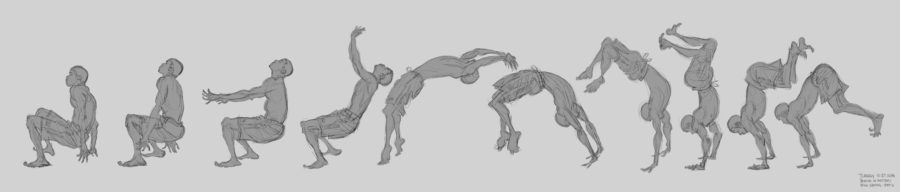
Artist: Tom Gately
Gesture sequence drawing involves sketching a series of poses that depict the progressions of movement.
This of it as a step-by-step, where each gesture builds on the previous one, showing a smooth transition from action to the next.
This technique is especially useful in sequential art like animation and comics, where motion and flow a crucial. But we can take this principle of animation and apply it to out gestures drawing practice.
Why Practice Gesture Sequence Drawing?
1. Understanding of Movement
By drawing sequences, you get a better grasp of how different poses relates to one another, imrpoving your ability to cature fluid motion.
2. Consistency of Forms
Practicing sequences helps maintain character and proportion consistency across different poses.
3. Exaggeration
Your drawings will have more life and energy, making them more engaging and expressive.
4. Storytelling
Sequence naturally lend themselves to narrative art forms, helping you convey stories more effectively through your drawings.
How to Get Started with Gesture Sequence Drawing?
1. Choose a Simple Action
Start with a basic action like jumping or sports. Observe and break it down into key poses. (Conté Tier members can watch the ‘Anticipation’ video for more tips on breaking down an action). I have some example actions saved on this Pinterest Board for you.
2. Study Real Movement
Watch videos or observe people around you. Notice the transitions between movements and how each action flows into the next.
3. Draw the Key Poses
Sketch the primary positions of the action. Don't worry about details; focus on capturing the essence and energy of each key pose. And as always use artistic license where you feel you can improve the clarity of the pose. Some inbetween frames will not look good…
4. Practice
The more you practice, the more intuitive it becomes.
Work this gesture sequence exercise into your drawing practice every month of two. Try different actions and sequences to challenge yourself. Draw actions that inspire you and get you excited to draw - maybe ballet, boxing, snowboarding, sword fighting - anything goes!
Tips for Successful Gesture Sequence Drawing
Loose Lines
Keep your lines loose and fluid to maintain the energy and motion.
Draw the Whole Body at Once
Don’t just draw the limbs; consider the entire body’s movement, including the torso, head, hands, feet!
Simplify
Use simple shapes to represent the body parts ( the bean, spheres, cylinders), making it easier to focus on the movement rather than getting bogged down by details.
Draw what inspires YOU!
Don’t just draw the reference I share. Learning is faster and more fun when you choose subjects that inspire YOU! (This is a tip I’ve learned recently through Roller Skating. I can skate better when I’m listening to music that I like!)
Resources:
Tom Gately Gesture Sequence Drawings
Scott Eaton's Bodies in Motion
Gesture sequence drawing is a fantastic way to breathe life into your art. It pushes you to think about how movements unfold over time and helps you create more dynamic, story-driven illustrations.
So, grab your sketchbook and start experimenting with gesture sequences. I’m fascinated to see if you notice a transformation in your drawings!
You can share your gesture sequence drawings in the community chat - under ‘Your Drawings’.
Gillian
Files
Previews only


