Home

 Creators
 Search
 Recent
 Random
 Posts
 DMs
 Tags
 Random
 Importer
 Import
 FAQ
 Account
 Register
 Login
 Favorites
 Keys
 Logout
 Telegram

Floral Dragons 4 - Meet the Aconite Dragon! (Patreon)
Content
Welcome to the fourth and final installment of the Field Guide to Floral Dragons series!
The Field Guide to Floral Dragons is an introduction to the mysterious world of floral dragons, unusual and elusive creatures inspired by real world plants and flowers. Beautifully illustrated by artist Kin Wald, each Floral Dragon booklet features field entries about new floral dragons, with notes from the point of view of the adventurers who discovered them.
The Floral Dragons each have a full stat block to be used in your 5e campaigns, as well as SHIFT stats for your SHIFT games!
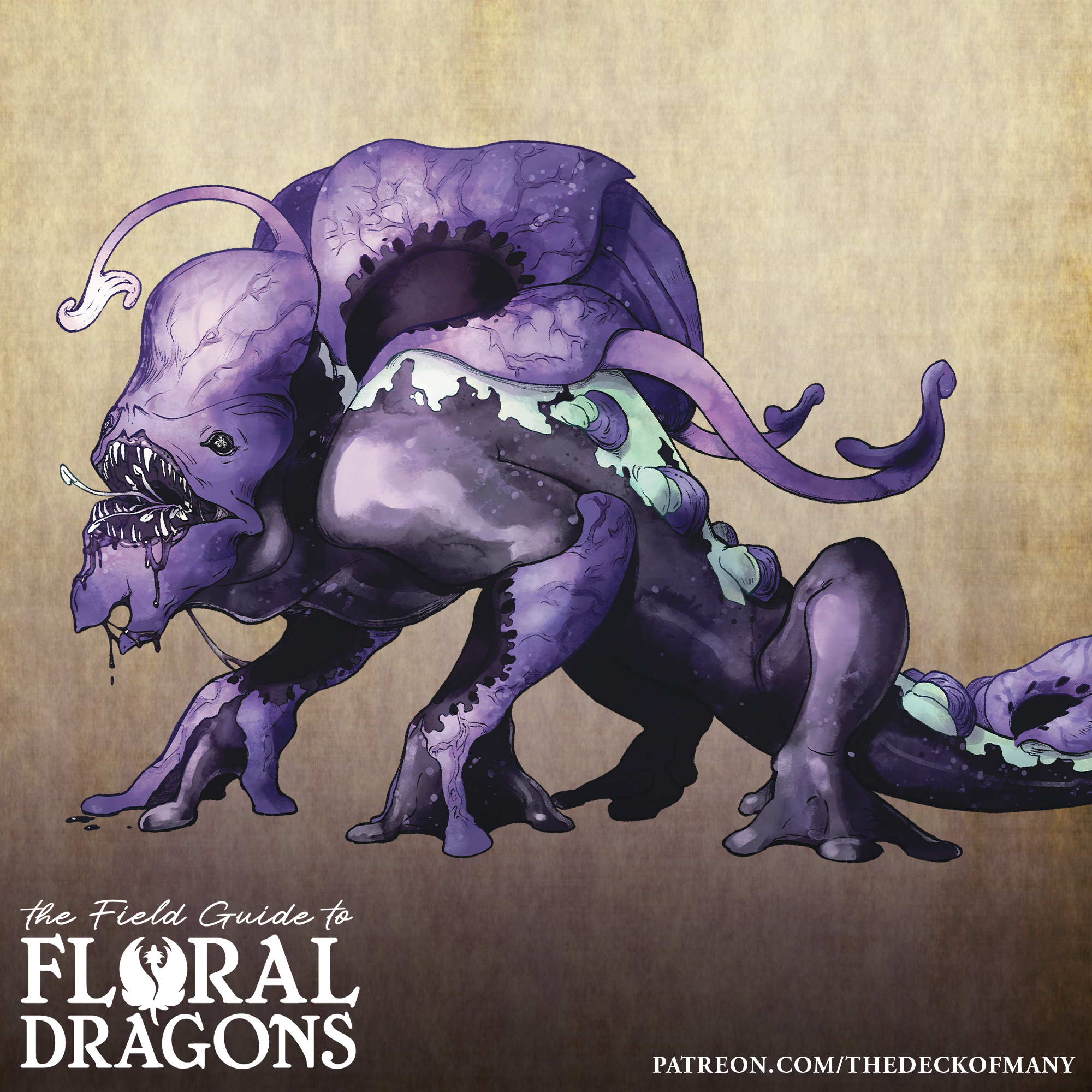
Today we'd like you to meet the... charming... Aconite Dragon!
Aconite dragons are hulking creatures with wide mouths and thick, muscular limbs. Among its most notable features are the three bioluminescent lures that hang over its head and back to attract prey in the dark. The feet of an aconite dragon are webbed, and its suckered toes allow it to adhere to trees and wait for prey. Its flowers bloom in shades of purple. A thin layer of slime coats the dragon’s skin to keep it from drying out when it isn’t submerged in water. This slime is exuded from glands on its back, which are a mottled light green. Young aconite dragons are darkest in color; older dragons become lighter as they age.
Aconite dragons dwell in marshes, bogs, and swamps. They favor cooler temperatures and areas with plenty of dense trees. Despite their size, aconite dragons are agile climbers and hide in large trees to ambush prey. Over time, repeated exposure to the aconite dragon’s toxic drool dripping onto a tree’s bark and into the soil at its roots kills the tree, but not before its trunk and boughs are bleached white and gnarled by the caustic substance.
Clematis dragons are often found near the dwellings of aconite dragons; aconite dragons are immune to the toxins of the smaller, frog-like dragons and devour them as a vital food source. Aconite dragons often lay their clutches of eggs under clematis dragon nests so their ravenous young have an easy first meal.
Aconite dragons eat everything. As powerful apex predators, they tend to overhunt and will eat each other if they run out of other food. As such, it’s unusual for a bog to have more than one aconite dragon unless it also contains an uncommonly large and fast-growing population of smaller creatures like frogs, newts, or clematis dragons.
Files