 Home

 Creators
 Search
 Recent
 Random
 Posts
 DMs
 Tags
 Random
 Importer
 Import
 FAQ
 Account
 Register
 Login
 Favorites
 Keys
 Logout
 Telegram

Paul's Preview: Zhang (c) vs Jedrzejczyk (Patreon)
Content
Right before Adesanya and Romero slug it out for middleweight supremacy, the women’s strawweight title is on the line as Weili Zhang defends her belt against #4 ranked Joanna Jedrzejczyk in the co-main event. Just like Romero, Jedrzejczyk isn’t the #1 contender for the belt, but the circumstances for her getting rewarded a title shot are similar. Jessica Andrade currently holds the #1 ranking as a contender, but she was the one Zhang beat to claim the title. With Rose Namajunas (ranked #2) originally declining the title shot, the UFC seemed poise to move onto Tatiana Suarez, who is ranked #3 and undefeated with 5 straight wins. Unfortunately, on-going neck issues have forced Suarez to put a temporary hold on her MMA career, so the promotion was left waiting to see who the winner of the Jedrzejczyk vs Michelle Waterson would be. With Jedrzejczyk dominant in victory, a title fight was put together to give us a double header. Given that both fighters are billed as strikers, let’s see what a potential clash might look like.
Despite having only had 3 fights in the UFC, Zhang built up quite a record overseas, amassing an impressive 16-1 record before heading over to the states. Although it was just her fourth fight in the promotion, Zhang made the most of her title fight and beat former champ Jessica Andrade by TKO in 42 seconds. This was quite impressive, considering that Andrade had seemed like the strongest fighter at strawweight and even in her 5 round title fight loss to Jedrzejczyk, it didn’t seem as if she was close to getting finished. It’s not as if Andrade had never faced prominent strikers before, she rattled off consecutive wins over Tecia Torres, Karolina Kowalkiewicz, and knocked out Namajunas herself to claim the strawweight title. Zhang might not have been a household name before the Andrade fight, but she’d seen enough of the Brazilian’s approaches to fights that she could take advantage of her style. Subtlety has never been Andrade’s strong suit, she has self-proclaimed to be “baby” Cyborg. With her stalking movement and hook-heavy punching style, it’s not hard to see the similarities. Knowing that she wouldn’t have to go chasing after Andrade, Zhang happily played the matador and had Andrade come toward to her. A couple of inside low kicks and jabs were enough to get Andrade to start chasing, setting up some elbows quite nicely for Zhang. Utilizing the elbows instead of hooks or jabs at close range was a smart choice, especially since they landed much quicker and with less telegraph. A momentarily stunned Andrade got caught with a clean right hook which sent her stumbling face forward. From there, a barrage of elbows, knees from the clinch, and follow up ground and pound sealed her fate, and Zhang became the first Asian UFC champion. The entire fight is less than a minute, and you can find it floating around if you want to witness one of the quickest title fights in the UFC history.
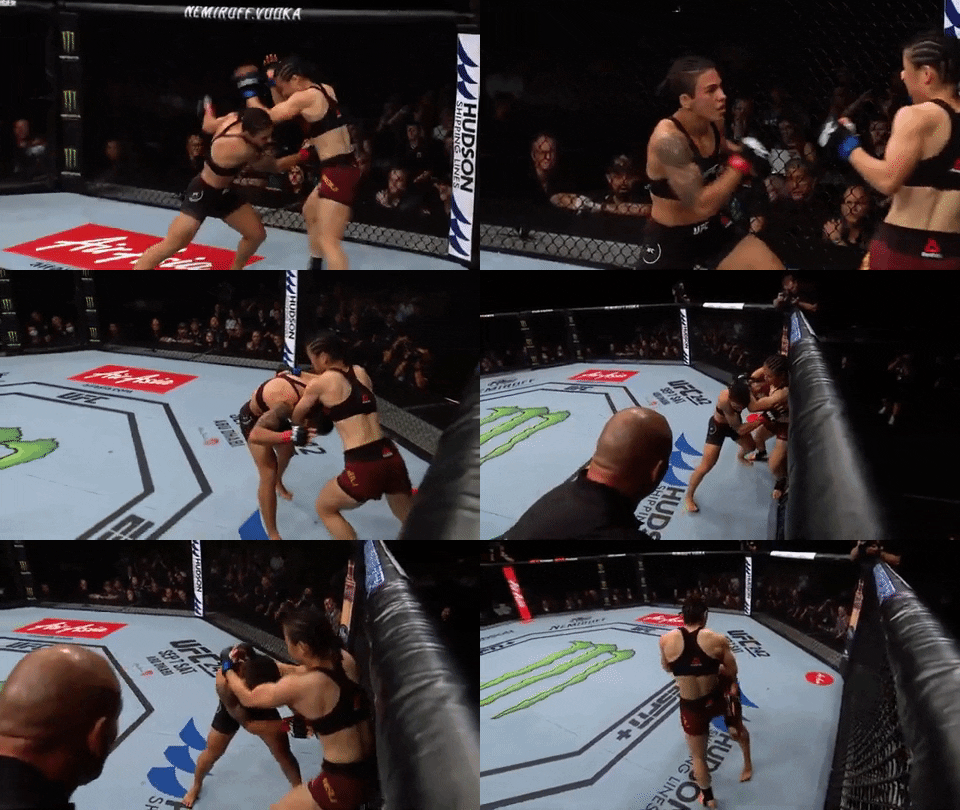
(As predicted, Andrade moved forward with alternating hooks, but Zhang smartly framed her with her left hand when she got too close. From there, a quick right elbow and left hook visibly shook Andrade, setting up the right straight. Afterwards, it was just a matter of time before Zhang’s continued attack finished Andrade.)
It might be easy to dismiss Zhang’s win as nothing more than luck and stating that Andrade simply got caught. This would be a terrible disservice to all her past opponents who knew what to expect and still got beaten or managed to win just long enough to be awarded on the judges’ scorecards. Zhang still had to go out there and try to outmuscle someone who was strong enough to give many bantamweights a hard time. Even Jedrzejczyk couldn’t finish Adrade, and she had 25 minutes to try. Although she might lack the technical counter game of someone like Valentina Shevchenko or the smooth boxing footwork of Namajunas, Zhang is still able to blend her own unique kickboxing game with a practical grappling base to give her opponents trouble. Standing at 5’4” with a 63” reach, she is at both a height and reach disadvantage against Jedrzejczyk (who is 5’6” with a 66” reach). Despite being around average for her division in height and reach, Zhang makes up for this quite nicely with her lead inside low kick. Even though the low kick thrown by the rear leg is much more powerful, the time it takes to set up and hit does give your opponents’ the opportunity to withdraw their lead leg and counter. The lead inside low kick comes much quicker and can knock the opponent off balance if most of their weight is on the front foot. It might seem like a cheap point scoring attack, but keep in mind there’s actually another champion that prefers this method: Alexander Volkanovski. The current male featherweight champ does have more feints and a great jabbing game to pair his lead inside low kick with, but it’s used for the same reasons as Zhang. It’s also great for covering distance quickly and can negate most reach and speed advantages (you can see how handy this would be against someone like Jedrzejczyk). If the opponent is still standing without having reacted, a left hook or a quick jab can be thrown for a nice low-high attack.
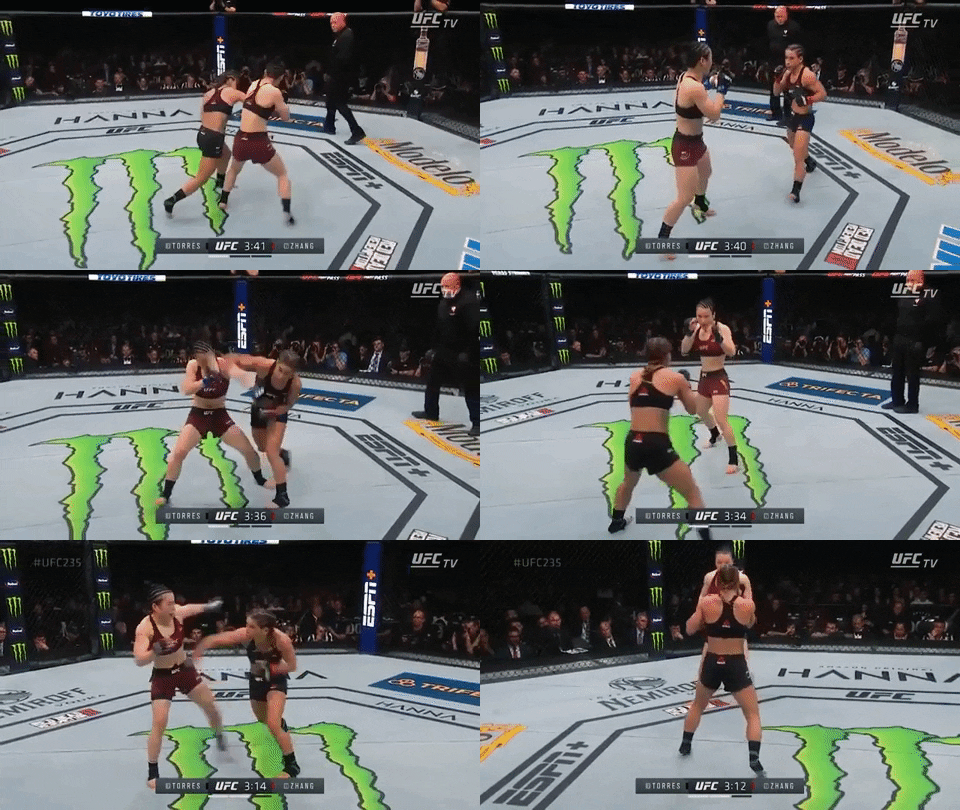
(Against Tecia Torres, Zhang uses the lead inside low kick to follow up with jabs and hooks on top, giving her two different things to worry about.)
What happens if the opponent moves out of the way completely? No big deal, it actually gives her a chance to show off the rest of her Sanda (Chinese kickboxing) game, or as Nick Diaz would call it, “throwing spinning shit.” It’s no secret that if you miss while kicking, you’re in a very compromised position and vulnerable to back takes. Zhang pummels opponents so frequently with her lead inside low kick that the usual reaction of sliding back or trying to check the kick is more or less their default mindset. It gives Zhang time to throw the spinning back kick without having to worry if the opponent is going to press forward. This also sets up a nice third attack, the simple side kick from the lead leg. Side kicks are a favorite for many fighters, including the middleweight title challenger on this card, Yoel Romero. Romero favors throwing it towards the leg (and famously injured Robert Whittaker the first time around), but Zhang prefers to aim for the body, sending the opponent back just a few feet. These are neat set ups that Zhang uses to attack from the outside as well as to get in close.
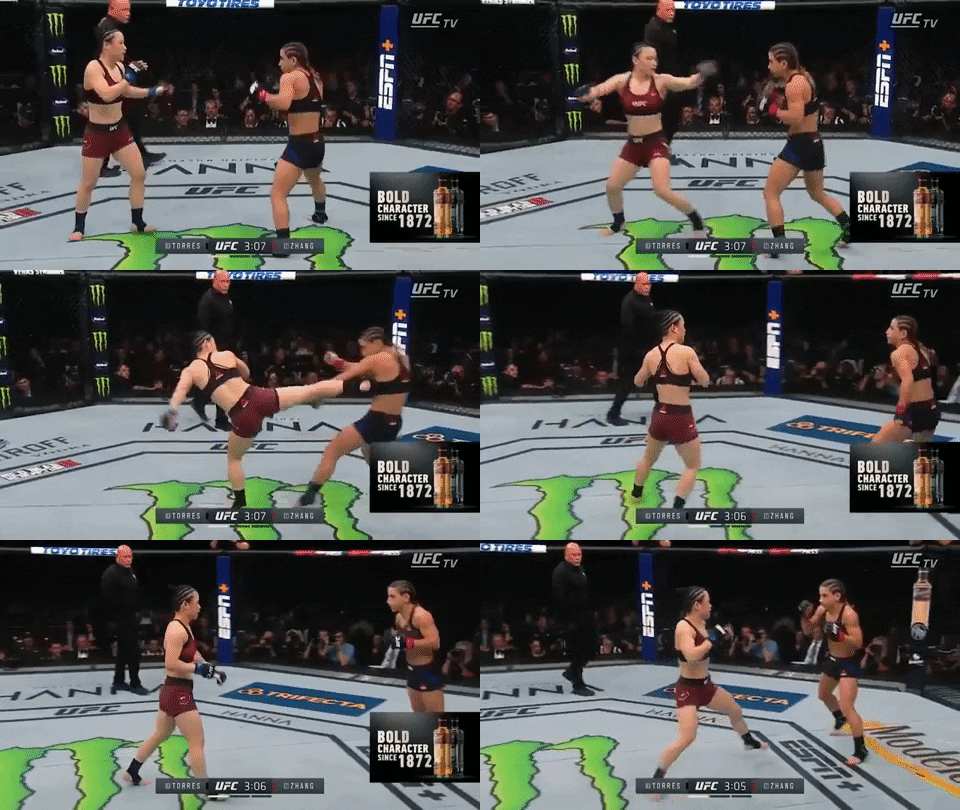
(Early on, Torres moves her hands up to parry what she thinks is a jab but gets met with a spinning back kick instead.)
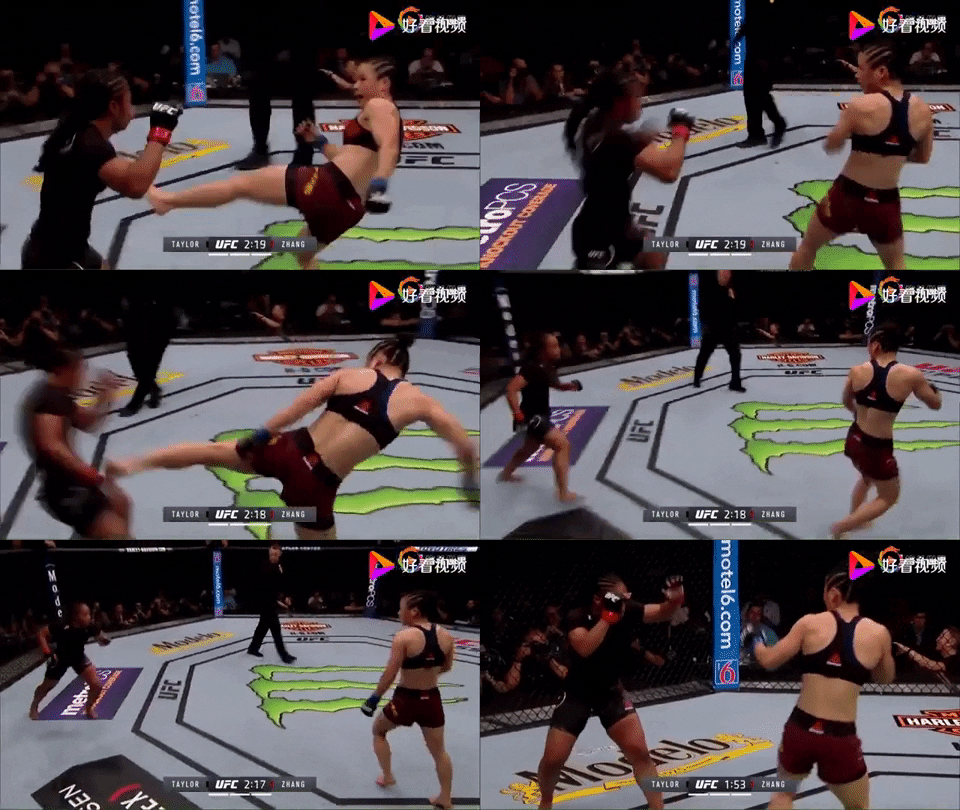
(Danielle Taylor steps out of the way of an inside low kick, and rushes in while Zhang is on one foot. Zhang quickly lands a side kick to Taylor’s lower chest/midsection area.)
Zhang’s boxing is fairly basic and serves mostly as a way to remind opponents that a right straight can be thrown if they’re only concerned about the kicks. She does her best boxing work at close range but can get sloppy at times and straight up close her eyes during exchanges. In the clinch, Zhang likes to muscle in and ground her opponents with trip takedowns where she can use her sizable strength and grappling skills to look for the finish while having top position. She’s only had one submission victory in the UFC, but she’s been able to take down all of her other opponents as well (minus Andrade who she finished in under a minute). Although she’s the champion, Zhang has less UFC fights than Jedrzejczyk has title defenses. Just who is Zhang up against?
Let’s all remember that before Namajunas beat Jedrzejczyk in back to back fights, Jedrzejczyk was considered to be unstoppable in the division. Her quick counter-striking and piston-like takedown defense is an amalgamation of Anderson Silva and Chuck Liddell. At her best, Jedrzejczyk’s jabs would ram into her opponents as they marched forward, determined to take the crown from the strawweight queen. Many of her previous opponents were content coming straight at her, determined to crowd Jedrzejczyk against the fence and try their own brand of striking and wrestling. What made Jedrzejczyk so scary was her ability to dictate the range where she fought and her ability to constantly circle out stay within the two black lines. Look no further than current middleweight champ, Israel Adesanya, to see how important this is to a striker. The more you move forward on a counter striker who has mastered lateral steps, the more strikes you’ll end up absorbing. Andrade, Kowalkiewicz, and Claudia Gadelha all wanted to close the distance, but didn’t have the tools necessary to do so.
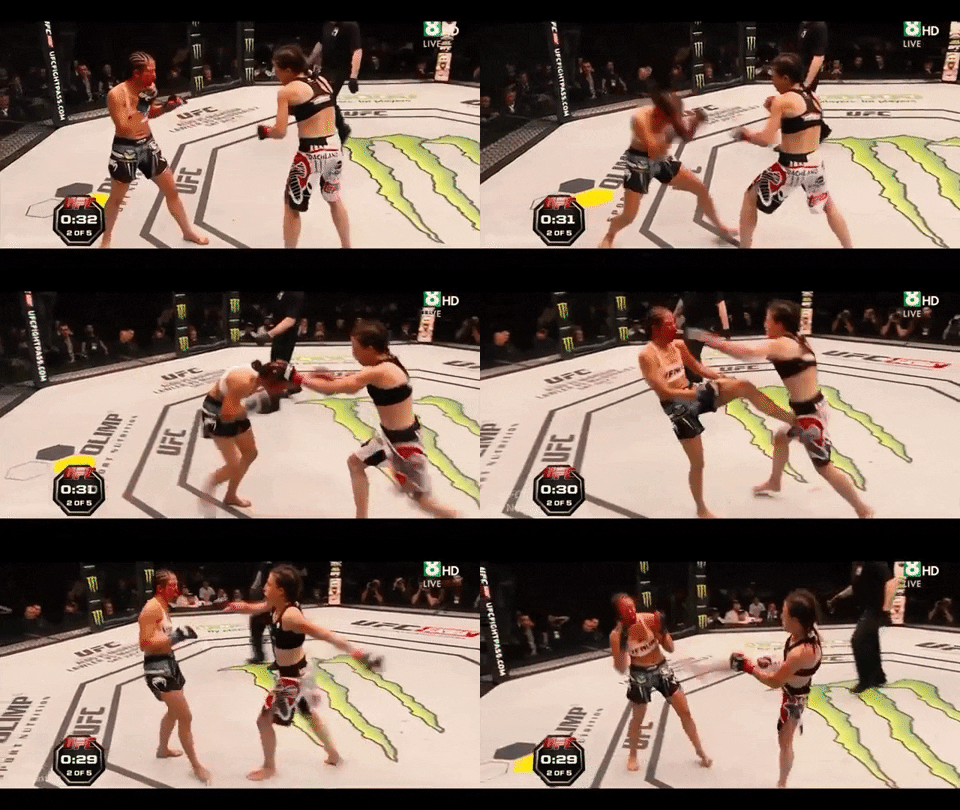
(Jessica Penne goes in low for a takedown only for Jedrzejczyk to stop the motion with her lead hand, Jose Aldo style. Penne is then given a hook-jab and a high kick for her troubles.)
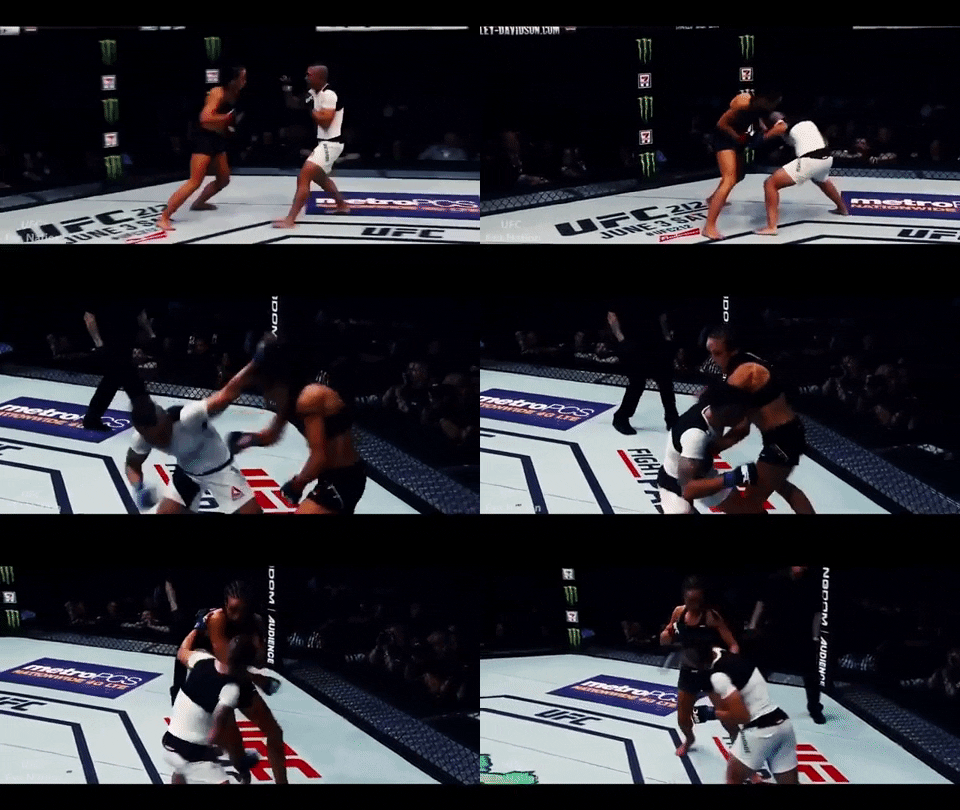
(Look carefully as Jedrzejczyk circles out towards Andrade’s blind spot and peppers in some strikes, making her pay as the collision increases the power of her punches.)
Even though she looked unstoppable, there are ways to deal with counter-strikers: either overload them with feints or force them to lead. Namajunas exploited the former while Shevchenko did the latter. Much like Anderson Silva, Jedrzejczyk looked amazing when opponents rushed in, trying to take her down or take her head off. When faced with a composed puncher that constantly feinted, Jedrzejczyk overreacted and would throw too quickly. Counter punching requires not just accuracy but impeccable timing. Throw too slow and you’ve already eaten the punch. Throw too fast and now YOU’RE the one at risk for the counter. Namajunas feinted constantly and had Jedrzejczyk throwing kicks and punches to an opponent that wasn’t there.
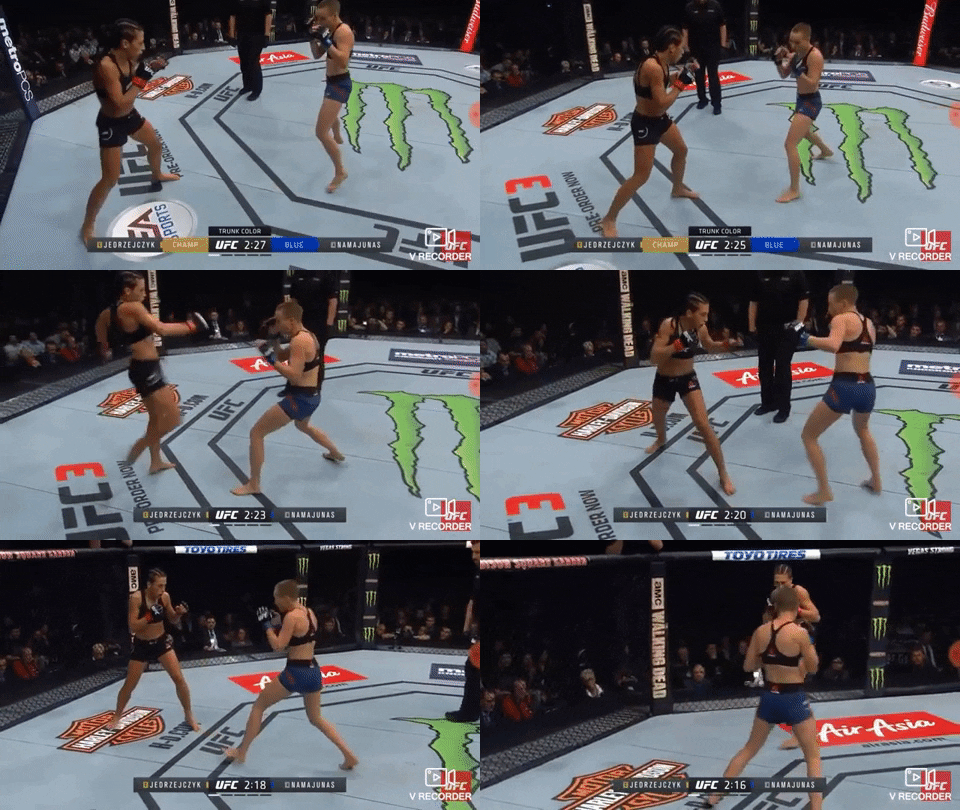
(Even though Namajunas is moving forward, she’s not blindly rushing in. Jedrzejczyk can’t tell what’s an actual strike and what’s the feint, resulting in her missing with kicks and punches only to get hit cleanly with a right hook.)
Namajunas did this twice in back to back matches, making Jedrzejczyk look incredibly vulnerable and for the first time, with back to back losses. After a quick victory over Torres, Jedrzejczyk was given the opportunity to fight former bantamweight title challenger, Valentina Shevchenko, for the vacant female flyweight title. Much like Jedrzejczyk, Shevchenko is also a bit of a counter fighter, and she had no problem in letting Jedrzejczyk take the lead. Once Jedrzejczyk was done with her strikes, Shevchenko countered. If Jedrzejczyk was hesitant, Shevchenko moved in with a swift 1,2 and retreated back to see what Jedrzejczyk would do. It was clear to see who the better counter-striker was.
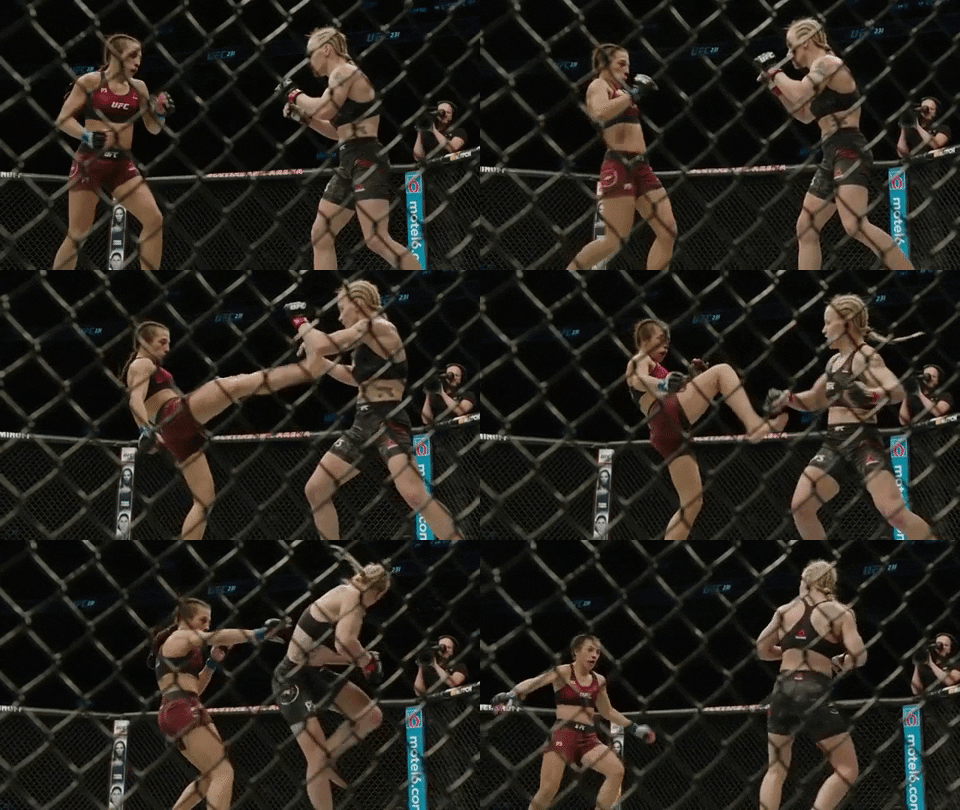
(The moment Jedrzejczyk finished, Shevchenko was right there to answer back.)
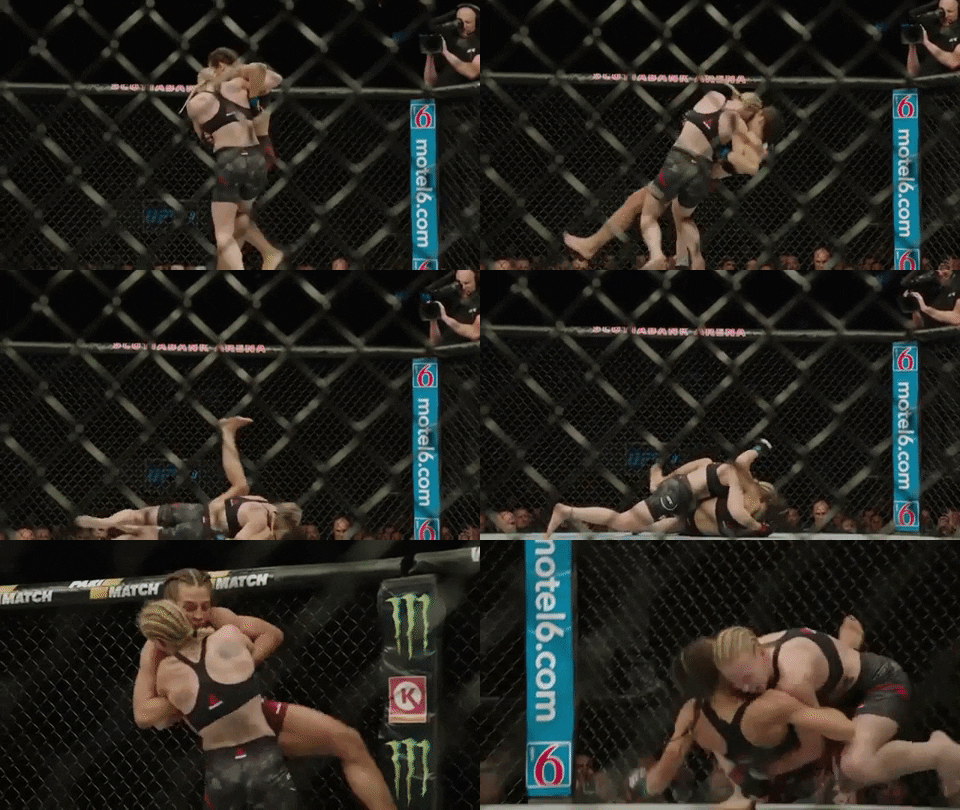
(It also helps that being the bigger and stronger fighter, Shevchenko used clinch opportunities to take Jedrzejczyk down and keep her there for large portions of the fight.)
With a recent victory over the always undersized Michelle Waterson (who’s really a blown up atomweight), Jedrzejczyk finds herself on a cusp of another title. The interesting thing about this matchup is that there are things that both Zhang and Jedrzejczyk do that can give each other problems. For Zhang, her physicality and lead leg kicking game can trouble Jedrzejczyk at close range and at a distance. Shevchenko muscled her around for the takedown and also offered up her lead leg so she can throw spinning kicks at an incoming Jedrzejczyk, something Zhang has shown quite an affinity for.
For Jedrzejczyk, she should look for opportunities when Zhang lunges in headfirst (as she’s done against Taylor and Torres) and time it to land some beautiful counters while moving laterally to avoid retribution. The X-factor is going to be in the clinch, and who can control it better. Zhang could be the stronger of the two, but her willingness to rush in at times for the clinch indicates that she’d rather not play an extended shoot-out, something that would obviously favor Jedrzejczyk. At long range in a 25-minute bout, it does favor the former strawweight champion whose footwork is still miles ahead of many in the weight class. It also doesn’t help that Zhang has a bad habit of closing her eyes during close exchanges, something that Jedrzejczyk has no problems with, given her extensive kickboxing background. But then again, Zhang does have some awkward counters that are harder to prepare for, and her strength could be something that Jedrzejczyk has a hard time dealing with. Gadelha was able to ragdoll her during both their fights but didn’t have the gas tank to sustain the same levels of activity. Either way, we should hopefully get a better gauge of Zhang’s skills after Saturday night, or see the former champ Jedrzejczyk return to become the champ.
