 Home

 Creators
 Search
 Recent
 Random
 Posts
 DMs
 Tags
 Random
 Importer
 Import
 FAQ
 Account
 Register
 Login
 Favorites
 Keys
 Logout
 Telegram

Paul's Preview: UFC 249 (Patreon)
Content
By Paul
Main Event
Somehow it’s 2020, and Khabib Nurmagomedov vs. Tony Ferguson still have not fought each other. Keep in mind that these two have been booked to fight SIX separate times, but for one reason or another the match never happened. Injuries were mostly to blame, but when it finally seemed like these two would face off, a global pandemic called the match off yet again. However, we got a pretty good consolation prize in Tony Ferguson vs. Justin Gaethje.
In their last six fights, Ferguson and Gaethje have racked up a combined 12 "Fight of the Night" and "Performance of the Night" bonuses. It’s safe to assume that no matter who wins, at least we won’t be in for a boring (interim) title fight.
In the co-main event, Henry Cejudo is putting his bantamweight title on the line against Dominick Cruz, the progenitor of the bantamweight division in the UFC. Although it’s absurd that someone coming off a four-year layoff and a loss gets a shot at the title, COVID-19 has forced the UFC to get creative with its booking—and who knows? Crazier things have happened in this sport. To make things clear, I’m pretty uncomfortable with the entire situation. While a global pandemic is unfolding with thousands of people dying every day, the UFC is pushing forward with an event that the vast majority of medical professionals are insisting is a terrible idea. Even though all other major sports have hit the pause button, the folks over at UFC and Endeavor have decided that guidelines are more like suggestions and are determined to hold this event. We have no idea what level of conditioning the fighters are going to show up with, or how sharp their skills will be come fight night. Such is the new normal under COVID-19. With all that said, let’s get this preview rolling.
Tony Ferguson is great at three things: slicing people up with elbows, throwing up submissions from any position, and defending his interim title. Outside of Renan Barao, who else has had to defend an interim title as often as Ferguson has? Even if you take his interim title out of the equation, this is a fighter who hasn’t tasted defeat in close to a decade. Out of 16 different opponents, only Michael Johnson has claimed a win over Ferguson (and it’s arguable that if Ferguson hadn’t broken his arm he could have won that fight). One of the reasons that Ferguson has found so much success is because he’s a threat in all ranges of combat. There isn’t one specific area where you’re completely safe from him. Standing at 5’11” with a 76” reach, Ferguson is definitely one of the biggest guys in the weight class. With Kevin Lee taking time off (for the moment at least), Ferguson now has the longest reach in the 155-pound weight class and he knows how to use it.
Ferguson’s unique combat style and rhythm has caused considerable difficulty for many of his opponents. They have found it challenging to time their own attacks and implement their game plans, especially when Ferguson pumps out the jab frequently and uses constant feints. Compounding all this is Ferguson’s pacing, awkward head movement, and spastic footwork. At first glance, Ferguson looks like he’s all over the place with no real sense of direction (like a bigger version of Dominick Cruz). Many coaches have shaken their heads at Ferguson’s fight strategy, and they have a point. Ferguson will jerk his head back without having his rear leg behind him for balance, he’ll lead with uppercuts more times than he should, and many of his kicks are thrown without setups. On top of all that, Ferguson will eat far too many strikes and leaves himself wide open for takedowns during his offensive onslaught. His opponents might look at his awkward movements and sloppy techniques and conclude, “Tony will get tired eventually, and THEN I’ll be able to impose my game plan.” This isn’t a strategy that has panned out so far.
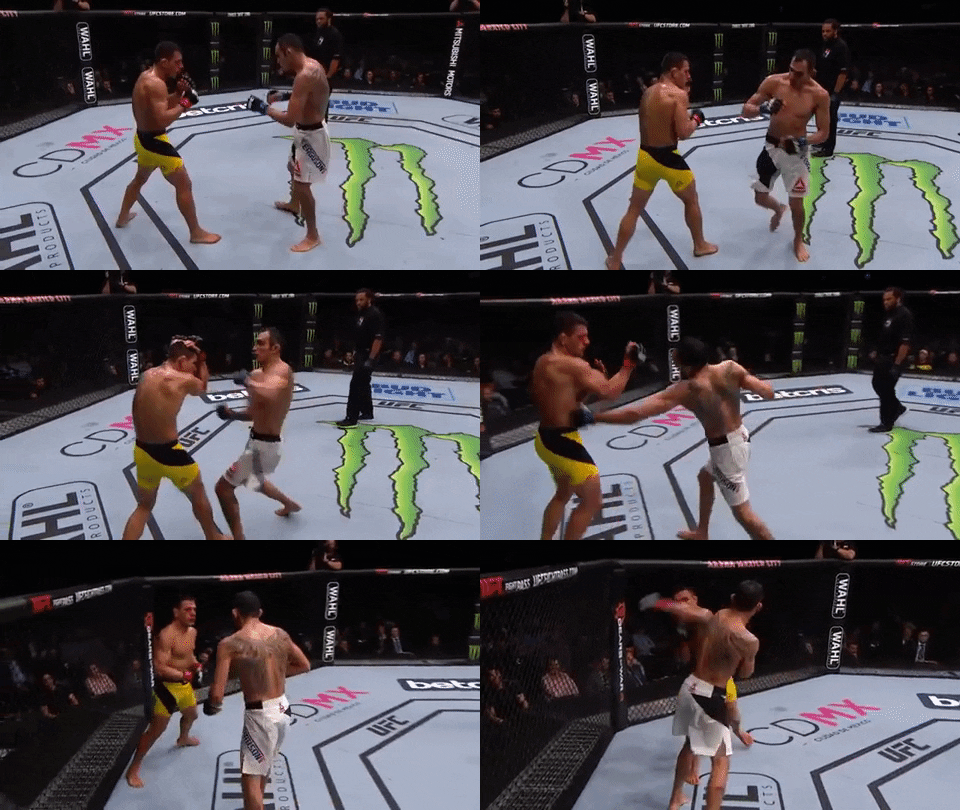
(RDA is known for his pressure fighting and gas tank, but even if he had trouble against the funky movements and unpredictable striking of Ferguson. Ferguson willingly gave up his back by spinning around and returned fire with a winding long left hook. How do you train for something like that?)
No one knows exactly what Ferguson is going to do next, and that includes Tony Ferguson. He has admitted that he enters the cage with a general game plan in mind, but if he sees something that’s working, he’ll continue to do it even if it seems to run counter to what he SHOULD do. In this way, he shares a lot of similarities with Carlos Condit. Whenever an opponent was bothered by an attack, Condit would make note of it and repeat it, ad nauseum. Spinning backfists, low kicks to the calves, or right straights to the body. If you showed momentary discomfort, Condit knew it was a matter of time before he could get you to break. Ferguson has a similar approach but has a deeper bag of tricks to pull from. With an endless gas tank and ability to remain unpredictable, opponents prepare for one type of attack only to be met by another. You could shoot in for Ferguson’s hips the first time around and be met with double underhooks and a sprawl, but the second time around Ferguson might go for a Granby roll to escape. A third takedown attempt might result in Ferguson snapping down your neck in a D’Arce choke attempt and all of a sudden, you’re the one under attack and fighting to get back to your feet. At it’s best, this can finish the opponent or create opportunities for Ferguson to take his opponent down and force them to play defense. If the opponent does fight out of the snap down, they now must absorb some strikes for their troubles.
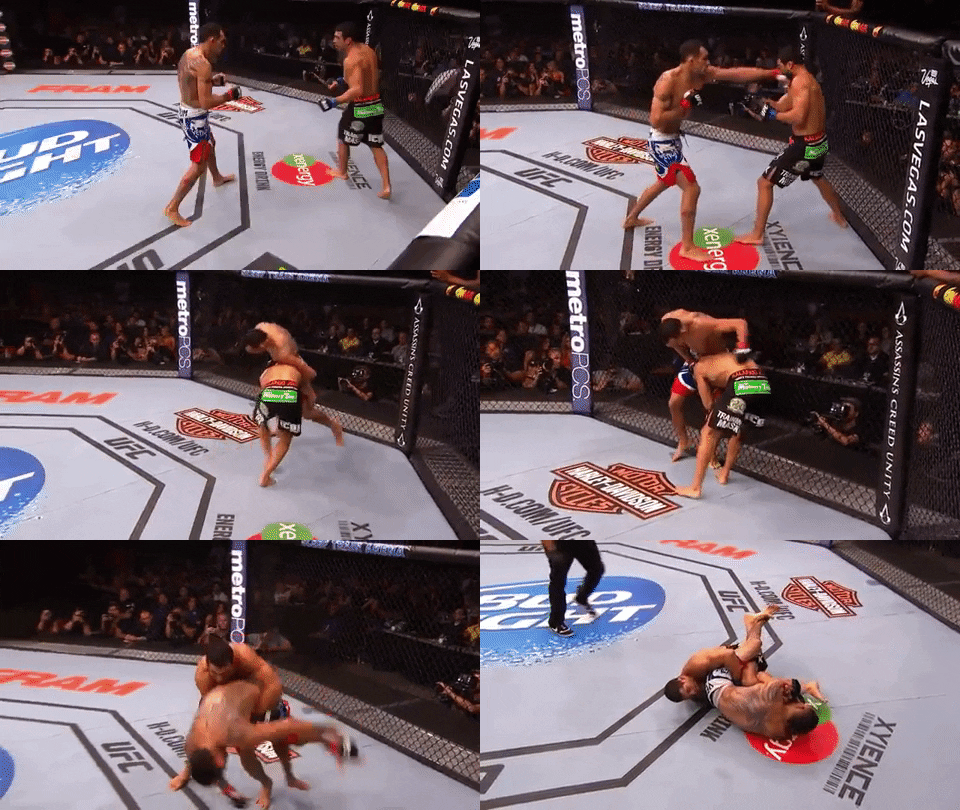
(Try to take in everything that’s going on here: Ferguson is pressuring Danny Castillo towards the fence and he uses upper body movements to avoid the strikes. Once Castillo has grabbed a single leg, Ferguson starts to snap his head down for a D’arce choke, only to go for a Kimura instead. Castillo bails on the takedown to try and grab Ferguson’s back, which Ferguson counters with a Granby roll straight into a kneebar.)
In the striking department, Ferguson’s ability to throw surprisingly accurate jabs and straights from both the orthodox and southpaw stance gives his opponents fits since they can’t commit to one side to slip out to and counter. Adding to the pressure, Ferguson’s not afraid to throw a barrage of kicks at your legs and midsection, slowing down the bounce in your steps and draining your gas tank. There’s nothing worse than looking up at the clock and realizing that you’re running out of steam while Ferguson seems to be getting more frenetic the longer the fight goes. His low kicks especially come in handy since it pins his opponents in place while he starts slicing them up with elbows, which he will throw from any possible angle. Ferguson’s penchant for throwing front kicks is also evident in all his fights, but especially in the Rafael dos Anjos and Kevin Lee match-ups. Despite knowing that his opponents would like nothing more than to grab and leg and take him down, Ferguson constantly threw the kicks, openly daring them to try and snatch a leg so he can hammer in some punches and scramble back up. By the time his opponents realize they’re tiring faster than anticipated, it’s already too late.
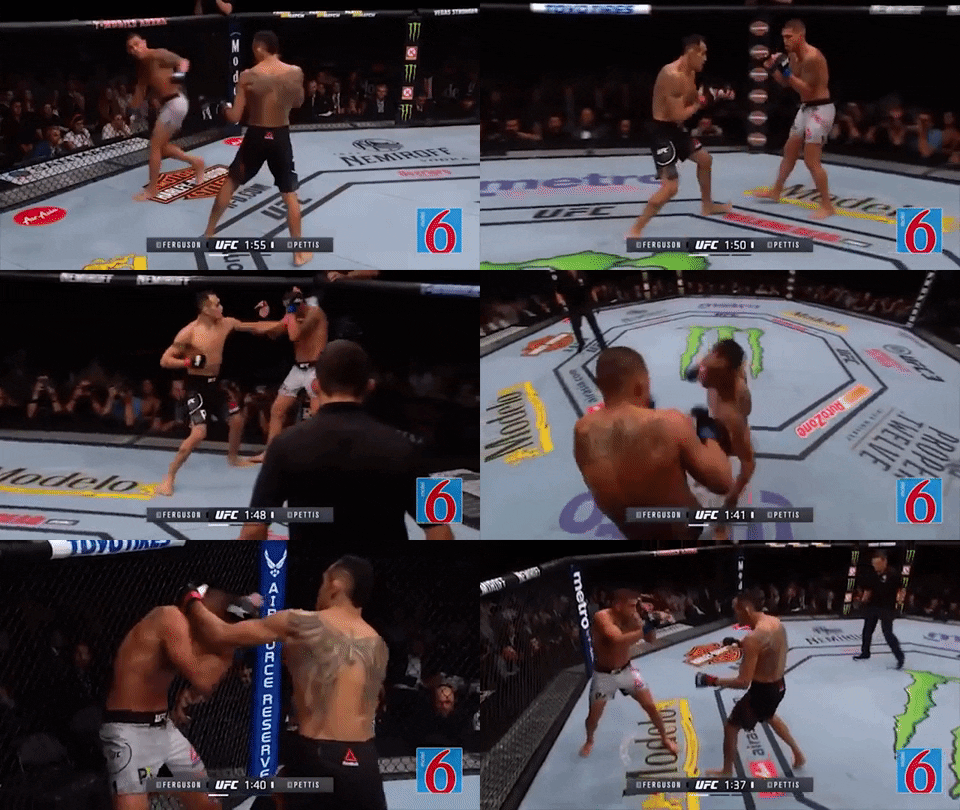
(Ferguson’s long lead right coupled with his stutter steps create an awkward rhythm that Pettis had trouble adjusting to, and it leads him right to the fence in a square stance.)
No two Ferguson fights look alike, and that’s what makes him difficult to prepare for. Ferguson is the kind of fighter that looked at Rory MacDonald’s fight against Stephen Thompson and thought that the main problem was that he waited too long to attempt an Imanari roll. After all, Barboza looked shocked when Ferguson went for one in the first minute of their fight. One of Ferguson’s go-to moves when he’s in trouble is to literally roll around to give himself time to recover, while throwing jabs and hooks to maintain some distance. There is not a single MMA coach working today that would seriously tell their fighters to do this, but Ferguson somehow manages to make it work.
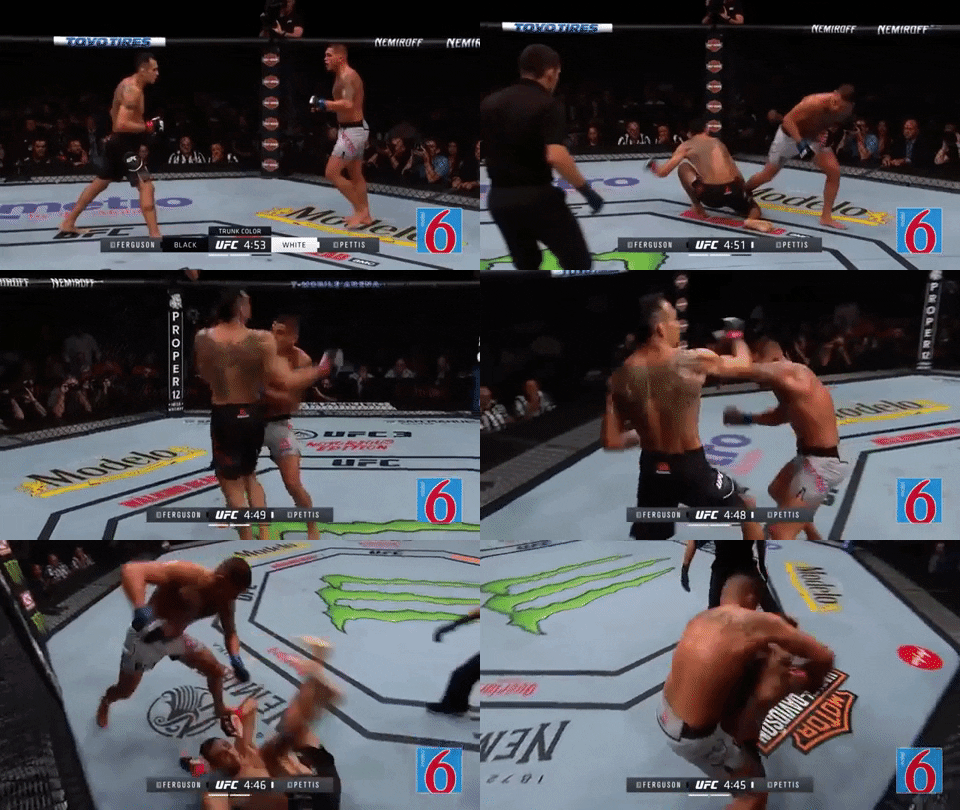
(It’s not a stretch to imagine Ferguson getting a bit too aggressive against a more patient Gaethje only to get clipped in a similar manner, but Ferguson’s creative attempts at throwing spinning elbows and forward rolls save him from absorbing too much damage.)
Against Pettis and Cerrone (his two most recent match-ups), Ferguson kept the fight standing and gave them no chance at setting up an effective counter game. The jabs came faster than expected and caused cuts and swelling in both Pettis and Cerrone, and Ferguson added to this problem by throwing elbows constantly to try and open them up even more. As mentioned earlier, the longer a fight drags on, the better the timing of Ferguson’s gets. Kevin Lee had a great first round against Ferguson, but once he started to accumulate damage to the body (courtesy of Ferguson’s front kicks and jabs), he faded quickly before getting submitted in the third round. Gaethje definitely has his hands full. What does he bring to the table?
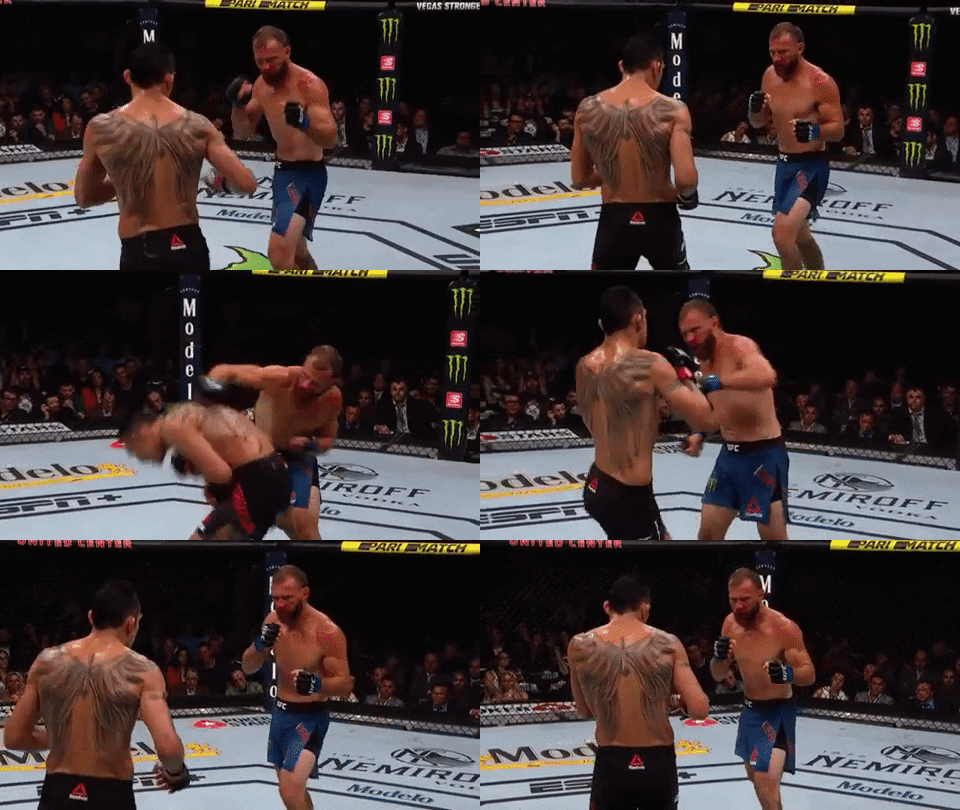
(In the RDA fight, Ferguson spun around and gave up his back to throw a left hook. He’s getting better at timing his strikes and finding his opponent’s without looking, which Cerrone found out the hard way. After he misses the jab, Ferguson ducks towards his left side and spins around to clock Cerrone with a beautiful right elbow.)
Despite a record of 4-2 in the UFC, Gaethje has headlined all but one event he's been in. Physically, there isn’t anything in particular about him that stands out. At 5’11” with a 70” reach, he doesn’t tower over most of the weight class nor is he the strongest or fastest. There’s no championship title given to the most exciting fighter, but if there was you can bet that Gaethje would be at the top of the list. Justin Gaethje, Cody Garbrandt, and Aaron Pico are notable examples of fighters who have great wrestling but elect not to use it, sometimes to their downfall. Marching forward, Gaethje keep his hands high and gets in close, pressuring you to back up and throw strikes at his forehead and forearms. Over in boxing, notable champions such as GGG, Joe Frazier, and Marcos Maidana have made a career out of doing this. But after two losses in a row, Gaethje realized that being exciting is great, but not if it comes at the expense of being finished brutally.
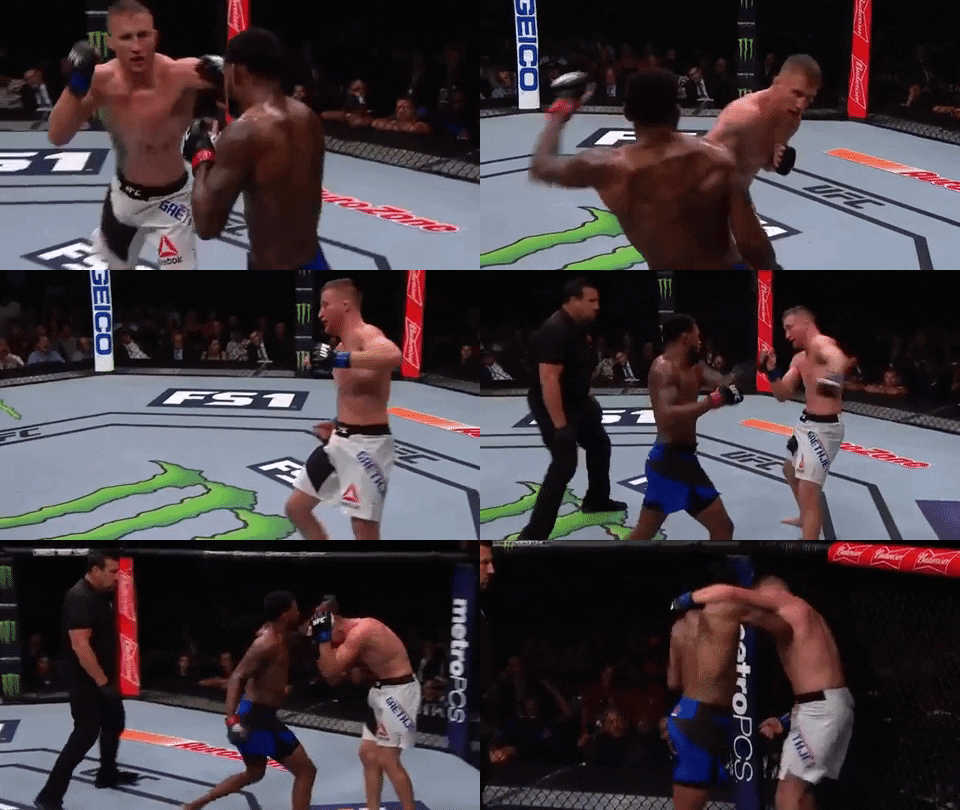
(You can call Gaethje many things, but boring is not one of them. Even after getting hit flush with several shots from Michael Johnson, Gaethje swings back and is offensive-minded.)
In the past, Gaethje relied exclusively on his iron head to hold up so he can get in close to swing in with hooks, uppercuts, and low kicks, usually thrown as counters when the opponents are off balance from punching him. Eddie Alvarez and Dustin Poirier have wins over Gaethje, but their lead legs were absolutely battered due to the constant barrage of leg kicks that were thrown their way. This is the trade-off that many prolific jabbers make: sacrifice your lead leg in order to develop a strong jabbing game. Alvarez was able to overcome this deficit by mixing up his hooks to the body and head after throwing his jabs while Poirier doubled and tripled-up on his jabs while throwing uppercuts down the center to throw off Gaethje’s timing. This isn’t a problem that’s unique to Gaethje, when kicks are thrown without proper setup, they get countered. Whenever Gaethje threw low kicks as a response to the jabs, he hurt his man. When he started throwing kicks randomly, he was eating straight punches for his troubles and being knocked off balance due to being on one leg.
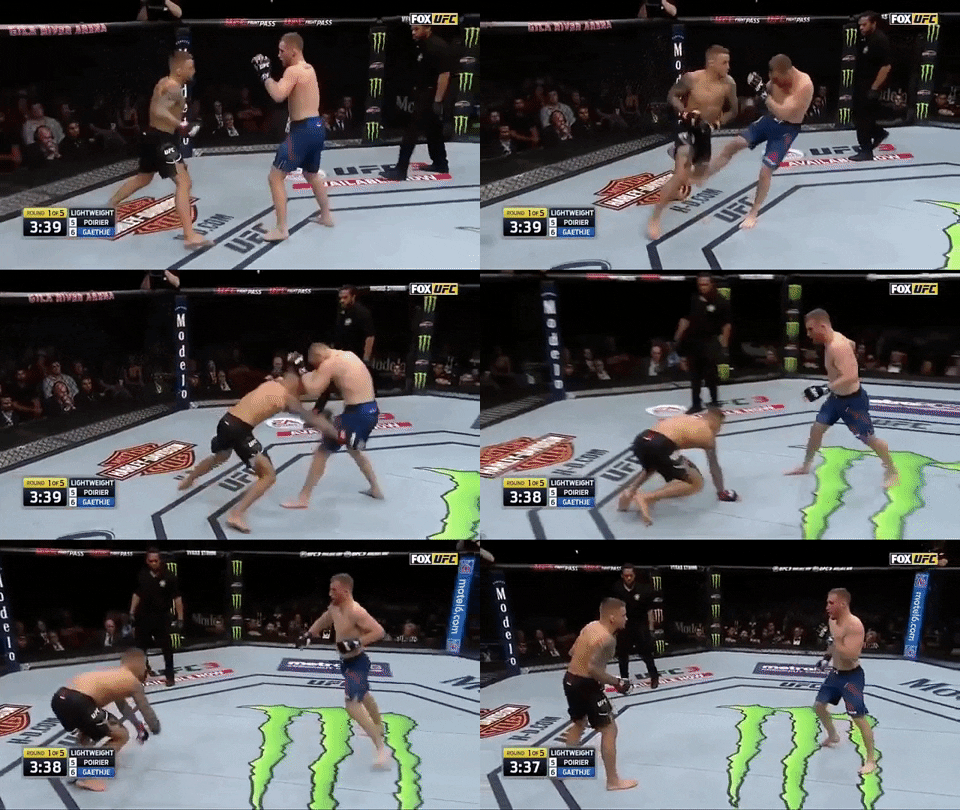
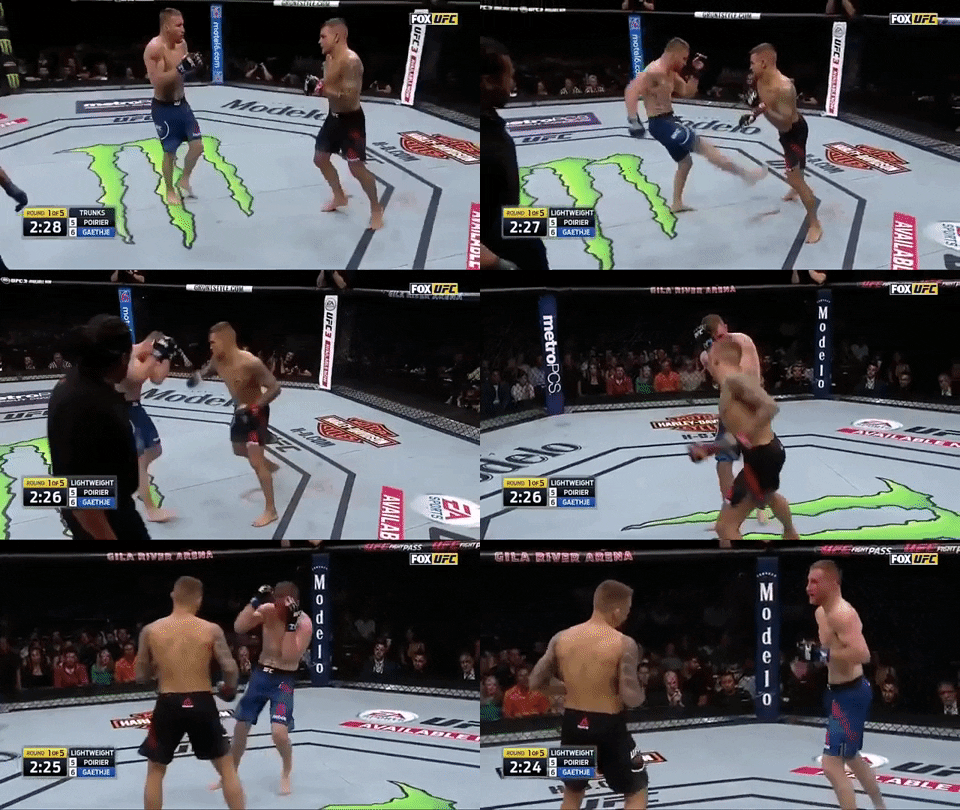
(In the first clip, Gaethje times a low kick while Poirier starts swinging with his hands and knocks him off balance. In the second, Poirier is more prepared and retreats his lead leg slightly, softening the damage he takes. Poirier follows this up with hooks and uppercuts to a stationary Gaethje.)
What’s made the biggest difference in Gaethje’s recent performances is the same thing that propelled Anderson Silva to stardom: patience and feinting. Instead of going for an all-out assault in the first few minutes of the fight, Gaethje has realized that picking his shots is much more conducive to scoring a finish. Rather than charging in and swinging for the fences, Gaethje leads with his jabs and feints and backs away when opponents start to counter. If they were going to exchange strikes, it would be Gaethje’s terms and no one else’s. This kind of approach could come in handy against someone like Ferguson, who loves to constantly move forward and has a singular purpose in mind: attack.
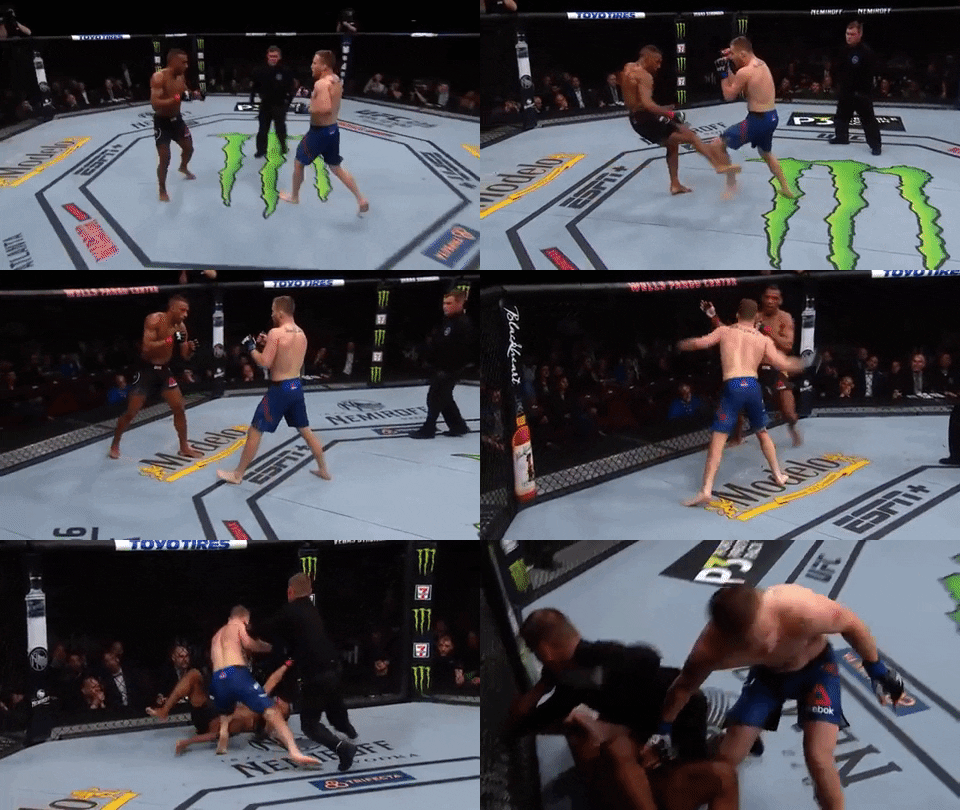
(Even though he took a leg kick, Gaethje stayed composed and stalked Barboza towards the fence. Once Barboza realized that the exit to his right was covered, he tried to move laterally only to get clipped by a right hook. I guess patience really is a virtue.)
For Ferguson to keep his winning streak intact, he’s going to have to try and drag Gaethje into deep waters. The low-line side kick, teep, and front kicks would do wonders, the latter being used by James Vick against Gaethje before he got knocked out. Trading low kicks isn’t the best idea against Gaethje, but if Ferguson can withdraw his lead leg and counter with straight punches, it can damage Gaethje more than usual since he’ll be one leg (as evident in the Michael Johnson and Dustin Poirier fight). Gaethje has a decent chin (despite all the damage he’s accrued), but fatigue makes cowards of us all. Alvarez and Poirier took advantage of this by going high-low with punches to the head, body, and then head again to constantly keep Gaethje working and depleting his gas tank. Ferguson is no stranger to body blows, and hammering Gaethje’s midsection with front kicks and throwing hooks to the body can slow down the pace and force Gaethje into making sloppy mistakes. When Cerrone was able to keep Gaethje at bay with front kicks and jab-straights while pivoting out. It kept Gaethje in place and didn’t give him the opportunity to counter with low kicks of his own. Look for Ferguson to replicate a strategy similar to this.
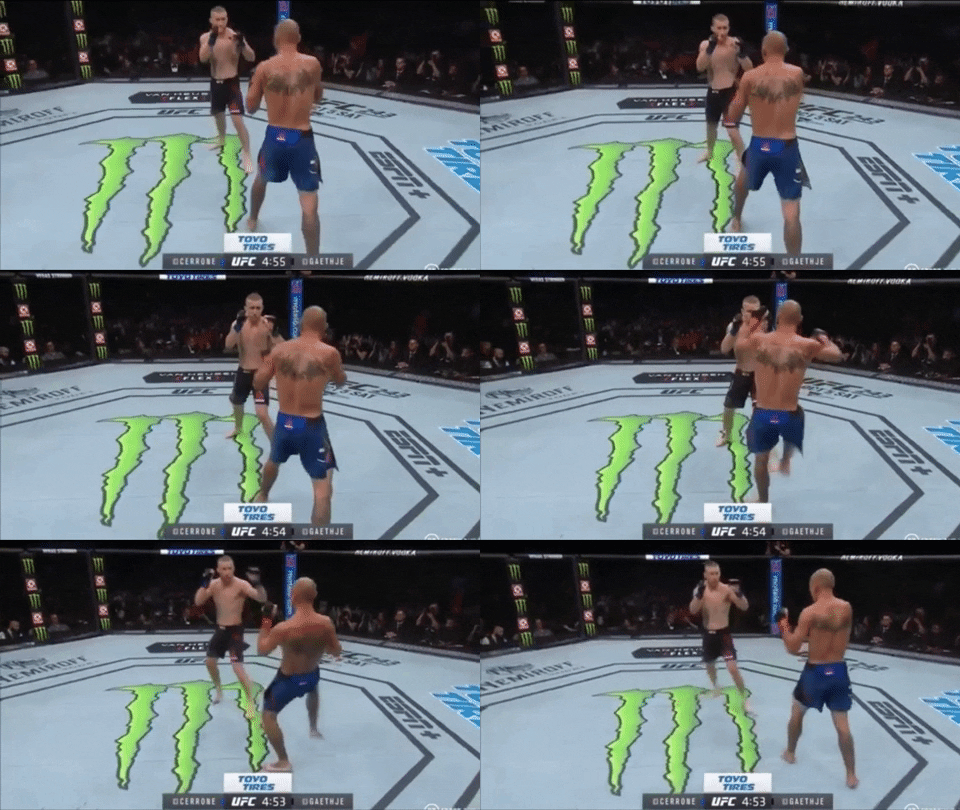
(Some more of these kicks would have helped keep Gaethje at a distance, and it’s not hard to imagine Ferguson utilizing these at some point.)
This doesn’t mean that Gaethje is against impossible odds, after all Ferguson isn’t without his faults. He’s hittable on the feet and has been dropped by guys like Kevin Lee, Anthony Pettis, and Lando Vannata. To think that Gaethje can’t hurt him on the feet is ludicrous. Ferguson can be taken down and held there as long as you constantly improve position and keep him from locking onto your wrists. Given all the wars he’s been in, he’s prone to getting cut up himself and who knows how long before another injury occurs. His lack of ring awareness at crucial moments causes him to give up positioning in the cage that he shouldn’t, especially when he moves back straight onto fence. Ferguson commits a lot of technical mistakes by sometimes lunging past his opponents or pressuring without the fleet-footed movements necessary to corner them. Don’t even get me started on his terrible habit of sticking his chin out in the open when he throws hooks and uppercuts, which is ripe for the picking against a heavy-handed fighter like Gaethje. Ferguson is also guilty of trying different moves and combinations mid-fight at the cost of losing the lead and forgetting his overall fight strategy. Gaethje can exchange kicks with the best of them (as shown in the Barboza fight) and is more than willing to eat a few shots to get in his own. The fact that Gaethje has recently been patience between rushes is good for him, and if he can throw in more feints to really draw out the kicks and strikes from Ferguson, all the better.
Co-Main Event
In the co-main event, Henry Cejudo defends his bantamweight title against former champ Dominick Cruz. Just in case you all weren’t aware, Cejudo is the only UFC fighter to have won a UFC title and an Olympic gold medal (in freestyle wrestling). Calling himself “Triple C”, Cejudo has drawn the ire of many fighters and fans, but his skills are undeniable. After beating Mighty Mouse in a rematch, he wiped out T.J. Dillashaw for his first flyweight title defense in less than a minute to enter the conversation as one of the pound-for-pound best fighters. To further solidify his greatness and join an elite group of fighters that are champ-champs, Cejudo moved up in weight against Marlon Moraes, who was on a tear and had finished his last 3 opponents in devastating fashion. The original plan was to have Cejudo fight Dillashaw up in his weight class of 135, but once Dillashaw was suspended for doping violations, it was clear that a new champion would be crowned. The first round was all Moraes, who had a field day kicking Cejudo’s lead leg and forcing him to switch stances. At 5’4” with a 64” reach, Cejudo isn’t the kind of fighter that can pick fighters apart from the outside and keep them at range; he needs to close the distance to inflict damage. Cejudo’s corner didn’t sugarcoat the results, he lost that round. However, they reminded him it’s the Demetrius Johnson rematch all over again. What followed was a series of technical adjustments that every cornerperson should take note of: if your fighter is losing, give them clear instructions on what they need to be doing in order to turn the tables. Cejudo started to switch stances while in range and threw right hand leads when he was in orthodox, jabs from southpaw, and pressuring Moraes with feints. Much like his friend and training partner Edson Barboza, Moraes is susceptible to moving more frequently than he should to get out of danger instead of pivoting. This kind of strategy removes the element of danger entirely but can get taxing as time wears on. Cejudo's right hand leads eventually cracked the defenses of Moraes and he started to wilt.
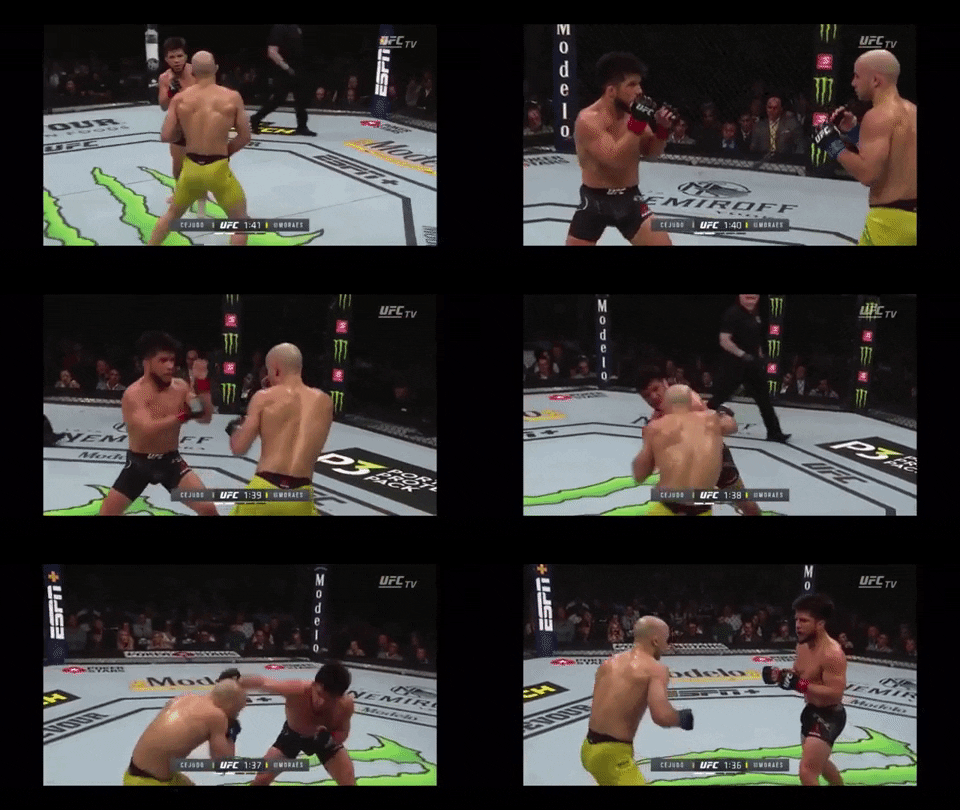
(Jabs are always the standard weapon of choice when measuring distance, but the right hand lead can surprise fighters if thrown with enough speed and can do more damage. A right hand lead into a clinch was a favorite of Fedor Emilianenko.)
By the time the third round rolled around, it was clear that Moraes has lost the wind in his sails and would need to badly hurt Cejudo to win. No such luck happened, and Cejudo again used a right hand lead to establish a clinch, hammering Moraes with knees. After taking Moraes down against the fence, Cejudo started raining down elbows and stopped Moraes before the championship rounds. Moraes is by no means a giant, but it was clear throughout the fight that he was bigger and stronger. For Cejudo to overcome the size discrepancy and finish off a legitimate contender like Moraes can’t be underestimated.
Much of Cejudo’s improvements can be traced back to his commitment to karate (don’t laugh). Wrestlers are great at pushing forward into takedowns and strikes, but many do have difficulties with certain nuances of striking. Cejudo started incorporating karate-style footwork right before the Wilson Reis fight, and the difference was notable. Instead of moving forward looking to exchange uppercuts and hooks, Cejudo now bounced in and out of range to focus on quick straight punches. This bladed stance allowed him to set up some brilliant counters, like the right straight that morphs into hooks to the body. Much like former champion Lyoto Machida and fan favorite Donald Cerrone, Cejudo started incorporating an intercepting knee to his game, a great tool to utilize against fighters who looked to swing overhands or dip lower to attempt takedowns. These kinds of traps came in handy when he faced off against the likes of Mighty Mouse and Dillashaw.
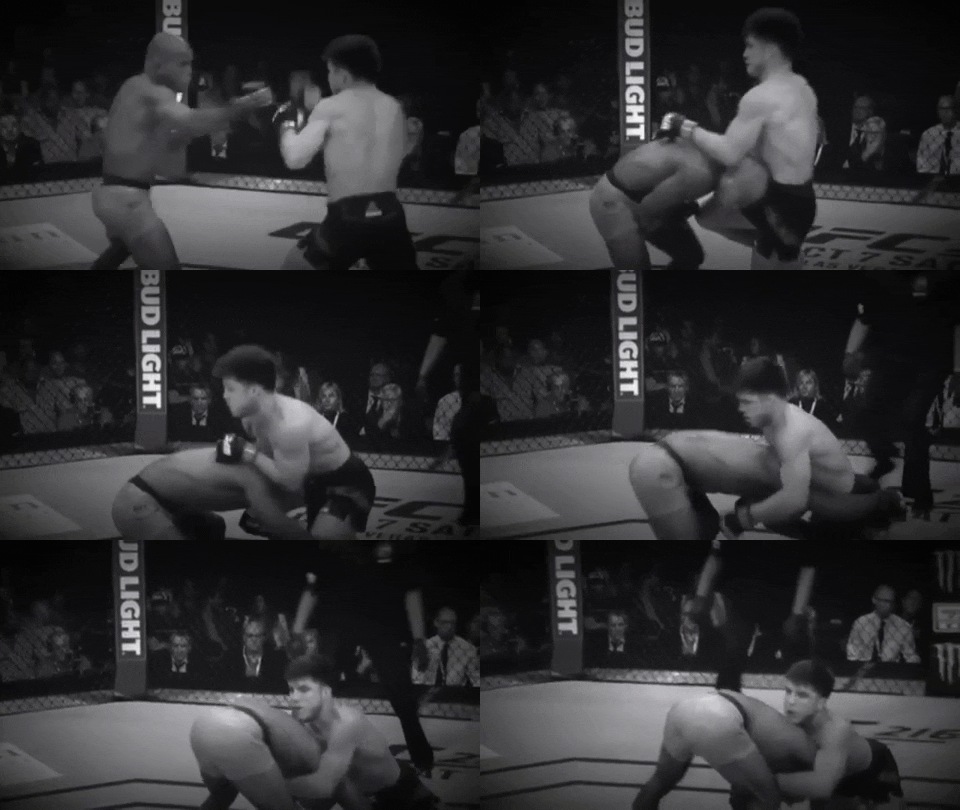
(In this instance, Cejudo meets a ducking Wilson Reis with an intercepting knee. At times, he’ll switch this out for uppercuts and hooks off an angle.)
In a perfect world, Cejudo would be able to defend his bantamweight title against a top contender, someone like Aljamain Sterling or Petr Yan. That’s not the world we live in, so instead Cejudo was slated to fight Jose Aldo who was coming off a hotly contested loss to none other Marlon Moraes. With COVID-19 throwing international travel out the window, the UFC was forced to look for a suitable alternate. It’s possible that they reached out to all the fighters in the top five or top ten before realizing that none of them would be able to make the May 9th date. Enter Dominick Cruz.
Now, I know some of you might be upset that Cruz is jumping the line to go from having a 4-year layoff to a shot at the title for his first fight back. Hell, his last fight was a clear-cut loss to Cody Garbrandt. From a rankings perspective, it makes no sense that he’s getting a chance to fight Cejudo for the belt, and I won’t even try to justify it. He was available, he’s a former champ, and at least we get to see both Cejudo and Cruz back in action. Just a couple of Arizona guys fighting for a title in sunny Florida, what more could you ask for (other than a vaccine for COVID-19)? Nothing, that’s what. Since it has been quite a while since Cruz has last fought, it’s worth strolling down memory lane to see what makes him so special, especially when he’s healthy.
During his heyday, Dominick Cruz was THE fleet-footed bantamweight that could run circles around you while blasting long, looping strikes. His footwork often stymied his opponents and analysts alike who couldn’t quite grasp what he was doing, and that suited Cruz just fine. Even though he was accused of breaking the fundamental rules of striking, it was hard to argue with the results. One of the tenets of boxing is to maintain your base so that you’re ready to attack and defend, regardless of being an orthodox or southpaw striker. Cruz is constantly switching stances, and to make it worse he does it in front of his opponents. Although it seems like he’s easy pickings for counters, a closer look shows that things aren’t as simple as they appear. By staying in perpetual motion, Cruz can move his lead leg back to avoid low kicks, and he’s in and out of punching range. When opponents try to close the distance, he can hop back to avoid strikes or make a quick stance switch and hit them with straights (from either side). Constant shuffling also hides his rear left kick, which he pairs nicely with a right straight. Against the likes of Urijah Faber and Joseph Benavidez, he found a lot of success using this combo and even dropped the latter in their rematch.
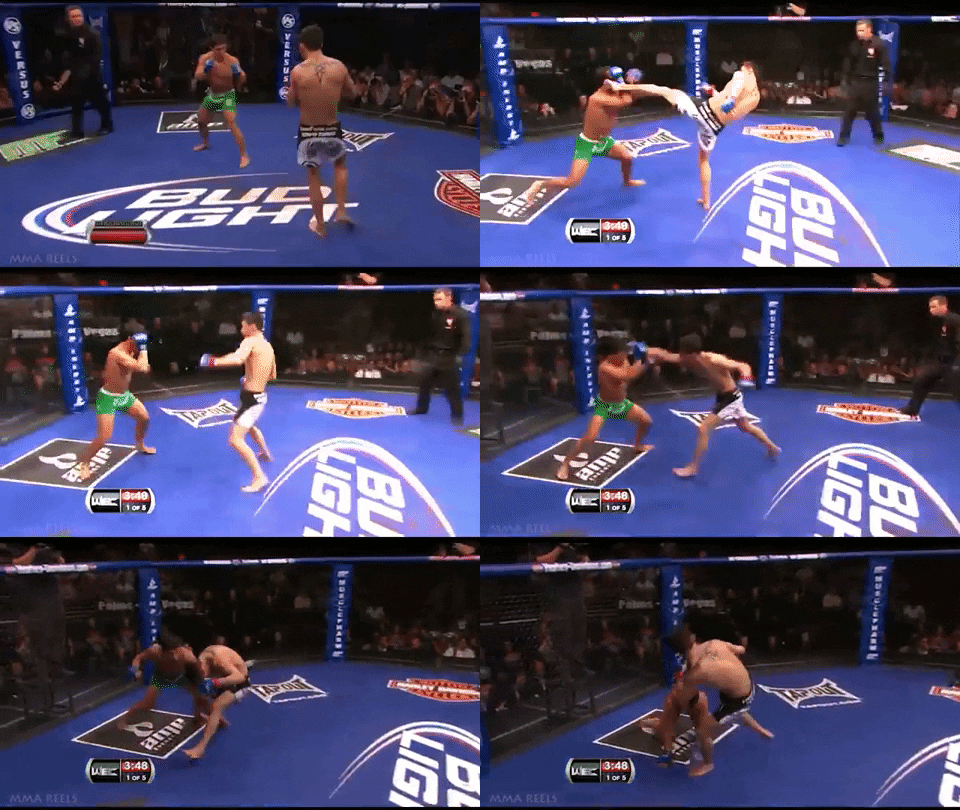
(A left high kick followed by a right straight dropped Benavidez, signaling a long night ahead of him against Cruz.)
One of the ways that Cruz is able to keep his opponents from lunging in is his excellent understanding of lateral movement. Much like Vasyl Lomachenko, Cruz loves to attack from one stance, switch while his opponents cover up, and then attack again from a superior position. This is a staple of his and even when other fighters try to mimic it, they miss key details. When Cruz starts shifting to one side, his legs are in front to make sure he’s not dipping too far with his waist. This allows him to slip without compromising his balance and gives him the perfect angle to either shoot for takedowns or throw long hooks. Take a closer look at his fight against Takeya Mizugaki and you’ll see that he uses this exact setup to take down Mizugaki before finishing him with strikes.
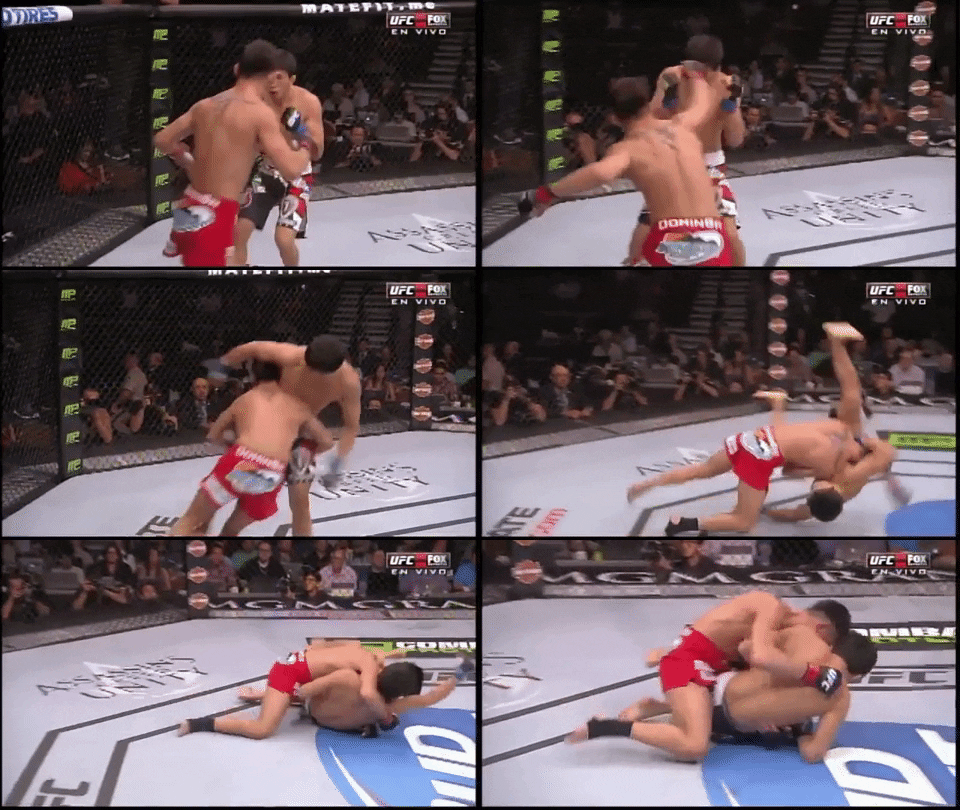
(After darting to his right, Cruz bounces off his rear foot to land a straight. Immediately after, he dives for Mizugaki’s hips and cuts an angle to complete the takedown.)
What made Cruz one of the most talked about stories in sports was his comeback title fight over T.J. Dillashaw. During Cruz’s long injury layoff, it was Dillashaw who took the reigns and established himself as the bantamweight with “neo footwork.” Having beaten Renan Barao twice, it looked as if he was set to be champion for years to come. It’s a good thing no one told Cruz that. In their fight, Cruz made Dillashaw chase him and was able to land a good number of long hooks and uppercuts whenever Dillashaw came in. The normally cerebral Dillashaw threw wild kicks while off balance and ate punches whenever he threw them without a proper setup. Cruz showed that he still has some of the best head movement in the game as he weaved away from Dillashaw’s lunging hooks and overhands, and he made sure to circle out whenever his back hit the fence. Cruz also had success catching the end of Dillashaw’s kicks and returning with either punches or takedowns of his own. I don’t want to make it appear as if Cruz dominated the entire fight, it was close and Dillashaw had plenty of good moments as well. But this is an article on what Cruz does well, so let’s put Dillashaw on the backburner for now.
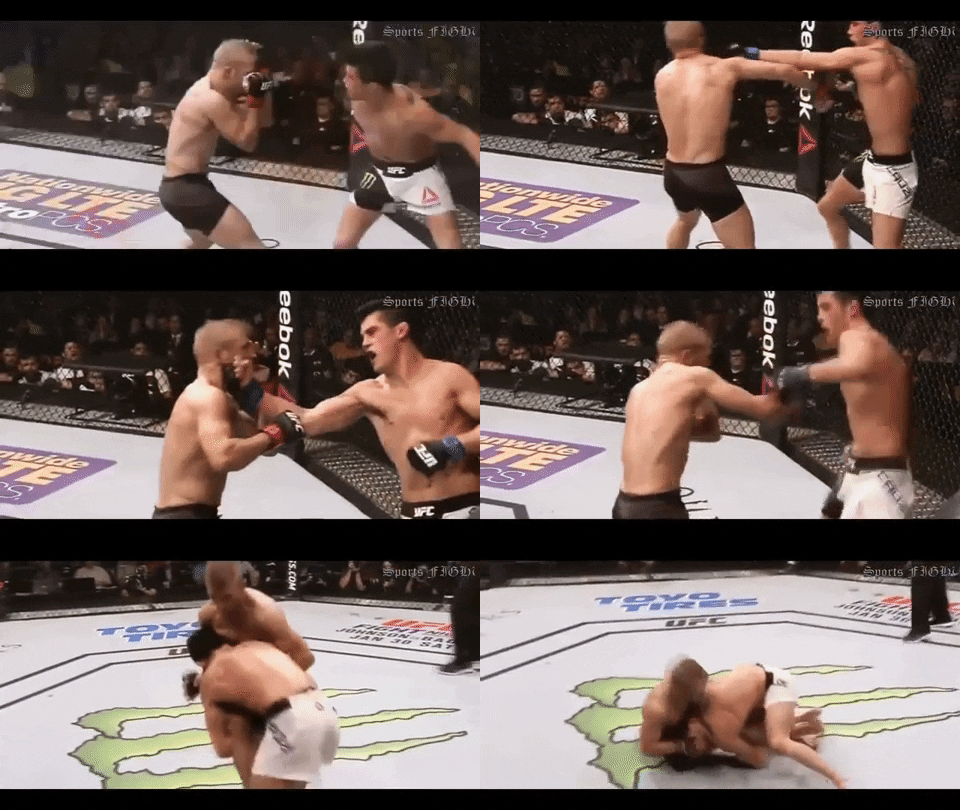
(Whenever Dillashaw chased down Cruz, he retaliated with long hooks and uppercuts. Dillashaw also swung with his hips exposed, giving Cruz takedowns he didn’t have to work too hard for.)
This fight will come down to how healthy Cruz really is and if Cejudo can compete against the bigger guys at bantamweight. Dominick Cruz is 5’8” and has nearly a 70” reach, which makes him the biggest opponent that Cejudo has ever faced. Let’s not forget that even though Demetrius Johnson is considered the greatest flyweight of all time, he looked decidedly average at 135 pounds against Cruz. It’s true that Johnson improved leaps and bounds after that fight, but there were plenty of moments where it seemed that he was just too small for the weight class, and that the flyweight division came just in time. Dillashaw has faced both Cejudo and Cruz, and had this to say about the matchup in a recent interview with MMAMania:
“I think the distance control that Cruz has is going to be one of Cejudo’s biggest challenges. He’s not gonna be able to get a hold of Cruz. If he does, he isn’t gonna be able to hold him down. It’s not like Cejudo is a jiu-jitsu expert where he’s gonna take advantage of Cruz giving him his back. Because Cruz gives up his back constantly when he gets taken down, but he uses it to get back to his feet. I think Cruz’s scrambling ability and his MMA wrestling will be an advantage for him, too.”
There’s no love lost between Dillashaw and his two former opponents, but he does have a point. For Cejudo to retain his title, he may want to implement parts of the strategy that Garbrandt and Dillashaw used: get Cruz to move towards him. Much like Anderson Silva, Cruz looks great on the counter but less so on the lead. Garbrandt had Cruz convinced that he was going to be headhunting him the whole fight, only to retreat back and circle out constantly. Dillashaw also had success when he lured Cruz forward and low kicked him, particularly in the 4th round. Garbrandt allowed Cruz to march towards him and when he would swing his favorite long hooks and right kicks, he ducked under and came back with short hooks and straights. Slick head movement and crisp counterpunching worked wonders for Garbrandt against Cruz, and it’s not unreasonable to think that Cejudo can’t do the same. After all, he employed a similar strategy to beat Dillashaw in less than a minute.
Cruz’s best chance at victory is trying to get Cejudo to come towards him and make him whiff at air. Even in a losing attempt against Garbrandt, he showed that his footwork doesn’t tire in the championship rounds and he has no problems going the full 25 minutes. Moraes also had a ton of success using switch kicks and battering the legs of Cejudo, something that Cruz can do to slow Cejudo down. Everyone is weary of clinching with an Olympic gold medalist, but Cruz should use that opportunity to lean in and make him carry his weight around. This is the same guy that suplexed Mighty Mouse and bullied him around the cage, and he could definitely remind Cejudo that even if he doesn’t have the same wrestling pedigree, MMA grappling is a different animal altogether.
Unlike other events where we can hopefully expect fighters to come in with a full camp (or at least prepare with coaches and sparring partners), we’re witnessing a live experiment to see who can compete under the worst of circumstances. When you take away your normal training routines and you have to be coached through Zoom calls and limited training partners, who can be the best? It’s not just about styles anymore, who can do the most with the limited amount of resources? Ferguson has been training himself for years, so even if he matches up terribly against Gaethje, he might have an edge due to his ability to prepare year-round, even under quarantine. Cruz has been out of the game for a long time due to injuries to his ACL (both knees), groin, feet, arm, and shoulders, but he’s also one of the few guys who have opted to heal rather than fight through the pain. Perhaps the time off has allowed him to focus on rebuilding his skills, learn new tricks, and come back like a man in his 20’s.
The card itself is stacked with talent, but we could be witnessing some dull fights if everyone gasses out due to poor training camps and the conditions that fighters have to compete under. Time will tell if UFC 249 will go down as one of the best in the promotion’s history or serve as a cautionary tale as to what happens when rules are circumvented to fill an obligation to shareholders.
