 Home

 Creators
 Search
 Recent
 Random
 Posts
 DMs
 Tags
 Random
 Importer
 Import
 FAQ
 Account
 Register
 Login
 Favorites
 Keys
 Logout
 Telegram

Vet to Champ: Dustin Poirier (Bonus) (Patreon)
Content

Dustin Poirier entered the UFC a decade ago as a talented featherweight on the WEC roster once the promotion was absorbed by Zuffa. Despite going 1-1 in WEC, Poirier showed a lot of promise and emerged as another natural fighter from Lafayette, Louisiana, joining the likes of Daniel Cormier, Alan Jouban, and Liz Carmouche (there must be something in the Bayou water). Poirier had a brawling style that pleased fans and matchmakers alike. His disdain for defense and focus on offense meant that he delivered nonstop action, even if it was to his detriment.
Although he gained a reputation as an exciting fighter, few were willing to call him a championship prospect. Poirier is nicknamed “The Diamond”, and if he wanted to live up to that moniker, he would have to learn to perform under pressure.
It didn’t happen overnight, but Poirier went from fringe contender to interim champion in one of the deepest divisions in the UFC. Let’s take a closer look at how he was able to make such a transformation.

To understand where Poirier is now in terms of skills, it’s important to establish where he started from. Poirier began his UFC career with a four-fight win streak before getting outclassed by Chan Sung Jung on the feet and submitted in the fourth round. The fight revealed a pattern in Poirier’s early striking: he would win fights by biting on his mouthpiece and swinging away with hooks, but his technical deficiencies would cost him against the best. In 2015, he made the trek up to lightweight for greener pastures. The additional ten pounds seemed to help as he racked up another four-fight win streak. This isn’t to say that he made leaps in his technical development, he was still showing a lot of the same bad habits he had at featherweight. The only real difference is that he could take more punishment and he spent less time cutting weight.
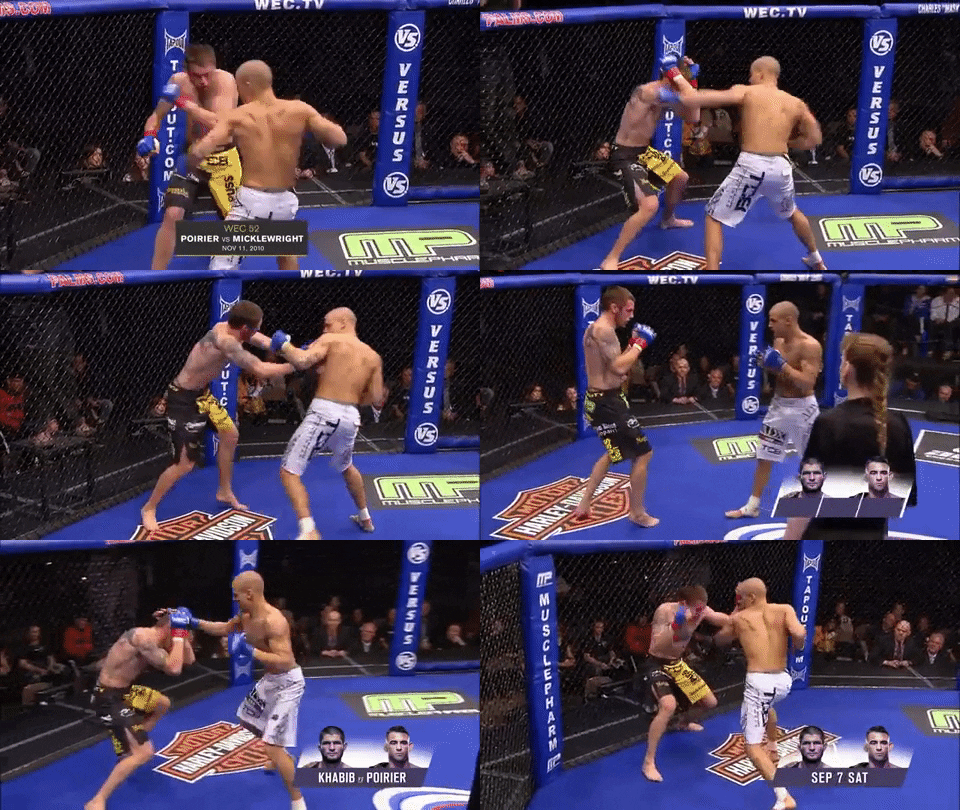
(A young Dustin Poirier was all about moving forward with 1-2’s until he was close enough to start swinging hooks.)
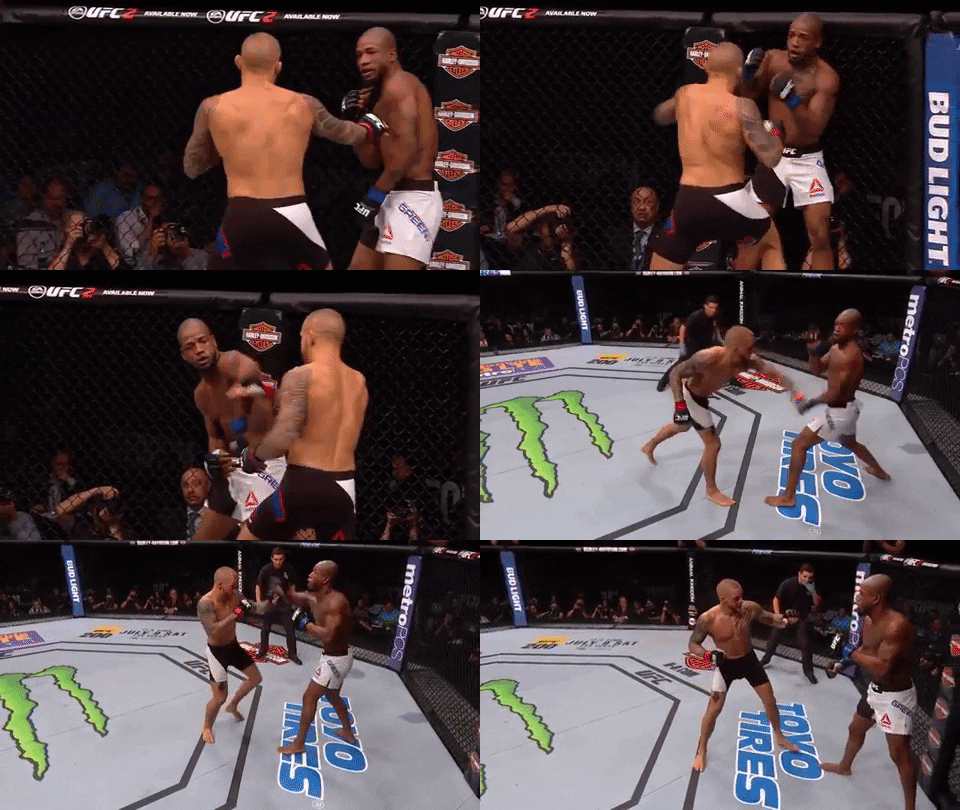
(Against Bobby Green, Poirier threw the left straight and remained stationary before he tried the 1-2 again, which allowed Green to slip out. Poirier backed up and tried the same thing all over again, using ducking as his main source of defense.)
After trading some verbal barbs with Michael Johnson, Poirier found himself headlining his second UFC card in September 2016. Despite trying his best to not repeat the results from his previous headlining fight against Jung, all of Poirier’s bad habits caught up with him at the worst possible time.
This was taking place when the rivalry between American Top Team (ATT) and the Blackzilians was at its peak. It wasn’t just your own reputation on the line, it was also your gym's reputation as well. Keep in mind that just a year before this fight, The Ultimate Fighter had its first-ever gym vs. gym season, featuring ATT and Blackzilians. Kamaru Usman, current UFC welterweight champion and then-Blackzilian, ended up winning the season. This was Poirier’s chance to even the score, but it was not meant to be.
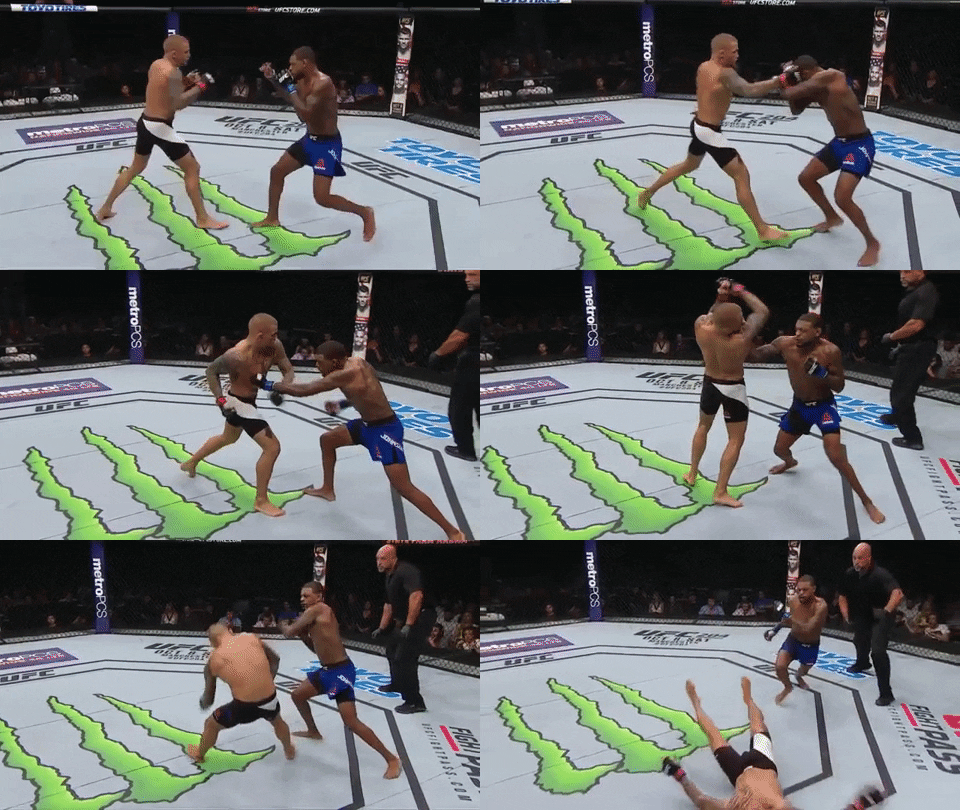
(While Poirier was throwing a left straight, right uppercut down the middle, Johnson stepped back and caught Poirier with his own right straight, left hook, ending his night and changing Poirier’s career path for the better.)

The loss to Johnson wasn’t ideal, but it exposed all the flaws in his striking. Even though he was having some success with stance-switching and caught Johnson flush, Poirier’s face-first, punch later mentality exposed him yet again. Poirier has always had a decent southpaw straight, but he didn't have anything after the punch.
Often times, he followed up his left-straight with forward movement, leaving his chin open for counters. The most frustrating part was that he had moments where he recognized his defensive shortcomings, but wasn’t consistent about fixing them. Before the Johnson match-up, Poirier displayed better defensive savvy against Conor McGregor. Against another southpaw, Poirier brought up his right arm whenever he saw that McGregor was preparing to throw a left straight. The biggest problem was that this still left him vulnerable to the left hook (especially to the head), and McGregor timed Poirier’s blocks to sneak in a left hook to the temple.
Though improved, Poirier still bungles his defense on occasion, but his offensive attacks should be studied by coaches who want to turn their fighters from contenders to champions.
Post Michael Johnson, Poirier had amassed a 6-1-1 record, winning an interim title against Max Holloway in the process. What caused this change? It’s a combination of things, but by far the most notable adjustment was his hair. I’m kidding, it was the jabs. But the hair didn’t hurt either.

In the Jim Miller fight, Poirier debuted a nuanced jabbing game that left Miller flummoxed. By setting up his left straight with well-timed jabs, Poirier was no longer in a rush to try and hit first. Openings that weren’t there before started appearing, and Poirier took advantage.
Feints were also an important addition that he hadn’t shown in previous matches. The feints create overreactions and delays from opponents, giving Poirier opportunities to counter instead of always having to strike first. Miller thought he was getting a one-note brawler, only to be hit with jabs and whiffing on exchanges.
Finally, Poirier’s commitment to setting up his kicks gave him a weapon that was often under-utilized in previous bouts. When Poirier starts his jabbing game, the kicks gave his opponents another thing to worry about. Expecting the jab, opponents would often get hit to the body and legs with kicks.
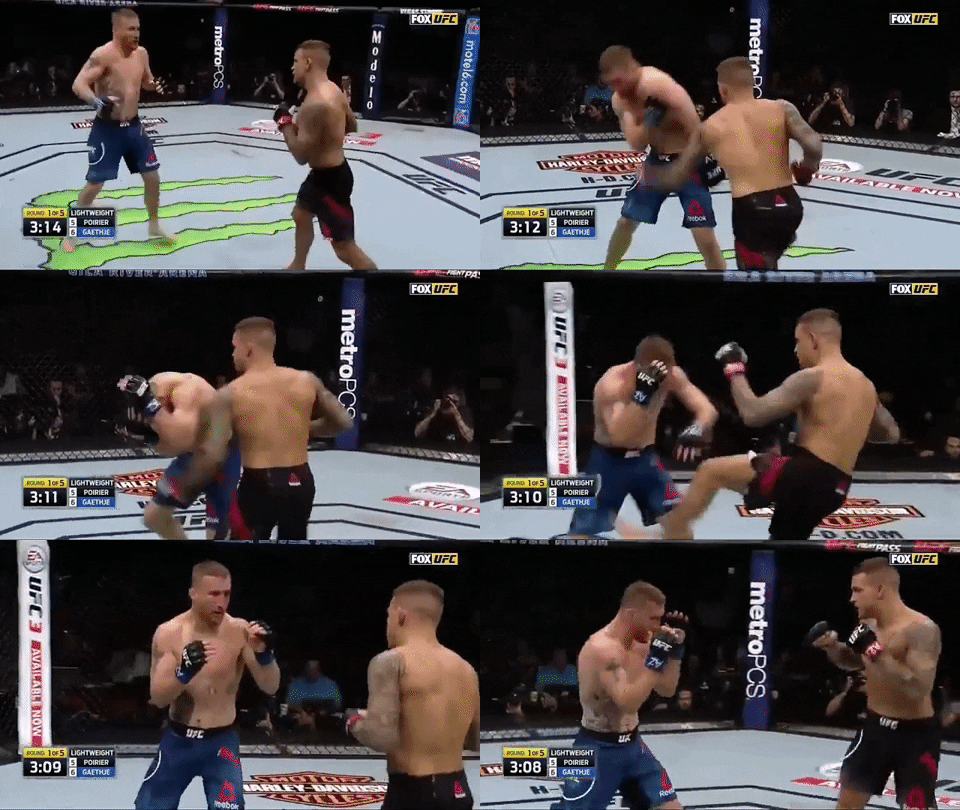
(Instead of blitzing Justin Gaethje, Poirier threw a combination and ended it with a kick before retreating. To dissuade Gaethje from lunging in, Poirier threw in a jab while he moved back.)
You may ask, “But what about Poirier’s defense?” Well, those improvements deserve their own talking points. Poirier still likes to engage in firefights from time to time, it’s part of his fighter DNA and he’s been doing it for so long it’s hard to get him to stop at this point.
Instead, his coaches at ATT have drilled better head movement strategies to reduce the number of strikes he absorbs. Notice how current-day Poirier will move his head off-line (either by slipping side to side or moving straight back) or use the stonewall defense to absorb strikes meant for his head onto his arms. These two moves used in tandem give Poirier the opportunity he needs to counter without sacrificing his chin (most of the time).
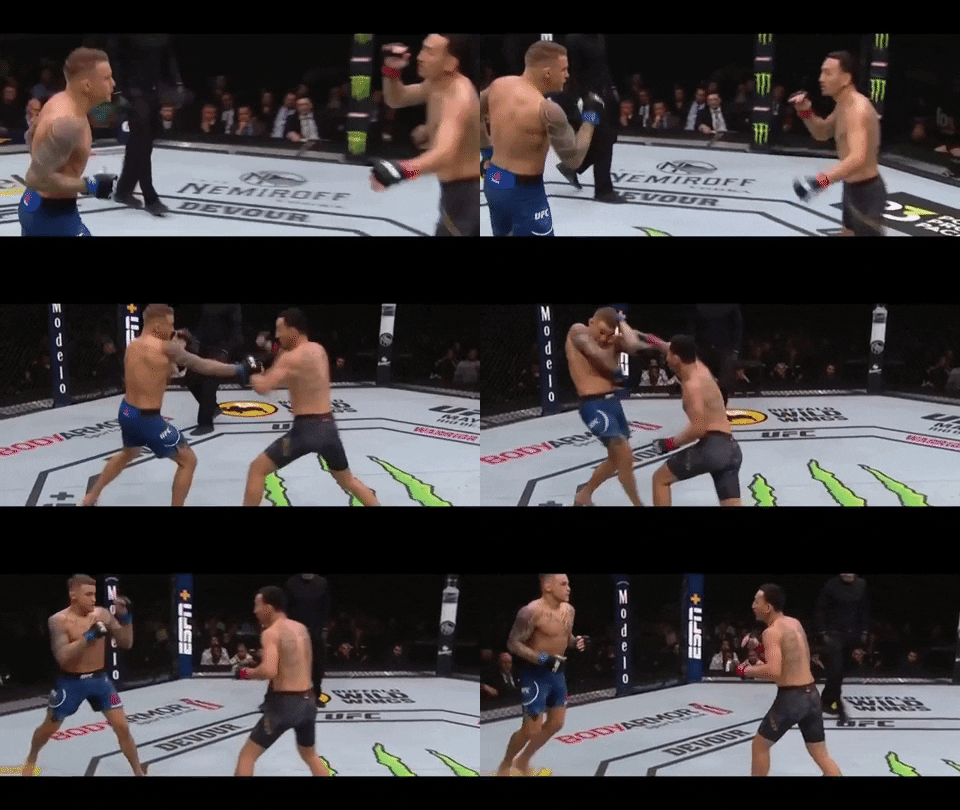
(The stone wall defense is hard to master, but its effectiveness is undeniable. Look at how much trouble Holloway had when trying to land punches.)
There are still defensive flaws in Poirier’s style of striking, but he’s able to make better adjustments on the fly. Justin Gaethje’s low kicks hammered Poirier’s lead leg, but Poirier countered by throwing the left straight at the same time, which buckled Gaethje while he was on one leg. In his two fights against Eddie Alvarez, Poirier got hit with hooks to the body repeatedly whenever he covered his head. To make Alvarez pay, Poirier added kicks at the end of his jabs (as well as intercepting knees), to stop Alvarez’s forward movements and limit his reach further.
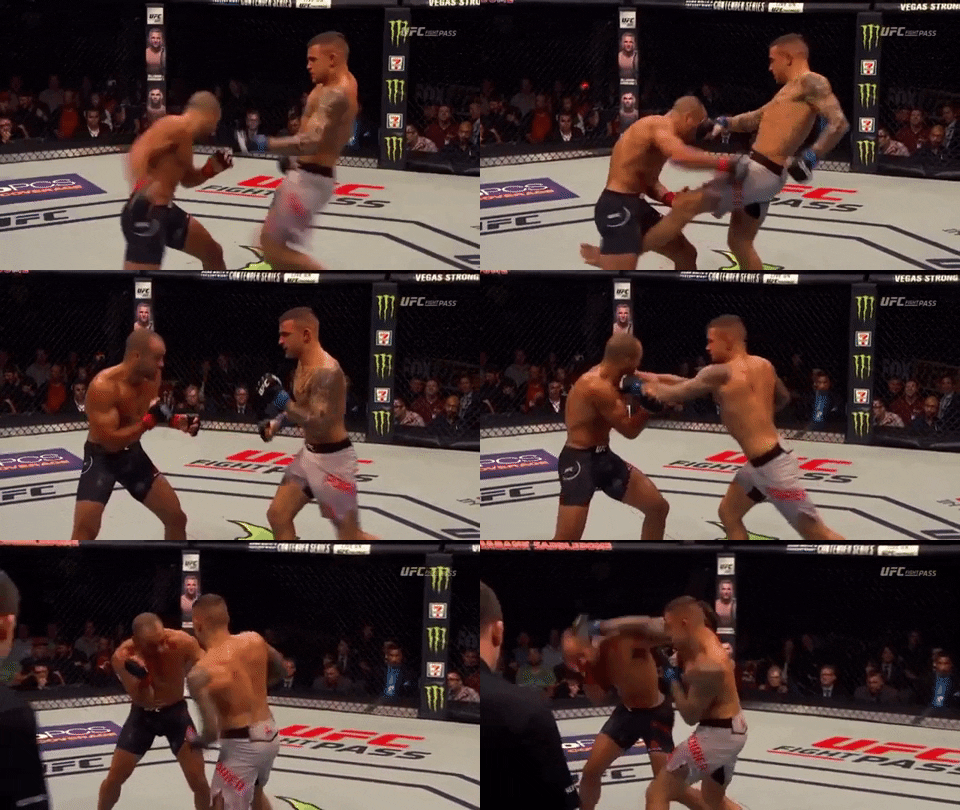
(Alvarez may have landed hooks to Poirier’s body, but the knee and subsequent four-punch combination he absorbed may not have been worth it.)

Against Max Holloway, the second time around (and for the interim UFC lightweight title), Poirier’s stonewall defense limited Holloway’s punching volume, since throwing punches to his Poirier’s head could mean injury to his hands. Poirier also used footwork to force Holloway to chase him, which didn't allow Holloway to properly set up his strikes. Poirier’s left hooks and retreating check hooks also kept Holloway at bay for most of the 25 minutes. Unlike his previous opponents, Holloway just couldn’t figure Poirier out.

Yes, Poirier did suffer a fairly one-sided loss against Khabib Nurmagomedov, but so far no one has been able to beat the Dagestani native. This doesn’t mean Poirier can’t be champion again, and his most recent fight against Dan Hooker showed that another rise to the top isn’t out of the question.

Don’t get me wrong, Poirier still has weaknesses. No style is perfect and his is no exception. The jab heavy style means that his lead leg is ripe for kicking, and everyone from Gaethje to Hooker has badly damaged his right leg. His shoulder roll defense might be great at protecting his head and chin, but his midsection is left exposed and over time, opponents can get Poirier to drop his arms by hitting him to the body, as Joe Duffy proved. Poirier doesn’t let these weaknesses overwhelm the rest of his game, he finds ways to win in spite of his limits, as he still ended up beating Joe Duffy and Justin Gaethje.
Four years ago, Poirier was getting knocked out while rushing in headfirst against Michael Johnson. Nowadays, he’s being linked to a match-up against Tony Ferguson to determine the next title contender at lightweight. Diamonds are created under pressure, and Poirier has finally lived up to his nickname.
Files
Previews only

