 Home

 Creators
 Search
 Recent
 Random
 Posts
 DMs
 Tags
 Random
 Importer
 Import
 FAQ
 Account
 Register
 Login
 Favorites
 Keys
 Logout
 Telegram

Preview: Nurmagomedov vs. Gaethje (Patreon)
Content
Before the influx of talent at bantamweight and featherweight, the lightweights claimed the title of having the most stacked division in the UFC. With that distinction, it’s no surprise that it’s also the weight class that has had the most interim champions. UFC 254 is no exception as Khabib Nurmagomedov puts his undefeated streak and title on the line against the interim champion, Justin Gaethje. Nurmagomedov has been perfect in his MMA career, going 28-0 and a perfect 12-0 in the UFC. The only other fighter to have racked up that many wins in a row at lightweight is Tony Ferguson. With just one more win, Nurmagomedov can claim the longest winning record at 155 pounds and cement himself as the undisputed champion of the world (again). Standing in his way is Justin Gaethje, the man who beat Ferguson and took his spot as the next challenger as well as winning the interim title in the process. Nurmagomedov has so far looked unstoppable, but he’s also fighting someone that is no stranger to stopping long win streaks.
This was a fight that no one expected at the beginning of the year, but such is the nature of MMA. Gaethje started 2020 expecting to fight the winner of Nurmagomedov vs Ferguson only to beat the latter and face off against the former in six months. Gaethje is the betting underdog in this fight for good reason. In over a decade of fighting, no one has been able to stop Nurmagomedov’s game of taking opponents down and beating them to exhaustion. What makes his style so effective?
Let’s start by dispelling some myths about Nurmagomedov’s striking. Nurmagomedov isn’t without weapons on the feet, and he’s become a competent striker since his UFC debut. His striking is reminiscent of both Fedor Emelianenko and Igor Vovchanchyn during their run in PRIDE FC. Nurmagomedov throws looping hooks that can set up the clinch into a single underhook and work on taking his opponents down. Nurmagomedov has also worked on mixing in jabs and uppercuts to keep opponents upright. Many are focused on keeping their base low to avoid takedowns only to leave themselves open to punches down the middle. Al Iaquinta and Rafael dos Anjos both got hit repeatedly by lead jabs and uppercuts, and he’s also been able to drop McGregor by utilizing shoulder/head feints and jabs before throwing the right hand.

(McGregor was so worried about the takedowns that his left hand was lowered longer than usual. This let Nurmagomedov feint with his head movement before uncorking a right hand.)
As a two-time world champion in combat sambo, it’s expected that Nurmagomedov’s transition to MMA was smooth compared to other martial arts. Early on in his career, it wasn’t uncommon to see Nurmagomedov swing hooks and go for flying knees as his feeling out process. A part of it was due to his ability to wrestle down anyone once he got close enough to touch them. The other was that he expected the wild strikes to back his opponents towards the fence. Nurmagomedov has polished a lot of his striking, but one thing that remained constant throughout his career is his use of underhooks, particularly the single underhook while pressing opponents against the cage. It’s hard to say if this is a Nurmagomedov trait or an AKA thing, as other fighters from the gym also utilized it to great effect. Daniel Cormier, Luke Rockhold, Jon Fitch, and Cain Velasquez eschewed the traditional double underhooks and used the single version to free up one of their hands to throw strikes or wrap around their opponents for a takedown.
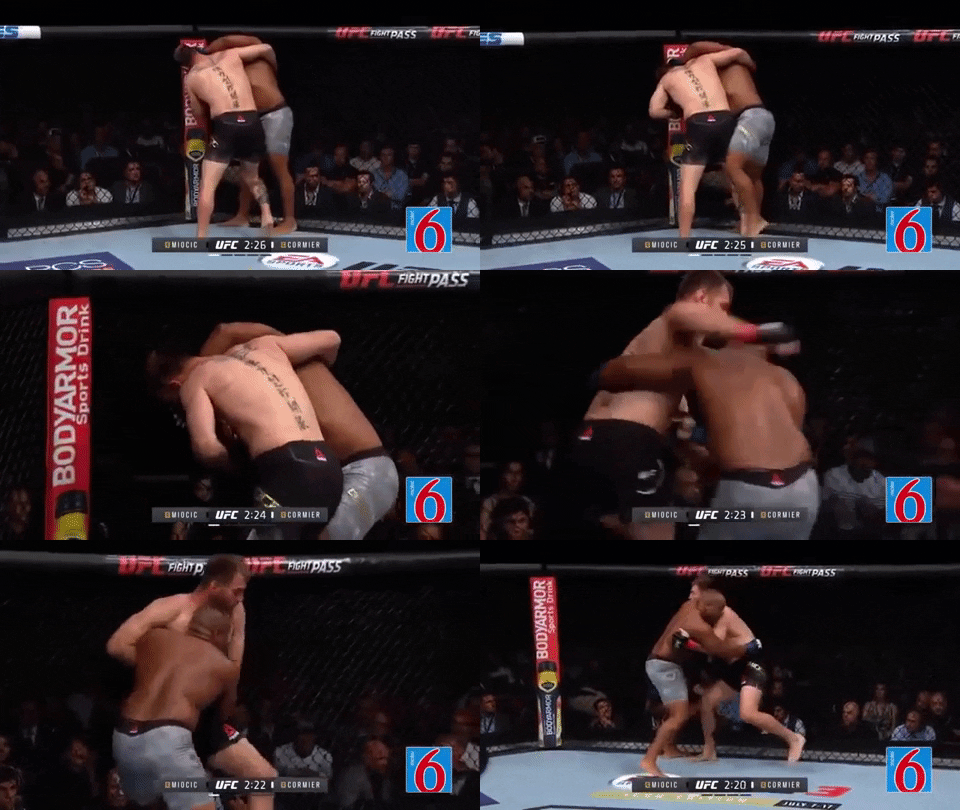
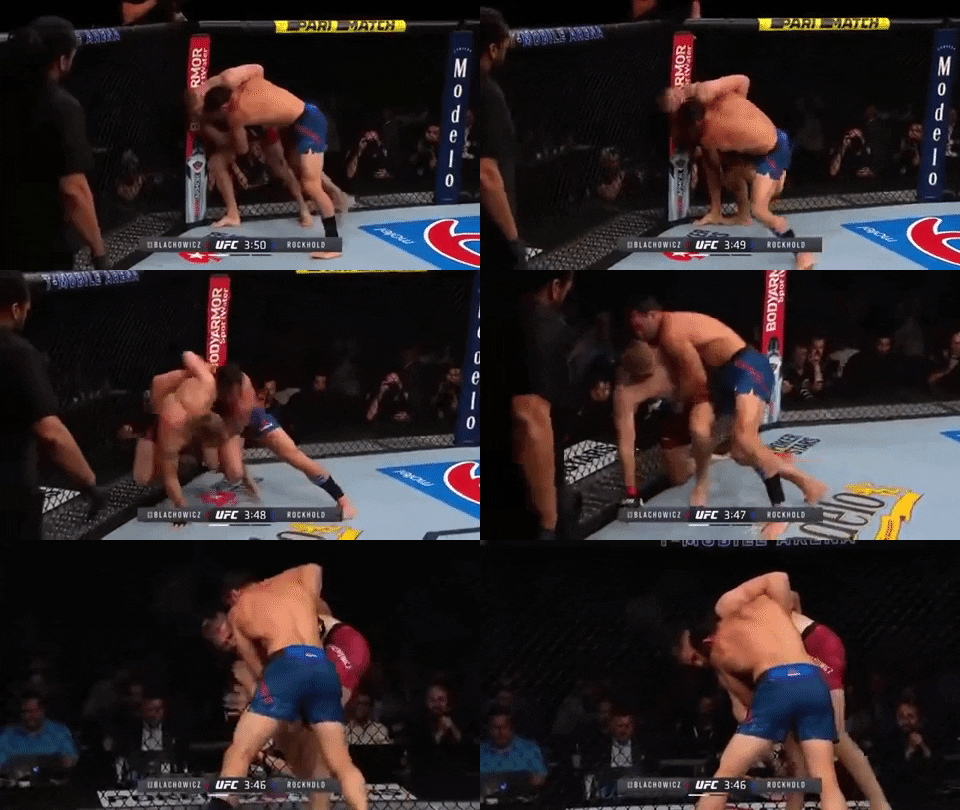
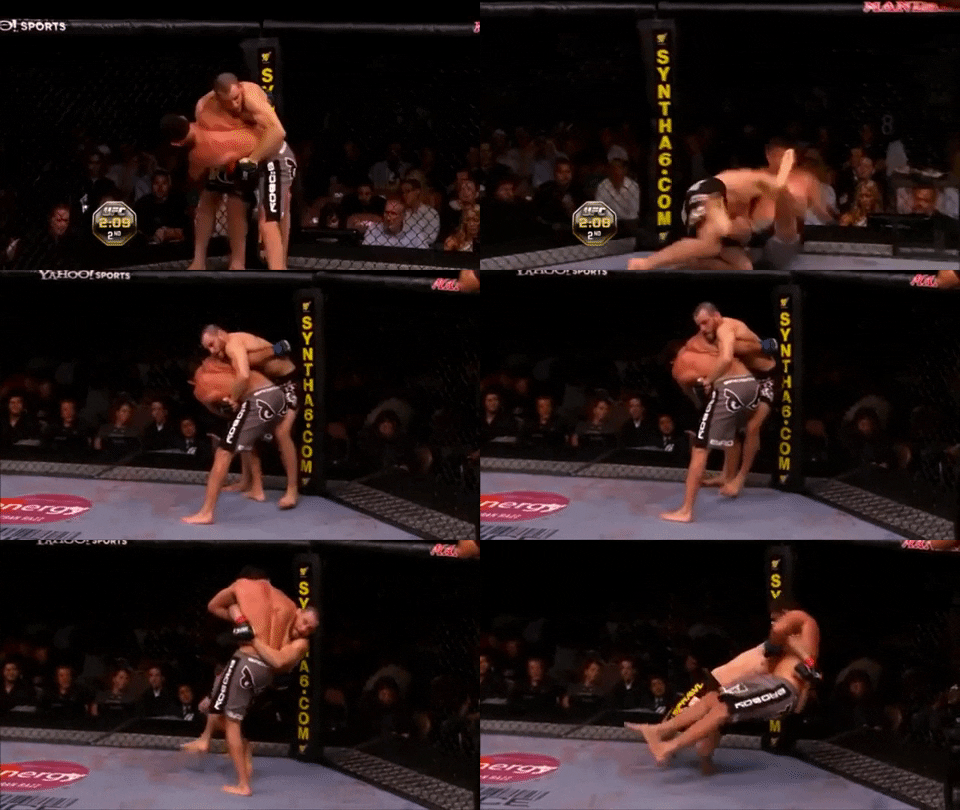
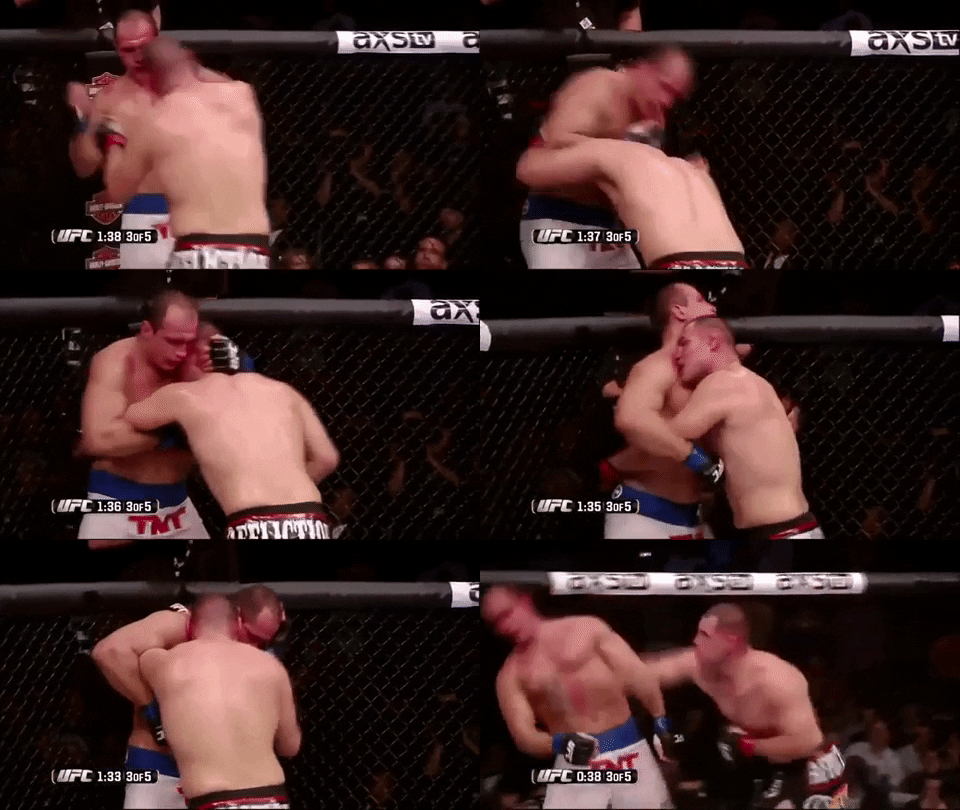
The strikes help soften the opponents and allow Nurmagomedov to chain wrestle. Nurmagomedov’s 5’10” frame and 70” reach might not be the most imposing, but when he has you stapled to the ground, nothing else matters.
All the work that Nurmagomedov does on his feet is to ensure one thing: clamping his hands across his opponent's backs. The single underhook is the starting point, but there are several ways Nurmagomedov secures the snowball grip (also known as the Gable grip). The simplest method is for Nurmagomedov to start throwing punches with his free hand until the opponent uses their arms to defend. Nurmagomedov will then take the opportunity to secure the snowball grip into a takedown. If they don’t take the bait, Nurmagomedov can transition to a single leg takedown to get opponents to react, only to switch to a double leg and press them against the fence. As of late, opponents have gotten wise to this set-up and use both their hands in a two-on-one grip to stop Nurmagomedov’s free hand from connecting his palms. Both Conor McGregor and Dustin Poirier used this defense to temporarily stop Nurmagomedov from dragging them down repeatedly. Nurmagomedov isn’t without other takedowns, and he’ll use the opportunity to transition to a high crotch takedown while kicking at the legs. This is a favorite takedown among wrestlers who are often short for their division (like Daniel Cormier and Randy Couture), but others like Kamaru Usman also use it from time to time. Once the opponent is down and secured against the fence, Nurmagomedov does some of his best work.

(Nurmagomedov shoots in with his head high on McGregor’s chest to avoid the knees, and trips McGregor down with his legs.)

(Poirier uses both hands to defend the takedown only for Nurmagomedov to switch to a high crotch and kick out Poirier’s leg and take him down.)
It’s been ingrained in most fighters that the best way to get up when taken down by a wrestler is to wall walk back up to your feet. In most cases this is true, but against Nurmagomedov this is easier said than done. By entangling the legs and throwing uppercuts down the middle, Nurmagomedov forces opponents to give up any ideas of potential submissions. If opponents try to post an arm and pop their hips up, Nurmagomedov will break down their posted arm before trapping it down to the mat. Edson Barboza and Michael Johnson were victims of this and almost had no answers when planted on the ground.

(Whether he’s on his feet or his knees, Nurmagomedov constantly had control over Johnson’s hips and pounded away. Also note how Nurmagomedov controlled Johnson’s right hand when they’re on the ground.)
It doesn’t matter how great you are at grappling, it becomes impossible to submit someone when your hips are grounded and your back is pressed against the fence. There are no submissions to threaten from that position, and even if you find yourself able to get back to your feet, Nurmagomedov is ready to begin the process all over again with a mat return. By controlling the opponent’s wrists and mounting their legs, escape becomes incredibly laborious.

(Abel Trujillo finds himself taken down repeatedly every time he popped back up. Over time, his ability to return to his feet slowed down considerably.)
Once Nurmagomedov has held his opponent on the mat for a round or two, their defenses become sloppier and their attacks are panicked. They know that getting taken down means more punishment, and a submission might not be far off. When Nurmagomedov does secure a submission, it’s usually after his opponents have absorbed significant damage. They see the fight-ending submission as a way out, a path for them to admit defeat without having to quit on the stool. Luckily for us, Justin Gaethje would rather get finished than give up during a fight.
If you’re not familiar with the new and improved Gaethje, go ahead and catch up on his last four fights. The first three shouldn’t take you that long, none of them went over the first round.
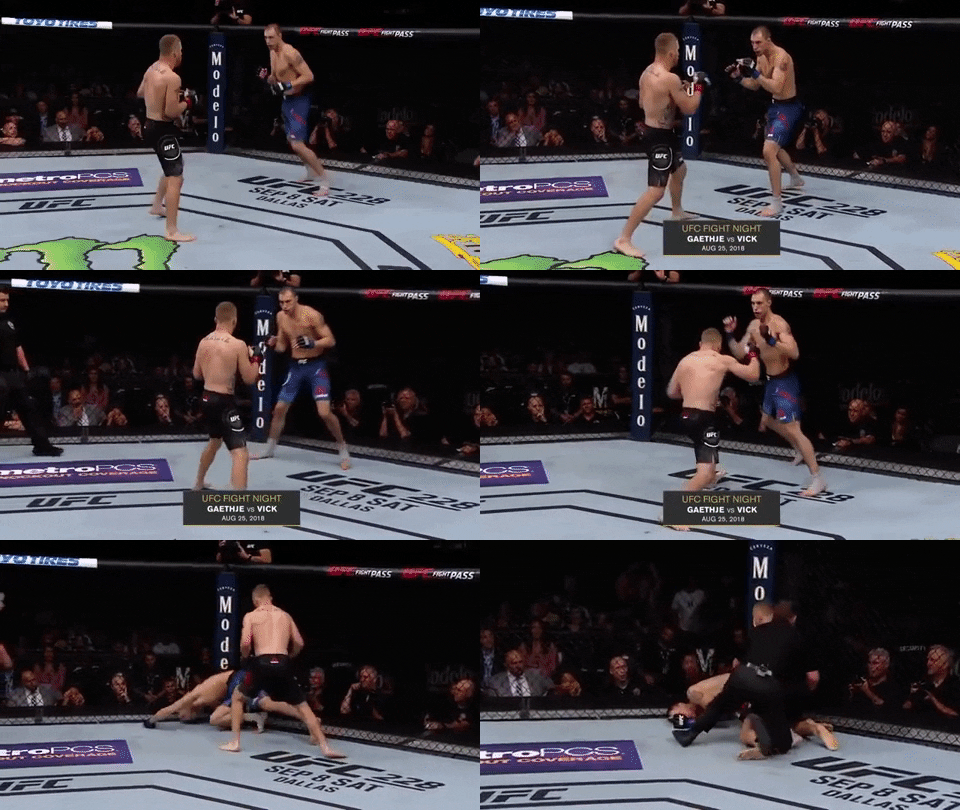
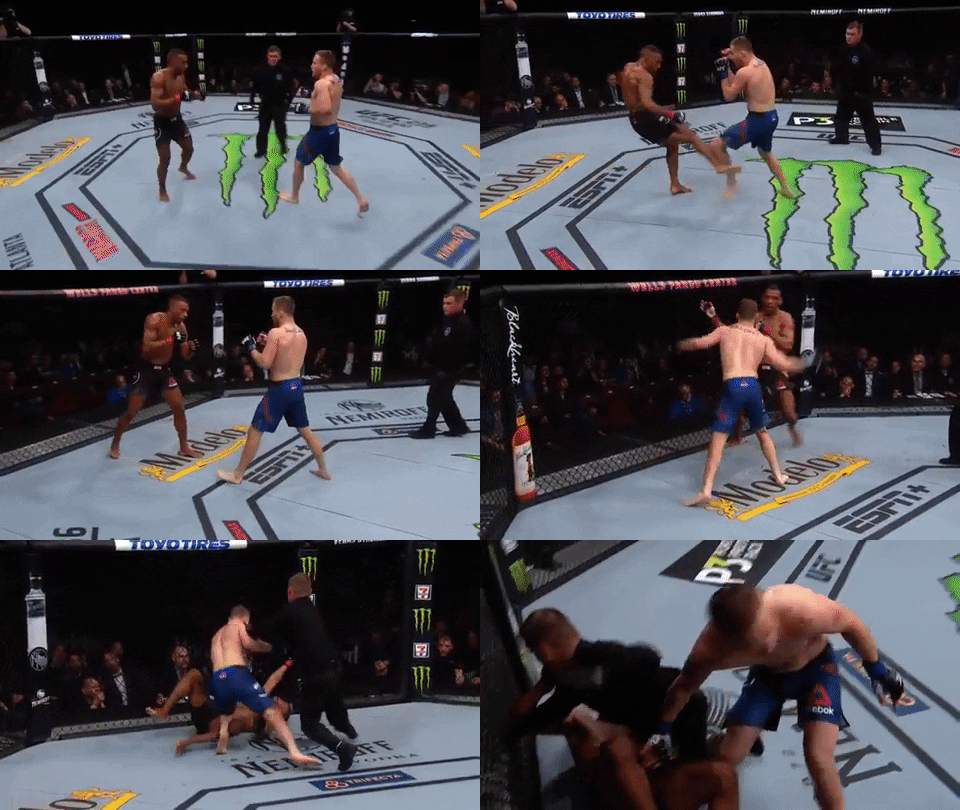
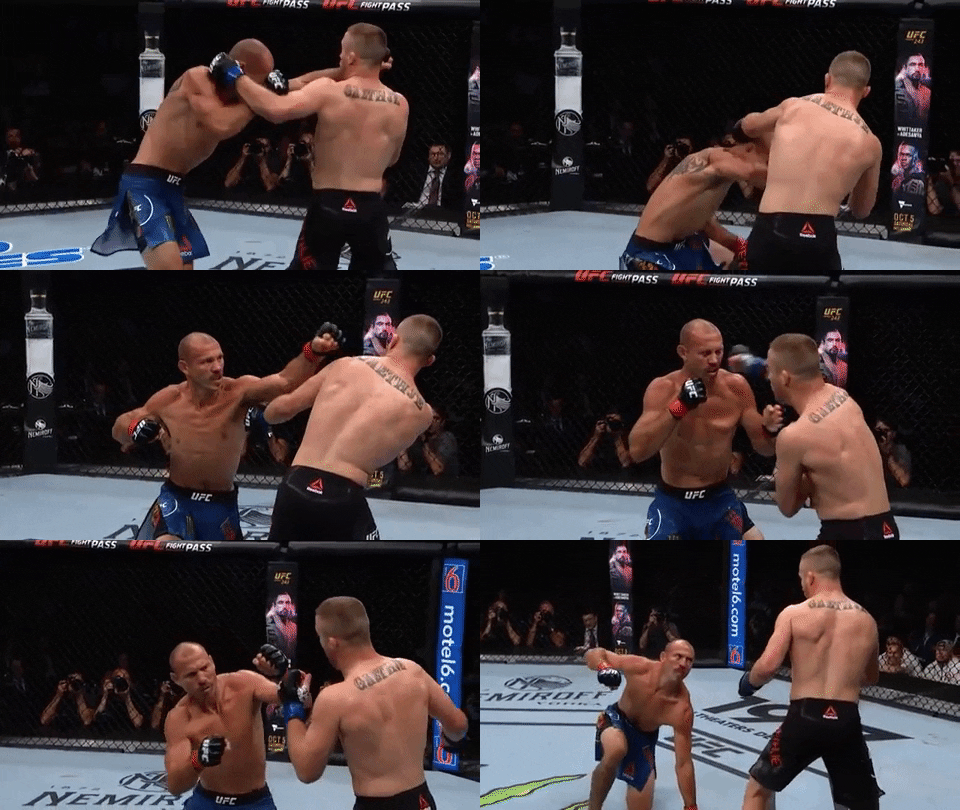
It almost seems like yesterday when Gaethje would march forward with his guard high, ready to absorb punches on his forearms. Once he got close enough, alternating hooks and uppercuts mixed with low kicks were thrown with no regard for defense. Gaethje ended up absorbing way more strikes than he had to, but this kind of fighting style guaranteed a finish every time.
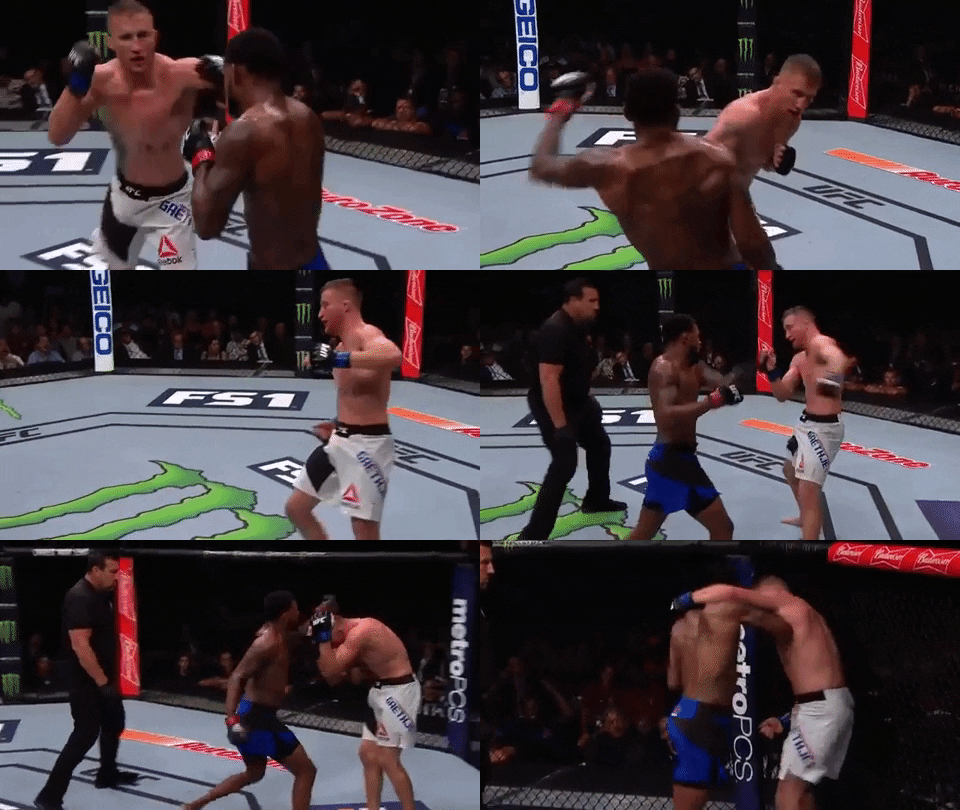
Unfortunately for Gaethje, he was on the receiving end of those finishes against Eddie Alvarez and Dustin Poirier.
Gaethje had the same problem that plagued Chan Sung Jung early in his career – he was exciting but nowhere near title contention. His low kicks damaged opponents, but without proper setup, he ended up getting timed and countered repeatedly. Fighters like Poirier and Alvarez would wait until he was kicking on one leg to blitz down the middle with straight punches or grab his leg for a takedown.
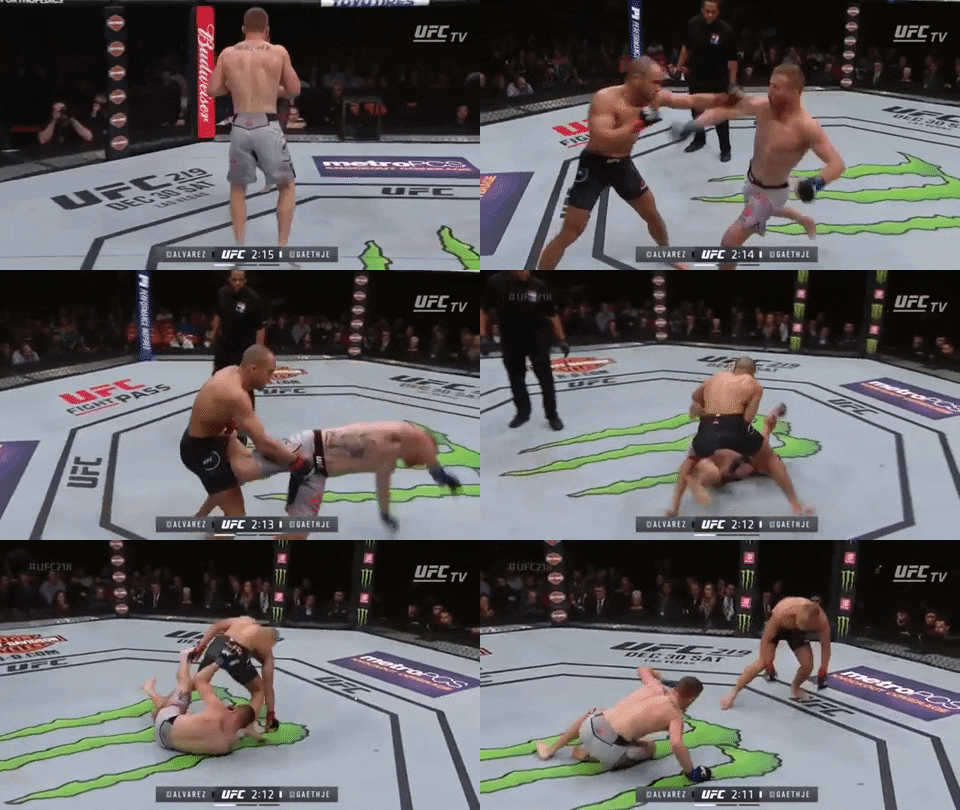
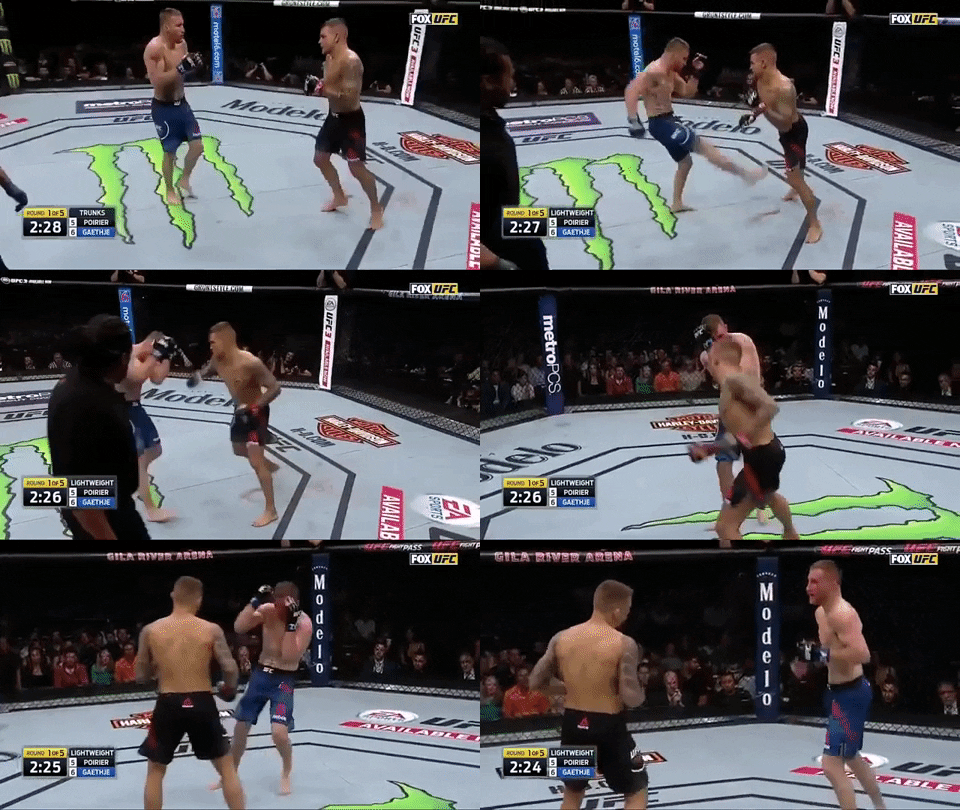
(Alvarez was able to land a takedown off the kicks, while Poirier used the time to set up his combinations.)
In the past, Gaethje constantly moved forward like Wanderlei Silva. It was effective in pressuring opponents and getting them to constantly be on the defensive, but it also made Gaethje predictable and prone to counters. Even a badly damaged Michael Johnson knew that if he kept swinging as Gaethje advanced, some of his strikes would land. Gaethje won the fight but took more punishment than he should. The Gaethje of today has improved dramatically by taking cues from a different Silva – Anderson. Instead of barreling forward and swinging away, Gaethje has added feinting and patience to his game. Gaethje realized picking his shots results in more finishes. Gaethje now leads with his jabs and feints, only to back away when opponents start to counter. If they were going to exchange blows, it would be Gaethje that sets the terms. This approach resulted in three straight finishes, but admittedly against weaker competition. Not to mention that the fights ended quickly. We had no idea if Gaethje’s patient approach could hold up in an extended fight. Can Gaethje remain calm if the opponent didn’t back down? What if they had a variety of strikes to respond with? The Tony Ferguson match-up answered those questions.
Ferguson builds up his lead early on by throwing strikes both in volume and variety. Gaethje was able to get him to overreact to his feints, creating hesitation. A common theme was seeing Gaethje feint a few times before circling out, with Ferguson on high alert. After doing this repeatedly, Ferguson would step in to try and pressure Gaethje only to get hit with punches as Gaethje angled out.

As a striker that relies on momentum, Ferguson never looked comfortable trying to chase Gaethje. Even though Ferguson landed an uppercut that dropped Gaethje at the end of round 2, he seemed to eat two strikes for one that he landed. It became clear that this was a numbers game that he was losing. Gaethje’s counter right straights and low kicks caught Ferguson repeatedly, and those two strikes seemed to trouble Ferguson enough that he couldn’t think of a response.

In the past, it would be common for Gaethje to destroy the lead leg of his opponents but eat punches while on one leg. There are two main reasons why it’s become less of a weakness: Gaethje started hiding the kicks alongside his punches, and he started throwing them from further out. Once opponents knew what to expect, they would brace their legs to absorb a couple to return fire with punches. Gaethje now starts by throwing punches first to get his opponents to keep their hands up before finishing with leg kicks. Also, by throwing the kicks from further out, Gaethje is less prone to being off balance.
The left hook was also a prominent weapon on display. In recent fights, Gaethje has made it a point to clean up his striking and present different threats when opponents either crowd him or he wants some space. The left hook allows Gaethje to hit fighters as he angles out or stops them from pressing forward entirely. Even when Ferguson switched stances, the left hook found its mark. Gaethje used the left hook whenever Ferguson rushed forward and caught him clean or used it as a follow-up strike after throwing his right straight.

Pay close attention to Gaethje’s head movement and you’ll see that by slipping to his left side before throwing the left hook, Gaethje was able to avoid any counters from Ferguson while establishing a dominant angle.
After five rounds of punishment, Ferguson’s body gave up on him and the referee called it off. We may have lost the Nurmagomedov vs Ferguson match-up, but Nurmagomedov vs Gaethje isn’t a bad consolation prize.
Nurmagomedov isn’t invincible, but his A-game is hard to beat. To claim victory, Nurmagomedov is going to have to tie up Gaethje in the clinch before going for takedowns to wear him out. Despite having a disciplined feinting game and commitment to footwork, Gaethje will still rush in from time to time, shifting his weight and momentarily crossing his feet. Nurmagomedov might not have knockout power to hurt him during these rushes, but he can time these to change levels on Gaethje’s hips and take him down. Despite Gaethje’s decorated background in collegiate wrestling, he’s been taken down in MMA competition. Alvarez timed his leg kicks and grabbed one to take him down, and even Poirier landed a double leg takedown in the center of the cage. Even though Nurmagomedov isn’t knocking people out left and right, his uppercuts and overhand rights are set up by a smart feinting game. Gaethje’s high guard can block most straights and hooks, but uppercuts seem to find a way to sneak through. In past interviews, Gaethje has admitted that he doesn’t wrestle in his fights because its exhausting. If Gaethje acknowledges how tiring wrestling can be, Nurmagomedov is the worst possible match-up among all the lightweights. Gaethje explodes out of takedowns and is hard to pin down, but over time that gets tiring. Nurmagomedov’s high crotch takedown starts with shooting in while his head is outside, away from possible counters. He should be mindful of keeping it safe since one punch from Gaethje might be all that he needs to win. If Gaethje doesn’t have a technical get-up that he can effectively rely on, Nurmagomedov can ride the body lock into a mat return repeatedly.Gaethje has never been submitted before, but fatigue makes cowards of us all.
Gaethje has a hard task ahead of him, but it’s not impossible. Nurmagomedov is not the best at cutting the ring. The more you can circle out, the more you can make him work. Nurmagomedov is better at striking now, but he still runs at you in a straight line. Too many opponents have waited until they’re less than a foot away from the cage to start moving away. It’s not enough to just plan on getting back up. Gaethje should have several layers of defense, with footwork and distance being the first. Israel Adesanya doesn’t have a traditional grappling background but can maintain a high takedown defense almost strictly off his footwork and angling out of bad positions. If Gaethje does find himself taken down, he should avoid getting pressed up against the fence. At the very least, he should turn towards the center of the cage as much as possible. Nurmagomedov will be forced to exert more energy and without the cage propping up the opponent, controlling becomes harder. What might also be effective is pressing Nurmagomedov up (like a bench-press) and dropping him onto one of his elbows. What made part of the Ferguson vs. Nurmagomedov match-up so interesting was how active Ferguson is off his back, and this is one of his go-to moves against other wrestlers. Kevin Lee took Ferguson down, only to be hit by repeated elbows from the bottom when he pushed Lee up and let him drop onto his elbows to cut him. Nurmagomedov also likes to shoot in with his head on the outside, away from possible knees and uppercuts. Since counter strikes might not be as effective, constant movement is going to be key. Keeping Nurmagomedov on the backfoot is tricky, but if Gaethje can do it intelligently, he can minimize the possibility of takedowns. McGregor pressured Nurmagomedov towards the fence so that if he did have to defend takedowns, at least he wouldn’t have the cage to deal with. Nurmagomedov has been hurt on the feet before by the likes of Michael Johnson and Al Iaquinta, and Gaethje hits harder than both. Gaethje’s patience and feinting game can get Nurmagomedov to swing first and run into punches, and that might be his best chance at winning.
This is the first fight that Nurmagomedov is competing in without the guidance of his father, who has been responsible for his career since childhood. With retirement on his mind, we might not have Nurmagomedov for much longer. Win or lose, Nurmagomedov’s dominance is something to behold, and we should appreciate it as much as possible.
Files
Previews only

