Home

 Creators
 Search
 Recent
 Random
 Posts
 DMs
 Tags
 Random
 Importer
 Import
 FAQ
 Account
 Register
 Login
 Favorites
 Keys
 Logout
 Telegram

Recipe: Buta Kimchi (Pork and Kimchi) (Patreon)
Content
First off, I know! Not a traditional Japanese recipe, but I wanted to share this easy and yummy dish.
Buta Kimchi is delicious and can be as easy or involved as you'd like. At its simplest it's some sliced pork thrown into a skillet with a tub of kimchi tossed on top and all fried up together. Dump that on some white rice and you're done. Even that is pretty darned good.
But first: garlic rice.
Once I discovered you could add other things to your rice cooker to jazz up white rice, I've hardly ever gone back.
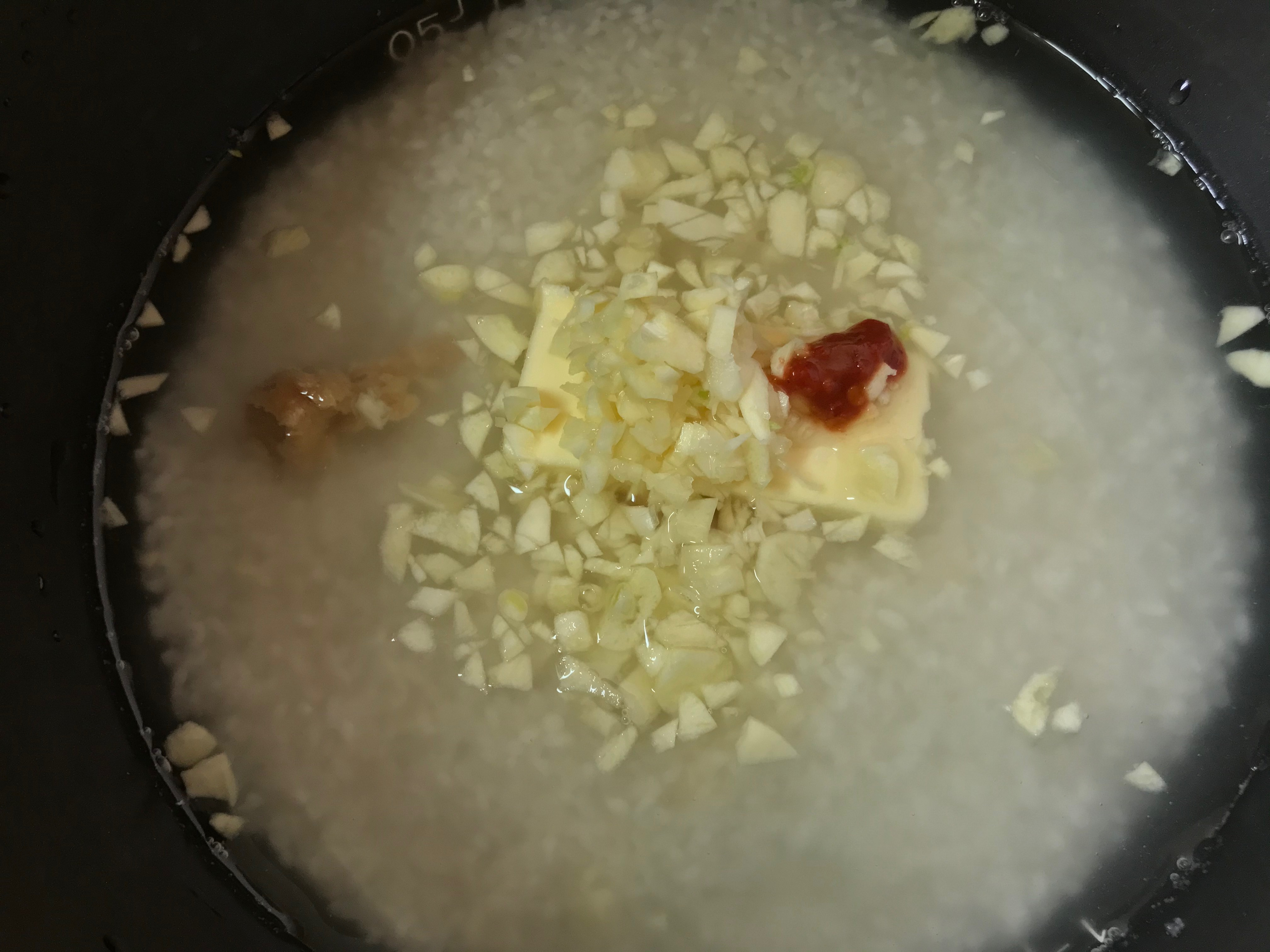
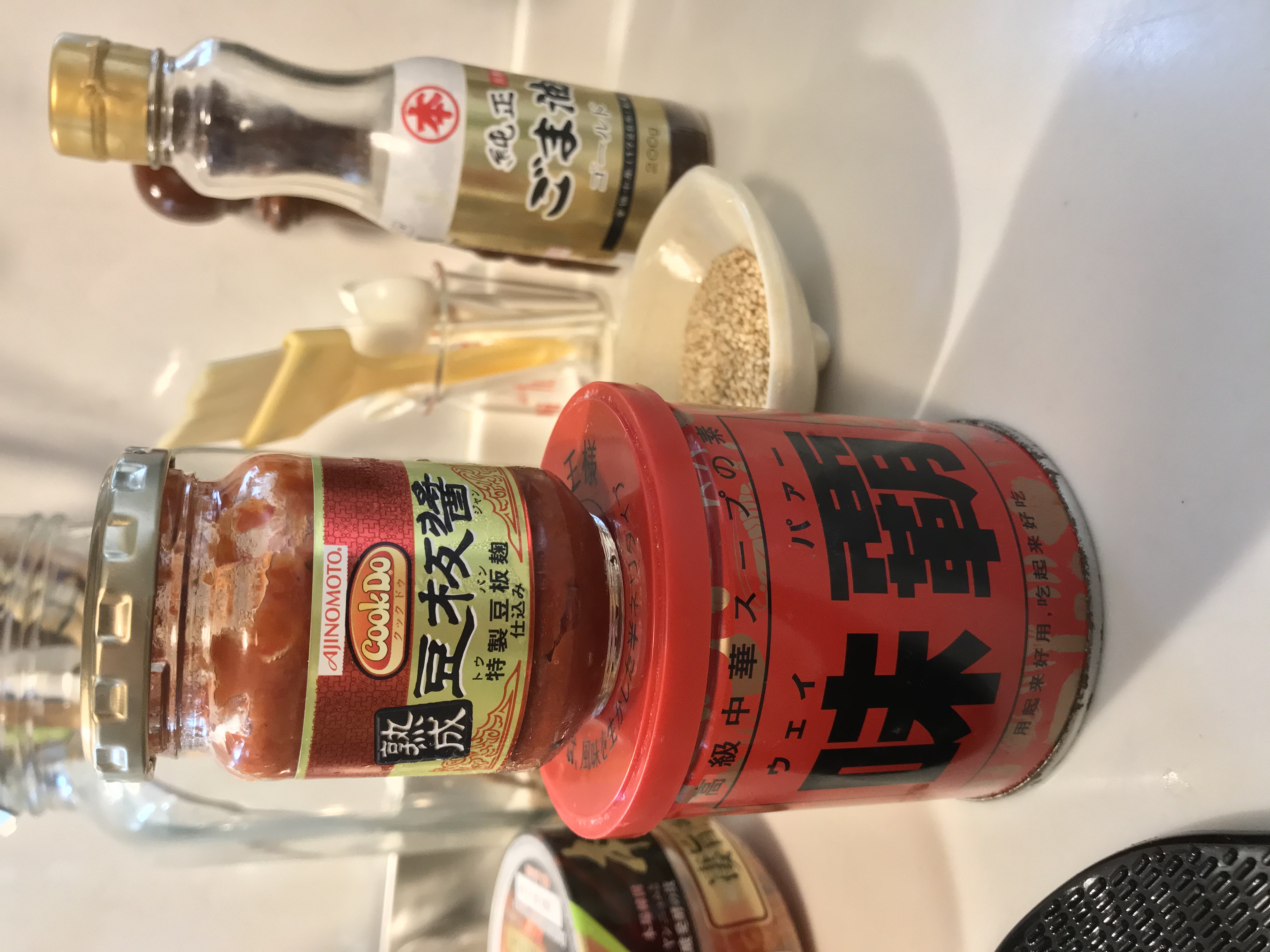
One of my favorites is a bit of butter, salt, chicken stock, smashed garlic, and a dab of tobanjan (doubanjang in Chinese, a bean chili paste) or gochujang (a Korean fermented chili paste that has a hint of sweetness to it).
Then just cook rice as usual.
Now onto the Buta Kimchi.
Like I said up there, this recipe can be simple (literally two ingredients: kimchi and pork) or you can zhoosh it up with more spices and more veggies.
Essential Ingredients:
*kimchi
*thinly sliced pork
Extra Goodness Ingredients:
*garlic, minced (several cloves, the more the better)
*ginger, finely chopped or grated (or if you can get paste, that works better I think)
*finely chopped green onions (garnish)
*sesame oil
*dash of soy sauce
*splash of sake
*sesame seeds (garnish)
*Korean nori/seaweed (garnish and way of eating)
*long onions (or any kind really), sliced into rings
* green peppers, sliced thinly (I used spinach this time, because it's all I had, and it worked really well)
*nira (chives) or ninniku no me (garlic sprouts) are also good, cut into small pieces
toubanjang or gochujang to add extra kick, if you't like.
I just used what I had in the fridge.
Not necessary but nice to have on hand is that red can up there. It's called Uei Paa. I just looked and found it's Ajiha U-eipa on Amazon. It's a Chinese chicken/pork broth (in the can it's kind of a paste), but really good for making soups or adding as a secret hidden flavor in different recipes. I use a spoonful in fried rice, for example. In buta kimichi I use a little when frying up the meat.
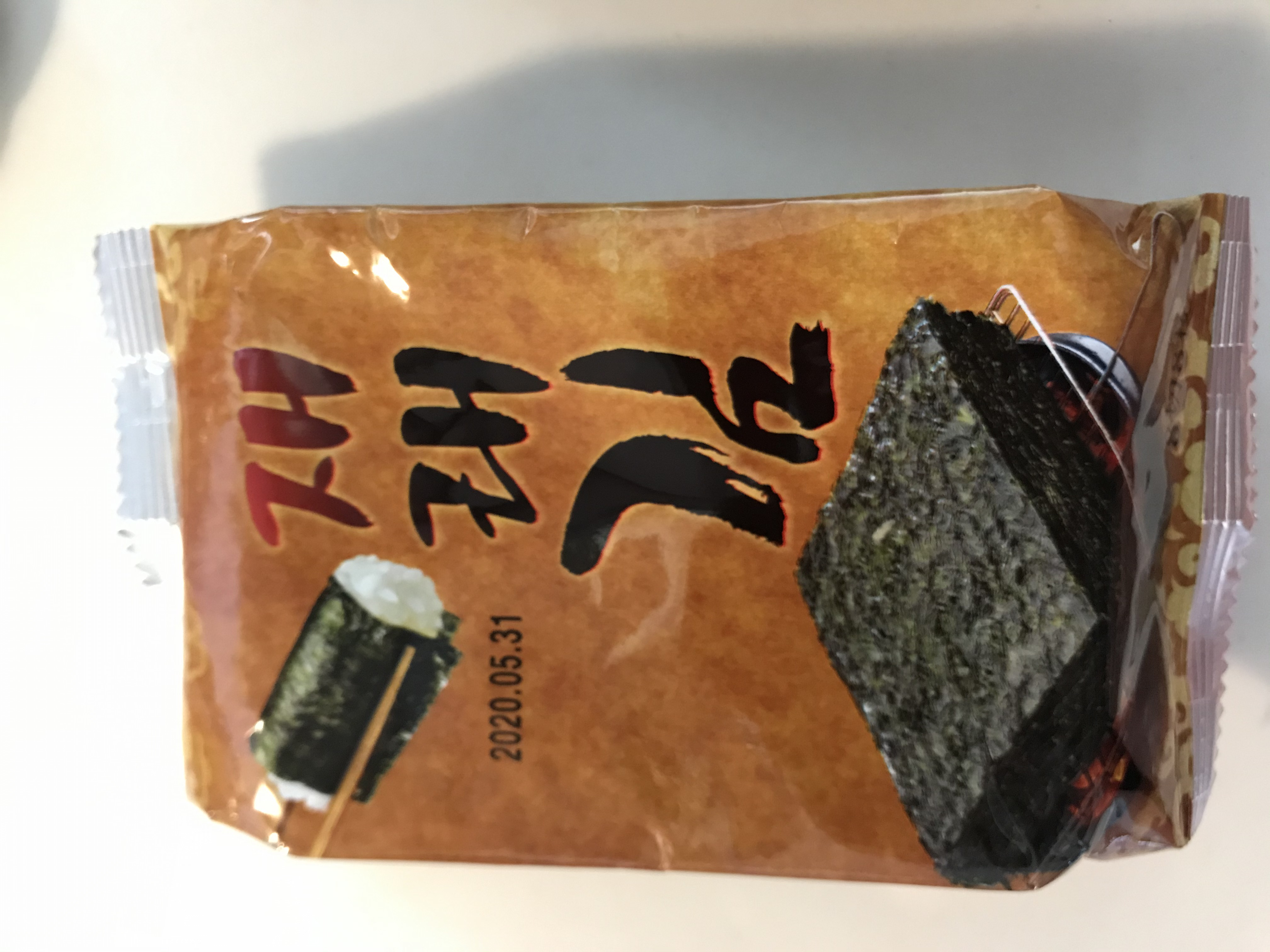
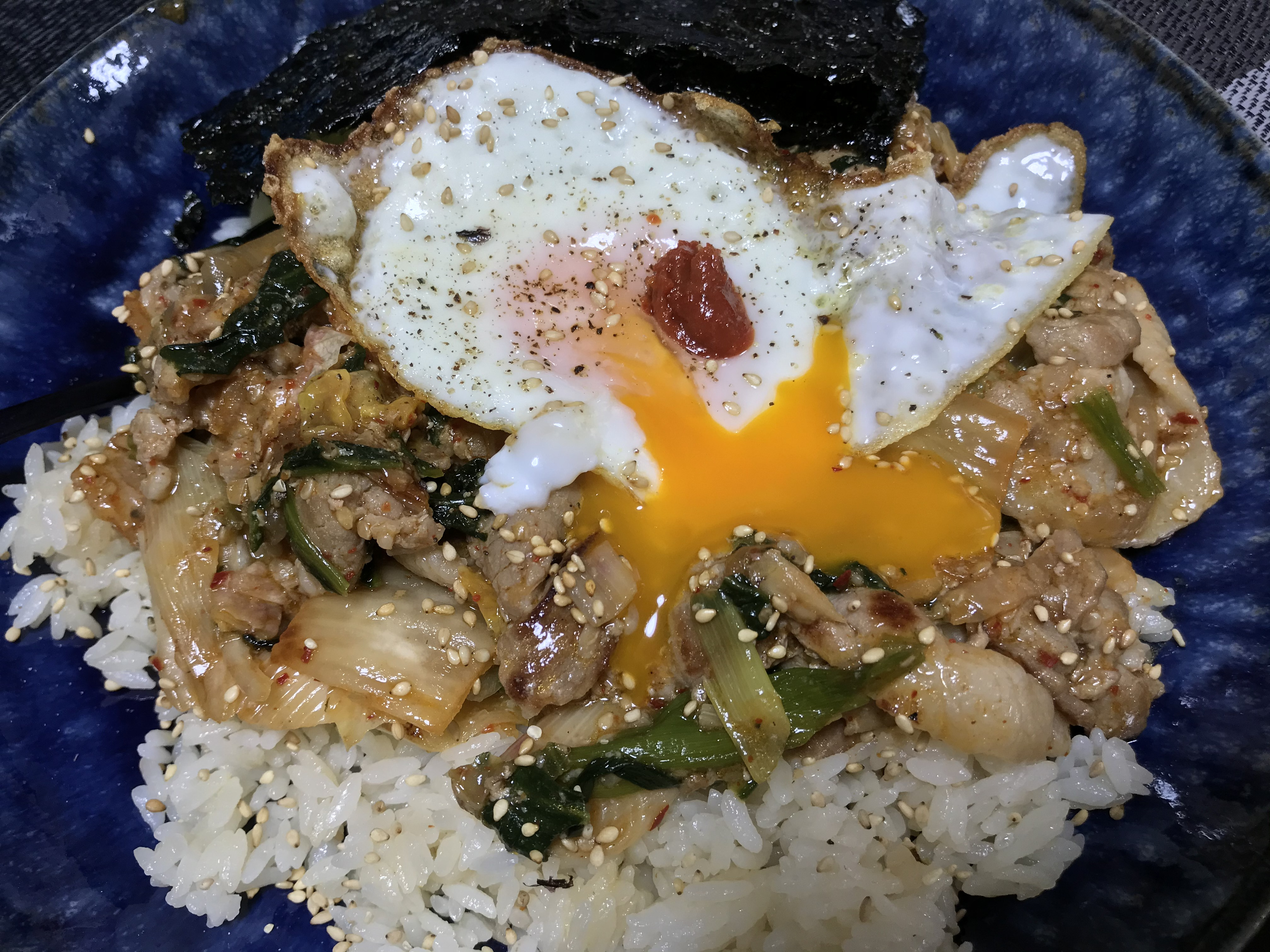
I just love Korean nori. Salty and sesame-seedy. You can either crumble on top of the dish or use your chopsticks (like the photo below) to wrap a piece of the nori around some rice and buta kimchi and eat like that. Tricky but good.
First, I marinate the meat in minced garlic, chopped ginger (or ginger paste), a little sesame oil, a little soy sauce, and slash of sake. Mush together well, pop in the fridge.
Next, I cut up all my veggies into bite sized pieces, then stir fry them in a little sesame oil, and either consume powder or the ueipaa stuff, just to give them some flavor. A bit of salt would do, too.
Note: Depending how vegetable-heavy the meal is (and how much kimchi you're adding), the kimchi flavor won't be enough to flavor it all. Since I tend to add a lot of veggies, I make sure they taste good by themselves. Same for meat.
Fry up the meat separately. Sometimes I do the meat first, then add the vegetables, then add the kimchi. I think this time I wanted that marinating time, so I did them separately.
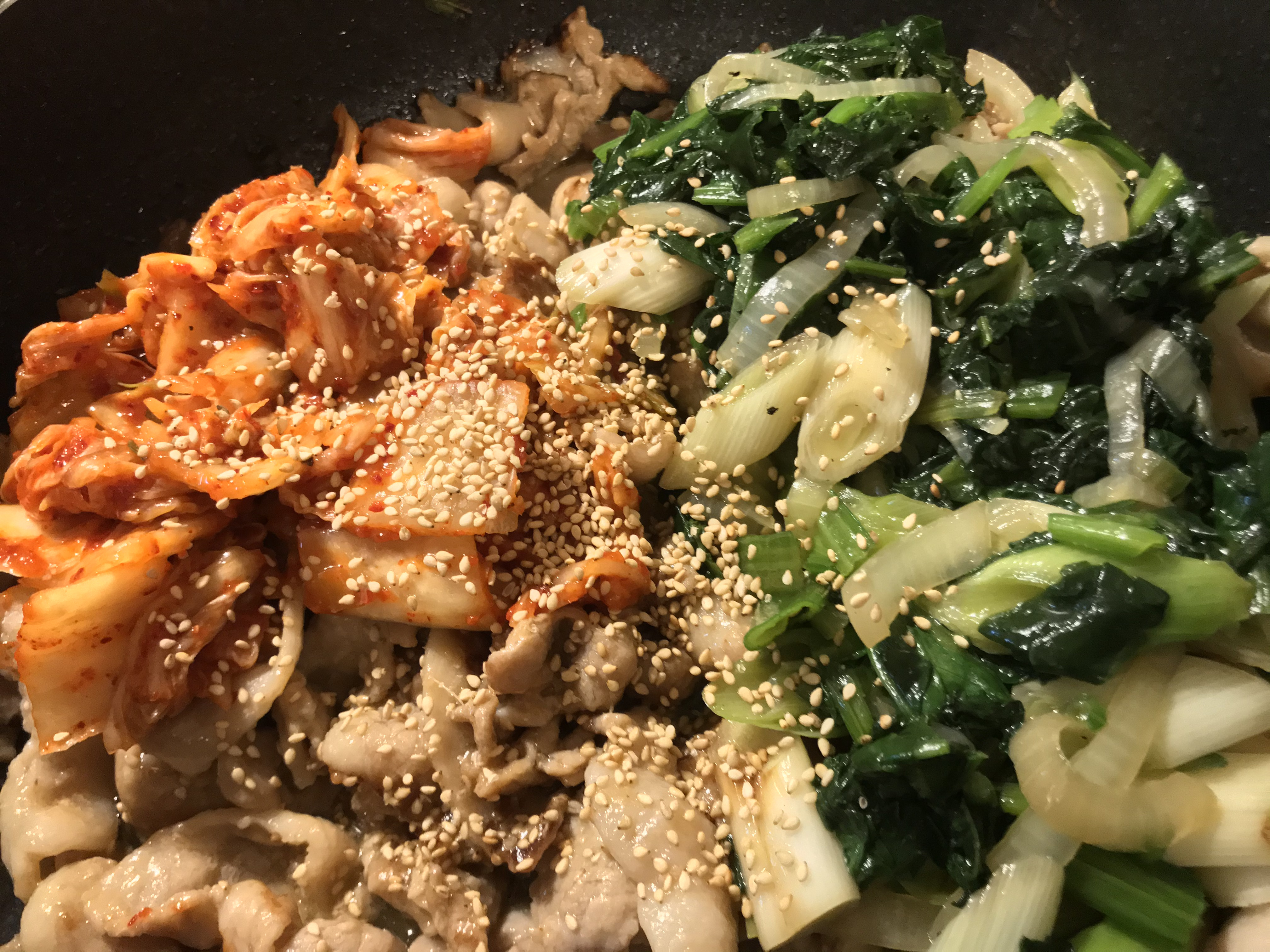
After the meat looks good, toss in the veggies and the container of kimchi. I also added a sprinkle of goma sesame seeds.
Heat and mix altogether. At the very end adding a splash of sesame oil keeps it fragrant. Also a good time to add anything spicy, like toubanjang, gochujang, to taste.
Almost finished!
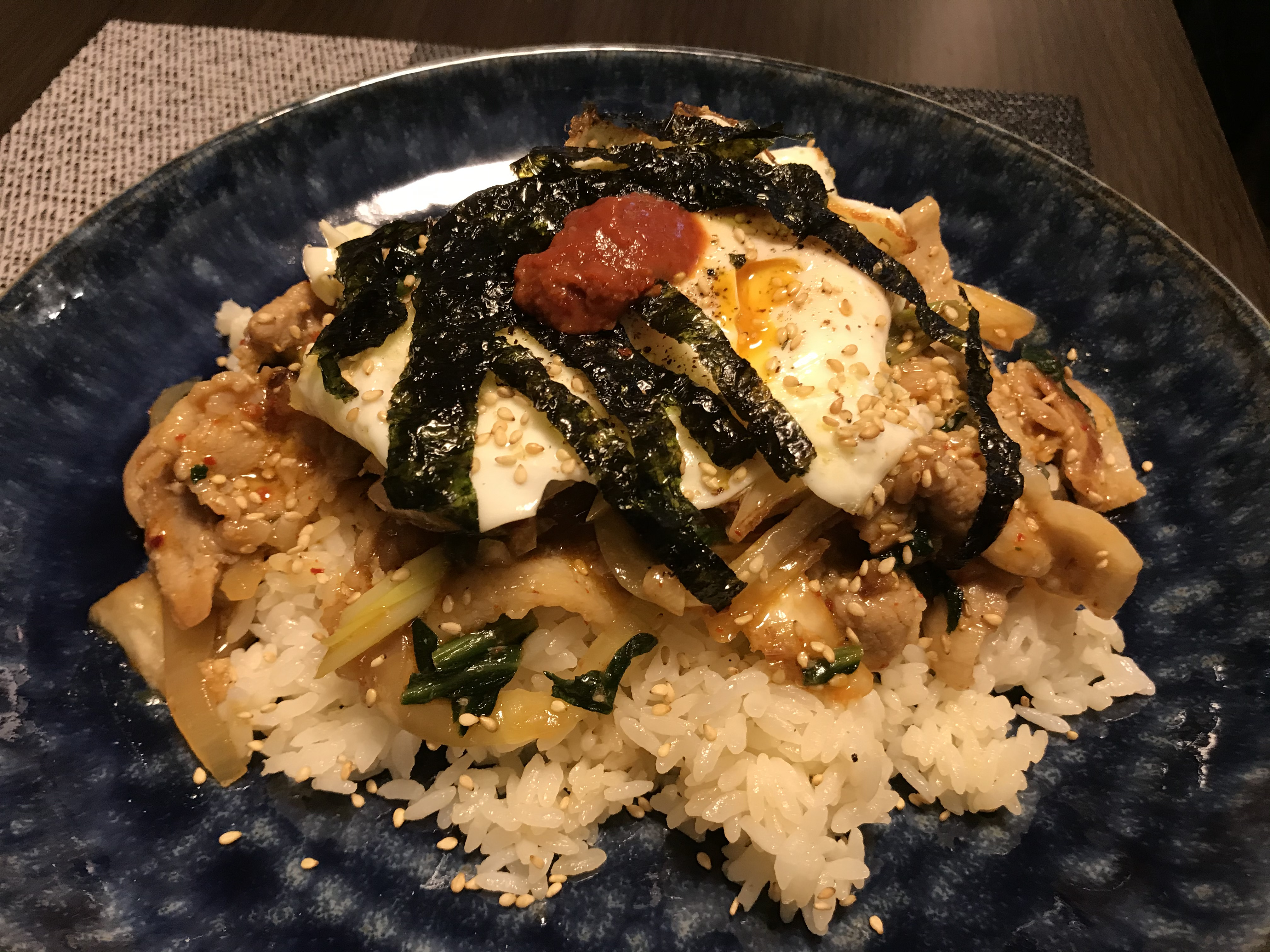
First, put down a layer of regular white rice, or some kind of garlic or flavored rice. I used my garlic-butter rice.
Scoop on a generous amount of buta kimchi and garnish with sesame seeds, crumbled (or cut with scissors) Korean nori, and finely chopped green onions.
Sometimes I like to top with an over easy fried egg. I like the way the yolk mellows out the spiciness. I didn't have green onions to garnish this time, but I did dollop on some toubanjang. for flavor and color.
For some reason during the pandemic kimchi became very hard to come by. I could only find a very small package. Usually, the dish is a lot redder and spicer than shown below.
And finally, here are some ideas of different ways to make it.
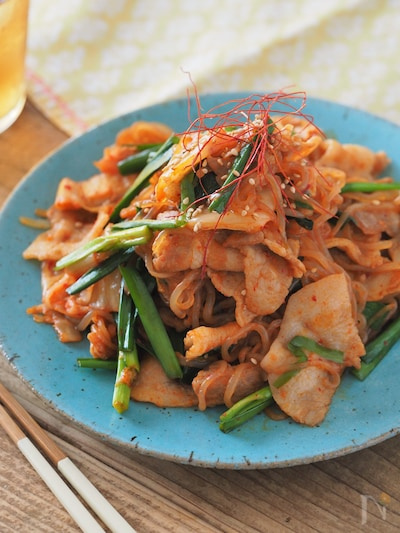
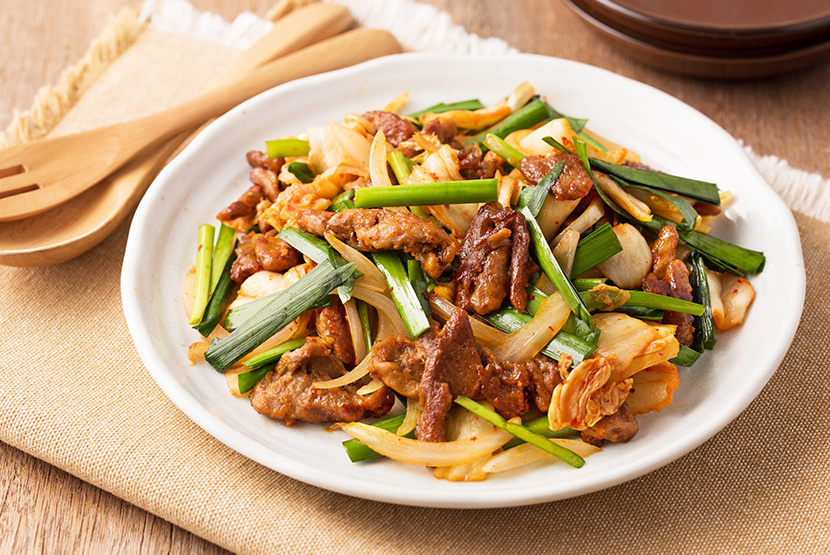
1) Nira/chives and garlic sprouts (more like stems) are both really good with buta kimchi.
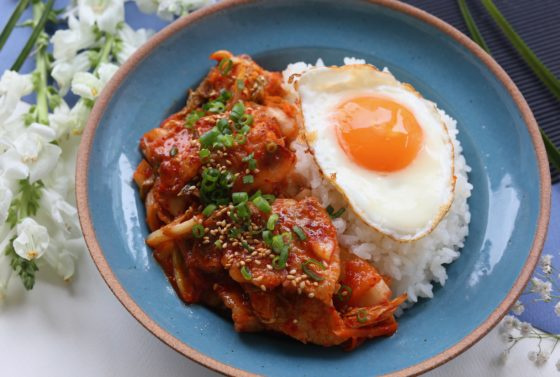
2) Much nicer with chopped green onions, egg on the side
3) Again nira or ninniku no me look nice. I also add green peppers when I have them.
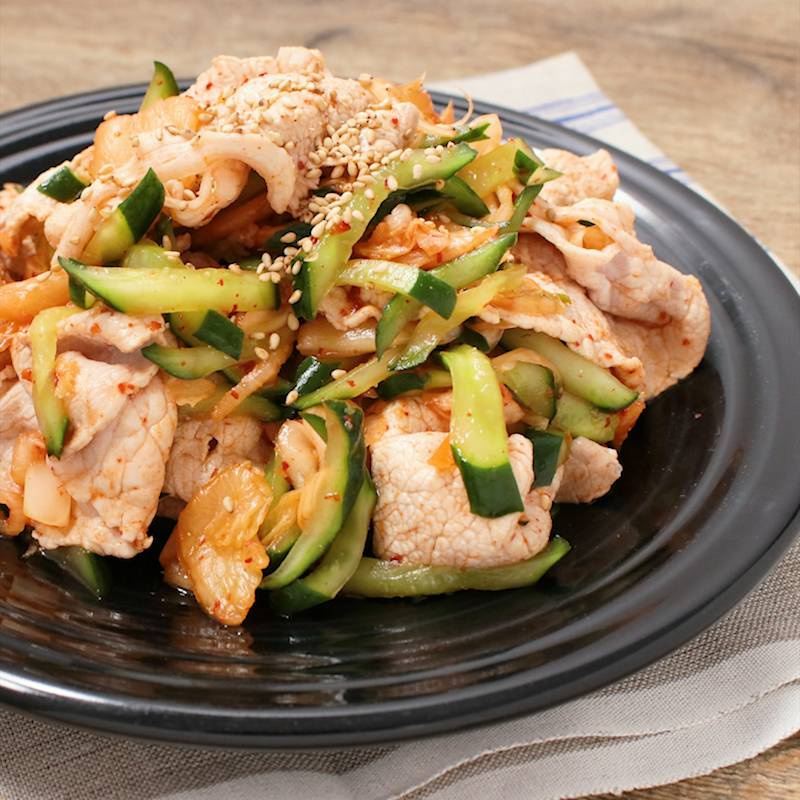
4) Cucumbers! There's an idea.
5) And I really like the idea of using goya (Chinese bitter melon). Goya is almost always paired with pork anyway. The below idea would be great for the summer, I bet.
Files