Home

 Creators
 Search
 Recent
 Random
 Posts
 DMs
 Tags
 Random
 Importer
 Import
 FAQ
 Account
 Register
 Login
 Favorites
 Keys
 Logout
 Telegram

Copying By Ear | Phrase Up To Tsuru-tere of Kyokubiki (Tsugaru Jongara Bushi) -- 耳コピクイズ | 津軽じょんがら節曲弾きツルテレまでのフレーズ (Patreon)
Downloads
Content
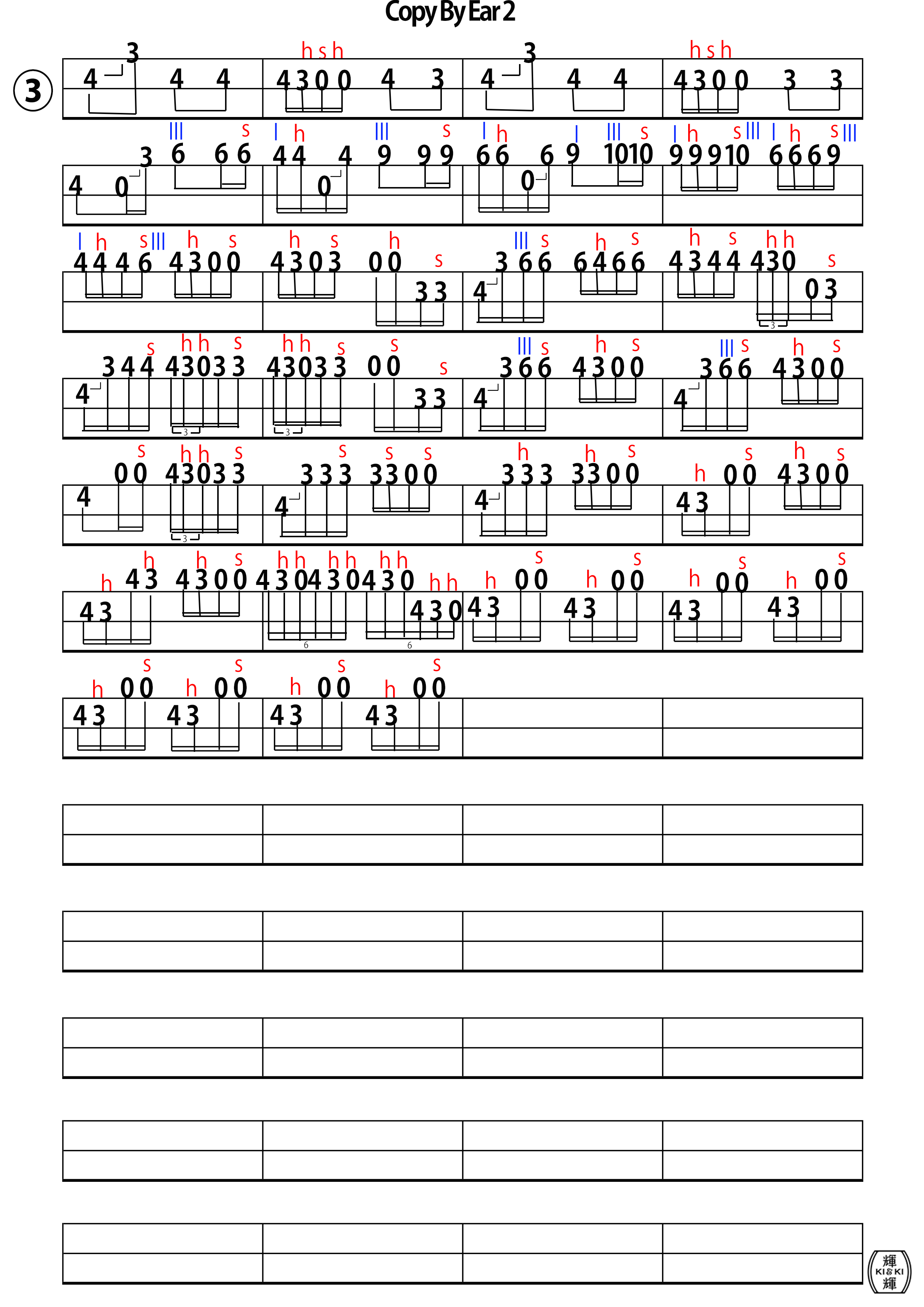
This time, we have phrases from Bachizuke to Tsurutere that can also be used in Kyokubiki. The phrases are a little bit advanced and difficult, but once you master this, you too will be an ear-copying master!
We had fun creating this quiz, so we hope you enjoy it, too! Please give it a try~
Additionally, please check out the details about the importance of copying by ear in the following post if you have not read it yet: https://bit.ly/3UotAC2
▼How to play the Coping By Ear Quiz▼
- There are 3 phrases in total, so try to copy/play by ear while pausing the video for each phrase!
- It might be difficult to pick up all the sounds at once, so it is good to start from a range you feel comfortable with, such as "one bar at a time" or "one phrase at a time."
- There are checkpoints after the playing, so try to focus on where to listen and use them as references.
- Please use the attached sheet music for checking the phrases!
At first, you might think, "This is impossible!" but if you keep up with it, you will find yourself able to do it. (We felt the same way at first too!) Daily small steps are important. Let's work together to improve our ear-copying skills this year!
---------------------------今回は曲弾きでも使える撥付からツルテレまでのフレーズです。難易度も高くちょっと高度ですが、これができたらあなたも耳コピマスター!
私たちも遊びながらクイズを作りました!笑ぜひチャレンジしてみてください。
耳コピの大切さについてポストでも詳しく書いているのでお時間ある時に見てください: https://bit.ly/3UotAC2
▼耳コピクイズのやり方▼
・全部で3問あるので1問ずつ動画を止めながら音を取ってみましょう!
・一気に全部音を取るのは難しいと思うので、まずは「1小節ずつ」とか、「1フレーズずつ」とか自分のできる範囲からスタートさせると良いと思います。
・演奏の後にチェックポイントもあるのでどこに注目して聴くと良いか、参考にしてみてください。
・添付の楽譜は答え合わせで使ってくださいねー!
最初は「こんなの無理!!!」と思うかも知れませんが、続けていると気づいたらできるようになるはず。(私たちも最初はそうでした!)毎日のちょっとした積み重ねが大切です。今年は頑張って耳コピ力をみんなで上げていきましょう!
---------------------------Vocabulary List
Kyokubiki - performing a piece on the shamisen alone, with no singing - Tsugaru Jongara Bushi is often referred to as ‘Kyokubiki’
Tsuru-tere - a phrase that combines Sukui or Hajiki with Tsubo 4 and 3 on the second string and the open string on the third string
Tuning - to adjust the pitch of the Shamisen
Niagari - the tuning with the first string in C, the second string in G, and the third string in C. The base note on the first string can be other notes than C, but the balance between the three strings remains the same
Bachizuke - to create rhythm by using Maebachi and Ushirobachi
Tataki - to strike a string and shamisen body with bachi to produce sound
Hajiki - to pull off a string with index/ring finger of your string-hand to produce sound
Sukui - producing sound through upstroke of the bachi
Tsubo - positions on Sao (shamisen neck) that indicate where to hold strings with the string-hand fingers to determine musical scale of sound
曲弾き(きょくびき) - 唄が入らず三味線だけで一曲演奏すること
ツルテレ - 二の糸の4、3のツボと三の糸の開放弦を使ってスクイやはじきを組み合わせたフレーズのこと
調弦 - 三味線の音程を調整すること
二上り - 一の糸をドにしたときに、二の糸がソ、三の糸がドになる調弦。一の糸をド以外にすることもあるが、三本の音の関係は変わらない
バチ付け - 前撥・後ろ撥を使ってリズムを出すこと
叩き(たたき) - バチで糸と皮を叩くようにして音を出すこと
はじき - 左手の人差し指や薬指でで糸を弾いて音を出すこと
スクイ - おろしたバチを糸の下から上に向かってすくい上げて音を出すこと
ツボ - 音程を決めるために左手の指で弦を押さえる棹(さお) の場所のこと。1~20まである