Home

 Creators
 Search
 Recent
 Random
 Posts
 DMs
 Tags
 Random
 Importer
 Import
 FAQ
 Account
 Register
 Login
 Favorites
 Keys
 Logout
 Telegram

The Problem with the Bitwig EQ (Patreon)
Content
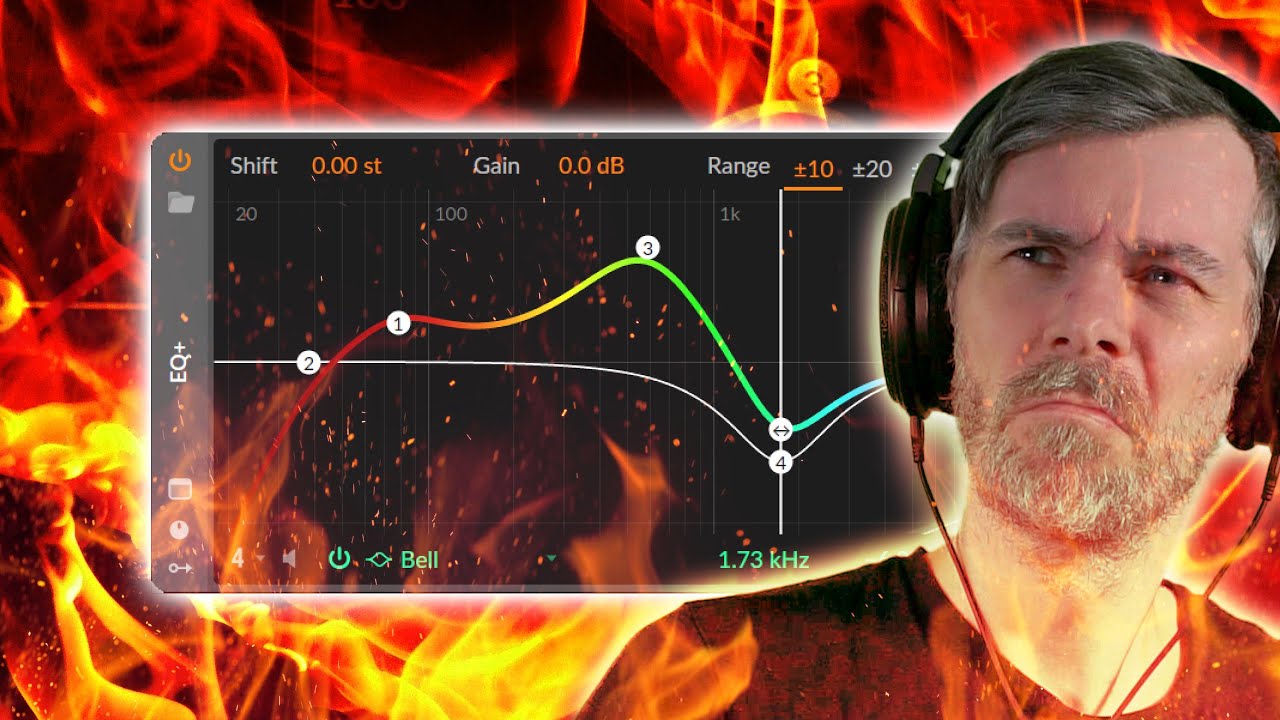
Hey folks, welcome back! Today, I want to talk about EQ Plus and some issues surrounding its behavior, especially when used in parallel. It’s not a big problem for me, but I know it’s been a concern for others in the community, so I want to explain it and give some suggestions for workarounds.
Key Points:
Personal Stance on EQ Issues
Generally, if I don't like a device’s behavior, I just don’t use it.
Some people want Bitwig's EQs to work perfectly in every scenario, so I wanted to address the issue here.
Phase Shift in EQ Plus
By default, EQ Plus has a slight phase shift, mostly noticeable in the top-end frequencies (around 20kHz).
The frequency response is still flat, so this phase shift isn’t a huge problem unless you're using EQ Plus in certain setups.
Problems with EQ Plus in Parallel
When you use EQ Plus in parallel with the mix knob, it can create an unwanted notch at the top-end frequencies.
This only becomes a problem if you have frequencies at the top (around 20kHz) that you want to preserve.
Parallel Processing with Same EQ Plus
If you use two EQ Plus devices in parallel, there’s no issue since they have the same latency.
But introducing another device with different latency (like a tool device or another EQ) can cause the notch problem.
Using EQ Plus in Serial
If you use EQ Plus in serial (one after the other), the phase shift adds up and can create notch filters or all-pass filter effects.
This can be used creatively for sound design, but it’s not what EQ Plus was necessarily designed for.
Comparison to EQ Five
EQ Five doesn’t have the phase shift issues that EQ Plus has.
However, EQ Five lacks features like the tilt control and global gain knob that EQ Plus offers, so you lose certain creative possibilities when using EQ Five.
Bitwig’s Duality in Devices
Bitwig often offers devices that overlap in functionality but have different feature sets.
You may need to choose between devices like EQ Plus and EQ Five depending on your specific needs, but sometimes you need both, which can be a problem.
My Approach to Using EQ Plus
I mostly use EQ Five because it’s more straightforward and reliable.
I use EQ Plus when I know I won’t use it in parallel or when I need its specific features like the tilt control.
Conclusion:
EQ Plus isn’t a huge issue if used normally (not in parallel), but there are known problems when used in parallel or serial, especially with other devices that introduce latency.
If you want to avoid these issues, EQ Five is a solid alternative, though it’s missing some of the advanced features of EQ Plus.
I hope this helps you understand the problem and how to work around it, and maybe we’ll see a fix in future updates.
Let me know what you think in the comments, and if you found this video helpful!