Home

 Creators
 Search
 Recent
 Random
 Posts
 DMs
 Tags
 Random
 Importer
 Import
 FAQ
 Account
 Register
 Login
 Favorites
 Keys
 Logout
 Telegram

2026 July Update #02 (Patreon)
Videos
-
700566785.mp4 -
01_01_01_intro.anim.mp4
Downloads
Content
After spending the last couple of days learning about walk cycles, I realized I've been using pretty much every rig I've ever worked with in Blender incorrectly.
Before this, I was overlapping transforms on the hip way too much — rotating, translating, and twisting the Hip or CoG (Center of Gravity) all at once on the same bone. At the time it felt like the natural thing to do, since combining everything into one controller seemed faster and more intuitive. But the first few walk cycles I attempted came out super jerky, and keeping the upper spine straight was basically impossible. The hip was doing too much work, and every adjustment I made to one transform would throw off everything else. I spent the first two days of the week just fighting that problem and getting increasingly frustrated.
After watching more videos to see how other animators approach it, I was surprised to find that most experienced animators keep things as simple as possible. Specifically, they avoid overlapping transforms on a single bone whenever they can — and it turns out that's exactly where I was going wrong. If you look at any professionally made rig, there are usually three separate controllers for rolling the characters' heel, rotating the foot from side to side and finally the main foot controller. Each one has a single, clear purpose. I used to do all of that on the main foot controller for speed, but that makes polishing — actually cleaning up the animation — an absolute nightmare, because you can never isolate what's causing a problem.
That's my big takeaway from this walk cycle. Keeping transforms separated gives you so much more control when it comes time to refine things, and it makes the whole process far less stressful. At some point I really want to set aside dedicated time to properly break down a walk cycle and fundamentally understand what's happening mechanically at each stage, because I think there's still a lot I'm missing under the surface.
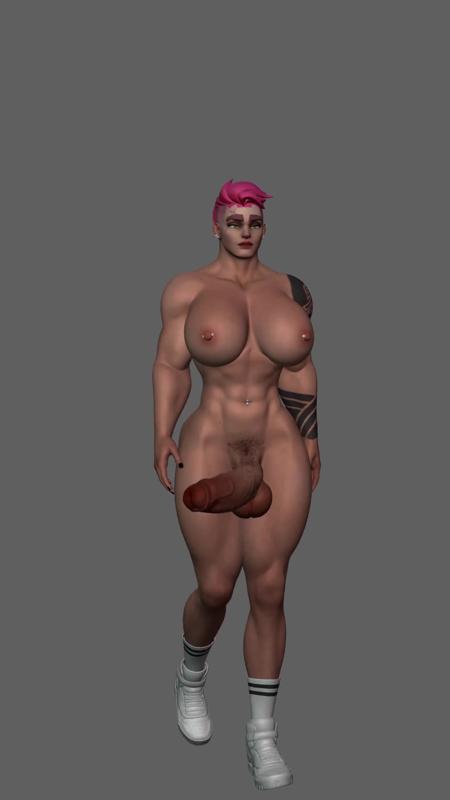
Unfortunately I couldn't go too deep on the walk cycle this time, since Zarya walks on screen for less than five seconds and you only see part of her body anyway — spending days perfecting it just wouldn't have made sense given how little of it the viewer actually sees. But at the end of the day, there's no single "correct" way to use a rig. Find what works for you, and more importantly, what keeps things simple.
Files