Home

 Creators
 Search
 Recent
 Random
 Posts
 DMs
 Tags
 Random
 Importer
 Import
 FAQ
 Account
 Register
 Login
 Favorites
 Keys
 Logout
 Telegram

Working on the SOTN prototypes (Patreon)
Content
ENGLISH/ESPAÑOL
Well, today's post is a pretty interesting one :)
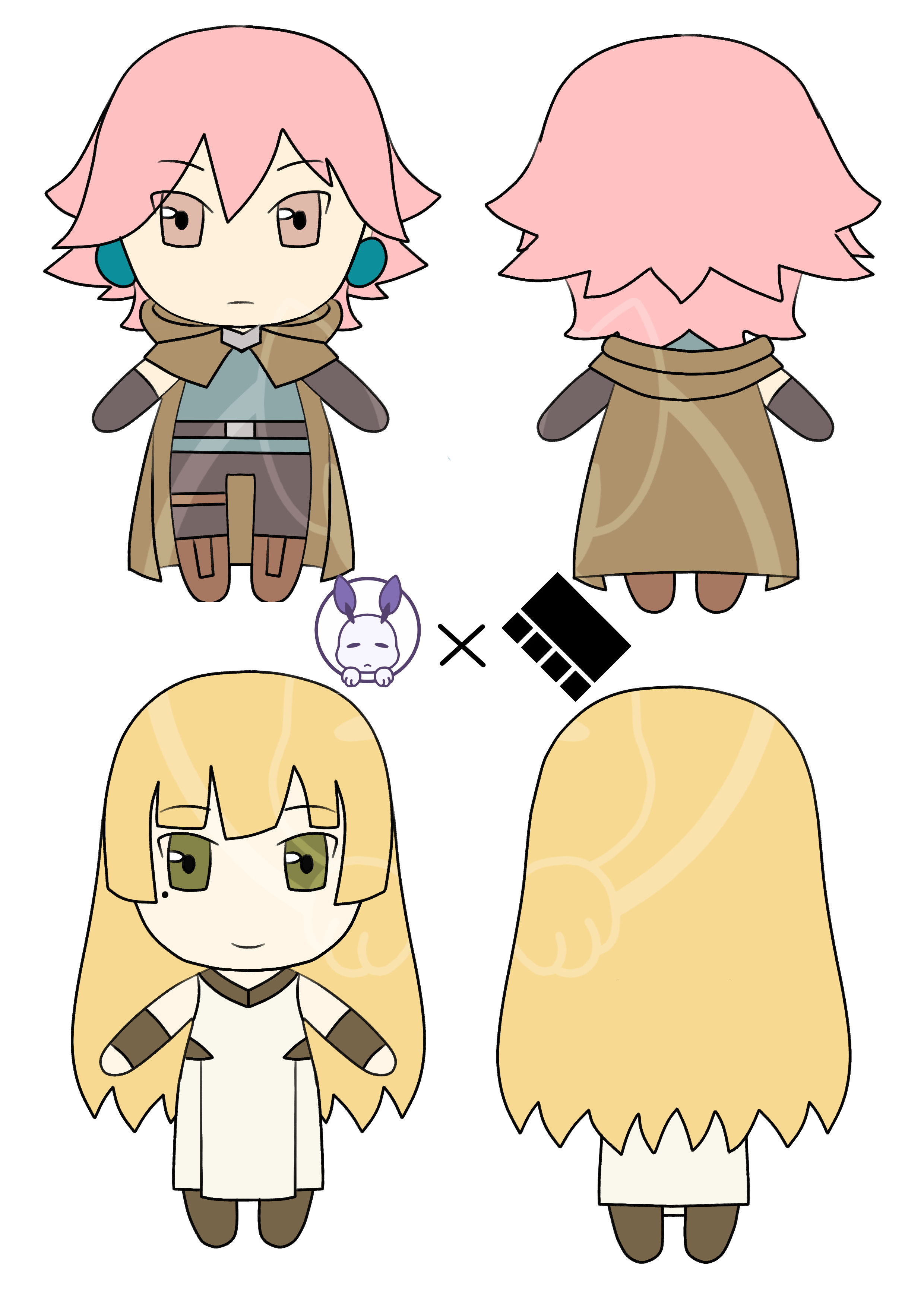
As you may know, we're collaborating with the Kickstarter campaign for Sword of the Necromancer, a game by Grimorio of Games. For their KS campaign, they asked us to make mini plushies of the two main characters; Tama and Koko. We made the designs based on the references they gave us andwe started working on the prototypes. The biggest problem we had was that the plushies had a lot of details for the size they would have. That's why we thought on using custom printed fabric for all of their parts, except the hair that would be made of minky.
So after many days looking through all the printed fabric samples from different stores that we had and patterning the base bodies, we decided to order one meter of printed fabric with our design. We recieved the fabric and started working with it, happy with the printing quality. But when we turned the plush inside out and started stuffing it, we found a big problem. The white part underneath the print showed up in a lot of seams. We were really surprised because we had chosen a fabric with a really short fur, almost like a peach skin, expecting to avoid this to happen. But it seems that since the plush is so small and the seams have tension due to being stuffed, we couldn't avoid it. It was a downer because we really liked the soft touch and the quality of the print, but we couldn't give out something like this. At least we know it's a good fabric for bigger plushies or parts that won't be under so much tension.
After going through all the samples again, we chose another fabric to print. This one didn't have any fur and was more rigid, so it wouldn't leave white seams, and it was still soft. But when we recieved it and started working with it, we realised it was too stiff. On top of that, when we stuffed it, we saw that you could see the thread between every stitch. It happens with many fabrics, for example with polar fleece, so it's not that rare. The problem was that with so many color changes, we couldn't use a matching thread colour, because it would mean it needed to be changed every few stitches.
At this point we felt really lost, because we really didn't know what fabric to use. The only one that wouldn't give us these issues would be printed polar fleece, but we didn't want to use it because it creates a lot of pilling with friction and the print blurs very easily.
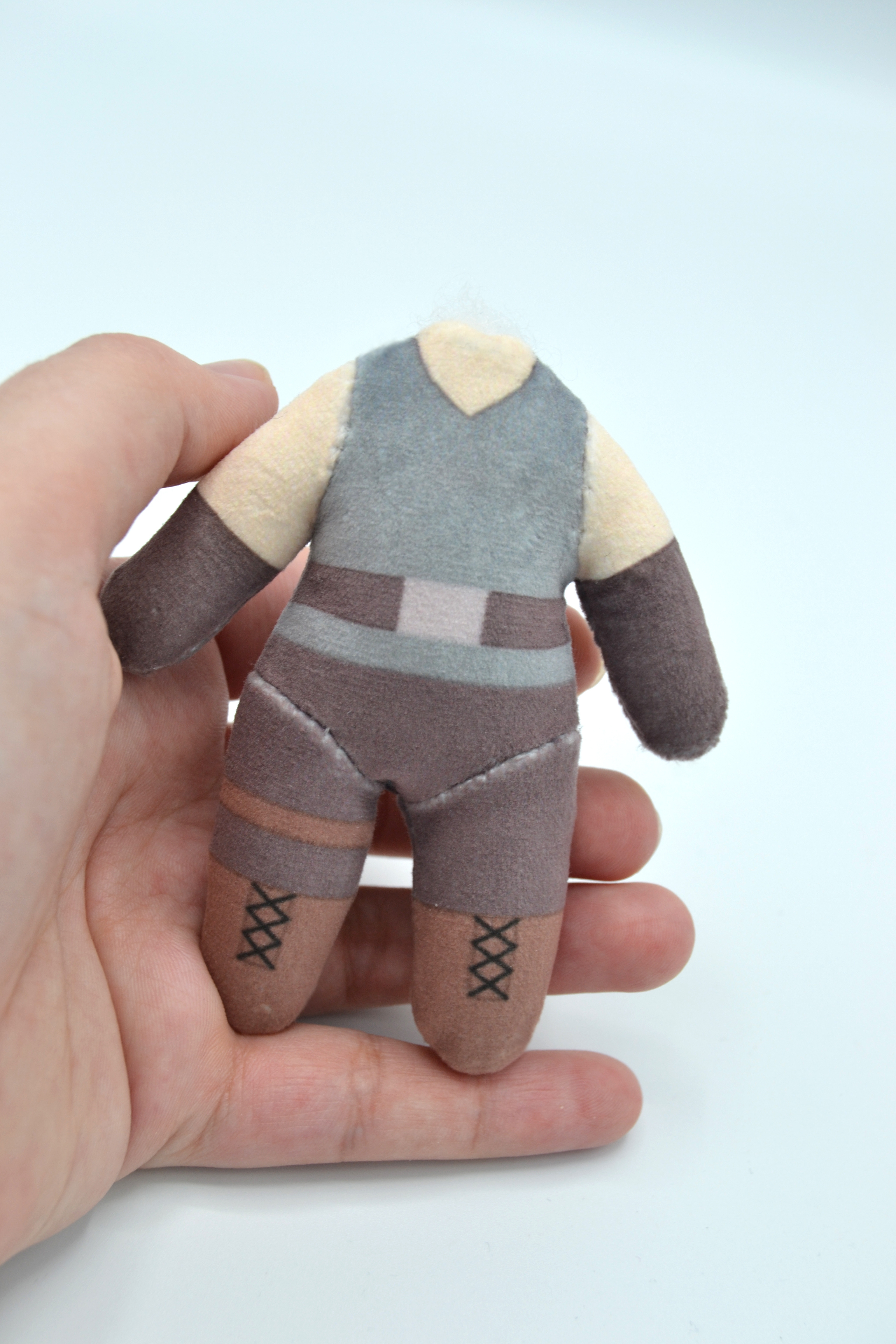
Finally, we came to the conclusion that we had to use minky for the bodies and make all the color changes and details by hand. We didn't want to do this because it meant spending A LOT of hours for such a small plush with a low budget. But you know that we can't stand making a mediocre job, so it was our only option.
We made two bodies with minky; one of them with the details cut apart and glued to the body, and the other with embroidered ones. They were quick tests to have an idea of what they would look like with each option, so don't worry if you see some seams that don't match or not sewn perfectly.
Both the customers and us like the embroidered version. And we're lucky we didn't made them as final versions because we were asked to use grey instead of dark brown for the pants and belt.
Now that we know how to continue, we can finish these plushies. And we will soon post more pics, don't worry.
As a conclusion, we have to admit that these kind of unpredicted issues help you learn from your mistakes. We would have never known that we would have so many issues with custom printing such small pieces. But well, we've learned more about printed fabrics, and even if it was a huge money investment that we won't get back, we at least got experience from it.
We've also learned a lot towards designing custom printed pieces (the colours turned out great at first try, unlike Marshal's vest) and that we can solve any problem we come up with. We always give our best!
----ESPAÑOL----
Bueno, pues hoy os traemos un post bastante interesante :)
Como sabréis, estamos colaborando con la campaña de Kickstarter del juego Sword of the Necromancer, creado por Grimorio of Games. Para su campaña de Kickstarter, nos pidieron hacer unos mini peluches de sus dos protagonistas, Tama y Koko. Hicimos unos diseños a partir de una base que nos dieron y empezamos a trabajar en los prototipos. El problema más grande que nos encontrábamos con estos peluches era que tenían bastantes detalles para lo pequeñas que iban a ser. Por ello, tuvimos la idea de usar una tela estampada para todo el cuerpo, haciendo solo el pelo de minky.
Así que después de muchos días mirando nuestros muestrarios y haciendo los patrones, decidimos comprar un metro de una tela con nuestro diseño de estampado. Recibimos la tela y nos pusimos a trabajar, muy contentas con la calidad de la impresión. Pero al girar y rellenar el peluche, nos encontramos con un error muy grande. El pelo se levantaba muchísimo en todas las costuras, dejando marcas blancas por todas las zonas cosidas. Nos sorprendió mucho porque ya habíamos elegido un material que no debía darnos este percance, pero se ve que al ser tan pequeño y estar soportando tanta tensión al estar relleno, no se podía evitar. Fue un baño de agua fría porque nos gustaba mucho el tacto y acabado que daba, pero no podíamos entregar algo así. Aunque para otros peluches más grandes o sin tanta tensión, sabemos que es una tela buena.
Después de revisar nuestro muestrario de tela, cogimos otra tela estampada. Esta no tenía pelo y era rígida, así que no iba a dejar partes blancas, y seguía siendo suave. Pero al recibirla y empezar a trabajar en ella, nos dimos cuenta de que era un material demasiado duro y rígido. Y cuando lo rellenamos, vimos que todas las costuras quedaban visibles. A veces no se puede evitar que se vean las costuras en ciertos materiales, al polar por ejemplo le pasa mucho. Pero como tiene tantos cambios de color y son colores tan pasteles, no podemos usar el hilo de su color, queda demasiado visible.
En este punto estábamos bastante perdidas, porque no sabíamos ya qué material usar. El único que no nos daría estos problemas era el polar estampado, pero no queríamos usarlo, porque es un material que crea mucha pelusilla al rozarse, y al final el dibujo se acaba perdiendo y se queda borroso.
Finalmente, llegamos a la conclusión que debíamos hacer los cuerpos con minky y hacer los cambios de color y detalles a mano. No queríamos usar esta opción porque significa MUCHAS horas de trabajo para un peluche tan pequeño y con un presupuesto bajo. Pero sabéis que no soportamos hacer un trabajo mal, así que era nuestra única elección.
Hicimos dos cuerpos de minky, uno con los detalles sobrepuestos con recortes y pegados y otros donde los detalles están bordados. Son prototipos rápidos, así que no os preocupéis si veis algo torcido o movido, porque solo era para visualizar cómo quedaban los detalles.
Y la verdad es que la opción bordada nos gusta tanto a nosotras como al cliente. Y suerte que no los hicimos a limpio, porque el cliente nos ha pedido que substituyamos las zonas de color marrón oscuro por gris.
Ahora que sabemos por dónde seguir, podemos terminar estos peluches completamente, y pronto pondremos fotitos, no os preocupéis.
Como conclusión final, la verdad es que este tipo de contratiempos solo se aprenden al probar y equivocarte. Nunca hubiéramos podido saber que al ser tan pequeñas darían tantos problemas al estamparse. Pero bueno, hemos aprendido más sobre las telas estampadas, y aunque sí que ha sido un gran gasto de dinero que no recuperaremos, nos quedamos con la experiencia.
También nos gusta ver que estamos aprendiendo mucho de hacer diseños para telas (los colores quedaron genial y los patrones en la tela también) y que podemos sacar adelante cualquier problema que se nos ponga delante. Siempre damos lo mejor de nosotras!
Files