 Home

 Creators
 Search
 Recent
 Random
 Posts
 DMs
 Tags
 Random
 Importer
 Import
 FAQ
 Account
 Register
 Login
 Favorites
 Keys
 Logout
 Telegram

Preview: Moraes vs. Sandhagen (Patreon)
Content
At UFC Fight Night 179, we see decorated veteran Marlon Moraes face rising upstart Cory Sandhagen. Moraes signed with the UFC as the World Series of Fighting (WSOF) champion. He has yet to capture a title in the UFC, but another impressive showing could give him a chance to fight for the title again. Sandhagen recently suffered a quick loss to current #2 ranked Aljamain Sterling, but up until that point, he has looked nothing short of a future champion.
Moraes is one of the most exciting fighters at bantamweight. His ability to hit switch kicks and change directions are among the best in the division (if not the best). As a former pupil of Mark Henry, Moraes’s lateral movement makes him difficult to pin down. Moraes isn’t the kind of striker who barrels forward, he’s a thoughtful fighter who moves in behind feints, jabs, and rarely finds himself moving backward straight onto the cage. Opponents chase Moraes only to get hit with counter rights and leg kicks. In his most recent fight against Jose Aldo, Moraes won a closely contested split decision. Aldo was able to take Moraes’s best shots early in round 1 and spent rounds 2 and 3 stalking him. It wasn’t all gloom, Moraes kept moving to make sure Aldo didn’t have time to settle in to throw his low kicks or string together combinations. It was clear that Moraes won the first and Aldo won the second, with the fight coming down to how the judges scored the third round. Moraes did well whenever he kept moving and found a place for his jabs followed by hooks to the body. Aldo scored by pressuring Moraes.
In one year's time, Moraes beat John Dodson, Aljamain Sterling, Jimmie Rivera, and Raphael Assunção. In each of these fights, Moraes showed his ability to adapt from opponent to opponent. In the Dodson fight, after being dropped by the southpaw straight, Moraes figured out Dodson’s habit of squaring up his hips before throwing punches. To counter, Moraes threw the left hook over Dodson’s shoulder—killing the southpaw straight. Dodson also kept lunging forward with his chin in the air, making the check hook a go-to weapon for Moraes. To disrupt Dodson’s balance, Moraes threw inside low kicks whenever Dodson moved forward. After the first round, Dodson had trouble launching any offense and was limited to charging attacks, hoping to catch Moraes off guard.
Victories over Sterling and Rivera seemed to come out of nowhere. Moraes threw a body kick as Sterling moved forward, and his knee caught Sterling in the head. The knockout was surprising even to Moraes, who immediately recognized Sterling was out and waved off any further attacks.
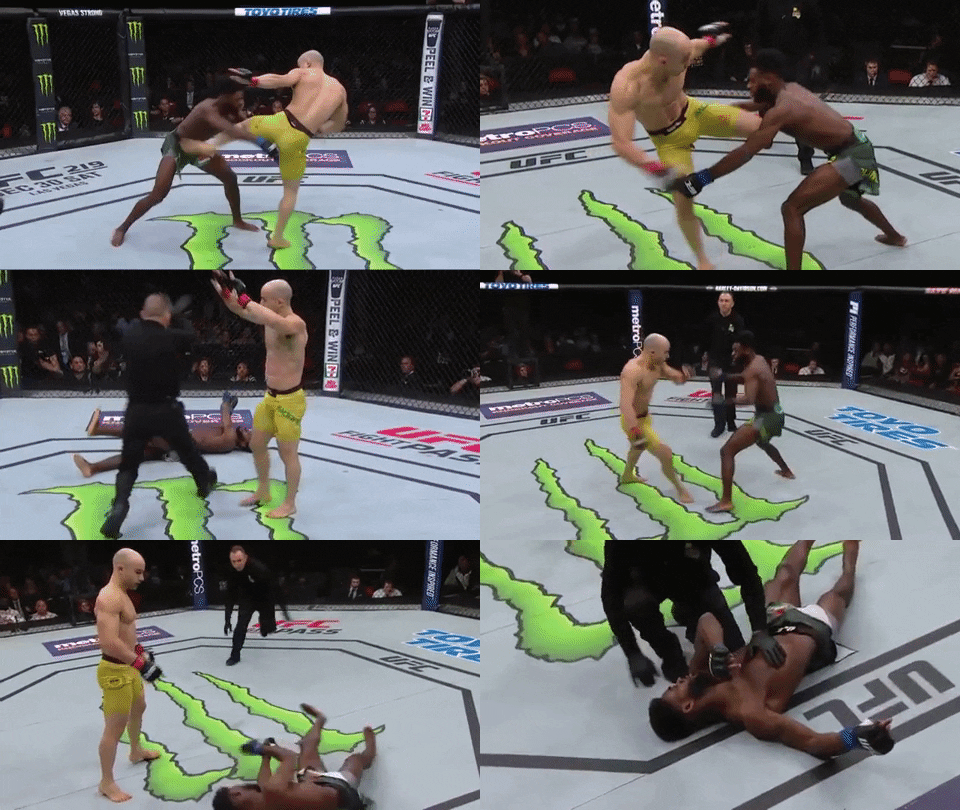
(Moraes is a lot of things, but vicious isn’t one of them. Here, he knows that the knee turned out Sterling’s lights and preemptively waved off his own fight.)
The Rivera knockout was even quicker as Moraes was in the process of throwing non-committal strikes to gauge Rivera’s responses. A head kick was thrown to see how Rivera would react, and it caught him in the temple 33 seconds into the fight (the quickest KO win for Moraes in the UFC).
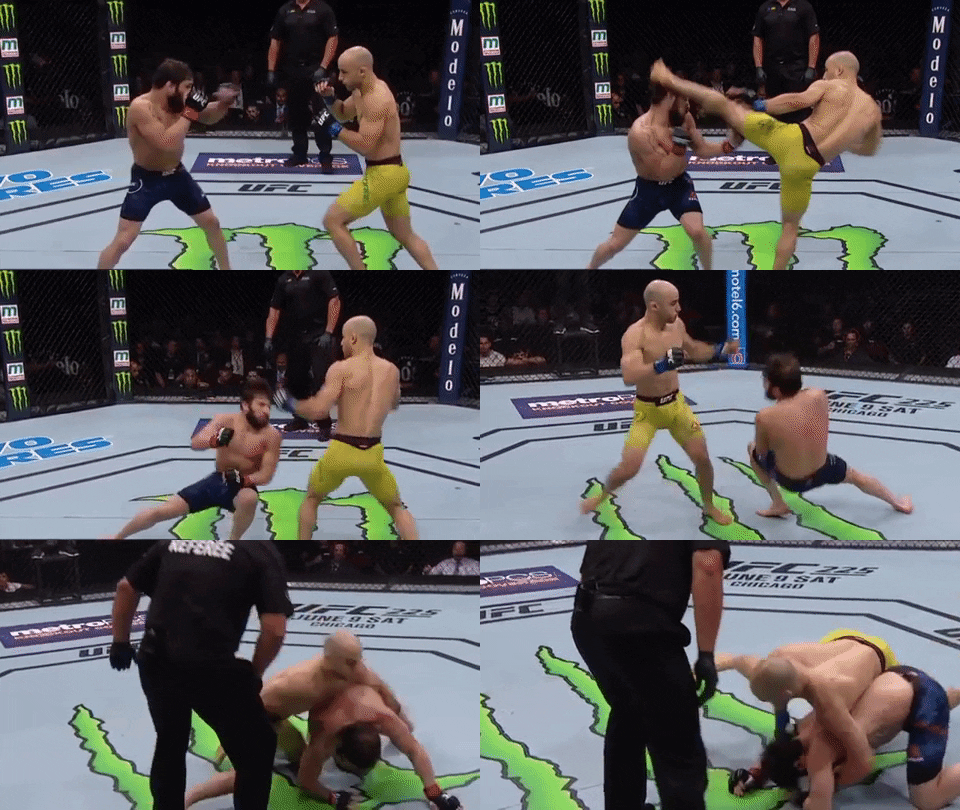
(Before he could prepare, Moraes caught Rivera with a shin across his head. The end followed soon after.)
In his rematch against Assunção, Moraes threw right-hand leads over Assunção’s attempted jabs and dropped him before choking him out in the first round. Whether he’s looking for openings or catching his opponents off-guard, Moraes is one of the best counter strikers in the division.
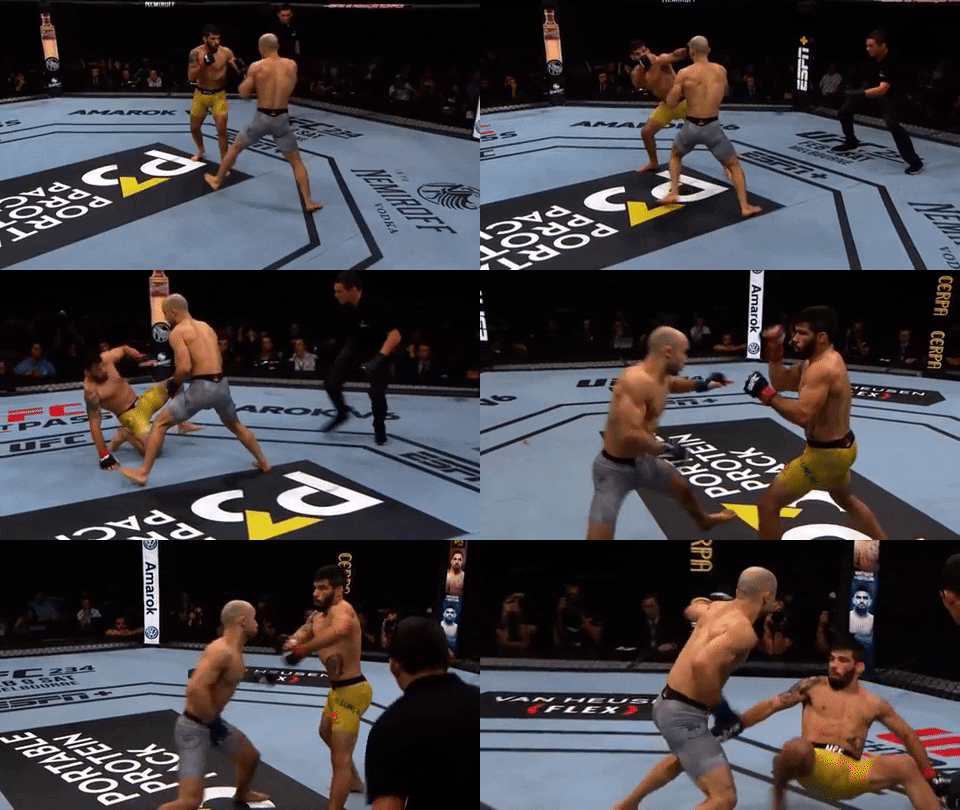
(Moraes is known for his kicks, but his hands do plenty of damage on their own. In this clip, double overhand rights stun and knock down Raphael Assunção.)
Moraes’s right kick has the same hip motion as his right straight, making it confusing for his opponents to guess which attack is coming. Many will try to rush in after the kicks only to get punched in the face. Instead of relying on the right straight for power, Moraes uses the left hook to great effect. By throwing the left hook as opponents come in, the power of the punch is amplified. The precision and timing often do most of the work for Moraes. Moraes’s speed is what sets him apart from his contemporaries. Though Moraes is 1-1 in his last two fights (with an argument that he can be 0-2), another win can put Moraes on the shortlist for a future shot at the winner of the Petr Yan and Aljamain Sterling match-up. Unless Cory Sandhagen has something to say.
Sandhagen is also coming off a loss, but don’t let that take away from his talents as he was fighting to become the number 1 contender. Standing at 5’11”, he’s among the tallest in the division. With a 71” reach, Sandhagen can utilize his jabs to set up most of his offense. With a background in muay Thai as well as karate, it’s no surprise to see Sandhagen pair his jabs with kicks from both the orthodox and southpaw stance. Sandhagen’s jabs from both stances are among the best in the division. Whether he throws the jab in a flicking motion to blur his opponents’ vision or with full power to hurt, you can bet they’re thrown off-rhythm before anyone can get a good sense of his timing. If opponents start swinging back, this just sets up Sandhagen’s pull counters and rear kicks. Sandhagen’s feinting and volume dulls the senses of would-be counter strikers. Raphael Assunção found himself swinging at air when he threw punches after Sandhagen’s feints and ended up absorbing hooks to the midsection for his troubles.
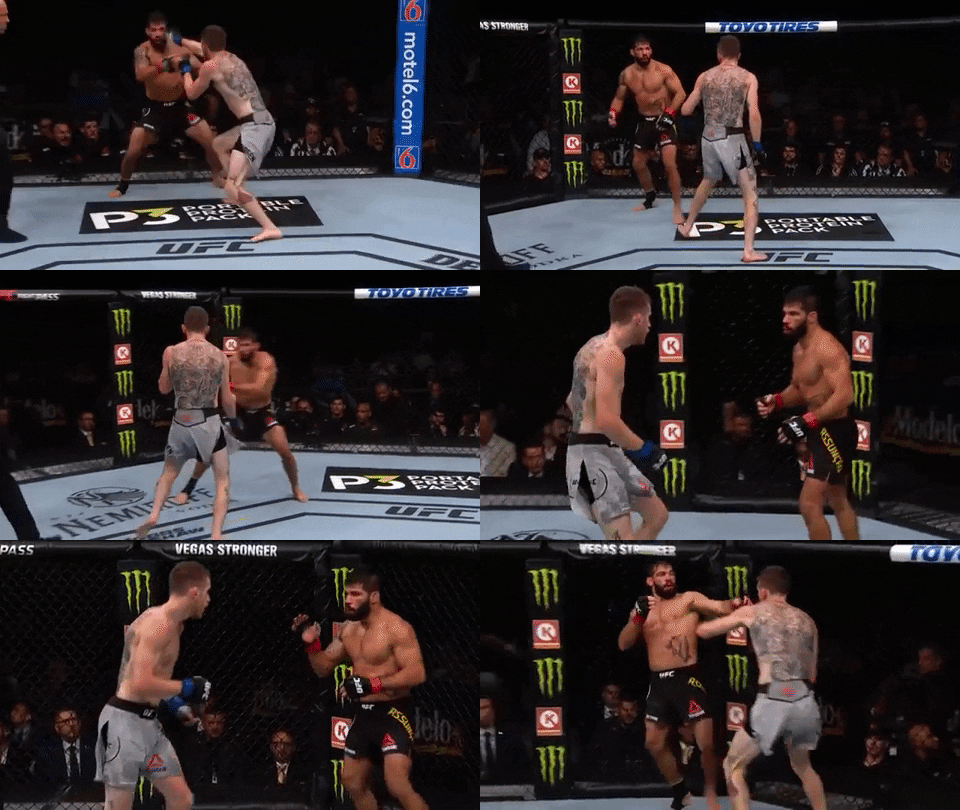
(While Assunção was missing with the overhand, Sandhagen connected with his jabs and flying knee.)
Sandhagen is constantly on the move, but this doesn’t mean he’s always attacking. It could be as simple as stance switching or stutter steps into hip feints. By having to constantly react to whatever Sandhagen is doing, opponents are forced to exert more energy trying to answer him rather than come up with effective attacks. Over time, the constant movements tire opponents and leave them vulnerable to mistakes on defense. Sandhagen is the type to create openings during the counter. He will stand with his hands low and his head leaned over his lead foot so he can pull back and punch in response. Against John Lineker, Sandhagen avoided most of the hooks while countering with kicks and jabs of his own.
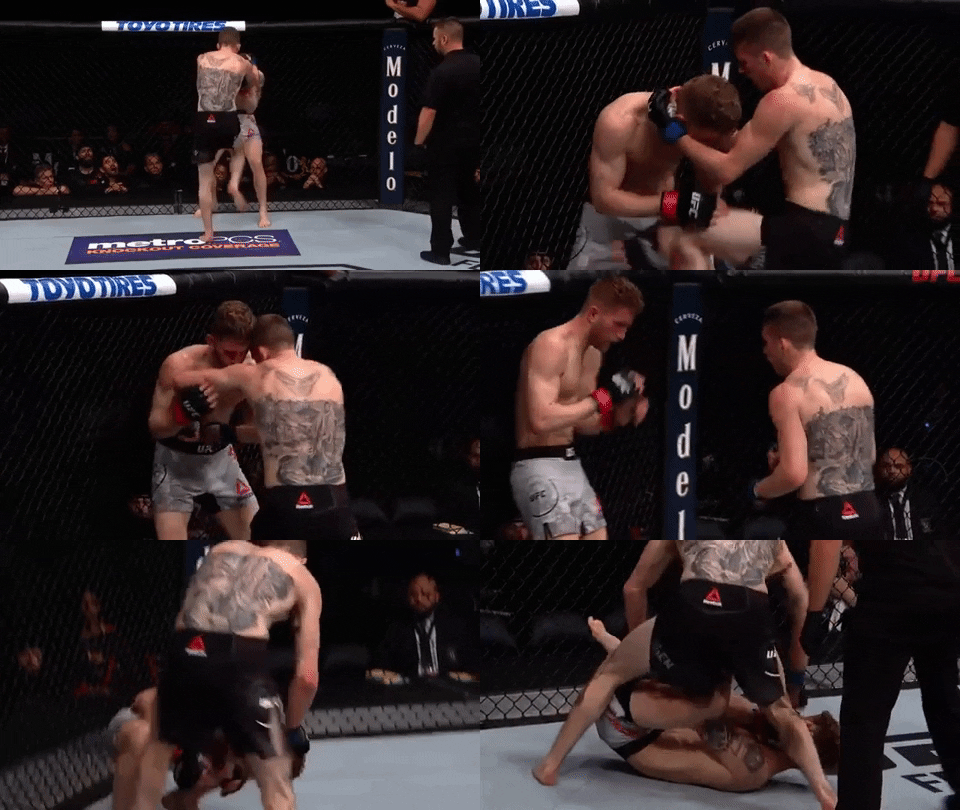
(Sandhagen transitions from the muay Thai clinch to uppercuts and hooks. They might not be powerful, but they’re constant.)
Even when he’s taken down, Sandhagen can attack with armbars and triangles off his back, or using them to create scrambles to get back up. Sandhagen’s ability to chain together different submission attempts is a legitimate threat and keeps fighters from stalling on the ground. Against Mario Bautista, Sandhagen had no problem setting up a kimura before transitioning to an armbar. It might not be on the level of Demian Maia, but it’s not a stretch to think that he couldn’t threaten others on the ground (unless you’re Aljamain Sterling).
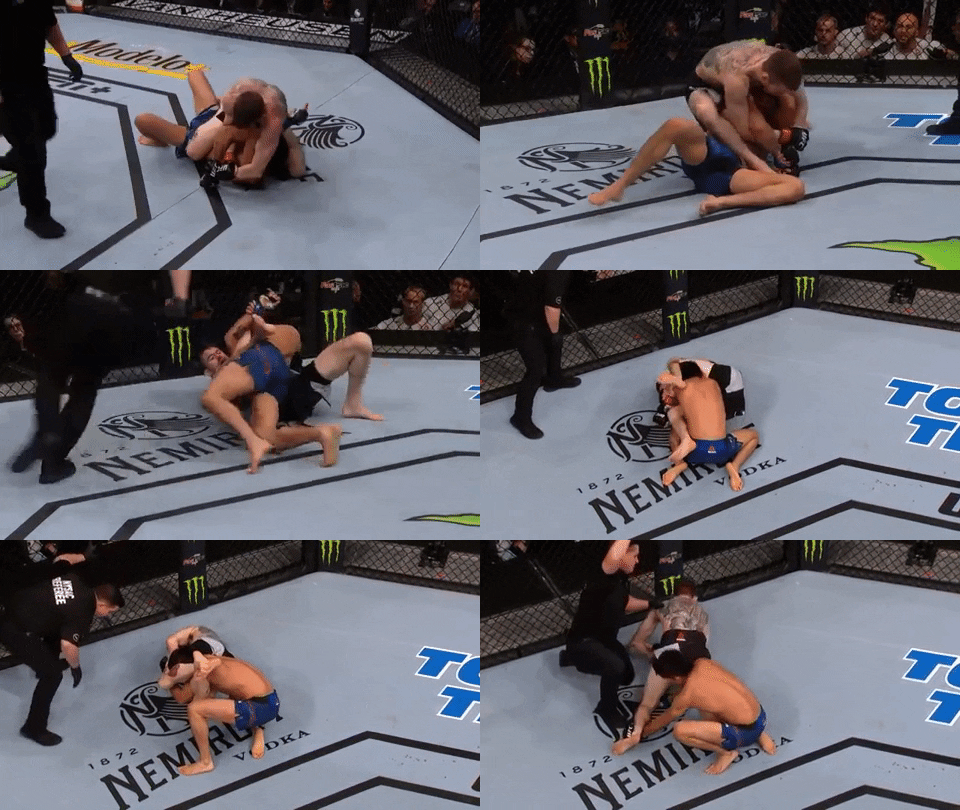
(The kimura attempt from Sandhagen wasn’t serious, but it set up the armbar finish quite nicely.)
For Moraes, he should focus on implementing his A-game of probing Sandhagen with feints before committing to anything. Moraes does his best work when he can get a read on his opponents and analyze their attacks. Sandhagen has a bad habit of lowering his hands while kicking, making him susceptible to Moraes’s left hook or counters as soon as he finishes. The height and reach difference isn’t the game-changer that you might think. Even though Moraes stands 5’6” with a 67” in reach, he has plenty of experience against taller opponents. Miguel Torres is 5’9” with an absurd 76” reach at bantamweight, and Moraes had no problem timing and countering Torres with kicks to the body. Even if Sandhagen can move his head out of the way or withdraw his lead leg, he can’t move his midsection without stepping back completely. Moraes is good at timing kicks to the body as the opponent withdraws or steps in with punches. Sandhagen should do his best to keep his elbow tucked in to avoid any surprises. Moraes is competent on the ground, and if the fight turns into a grappling exchange, perhaps he can take advantage of Sandhagen’s preference for tripoding when getting back up.
Sandhagen’s path to victory lies in his ability to throw off Moraes’s timing with feints and volume while keeping him at range with kicks and long jabs. Even though Moraes is great at switch kicks, they won’t land if Sandhagen is constantly forcing him to fight off his back foot. Aldo was able to pressure Moraes effectively and limited his attacks to hooks to the body. Moraes is half the fighter moving backward as he is moving forward. Henry Cejudo also blasted Moraes with right-hand leads down the middle, wobbling him badly before setting up the TKO finish. Moraes can still be thrown off with feints, couple that with kicks from both orthodox and southpaw and Moraes might get frustrated enough to lunge in and get countered.
The bantamweight division continues to be the gift that keeps on giving. Moraes came into the UFC with a lot of hype, Sandhagen was building up a lot of hype until he met Aljamain Sterling. On October 11th, we’ll get a better understanding of the bantamweight pecking order.
Files
Previews only

