Home

 Creators
 Search
 Recent
 Random
 Posts
 DMs
 Tags
 Random
 Importer
 Import
 FAQ
 Account
 Register
 Login
 Favorites
 Keys
 Logout
 Telegram

Labor-Intensive Deluxe Okonomiyaki for Special Occasions (Patreon)
Content
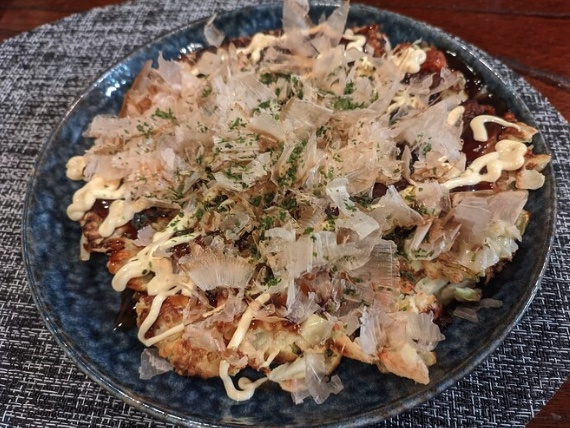
After much, much research Richard put together a very special okonomiyaki recipe. Not something you throw together after work. But It really did taste incredible.
He also went as far as learn how to make really good homemade dashi. Both recipes below.
Rich:
Okonomiyaki recipes come a dime a dozen. How many okonomiyaki videos are there on YouTube? More than 10, that’s for sure.
I went looking for the absolutely most delicious, most amazing okonomiyaku recipe out there and I found it. What puts it over the top is the chicken dashi.
Clear your schedule, this will take a while.
This is a recipe for more dashi than you’ll need. It’ll keep in the fridge for about two days and in the freezer for about three weeks, but use it as quickly as possible because it absorbs freezer odors quickly. I like to freeze dashi in ice cube trays then keep them in a ziplock bag.
How to Make The Best Chicken Dashi
1.5 L of the purest, high PH (i.e. soft) water you can find
about 30g kombu (昆布)
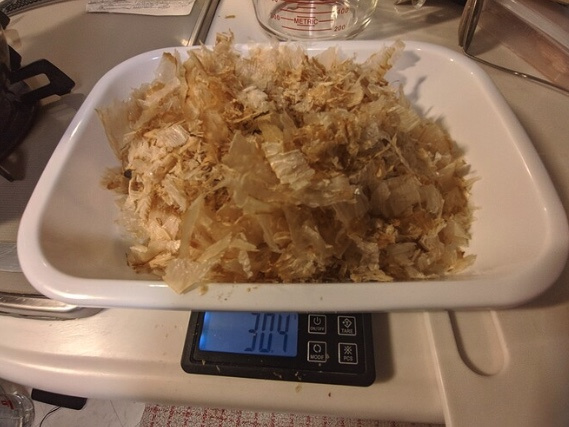
30g of bonito flakes (鰹節 katsuobushi)
1 chicken breast
1 tsp salt
Lightly brush off any sand dirt from the kombu with a slightly damp cloth but don’t wipe off the white powder. It’s called マンニット (Mannitol), it’s used as medication and a sweetener, it’s healthy and it’s a main component of the flavor of kombu. Even some Japanese don’t know you’re not supposed to remove it.
A piece of kombu about this size is right but it depends on the thickness. Soft water makes better dashi than water with higher acidity or mineral content.
Put the 1.5 liters of water in a pan and add the kombu while it’s cold. Let it stand for 30 minutes. You want to let it rehydrate to its natural state.
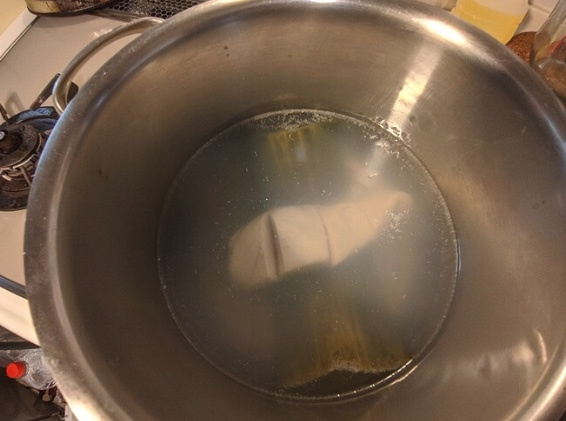
Add the chicken breast and turn the heat to low or medium. Kombu starts to release its flavor at about 60 degrees Celsius and the best temperature is 80-85C. Keep the water below boiling for 10 minutes.
Remove floating scum as the kombu steeps.
Wash the scum from the skimmer by swishing in some water.
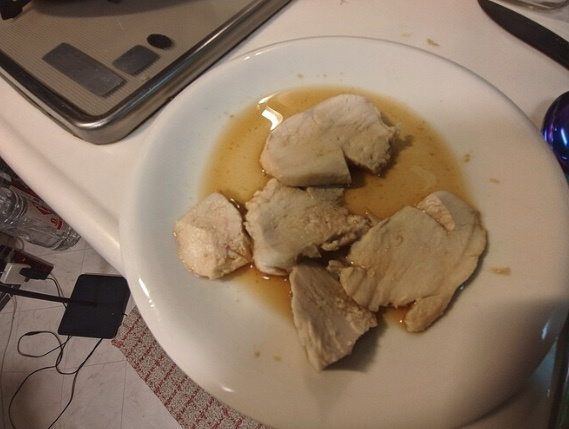
After 10 minutes, remove the kombu and bring the water to a boil with the chicken breast still in it. Turn off the heat, remove the chicken, slice it, put some ponzu sauce on it and eat it. You deserve a reward for all that hard work.
Wait for the water to reduce to about 90 degrees C to add about 30-50g of bonito flakes. If you’re a fast eater, by the time you finish your chicken snack the water should be the right temperature. Don’t dump the kombu in all once, sprinkle it in slowly.
Stir the bonito flakes once gently and while letting it simmer for about 3 minutes, carefully skim off any scum that forms around the edge of the dashi. (It’s bitter.)
Give it a taste to see if it needs salt. Depending on the kind of bonito flakes, you might or might not need it.
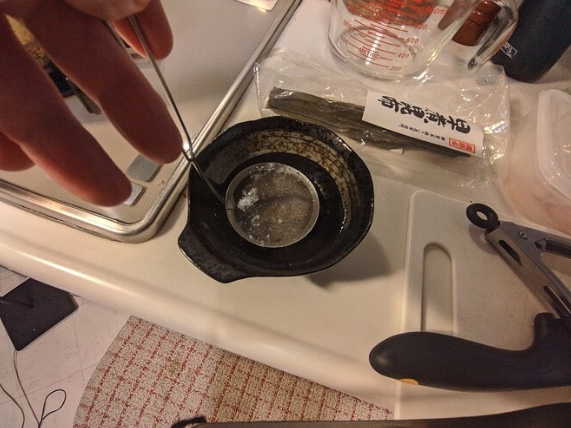
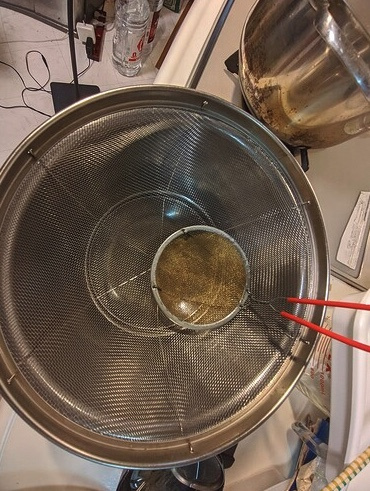
The last step is to strain the dashi so it’s completely clear. Most instructions say to strain it through a paper towel but that never works for me. I strain it through a fine mesh…one of these things and a colander to catch any big pieces.
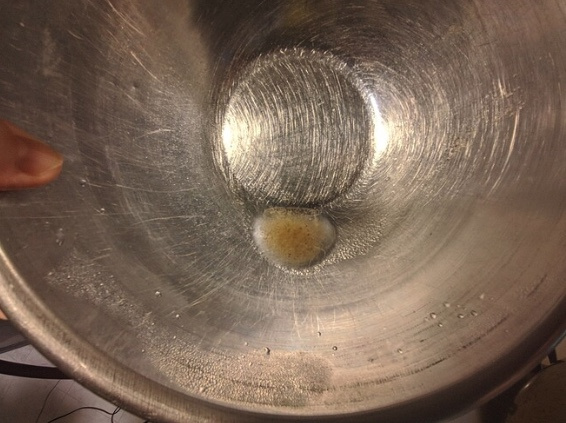
This is the kind of sediment you don’t want in your dashi.
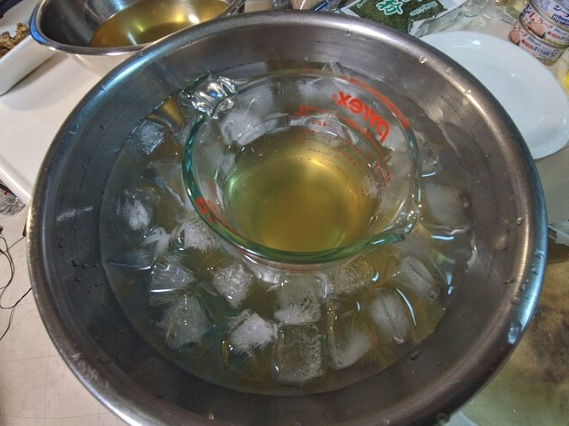
Before you add the dashi to the okonomiyaki batter, let it cool or give it an ice water bath.
Okonomiyaki batter ingredientsMakes 4
300 ml dashi
200g cake flour
400g cabbage, cut into 1cm square pieces.
250g thinly sliced pork belly ( 豚肉 バラうすぎり)
4 eggs
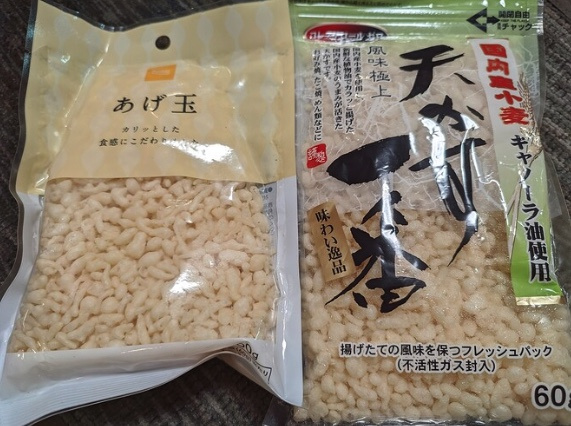
5 heaping tbsp tenkasu
1 long onion, thinly sliced
50g (about 3 tbsp grated nagaimo (Chinese yam)
Toppings
bonito flakes
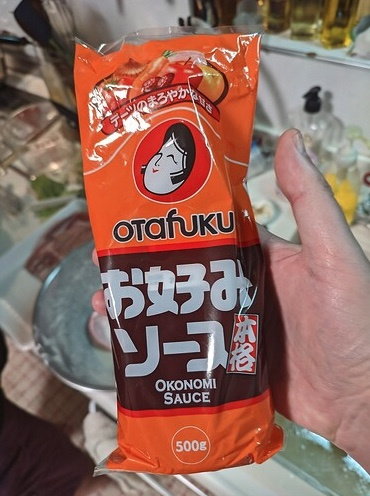
Otafuku sauce
mayonaise
aonori
Here are some of the ingredients.
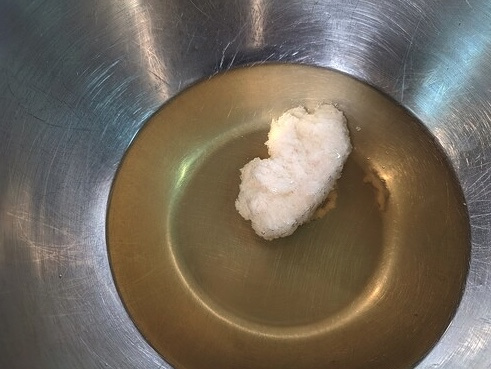
This is a nagaimo. Peel it and grate it. Be forewarned, it’s very slimy after it’s peeled. If it’s not available fresh, there’s also a nagaimo power that gets mixed with water. It makes the batter fluffy.
Add it to the dashi and mix them together before whisking in the flour. Keep the batter light and airy.
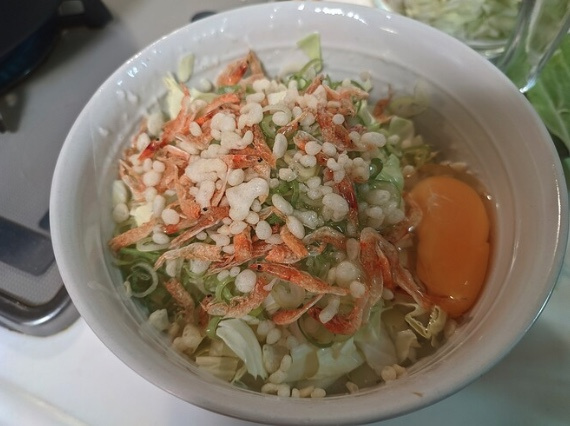
Mix all the ingredients except the eggs into the batter. Divide it into four parts (about 2 ladle’s worth each), add an egg to each and mix again. The trick is to do it quickly so it’s still light and airy when it hits the pan. The tenkasu keeps the batter from becoming dense, so it cooks evenly inside and out.
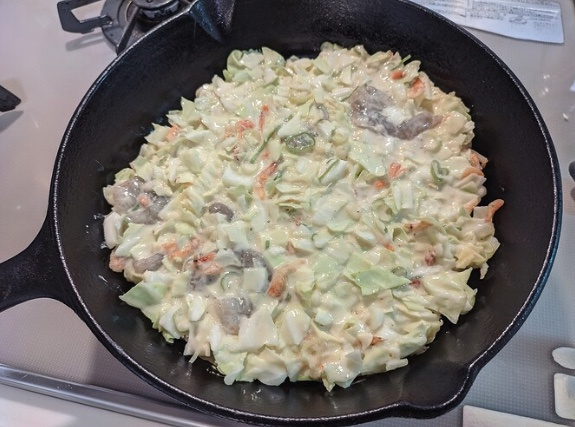
This is a good ratio of batter to ingredients. You only need enough batter to keep the ingredients together.
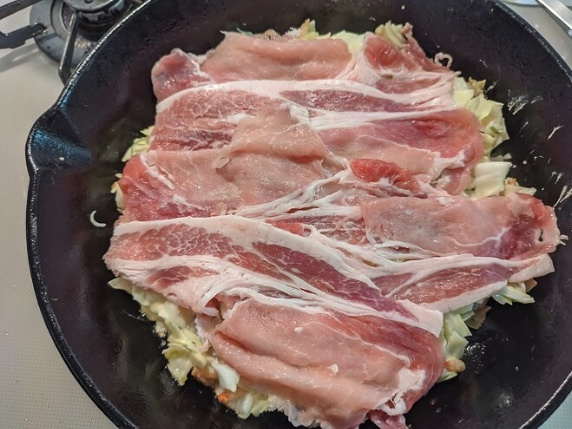
When one side is done and it’s ready to flip, lay on the pork.
Cut into the okonomiyaki with a spatula to check if it’s cooked all the way through.
Top it with otafuku sauce, mayo and bonito flakes.
Here are some photos of the ingredients.
Agedama or tenkasu. There’s not much difference between the two, if any.
These are dried sakura ebi. I didn’t list them because some people think they’re like eating bugs because of the shells. They’re probably right. I don’t mind them, but I’m OK with bugs too.
The is the original and best okonomiyaki sauce.
Files